In today’s fast-paced world, many people are looking for simple ways to bring more peace, focus, and spiritual balance into their daily lives. One of the oldest and most effective practices in Sanatan Dharma is mantra chanting, a spiritual discipline that helps calm the mind and strengthen one’s connection with the Divine.
Whether you are completely new to spiritual practice or seeking a deeper understanding of sacred sounds, mantra chanting can be a meaningful and accessible path. It does not require elaborate rituals, advanced knowledge, or years of experience. Even a few minutes of sincere practice each day can help cultivate inner peace, devotion, and mindfulness.
Many beginners have questions about mantra chanting, including how to start, whether a Guru is necessary, which mantras are suitable for daily practice, and how chanting supports spiritual growth. Understanding these fundamentals can make the journey more comfortable and rewarding.
In this guide, you will learn the meaning of mantra chanting, its importance in daily life, how beginners can start safely, the benefits of regular practice, common mistakes to avoid, and the role of devotion, discipline, and guidance on the spiritual path.
At a Glance: Mantra Chanting
| Aspect | Details |
|---|---|
| Meaning | Repetition of sacred sounds, words, or phrases to focus the mind and deepen spiritual awareness |
| Origin | Rooted in the Vedas, Upanishads, and ancient spiritual traditions of Sanatan Dharma |
| Purpose | To cultivate devotion, concentration, inner peace, and connection with the Divine |
| Suitable For | Beginners, devotees, spiritual seekers, and anyone seeking mental clarity and spiritual growth |
| Common Practice | Chanting aloud, softly, mentally, or with a japa mala |
| Best Time | Brahma Muhurta, sunrise, sunset, or any quiet time with regular consistency |
| Popular Mantras | Om Namah Shivaya, Hare Krishna Maha Mantra, Gayatri Mantra, Mahamrityunjaya Mantra, Om Namo Narayanaya |
| Key Benefits | Mental peace, improved focus, emotional balance, devotion, mindfulness, and spiritual growth |
| Need a Guru? | Many devotional mantras can be practiced by beginners, while certain advanced mantras traditionally require guidance |
| Daily Practice | Even 5–15 minutes of sincere mantra chanting can become a meaningful spiritual discipline |
| Long-Term Impact | Helps develop self-discipline, positive thinking, inner strength, and a deeper spiritual connection |
Did You Know?
The tradition of mantra chanting has been practiced in India for thousands of years and is deeply rooted in the Vedas, the oldest sacred texts of Sanatan Dharma.
Ancient sages believed that sacred sounds carry spiritual power and can help calm the mind, cultivate devotion, and elevate consciousness.
Even today, millions of people around the world include mantra chanting in their daily routines as a way to find inner peace, focus, and a deeper connection with the Divine.
Table of Contents
ToggleWhat Is Mantra Chanting?
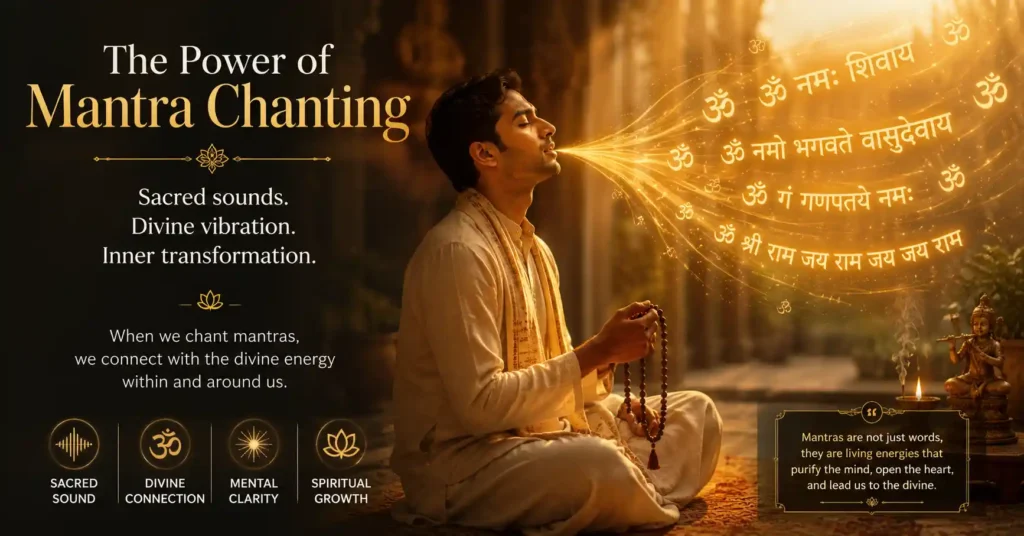
Mantra chanting is the practice of repeatedly reciting sacred words, sounds, or phrases with focus, devotion, and awareness. In Sanatan Dharma, mantras are considered powerful spiritual tools that help align the mind with higher thoughts and divine consciousness.
The word mantra comes from two Sanskrit roots: man (mind) and tra (to protect or liberate). Together, a mantra is often understood as something that helps protect, guide, or transform the mind.
Mantra chanting has been practiced for thousands of years in Hindu traditions, yogic paths, and devotional movements. It can be performed silently, softly, or aloud, depending on the practice and personal preference.
Unlike ordinary words, mantras are regarded as sacred vibrations. Their purpose is not merely repetition but the cultivation of concentration, devotion, inner peace, and spiritual awareness.
Some mantras invoke a specific deity, such as Lord Shiva, Vishnu, Devi, Ganesha, or Hanuman. Others focus on universal spiritual principles, meditation, or self-realization.
People engage in mantra chanting for many reasons, including:
Developing a daily spiritual practice
Strengthening devotion and faith
Improving concentration and mindfulness
Reducing mental restlessness
Creating inner calm and emotional balance
Deepening their connection with the Divine
Whether practiced for a few minutes each day or as part of a dedicated spiritual discipline, mantra chanting remains one of the most accessible and widely followed practices in Sanatan Dharma.
It does not require special circumstances to begin. What matters most is sincerity, consistency, and a willingness to turn the mind toward higher thoughts and spiritual growth.
Why Is Mantra Chanting Important in Daily Life?
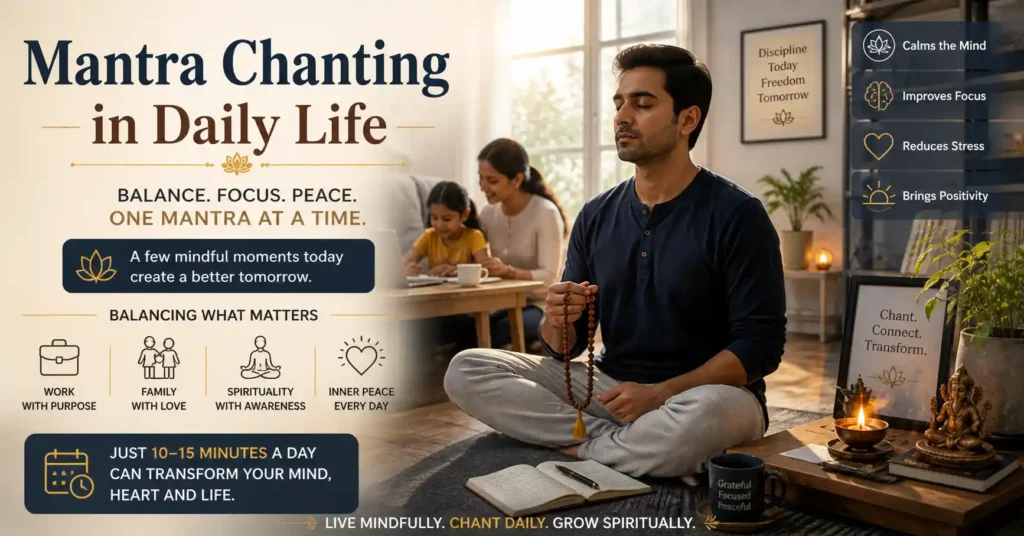
Modern life is often filled with distractions, stress, and constant mental activity. Many people struggle to find moments of peace and clarity amid their daily responsibilities. Mantra chanting offers a simple yet powerful way to create balance and inner stability.
When practiced regularly, mantra chanting helps bring the mind back to the present moment. Instead of being carried away by worries about the past or future, the practitioner learns to focus on a sacred sound, divine name, or spiritual intention.
One of the greatest strengths of mantra chanting is its simplicity. It can be practiced at home, during meditation, while walking, or even during quiet moments throughout the day. This makes it accessible to people of all ages and backgrounds.
Regular daily mantra chanting practice can also help develop discipline and consistency. Just as physical exercise strengthens the body, spiritual practice strengthens the mind and cultivates positive habits.
For many devotees, chanting becomes more than a ritual. It becomes a way of remembering the Divine throughout the day. This remembrance helps transform ordinary activities into opportunities for devotion and mindfulness.
In today’s fast-paced world, mantra chanting can support:
Mental calm and emotional balance
Improved concentration and focus
Greater patience and self-control
A deeper sense of devotion and gratitude
Relief from stress and mental restlessness
Consistent spiritual growth through daily practice
Whether practiced for a few minutes or as part of a longer spiritual routine, mantra chanting helps create a meaningful connection between daily life and spiritual awareness.
By making sacred remembrance a part of everyday living, practitioners gradually cultivate peace within themselves while remaining engaged with the world around them.
Does Daily Mantra Chanting Require a Guru?
Many beginners wonder whether they need a Guru before starting a daily chanting practice. This question often arises because spiritual traditions place great respect on the Guru-disciple relationship.
For most people, the answer is reassuring. Many devotional mantras have been recited by devotees for centuries without formal initiation. A sincere spiritual practice can begin with faith, respect, and consistency.
For beginners, what matters most is:
- Choosing a simple and widely accepted mantra
- Chanting with sincerity and devotion
- Practicing regularly rather than occasionally
- Maintaining a calm and respectful attitude
- Focusing on spiritual growth rather than quick results
A Guru can certainly enrich the journey by offering guidance, correcting misunderstandings, and helping a seeker progress more deeply. However, the absence of a Guru should not prevent someone from beginning a daily practice.
Guidance becomes more important when exploring:
- Certain Beej Mantras
- Advanced Tantric practices
- Specialized forms of sadhana
- Tradition-specific initiations (Diksha)
For most beginners, simple devotional chanting is a safe and meaningful way to develop concentration, devotion, and inner peace.
A balanced approach is to start where you are, practice consistently, and remain open to guidance when it naturally becomes part of your spiritual journey.
Ultimately, regular practice, sincere devotion, and a pure intention are the foundations of spiritual progress. A Guru can illuminate the path, but the first step often begins with a simple mantra and a willing heart.
Which Mantras Are Best for Beginners?
One of the biggest challenges for beginners is deciding which mantra to start with. With so many sacred mantras available, it is easy to feel overwhelmed or unsure about which one is most suitable.
A simple rule is to begin with a mantra that inspires devotion, feels meaningful, and is widely practiced within Sanatan Dharma. There is no need to start with complicated or advanced practices.
Some beginner-friendly mantras include:
Om Namah Shivaya – Associated with Lord Shiva and inner transformation.
Om Namo Narayanaya – A mantra of devotion to Lord Vishnu.
Sri Ram Jai Ram Jai Jai Ram – Promotes peace, devotion, and remembrance of Lord Rama.
Hare Krishna Maha Mantra – Widely chanted in Bhakti traditions.
Gayatri Mantra – A revered Vedic prayer for wisdom and spiritual illumination.
Mahamrityunjaya Mantra – Traditionally recited for strength, healing, and protection.
Om Gam Ganapataye Namah – Invokes the blessings of Lord Ganesha.
When choosing a mantra, consider the following:
Start with one mantra rather than several.
Select a mantra that resonates with your faith and spiritual inclination.
Learn the correct pronunciation as best as possible.
Focus on regular practice rather than the number of repetitions.
Allow time for a connection with the mantra to develop naturally.
For beginners, consistency is often more valuable than complexity. Reciting a simple mantra daily with attention and devotion can be more beneficial than frequently changing practices.
Over time, many devotees discover that a particular mantra becomes a source of comfort, strength, and spiritual inspiration. That steady connection often becomes the foundation of a lifelong spiritual journey.
How Can Beginners Start Mantra Chanting at Home?
Starting a daily spiritual practice does not require elaborate preparations or special circumstances. What matters most is sincerity, consistency, and a willingness to dedicate a few moments each day to spiritual reflection.
Beginners often make the mistake of focusing on complicated rules. In reality, it is better to start simply and build the habit gradually.
A Simple Way to Begin
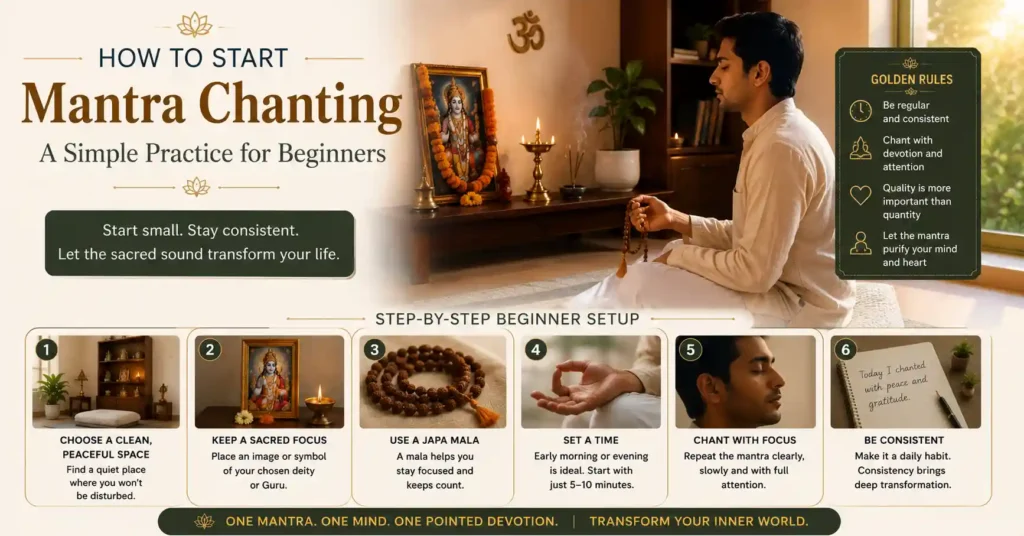
1. Choose One Mantra
Select a mantra that resonates with your faith, devotion, or spiritual aspiration. Avoid changing mantras frequently in the beginning.
2. Set Aside a Regular Time
Practicing at the same time each day helps create discipline and consistency.
Popular times include:
Brahma Muhurta (before sunrise)
Morning after bathing
Sunset or evening prayers
Before sleeping
3. Create a Peaceful Space
A clean and quiet corner can help improve concentration.
You may keep:
A deity image or murti
A lamp or diya
Incense (optional)
A japa mala
4. Sit Comfortably
There is no need for difficult postures.
Simply:
Keep your spine reasonably straight
Relax your body
Breathe naturally
Keep your attention on the mantra
5. Start Small
Many beginners benefit from starting with:
5–10 minutes daily
One mala (108 repetitions)
A fixed number of repetitions
Consistency is more important than duration.
Helpful Tips for Beginners
Focus on the meaning and feeling behind the mantra.
Chant with devotion rather than haste.
Do not worry about perfection.
Keep your practice simple and steady.
Allow the benefits to unfold naturally over time.
As the habit develops, many people find that sacred chanting becomes a source of peace, strength, and spiritual connection throughout the day. Even a few minutes of sincere practice can gradually transform the quality of one’s thoughts and daily life.
What Is a Simple Daily Mantra Chanting Routine?
Many people believe they need a long spiritual schedule to benefit from chanting. In reality, even a few minutes of regular practice can create a meaningful impact when done with sincerity and consistency.
A simple routine is often easier to maintain than an ambitious one that becomes difficult to follow.
1. Morning Routine (5–15 Minutes)
Start your day with a few moments of silence and remembrance.
You can:
Sit comfortably in a clean space
Take a few deep breaths
Offer a simple prayer
Chant your chosen mantra
Sit quietly for a minute before beginning daily activities
This helps set a calm and positive tone for the day.
2. During the Day
Even busy people can stay connected to their practice.
Some simple ways include:
Mentally repeating the mantra while walking
Chanting during travel
Using short breaks for a few repetitions
Remembering the Divine name during routine tasks
These small moments help bring spiritual awareness into daily life.
3. Evening Practice
Evening chanting can help release mental stress accumulated throughout the day.
A simple evening routine may include:
Lighting a diya or lamp
Offering gratitude
Chanting for a few minutes
Sitting quietly in reflection
This creates a peaceful transition from activity to rest.
4. Consistency Matters More Than Quantity
Many beginners focus on numbers, but spiritual progress often comes from regularity rather than volume.
Remember:
Five minutes daily is better than one hour once a week.
One mantra practiced consistently is better than frequently changing mantras.
Devotion and attention are more important than speed.
Over time, a simple routine can become a natural part of daily life, helping cultivate inner peace, discipline, and a deeper connection with the Divine.
What Are the Benefits of Mantra Chanting?
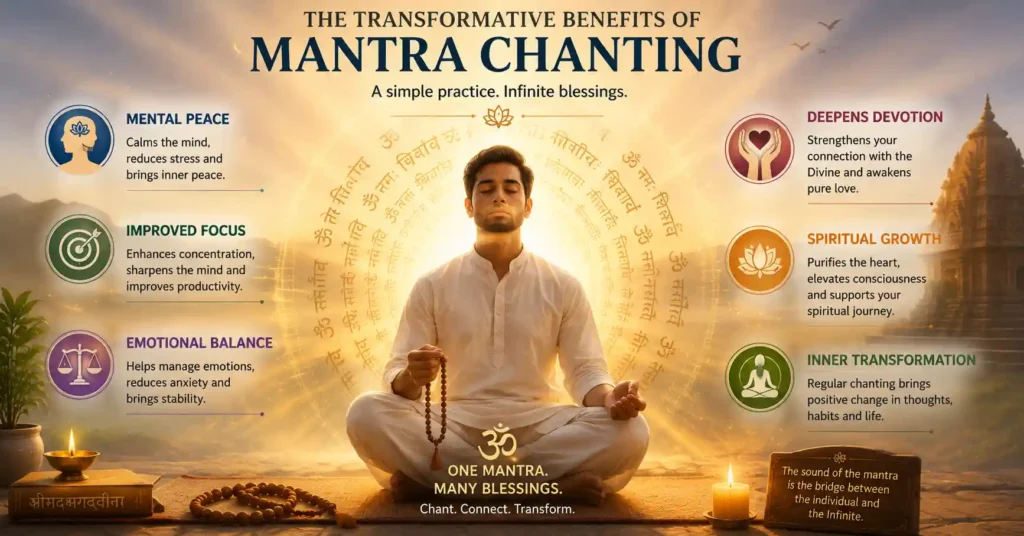
The practice of repeating sacred sounds has been valued in Sanatan Dharma for centuries because of its ability to influence the mind, emotions, and spiritual outlook. While experiences vary from person to person, many devotees report positive changes through regular practice.
Some benefits may be noticed quickly, while others develop gradually through consistent effort.
1. Mental Benefits
Sacred chanting can help calm the constant flow of thoughts and bring greater mental clarity.
Common mental benefits include:
Improved concentration
Better focus and attention
Reduced mental restlessness
Greater mindfulness
A calmer and more balanced mindset
2. Emotional Benefits
Many people turn to spiritual practices during periods of stress, uncertainty, or emotional challenges.
Regular practice may help:
Reduce feelings of anxiety and worry
Promote emotional stability
Increase patience and resilience
Cultivate gratitude and positivity
Create a sense of inner comfort
3. Spiritual Benefits
Beyond mental and emotional well-being, this practice can deepen one’s relationship with the Divine.
Many devotees experience:
Stronger devotion (Bhakti)
Greater spiritual awareness
Increased self-reflection
A deeper sense of purpose
Closer connection with their chosen deity
4. Benefits in Daily Life
The effects of a steady spiritual discipline often extend beyond formal practice sessions.
Over time, it may help:
Improve self-discipline
Encourage positive habits
Promote thoughtful decision-making
Develop patience in relationships
Bring greater balance to everyday life
5. Long-Term Growth
Spiritual progress usually happens gradually. Small daily efforts often lead to meaningful changes over months and years.
With sincerity and consistency, mantra chanting benefits may include greater inner peace, emotional strength, devotion, and a deeper understanding of oneself and the Divine.
The goal is not merely to repeat words but to transform the quality of one’s thoughts, actions, and daily living.
What Are Common Mistakes to Avoid in Mantra Chanting?
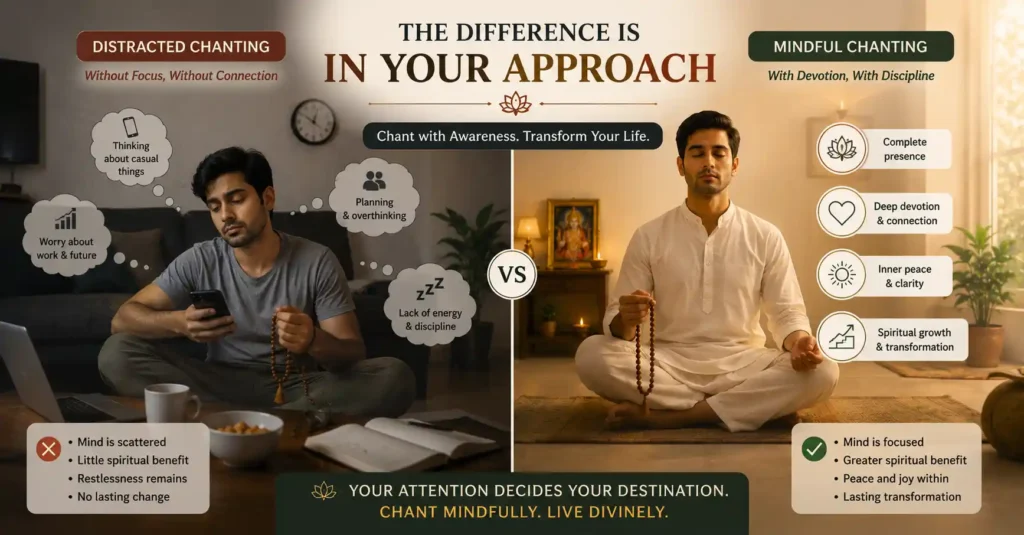
Beginners often worry about pronunciation or technique, but the most common mistakes are usually related to consistency, expectations, and mindset rather than the mantra itself.
Being aware of these mistakes can help make the practice more meaningful and sustainable.
1. Chanting Too Many Mantras at Once
Many newcomers try multiple mantras simultaneously, hoping for faster results. This can create confusion and make it difficult to develop a deeper connection with any one practice.
Instead:
Start with one mantra
Practice it consistently
Allow familiarity and devotion to grow naturally
2. Focusing Only on Numbers
Counting repetitions can be helpful, but it should not become the sole focus.
Remember:
Quality matters more than quantity
Attention is more important than speed
Devotion is more important than statistics
3. Seeking Immediate Results
Spiritual growth is usually gradual. Some people become discouraged if they do not notice changes quickly.
Avoid:
Constantly evaluating results
Comparing your progress with others
Treating the practice as a quick solution
Trust the process and remain patient.
4. Chanting Without Attention
Mechanical repetition may help build discipline, but conscious repetition is often more beneficial.
Try to:
Listen to the mantra as you chant
Stay present in the moment
Bring your mind back when it wanders
5. Frequently Changing Practices
Jumping from one mantra, teacher, or technique to another can make progress difficult.
A stable practice allows:
Greater concentration
Deeper familiarity
Stronger spiritual connection
6. Ignoring the Meaning and Spirit of the Practice
While understanding every Sanskrit word is not necessary, it helps to appreciate the purpose and significance of the mantra.
Try to cultivate:
Respect
Gratitude
Devotion
Mindfulness
7. Comparing Yourself with Others
Every spiritual journey is unique. What works for one person may not work in the same way for another.
Focus on:
Your own consistency
Your own growth
Your own relationship with the Divine
By avoiding these common mistakes, beginners can build a steady and rewarding practice that supports inner peace, self-discipline, and long-term spiritual development.
Why Is Mantra Chanting Relevant in Modern Life?
Modern life offers many conveniences, but it also brings constant distractions, information overload, stress, and mental restlessness. Many people struggle to find moments of silence and inner balance amid busy schedules and daily responsibilities.
This is where mantra chanting remains remarkably relevant. It provides a simple way to pause, refocus the mind, and reconnect with deeper values and spiritual awareness.
Unlike many spiritual practices that require special settings or long hours, chanting can be integrated into everyday life. A few minutes of sincere practice can help create a sense of calm even during demanding days.
1. Challenges of Modern Life
Many people today experience:
Stress and anxiety
Constant digital distractions
Difficulty concentrating
Mental fatigue
Emotional overwhelm
Lack of quiet reflection
These challenges affect not only mental well-being but also relationships, work, and overall quality of life.
2. How Chanting Helps
Regular practice can serve as a simple anchor amid daily pressures.
It may help:
Calm a busy mind
Improve focus and attention
Create moments of mindfulness
Reduce emotional reactivity
Encourage positive thinking
Foster inner stability
3. A Practice for Everyone
One of the strengths of this spiritual discipline is its accessibility.
It can be practiced:
At home
During meditation
While walking
During travel
Before sleep
As part of morning prayers
No elaborate arrangements are required to begin.
4. Connecting Daily Life with Spiritual Growth
Many people think spirituality and daily responsibilities are separate. Sanatan Dharma teaches that both can coexist harmoniously.
A few minutes of sacred remembrance each day can help transform ordinary routines into opportunities for reflection, gratitude, and devotion.
In this way, chanting is not merely a ritual. It becomes a practical tool for cultivating peace, awareness, and spiritual balance while fully participating in modern life.
When Should You Seek Guidance from a Guru?
Many people begin their spiritual journey on their own and benefit greatly from a simple daily practice. However, there may come a time when guidance from an experienced teacher becomes valuable.
Seeking guidance does not mean you have failed to progress independently. It simply means you are looking to deepen your understanding and practice.
1. A Guru May Be Helpful When:
You have persistent spiritual doubts.
You feel confused by conflicting teachings.
You want to understand deeper aspects of spiritual practice.
You are interested in advanced forms of sadhana.
You wish to receive mantra initiation (Diksha).
You seek personalized guidance for your spiritual journey.
2. Signs of a Genuine Spiritual Teacher
Sanatan Dharma encourages seekers to use wisdom and discernment when choosing a teacher.
Look for someone who:
Lives according to the values they teach.
Demonstrates humility and compassion.
Encourages sincere spiritual growth.
Does not promote fear or dependency.
Inspires devotion, wisdom, and self-discipline.
A true Guru helps seekers move closer to the Divine rather than drawing attention to themselves.
3. Guidance and Personal Effort Go Together
Even with a Guru, spiritual growth requires personal effort.
A teacher can:
Show the path
Clarify doubts
Offer encouragement
Share spiritual wisdom
But the actual practice must be done by the seeker.
4. For Most Beginners
If you are just starting, there is no need to worry about finding the perfect Guru immediately.
Begin with:
A simple mantra
Regular practice
Sincere devotion
A willingness to learn
As your spiritual understanding grows, the right guidance often arrives naturally at the appropriate time.
Ultimately, the purpose of any spiritual teacher is to help seekers strengthen their connection with the Divine and live a more conscious, meaningful, and spiritually grounded life.
How Does Mantra Chanting Support Spiritual Growth?
Many people begin chanting for peace of mind, stress relief, or emotional balance. While these benefits are valuable, the deeper purpose of the practice is spiritual growth and inner transformation.
In Sanatan Dharma, a mantra is more than a collection of words. It is regarded as a sacred sound that helps turn the mind away from constant distractions and toward higher awareness.
1. Strengthens Devotion
Regular chanting helps cultivate a deeper relationship with the Divine.
Over time, many practitioners develop:
Greater faith
Stronger devotion (Bhakti)
A sense of gratitude
Spiritual humility
The practice gradually becomes an expression of love and remembrance rather than a routine exercise.
2. Purifies the Mind
The mind is constantly influenced by thoughts, emotions, desires, and external distractions.
Sacred repetition helps:
Reduce mental clutter
Encourage positive thinking
Improve self-awareness
Create inner calm
This purification supports both spiritual and personal development.
3. Develops Self-Discipline
Spiritual growth often requires consistency and commitment.
Maintaining a regular practice teaches:
Patience
Perseverance
Discipline
Dedication
These qualities often extend into other areas of life as well.
4. Encourages Inner Reflection
As the mind becomes calmer, people often gain greater insight into their thoughts, habits, and actions.
This self-reflection can help individuals:
Understand themselves better
Make wiser decisions
Live more consciously
Align their actions with spiritual values
5. Deepens Awareness of the Divine
One of the central goals of many spiritual traditions is to remain connected to the Divine throughout daily life.
Regular chanting serves as a gentle reminder of that connection.
Instead of limiting spirituality to a temple or prayer room, practitioners learn to carry that awareness into their daily responsibilities and relationships.
6. A Lifelong Spiritual Companion
Spiritual growth rarely happens overnight. It develops gradually through sincere and consistent effort.
Over time, mantra chanting can become:
A source of strength during difficulties
A guide during periods of uncertainty
A means of cultivating inner peace
A path toward deeper spiritual understanding
For many devotees, what begins as a simple daily practice eventually becomes a lifelong companion on the journey of self-discovery and devotion.
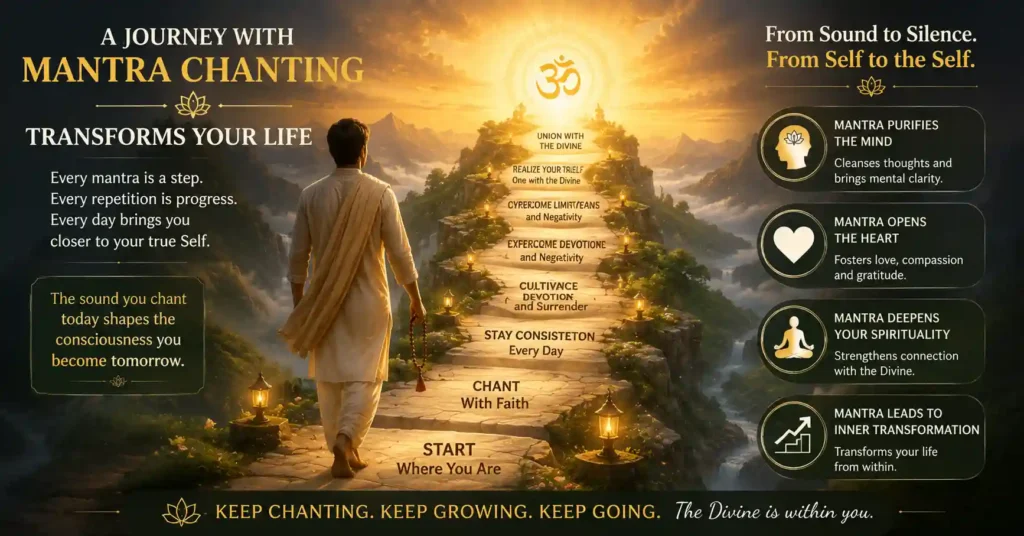
Conclusion: Making Mantra Chanting a Part of Daily Life
Mantra chanting is one of the simplest and most accessible spiritual practices in Sanatan Dharma. It does not require elaborate rituals, special qualifications, or years of preparation to begin.
Whether you are seeking inner peace, greater focus, emotional balance, or a deeper connection with the Divine, a few minutes of regular practice can become a meaningful part of daily life.
The journey does not begin with perfection. It begins with sincerity.
As you progress, remember these key principles:
Start with a simple and suitable mantra.
Practice consistently rather than occasionally.
Focus on devotion and awareness.
Be patient with your progress.
Allow spiritual growth to unfold naturally.
Remain open to learning and guidance.
Over time, mantra chanting can become more than a daily habit. It can serve as a source of strength during challenges, a reminder of the Divine amid daily responsibilities, and a path toward greater self-awareness and spiritual growth.
The true value of mantra chanting lies not only in repeating sacred words but in gradually transforming the mind, nurturing devotion, and bringing more peace, purpose, and spiritual awareness into everyday life.
Key Takeaways
- Mantra chanting is a simple yet powerful spiritual practice rooted in Sanatan Dharma.
- It helps cultivate inner peace, focus, devotion, and spiritual awareness.
- Beginners can start with simple and widely practiced devotional mantras.
- A Guru can provide valuable guidance, but many devotional mantras can be practiced without formal initiation.
- Consistency is more important than long sessions or large numbers of repetitions.
- Choosing one mantra and practicing it regularly often leads to better results than frequently changing practices.
- A simple daily routine can help integrate spirituality into everyday life.
- Common mistakes include seeking quick results, chanting mechanically, and practicing inconsistently.
- Regular chanting supports mental well-being, emotional balance, self-discipline, and spiritual growth.
- Even a few minutes of sincere daily practice can become a meaningful step toward a deeper connection with the Divine.
In the end, you chant not to impress the Gods but to connect with them. You chant to bring your mind back to peace and to feel the presence of the Divine in daily life.
Even the smallest mantra whispered with love is heard instantly.
Guru or no Guru, your devotion is your greatest strength.
So whenever someone asks, Can we chant mantras without a Guru? you can gently smile and say, yes, we can, because the Divine listens to bhava first.
Om Namah Shivaya.
FAQs
What Is Mantra Chanting?
Mantra chanting is the practice of repeatedly reciting sacred sounds, words, or phrases with focus, devotion, and awareness.
In Sanatan Dharma, mantras are considered powerful spiritual tools that help calm the mind, cultivate positive thoughts, and strengthen one’s connection with the Divine.
The practice may be performed aloud, softly, or mentally. While the methods can vary, the goal remains the same: to bring the mind toward peace, concentration, and spiritual growth.
What Are the Benefits of Mantra Chanting?
Regular practice can positively influence the mind, emotions, and spiritual outlook.
Some commonly experienced benefits include:
- Improved concentration and focus
- Greater mental calm
- Reduced stress and restlessness
- Emotional balance
- Increased devotion and mindfulness
- Stronger spiritual discipline
Many practitioners also find that chanting helps them develop patience, gratitude, and a more positive perspective on life.
Can Beginners Practice Mantra Chanting?
Yes. Mantra chanting is suitable for people of all ages and levels of spiritual experience.
Beginners do not need advanced knowledge, special qualifications, or years of training to start. A simple mantra, sincere intention, and regular practice are often enough to begin.
Many people start with a few minutes of daily chanting and gradually deepen their practice over time.
Which Mantras Are Best for Beginners?
Beginners are generally encouraged to start with simple and widely practiced devotional mantras.
Popular choices include:
- Om Namah Shivaya
- Om Namo Narayanaya
- Sri Ram Jai Ram Jai Jai Ram
- Hare Krishna Maha Mantra
- Gayatri Mantra
- Mahamrityunjaya Mantra
The best mantra is often the one that inspires devotion and feels meaningful to the individual practitioner.
Do I Need a Guru to Start Chanting Mantras?
For most devotional mantras, a Guru is not required to begin.
Many sacred names and prayers have been openly practiced by devotees for generations. A sincere heart and regular practice are often considered the most important factors for beginners.
However, a Guru can provide valuable guidance, answer questions, and help deepen spiritual understanding.
Certain advanced practices may traditionally require initiation (Diksha) and personal instruction.
What Is the Best Time for Mantra Chanting?
Many spiritual traditions recommend Brahma Muhurta, the period before sunrise, as an ideal time for spiritual practices.
However, the best time is often the time you can practice consistently.
Many people choose:
- Early morning
- After bathing
- During evening prayers
- Before sleeping
Consistency is generally more important than selecting the perfect hour.
How Long Should I Practice Each Day?
There is no fixed rule that applies to everyone.
Beginners often start with:
- 5 to 10 minutes daily
- One mala (108 repetitions)
- A small, manageable commitment
As the practice becomes a habit, the duration can be increased naturally.
A short daily session performed consistently is usually more beneficial than occasional long sessions.
Can I Chant More Than One Mantra?
Yes, but beginners are often advised to focus on one primary mantra at first.
Practicing a single mantra consistently can help develop concentration, devotion, and familiarity with the practice.
Once a stable routine is established, some people choose to include additional prayers or mantras according to their spiritual interests and traditions.
What Should I Do If My Mind Keeps Wandering?
A wandering mind is a common experience, especially for beginners.
When distractions arise, simply bring your attention back to the mantra without frustration or self-criticism.
Over time, regular practice naturally improves concentration and mental steadiness.
The goal is not to force the mind into silence but to gently guide it back whenever it drifts.
Can Mantra Chanting Be Practiced at Home?
Yes. Many devotees practice entirely at home.
A simple and clean space is usually sufficient. Some people create a small prayer corner with a deity image, diya, incense, or japa mala, while others practice quietly wherever they feel comfortable.
The effectiveness of the practice depends more on sincerity and consistency than on elaborate arrangements.
Is Correct Pronunciation Necessary?
Correct pronunciation is helpful and should be learned whenever possible.
However, beginners should not become discouraged if they are still learning.
Devotion, attention, and sincerity are often considered more important than perfect pronunciation in the early stages of practice.
With time, pronunciation can be improved through study, listening, and guidance from knowledgeable teachers.
How Does Mantra Chanting Support Spiritual Growth?
Regular chanting helps cultivate self-discipline, mindfulness, devotion, and inner awareness.
As the practice deepens, many people find that it strengthens their relationship with the Divine and encourages greater reflection on their thoughts, actions, and values.
Over time, it can become more than a daily routine. It can evolve into a lifelong spiritual companion that supports personal transformation and inner peace.
Suggested Reading
Mantra chanting is one of the simplest ways to bring spiritual awareness into everyday life. As your understanding of mantra chanting deepens, you may also enjoy exploring related topics that support inner growth, devotion, mindfulness, and balanced living. These articles expand on many of the principles that make mantra chanting a meaningful part of daily spiritual practice.
Water in Sanatan Dharma: Spiritual Significance, Sacred Traditions and Daily Practices
https://thesanatantales.com/water-in-sanatan-dharma/
Fear of Failure: Finding Your Path, Purpose and Success Through Sanatan Wisdom
https://thesanatantales.com/fear-of-failure/
Daily Devotional Practices: How Small Acts Build Inner Discipline and Faith
https://thesanatantales.com/daily-devotional-practices/
Ambition and Peace: How to Balance Both Without Losing Inner Peace in Daily Life
https://thesanatantales.com/ambition-and-peace/
Daily Meditation: Benefits, Meaning and Simple Ways to Start
https://thesanatantales.com/daily-meditation/
Karma and Life Lessons: What Your Experiences Are Teaching You
https://thesanatantales.com/karma-and-life-lessons/
Sanatan Living: Finding Balance in a Fast-Paced World
https://thesanatantales.com/sanatan-living/
Mantra (Wikipedia)
https://en.wikipedia.org/wiki/Mantra
Glossary of Important Terms
| Term | Meaning |
|---|---|
| Mantra | A sacred sound, word, or phrase repeated for spiritual focus, devotion, meditation, and inner transformation. |
| Mantra Chanting | The practice of repeatedly reciting a mantra with attention, devotion, and awareness. |
| Japa | Repeated recitation of a mantra, either aloud, softly, or mentally. |
| Japa Mala | A string of prayer beads, usually containing 108 beads, used to count mantra repetitions. |
| Guru | A spiritual teacher who guides seekers on the path of knowledge, devotion, and self-realization. |
| Diksha | Spiritual initiation through which a Guru formally imparts a mantra or spiritual practice. |
| Bhakti | Devotion and loving dedication toward the Divine. |
| Sadhana | A regular spiritual discipline or practice undertaken for self-improvement and spiritual growth. |
| Meditation (Dhyana) | A practice of focused awareness that helps calm the mind and deepen spiritual understanding. |
| Sanskrit | The ancient sacred language in which many Hindu scriptures and mantras are composed. |
| Beej Mantra | A powerful seed syllable or sound believed to contain specific spiritual energy. |
| Tantric Mantra | A mantra used within certain Tantric traditions and often practiced under proper guidance. |
| Brahma Muhurta | The auspicious period before sunrise traditionally considered ideal for spiritual practices. |
| Bhava | The feeling, devotion, sincerity, and emotional attitude behind a spiritual practice. |
| Deity (Deva/Devi) | A divine form worshipped in Sanatan Dharma, such as Shiva, Vishnu, Durga, Ganesha, or Hanuman. |
| Pranayama | Yogic breathing practices used to regulate breath and prepare the mind for meditation and chanting. |
| Moksha | Liberation from the cycle of birth and death and realization of one’s true spiritual nature. |
| Atman | The eternal self or soul that exists beyond the physical body and mind. |
| Sanatan Dharma | The eternal spiritual tradition commonly known as Hinduism, encompassing diverse paths of knowledge, devotion, action, and meditation. |
| Spiritual Growth | The gradual development of self-awareness, devotion, wisdom, inner peace, and connection with the Divine. |
About the Author
Yateendra Chaturvedi is a spiritual writer, researcher, devotee, and the founder of The Sanatan Tales. With over 35 years of professional experience and a lifelong interest in Sanatan Dharma, he writes about Hindu deities, temples, scriptures, festivals, Mahavidyas, sacred stories, rituals, and living traditions that continue to guide and inspire devotees across India.
Drawing from traditional scriptures, regional beliefs, temple traditions, devotional literature, and historical sources, he aims to present authentic, well-researched, and easy-to-understand content for modern readers. His work focuses on preserving spiritual wisdom, explaining sacred traditions, and helping seekers develop a deeper understanding of India’s rich spiritual heritage.
Through The Sanatan Tales, Yateendra strives to make the timeless teachings of Sanatan Dharma simple, meaningful, and relevant for today’s generation while maintaining respect for traditional sources, regional practices, and diverse spiritual perspectives.
Learn More About Yateendra Chaturvedi →
https://thesanatantales.com/about-the-author/
References & Sources
This article is based on teachings, practices, and spiritual principles associated with Sanatan Dharma, including insights drawn from Hindu scriptures, devotional traditions, mantra practices, yogic disciplines, and widely accepted spiritual teachings. It also reflects knowledge preserved through saints, spiritual teachers, family traditions, and the guru-disciple lineage that has guided seekers for generations.
The discussion of mantra chanting is informed by traditional understandings of japa, devotion (bhakti), meditation, spiritual discipline (sadhana), and the role of sacred sound in personal and spiritual development. The article presents commonly accepted perspectives found across various Hindu traditions while focusing on practical guidance for everyday spiritual life.
Note: Beliefs, interpretations, mantra practices, and spiritual disciplines may vary across different traditions, sampradayas, regions, lineages, and individual paths within Sanatan Dharma. The purpose of this article is not to present any single approach as the only valid one, but to offer a simple, balanced, and beginner-friendly introduction to mantra chanting. Sanatan Dharma embraces multiple paths of devotion, knowledge, meditation, self-discipline, and spiritual growth, allowing individuals to practice according to their faith, temperament, and spiritual aspirations.
Explore More Topics from The Sanatan Tales