
There are moments in life when we feel protected by a higher force, a presence that stands beside us even when everything feels uncertain. That presence is Maa Durga, the Divine Mother who removes darkness and restores balance.
When adharma rises and peace begins to fade, she takes form to protect faith, courage, and truth.During Navratri, devotees worship the Nine Forms of Maa Durga, known as Navadurga.
These nine forms are not separate goddesses, but sacred expressions of the same Divine Mother. Each form carries a deep spiritual meaning and guides the devotee step by step, from struggle to strength, from fear to faith, and from confusion to wisdom.
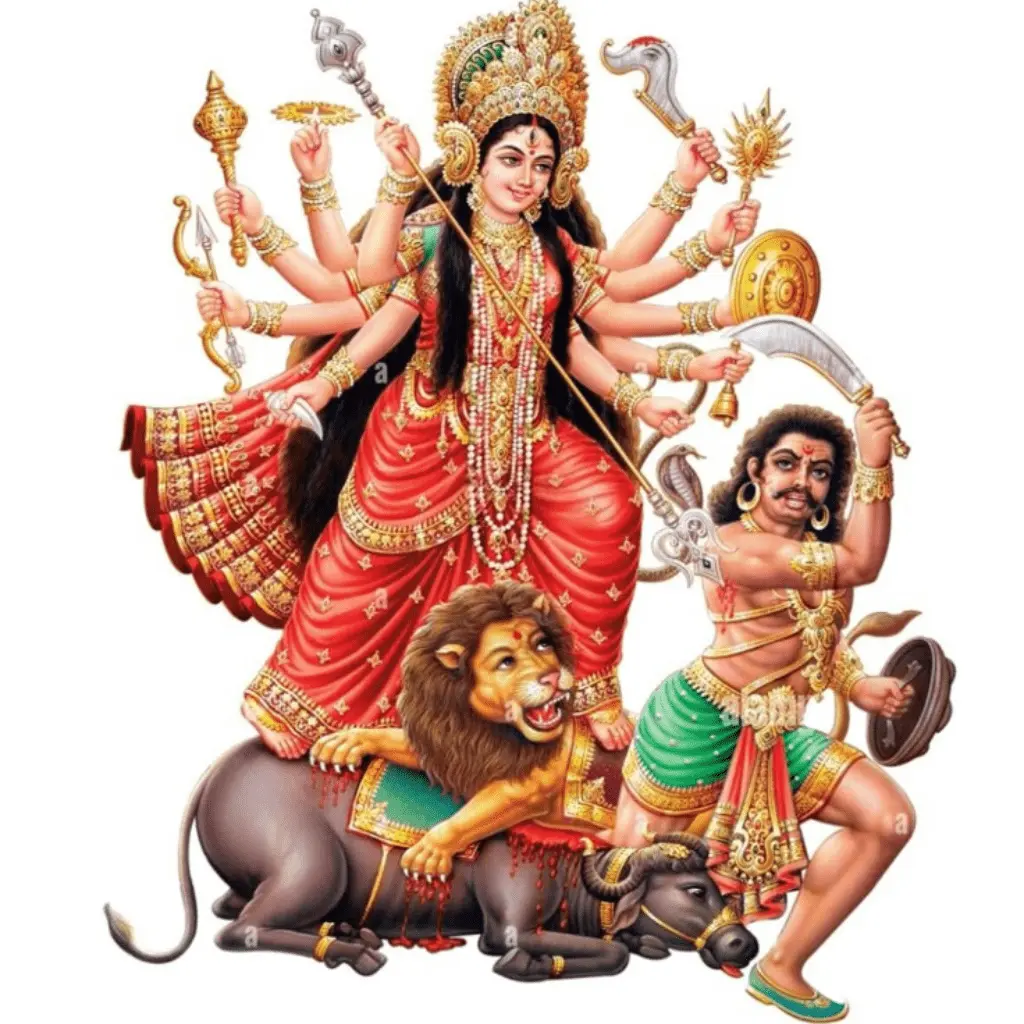
In Sanatan Dharma, Navadurga represents the journey of Shakti within us. To understand these nine forms deeply, it helps to first understand the wider presence of Maa Durga as the compassionate protector and warrior mother who restores balance in the universe.
Many devotees wish to know who the Navadurga are, what their names mean, and what each form represents. Yet beyond names and stories, these nine sacred days carry an inner journey that gently transforms the heart.
This Navadurga article explores the nine divine forms of Maa Durga and their spiritual powers, guiding devotees through faith and inner strength.
Table of Contents
ToggleShailputri: The Daughter of the Himalayas
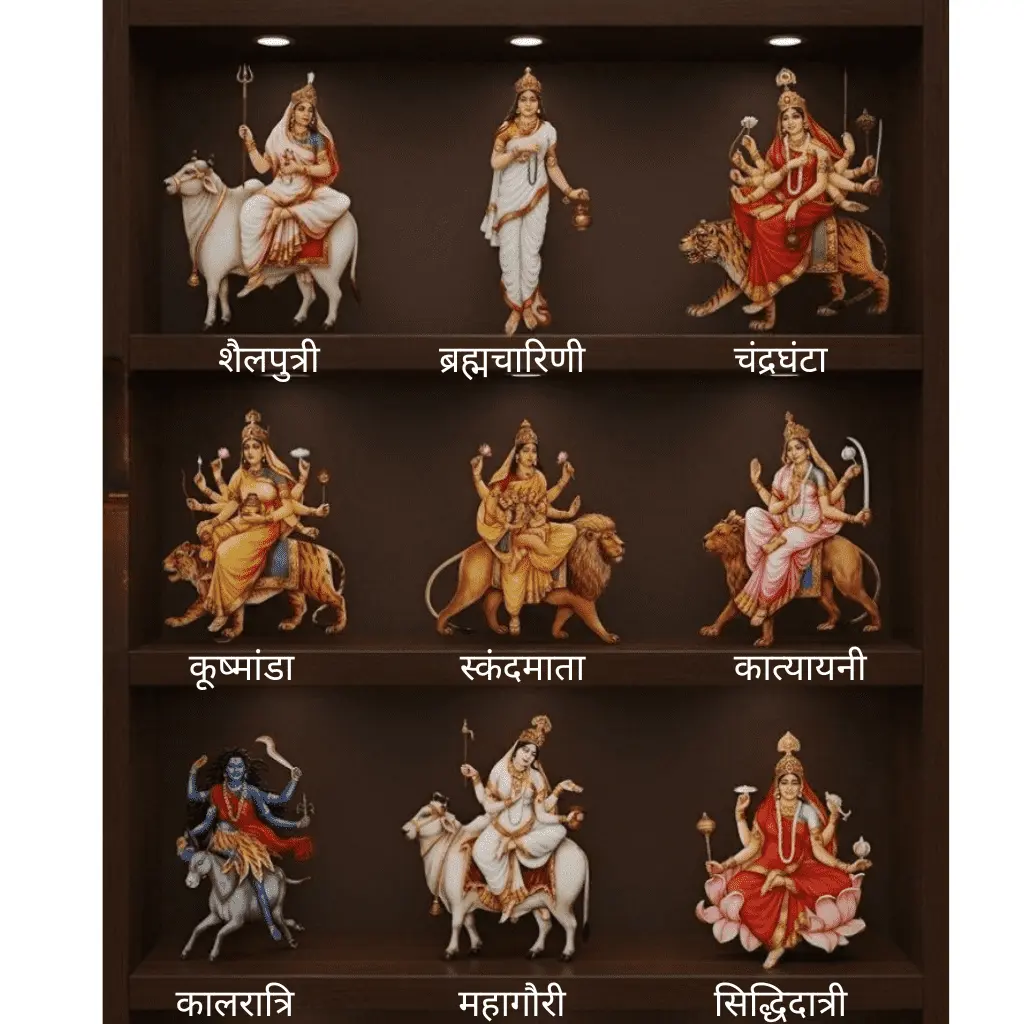
The first day begins with Maa Shailputri, the first form of Navadurga. Her name means Daughter of the Mountains. She rides a bull and carries a trident and a lotus. Her calm divine glow brings stability and strength. She represents the earth element, the solid base of life.
Shailputri teaches us to stand firm when life shakes us. When we worship her, we pray for a strong mind, patience, and the courage to face problems without losing balance.
Brahmacharini: The Goddess of Devotion
On the second day, we worship Maa Brahmacharini, the second form of Navadurga. She walks barefoot, holding a rosary and a kamandal. Her simple form reminds us of tapas, discipline, and deep devotion.
As Devi Parvati, she performed intense penance to receive Lord Shiva as her consort. Through her, we learn that with patience, faith, and effort, even the impossible becomes possible.
Chandraghanta: The Warrior of Courage
The third form of Navadurga is Maa Chandraghanta. She wears a crescent moon on her forehead that shines like soft light even in the middle of battle. She rides a tiger and carries many weapons.
She represents courage with calmness. Devotees pray to her to remove fear, negativity, and mental confusion. Her worship brings protection, inner confidence, and peace of mind.
Kushmanda: The Creator of the Universe
On the fourth day of Navadurga, we worship Maa Kushmanda. It is believed that when there was nothing in the universe, she smiled and created the cosmic egg. She represents light, joy, and creative energy. Worshipping Maa Kushmanda fills life with positivity, health, and a new beginning.
Her name itself carries this meaning. She sits on a lion, with eight hands holding different symbols of creation and power. She represents light, joy, and creative energy. Worshipping Maa Kushmanda fills life with positivity, health, and a fresh sense of purpose, like the first rays of the sun after a long night.
Skandamata : The Mother of Kartikeya
The fifth form of Navadurga is Maa Skandamata, the mother of Lord Kartikeya. She represents motherly love and purity in thoughts, words, and actions.
She represents purity in thoughts, words, and actions. When we worship Skandamata, we ask for harmony in the family, blessings for children, and peace in the home. Her presence feels like resting in a mother’s arms, where all fears slowly melt away.
Katyayani: The Fierce Protector
The sixth form, Maa Katyayani, is fierce, bright, and powerful. She was born as the daughter of sage Katyayan to destroy the demon Mahishasura. She stands for justice, strength, and divine anger against evil.
Maa Katyayani is connected with divine vision and inner clarity. Many young women pray to her for a good life partner and a happy married life. She also protects from negative influences and wrong company. She teaches us to stand up for what is right, without fear.
Kalaratri: The Remover of Darkness
The seventh day of Navadurga honors Maa Kalaratri. Her form is intense and fearsome. She has a dark complexion, unbound hair, three eyes that shine like fire, and a necklace that glows like lightning. Yet, she is deeply compassionate toward her devotees.
Maa Kalaratri removes darkness, ignorance, and deep fears. She destroys negative energies on the subtle level. Devotees chant “Om Devi Kalaratryai Namah” to burn away inner weakness and ego. Her worship brings courage, protection, and the strength to cross difficult phases of life.
Mahagauri: The Goddess of Purity
On the eighth day, we worship Maa Mahagauri. She is calm, gentle, and pure. She wears white clothes and rides a bull or a white vehicle, symbolizing peace and clarity.
It is said that after years of hard penance, Parvati’s complexion, which had become dark with dust and tapas, turned fair and glowing again. This change symbolizes the purification of the soul through devotion and effort. Maa Mahagauri blesses devotees with forgiveness, inner beauty, and peace in relationships and home.
Siddhidatri: The Granter of Wisdom and Liberation
The journey of Navadurga ends with Maa Siddhidatri. She sits on a lotus and grants siddhis, which are divine powers or spiritual perfections. Gods, sages, and devotees all receive blessings from her.
Maa Siddhidatri represents the final stage of spiritual evolution, where the soul experiences oneness with the divine. She grants wisdom, clarity, and liberation from the cycle of birth and death. With her blessings, the devotee feels complete, content, and close to the Divine Mother.
The Inner Meaning of the Nine Forms of Maa Durga
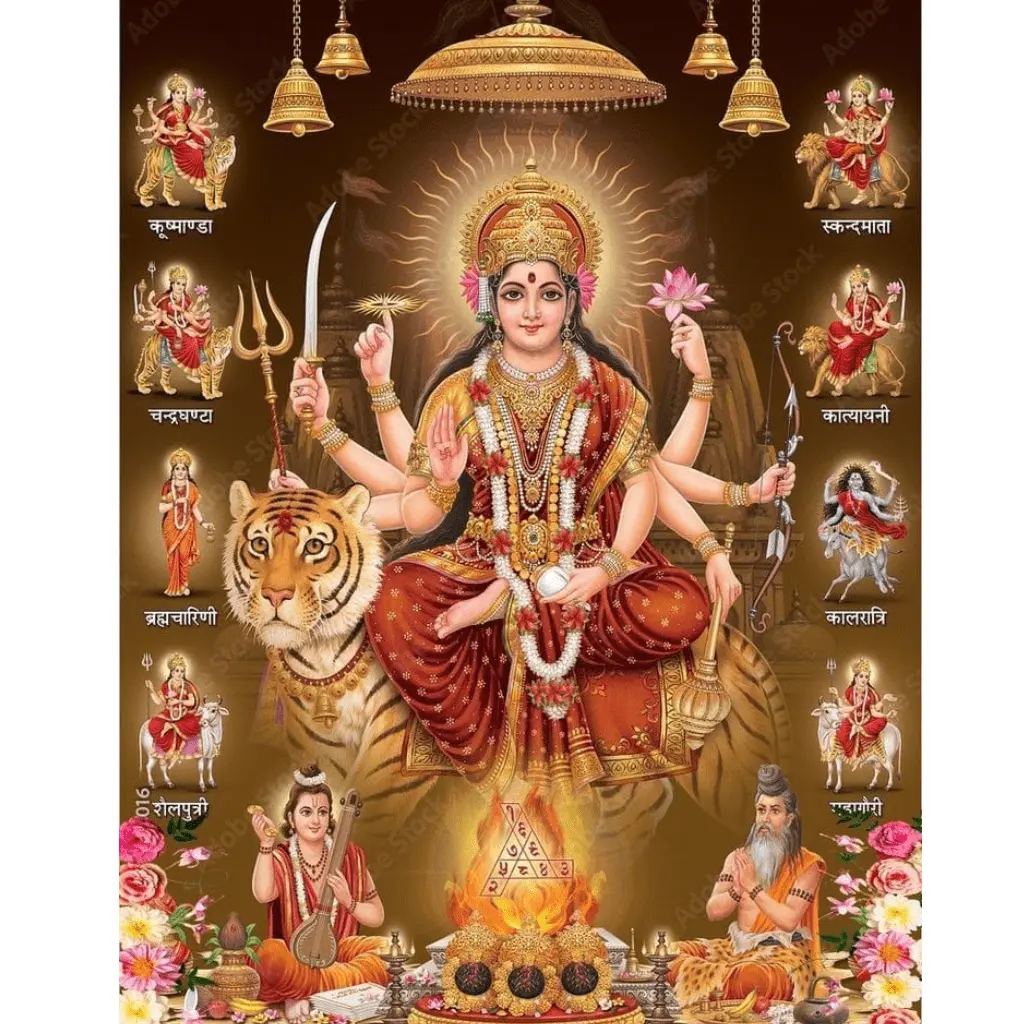
Navratri is not just a festival of fasting, new clothes, and bhajans. It is a deep inner journey. Each of the Nine Forms of Maa Durga reflects one step in the growth of our own soul.
We start from grounding and basic stability with Shailputri. Then we move into devotion with Brahmacharini, courage with Chandraghanta, creativity with Kushmanda, purity of heart with Skandamata, justice and strength with Katyayani, destruction of darkness with Kalaratri, complete purification with Mahagauri, and finally, spiritual perfection with Siddhidatri.
By the ninth day, the devotee does not just worship Maa Durga outside, but begins to feel her presence inside. This is the real victory of light over ignorance.
Conclusion
Maa Durga lives in our courage, patience, compassion, and truth. When we worship Navadurga, the Nine Forms of Maa Durga, with love and faith, we slowly awake those divine qualities in our own heart.
FAQs
Why are the Nine Forms of Maa Durga worshipped in a fixed order?
This order reflects the gradual journey of a soul, from basic strength and grounding to purity and finally to spiritual completion and liberation.
What is the deeper meaning of Navadurga worship?
It is the movement from darkness to light. Each day cleanses one more layer of ego, fear, or confusion, and brings the devotee closer to divine awareness.
Which form of Maa Durga removes fear and strong negativity?
Maa Kalaratri is known for destroying fear, evil influences, and deep inner darkness.
Which form of Maa Durga gives peace and purity of heart?
Maa Mahagauri blesses devotees with purity, calmness, clarity, and peace in family and personal life.
Who grants spiritual realization and siddhis among the Nine Forms of Maa Durga?
Maa Siddhidatri grants siddhis, wisdom, and spiritual realization. She leads the devotee toward liberation and inner completeness.