
In Sanatan Dharma, liberation is not promised only to sages who leave everything behind. It is also gently offered to householders, travelers, and ordinary devotees who walk sacred land with faith.
This ancient understanding lives through Saptapuri, the seven holy cities in Sanatan Dharma that are believed to guide the soul toward moksha.
These cities are not perfect or silent. They are crowded, lived-in, sometimes overwhelming. And yet, something timeless flows through them.
Pilgrims often say that even without doing much, just being in these cities makes the heart feel lighter.
sacred cities of Hinduism is not only about where the feet go.
It is about where the soul slowly learns to let go.
Table of Contents
ToggleWhat Is Saptapuri in Sanatan Dharma and Why It Matters
The concept of Saptapuri is clearly recorded in the Garuda Purana, where these seven cities are described as mokshadayika, the givers of liberation.
The same list appears across the Skanda Purana, Padma Purana, and Brahma Purana.
Different Puranas may emphasize different stories and rituals, but the list of these seven cities remains consistent. That continuity itself shows how deeply rooted this belief is.
The seven holy cities are Ayodhya, Mathura, Haridwar, Kashi, Kanchipuram, Ujjain, and Dwarka.
Their names are often remembered together, not as places, but as stages of inner awakening.
Why Saptapuri Is Called Mokshadayika in Scriptures
In Sanatan thought, liberation does not reject life. It slowly purifies it. The seven holy cities in Sanatan Dharma are called mokshadayika because they help dissolve karma through devotion, remembrance, and surrender.
Each city works on a different inner knot.
Fear loosens in Ujjain.
Attachment softens in Dwarka.
Ignorance fades in Kanchipuram.
Pilgrims may not always understand what shifts inside them. But something always does.
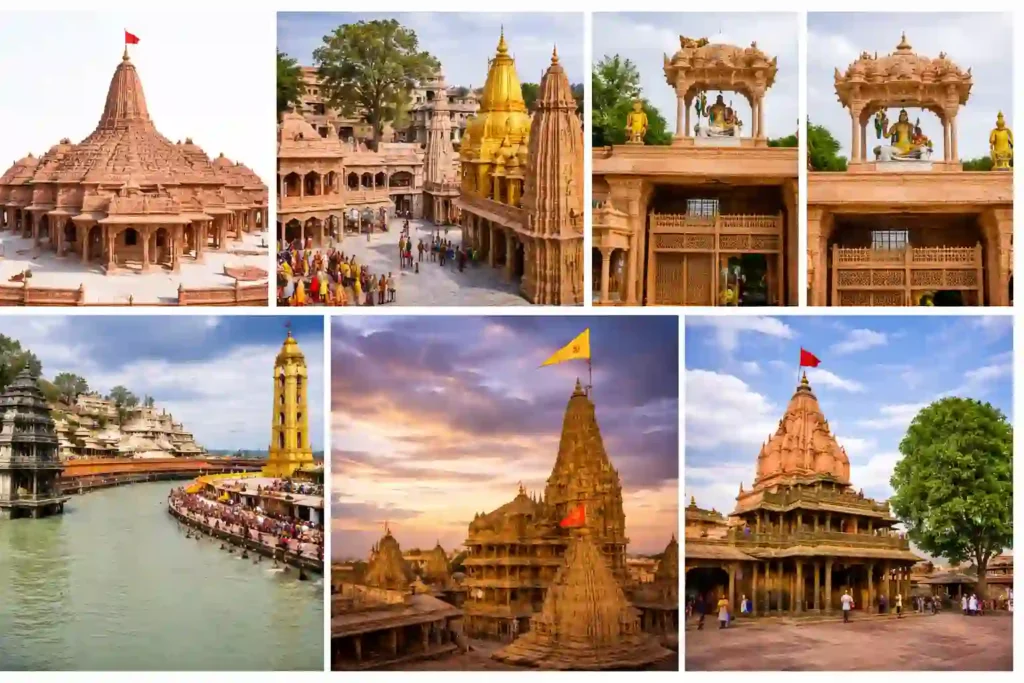
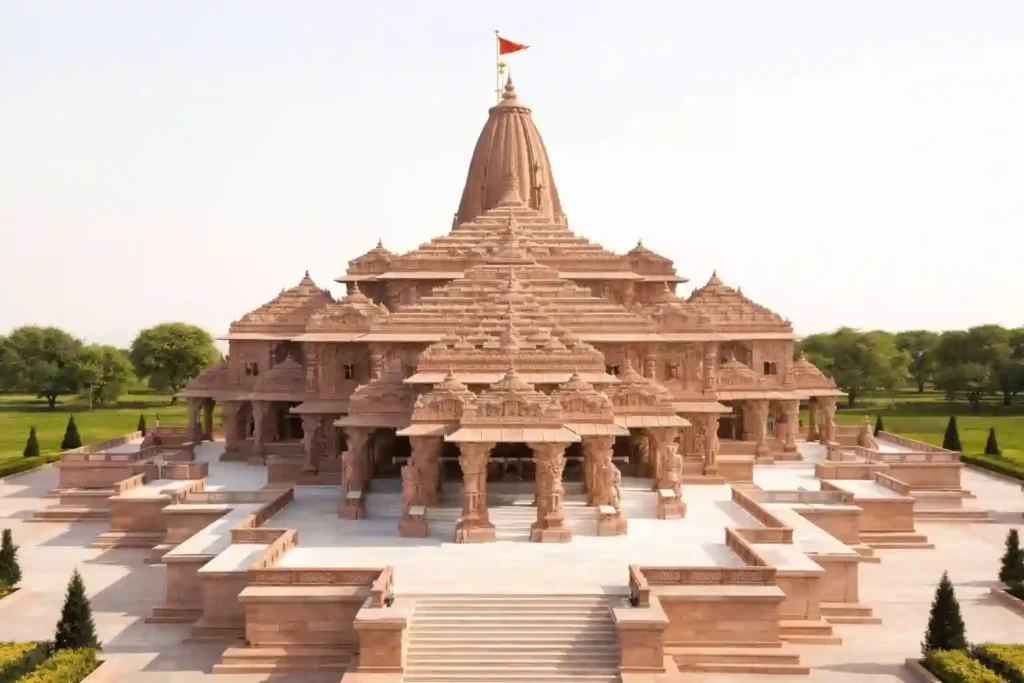
Ayodhya: The City of Ram and Dharma
Ayodhya is remembered as the ancient capital of the Kosala kingdom and the birthplace of Shri Ram.
Ancient texts and modern archaeological findings together confirm its deep historical roots.
The Ram Janmabhoomi Mandir stands at the spiritual center of Ayodhya. Yet, the city’s deeper teaching lies in its quiet discipline.
Ayodhya represents maryada, living life with balance, duty, and restraint.
Pilgrims often walk slowly along the Sarayu River, sitting quietly without prayers, just watching the water flow.
Important places include Hanuman Garhi and Kanak Bhavan. The best time to visit is October to March.
Tradition believes that remembering Ram at the time of death brings peace to the soul.
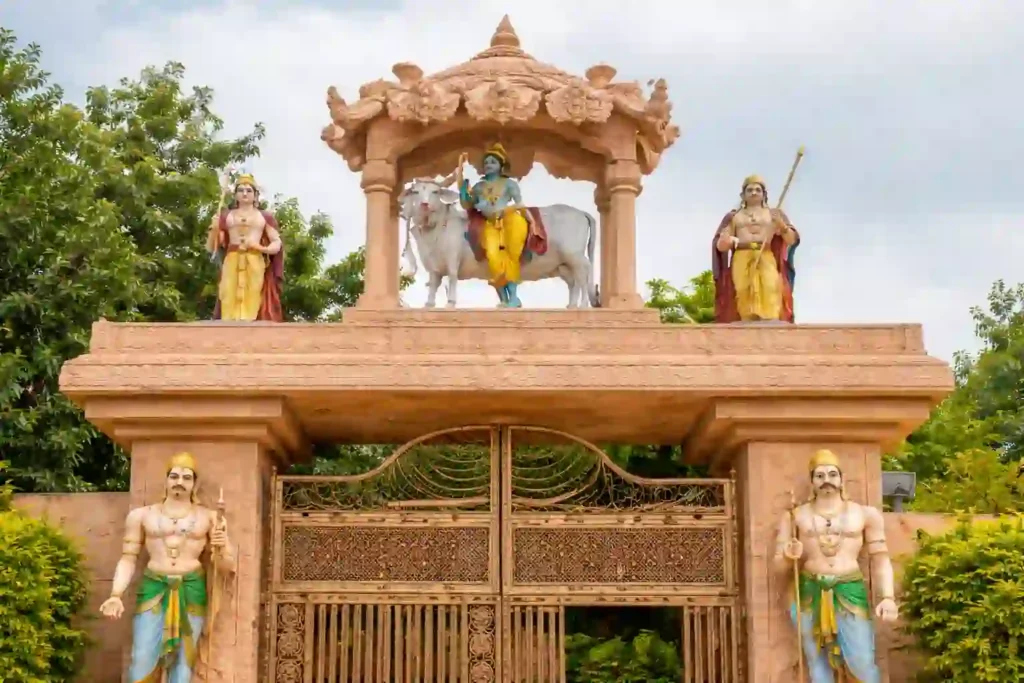
Mathura: Krishna’s Land of Divine Love
Mathura feels entirely different from Ayodhya. Here, devotion is playful, emotional, and intimate. This is the birthplace of Shri Krishna.
The Krishna Janmabhoomi, Vishram Ghat, and the nearby temples of Vrindavan form the living heart of Mathura. Devotion here feels like a relationship, not a rule.
During Janmashtami and Holi, the city overflows with song and color.
Many pilgrims say they feel closer to God here without trying. The best time to visit is October to March.
In Saptapuri, Mathura teaches love that melts ego naturally.
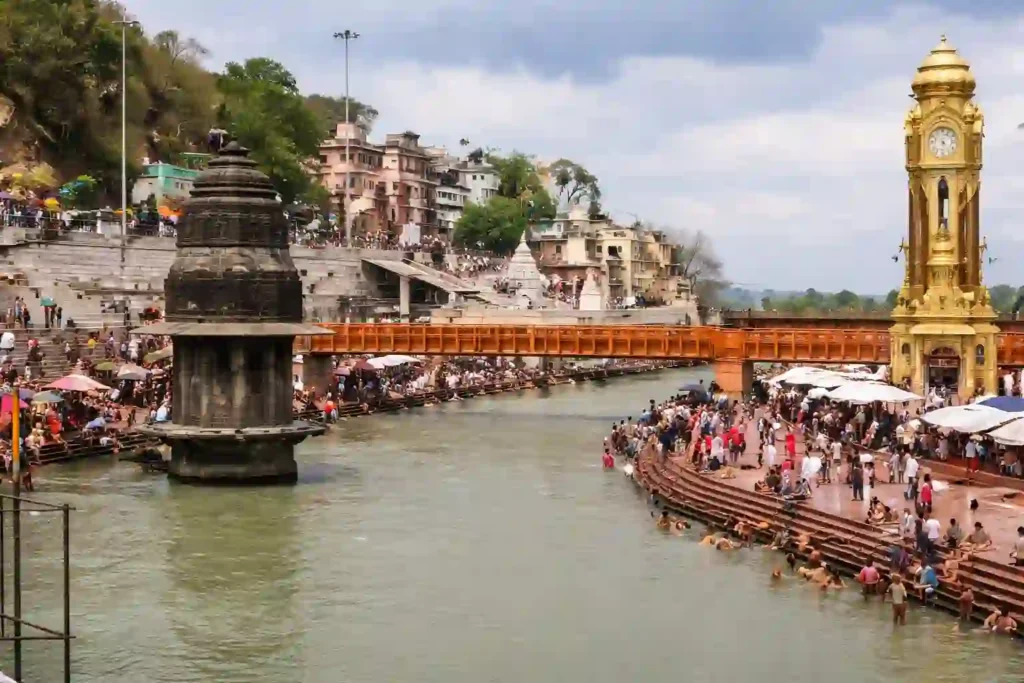
Haridwar: Where the Ganga Touches Human Life
Haridwar marks the point where the Ganga descends from the Himalayas into the plains. For centuries, it has been the gateway to pilgrimages and renunciation.
Har Ki Pauri, the evening Ganga aarti, and the sacred ghats define the rhythm of the city. Many visitors find themselves standing silently during aarti, eyes moist, without knowing why.
According to tradition, drops of amrit fell here during the Samudra Manthan. Bathing in the Ganga is believed to wash away accumulated karma.
The best time to visit is February to April and October to November. Haridwar represents purification in the Saptapuri journey.
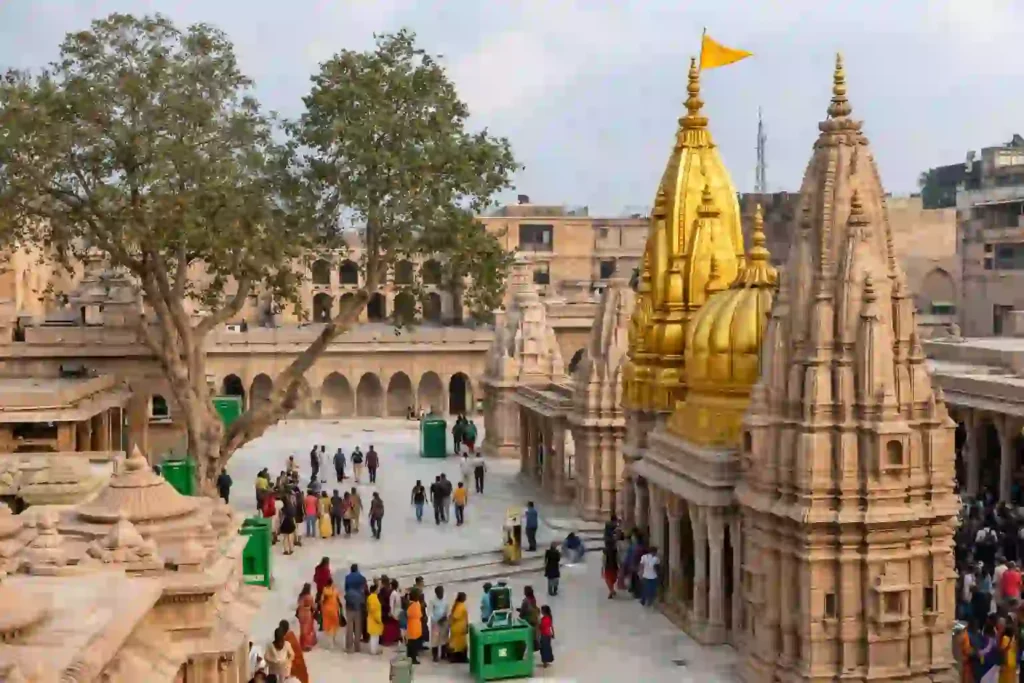
Kashi: The Eternal City of Liberation
Varanasi, also known as Kashi, is considered the heart of Saptapuri. Archaeological finds from nearby Aktha and Ramnagar suggest habitation dating back to around 1800 BCE.
The Kashi Vishwanath Temple, one of the twelve Jyotirlingas, anchors the city spiritually.
It is believed that Lord Shiva himself grants the Taraka mantra to those who leave their body here.
Life and death walk side by side in Kashi. At Manikarnika Ghat, pilgrims often sit quietly, watching flames and chanting softly.
Kashi is believed to offer direct liberation, without delay.
Kanchipuram: Where Shakti and Wisdom Meet
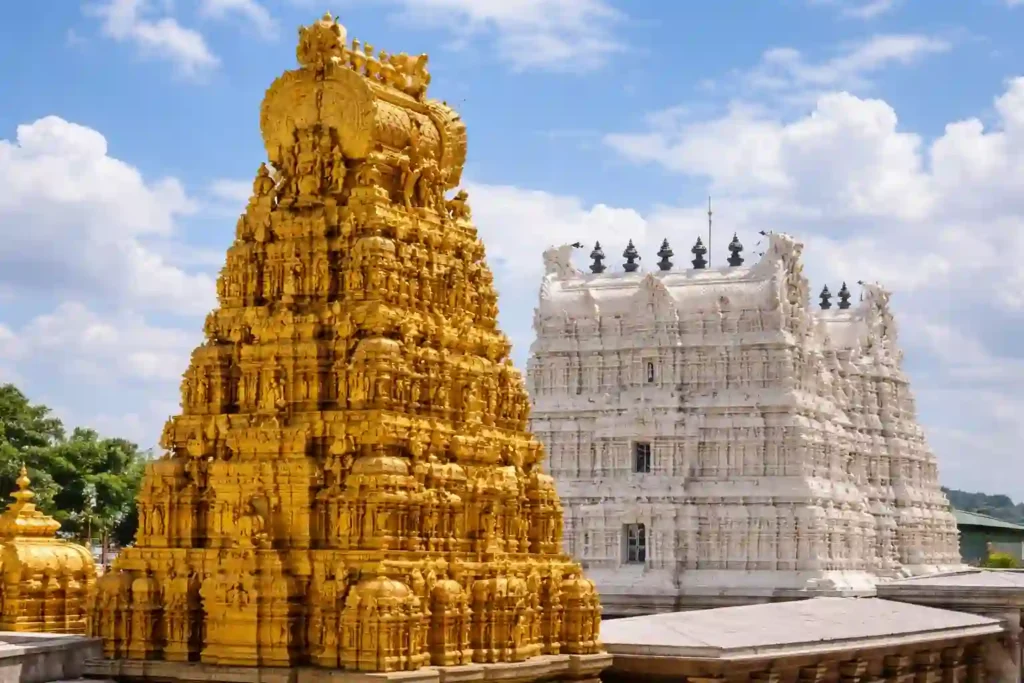
Kanchipuram is one of South India’s most ancient sacred cities. It is home to the Kamakshi Amman Temple and the Ekambareswarar Temple, known for its towering gopuram and earth lingam.
Historically, Kanchipuram was a rare space where Shaivism, Vaishnavism, Buddhism, and Jainism coexisted. Great acharyas, including Adi Shankaracharya, shaped its spiritual depth.
Pilgrims often describe the city as calm and grounding. The best time to visit is November to February.
In Saptapuri, Kanchipuram represents wisdom balanced with devotion.
Ujjain: Mahakal’s City Beyond Time
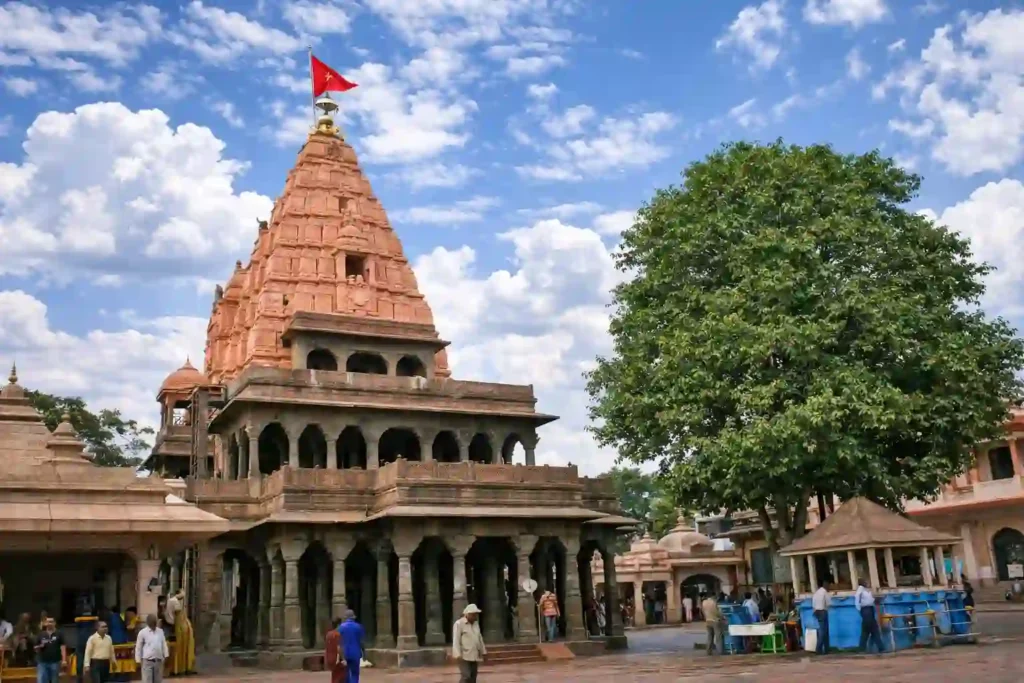
Ujjain, known as Avantika in ancient texts, is deeply associated with time and transformation.
Ujjain once marked India’s prime meridian, making it a center of ancient astronomy.
The Mahakaleshwar Jyotirlinga is unique as the only south-facing Jyotirlinga, worshipped as Dakshinamurti.
Devotees often speak of a strange calm after darshan here. The best time to visit is October to March, especially during Mahashivratri.
In Saptapuri, Ujjain frees the soul from fear of death.
Dwarka: Krishna’s Kingdom by the Sea
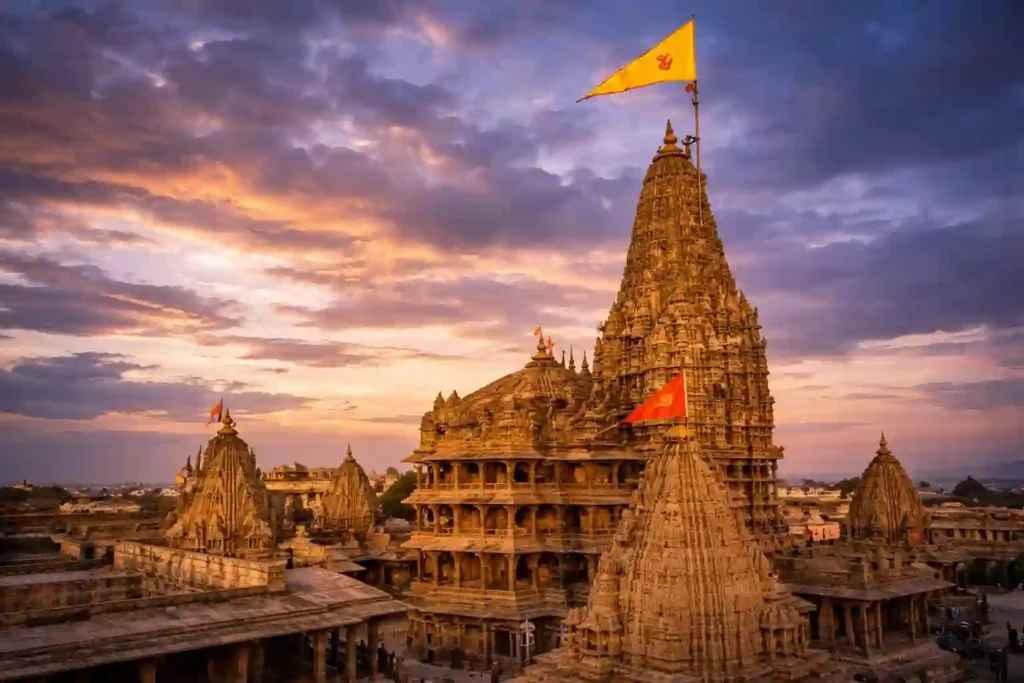
Dwarka was Shri Krishna’s royal city, described in scriptures as a magnificent kingdom that later submerged into the sea.
The Dwarkadhish Temple remains its spiritual center. Dwarka teaches that one can live fully engaged in the world and still remain untouched within.
The sea surrounding the city constantly reminds pilgrims of impermanence. The best time to visit is October to February.
Dwarka represents detached action in the Saptapuri path.
Architectural and Historical Depth of Saptapuri
Each city of Seven holy cities reflects a different layer of Indian civilization. Kashi shows uninterrupted habitation.
Ujjain preserves ancient astronomical knowledge. Kanchipuram displays evolving temple architecture. Ayodhya’s excavations confirm its royal past.
Together, the seven holy cities in Sanatan Dharma form a living archive of faith and history.
Best Time to Visit the Saptapuri Pilgrimage Circuit
October to March is ideal for most cities due to weather. Festival periods bring deeper spiritual energy but also crowds.
Traditionally, Seven holy cities is not meant to be rushed. Many devotees complete it slowly, sometimes across a lifetime.
Gentle Reflection for Today’s Pilgrim
Seven holy cities is not only spread across Bharat.
It also lives within us.
Dharma in Ayodhya.
Love in Mathura.
Purification in Haridwar.
Liberation in Kashi.
Wisdom in Kanchipuram.
Fearlessness in Ujjain.
Detachment in Dwarka.
Each city prepares the soul for the next step home.
Suggested Reading and Inner Continuation
If the idea of sacred cities and living pilgrimage traditions moves you, you may also enjoy reading about the grace-filled presence of Mahalakshmi Temple Kolhapur, where devotion blends with royal Shakti worship.
The deep faith surrounding Sanwariya Seth Temple, known for its powerful Krishna bhakti and fulfilled vows.
To experience devotion through love and surrender, the temples and lanes of Vrindavan offer a timeless connection with Shri Krishna.
For those drawn to Shiva’s transformative energy, the ancient Jyotirlinga at Mahakaleshwar Temple and the silent, high-Himalayan presence of Kedarnath Temple reveal how pilgrimage becomes an inner journey, not just a physical one.
FAQs
What is Saptapuri in Sanatan Dharma?
Saptapuri refers to the seven holy cities in Sanatan Dharma that are believed to grant moksha. These cities are mentioned in ancient Puranas as mokshadayika, meaning givers of liberation.
Which are the seven holy cities?
The seven holy cities of Saptapuri are Ayodhya, Mathura, Haridwar, Kashi, Kanchipuram, Ujjain, and Dwarka. Each city represents a different spiritual quality in the journey of the soul.
Why is Kashi considered the most important city in Saptapuri?
Kashi is believed to grant direct liberation because Lord Shiva himself gives the Taraka mantra to souls who die there. It is considered the heart of Saptapuri and the most powerful moksha city.
Is Saptapuri mentioned in Hindu scriptures?
Yes, Saptapuri is clearly mentioned in the Garuda Purana and also described in the Skanda Purana, Padma Purana, and Brahma Purana. These texts call the seven cities mokshadayika.
Do we need to visit all seven cities to get moksha?
No. Sanatan Dharma does not impose such conditions. Even visiting one city with faith is considered spiritually beneficial. Many devotees complete the Saptapuri pilgrimage gradually over years or even lifetimes.
What is the best time to visit the Seven holy cities pilgrimage sites?
The best time to visit most Saptapuri cities is from October to March due to pleasant weather. Festival times are spiritually powerful but also crowded.
Why is Ujjain important in Saptapuri?
Ujjain, also known as Avantika, is the city of Mahakal. It is believed to free devotees from the fear of death and time. The Mahakaleshwar Jyotirlinga here is unique and deeply revered.
How is Saptapuri different from Char Dham?
Char Dham focuses on four pilgrimage sites linked with Vishnu and spiritual balance, while Saptapuri focuses specifically on liberation and inner transformation through sacred cities.