
What is detachment in Hindu philosophy is a question that quietly rises when life starts feeling heavy and the mind begins to seek inner freedom.
It often appears when expectations grow, emotions feel tangled, or fear of loss refuses to leave.
Many people start searching for detachment not because they want to escape life, but because they want peace while living it.
In Sanatan Dharma, detachment does not mean rejecting the world or turning away from responsibilities.
It means learning how to live fully without being controlled by attachment, desire, or fear. Hindu philosophy explains that suffering does not come from life itself. It comes from clinging.
We cling to people, outcomes, identities, comfort, and even pain. Detachment is the inner skill that allows us to experience life without becoming trapped by it.
A detached person still loves, works, earns, plans, and participates in society. The difference is internal.
When situations change, the mind does not collapse. When things come, they are received with gratitude.
When they go, they are released with understanding. This inner freedom is the true meaning of detachment in Hindu philosophy.
Table of Contents
ToggleWhat is detachment in Hindu philosophy really about?
What is detachment in Hindu philosophy really about is not withdrawal from life, but freedom within life.
Detachment teaches how to remain steady while engaging fully with duties, relationships, and emotions.
Hindu philosophy explains that attachment binds the mind to outcomes, while detachment keeps awareness free.
This freedom allows life to be lived with clarity instead of fear. One continues to act sincerely, but without emotional bondage to results.
Detachment as Vairagya in Sanatan Dharma
Detachment is known as Vairagya in Sanskrit. Vairagya does not mean emotional coldness or lack of care.
It means maturity of understanding. It is the wisdom that comes from seeing the temporary nature of everything we experience.
With Vairagya, a person can enjoy life without becoming dependent on it. Pleasure is enjoyed, but not chased.
Pain is felt, but not resisted endlessly. Vairagya allows one to remain balanced when life shifts.
This deeper understanding of Vairagya clearly explains what is detachment in Hindu philosophy at its core.
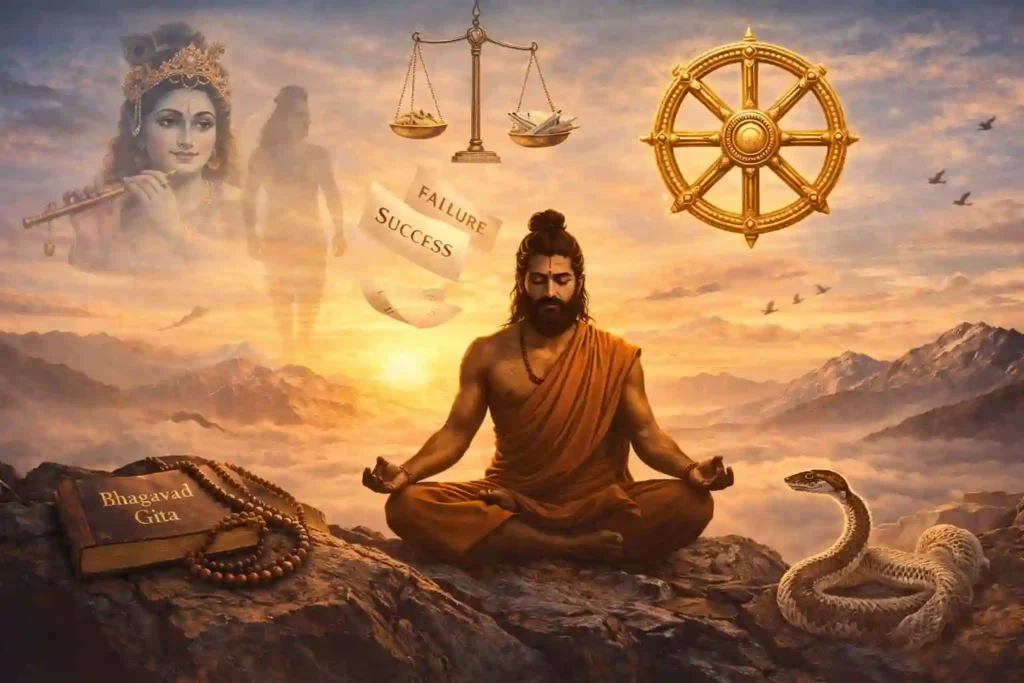
Does detachment mean giving up family and worldly life?
Detachment does not mean abandoning family, relationships, or work.
Sanatan Dharma respects the householder’s path and recognizes that most spiritual growth happens while living within society.
Detachment is not about changing external roles. It is about changing the inner relationship with those roles.
A person can love family deeply while remaining detached from control, fear, and emotional dependence.
When attachment softens, love becomes healthier and relationships become lighter.
Why is detachment important in Hindu philosophy?
Detachment is important because it reduces mental suffering.
Without detachment, the mind constantly swings between desire and disappointment, pride and guilt, hope and fear. This emotional turbulence drains energy and clarity.
When detachment develops, success does not inflate the ego and failure does not break the spirit.
Life becomes easier to navigate because reactions lose their intensity. Detachment creates inner space, and within that space, calm understanding begins to grow.
Detachment vs indifference in Hindu thought
Detachment and indifference are often confused, but they are very different. Indifference comes from emotional withdrawal or lack of care.
Detachment comes from understanding impermanence. A detached person feels emotions fully, but is not controlled by them.
There is compassion without possession, involvement without obsession, and care without fear. Detachment makes the heart steady, not cold.

The role of detachment in spiritual growth
Detachment plays a central role in spiritual growth because it prepares the mind for clarity.
A mind filled with attachment is constantly pulled outward by desire and fear.
When attachment loosens, awareness increases. Ego weakens. The mind becomes capable of stillness.
Hindu philosophy explains that wisdom does not need to be forced. It arises naturally when the mind is no longer crowded.
What Hindu scriptures say about detachment
Hindu scriptures consistently emphasize detachment. The Bhagavad Gita teaches action without attachment to results.
It reminds us that a person has the right to act, but not to cling to outcomes.
The Upanishads describe detachment as a sign of inner maturity. Saints and sages across traditions speak of detachment not as loss, but as freedom.
Detachment is praised because it removes inner bondage.
Can one be successful and detached at the same time?
Yes. Hindu philosophy does not reject success or material stability. Detachment does not mean avoiding achievement.
It means not defining self-worth through achievement.
A detached person works sincerely and accepts responsibility. Success may come and can be enjoyed.
Failure may come and can be faced calmly. Success becomes part of life, not the measure of life. This balance allows ambition without anxiety.
How detachment affects emotions in daily life
Detachment brings emotional balance. Joy and sorrow are experienced without overwhelm.
Emotions are not suppressed, but they no longer dominate the mind.
Over time, the heart becomes resilient. The mind becomes calmer.
This emotional steadiness is one of the most practical benefits of detachment in daily life.
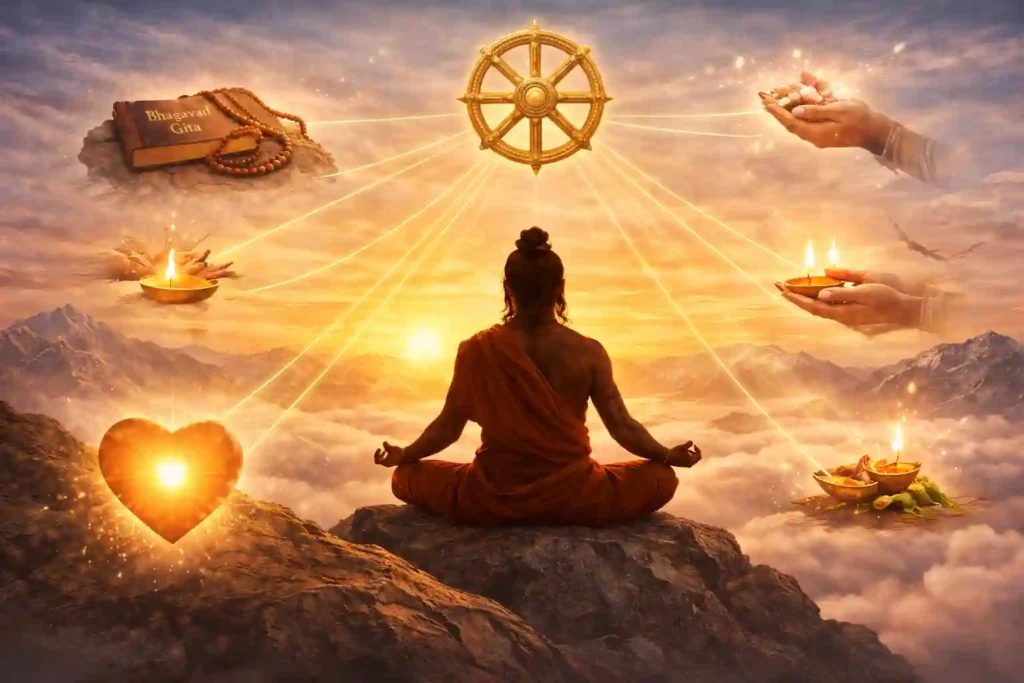
Practicing detachment in everyday life
Detachment begins with awareness. By observing thoughts and reactions, a person slowly understands where attachment exists. Accepting change as natural helps reduce resistance.
Offering actions without demanding specific outcomes is another form of detachment.
Gratitude replaces possession, and trust replaces control. Detachment grows gradually through reflection and lived experience, not force.
This understanding further clarifies what is detachment in Hindu philosophy when applied to everyday life.
Detachment and karma
Detachment is deeply connected to karma. Actions done with strong attachment create heavier karmic impressions.
When actions are performed with detachment, karmic burden reduces.
Detached action allows responsibility without emotional weight. Over time, this lightness leads to inner freedom and spiritual clarity.
Why detachment is often misunderstood
Detachment is often misunderstood because it is confused with escape or emotional distance. Popular images of spirituality show withdrawal from life, which creates confusion.
Hindu philosophy teaches detachment within life, not outside it. Detachment is an inner discipline, not outer rejection. It strengthens life rather than shrinking it.
Final understanding
What is detachment in Hindu philosophy, according to Sanatan Dharma, is not about rejecting the world or becoming emotionally numb.
It is about understanding life deeply. Detachment allows love without possession, action without fear, and acceptance without collapse.
When attachment loosens, wisdom naturally arises. Life is then lived with balance, awareness, and quiet strength. In Hindu philosophy, detachment is freedom.
This understanding further clarifies what is detachment in Hindu philosophy when applied to everyday life.
Suggested Reading
These articles expand related ideas of duty, action, and time within Sanatan Dharma:
What Is Dharma and Why Is It Important?
What Is Karma and How Does It Affect Life?
What Is Nishit Kaal?
(all published on thesanatantales.com)