Maa Bhuvaneshwari is a name that feels wide and calm, like the open sky. When devotees remember her, they often feel a sense of space opening within the heart, as if life itself has room to breathe again.
In Sanatan tradition, Maa Bhuvaneshwari is known as the Queen of the Worlds, the divine power that quietly holds creation together without noise or force.
She is counted among the ten Mahavidyas of Shaktism and is regarded as one of the highest expressions of the Supreme Mother.
Unlike fierce forms that awaken through intensity, Maa Bhuvaneshwari teaches through stillness. She reminds devotees that beneath the movement of life there is a deeper presence that supports, nourishes, and sustains all existence.
Table of Contents
ToggleMeaning and Deeper Sense of the Name Bhuvaneshwari
The name Bhuvaneshwari comes from two Sanskrit words. Bhuvana means worlds or planes of existence, and Ishwari means the divine feminine ruler. Together, the name means the Goddess who rules and pervades all worlds.
These worlds are traditionally understood as the three realms: the earthly world, the atmospheric world, and the heavenly world.
Maa Bhuvaneshwari is not separate from them. She is the space in which they exist. Just as space quietly holds stars, planets, and life without effort, she supports creation without disturbance.
Maa Bhuvaneshwari in Shakta Scriptures
In Shakta scriptures and traditions, Maa Bhuvaneshwari is revered as a living manifestation of the Supreme Goddess rather than a symbolic concept. She is regarded as an expression of Adi Parashakti, the Divine Mother whose presence sustains and guides creation.
The Devi Bhagavata Purana describes the Divine Mother as the source of creation, preservation, and dissolution, while later Shakta traditions honour Maa Bhuvaneshwari as the sovereign power who pervades and governs all worlds.
Some traditions further explain that when creation required balance and direction, the Divine Mother appeared as Bhuvaneshwari, becoming the very framework within which existence unfolds.
Although different texts and lineages describe her through varying theological perspectives, they share a common understanding: Maa Bhuvaneshwari is the divine presence that contains, sustains, and supports the universe while allowing it to function in harmony.
Her Place Among the Ten Mahavidyas
Maa Bhuvaneshwari is traditionally counted as the fourth Mahavidya. Each Mahavidya reveals a different truth of the Divine Mother, and Bhuvaneshwari Mahavidya represents expansion, order, and containment.
Many Shakta traditions associate Maa Bhuvaneshwari closely with Maa Tripura Sundari. While Tripura Sundari is often revered as the supreme beauty and consciousness underlying creation, Maa Bhuvaneshwari is understood as the vast cosmic space in which that creation unfolds.
Through this understanding, she becomes the sustaining presence that contains and supports all worlds. This shows that the Mahavidyas are not separate goddesses but different expressions of one Divine Shakti, each revealing a unique aspect of the Supreme Mother.
Why Maa Bhuvaneshwari Is the Fourth Mahavidya
In many traditional interpretations of the Mahavidyas, Maa Bhuvaneshwari follows Maa Kali, Maa Tara, and Maa Tripura Sundari.
While each Mahavidya represents a unique aspect of the Divine Mother, this sequence is often understood as a gradual unfolding of spiritual understanding.
Maa Kali removes limitations and awakens transformation, Maa Tara guides and protects the seeker, and Maa Tripura Sundari reveals divine beauty and consciousness.
Maa Bhuvaneshwari then appears as the vast presence within which all creation exists and functions. For this reason, she is often associated with expansion, containment, and the sustaining power of the universe.
This understanding helps devotees see the Mahavidyas not as separate goddesses but as interconnected expressions of one Divine Shakti, each revealing a deeper dimension of spiritual truth.
How Maa Bhuvaneshwari Differs from Other Mahavidyas
Each Mahavidya reveals a unique aspect of the Divine Mother. Maa Kali is associated with transformation and the removal of limitations, while Maa Tara is revered as a guide and protector. Maa Tripura Sundari represents beauty, harmony, and supreme consciousness.
Maa Bhuvaneshwari is worshipped as the Mahavidya of cosmic space and divine containment. Her presence symbolizes the vastness that supports all creation, reminding devotees of balance, openness, and the sustaining power of the Divine Mother.
Iconography of Maa Bhuvaneshwari
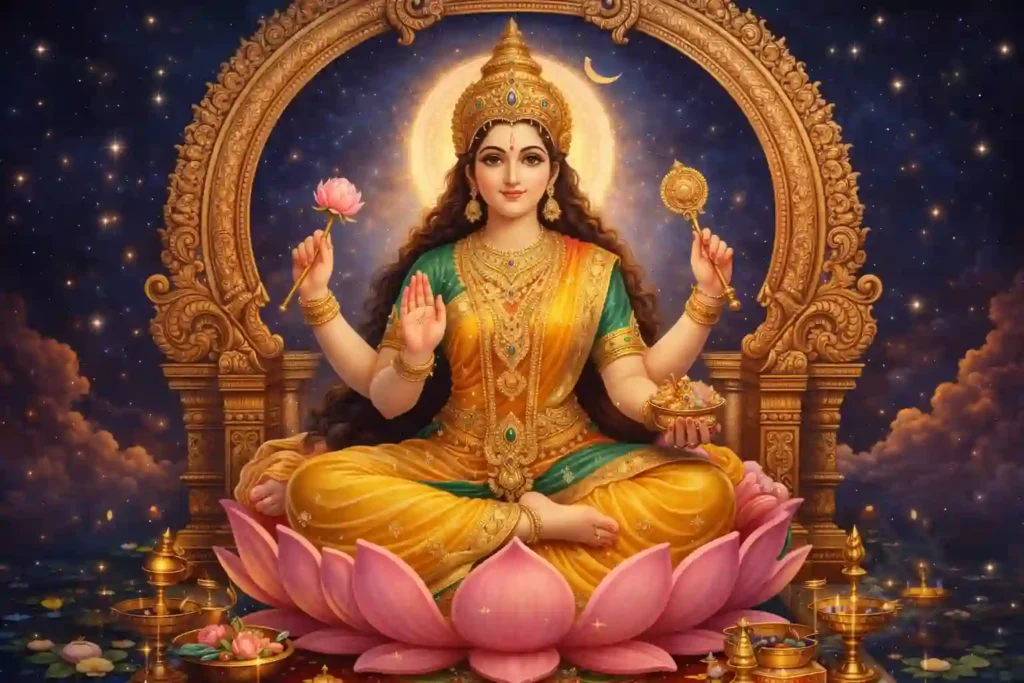
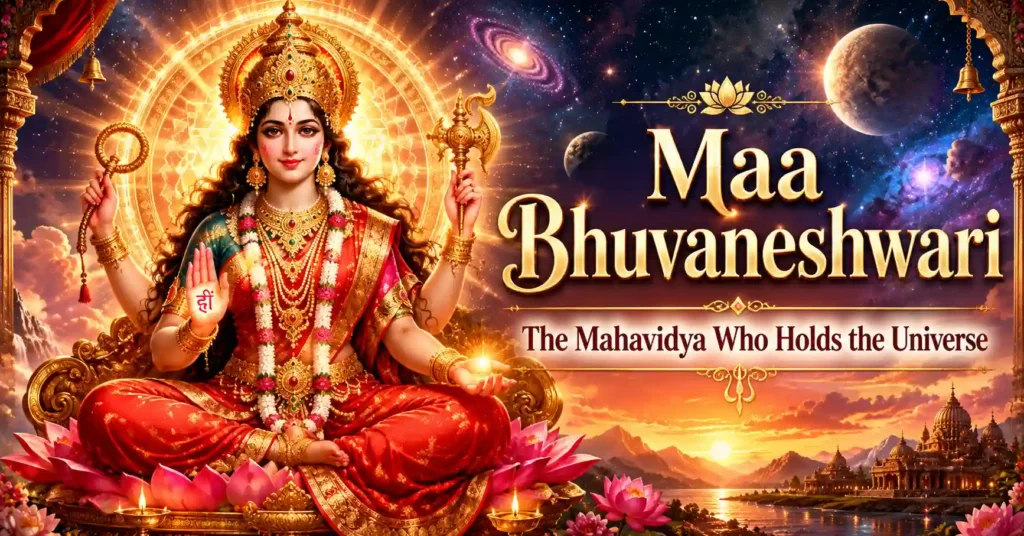
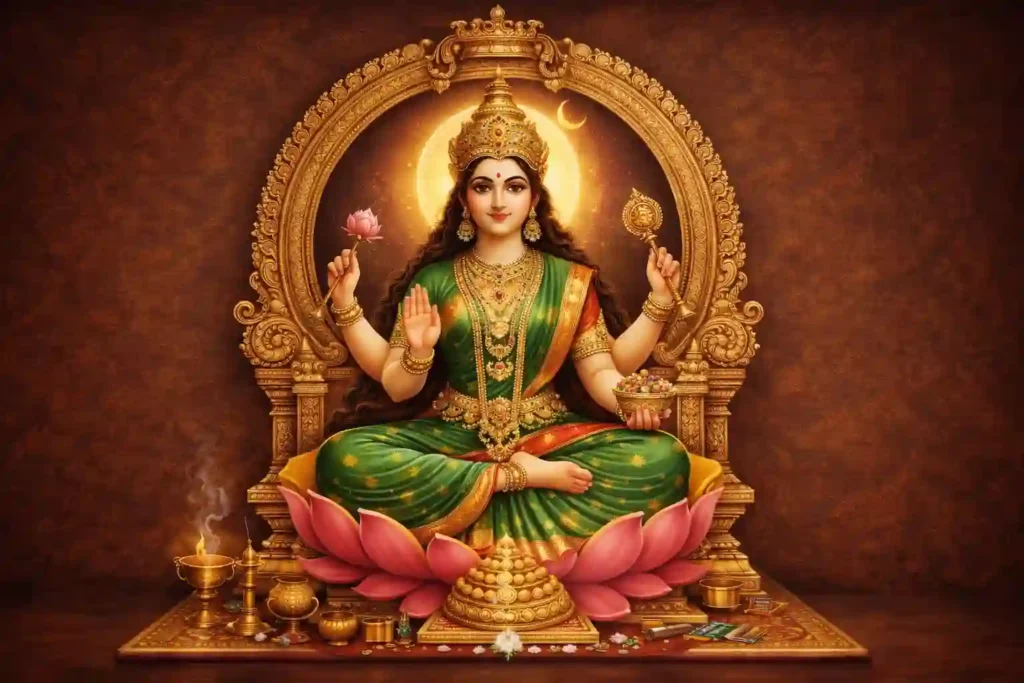
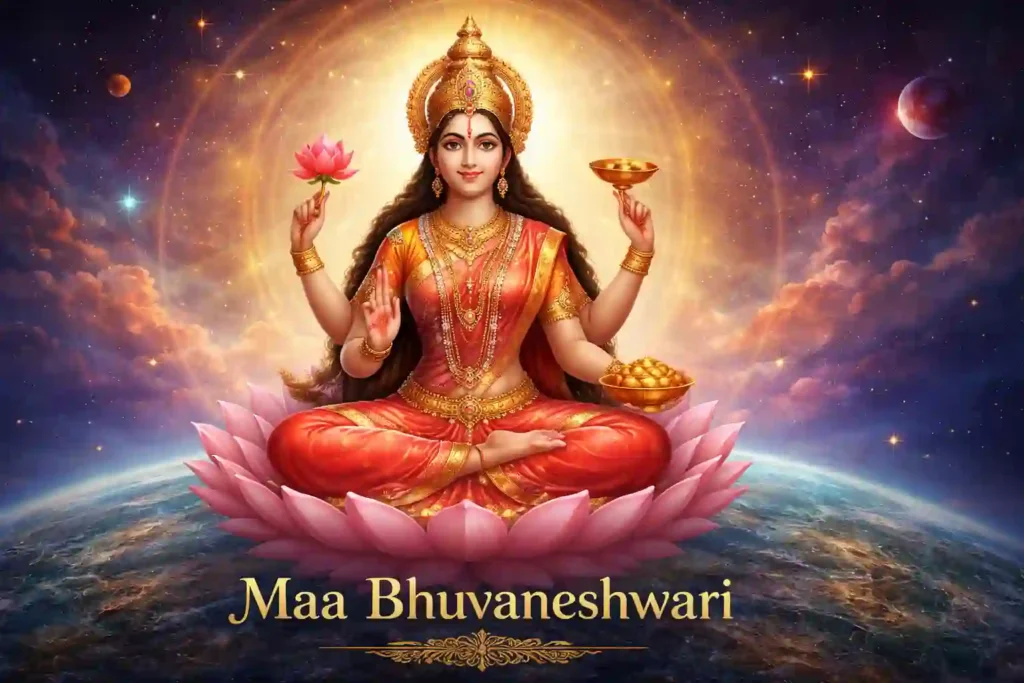
Maa Bhuvaneshwari is traditionally depicted as a radiant goddess seated upon a divine throne. She is often shown with four arms, holding a noose (pasha) and a goad (ankusha), while her other hands offer blessings and protection.
Her complexion is sometimes compared to the glow of the rising sun, symbolizing life, nourishment, and divine presence.
Unlike some Mahavidyas who appear in fierce forms, Maa Bhuvaneshwari is usually portrayed with a calm and compassionate expression.
Her image reflects the vastness, stability, and nurturing nature that devotees associate with the Divine Mother who sustains all worlds.
Symbolism of Maa Bhuvaneshwari
Every aspect of Maa Bhuvaneshwari’s form carries symbolic meaning. The noose represents her ability to draw devotees closer to divine truth, while the goad symbolizes guidance that removes ignorance and confusion.
Her blessing hand reflects compassion, and her protective gesture reassures devotees that they are held within her care.
The vastness associated with Maa Bhuvaneshwari is equally important. Shakta traditions often describe her as the cosmic space in which all beings, worlds, and experiences arise.
In this way, she represents not only creation itself but also the divine presence that quietly sustains it.
Maa Bhuvaneshwari and the Principle of Cosmic Space
Shakta traditions often associate Maa Bhuvaneshwari with Akasha, the principle of cosmic space. Space may appear empty, yet it allows everything to exist, move, and interact. Without space, there can be no creation, growth, or experience.
This understanding helps explain why Maa Bhuvaneshwari is called the Goddess who contains all worlds. Just as the sky holds clouds, stars, and planets without becoming limited by them, she is understood as the vast presence within which all forms of life arise and unfold.
Legends and Symbolic Understanding
Some Shakta traditions preserve symbolic narratives that explain Maa Bhuvaneshwari’s role in creation and cosmic order. In these stories, the Divine Mother appears as the sustaining power that supports and pervades all worlds.
These narratives are not usually understood as historical events but as spiritual teachings. They remind devotees that creation is not a one-time act. It is an ongoing process that requires balance, harmony, and support.
Maa Bhuvaneshwari represents this sustaining presence, the vast and nurturing power that quietly holds creation together.
The Nature and Benefits of Maa Bhuvaneshwari's Worship
Devotees often describe Maa Bhuvaneshwari as calm, motherly, and expansive. Her presence carries authority, yet it feels gentle and reassuring rather than overwhelming.
Unlike forms of the Divine Mother that awaken through intensity, Maa Bhuvaneshwari teaches through openness, balance, and quiet strength.
For this reason, many people feel drawn to her during periods of emotional heaviness, confusion, or mental pressure. Her worship is believed to create inner space, helping the mind settle naturally and allowing clarity to emerge with time.
Devotees worship Maa Bhuvaneshwari for mental peace, emotional balance, and steady progress in life. Her blessings are often described as gradual but lasting.
Rather than bringing sudden change, her grace is said to help people become more grounded, patient, and centered in their daily lives.
Many devotees feel that regular prayer, mantra japa, and remembrance of Maa Bhuvaneshwari bring a quiet sense of support during difficult times. Her worship reminds us that true strength does not always appear as force or intensity.
Sometimes it appears as stability, acceptance, and the ability to remain peaceful amidst life’s changing circumstances.
Worship of Maa Bhuvaneshwari in Daily Life
Worship of Maa Bhuvaneshwari can be simple and quiet. In many households, she is worshipped without elaborate rituals. A small image, a lamp, and sincere prayer are considered enough. This simplicity makes her worship accessible even to beginners.
Elders often remind devotees that Maa Bhuvaneshwari responds more to sincerity than to complexity. Regular remembrance, calm chanting, and respectful intention are considered the foundation of her worship.
Maa Bhuvaneshwari Mantra and Its Understanding
One commonly chanted mantra of Maa Bhuvaneshwari is:
Om Hreem Shreem Kleem Bhuvaneshwaryai Namah
This mantra is commonly used for japa and inner contemplation. The seed sounds are traditionally associated with divine energy, nourishment, harmony, and attraction. Together, they help devotees connect with the calm and supportive presence of the Goddess.
Many devotees believe that regular chanting brings mental peace, emotional balance, and a greater sense of inner spaciousness.
Over time, the practice is said to encourage clarity, steadiness, and a deeper connection with the Divine Mother.
The Spiritual Meaning of Hreem in Bhuvaneshwari Worship
Among the sacred sounds associated with Maa Bhuvaneshwari, Hreem holds special importance in many Shakta traditions. It is often described as a bija mantra connected with the Divine Mother and her creative power.
Devotees understand Hreem as a reminder of the presence of Shakti within creation and within the heart of the seeker.
While deeper interpretations are traditionally learned through a guru and lineage, many practitioners regard this sacred sound as a bridge between the individual soul and the universal presence of the Goddess.
Simple Maa Bhuvaneshwari Puja Vidhi for Home
A simple home puja can be performed without stress or fear. Clean the worship space and sit comfortably, preferably facing east or north. Light a lamp and incense, and place an image or symbol of the Goddess.
Offer flowers, fruit, or water with sincerity. Chant her mantra slowly, keeping awareness on sound and breath. Chanting 11, 21, or 108 times is sufficient. End the puja with gratitude and a few moments of silence.
Tradition reminds us that devotion matters more than ritual perfection. This simple Maa Bhuvaneshwari puja vidhi is suitable for daily home worship and beginners.
Common Offerings in Maa Bhuvaneshwari Worship
Devotees commonly offer fresh flowers, fruits, water, incense, and a lighted lamp during worship. Red and yellow flowers are especially associated with the Divine Mother in many traditions.
While offerings vary by region and family custom, sincerity and devotion are considered more important than the type or quantity of offerings presented.
Temple Worship and Ritual Variations
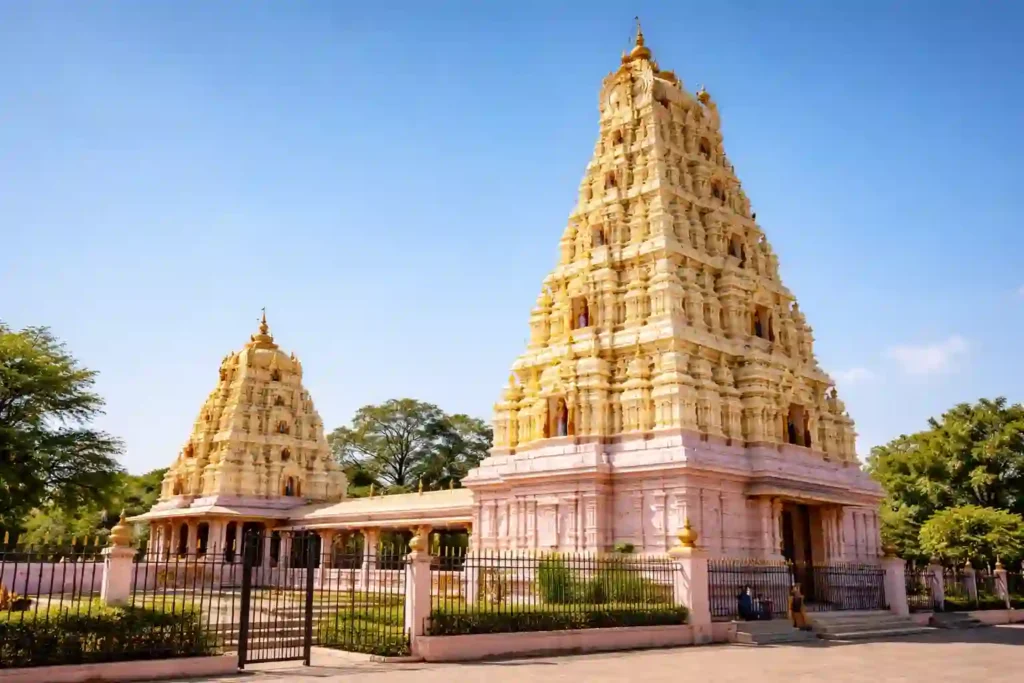
In temples and Shakti Peethas, Maa Bhuvaneshwari is worshipped through more elaborate rituals. These may include abhisheka, homa, mantra recitation, and traditional offerings. Some temples follow Shakta methods of worship, while others blend Vedic practices with regional customs.
Devotees are encouraged to respect temple-specific traditions, as the forms and rituals of Maa Bhuvaneshwari worship can vary across different regions and lineages.
Bhuvaneshwari Jayanti and Festival Observances
Devotees honour Maa Bhuvaneshwari throughout the year, particularly during Navaratri when various forms of the Divine Mother are worshipped with special devotion.
In some Shakta traditions, Bhuvaneshwari Jayanti is observed through mantra chanting, recitation of sacred texts, fasting, and temple worship.
The exact observances vary between regions and lineages. While rituals may differ, the central focus remains the same: remembering the Divine Mother as the sustaining power behind all existence.
Yantra and Symbolic Worship
In certain traditions, Maa Bhuvaneshwari is worshipped through a yantra, a sacred geometric form that symbolizes cosmic order and divine energy. The yantra serves as a visual aid for meditation, helping practitioners focus the mind during mantra japa and contemplative worship.
However, yantra worship is not compulsory. Simple remembrance, prayer, and sincere devotion are equally accepted ways of connecting with Maa Bhuvaneshwari.
Maa Bhuvaneshwari in Tantra and Sri Vidya Traditions
In tantric and Sri Vidya traditions, Maa Bhuvaneshwari is worshipped as the Shakti that sustains and contains creation. Her sadhana is associated with steadiness, inner expansion, and balance rather than the pursuit of sudden results.
While her nature is gentle compared to some Mahavidyas, advanced practices still require discipline and proper guidance. Traditional teachers generally advise householders to focus on simple mantra japa and devotional worship unless they receive instruction from a qualified guru.
Sri Vidya practitioners honour Maa Bhuvaneshwari as the sacred presence through which the universe is sustained and experienced. Although Sri Vidya places special emphasis on Maa Lalita Tripura Sundari, Maa Bhuvaneshwari is revered as an important expression of the same supreme Divine Mother.
Meditating on Maa Bhuvaneshwari
Many devotees meditate on Maa Bhuvaneshwari by visualizing her seated upon a radiant throne, holding the noose and goad while offering blessings and protection. Her calm expression and expansive presence are meant to inspire feelings of stability, trust, and inner openness.
Meditation on Maa Bhuvaneshwari is not focused on dramatic experiences. Instead, practitioners often use her form as a reminder of the vast awareness that exists beneath the constant movement of thoughts and emotions. In this way, contemplation of the Goddess becomes a practice of returning to balance and inner stillness.
Temples of Maa Bhuvaneshwari Across Regions
Maa Bhuvaneshwari is worshipped in many parts of India and even beyond.
In Karnataka, she is revered as a state goddess, with ancient temples in Uttara Kannada district. She is also worshipped within the Virupaksha Temple complex area, reflecting her long-standing regional importance.
Tamil Nadu has a powerful shrine at Pudukkottai, established by Sri Sri Santhananda Swamiji, where regular worship and spiritual activities continue. In Kerala, she is worshipped as Anchumana Devi at Ernakulam.
Gujarat has a dedicated temple at Gondal, established in the mid-20th century. Maharashtra is home to an ancient Bhuvaneshwari temple near the Krishna river, believed to be several centuries old.
Outside India, Maa Bhuvaneshwari is worshipped at the Parashakthi Temple in Michigan, USA, and at Shri Shiva Mandir in Sydney, Australia. These temples show how her worship has travelled with devotees across the world.
Regional and Folk Expressions of Devotion
Beyond formal temples, Maa Bhuvaneshwari is worshipped in village shrines and family traditions under local names.
In many regions, she is seen as a protective mother deity who guards land, home, and lineage. These folk expressions keep her worship alive in everyday life, beyond scriptures and institutions.
In parts of Karnataka and Kerala, local traditions honour Maa Bhuvaneshwari as a guardian deity connected with family welfare and community protection.
In some village traditions, devotees approach her for blessings related to land, livelihood, and household harmony. These local expressions demonstrate how her worship continues to evolve while remaining rooted in devotion to the Divine Mother.
Who Should Worship Maa Bhuvaneshwari
Anyone can worship Maa Bhuvaneshwari. Her path is especially suitable for beginners, householders, and those seeking inner stability rather than intense austerity.
Simple devotion does not require initiation. For deeper tantric practices, guidance from a teacher is advised.
Maa Bhuvaneshwari’s path is rooted in patience, humility, and sincerity. Traditional worship does not place fear-based restrictions on devotees. Simple prayer, mantra japa, and respectful devotion are considered sufficient foundations for her worship.
For deeper tantric practices, guidance from a qualified guru is traditionally recommended.
Maa Bhuvaneshwari and Inner Spiritual Growth
Beyond rituals and external worship, Maa Bhuvaneshwari is often understood as a guide toward deeper awareness. Many seekers view her as a reminder that spiritual growth requires inner space, patience, and the ability to observe life without becoming overwhelmed by it.
Through prayer, mantra japa, meditation, and self-reflection, devotees gradually cultivate steadiness and clarity. Rather than focusing on dramatic experiences, Maa Bhuvaneshwari’s path encourages a quiet deepening of awareness and a stronger connection with the Divine Mother’s presence in everyday life.
For this reason, her worship appeals not only to devotees seeking blessings but also to seekers who wish to combine devotion with inner contemplation and spiritual maturity.
Conclusion
Maa Bhuvaneshwari reminds devotees that divine strength is not always loud or dramatic. As the Mahavidya of cosmic space, she represents the nurturing presence that supports and sustains all life.
Her worship is rooted in simplicity, sincerity, and inner balance. Whether through prayer, mantra japa, or quiet remembrance, devotees seek her blessings for peace, clarity, and spiritual growth.
Remembering Maa Bhuvaneshwari helps us feel connected to the boundless compassion and guidance of the Divine Mother.
Suggested Reading
If you would like to deepen your understanding of Maa Bhuvaneshwari, the Mahavidyas, and the wider Shakta tradition, the following articles may be helpful. Together, they explore different dimensions of the Divine Mother, including wisdom, transformation, protection, beauty, and spiritual awakening.
Das Mahavidya: Meaning, Origin, 10 Goddesses, Temples and Spiritual Path
https://thesanatantales.com/das-mahavidya/
Maa Tara: Spiritual Meaning, Symbolism and Divine Compassion
https://thesanatantales.com/maa-tara-meaning-story-benefits/
Maa Kali: Origin, Symbolism and Spiritual Significance
https://thesanatantales.com/maa-kali-origin-story-meaning-power/
Maa Lalita Tripura Sundari: The Goddess of Beauty and Supreme Consciousness
https://thesanatantales.com/maa-lalita-tripura-sundari/
Ambaji Temple Banaskantha: A Sacred Experience Beyond Form
https://thesanatantales.com/ambaji-temple-banaskantha-guide/
Ambubachi Mela 2026: Dates, Significance and Complete Guide
https://thesanatantales.com/ambubachi-mela-2026
The Nine Forms of Maa Durga (Navadurga)
https://thesanatantales.com/navadurga-nine-forms-of-maa-durga/
Bhuvaneshvari (Wikipedia)
https://en.wikipedia.org/wiki/Bhuvaneshvari
Every form of the Divine Mother reveals a unique dimension of Shakti. Exploring these traditions together helps devotees gain a deeper appreciation of how the Divine Mother guides, nurtures, protects, and transforms spiritual life.
FAQs
What are the benefits of Bhuvaneshwari Mata?
Devotees worship Maa Bhuvaneshwari for mental peace, emotional balance, clarity, and inner stability. Her blessings are traditionally associated with patience, harmonious relationships, and steady spiritual growth.
How to worship Maa Bhuvaneshwari?
Maa Bhuvaneshwari can be worshipped through simple prayer, mantra japa, meditation, and offering flowers, fruits, or a lighted lamp. Devotees believe that sincerity and devotion are more important than elaborate rituals.
What is the symbol of Bhuvaneshwari?
The primary symbols of Maa Bhuvaneshwari include the noose (pasha), goad (ankusha), blessing hand, and protective gesture. Together, they represent guidance, protection, compassion, and divine authority over creation.
What is the favourite flower of Bhuvaneshwari?
Red flowers are commonly offered to Maa Bhuvaneshwari in many Shakta traditions. However, devotion is considered more important than any particular flower, and local customs may vary.
Which planet is Bhuvaneshwari Devi?
Some tantric traditions associate Maa Bhuvaneshwari with the Moon because of her connection with nurturing energy, emotional balance, and cosmic space. Different traditions may have different interpretations.
Which devi is for beauty?
Maa Tripura Sundari is traditionally associated with beauty, harmony, grace, and supreme consciousness. She is one of the Ten Mahavidyas and is revered as the embodiment of divine beauty.
Why is Maa Bhuvaneshwari called the Goddess of the Worlds?
The name Bhuvaneshwari means “Queen of the Worlds.” In Shakta traditions, she is understood as the Divine Mother who pervades, sustains, and governs all realms of existence.
Why is Maa Bhuvaneshwari the Fourth Mahavidya?
Maa Bhuvaneshwari is traditionally counted as the fourth Mahavidya. She represents cosmic space, expansion, and the sustaining presence that supports creation. Her position within the Mahavidyas symbolizes a deeper unfolding of the Divine Mother’s wisdom.
Can beginners worship Maa Bhuvaneshwari?
Yes. Maa Bhuvaneshwari is considered one of the most approachable forms of the Divine Mother. Simple prayer, mantra japa, and sincere devotion are traditionally regarded as sufficient for beginners.
What does Hreem mean in Bhuvaneshwari worship?
Hreem is a sacred bija mantra associated with the Divine Mother and her creative power. In Maa Bhuvaneshwari worship, it is often understood as a reminder of the presence of Shakti within creation and within the heart of the devotee.
Glossary of Important Terms
| Term | Meaning |
|---|---|
| Maa Bhuvaneshwari | The fourth Mahavidya and the Divine Mother who sustains and contains all worlds within her cosmic presence. |
| Bhuvaneshwari | Sanskrit term meaning “Queen of the Worlds” or “Ruler of All Realms.” |
| Mahavidya | One of the ten great wisdom goddesses representing different aspects of Divine Feminine power. |
| Das Mahavidya | The collective group of ten Mahavidyas in Shakta traditions. |
| Shakti | The divine feminine energy that creates, sustains, and transforms the universe. |
| Adi Parashakti | The primordial and supreme form of Divine Mother worshipped as the source of all creation. |
| Shakta Tradition | A branch of Sanatan Dharma that worships the Divine Mother as the Supreme Reality. |
| Cosmic Space (Akasha) | The subtle element of space that allows all existence, movement, and creation to unfold. |
| Akasha | The Sanskrit term for space or ether, symbolizing vastness and divine containment. |
| Divine Mother | The supreme feminine aspect of the Divine worshipped in many forms. |
| Tripura Sundari | The third Mahavidya associated with beauty, harmony, and supreme consciousness. |
| Maa Kali | The first Mahavidya associated with transformation, dissolution of ego, and liberation. |
| Maa Tara | The second Mahavidya who guides seekers across fear, suffering, and ignorance. |
| Consciousness | Pure awareness that exists beyond mind, body, and emotions. |
| Cosmic Order | The divine harmony and balance that sustains the universe. |
| Pasha (Noose) | A symbolic weapon representing attraction toward divine truth and spiritual growth. |
| Ankusha (Goad) | A symbolic tool representing guidance, discipline, and removal of ignorance. |
| Mantra | A sacred sound, word, or phrase used in prayer and meditation. |
| Bija Mantra | A seed syllable believed to contain concentrated spiritual energy. |
| Hreem | A sacred bija mantra associated with the Divine Mother and creative cosmic power. |
| Mantra Japa | The spiritual practice of repeatedly chanting a mantra with devotion and concentration. |
| Puja | A ritual act of worship offered to a deity with devotion and reverence. |
| Puja Vidhi | The traditional method or procedure for performing worship. |
| Yantra | A sacred geometric diagram used as a focus for meditation and worship. |
| Sri Vidya | A revered Shakta spiritual tradition centered on Divine Mother worship and spiritual realization. |
| Tantra | A spiritual path using mantra, meditation, rituals, and inner practices for self-realization. |
| Sadhana | A disciplined spiritual practice undertaken for inner growth and realization. |
| Guru | A spiritual teacher who guides seekers on the spiritual path. |
| Abhisheka | A ritual bathing of a deity with sacred substances during worship. |
| Homa | A sacred fire ritual performed with prayers and offerings. |
| Navaratri | A major Hindu festival dedicated to the worship of the Divine Mother in her various forms. |
| Bhuvaneshwari Jayanti | A sacred observance dedicated to Maa Bhuvaneshwari in some Shakta traditions. |
| Shakti Peetha | A sacred pilgrimage site associated with the Divine Mother. |
| Inner Stillness | A state of mental calmness and spiritual balance cultivated through devotion and meditation. |
| Spiritual Growth | The gradual development of wisdom, awareness, devotion, and inner maturity. |
| Divine Grace | The blessings and compassionate support received from the Divine Mother. |
| Emotional Balance | A state of inner stability and calmness often associated with Maa Bhuvaneshwari’s worship. |
| Devotion (Bhakti) | Loving worship, faith, and surrender to the Divine. |
| Self-Reflection | The practice of examining one’s thoughts, actions, and spiritual progress. |
About the Author
Yateendra Chaturvedi is a spiritual writer, researcher, devotee, and the founder of The Sanatan Tales. With over 35 years of professional experience and a lifelong interest in Sanatan Dharma, he writes about Hindu deities, temples, scriptures, festivals, Mahavidyas, sacred stories, rituals, and living traditions that continue to guide and inspire devotees across India.
Drawing from traditional scriptures, regional beliefs, temple traditions, devotional literature, and historical sources, he aims to present authentic, well-researched, and easy-to-understand content for modern readers. His work focuses on preserving spiritual wisdom, explaining sacred traditions, and helping seekers develop a deeper understanding of India’s rich spiritual heritage.
Through The Sanatan Tales, Yateendra strives to make the timeless teachings of Sanatan Dharma simple, meaningful, and relevant for today’s generation while maintaining respect for traditional sources, regional practices, and diverse spiritual perspectives.
Learn More About Yateendra Chaturvedi →
https://thesanatantales.com/about-the-author/
References & Sources
This article is based on beliefs and traditions followed within the Shakta traditions of Sanatan Dharma, traditional knowledge associated with the Dashamahavidya tradition, Shakti worship, Devi sadhana, and insights drawn from various spiritual and religious study sources. Some concepts discussed in this article are also inspired by teachings and interpretations preserved through the guru-disciple tradition.
Note: Beliefs, interpretations, and spiritual practices may vary across different traditions, sects, and paths within Sanatan Dharma. The purpose of this article is not to present any single viewpoint as the absolute truth, but to explain widely accepted religious and spiritual perspectives in a simple and accessible manner.
Explore More Fascinating Topics from Sanatan Dharma