Karwa Chauth is a cherished Hindu festival that celebrates love, devotion, and the sacred bond between husband and wife. Observed mainly in North India, this festival is marked by married women who traditionally keep a day-long fast and pray for their husbands’ good health, long life, and happiness.
The evening becomes especially beautiful as women dress in traditional attire, decorate their puja thalis, listen to the Vrat Katha, and wait for the moon to appear. The traditions of Karwa Chauth carry deep cultural and spiritual meaning. From preparing Sargi before sunrise to performing the evening puja and offering Arghya to Chandra Dev, every ritual has its own significance.
Families also share sweets, exchange gifts, apply mehndi, and come together to celebrate this special occasion. Although customs may differ from one region to another, the festival continues to hold an important place in many Hindu households.
In 2026, Karwa Chauth will be observed on Thursday, 29 October. In this guide, you will learn about the festival’s significance, the correct date and puja timings, Sargi traditions, vrat rules, essential puja samagri, step-by-step puja vidhi, the traditional Vrat Katha, and the moonrise ritual.
Whether you are observing the fast for the first time or following a family tradition, this article will help you understand Karwa Chauth and its rituals in a simple, practical, and devotional way.
Table of Contents
ToggleWhat Is Karwa Chauth?
The name Karwa Chauth has a special meaning. The word Karwa refers to an earthen pot traditionally used during the rituals, while Chauth means the fourth day of the lunar fortnight. The festival falls on the fourth day of Krishna Paksha, the waning phase of the Moon, in the Hindu month of Kartik according to the commonly followed North Indian calendar.
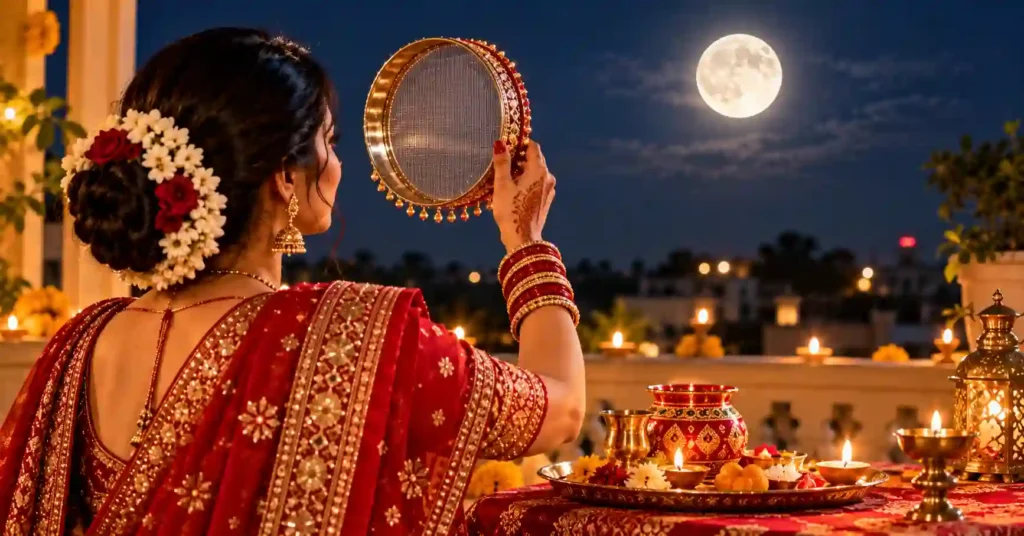
Preparations begin early in the morning, when women eat Sargi, a pre-dawn meal traditionally prepared by their mothers-in-law. After sunrise, they observe the fast according to their family customs and spend the day preparing for the evening puja. Women often wear beautiful sarees or suits, apply mehndi, decorate their puja thalis, and gather with other women to listen to the Karwa Chauth Vrat Katha.
The fast is traditionally concluded after moonrise. Women offer prayers to Chandra Dev, look at the Moon through a sieve, and then look at their husbands before breaking the fast. Although the exact customs vary between families and regions, Karwa Chauth remains a meaningful occasion for expressing marital devotion, strengthening family bonds, and celebrating a cherished Hindu tradition.
Why Is Karwa Chauth Celebrated?
The festival also reflects the importance of prayer and Sankalpa, a sincere intention made with devotion. Women begin their fast with faith and follow the rituals passed down through generations. The evening puja, the traditional Vrat Katha, and prayers to Chandra Dev give the day its distinctive spiritual character.
Over time, Karwa Chauth has also become an occasion for families to come together and celebrate their relationships. Women dress in festive clothes, apply mehndi, exchange gifts, and share traditional foods. In many communities, women gather to perform the puja collectively, creating a sense of friendship, belonging, and shared tradition.
Although the festival is traditionally associated with married women praying for their husbands, its deeper message can also be understood through mutual love, respect, and responsibility. A healthy marriage depends on the care and support of both partners. Observed with devotion and understanding, Karwa Chauth can be a meaningful opportunity to appreciate this bond while keeping alive the cultural traditions of Sanatan Dharma.
Karwa Chauth 2026: Date, Tithi and Puja Muhurat
The Chaturthi Tithi is important because the festival is observed according to the Hindu lunar calendar rather than a fixed date on the Gregorian calendar. As a result, the date of Karwa Chauth changes every year. The exact observance and timings should be determined using the local Panchang.
Important timings for Karwa Chauth 2026
Event | Date or timing |
|---|---|
Karwa Chauth | Thursday, 29 October 2026 |
Chaturthi Tithi | Confirm according to the local Panchang |
Sargi | Before sunrise |
Evening Puja Muhurat | Confirm according to the local Panchang |
Moonrise | Varies by city |
Vrat Parana | After moonrise and completion of the customary ritual |
Why do timings matter?
The evening puja is generally performed during the prescribed muhurat, while the fast is traditionally completed after the Moon becomes visible. Since moonrise differs across locations, women should check the timing for their own city rather than follow a time published for another place.
For Karwa Chauth 2026, confirm the exact Chaturthi Tithi, puja muhurat, and moonrise time before publishing these details. This will help readers plan their Sargi, evening worship, and fast-breaking rituals accurately.
Significance of Sargi in Karwa Chauth
The Sargi meal is usually eaten during the early morning hours, before the fast begins. It helps women prepare for the long day ahead, during which the traditional fast is observed without food or water by those following the Nirjala vrat. The exact practices may vary according to family customs and regional traditions.
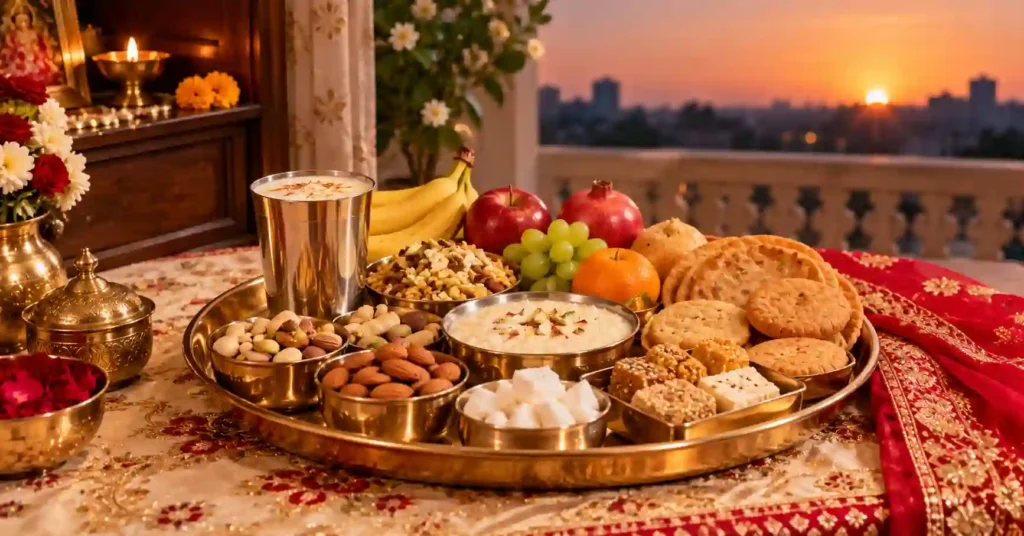
What Is Included in a Sargi Thali?
A traditional Sargi thali may contain a variety of foods chosen to provide nourishment and energy throughout the day.
Fruits: Bananas, apples, and other seasonal fruits.
Dry fruits and nuts: Almonds, cashews, and raisins.
Sweets: Kheer, laddoos, or other homemade sweets.
Traditional foods: Mathri, paratha, or other family favourites.
Drinks: Milk or other suitable beverages consumed before the fast begins.
The foods served may differ from one household to another. Many families prepare Sargi according to their traditions, personal preferences, and dietary needs.
How Should Sargi Be Observed?
Women traditionally wake up before sunrise, bathe, offer prayers, and eat their Sargi before beginning the fast. It is helpful to choose nourishing foods and drink enough water before the fasting period starts, particularly when the fast will continue until moonrise.
The spiritual meaning of Sargi goes beyond the meal itself. It represents blessings, family affection, and preparation for a day of devotion. For many women, this early-morning ritual is one of the most cherished parts of Karwa Chauth, connecting generations through a shared tradition.
A gentle reminder: A strict fast without water may not be suitable for everyone. Women who are pregnant, have a medical condition, or take regular medication should seek appropriate medical advice before undertaking such a fast.
Karwa Chauth Vrat Rules
Understanding the vrat rules helps devotees prepare for the day and perform the rituals with devotion. Here are the common practices followed during Karwa Chauth.
1. Eat Sargi Before Sunrise
Women traditionally eat Sargi in the early morning before sunrise. The meal usually includes fruits, dry fruits, sweets, and other nourishing foods. After this meal, the fast begins according to the family’s customs.
2. Observe the Fast According to Tradition
Many women observe a Nirjala vrat, which means abstaining from both food and water until the Moon is sighted. Others may follow a modified fast depending on their health, circumstances, and family traditions. The purpose of the observance is devotion, not putting one’s health at risk.
3. Prepare for the Evening Puja
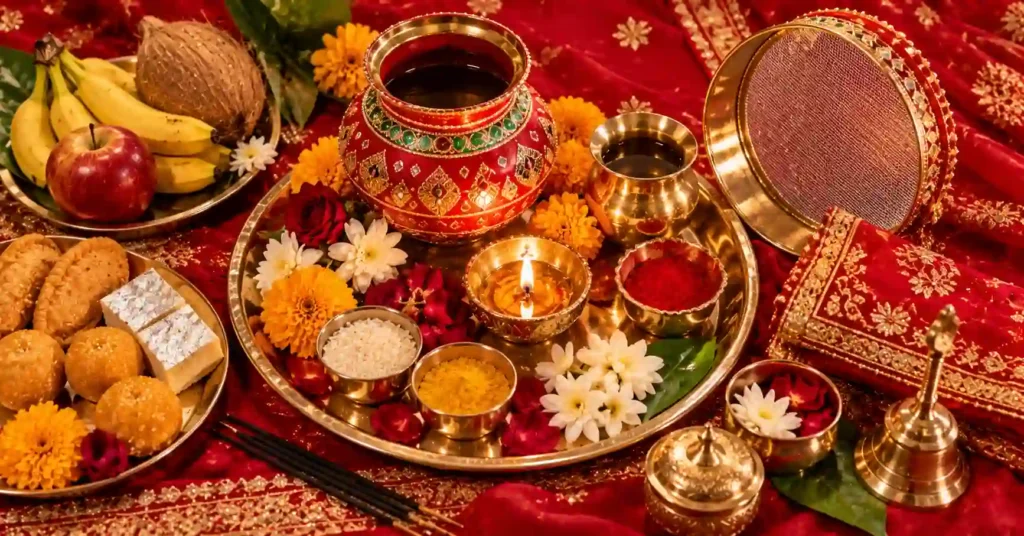
Women commonly wear traditional clothes, apply mehndi, and arrange their puja samagri before the evening worship. The puja thali may contain a diya, roli, rice, flowers, sweets, and a decorated Karwa pot. Devotees gather for prayers and listen to the Karwa Chauth Vrat Katha.
4. Perform the Puja During the Prescribed Muhurat
The evening puja is performed according to the local Panchang and family customs. Women offer prayers to Goddess Parvati, Lord Shiva, Lord Ganesha, and other deities honoured in their traditions. The Vrat Katha is recited or heard as part of the observance.
5. Offer Prayers to Chandra Dev
After moonrise, women traditionally view the Moon through a sieve and offer water as part of the customary ritual. They then look at their husbands through the sieve and receive their blessings or participate in the family’s traditional fast-breaking ritual.
6. Break the Fast After the Moon Ritual
The fast is traditionally completed after the Moon is sighted and the evening rituals are performed. Women then drink water and eat food according to their customs. If the Moon is not visible because of clouds, local religious guidance and family traditions can help determine how to complete the observance.
Important Health Considerations
A strict fast without water can cause dehydration and may not be safe for everyone. Pregnant or breastfeeding women, people with diabetes or other medical conditions, and those taking regular medication should consult a healthcare professional before attempting a restrictive fast. Devotion can be expressed through prayer and worship without compromising personal health.
Ultimately, the vrat rules of Karwa Chauth are rooted in faith, discipline, and prayer. Families may follow slightly different practices, so devotees can observe the festival in a way that respects their traditions while remaining mindful of their well-being.
Karwa Chauth Puja Samagri
The exact items may vary according to family traditions and regional customs. You can arrange the following essentials before the evening puja.
Essential Items for Karwa Chauth Puja
Puja Item | Significance or Use |
|---|---|
Karwa (earthen or metal pot) | Traditionally used during the puja and water offerings |
Puja thali | Holds the essential worship items |
Diya and cotton wicks | Used to light the lamp during worship |
Roli and rice (akshat) | Used for tilak and traditional offerings |
Flowers | Offered to the deities as a mark of devotion |
Sweets and fruits | Prepared as traditional offerings or prasad |
Kalash and water | Used according to the family’s puja customs |
Sieve (channi) | Used during the traditional Moon-viewing ritual |
Sacred thread (moli) | Used in some regional puja traditions |
Incense sticks | Used during worship, according to family customs |
Karwa Chauth Vrat Katha | Read or heard during the evening puja |
Decorated cloth | Used to arrange the puja items attractively |
How to Prepare the Puja Thali
Place the essential items neatly on a clean thali. Keep the diya, roli, rice, flowers, sweets, and other offerings within easy reach. The Karwa pot should be cleaned and decorated according to your family’s custom.
Keep the sieve and a separate vessel for the Moon offering ready before the evening rituals begin. This helps you complete the customary Moon-viewing ceremony without having to search for items at the last moment.
Why Is the Karwa Important?
The Karwa is a traditional pot associated with the festival and gives Karwa Chauth its name. In many households, it is decorated and included in the evening worship as a symbol of auspiciousness and devotion. Its use and the accompanying rituals may differ between communities.
Remember that Karwa Chauth puja samagri does not need to be elaborate or expensive. A clean, thoughtfully arranged thali and sincere devotion are central to the spirit of the observance.
Karwa Chauth Puja Vidhi: Step-by-Step Guide
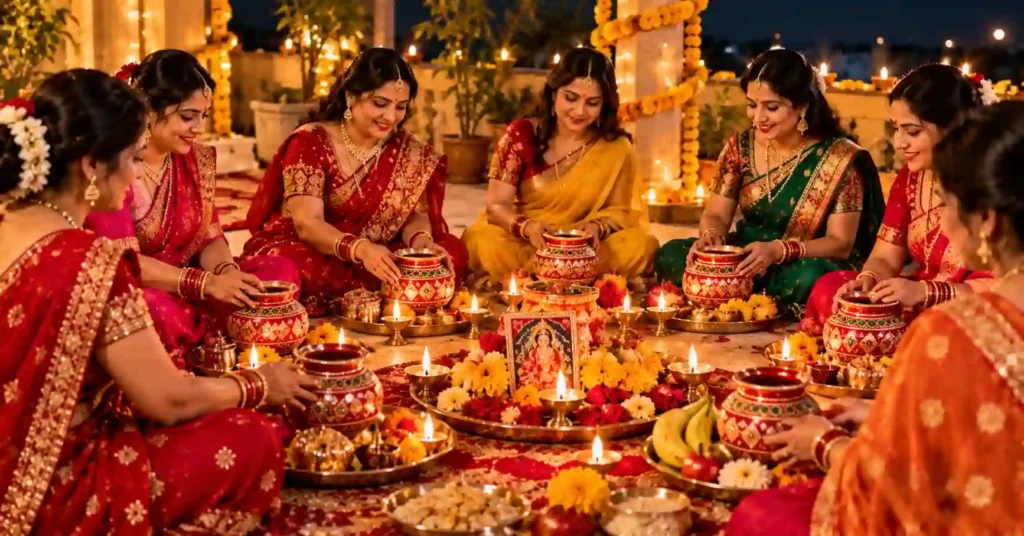
The evening puja is one of the most important parts of Karwa Chauth. Women gather to worship with decorated puja thalis, offer prayers, and listen to the traditional Vrat Katha. The rituals express devotion, faith, and prayers for the well-being and happiness of the family.
Although customs vary across regions and households, the following steps describe a commonly followed method of performing the puja.
Step 1: Prepare for the Evening Puja
After completing the day’s preparations, bathe or freshen up and wear traditional clothes according to your family custom. Arrange the puja samagri, including the decorated Karwa, diya, roli, rice, flowers, sweets, and sieve, in a clean place.
Step 2: Arrange the Puja Thali
Place the essential items neatly on the puja thali. Fill the Karwa with water as required by your tradition, and keep the diya ready for lighting. Some families also include a decorated image of Goddess Parvati, Lord Shiva, and Lord Ganesha in their worship.
Step 3: Worship the Deities
Light the diya and offer flowers, roli, rice, and prayers to the deities. Devotees commonly worship Goddess Parvati for marital happiness and seek the blessings of Lord Shiva and Lord Ganesha. Follow the customary prayers and offerings practised in your household.
Step 4: Listen to the Karwa Chauth Vrat Katha
The Vrat Katha is traditionally recited or heard during the evening puja. Women may gather in a circle with their decorated thalis while listening to the story and participating in the customary rituals. The Katha reminds devotees of the importance of faith, patience, and devotion.
Step 5: Perform the Traditional Thali Ritual
In some communities, women exchange or rotate their puja thalis while singing traditional Karwa Chauth songs. Other families follow different customs, including specific prayers and offerings involving the Karwa pot. These practices are usually guided by regional traditions and family elders.
Step 6: Wait for Moonrise
After the evening puja, women wait for the Moon to appear. Keep the sieve, water vessel, and other items needed for the Moon ritual ready. Since moonrise varies by location, check the local timing for your city.
Step 7: Offer Arghya to Chandra Dev
When the Moon becomes visible, women offer water to Chandra Dev as part of the customary ritual. They then look at the Moon through a sieve and, in many families, look at their husbands through the same sieve. The husband may offer water or a small portion of food to help his wife break the fast.
Step 8: Complete the Vrat
After the Moon-viewing ritual and prayers, women traditionally break their fast with water and food. Some families also offer prasad and share a meal together. The precise order of the rituals may vary according to local customs.
The purpose of Karwa Chauth Puja Vidhi is to observe the festival with sincerity and devotion. Preparing the puja items in advance, following family traditions, and offering prayers with a peaceful mind can make the occasion more meaningful.
Karwa Chauth Vrat Katha
The Karwa Chauth Vrat Katha is an important part of the evening worship. Traditionally, women listen to or recite the story during the puja with faith and devotion. The story reminds devotees of the importance of love, patience, sincerity, and unwavering faith during difficult times.
One of the most widely told stories associated with Karwa Chauth is the tale of Veeravati, a devoted woman whose love for her husband forms the heart of the narrative.
The Story of Queen Veeravati
According to a popular traditional version, Veeravati was the only sister among seven loving brothers. After her marriage, she observed her first Karwa Chauth fast at her parental home. She began the fast with devotion, intending to pray for her husband’s long life and well-being.
As the day passed, Veeravati became increasingly weak and thirsty. Her brothers could not bear to see their beloved sister suffering. Wanting her to end the fast, they devised a plan to make her believe that the Moon had risen.
They created the appearance of moonlight at a distance, leading Veeravati to believe that the Moon was visible. Thinking that the time had come, she performed the customary ritual and broke her fast.
The Consequences of Breaking the Fast Early
According to the story, after Veeravati broke her fast, she received news that her husband had died or was gravely affected, depending on the version being told. Heartbroken, she prayed with deep devotion and sought divine help.
Moved by her sincere prayers, the divine power guided her toward correcting her mistake and observing the vrat with renewed faith. In some versions, she undertakes the fast again with proper devotion, and her husband’s life is restored.
The details of this story vary across regional and oral traditions. Its central message, however, remains connected with faith, devotion, patience, and the importance attached to the traditional observance.
What Is the Spiritual Message of the Vrat Katha?
The story of Veeravati is remembered during Karwa Chauth because it connects the fast with devotion and the wish for a spouse’s well-being. It also highlights the emotional bond between family members and the care that can sometimes lead people to make misguided decisions.
For devotees, listening to the Vrat Katha is more than a ritual. It is an opportunity to reflect on sincerity, self-discipline, and trust in the divine. The story continues to be passed down through generations as part of the festival’s living cultural tradition.
Why Do Women Look at the Moon Through a Sieve?
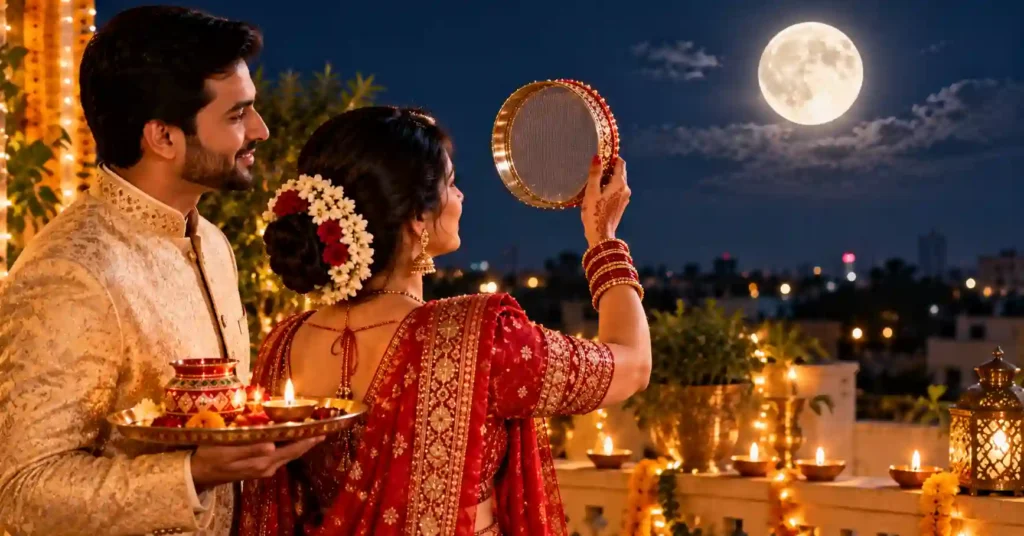
The Moon-viewing ritual is one of the most recognised traditions of Karwa Chauth. After the evening puja, women wait for Chandra Dev to appear in the night sky. They traditionally look at the Moon through a sieve and then look at their husbands through it before completing the fast.
This beautiful ritual carries cultural and spiritual meaning. In Hindu traditions, Chandra Dev is associated with the Moon and is honoured through prayers and offerings. The Moon’s appearance marks an important moment in the festival, as it signals the time when women who have observed the traditional fast can prepare to break it.
What Is the Significance of the Sieve?
The sieve, known as a channi in Hindi, is an essential part of the customary Moon-viewing ritual. It is often decorated or selected especially for the occasion and placed alongside the puja thali.
Looking at the Moon through the sieve has become a cherished symbol of the festival. The ritual is passed down through generations, and many women remember watching their mothers and grandmothers perform it before following the same tradition themselves.
Why Do Women Look at Their Husbands Through the Sieve?
After viewing the Moon, women traditionally turn toward their husbands and look at them through the same sieve. In many families, the husband then offers his wife water or food to help her break the fast. The couple may exchange prayers, blessings, or affectionate words as part of the ceremony.
This moment represents love, companionship, and the prayers associated with married life. For many couples, it is one of the most memorable parts of the festival because it brings together the day’s fasting, worship, and family traditions.
The Spiritual Meaning of the Moon Ritual
The Moon-viewing ceremony reminds devotees of the relationship between faith and everyday life. The Moon has a special place in Hindu worship, and offering prayers to Chandra Dev is an established part of this observance.
Although the exact customs differ between families and regions, the ritual remains a meaningful expression of devotion and marital affection. During Karwa Chauth, the sieve, the Moon, and the shared moment between husband and wife together make the completion of the fast a cherished tradition.
Moonrise and Breaking the Fast
Moonrise is one of the most awaited moments of Karwa Chauth. After a day of fasting, prayer, and preparation, women look forward to seeing Chandra Dev and completing the traditional rituals. The sight of the Moon brings the day’s observance to its final stage and holds deep emotional significance for many families.
The fast is traditionally observed from before sunrise until the Moon appears in the evening. Women who follow the Nirjala vrat abstain from both food and water during this period. Once the Moon is visible, they perform the customary offering and complete the fast according to their family traditions.
How Is Arghya Offered to the Moon?
Arghya is a traditional water offering made during Hindu worship. On Karwa Chauth, women commonly offer water to Chandra Dev while praying for their husbands’ well-being and the happiness of their families.
The ritual is generally performed using a small vessel containing water. Some families follow additional customs involving flowers, rice, or other offerings. The exact method may vary according to regional practices and family traditions.
Steps for the Moonrise Ritual
The customary Moon-viewing ceremony usually follows these steps:
Wait until the Moon is visible in the sky.
Light the diya and arrange the sieve and water vessel.
Offer Arghya to Chandra Dev according to family custom.
Look at the Moon through the sieve.
Look at your husband through the sieve, as traditionally practised.
Receive or offer water and food to complete the fast.
In many households, the husband helps his wife break the fast by offering her water and a small portion of food. The couple may then share a meal and celebrate the completion of the day’s observance.
What If the Moon Is Not Visible?
Sometimes clouds or rain make it difficult to see the Moon. In such situations, customs and guidance may differ across families and communities. Devotees can consult their family elders or follow the customary religious guidance practised in their region rather than assuming that every household follows the same method.
The Moonrise time also varies from city to city, so it is important to check the local timing before the festival.
The Moon ritual brings Karwa Chauth to a meaningful close. It combines prayer, tradition, and the joy of completing the fast, while reminding couples of the love, care, and mutual support that help sustain married life.
What Foods Are Prepared for Karwa Chauth?
Food plays a special role in Karwa Chauth, from the early-morning Sargi meal to the dishes enjoyed after the fast. Traditional foods are prepared with care and shared among family members, making the festival a time of devotion, affection, and togetherness.
The dishes vary by region and household. Some families prepare traditional North Indian foods, while others include recipes that have been passed down through generations. Here are some popular foods associated with the festival.
1. Sargi Foods
Sargi is eaten before sunrise by women observing the fast. The meal is usually planned to provide nourishment before the fasting period begins.
Common Sargi foods include:
Fresh fruits such as bananas, apples, and pomegranates
Almonds, cashews, raisins, and other dry fruits
Homemade sweets such as laddoos and barfi
Mathri, paratha, or other traditional snacks
Kheer or other family favourites
Milk or other suitable drinks consumed before the fast
The selection depends on personal preference, family customs, and dietary needs.
2. Thekua and Traditional Sweets
In some households, sweets are prepared as offerings or served to family members during the festival. Laddoos, barfi, halwa, and kheer are popular choices. Thekua, a traditional sweet made with flour and jaggery or sugar, may also be prepared in families that enjoy this regional delicacy.
These foods add a festive touch to the puja and may be included in the offerings according to family tradition.
3. Fruits and Prasad
Fruits and sweets are commonly included in the puja arrangements. Depending on local customs, devotees may offer seasonal fruits, homemade sweets, or other suitable foods to the deities before sharing the prasad with family members.
The emphasis is on preparing the offerings with cleanliness and devotion rather than on preparing an elaborate spread.
4. Food After Breaking the Fast
After completing the Moon-viewing ritual, women traditionally break their fast with water and then eat a meal. Families may prepare roti, sabzi, dal, rice, or other familiar home-cooked dishes. Some prefer a light meal after a long day without food or water.
It is helpful to begin gently, especially after a strict fast. Drinking water slowly and choosing easily digestible foods can make the transition back to normal eating more comfortable.
The food traditions of Karwa Chauth bring families together and preserve cherished recipes across generations. Whether the meal is simple or elaborate, the spirit of the festival lies in devotion, gratitude, and sharing with loved ones.
Can Unmarried Women Observe Karwa Chauth?
Yes, unmarried women can observe Karwa Chauth according to their personal faith and family traditions. Although the festival is traditionally associated with married women praying for their husbands’ long life and well-being, some unmarried women also observe the fast with prayers for a loving, compatible life partner and a happy future marriage.
The way the fast is observed may differ according to regional customs, family beliefs, and personal devotion. There is no single practice followed by every Hindu community.
Why Do Some Unmarried Women Keep This Fast?
Some unmarried women observe the vrat with the hope of finding a suitable life partner. Others participate because the festival is an important family tradition or because they feel a personal spiritual connection with its rituals.
For many, it is also an opportunity to learn about Hindu customs, join family celebrations, and participate in the evening puja alongside married women.
How Can Unmarried Women Observe Karwa Chauth?
Unmarried women who choose to observe the fast may follow the customs practised in their families. These can include eating before sunrise, offering prayers, listening to the Vrat Katha, and participating in the evening worship.
Some may follow a modified fast or participate in the puja without observing a strict Nirjala vrat. The form of observance depends on personal circumstances, family guidance, and health.
Is It Necessary for Unmarried Women to Keep the Fast?
No. Observing Karwa Chauth before marriage is a personal choice, not a universal requirement. Women who do not observe the fast can still participate in the festival’s prayers and celebrations.
Faith is personal, and devotion does not depend on undertaking a particular fast. Anyone choosing to observe it should consider their health and avoid putting themselves at risk through prolonged fasting without food or water.
Ultimately, Karwa Chauth can hold different meanings for different women. Whether observed by a married woman, an unmarried woman, or someone who simply wishes to participate in the family celebration, the festival can be approached with sincerity, respect, and devotion.
Can Pregnant Women Observe Karwa Chauth?
Pregnant women may wish to participate in Karwa Chauth because of its religious and family significance. However, pregnancy changes the body’s nutritional and hydration needs, so observing a strict fast without food or water may not be safe for everyone. The health of the mother and developing baby should always come first.
Traditionally, some women observe a Nirjala vrat, abstaining from both food and water until moonrise. During pregnancy, however, prolonged fasting and dehydration can cause weakness, dizziness, or other complications. A pregnant woman should consult her doctor before considering any form of fasting.
Can Pregnant Women Observe a Modified Fast?
Depending on their health and medical advice, some pregnant women may choose to participate in the festival without undertaking a strict fast. They may eat regular meals, drink water throughout the day, attend the evening puja, listen to the Vrat Katha, or offer prayers to Goddess Parvati and Lord Shiva.
These alternatives allow women to remain connected with their family traditions while avoiding unnecessary health risks. The appropriate choice depends on the individual’s pregnancy, medical history, and doctor’s advice.
What Precautions Should Pregnant Women Take?
If you are pregnant and wish to participate in Karwa Chauth, keep these points in mind:
Consult your doctor: Discuss fasting before making a decision.
Avoid dehydration: Do not restrict water unless specifically advised by your healthcare professional.
Maintain regular nutrition: Follow your doctor’s guidance on meals and snacks.
Recognise warning signs: Dizziness, faintness, unusual weakness, or other concerning symptoms require prompt medical attention.
Women with pregnancy complications or conditions requiring regular food, fluids, or medication should be especially cautious about fasting.
Can Pregnant Women Participate Without Fasting?
Yes. Pregnant women can participate in the evening puja, listen to the traditional story, offer prayers, and spend time with their families without undertaking a strict fast. Religious devotion can be expressed in many ways, and family customs can be adapted to protect maternal and fetal health.
The spirit of Karwa Chauth is rooted in love, prayer, and concern for the well-being of loved ones. During pregnancy, caring for one’s own health is also an important responsibility. No religious observance should require someone to ignore medical advice or put themselves or their baby at risk.
The Spiritual and Cultural Significance of Karwa Chauth
Karwa Chauth is more than a day of fasting. It is a festival that brings together devotion, family traditions, and the emotional bond between husband and wife. For generations, women have observed this vrat with prayers for their husbands’ health, long life, prosperity, and happiness. The rituals reflect the importance of faith and the place of marriage within many Hindu families.
From a spiritual perspective, fasting is often associated with self-discipline, prayer, and a sincere intention, known as Sankalpa. Women prepare for the day with devotion, participate in the evening puja, and listen to the traditional Vrat Katha. These practices provide an opportunity to pause daily activities and focus on prayer and personal faith.
The Connection with Goddess Parvati and Lord Shiva
Goddess Parvati and Lord Shiva are honoured in many Karwa Chauth traditions. Their divine relationship is often regarded as a symbol of devotion, commitment, and the harmony of married life. Devotees seek their blessings for marital happiness, peace, and strength in family relationships.
Prayers to Goddess Parvati are especially meaningful for women who associate her with auspicious married life and spiritual strength. Lord Ganesha may also be worshipped at the beginning of the puja to seek blessings and the removal of obstacles.
A Festival That Brings Families Together
Karwa Chauth also carries a strong cultural significance. Mothers, daughters, daughters-in-law, sisters, and friends share preparations and rituals, helping pass traditional practices from one generation to the next. Sargi, mehndi, festive clothing, decorated puja thalis, and traditional songs all contribute to the atmosphere of celebration.
For many families, the evening Moon-viewing ritual is an especially cherished moment. After completing the prayers, couples share water or food, and families come together to enjoy a meal. These simple traditions create lasting memories and strengthen relationships.
The Meaning of Love, Respect, and Mutual Care
Although the festival traditionally centres on women praying for their husbands, the values of love and commitment are meaningful for both partners. A strong marriage grows through mutual respect, trust, patience, and care during both happy and difficult times.
The deeper message of Karwa Chauth can therefore extend beyond the fast itself. It offers an opportunity for couples to appreciate one another, express gratitude, and renew their commitment to supporting each other. When observed with understanding and sincerity, the festival preserves an important cultural tradition while reminding families of the lasting value of love and togetherness.
Conclusion
Karwa Chauth 2026 will be observed on Thursday, 29 October. Women planning to observe the vrat should prepare their puja samagri in advance and confirm the local puja muhurat and moonrise time. Understanding the traditional rituals makes the celebration more meaningful and helps families observe the festival according to their customs.
Beyond fasting and rituals, the deeper message of Karwa Chauth lies in love, trust, mutual respect, and caring for one another. Whether you observe the traditional fast or participate through prayers and puja, the occasion offers an opportunity to celebrate the bond between husband and wife and seek blessings for a happy family life.
May Goddess Parvati and Lord Shiva bless every family with love, peace, good health, and lasting happiness.
Har Har Mahadev! 
Suggested Reading
FAQs
If you enjoyed learning about Karwa Chauth, you may also like these guides to Hindu festivals, vrat traditions, and sacred rituals. Explore them to understand the significance of different observances and deepen your knowledge of Sanatan Dharma.
These articles complement Karwa Chauth by explaining the stories, rituals, and spiritual values behind other important Hindu festivals.
1. Sharad Navratri 2026: Dates, Ghatasthapana Muhurat, Rituals and Significance https://thesanatantales.com/sharad-navratri/
2. Ghatasthapana: Meaning, Puja Vidhi and Significance https://thesanatantales.com/ghatasthapana/
3. Maha Navami: Significance, Rituals, Kanya Pujan and Spiritual Meaning https://thesanatantales.com/maha-navami/
4. Dussehra: Significance, Traditions and Why We Celebrate https://thesanatantales.com/dussehra/
5. What Is Shraddha in Hinduism? Meaning, Rituals and Significance https://thesanatantales.com/shraddha-in-hinduism/
6. What Is Karwa Chauth? Date, Vrat Rules and Puja Vidhi
Read my answer on Quora: What Is Karwa Chauth? Date, Vrat Rules and Puja Vidhi
1. When is Karwa Chauth in 2026?
Karwa Chauth in 2026 will be observed on Thursday, 29 October. The festival falls on the Chaturthi Tithi of Krishna Paksha in the Hindu month of Kartik, according to the commonly followed North Indian calendar.
Women traditionally begin the fast before sunrise after eating Sargi and continue until the Moon appears in the evening. Since the exact puja muhurat and moonrise time vary by location, check the local Panchang before planning the day’s rituals.
2. Why is Karwa Chauth celebrated?
Karwa Chauth is traditionally observed by married women who pray for their husbands’ long life, good health, prosperity, and happiness. The fast expresses devotion, faith, and the importance of the marital bond.
The festival also brings families and communities together through Sargi, mehndi, evening puja, traditional songs, and the Vrat Katha. Today, many couples also use the occasion to express mutual love, respect, and commitment, making the festival meaningful beyond its traditional fasting rituals.
3. What is the significance of Sargi in Karwa Chauth?
Sargi is the pre-dawn meal traditionally eaten by women before beginning the Karwa Chauth fast. In many families, the mother-in-law prepares or gives Sargi to her daughter-in-law as a gesture of affection, blessings, and goodwill.
The meal may include fruits, dry fruits, sweets, mathri, and other nourishing foods. Women generally eat Sargi before sunrise and then begin the fast according to their family customs. The tradition represents family bonding and preparation for the day’s religious observance.
4. What are the main Karwa Chauth vrat rules?
Traditionally, women wake up before sunrise, eat Sargi, and observe the fast throughout the day. Many follow a Nirjala vrat, meaning they abstain from both food and water until moonrise. The evening includes worship, listening to the Vrat Katha, and preparing for the Moon-viewing ritual.
After the Moon appears, women offer Arghya and complete the fast according to their family traditions. Practices differ across communities, and strict fasting may not be suitable for everyone. Health and medical advice should take priority over restrictive fasting.
5. How is Karwa Chauth puja performed?
Karwa Chauth puja is generally performed in the evening during the prescribed muhurat. Women arrange a puja thali with items such as a diya, roli, rice, flowers, sweets, and a decorated Karwa pot.
They worship according to their family traditions, often offering prayers to Goddess Parvati, Lord Shiva, and Lord Ganesha. The Vrat Katha is traditionally heard or recited during the observance. After moonrise, women offer Arghya to Chandra Dev and perform the customary sieve ritual before breaking the fast.
6. Why do women look at the Moon through a sieve?
Looking at the Moon through a sieve is one of the best-known Karwa Chauth traditions. After offering prayers to Chandra Dev, women traditionally view the Moon through the sieve and then look at their husbands through it.
In many families, the husband offers his wife water or food to help her break the fast. The ritual symbolises devotion, affection, and the bond between husband and wife. Although the exact customs vary, the Moon-viewing ceremony remains a cherished part of the festival.
7. What is the Karwa Chauth Vrat Katha?
The Karwa Chauth Vrat Katha is a traditional story heard or recited during the evening puja. One popular version tells the story of Veeravati, a devoted woman whose fast is interrupted when her brothers create the false appearance of moonrise.
According to the story, she faces distress after breaking her fast early and later seeks divine help through sincere devotion. Versions of the narrative differ across regions and oral traditions. The story is remembered for its themes of faith, patience, devotion, and the importance attached to the vrat.
8. Can unmarried women observe Karwa Chauth?
Yes, some unmarried women observe Karwa Chauth according to their personal faith and family traditions. They may pray for a suitable life partner, a happy future marriage, or simply participate in a festival that is important to their family.
There is no universal requirement for unmarried women to observe this fast. Some participate in the evening puja or listen to the Vrat Katha without undertaking a strict fast. The decision is personal and may depend on family customs, individual beliefs, and health considerations.
9. Can pregnant women observe Karwa Chauth?
Pregnant women should consult their healthcare professional before considering a Karwa Chauth fast. A strict fast without food or water may cause dehydration, weakness, or other complications, depending on the individual’s health and stage of pregnancy.
Women may be able to participate through prayers, the evening puja, or listening to the Vrat Katha without fasting. Any changes to food, fluid intake, or medication should follow medical advice. Religious devotion does not require someone to compromise their health or the well-being of their baby.
10. What should be included in a Karwa Chauth puja thali?
A traditional Karwa Chauth puja thali may include a decorated Karwa pot, diya, cotton wicks, roli, rice, flowers, sweets, and a sieve for the Moon-viewing ritual. A vessel containing water is also commonly kept ready for the Arghya offering.
Some families include additional items according to their regional customs and the form of worship they follow. Preparing the thali in advance makes the evening puja easier. The items need not be expensive or elaborate; a clean arrangement prepared with devotion is sufficient for many households.
11. What should women eat after breaking the Karwa Chauth fast?
After completing the Moon-viewing ritual, women traditionally break their fast with water and then eat according to their family’s customs. Some households prepare roti, dal, sabzi, rice, or other home-cooked dishes, while others serve festive foods and sweets.
After a long fast, it is sensible to drink water gradually and begin with a moderate meal that is comfortable to digest. Anyone who experiences dizziness, severe weakness, fainting, or other concerning symptoms should seek appropriate medical attention rather than ignoring the symptoms for the sake of tradition.
12. What happens if the Moon is not visible on Karwa Chauth?
Clouds, rain, or poor visibility may make it difficult to see the Moon on Karwa Chauth. In such circumstances, practices can differ between families and regional traditions, so there is no single procedure followed by everyone.
Devotees may seek guidance from family elders or follow the customary religious practice of their community. Checking the local moonrise time can also help avoid confusion. The key is to understand the tradition followed in one’s household rather than assuming that timings or procedures are identical everywhere.
About the Author
Yateendra Chaturvedi is a spiritual writer, researcher, devotee, and the founder of The Sanatan Tales. With over 35 years of professional experience and a lifelong interest in Sanatan Dharma, he writes about Hindu deities, temples, scriptures, festivals, Mahavidyas, sacred stories, rituals, and living traditions that continue to guide and inspire devotees across India.
Drawing from traditional scriptures, regional beliefs, temple traditions, devotional literature, and historical sources, he aims to present authentic, well-researched, and easy-to-understand content for modern readers. His work focuses on preserving spiritual wisdom, explaining sacred traditions, and helping seekers develop a deeper understanding of India’s rich spiritual heritage.
Through The Sanatan Tales, Yateendra strives to make the timeless teachings of Sanatan Dharma simple, meaningful, and relevant for today’s generation while maintaining respect for traditional sources, regional practices, and diverse spiritual perspectives.
Learn More About Yateendra Chaturvedi →
https://thesanatantales.com/about-the-author/
References & Sources
Note: Karwa Chauth rituals, fasting rules, Vrat Katha versions, and puja practices may vary across regions, communities, and family traditions. This article presents commonly followed practices in a simple, reader-friendly manner and does not suggest that every family must observe the festival in exactly the same way. Fasting practices should also be adapted to individual health needs, and anyone with medical concerns should seek appropriate medical advice before undertaking a strict fast.
Explore More Topics from The Sanatan Tales