
Bhairav worship in North Indian villages is not a marginal or fading tradition. It is a living system of faith where land, memory, fear, protection, and devotion come together.
In villages across Uttar Pradesh, Rajasthan, Madhya Pradesh, Haryana, and the Himalayan foothills, Bhairav is not only known through scriptures.
He is experienced as a kshetrapal, a gram devta, and a silent guardian who watches over boundaries, people, and moral order.
To understand Bhairav in village life, one must move beyond temples and texts and enter the lived spaces where devotion continues quietly, generation after generation.
in everyday practice, Bhairav worship in North Indian villages reflects how protection, land, and faith merge into lived Sanatan tradition.
Table of Contents
ToggleBhairav worship in North Indian villages as ancient village guardian tradition
The idea of a guardian deity protecting land and settlement is older than formal temples.
Agrarian communities needed assurance that their fields, cattle, and village boundaries were safe.
This gave rise to kshetrapal traditions, where a fierce divine presence was placed at the edge of inhabited space to guard both land and people.
As Shaiva traditions spread, these guardian figures gradually merged with Bhairav, the fierce manifestation of Shiva associated with time, destruction of ignorance, and protection against disorder.
Seen through this lens, Bhairav worship in North Indian villages developed as an ancient village guardian tradition, grounded in daily life and lived necessity rather than abstract philosophy.
Bhairav worship in North Indian villages as Kshetrapal and Gram Devta
In North Indian villages, Bhairav functions in two closely related roles.
As kshetrapal, he guards physical and spiritual boundaries. His shrine often stands where the village ends, where cultivated land meets wilderness, or where roads cross.
These are spaces of uncertainty, and Bhairav is believed to stand there so the village does not have to.
As gram devta, Bhairav belongs to the community itself. He is invoked before major village events, during epidemics, before harvest, and when collective fear rises.
In many villages, no major ritual is considered complete unless Bhairav is acknowledged first.
This dual role explains why Bhairav is feared, respected, and trusted deeply. his functional role explains why Bhairav worship in North Indian villages is rooted in daily life rather than limited to temple visits.
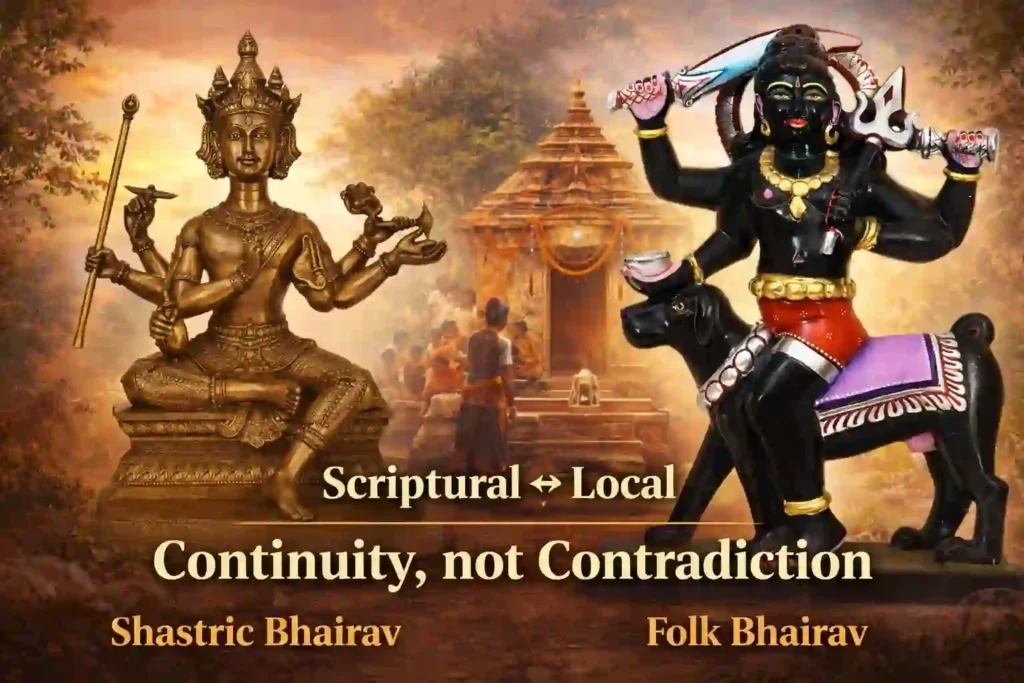
Folk Bhairav and Puranic Bhairav: continuity, not contradiction
A common misunderstanding is to see folk Bhairav and Puranic Bhairav as separate or conflicting.
Puranic Bhairav is known through scripture, iconography, and temple theology. He is a cosmic figure, fierce yet liberating, associated with Shiva’s power over time and ego.
Folk Bhairav, on the other hand, is local and immediate. His stories are told by elders, not read from books. He protects this village, this land, this lineage.
Yet both forms exist on the same continuum. The folk Bhairav draws authority from the cosmic Bhairav, while the Puranic Bhairav gains relevance through local presence.
Within Bhairav worship in North Indian villages, this continuity is lived naturally rather than debated or questioned.
For villagers, there is no contradiction. A devotee may chant a Bhairav stotra and still bow first at the village Bhairav shrine before entering the fields.
Regional names and local identities of Bhairav
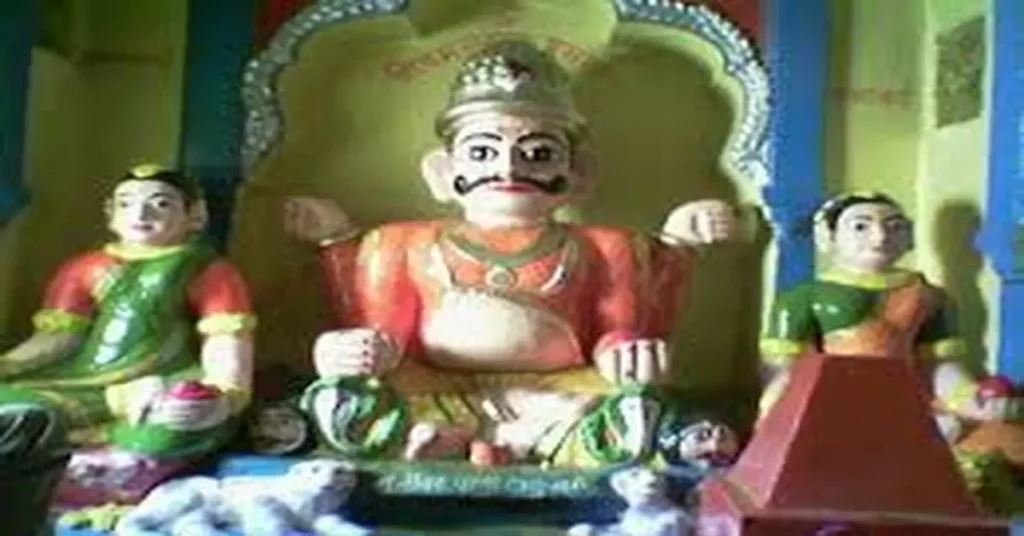
One important fact often missed is that Bhairav is not always called Bhairav in villages.
Across North India, he may be known as:
- Bhairo or Bhairon Baba
- Kal Bhairo
- Khetpal or Kshetrapal Dev
- Baba Ji
In many villages, people worship Bhairon Baba without consciously linking him to Puranic Bhairav. The connection exists, but it is lived, not verbalised.
This explains how Bhairav worship survives even where scriptural knowledge is limited. Names change, function remains.
These variations show how Bhairav worship in North Indian villages adapts without losing its core purpose.
Temple rituals in Bhairav worship in North Indian villages
Bhairav shrines in villages are shaped by land, memory, and need. They rarely resemble classical temples.
Sacred placement and iconography
Village Bhairav shrines are usually placed at liminal points: village boundaries, crossroads, near grazing land, or close to cremation grounds.
These locations reflect Bhairav’s role as guardian of thresholds.
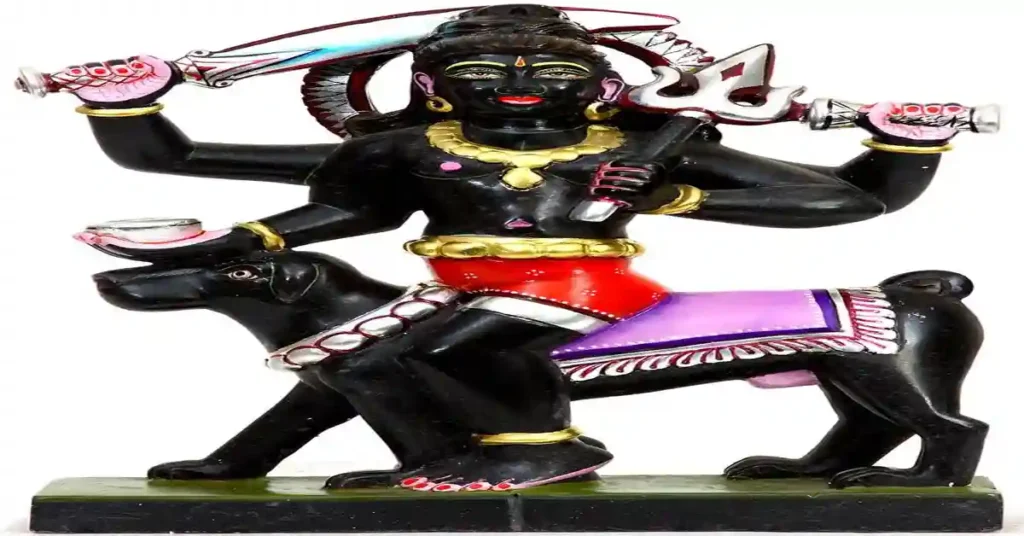
The shrine itself may be simple: a stone pillar, a rough carving, or a metal icon under a tree.
Often, a dog symbol is present, either carved or remembered through oral belief. The power of the shrine lies not in architecture, but in presence.
These practices show that Bhairav worship in North Indian villages follows rhythm, memory, and necessity more than formal rules.
Offerings, vows, and ritual rhythm
Village Bhairav worship follows the rhythm of life, not a clock.
Devotees approach Bhairav with vows during illness, fear, or crisis. Offerings include lamps, sindoor, flowers, local food, and in some regions liquor or meat.
These practices are not casual. They follow inherited rules and are seen as ancestral agreements.
Annual village gatherings in Bhairav’s honour reaffirm community bonds. On these days, disputes are settled, boundaries acknowledged, and collective protection sought, reflecting the living reality of Bhairav worship in North Indian villages.
Priesthood and ritual authority
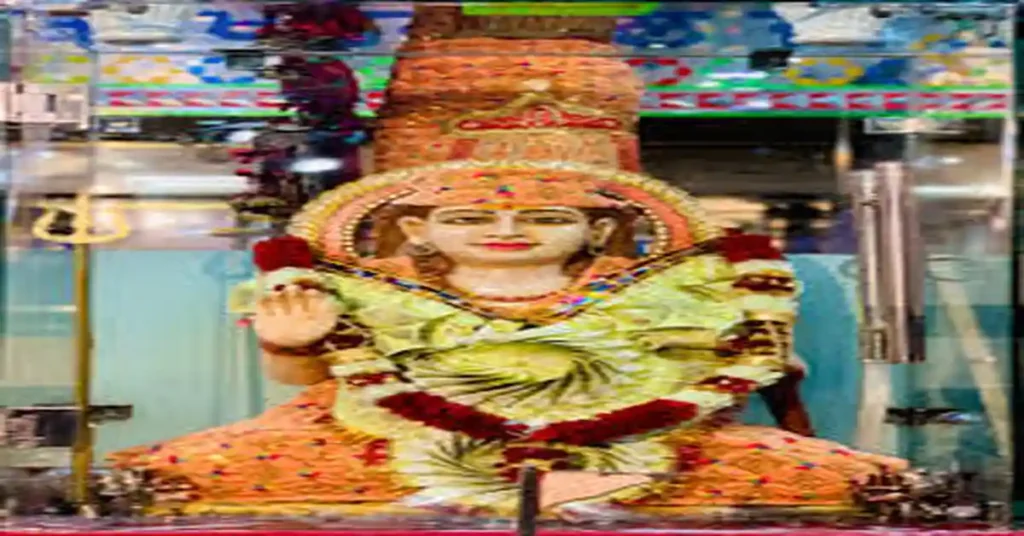
Many village Bhairav shrines are maintained by hereditary caretakers or village elders.
These may be non-Brahmin lineages or families entrusted with ritual responsibility for generations.
This is not a deviation from Sanatan Dharma. Bhairav, as a boundary deity, traditionally accepts worship outside rigid temple hierarchy.
His authority comes from function and presence, not formality, which is clearly reflected in Bhairav worship in North Indian villages.
Bhairav as moral guardian and enforcer of village order
Beyond physical protection, Bhairav plays a powerful moral role in village life.
In many villages:
- Oaths are taken before Bhairav
- People fear lying in his name
- Theft, broken vows, or boundary violations are believed to invite Bhairav’s displeasure
This is not superstition but social regulation through sacred authority. Bhairav becomes the unseen witness who ensures moral restraint when formal systems are absent.
This explains why Bhairav is feared yet deeply trusted.
This moral authority is one of the strongest reasons Bhairav worship in North Indian villages remains relevant even today.
Bhairav, death, ancestors, and threshold spaces
Bhairav’s association with cremation grounds is often misunderstood.
In folk belief, Bhairav guards the threshold between life and death. He ensures that negative forces do not cross into the village and that the dead do not disturb the living.
This connects him to ancestor-related fears, untimely death, and accidents.
Villagers do not see this as dark worship. They see it as necessary guardianship. Bhairav stands where others cannot, so the village remains safe.
Tantric elements in Bhairav worship where traditionally accepted
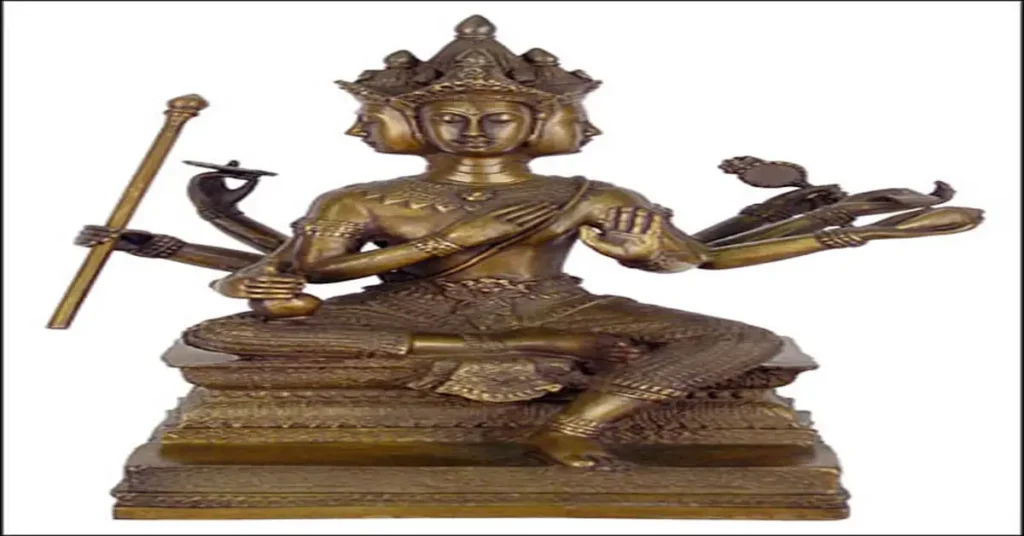
Bhairav’s connection to tantra is ancient and disciplined.
In certain lineages, Bhairav is worshipped through mantra, initiation, and controlled ritual practice. These rites are private and lineage-bound, not public spectacle.
In village life, tantric ideas influence belief more than ritual. Bhairav absorbs danger, confronts chaos, and transforms fear.
Even when villagers do not use the word tantra, the logic of protection and transformation remains deeply tantric in nature.
It is important to present this with dignity, not sensationalism.
Folk and Shastric Bhairav worship in North Indian villages
Rather than viewing doctrine and folk belief as opposites, Bhairav worship shows how Sanatan Dharma actually functions.
Scripture provides cosmic legitimacy. Folk practice provides lived relevance. Temple ritual offers structure. Oral tradition preserves memory.
These layers do not compete. They reinforce each other.
A serious understanding of Bhairav must hold all these dimensions together.
Bhairav among other village deities and local pantheon hierarchy
Bhairav rarely stands alone. In many villages, he protects the village for the main deity, often a Devi, Shiva, or local goddess.
He is invoked first, then the primary deity is worshipped.
This hierarchy reinforces Bhairav’s guardian role. He is powerful, but his power is directional, protective, and functional.
This hierarchy explains how Bhairav worship in North Indian villages fits naturally within local pantheon systems.
How to approach living Bhairav traditions with respect
Anyone who wishes to study or write about village Bhairav worship should approach it with humility. Do not behave like an expert or outsider. Go as a learner.
Observe what is openly shared , the placement of the shrine, the families who care for it, the rhythm of rituals through the year, and the stories elders pass on.
These visible aspects carry the living memory of the tradition.
Some practices, especially those linked to initiation or tantric lineages, are meant to remain private.
They should never be questioned or recorded without clear permission. In many cases, quiet listening and restraint are the highest forms of respect.
The true service here is not explanation or exposure, but preservation without distortion.
Conclusion
Bhairav worship in North Indian villages is not a relic of the past. It is a living system where protection, morality, ancestry, and devotion meet.
Whether known as Bhairav, Bhairon Baba, or Kshetrapal Dev, his presence continues to guard land and people.
Understanding Bhairav here means understanding Sanatan Dharma as it is lived: grounded, layered, and deeply human.
Bhairav worship in North Indian villages continues as a living Sanatan tradition where protection, morality, ancestry, and devotion come together.
Suggested Reading
Bhairav worship in North Indian villages is not a relic of the past. It is a living system where protection, moral order, ancestry, and devotion quietly come together in everyday village life.
If this exploration deepened your understanding, you may also like reading our detailed articles on Kaal Bhairav, Golu Devta: Folk God of Justice in North India, and Nanda Devi folk goddess of Uttrakhand already published on the site.
Together, these readings show how Bhairav, whether known as Bhairav, Bhairon Baba, or Kshetrapal Dev, continues to guard land and people across regions.
Seen this way, Folk deities of North India helps us understand Sanatan Dharma not just as scripture, but as a lived, grounded, and deeply human tradition.
FAQs
Who is Bhairav in North Indian village worship?
In villages, Bhairav is worshipped as a guardian deity who protects land, people, cattle, and moral order. He is often seen as a kshetrapal or gram devta rather than only a Puranic figure.
What is the difference between folk Bhairav and Puranic Bhairav?
Puranic Bhairav is known through scriptures and temples, while folk Bhairav lives through local belief and oral tradition. Both are connected and exist on a single spiritual continuum.
Why are Bhairav shrines placed at village boundaries?
Bhairav is believed to guard liminal spaces like village edges, crossroads, and cremation grounds. These locations symbolise protection where order meets uncertainty.
Is Bhairav worship associated with fear or negativity?
No. While Bhairav is fierce, his role is protective, not harmful. Fear comes from misunderstanding. In village life, Bhairav represents safety, justice, and balance.
Why do some villages offer liquor or meat to Bhairav?
In certain folk traditions, such offerings are part of ancestral custom and ritual agreement. They are performed with rules and restraint, not indulgence or compulsion.
Are tantric practices part of village Bhairav worship?
Some tantric elements exist in traditional lineages, but public village worship is usually simple and community-focused. Tantric practices, where present, are private and disciplined.