
There are moments in the year when nature itself feels renewed, and Chaitra Navratri 2026 arrives during such a sacred time.
The air changes, the days grow brighter, and a quiet sense of beginning spreads everywhere. Chaitra Navratri 2026 arrives during such a time.
In Sanatan Dharma, Chaitra Navratri marks the sacred beginning of the Hindu lunar year in many traditions.
It is a period when devotees turn toward the Divine Mother with gratitude, hope, and fresh spiritual intention.
Across India, homes, temples, and pilgrimage centres honour the Divine Mother during these nine days.
Some devotees celebrate with simple daily prayers, while others follow deeper practices such as mantra chanting, Durga Saptashati recitation, fasting, and temple worship.
Although Chaitra Navratri is widely celebrated, its essence remains deeply personal.
These nine days invite devotees to reconnect with faith, purify the mind, and begin the year with spiritual clarity.
Table of Contents
ToggleWhat is Chaitra Navratri?
Chaitra Navratri is a nine-day festival dedicated to the worship of the Divine Mother in her nine forms, collectively known as Navadurga.
The word Navratri literally means nine nights. During these nine nights and ten days, devotees honour different aspects of Shakti that represent courage, compassion, discipline, wisdom, and protection.
This Navratri occurs during the Chaitra month of the Hindu lunar calendar, usually falling in March or April. In many traditions, this day also marks the beginning of the Hindu New Year.
Different regions celebrate this new beginning in their own way. In Maharashtra it is observed as Gudi Padwa, in Andhra Pradesh and Karnataka as Ugadi, and in Kashmir as Navreh.
Despite regional differences, the central idea remains the same. Devotees begin the year by invoking the blessings of the Divine Mother.
For many devotees, Chaitra Navratri 2026 becomes a time to begin the year with prayer, discipline, and gratitude toward the Divine Mother.
Chaitra Navratri 2026 Dates
In 2026, Chaitra Navratri will be observed from March 19 to March 27.
The festival begins on Pratipada, the first day of the bright lunar fortnight of the Chaitra month.
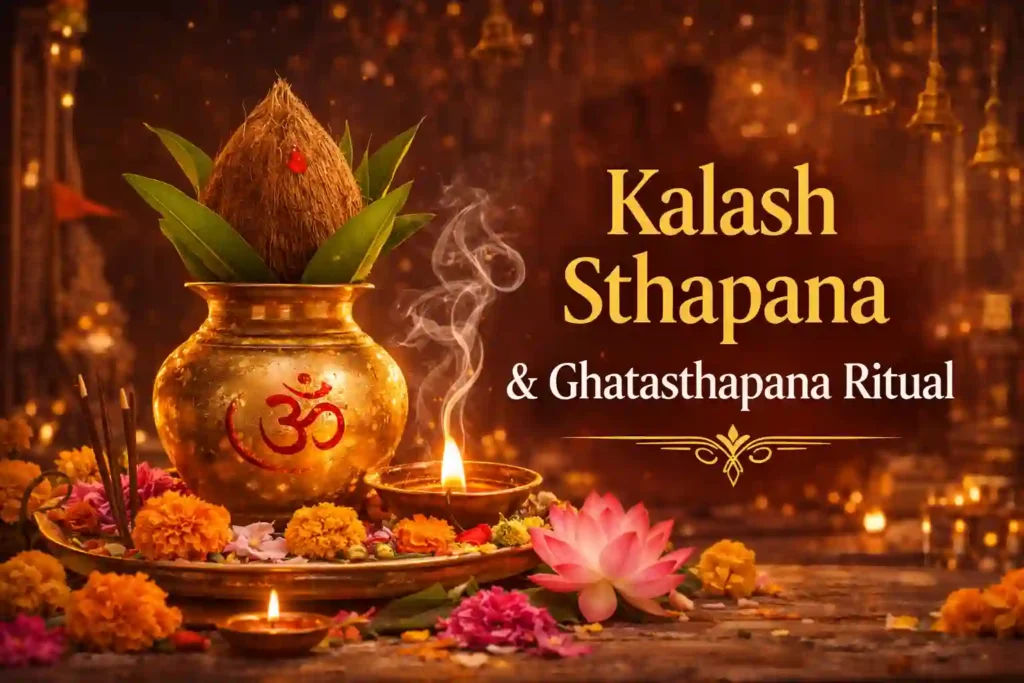
Devotees begin the festival with Ghatasthapana or Kalash Sthapana, a sacred ritual that symbolically invites the presence of the Divine Mother into the home or temple.
The ninth day of Chaitra Navratri coincides with Ram Navami, the birth celebration of Lord Rama.
This connection reflects an important spiritual idea in Sanatan Dharma. The Divine Mother represents cosmic energy and protection, while Lord Rama represents righteousness and dharma.
Their festivals coming together symbolise the harmony between divine energy and righteous action.
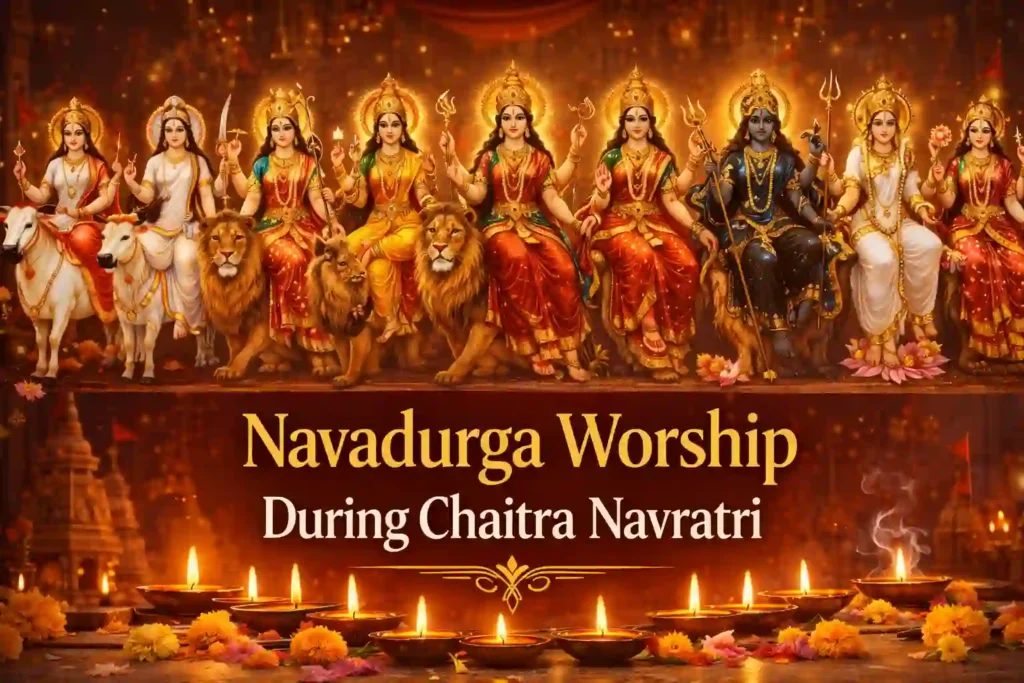
Navadurga Worship During Chaitra Navratris
During Chaitra Navratri, devotees remember the nine sacred forms of the Divine Mother.
- Maa Shailaputri
- Maa Brahmacharini
- Maa Chandraghanta
- Maa Kushmanda
- Maa Skandamata
- Maa Katyayani
- Maa Kalaratri
- Maa Mahagauri
- Maa Siddhidatri
Each form symbolises a stage of spiritual growth.
During Chaitra Navratri 2026, devotees remember these nine forms of the Divine Mother to seek strength, clarity, and spiritual protection.
The journey begins with grounding and discipline represented by Maa Shailaputri and culminates with Maa Siddhidatri, who symbolises divine wisdom and fulfilment.
For many devotees, simply remembering these forms during the nine days becomes a way of aligning the mind with spiritual strength.
Scriptural Tradition of Chaitra Navratri Worship
The scriptural foundation for Navratri worship comes mainly from the Durga Saptashati, also known as the Devi Mahatmya, found in the Markandeya Purana.
This sacred text narrates how the Divine Mother protects the universe by defeating powerful forces that symbolise ego, arrogance, and chaos.
For centuries, devotees have recited this text during Navratri as a form of spiritual discipline.
Some read a portion daily across the nine days, while others complete the full text during the festival.
The recitation is believed to strengthen devotion, courage, and clarity of mind.
Temple Traditions During Chaitra Navratri
During Chaitra Navratri 2026, major Shakti temples across India observe special rituals and celebrations dedicated to the Divine Mother.
Temples such as Vaishno Devi, Kamakhya, Vindhyavasini, and Jwala Devi attract thousands of pilgrims during these days.
Special rituals may include continuous Durga Saptashati recitation, yajnas, abhishek ceremonies, and devotional singing dedicated to the Divine Mother.
In many temples, special darshan arrangements are made due to the large number of devotees visiting during the Navratri period.
Regional Traditions of Chaitra Navratri
The way Chaitra Navratri is observed varies across India.
In North India, devotees often observe fasting and perform Kanya Puja on the eighth or ninth day, where young girls are worshipped as living forms of the Divine Mother.
In Maharashtra, the festival coincides with Gudi Padwa, which celebrates the beginning of the new year.
In South India, temples conduct special abhishekams and devotional processions of the goddess.
In Nepal, the festival is connected with the worship of Taleju Bhawani, the protective deity of the Kathmandu valley.
These regional traditions show how devotion to the Divine Mother expresses itself through different cultural forms across the Indian subcontinent.
Tantric and Shakta Traditions of Navratri
In certain Shakta traditions, Navratri is considered a spiritually powerful period for deeper practices.
Some practitioners perform mantra japa, yantra worship, and rituals dedicated to forms of the Divine Mother such as Kali, Tara, or Tripura Sundari.
These practices are generally performed under guidance of a guru and are not part of common household observance.
For most devotees, Navratri remains a period of prayer, discipline, and devotion to the Divine Mother.
Common Household Practices During Chaitra Navratri
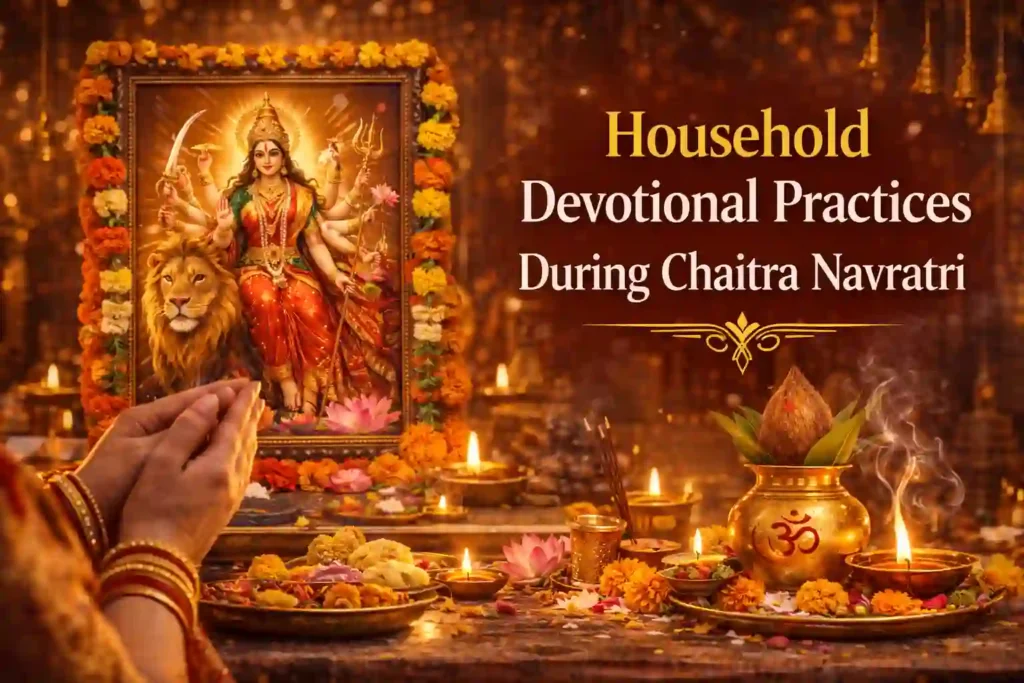
For household devotees, Chaitra Navratri 2026 can be observed with simple devotional practices.
Many families begin with Kalash Sthapana on the first day and maintain a sacred space for daily prayer during the nine days.
Common practices include lighting a diya before the goddess, chanting Durga mantras, reading Durga Chalisa or Durga Saptashati, and maintaining sattvik food.
Some devotees observe fasting, while others simply follow disciplined and mindful living during the festival.
What matters most is sincerity and devotion.
Kanya Puja During Navratri
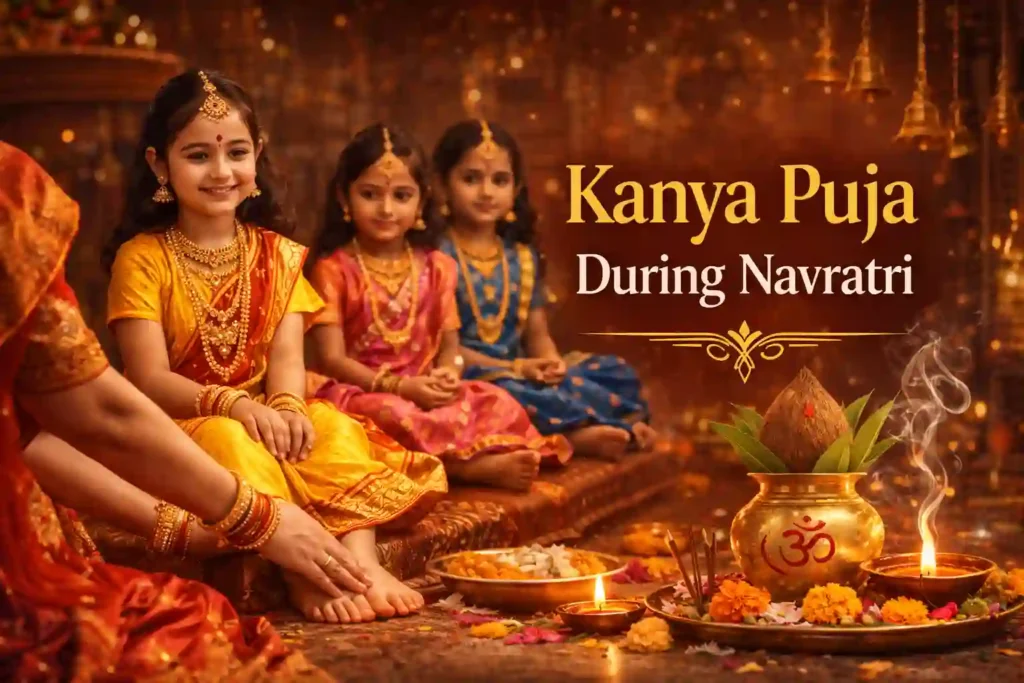
One of the most meaningful rituals of Navratri is Kanya Puja.
Young girls, usually between two and ten years old, are worshipped as living representations of the Divine Mother.
Devotees wash their feet, offer food, and give small gifts as a mark of respect.
This ritual symbolises reverence for the divine feminine present in all life.
Spiritual Meaning of Chaitra Navratri
At its deeper level, Chaitra Navratri 2026 represents the awakening of divine energy within the human heart.
Each day symbolises the gradual removal of negative tendencies such as fear, anger, ego, and ignorance.
As the nine nights progress, devotees move inward from restlessness toward clarity and devotion.
Through prayer, discipline, and remembrance of the Divine Mother, the mind becomes calmer and more balanced.
In this way, Chaitra Navratri becomes not only a festival but a journey of inner transformation.
Conclusion
Chaitra Navratri 2026, observed from March 19 to March 27, marks a sacred beginning in the spiritual calendar of Sanatan Dharma.
Across temples, homes, and pilgrimage centres, devotees honour the Divine Mother through prayer, fasting, scripture recitation, and acts of devotion.
These nine days remind devotees that every new cycle of life offers an opportunity to renew faith, strengthen discipline, and reconnect with the protective and nurturing energy of Shakti.
When observed with sincerity, Chaitra Navratri 2026 becomes a powerful spiritual beginning for the year ahead.
Suggested Reading
If you wish to explore the deeper traditions of Shakti worship connected with Chaitra Navratri 2026, these articles may help you understand the Divine Mother and her spiritual significance in greater depth:
Maa Durga: The Divine Mother and Her Protective Power
https://thesanatantales.com/maa-durga/
Das Mahavidya: Ten Wisdom Forms of the Divine Mother
https://thesanatantales.com/das-mahavidya/
Kumari Puja in Navratri: Honouring Kanya as Divine Shakti
https://thesanatantales.com/kumari-puja-in-navratri-guide/
Gupta Navratri January 2026: Meaning, Dates and Spiritual Significance
https://thesanatantales.com/gupta-navratri-january-2026/
Suggested Reading
When is Chaitra Navratri in 2026?
Chaitra Navratri in 2026 will begin on March 19 and end on March 27, concluding with the celebration of Ram Navami.
Why is Chaitra Navratri important?
Chaitra Navratri 2026 marks the beginning of the Hindu lunar year in many traditions and is dedicated to worshipping the nine forms of the Divine Mother.
Which goddesses are worshipped during Chaitra Navratri?
Devotees worship the Navadurga, the nine sacred forms of the Divine Mother, during the nine days of Navratri.
What is the significance of Kanya Puja?
Kanya Puja honours young girls as manifestations of the Divine Mother and symbolises respect for the divine feminine.
Can household devotees observe Chaitra Navratri simply?
Yes. Lighting a diya daily, chanting Durga mantras, maintaining sattvik food, and offering simple prayers are considered sufficient.