
Many devotees feel a deep connection with Maa Durga through simple devotional prayers.
Among these sacred hymns, the Durga Chalisa is one of the most widely recited prayers dedicated to the Divine Mother.
Many devotees search for the Durga Chalisa meaning so they can chant the prayer with understanding and devotion.
The word Chalisa means a hymn of forty verses, and this prayer praises the strength, compassion, and protective power of Maa Durga.
Through these verses, devotees remember the Divine Mother as the destroyer of evil and the protector of those who walk the path of devotion.
This guide presents the full Durga Chalisa lyrics first for continuous reading, followed by a line-by-line section with English pronunciation and meanings so beginners can chant with clarity.
Table of Contents
ToggleWhat Is Durga Chalisa
Durga Chalisa is a devotional hymn of forty verses dedicated to Maa Durga. The prayer praises the Divine Mother as the source of divine strength, wisdom, and protection.
The word Chalisa means forty, referring to the forty verses that describe the glory and power of Maa Durga.
Through these verses, devotees remember the many forms of the Divine Mother and her role in protecting the universe from negativity and injustice.
Because of its simple language and powerful message, Durga Chalisa is widely recited by devotees across India, especially during Navratri and other festivals dedicated to the Divine Mother.
The Durga Chalisa is traditionally attributed to the devotee Devidas, who composed this hymn to praise the compassion and strength of Maa Durga.
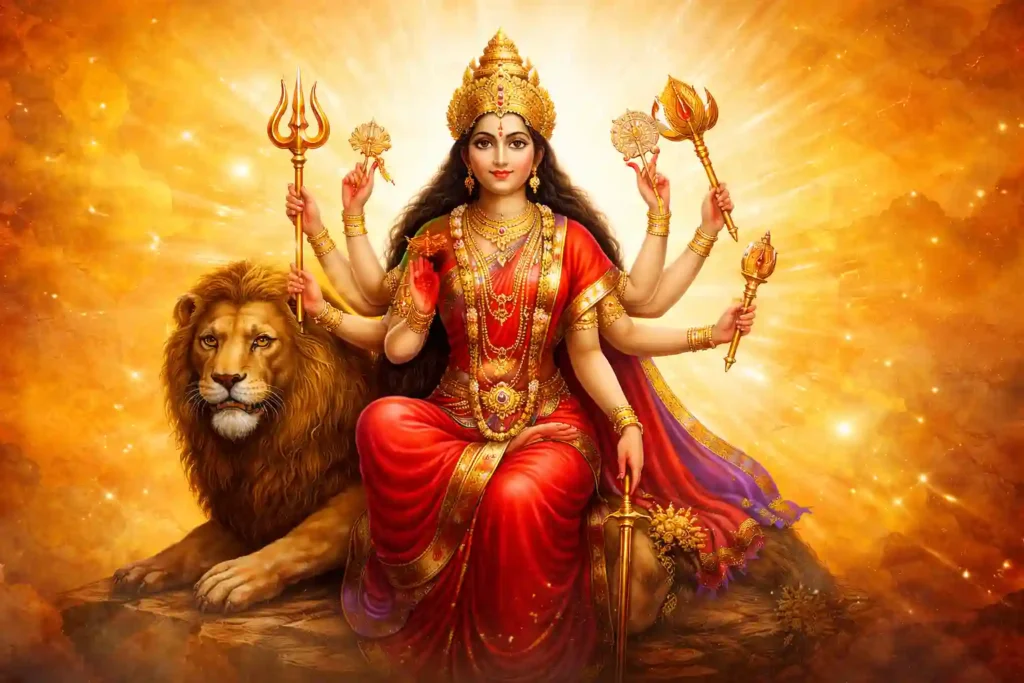
Full Durga Chalisa for Continuous Reading
The Durga Chalisa is traditionally attributed to the devotee Devidas, who composed this hymn to praise the power and compassion of Maa Durga.
नमो नमो दुर्गे सुख करनी।
नमो नमो अम्बे दुःख हरनी॥
निरंकार है ज्योति तुम्हारी।
तिहुँ लोक फैली उजियारी॥
शशि ललाट मुख महा विशाला।
नेत्र लाल भृकुटि विकराला॥
रूप मातु को अधिक सुहावे।
दरश करत जन अति सुख पावे॥
तुम संसार शक्ति लय कीना।
पालन हेतु अन्न धन दीना॥
अन्नपूर्णा हुई जग पाला।
तुम ही आदि सुन्दरी बाला॥
प्रलयकाल सब नाशन हारी।
तुम गौरी शिव शंकर प्यारी॥
शिव योगी तुम्हरे गुण गावें।
ब्रह्मा विष्णु तुम्हें नित ध्यावें॥
रूप सरस्वती को तुम धारा।
दे सुबुद्धि ऋषि मुनि उबारा॥
धरयो रूप नरसिंह को अम्बा।
प्रगट भई फाड़कर खम्बा॥
रक्षा करी प्रह्लाद बचायो।
हिरण्याक्ष को स्वर्ग पठायो॥
लक्ष्मी रूप धरो जग माहीं।
श्री नारायण अंग समाहीं॥
क्षीर सिंधु में करत विलासा।
दयासिंधु दीजै मन आसा॥
हिंगलाज में तुम्हीं भवानी।
महिमा अमित न जात बखानी॥
मातंगी धूमावति माता।
भुवनेश्वरी बगला सुख दाता॥
श्री भैरव तारा जग तारिणी।
छिन्न भाल भव दुख निवारिणी॥
केहरि वाहन सोह भवानी।
लांगुर वीर चलत अगवानी॥
कर में खप्पर खड्ग विराजै।
जाको देख काल डर भाजै॥
सोहै अस्त्र और त्रिशूला।
जाते उठत शत्रु हिय शूला॥
नगर कोट में तुम्हीं विराजत।
तिहुँ लोक में डंका बाजत॥
शुम्भ निशुम्भ दानव तुम मारे।
रक्तबीज संहारें॥
महिषासुर नृप अति अभिमानी।
जेहि अघ भार मही अकुलानी॥
रूप कराल काली को धारा।
सेन सहित तुम तिहि संहारा॥
परी गाढ़ संत पर जब जब।
भई सहाय मातु तुम तब तब॥
अमरपुरी अरु बसव लोक।
तव महिमा सब रहै अशोक॥
ज्वाला में है ज्योति तुम्हारी।
तुम्हें सदा पूजें नर नारी॥
प्रेम भक्ति से जो यश गावें।
दुःख दारिद्र निकट न आवें॥
ध्यावे तुम्हें जो नर मन लाई।
जन्म मरण से मुक्त हो जाई॥
जोगी सुर मुनि कहत पुकारा।
योग न हो बिन शक्ति तुम्हारा॥
शंकर आचारज तप कीनो।
काम अरु क्रोध जीत सब लीनो॥
निशिदिन ध्यान धरो शंकर को।
काहु काल नहिं सुमिरो तुमको॥
शक्ति रूप का मरम न पायो।
शक्ति गई तब मन पछितायो॥
शरणागत हुई कीर्ति बखानी।
जय जय जय जगदम्ब भवानी॥
भई प्रसन्न आदि जगदम्बा।
दई शक्ति नहिं कीन विलम्बा॥
मोको मातु कष्ट अति घेरो।
तुम बिन कौन हरे दुख मेरो॥
आशा तृष्णा निपट सतावें।
रिपु मूरख मोहिं अति डरपावें॥
शत्रु नाश कीजै महारानी।
सुमिरौं इकचित तुम्हें भवानी॥
करो कृपा हे मातु दयाला।
ऋद्धि सिद्धि दे करहु निहाला॥
जब लगि जिऊँ दया फल पाऊँ।
तुम्हरो यश मैं सदा सुनाऊँ॥
दुर्गा चालीसा जो कोई गावै।
सब सुख भोग परम पद पावै॥
देवीदास शरण निज जानी।
करहु कृपा जगदम्ब भवानी॥
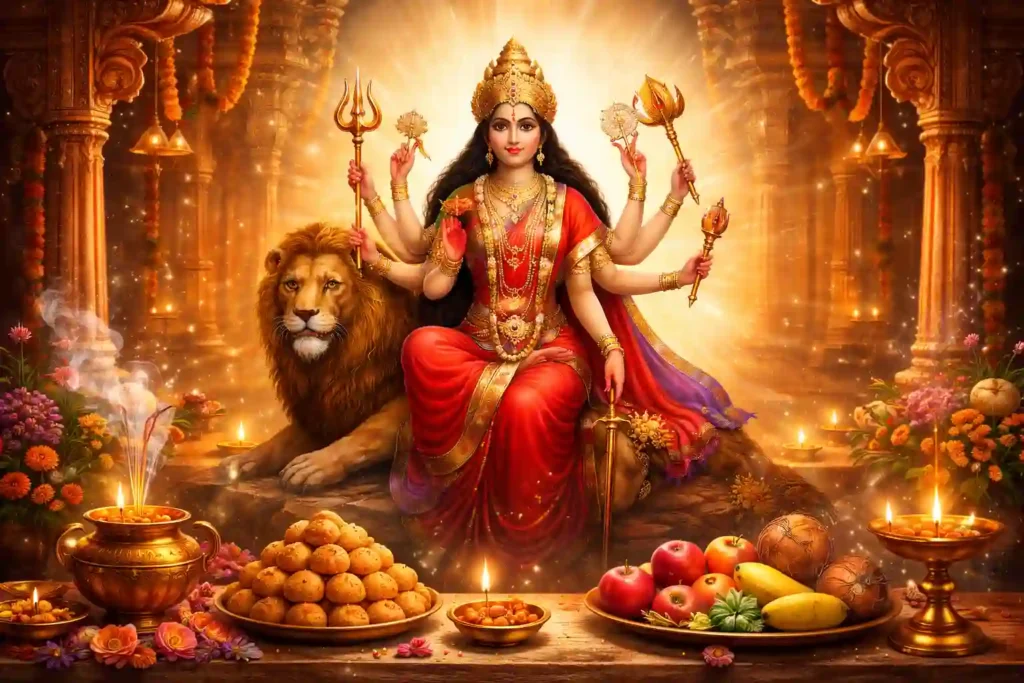
Durga Chalisa Line-by-Line (English Pronunciation & Meaning)
Below is the Durga Chalisa explained verse by verse with English pronunciation and simple meanings so beginners can chant with understanding.
Verse 1
नमो नमो दुर्गे सुख करनी
नमो नमो अम्बे दुःख हरनी
Pronunciation
Namo namo Durge sukh karani
Namo namo Ambe dukh harani
Hindi Meaning
हे माता दुर्गा, आपको बार-बार प्रणाम है। आप सुख देने वाली और दुःख दूर करने वाली हैं।
English Meaning
O Mother Durga, I bow to you again and again. You are the one who brings happiness and removes sorrow.
Verse 2
निरंकार है ज्योति तुम्हारी
तिहुँ लोक फैली उजियारी
Pronunciation
Nirankar hai jyoti tumhari
Tihun lok phaili ujiyari
Hindi Meaning
आपकी दिव्य ज्योति निराकार है और तीनों लोकों में उसका प्रकाश फैला हुआ है।
English Meaning
Your divine light is formless and spreads across all three worlds.
Verse 3
शशि ललाट मुख महा विशाला
नेत्र लाल भृकुटि विकराला
Pronunciation
Shashi lalat mukh maha vishala
Netra lal bhrikuti vikarala
Hindi Meaning
माता का ललाट चंद्रमा की तरह तेजस्वी है और उनका विशाल रूप अत्यंत दिव्य है। उनकी लाल आँखें और भृकुटि दुष्ट शक्तियों के लिए भयावह हैं।
English Meaning
The Divine Mother has a radiant face, with a shining forehead like the moon and powerful eyes that destroy evil.
Verse 4
रूप मातु को अधिक सुहावे
दरश करत जन अति सुख पावे
Pronunciation
Roop matu ko adhik suhave
Darash karat jan ati sukh pave
Hindi Meaning
माँ का यह रूप अत्यंत सुंदर है। उनके दर्शन करने से भक्तों को बहुत सुख मिलता है।
English Meaning
The beautiful form of the Divine Mother brings great joy. Devotees feel deep happiness upon seeing her divine presence.
Verse 5
तुम संसार शक्ति लय कीना
पालन हेतु अन्न धन दीना
Pronunciation
Tum sansar shakti lay kina
Palan hetu ann dhan dina
Hindi Meaning
आपने ही संसार की शक्ति का निर्माण किया और जीवों के पालन के लिए अन्न और धन प्रदान किया।
English Meaning
You created the power that sustains the world and provide food and wealth for the nourishment of all beings.
Verse 6
अन्नपूर्णा हुई जग पाला
तुम ही आदि सुन्दरी बाला
Pronunciation
Annapurna hui jag pala
Tum hi adi sundari bala
Hindi Meaning
आप अन्नपूर्णा बनकर संसार का पालन करती हैं और आप ही आदि शक्ति और सुंदरी माता हैं।
English Meaning
As Annapurna, you nourish the entire world. You are the primordial and beautiful Divine Mother.
Verse 7
प्रलयकाल सब नाशन हारी
तुम गौरी शिव शंकर प्यारी
Pronunciation
Pralay kaal sab nashan hari
Tum Gauri Shiv Shankar pyari
Hindi Meaning
प्रलय के समय आप सबका नाश करती हैं और आप शिव शंकर की प्रिय गौरी हैं।
English Meaning
At the time of cosmic dissolution, you destroy all negativity. You are Gauri, the beloved of Lord Shiva.
Verse 8
शिव योगी तुम्हरे गुण गावें
ब्रह्मा विष्णु तुम्हें नित ध्यावें
Pronunciation
Shiv yogi tumhare gun gaave
Brahma Vishnu tumhe nit dhyaave
Hindi Meaning
शिव और योगी आपके गुणों का गान करते हैं। ब्रह्मा और विष्णु भी आपको निरंतर स्मरण करते हैं।
English Meaning
Lord Shiva and great yogis sing your praises. Even Brahma and Vishnu meditate upon you.
Verse 9
रूप सरस्वती को तुम धारा
दे सुबुद्धि ऋषि मुनि उबारा
Pronunciation
Roop Saraswati ko tum dhara
De subuddhi rishi muni ubara
Hindi Meaning
आपने सरस्वती का रूप धारण कर ऋषियों और मुनियों को ज्ञान और बुद्धि प्रदान की।
English Meaning
Taking the form of Saraswati, you bless sages and seekers with wisdom and knowledge.
Verse 10
धरयो रूप नरसिंह को अम्बा
प्रगट भई फाड़कर खम्बा
Pronunciation
Dharyo roop Narasinh ko Amba
Pragat bhai phadkar khamba
Hindi Meaning
माता ने नरसिंह का रूप धारण किया और खम्भे से प्रकट हुईं।
English Meaning
O Mother, you manifested in the fierce form of Narasimha, emerging powerfully from the pillar.
Verse 11
रक्षा करी प्रह्लाद बचायो
हिरण्याक्ष को स्वर्ग पठायो
Pronunciation
Raksha kari Prahlad bachayo
Hiranyaksha ko swarg pathayo
Hindi Meaning
आपने भक्त प्रह्लाद की रक्षा की और दुष्ट हिरण्याक्ष का विनाश किया।
English Meaning
You protected the devotee Prahlad and destroyed the demon Hiranyaksha.
Verse 12
लक्ष्मी रूप धरो जग माहीं
श्री नारायण अंग समाहीं
Pronunciation
Lakshmi roop dharo jag maahin
Shri Narayan ang samahin
Hindi Meaning
आपने लक्ष्मी का रूप धारण किया और भगवान विष्णु के साथ विराजमान हुईं।
English Meaning
You took the form of Goddess Lakshmi and became united with Lord Vishnu.
Verse 13
क्षीर सिंधु में करत विलासा
दयासिंधु दीजै मन आसा
Pronunciation
Ksheer sindhu mein karat vilasa
Dayasindhu dijai man asa
Hindi Meaning
आप क्षीरसागर में विराजमान हैं। कृपया अपने भक्तों की मनोकामनाएँ पूर्ण करें।
English Meaning
You reside in the divine ocean of milk. O ocean of compassion, please fulfill the hopes of devotees.
Verse 14
हिंगलाज में तुम्हीं भवानी
महिमा अमित न जात बखानी
Pronunciation
Hinglaj mein tumhi Bhavani
Mahima amit na jaat bakhani
Hindi Meaning
हिंगलाज धाम में भी आप ही भवानी रूप में विराजमान हैं। आपकी महिमा अनंत है।
English Meaning
You are worshipped as Bhavani at Hinglaj. Your divine glory is beyond description.
Verse 15
मातंगी धूमावति माता
भुवनेश्वरी बगला सुखदाता
Pronunciation
Matangi Dhumavati mata
Bhuvaneshwari Bagla sukhdata
Hindi Meaning
आप मातंगी, धूमावती, भुवनेश्वरी और बगला के रूप में भी पूजित हैं।
English Meaning
You are worshipped in many divine forms such as Matangi, Dhumavati, Bhuvaneshwari, and Baglamukhi.
Verse 16
श्री भैरव तारा जग तारिणी
छिन्न भाल भव दुख निवारिणी
Pronunciation
Shri Bhairav Tara jag tarini
Chhinn bhaal bhav dukh nivarini
Hindi Meaning
आप तारा रूप में संसार को पार लगाने वाली हैं और संसार के दुखों को दूर करती हैं।
English Meaning
As Goddess Tara, you help devotees cross the ocean of worldly suffering and remove their sorrows.
Verse 17
केहरि वाहन सोह भवानी
लांगुर वीर चलत अगवानी
Pronunciation
Kehari vahan soh Bhavani
Langur veer chalat agvani
Hindi Meaning
माता भवानी सिंह पर विराजमान हैं और वीर उनके आगे चलते हैं।
English Meaning
Goddess Bhavani rides the lion, symbolizing courage and strength.
Verse 18
कर में खप्पर खड्ग विराजै
जाको देख काल डर भाजै
Pronunciation
Kar mein khappar khadg virajai
Jako dekh kaal dar bhajai
Hindi Meaning
माता के हाथों में खड्ग और खप्पर सुशोभित हैं। जिन्हें देखकर काल भी डर जाता है।
English Meaning
Holding a sword and skull bowl, the Goddess appears so powerful that even death fears her.
Verse 19
सोहै अस्त्र और त्रिशूला
जाते उठत शत्रु हिय शूला
Pronunciation
Sohai astr aur trishula
Jaate uthata shatru hiy shoola
Hindi Meaning
माता के अस्त्र और त्रिशूल शत्रुओं का नाश करते हैं।
English Meaning
The divine weapons and trident of the Goddess destroy all enemies and negativity.
Verse 20
नगर कोट में तुम्हीं विराजत
तिहुँ लोक में डंका बाजत
Pronunciation
Nagar kot mein tumhi virajat
Tihun lok mein danka bajat
Hindi Meaning
आप नगरकोट में विराजमान हैं और तीनों लोकों में आपकी महिमा का डंका बजता है।
English Meaning
You reside in sacred places like Nagarkot, and your glory echoes across the three worlds.
Verse 21
शुम्भ निशुम्भ दानव तुम मारे
रक्तबीज संहारें
Pronunciation
Shumbh Nishumbh danav tum mare
Raktabeej sanhare
Hindi Meaning
आपने शुम्भ, निशुम्भ और रक्तबीज जैसे दानवों का विनाश किया।
English Meaning
You destroyed powerful demons such as Shumbha, Nishumbha, and Raktabeej.
Verse 22
महिषासुर नृप अति अभिमानी
जेहि अघ भार मही अकुलानी
Pronunciation
Mahishasur nrip ati abhimani
Jehi agh bhar mahi akulani
Hindi Meaning
महिषासुर नामक अत्यंत अहंकारी दानव ने पृथ्वी को कष्ट दिया।
English Meaning
The arrogant demon Mahishasura troubled the world with his tyranny.
Verse 23
रूप कराल काली को धारा
सेन सहित तुम तिहि संहारा
Pronunciation
Roop karal Kali ko dhara
Sen sahit tum tihi sanhara
Hindi Meaning
माता ने काली का भयंकर रूप धारण कर उसकी सेना सहित उसका नाश किया।
English Meaning
Taking the fierce form of Kali, you destroyed the demon and his army.
Verse 24
परी गाढ़ संत पर जब जब
भई सहाय मातु तुम तब तब
Pronunciation
Pari gadh sant par jab jab
Bhai sahay matu tum tab tab
Hindi Meaning
जब-जब संतों पर संकट आया, तब-तब माता ने उनकी सहायता की।
English Meaning
Whenever saints and devotees faced danger, the Divine Mother came to their help.
Verse 25
अमरपुरी अरु बसव लोक
तव महिमा सब रहै अशोक
Pronunciation
Amarpuri aru basav lok
Tav mahima sab rahai ashoka
Hindi Meaning
देवताओं के लोकों में भी आपकी महिमा का वर्णन होता है।
English Meaning
Even in the heavenly realms, your divine glory is praised.
Verse 26
ज्वाला में है ज्योति तुम्हारी
तुम्हें सदा पूजें नर नारी
Pronunciation
Jwala mein hai jyoti tumhari
Tumhe sada poojen nar nari
Hindi Meaning
ज्वाला में भी आपकी ही शक्ति है और सभी नर-नारी आपकी पूजा करते हैं।
English Meaning
Your divine energy shines even in flames, and people everywhere worship you.
Verse 27
प्रेम भक्ति से जो यश गावें
दुःख दारिद्र निकट न आवें
Pronunciation
Prem bhakti se jo yash gaave
Dukh daridra nikat na aave
Hindi Meaning
जो भक्त प्रेम और भक्ति से माता का गुणगान करते हैं, उनके जीवन में दुःख और दरिद्रता नहीं आती।
English Meaning
Those who sing the praises of the Goddess with devotion remain free from sorrow and poverty.
Verse 28
ध्यावे तुम्हें जो नर मन लाई
जन्म मरण से मुक्त हो जाई
Pronunciation
Dhyave tumhe jo nar man lai
Janm maran se mukt ho jai
Hindi Meaning
जो भक्त मन से माता का ध्यान करता है, वह जन्म और मृत्यु के चक्र से मुक्त हो सकता है।
English Meaning
One who meditates upon the Goddess with full devotion becomes free from the cycle of birth and death.
Verse 29
जोगी सुर मुनि कहत पुकारा
योग न हो बिन शक्ति तुम्हारा
Pronunciation
Jogi sur muni kahat pukara
Yog na ho bin shakti tumhara
Hindi Meaning
योगी, देवता और मुनि कहते हैं कि आपकी शक्ति के बिना योग भी संभव नहीं।
English Meaning
Yogis, sages, and gods say that spiritual realization is impossible without your divine power.
Verse 30
शंकर आचारज तप कीनो
काम अरु क्रोध जीत सब लीनो
Pronunciation
Shankar acharaj tap kino
Kam aru krodh jeet sab lino
Hindi Meaning
शंकराचार्य ने तपस्या करके काम और क्रोध जैसे विकारों पर विजय प्राप्त की।
English Meaning
Through deep austerity, Shankaracharya conquered desires and anger.
Verse 31
निशिदिन ध्यान धरो शंकर को
काहु काल नहिं सुमिरो तुमको
Pronunciation
Nishidin dhyan dharo Shankar ko
Kahu kaal nahin sumiro tumko
Hindi Meaning
दिन-रात शिव का ध्यान किया, पर कभी शक्ति का स्मरण नहीं किया।
English Meaning
Though Lord Shiva was worshipped constantly, the power of the Goddess was sometimes forgotten.
Verse 32
शक्ति रूप का मरम न पायो
शक्ति गई तब मन पछितायो
Pronunciation
Shakti roop ka maram na payo
Shakti gai tab man pachitayo
Hindi Meaning
जब शक्ति का महत्व नहीं समझा गया तो बाद में पछतावा हुआ।
English Meaning
Not understanding the importance of divine power leads to regret.
Verse 33
शरणागत हुई कीर्ति बखानी
जय जय जय जगदम्ब भवानी
Pronunciation
Sharanagat hui kirti bakhani
Jai jai jai Jagadamb Bhavani
Hindi Meaning
भक्त माता की शरण में आकर उनकी महिमा का गुणगान करते हैं।
English Meaning
Devotees surrender to the Divine Mother and praise her glory.
Verse 34
भई प्रसन्न आदि जगदम्बा
दई शक्ति नहिं कीन विलम्बा
Pronunciation
Bhai prasann adi Jagadamba
Dai shakti nahin keen vilamba
Hindi Meaning
जगदम्बा प्रसन्न होकर तुरंत शक्ति प्रदान करती हैं।
English Meaning
When pleased, the Divine Mother quickly blesses devotees with strength.
Verse 35
मोको मातु कष्ट अति घेरो
तुम बिन कौन हरे दुख मेरो
Pronunciation
Moko matu kasht ati ghero
Tum bin kaun hare dukh mero
Hindi Meaning
हे माता, मुझे अनेक कष्ट घेर रहे हैं। आपके बिना मेरा दुःख कौन दूर करेगा?
English Meaning
O Mother, I am surrounded by difficulties. Who else but you can remove my sorrow?
Verse 36
आशा तृष्णा निपट सतावें
रिपु मूरख मोहिं अति डरपावें
Pronunciation
Asha trishna nipat satave
Ripu murakh mohi ati darpave
Hindi Meaning
आशा और तृष्णा मुझे परेशान करती हैं और शत्रु मुझे डराते हैं।
English Meaning
Desires and fears trouble the mind, and enemies create anxiety.
Verse 37
शत्रु नाश कीजै महारानी
सुमिरौं इकचित तुम्हें भवानी
Pronunciation
Shatru nash kije Maharani
Sumirau ikchit tumhe Bhavani
Hindi Meaning
हे महारानी, मेरे शत्रुओं का नाश करें। मैं एकाग्र होकर आपका स्मरण करता हूँ।
English Meaning
O Great Queen, destroy my enemies as I remember you with focused devotion.
Verse 38
करो कृपा हे मातु दयाला
ऋद्धि सिद्धि दे करहु निहाला
Pronunciation
Karo kripa he matu dayala
Riddhi siddhi de karahu nihala
Hindi Meaning
हे दयालु माता, कृपा कर मुझे समृद्धि और सिद्धियाँ प्रदान करें।
English Meaning
O compassionate Mother, bless me with prosperity and spiritual fulfillment.
Verse 39
जब लगि जिऊँ दया फल पाऊँ
तुम्हरो यश मैं सदा सुनाऊँ
Pronunciation
Jab lagi jiun daya phal paun
Tumharo yash main sada sunaun
Hindi Meaning
जब तक मैं जीवित रहूँ, आपकी कृपा का फल पाऊँ और आपकी महिमा का गान करूँ।
English Meaning
As long as I live, may I receive your grace and continue to sing your praise.
Verse 40
दुर्गा चालीसा जो कोई गावै
सब सुख भोग परम पद पावै
Pronunciation
Durga Chalisa jo koi gaave
Sab sukh bhog param pad paave
Hindi Meaning
जो कोई भी श्रद्धा से दुर्गा चालीसा गाता है, वह सभी सुख प्राप्त करता है और परम पद पाता है।
English Meaning
Whoever chants the Durga Chalisa with devotion attains happiness and ultimately spiritual liberation.
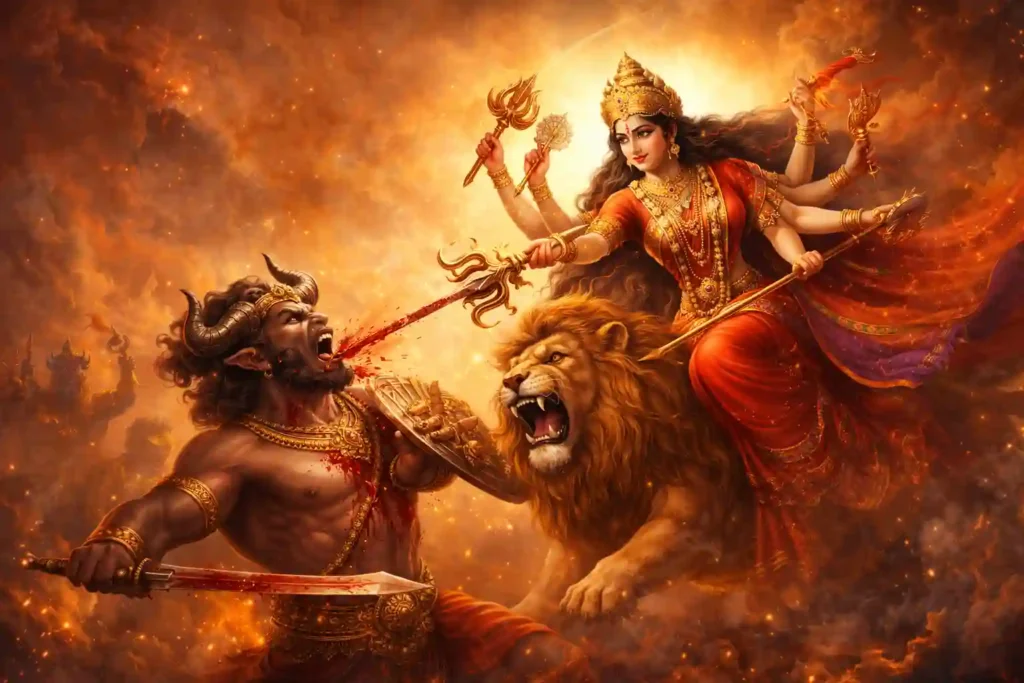
The Spiritual Meaning of Durga Chalisa
The Durga Chalisa is more than a prayer of praise. The verses symbolize the victory of divine strength over negativity and ignorance.
Maa Durga represents courage, wisdom, and protection. By chanting the Chalisa, devotees remember that divine strength exists within the heart of every seeker.
For many people, chanting this prayer becomes a reminder that faith and devotion can help overcome fear, confusion, and difficulties in life.
Lorem ipsum dolor sit amet, consectetur adipiscing elit. Ut elit tellus, luctus nec ullamcorper mattis, pulvinar dapibus leo.
Why Devotees Chant Durga Chalisa
Many devotees chant the Durga Chalisa to seek courage, protection, and emotional peace.
The hymn praises the Divine Mother as the destroyer of negative forces and the protector of those who remember her.
Chanting the Chalisa often brings a feeling of reassurance and spiritual comfort. For many people, it becomes a daily prayer that helps them stay calm and hopeful during challenging moments.
When to Chant Durga Chalisa
Durga Chalisa can be chanted at any time with devotion.
However, many devotees prefer certain occasions:
- During Navratri
- On Fridays or Tuesdays
- During morning or evening prayers
- During worship of Maa Durga
The most important aspect is devotion rather than strict timing.
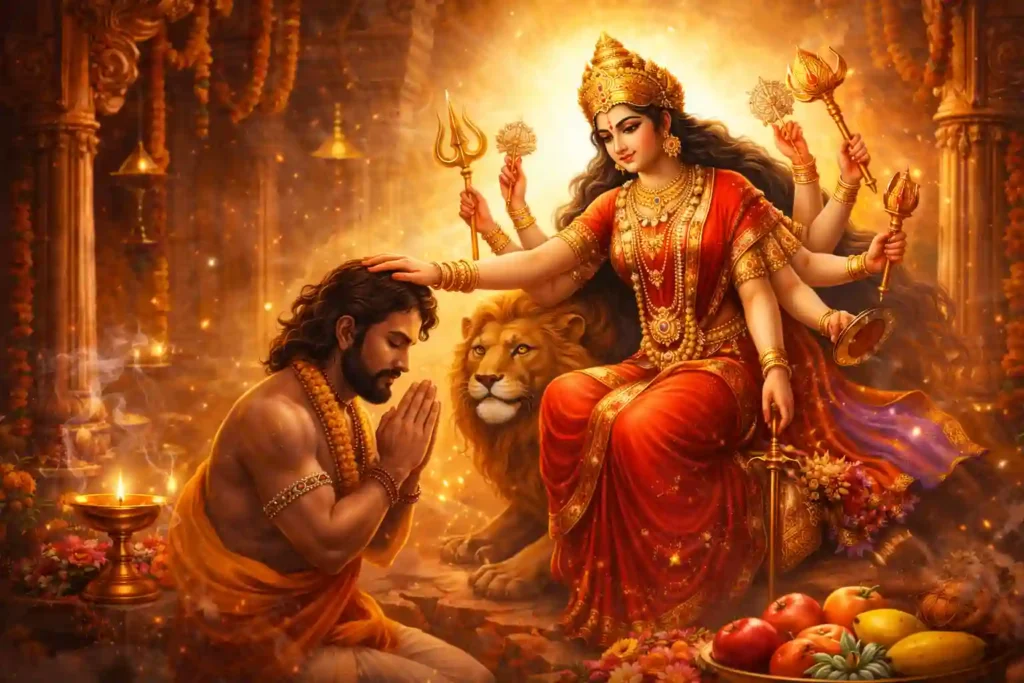
How to Chant Durga Chalisa
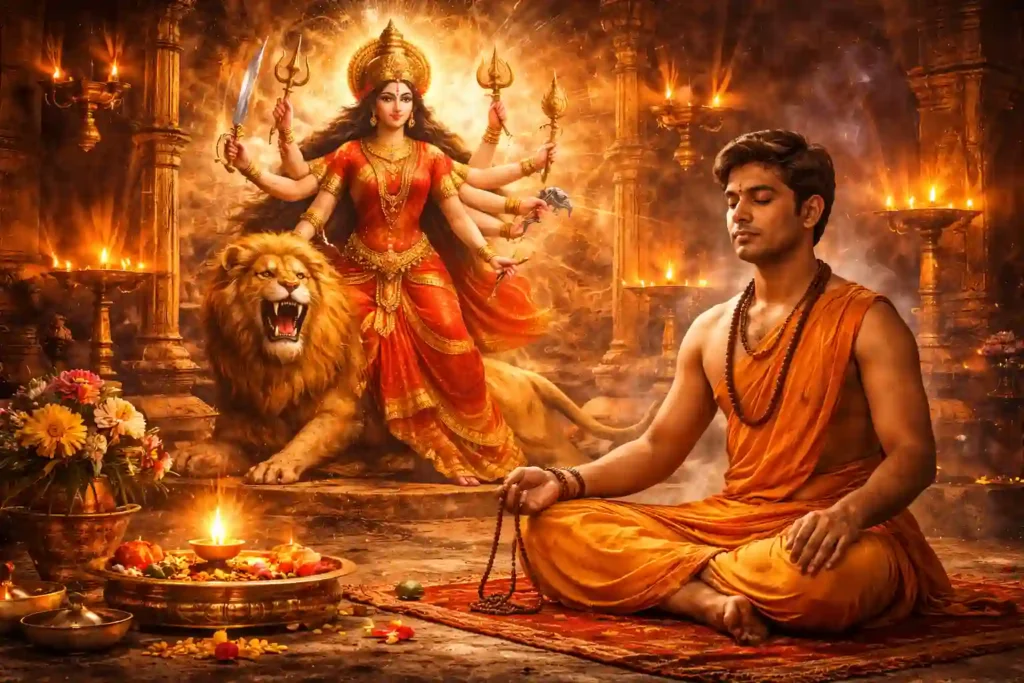
Sit in a peaceful place where your mind can remain calm. Many devotees like to light a diya or incense before beginning the prayer.
Take a few slow breaths and remember Maa Durga with devotion. Chant the verses slowly and clearly.
Even reading the Chalisa with sincerity can create a peaceful and devotional atmosphere.
Benefits Felt by Devotees
Devotees often share that chanting the Durga Chalisa brings emotional strength and inner peace.
Some common experiences include:
- increased courage and confidence
- calmness of mind
- stronger faith in Maa Durga
- a feeling of divine protection
Over time, the prayer can deepen devotion and help devotees face challenges with greater courage.
Suggested Reading
If you want to explore more sacred prayers related to Maa Durga, these articles may also help deepen your understanding.
What Is Durga Saptashati? Meaning, Story and Why It Is Read in Navratri
https://thesanatantales.com/durga-saptashati-meaning-navratri/
Siddha Kunjika Stotram: The Sacred Key That Unlocks the Full Power of Durga Saptashati
https://thesanatantales.com/siddha-kunjika-stotram/
Navarna Mantra Meaning, Benefits, Chanting Rules and How to Chant
https://thesanatantales.com/navarna-mantra/
Devi Kavach Meaning: Durga Saptashati Protection Prayer with English Pronunciation
https://thesanatantales.com/devi-kavach-meaning/
Durga Beej Mantra: Simple Meaning, Benefits and How to Chant
https://thesanatantales.com/durga-beej-mantra-meaning
Final Thought
The Durga Chalisa is a simple yet powerful prayer that expresses devotion to the Divine Mother.
Even chanting a few verses with sincerity can bring peace, courage, and spiritual comfort.
May Maa Durga bless your life with strength, protection, and inner clarity.
Jai Maa Durga
Stay Connected with The Sanatan Tales
Receive spiritual reflections, festival insights, and new articles directly on WhatsApp.
FAQs
What is Durga Chalisa?
Durga Chalisa is a devotional hymn of forty verses dedicated to Maa Durga. It praises the strength, compassion, and protective power of the Divine Mother and is widely recited by devotees.
When should Durga Chalisa be chanted?
Durga Chalisa can be chanted at any time with devotion. Many devotees prefer chanting it during Navratri, on Fridays or Tuesdays, or during daily morning prayers.
Can beginners chant Durga Chalisa?
Yes. Beginners can chant Durga Chalisa with devotion. Even reading the prayer slowly and understanding its meaning can make the experience more meaningful.
What are the benefits of chanting Durga Chalisa?
Devotees believe that chanting Durga Chalisa brings courage, inner peace, and a feeling of divine protection. It can also strengthen faith and devotion toward Maa Durga.
Is Durga Chalisa part of Durga Saptashati?
No, Durga Chalisa is a separate devotional hymn. However, both prayers praise the power and glory of Maa Durga and are commonly recited during Navratri.
How many times should Durga Chalisa be read?
Some devotees chant Durga Chalisa once daily, while others read it during special occasions like Navratri. The most important aspect is devotion rather than a fixed number.
Who wrote Durga Chalisa?
Durga Chalisa is traditionally attributed to the devotee Devidas, who composed the hymn to praise the strength and compassion of Maa Durga.