
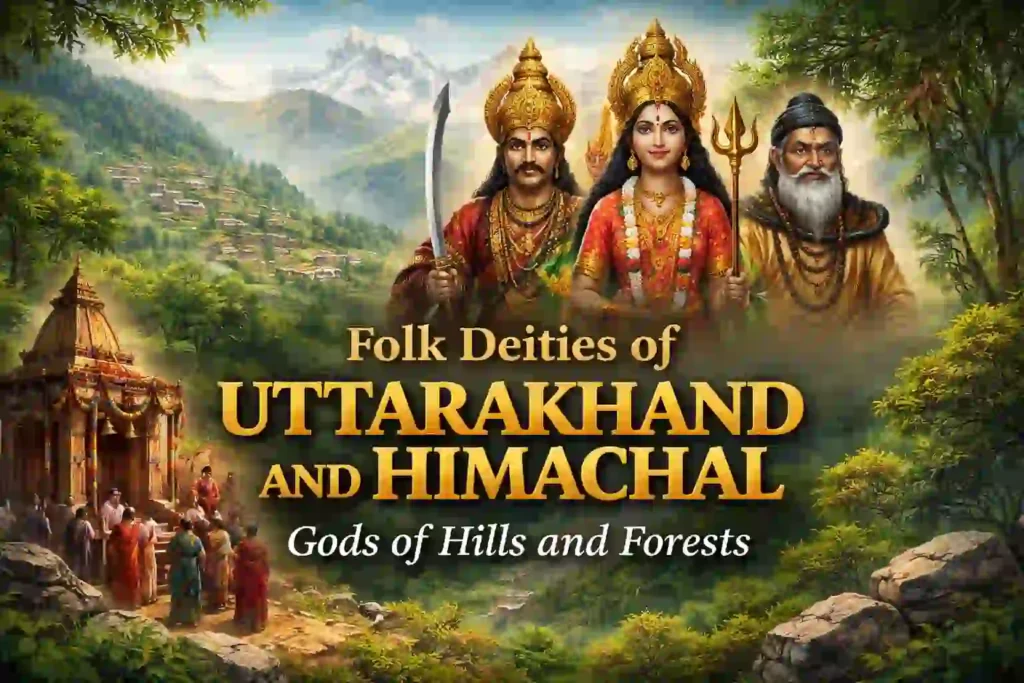
Folk deities of Uttarakhand and Himachal are not distant gods remembered only through old stories. In the Himalayan hills, gods are living presences.
They walk in palanquins, speak through oracles, protect forests and villages, get angry when boundaries are crossed, and guide community life through clear signs and rituals.
Unlike urban temple traditions, hill worship grows out of forests, peaks, rivers, isolation, and survival. Belief here is not abstract or symbolic.
It is practical, relational, and deeply tied to land. To understand these regions, one must understand their devtas.
In the hill regions, folk deities of Uttarakhand and Himachal are worshipped as living protectors, not as distant, temple-bound gods.
Table of Contents
ToggleFolk deities of Uttarakhand and Himachal in village life and the living devta culture
In Uttarakhand and Himachal, devtas are not seen as invisible or unreachable. They are active participants in village life. People believe their gods listen, respond, negotiate, and protect.
Village decisions related to farming, grazing, migration, festivals, and even disputes are often taken only after the devta’s consent.
This is not blind faith. It is lived experience built over generations. Even today, the folk deities of Uttarakhand and Himachal continue to guide village decisions, seasonal rituals, and social boundaries.
This devta culture exists because hill life demands balance with nature. Forests can give life or take it away. Mountains protect but also threaten.
Rivers nourish but can destroy. Folk deities emerge as guardians who maintain this balance. This is why folk deities of Uttarakhand and Himachal remain central to daily life.
Devta culture of Himachal: gods who rule village life
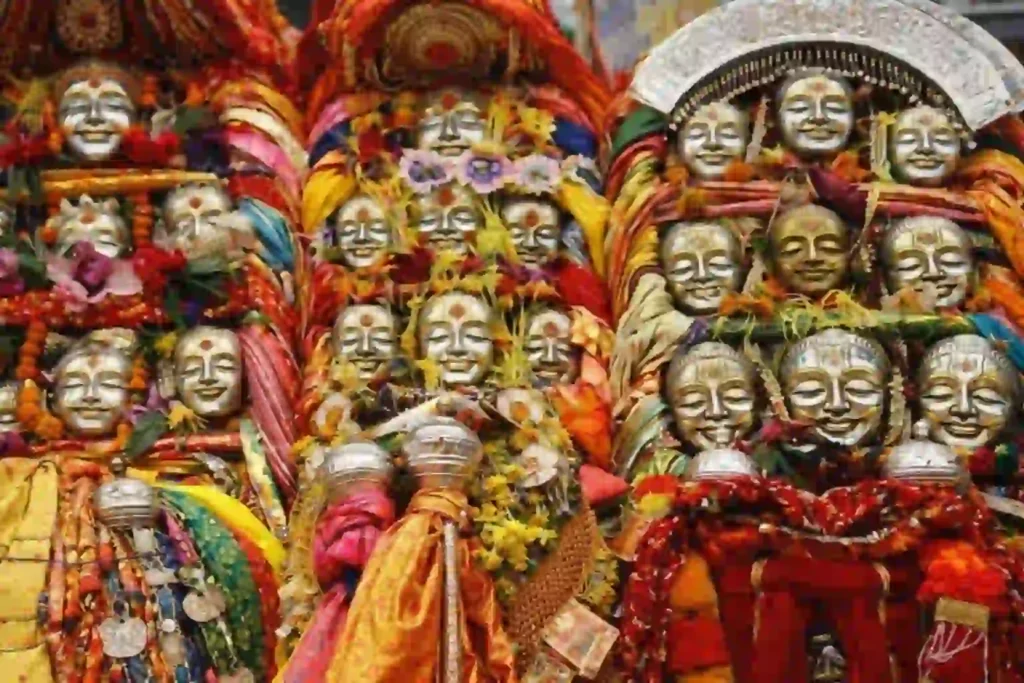
Himachal Pradesh is known for its strong devta rajya tradition, where village gods function as governing authorities.
Every devta has a defined territory, lineage of caretakers, and ritual responsibilities.
Decisions are often taken through the devta’s oracle, usually a medium known as gur or chela. When the devta is consulted, the entire village participates.
The outcome is respected deeply, especially in matters of land, justice, and social harmony.
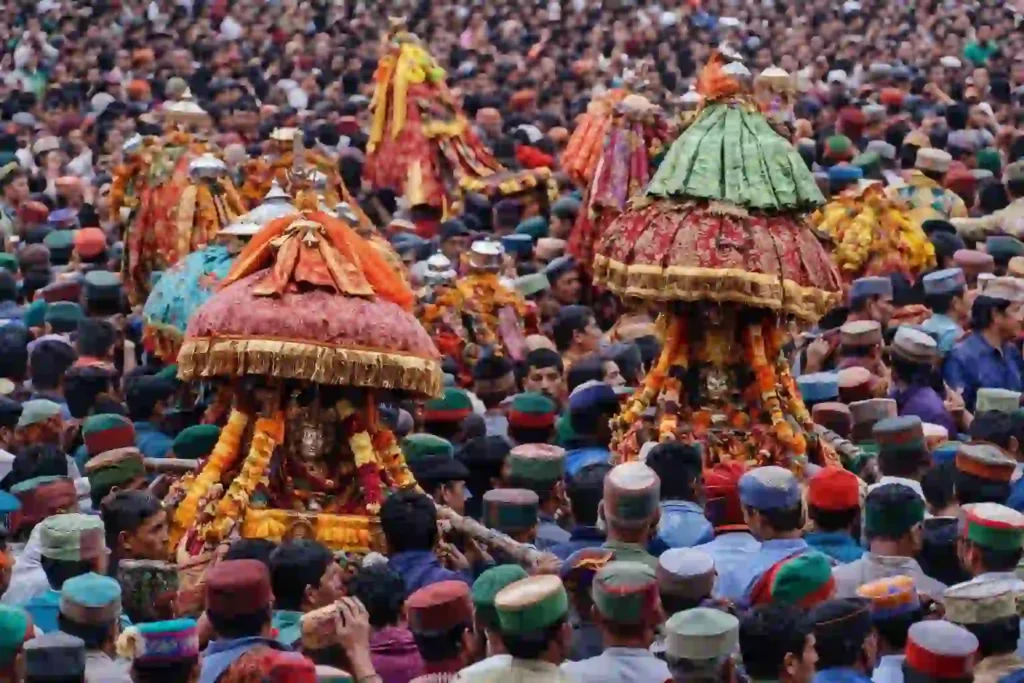
Devtas travel in palanquins (rath or doli) during festivals and important occasions. These journeys are not symbolic processions.
Villagers believe the god is physically present, observing everything. In many areas, village life moves according to devta guidance rather than administrative schedules.
Folk deities of Garhwal and their protective roles
prominent is Mahasu Devta, worshipped along with the Mahasu brothers. Mahasu Devta is regarded as a powerful authority who ensures discipline, justice, and protection across large regions.
Alongside Mahasu, villages worship:
- Local Bhairavs of the hills, guarding forest edges and boundaries
- Gram devtas, protecting individual villages
- Kul devtas, connected to family lineages
These deities are invoked during landslides, epidemics, forest threats, cattle loss, and sudden misfortune. Their role is not symbolic. Protection and stability come before philosophy.
Kumaon folk deities and traditions of justice
Kumaon is especially known for its justice-oriented folk deities, most notably Golju Devta. Golju Devta is approached as a fair judge who listens to grievances and delivers justice.
Devotees write petitions, take oaths, and offer bells at Golju temples. Many people believe unresolved matters will be corrected by the deity over time.
This faith has created a strong moral culture where truthfulness and accountability are valued.
Kumaon also has powerful gram devta traditions that emphasise social order, honesty, and community balance. Justice here is not only legal. It is sacred.
Forest, mountain, and river deities of the Himalayan hills
In the hills, nature itself is sacred. Forests are protected through forest-guardian deities. Cutting trees or harming wildlife without ritual permission is considered dangerous.
Mountains are treated as living beings. Many peaks are associated with local deities. Rivers are seen as mothers and protectors, not resources.
This devta–forest–mountain relationship functions as a natural conservation system. Long before modern environmental ideas, belief ensured restraint and balance.
Rituals, possession, oracles, and jagar traditions in folk worship
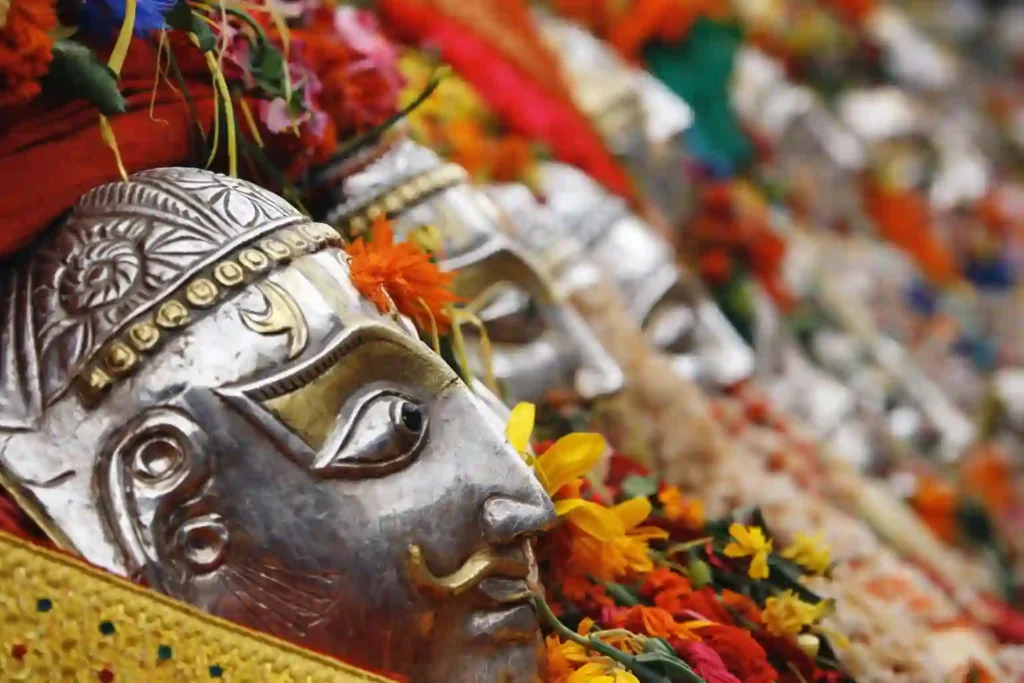
One of the most misunderstood aspects of hill worship is possession and oracle traditions. In Uttarakhand, the jagar tradition involves night-long ritual singing that invites the devta’s presence.
When the devta speaks through a medium, guidance is given on health, disputes, rituals, or warnings. These practices are not chaotic or fear-based. They follow strict rules and are led by trained practitioners.
Possession here is understood as divine communication, not loss of control. These traditions exist openly and are socially accepted.
Temple-specific and village-specific rituals of folk deities
Folk worship is never uniform. Each village follows its own inherited practices. Some shrines are simple stones under trees. Others have structured temples.
Offerings may include grains, flowers, lamps, or in some regions animal sacrifice. Where such practices exist, they follow strict ancestral rules and seasonal limits. They are not casual acts.
This diversity reflects Sanatan Dharma’s flexibility. Sincerity and continuity matter more than standardisation.
Doctrinal variations and folk belief systems of the hills
Hill worship does not always align neatly with textual doctrine. Folk logic values experience over explanation.
A devta is accepted because protection is felt, not because scripture confirms it.
Beliefs vary from village to village. This variation is not seen as confusion. It is seen as natural. Sanatan Dharma has always allowed multiple truths to exist side by side.
There is no fear or judgement here, only acceptance of lived reality.
Tantric and shamanic elements where traditionally accepted
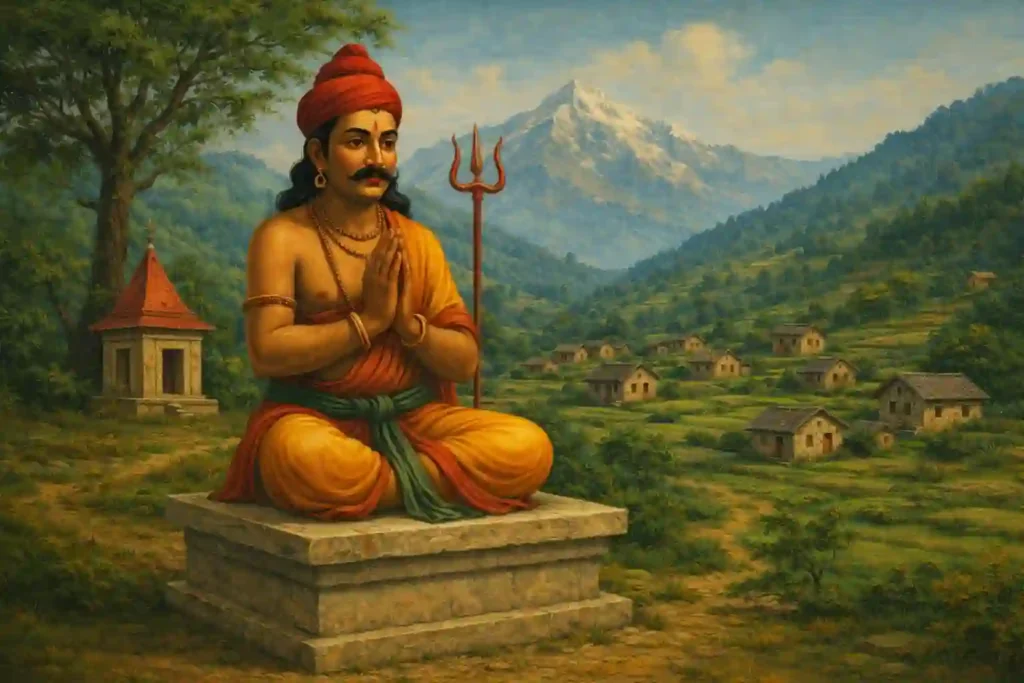
Some hill traditions include tantric or shamanic elements, especially in forest and boundary worship. These practices are lineage-based and controlled.
Initiation, restraint, and secrecy are respected. Such practices are never public spectacle and should not be sensationalised. Understanding them requires humility, not curiosity.
Folk deities vs Puranic gods in Uttarakhand and Himachal
Villagers do not see a strict divide between folk and Puranic gods. Shiva, Devi, Bhairav, and local devtas exist together naturally.
A village may worship Bhairav as a boundary guardian while also visiting a Shiva temple. There is no contradiction. Folk deities often absorb Puranic identities over time.
This coexistence explains why folk traditions remain strong even as temple culture expands.
Why folk deities still guide village life today
Modern life has not erased devta culture. Agriculture, forest dependence, migration anxiety, and identity continue to keep folk worship relevant.
For many, folk deities of Uttarakhand and Himachal provide protection, moral grounding, and belonging. These traditions adapt without losing their core.
Conclusion
The hills of Uttarakhand and Himachal are sacred landscapes where gods live close to people. Devtas guard forests, guide villages, deliver justice, and maintain balance.
Understanding folk deities of Uttarakhand and Himachal means understanding Sanatan Dharma as it is lived on the ground: layered, practical, respectful, and deeply human.
The folk deities of Uttarakhand and Himachal are not distant gods. They live with the people, walk in processions, and guard the hills even today.
Suggested Reading
If this deep dive into hill devta culture resonated with you, you may also like reading our earlier articles on Goludevta, Bhairav worship in North India Villages, and folk deities of North India.
Reading about the folk deities of Uttarakhand and Himachal helps us understand how faith grows directly from land, forest, and memory.
Together, these readings show how Sanatan Dharma lives through land, forest, and community, not only through temples and texts, but through everyday faith and lived experience.
Visit our website:www.thesanatantales.com for more such article on other Interesting topics of Sanatan Dharma.
FAQs
Who are the folk deities of Uttarakhand and Himachal?
They are local village gods, forest guardians, and mountain spirits worshipped as living protectors who guide daily life, rituals, and community decisions.
How is devta culture different in the hills?
In hill regions, gods actively guide villages through oracles, rituals, and collective decisions, rather than being limited to temple worship alone.
Who are the major folk deities of Garhwal and Kumaon?
Garhwal is known for Mahasu Devta and local Bhairavs, while Kumaon is famous for Golju Devta, the justice-giving deity, along with many gram devtas.
Do possession and oracle traditions still exist today?
Yes. In many villages, possession, jagar rituals, and oracle guidance are openly practiced and culturally accepted as divine communication.
Are folk deities separate from Puranic gods?
No. Villagers see folk deities and Puranic gods as connected. Shiva, Devi, Bhairav, and local devtas coexist naturally in hill worship.