
In Rajasthan, gods are not always born in heaven. Many are born in villages, on dusty paths, among cattle and farmers.
They live as humans, make promises, fight injustice, and die keeping their word. Over time, people stop calling them warriors.
They begin calling them protectors. This is how the hero deities of Rajasthan are born.
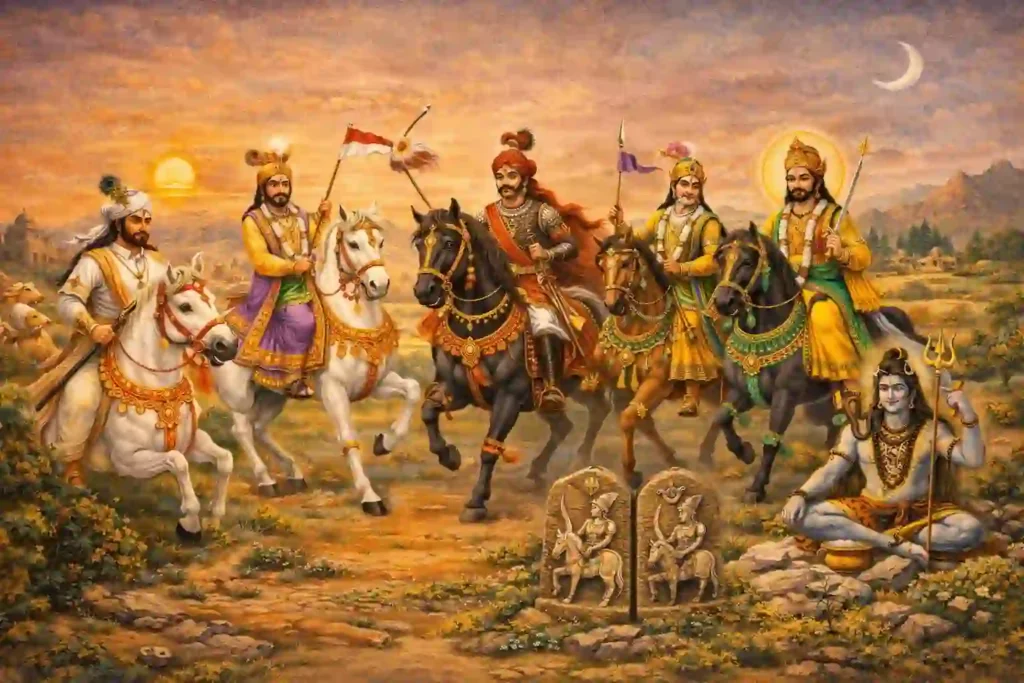
These deities are known as Lok Devtas of Rajasthan. They are not distant figures from ancient scriptures.
They are remembered as real people who chose truth over life. Their stories still guide village ethics, social duty, and faith, shaping the values of Rajasthan folk warriors.
Among them, Tejaji and Pabuji shine as symbols of sacrifice, truth, and protection.
These stories explain why the hero deities of Rajasthan are still worshipped not as myths, but as living guardians of truth and protection, and why the hero deities of Rajasthan continue to hold a place in everyday village faith.
Table of Contents
ToggleWho are the hero deities of Rajasthan
Hero deities are historical figures who earned divine status through action, not lineage. Most of them rose from farming, pastoral, or warrior communities.
Their worship spread because people saw their courage with their own eyes or heard it from elders who trusted these stories more than written texts.
In the harsh desert, cattle meant survival. Water, animals, and honor were everything. Anyone who died protecting these was remembered forever.
That is why cattle protection, vow-keeping, and social justice sit at the center of Rajasthan’s folk religion.
The hero deities of Rajasthan became divine not through miracles alone, but through unwavering truth, sacrifice, and protection of the vulnerable.
In local tradition, these heroes are known as Lok Devtas of Rajasthan, community-protecting gods who rose from real lives and real sacrifices.
Unlike distant temple deities, they belong to fields, cattle paths, villages, and desert memory.
Tejaji, the protector of truth and cattle
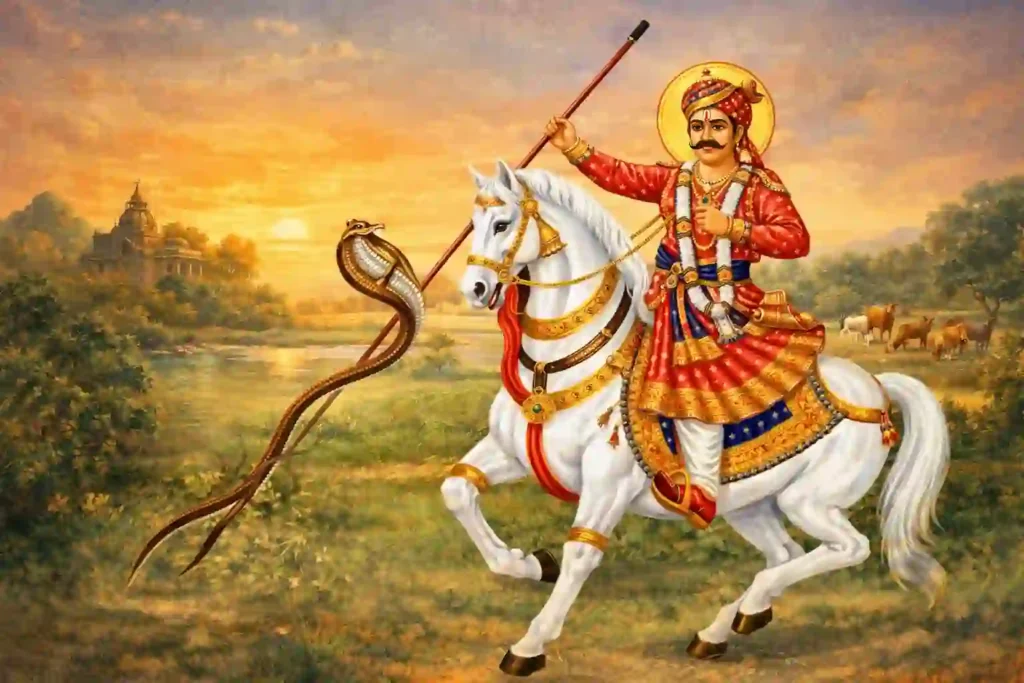
Tejaji, also known as Veer Teja, was born in 1073 CE in Kharnal, Nagaur. He belonged to a farming family and lived an ordinary rural life. What made him extraordinary was his absolute commitment to truth.
While traveling to bring his wife Pemal from her maternal home, Tejaji was stopped by a woman named Lachha Gujari. Her cows had been stolen by robbers. Without hesitation, Tejaji chose to help her.
On his way, he met a burning snake, Basak Naga. The snake wished to bite him due to an old karmic bond. Tejaji asked for time and promised he would return after rescuing the cows.
He fought the robbers, saved the cattle, and returned badly wounded. His entire body was covered in blood. To keep his promise, he offered his tongue to the snake. The bite killed him on Bhadrapada Shukla Dashmi in 1103 CE.
Why Tejaji became a snake-protection deity
Tejaji’s death was not seen as defeat. It was seen as victory of truth. Over time, people began believing that someone who could give his life for a promise could also protect others from fear.
Even today, Tejaji is worshipped as a protector against snake bites. In villages, when someone is bitten, they are taken to his shrine.
A sacred thread called Tanti is tied in his name. This practice continues across Rajasthan and nearby states.
His shrines are simple, often under Khejri or Neem trees. Large fairs are held at Parbatsar, Sursura, and Kharnal. Farmers pray to him for safety, rain, and healthy cattle.
Pabuji, the warrior who left his wedding
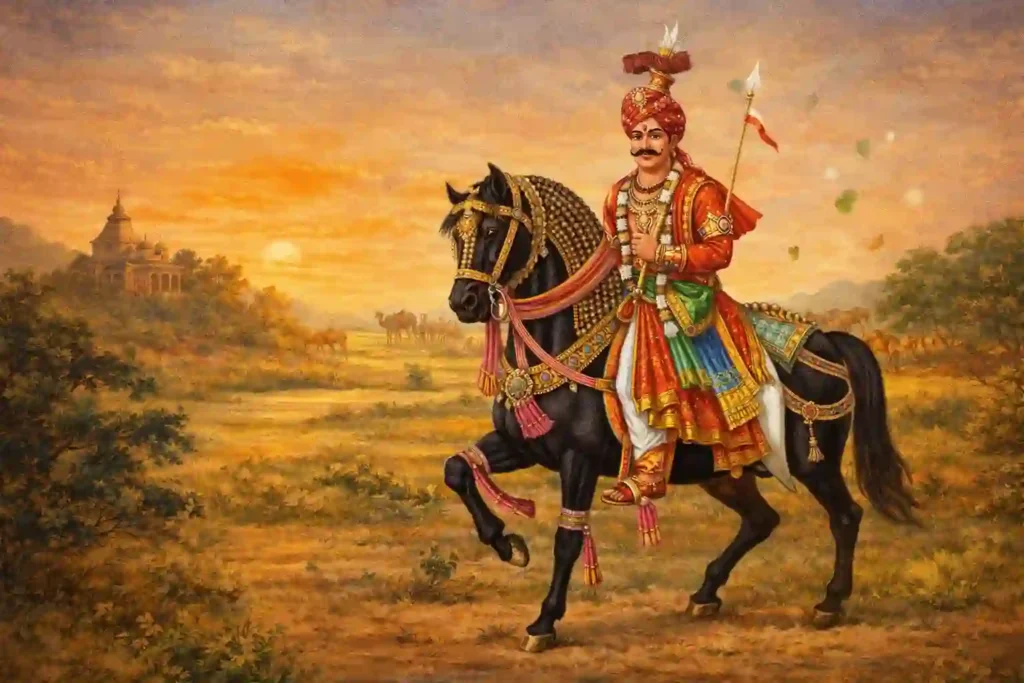
Pabuji Rathore was a 13th-century Rajput warrior born near Kolu, close to Barmer. He is believed by many to be an incarnation of Lakshman, but people worship him for his actions, not his origin.
During his wedding ceremony, a Charan woman named Deval came seeking help. Her cows were being taken by Jindrao Khinchi. Pabuji had earlier promised her protection.
He left his wedding after only three rounds, mounted his black mare Kesar Kalmi, and went to battle. He died in 1276 AD while defending her cattle.
For desert communities, this act defined honor. A promise was greater than celebration. Protection was greater than personal happiness.
Pabuji, god of camels and communities
Pabuji is worshipped widely by Raika, Rabari, Bhil, and pastoral communities. He is known as the protector of camels and refugees. His story lives through Pabuji ki Phad, a long painted scroll.
At night, priest-singers called Bhopas open the Phad and sing his life story using the Ravanhatta. These performances are believed to invite the presence of Pabuji himself.
A major fair is held at Kolumand on Chaitra Amavasya, where camel herders gather to honor him.
Shared values of Rajasthan’s folk warriors
Tejaji and Pabuji represent the same soul of Rajasthan.
They protected cattle because cattle meant life.
They kept their vows even when death was certain.
They stood against injustice and misuse of power.
They became gods because people trusted their values.
This is why the hero deities of Rajasthan remain relevant even today.
Tejaji and Pabuji represent the ideal of Rajasthan folk warriors, men who chose duty over comfort and truth over survival.
Other major folk deities of Rajasthan
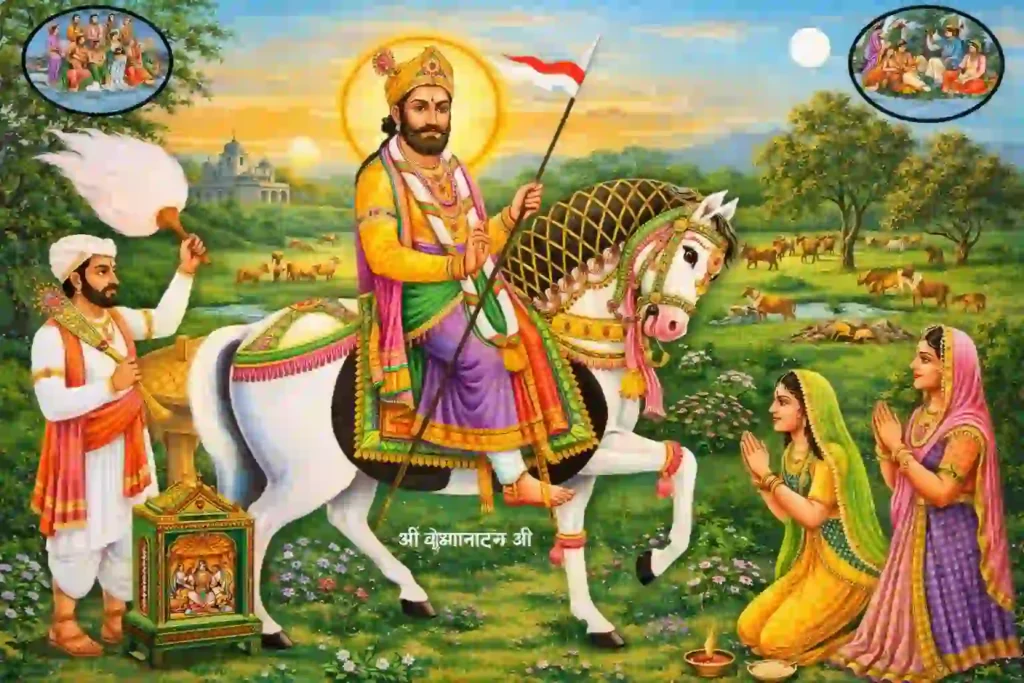
Alongside Tejaji and Pabuji, Rajasthan worships many other warrior-saints who will be explored in detail in separate articles.
Ramdevji, also called Ramshah Pir, is known for social equality and miracles. He is worshipped by Hindus and Muslims alike at Ramdevra. His life stands as a bridge between faiths.
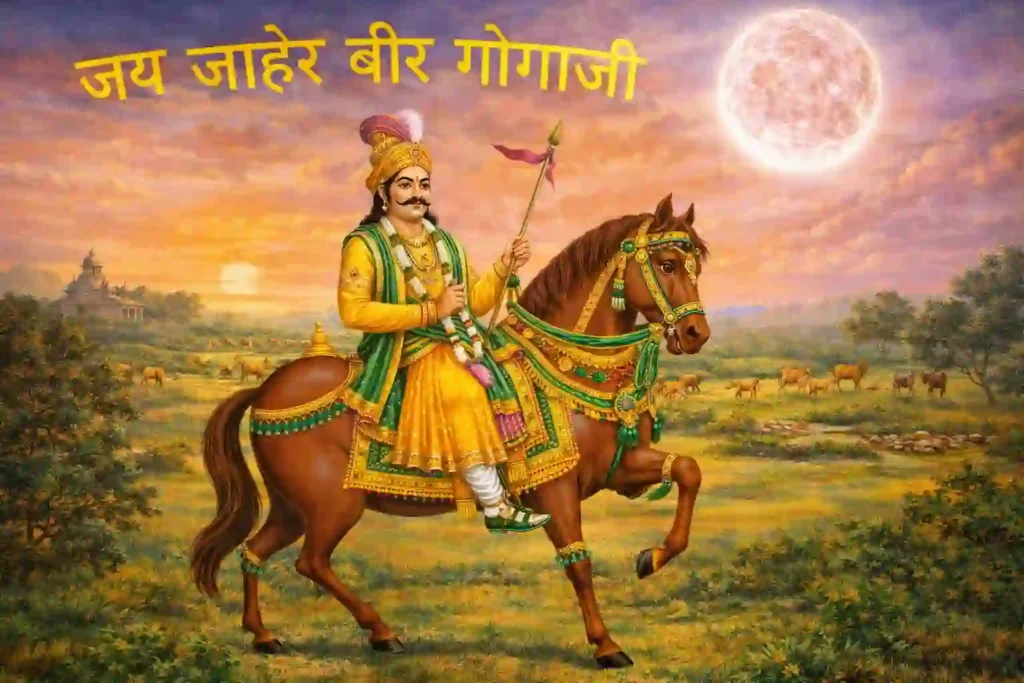
Gogaji, also known as Jahar Veer, is revered as a snake god and cattle protector. His shrines are often found under Khejri trees, and he is deeply connected to agrarian life.
Devnarayanji is worshipped by Gurjar communities as an incarnation of Vishnu. He is known for healing, justice, and social reform.
Each of these deities represents a different path of protection and service.
Phad, Pavade, and mobile temples
In many villages, stories became temples. Phad paintings and Pavade songs carried divine memory from place to place.
These were mobile shrines for communities without stone temples.
Bhopas sing through the night. Their wives hold lamps to light the scenes. People listen not as audience, but as devotees.
Hero stones and sacred memory
Across Rajasthan, stone memorials called Devalis mark the places where warriors died.
These stones show a rider on horseback, often with sun and moon symbols, meaning their fame will never fade.
Govardhan stones near grazing lands honor those who died protecting cattle. They remind villagers that truth is worth more than life.
Healing, nature, and belief
Neem leaves, Khejri trees, and sacred threads form part of folk healing. When someone ties a Tanti thread in Tejaji or Gogaji’s name, it is an act of surrender, not fear.
Faith, community, and nature work together.
Why these hero deities still matter
In a world full of compromise, the hero deities of Rajasthan remind us that truth is not flexible. Protection is a duty. Sacrifice has meaning.
They teach that an ordinary life, lived with courage and honesty, can become divine.
In remembering the hero deities of Rajasthan, people remember a way of life where promises mattered more than survival.
Conclusion
In the end, the hero deities of Rajasthan remind us that divinity can rise from ordinary lives lived with courage and truth.
Tejaji and Pabuji were not distant gods, but protectors who stood for promises, cattle, and the dignity of the weak.
Their stories continue to live in village prayers, night songs, fairs, and quiet faith.
Remembering the hero deities of Rajasthan is not just about history.
It is about remembering a way of life where truth mattered more than fear, and duty mattered more than life itself.
Suggested Reading
If the world of Rajasthan’s folk faith speaks to you, you may also like reading about Nanda Devi, the beloved mountain mother worshipped across Uttarakhand, where devotion flows through village rituals and seasonal journeys.
The story of Goludevta shows another side of living faith, where people still write letters to a god seeking truth and justice. Beyond the desert, warrior devotion continues with Khandoba, a protector god worshipped by farmers and warriors alike.
You may also feel drawn to Khatu Shyam Baba, where surrender and faith matter more than power, and to Powerful Bhairav worship in North indian village, the divine guardian of traders and households. Together, these traditions show how folk devotion across India keeps faith close to everyday life.
FAQs
Who are the hero deities of Rajasthan
Hero deities are historical warriors who became gods due to their sacrifice, truthfulness, and protection of people and cattle.
Why is Tejaji worshipped as a snake protector
Because he willingly offered his life to keep a promise made to a snake, people believe he protects against snake bites.
What is Pabuji ki Phad
It is a traditional scroll painting that narrates the life of Pabuji through night-long singing and music.
Are these deities mentioned in scriptures
They belong mainly to oral tradition and folk belief, not classical scriptures.
Why is cattle protection so important in these stories
In desert life, cattle meant survival, economy, and dignity.
Are these deities still worshipped today
Yes, millions visit their shrines and fairs every year across Rajasthan.