
Hindu festivals are not just days of celebration. They are moments of pause created by Sanatan Dharma to help human life stay in balance. Long before modern calendars existed, sages observed nature, time, and the human mind closely.
From these observations, festivals were shaped as gentle reminders to live with awareness, gratitude, and harmony.
Hindu festivals are sacred markers of time in Sanatan Dharma, created to guide life with balance, awareness, and harmony. Some mark seasonal shifts, some follow the movement of the Sun or Moon, and others honour divine energies that guide human life.
When understood deeply, festivals slowly align our outer actions with our inner state. This is why they continue to feel meaningful even today.
Table of Contents
ToggleWhy Hindu Festivals Are Central to Sanatan Dharma
In Sanatan Dharma, spirituality is not separated from daily life. Festivals bring spiritual wisdom into homes in a natural way. They do not demand renunciation or strict discipline. Instead, they invite people gently.
A festival creates a shared environment where prayer feels easier, kindness flows naturally, and the mind becomes receptive. Even those who rarely visit temples feel drawn towards reflection or charity during festival days.
This is not emotional excitement alone. It is the power of collective intention. Festivals also preserve values.
Through stories, rituals, and customs, they pass wisdom from one generation to the next without force. Children learn devotion, elders feel continuity, and families find a shared spiritual rhythm.
The Deep Connection Between Hindu Festivals and Nature
One of the most unique aspects of Hindu festivals is their close relationship with nature. These celebrations are not placed randomly on the calendar. They follow cosmic movements with remarkable precision.
Solar festivals align with the Sun’s journey across zodiac signs. Lunar festivals depend on Moon phases, which influence emotions and mental states. Seasonal festivals often coincide with sowing or harvest cycles, reminding people to honour the earth that nourishes them.
By celebrating festivals in rhythm with nature, life flows more smoothly. Energy rises when it should, rest comes naturally, and imbalance begins to dissolve. This ancient wisdom feels especially relevant in modern life, where many feel disconnected from natural cycles.
Understanding the Types of Hindu Festivals
Hindu festivals can be understood better by looking at what they awaken within us rather than placing them into rigid categories.
Some festivals cultivate gratitude and abundance. Others teach restraint, discipline, or introspection. Certain celebrations encourage joy and togetherness, while others invite silence and letting go. Together, they form a complete spiritual map that supports human life through all stages.
Each festival arrives at the right time, carrying a lesson meant for that phase of the year and for the inner journey of the individual.
Spiritual Importance of Hindu Festivals in Daily Life
Hindu festivals quietly shape daily life without imposing rules. They offer natural pauses in a fast-moving world. When life feels overwhelming, festivals create moments to slow down, reconnect with family, and realign priorities.
They also bring emotional healing. Shared prayers, familiar rituals, and collective joy build a sense of belonging. In times of uncertainty, festivals provide stability, hope, and reassurance. This is why their relevance has not faded, even as lifestyles have changed.
Solar Festivals and the Journey of Light
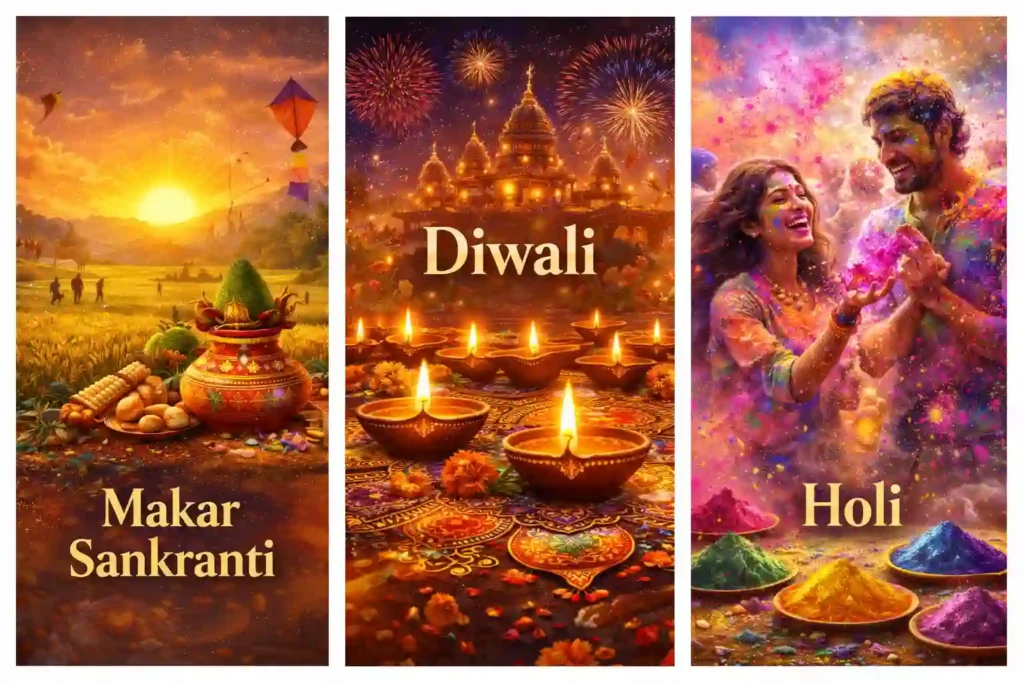
Solar festivals are based on the movement of the Sun and symbolise clarity, strength, and forward movement in life. Among them, Makar Sankranti holds special importance.
Makar Sankranti marks the moment when the Sun enters Makara rashi and begins its northward journey, known as Uttarayan. Spiritually, this shift represents movement from darkness towards light and from stagnation towards growth. It is celebrated as a harvest festival and a time of gratitude, charity, and fresh beginnings.
You can explore its date, rituals, and deeper meaning in our detailed guide on Makar Sankranti Festival, which explains why this transition is considered so auspicious in Sanatan Dharma.
Lunar Festivals and Inner Awareness
Lunar festivals follow the waxing and waning of the Moon. Since the Moon is closely linked to the human mind, these festivals often focus on inner awareness and emotional balance.
Observances like Ekadashi encourage simplicity and self-discipline. Purnima represents fullness and gratitude. Amavasya invites release of emotional heaviness and remembrance of ancestors. These festivals are not meant to create fear or pressure, but mindfulness.
Over time, such practices gently train the mind to observe itself and remain steady.
Festivals Dedicated to Deities and Divine Energies
Many Hindu festivals are devoted to specific deities, each representing an aspect of life and consciousness. Through these celebrations, devotees connect with divine qualities in a personal and meaningful way.
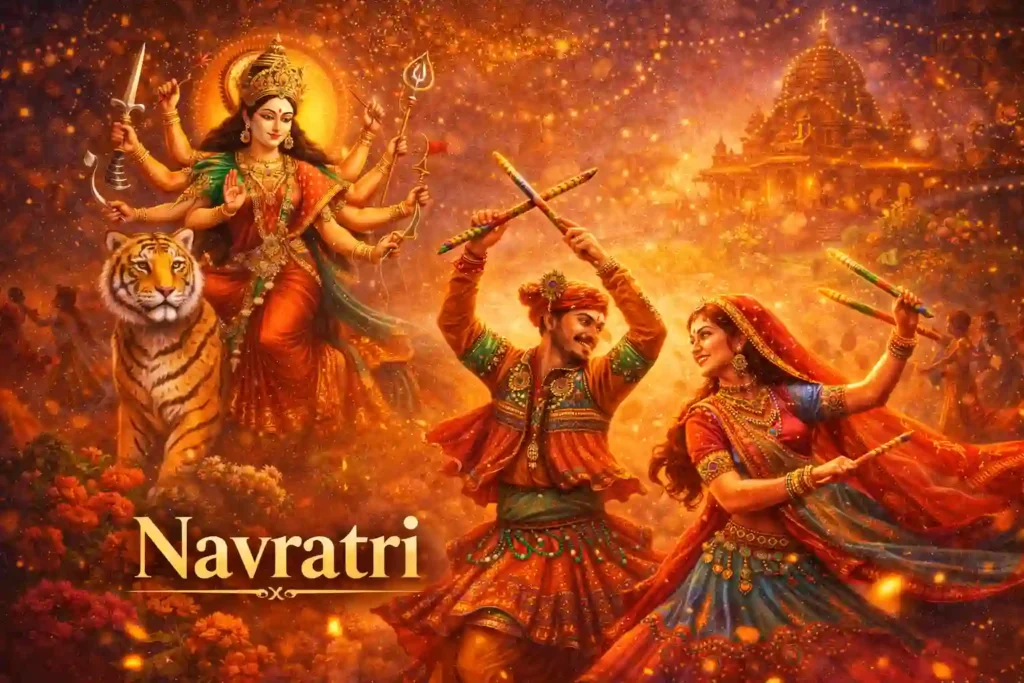
Festivals like Diwali celebrate the victory of inner light over darkness, while Navratri honours balance, strength, and devotion through the worship of the Divine Mother. These celebrations help spiritual ideas become part of everyday life.
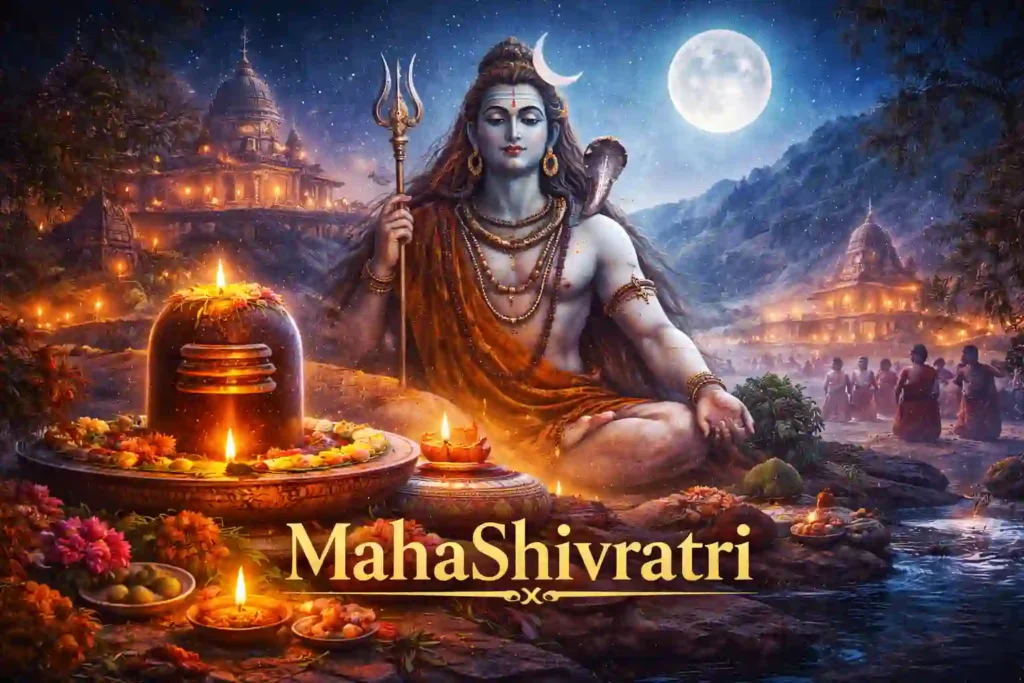
Festivals related to Lord Shiva focus on transformation, inner silence, and courage, as explained in our article on Bhagwan Shiv as the supreme consciousness. Devotees drawn to protective energies may also feel connected to fierce forms like Kaal Bhairav, who represents time, truth, and fearless clarity.
Regional Festivals and Living Traditions
India’s cultural diversity is beautifully reflected in its regional festivals. While the spiritual essence remains the same, expressions differ according to climate, geography, and local history.
Regional festivals keep traditions alive and rooted. They strengthen community bonds and preserve cultural memory. At the same time, they show that Sanatan Dharma is not rigid. It adapts while staying true to its core wisdom.
The Role of Rituals in Hindu Festivals
Rituals are symbolic actions designed to influence the mind and environment. Lighting a lamp represents awakening. Offering food symbolises gratitude. Fasting builds discipline and awareness.
When rituals are performed with understanding, they become tools for inner growth rather than obligations. Even simple acts done with sincerity can create deep impact. Festivals encourage such mindful actions naturally.
Conclusion
Hindu festivals form a living system of wisdom that connects time, nature, devotion, and human life into one harmonious flow. When viewed together, they reveal how Sanatan Dharma supports balance, growth, and emotional well-being.
Solar celebrations like Makar Sankranti show the connection between cosmic movement and human life, while deity-based traditions linked to Shiva and Bhairav highlight courage, discipline, and transformation.
To explore these themes further, you can read more articles on festivals, deities, temples, and spiritual practices on thesanatantales.com, where Sanatan wisdom is shared in a simple, heartfelt, and human way.
FAQs
What is the meaning of Hindu festivals?
Hindu festivals are spiritual markers connected to nature, time, and human life. They guide awareness, balance, and inner growth through celebration and reflection.
How many Hindu festivals are there?
There is no fixed number. Hindu festivals follow solar, lunar, seasonal, regional, and deity-based traditions throughout the year.
Why are Hindu festivals linked to the Sun and Moon?
The Sun influences physical energy and direction, while the Moon affects emotions and the mind. Festivals align life with these cosmic forces.
Are Hindu festivals only about rituals?
No. Rituals are tools, but the deeper purpose is awareness, gratitude, discipline, and harmony with life.
Which is the most important Hindu festival?
Importance varies by region and tradition. Festivals like Makar Sankranti, Diwali, Navratri, and Maha Shivratri are widely celebrated due to their deep spiritual meaning.