Bhagwan Shiv is not easy to explain in a few words. He is silence and storm together. He is deep meditation and fierce protection.
For many devotees, Bhagwan Shiv is not just a god sitting somewhere in the heavens. He feels close, personal, almost like someone who understands pain, confusion, surrender, and truth without words.
In Sanatan Dharma, Bhagwan Shiv is often understood as pure consciousness. He has no beginning and no end. He is present before creation and remains even after everything dissolves.
As Mahadev, he represents both the stillness of meditation and the power of transformation.
When life feels heavy, confusing, or unfair, people naturally turn to Shiv. Not because he promises comfort, but because he offers truth, courage, and inner stillness.
His presence reminds devotees that even in the midst of change and uncertainty, there is an eternal reality that never fades.
Table of Contents
ToggleWho Is Bhagwan Shiv
Bhagwan Shiv is known as Mahadev, the greatest among the divine. But greatness here does not mean power or control. It means freedom.
Shiv is free from ego, desire, and attachment. He does not rule the universe like a king. He simply exists as awareness itself.
In Sanatan Dharma, creation, preservation, and dissolution are natural cycles. Shiv represents dissolution, not as destruction, but as release.
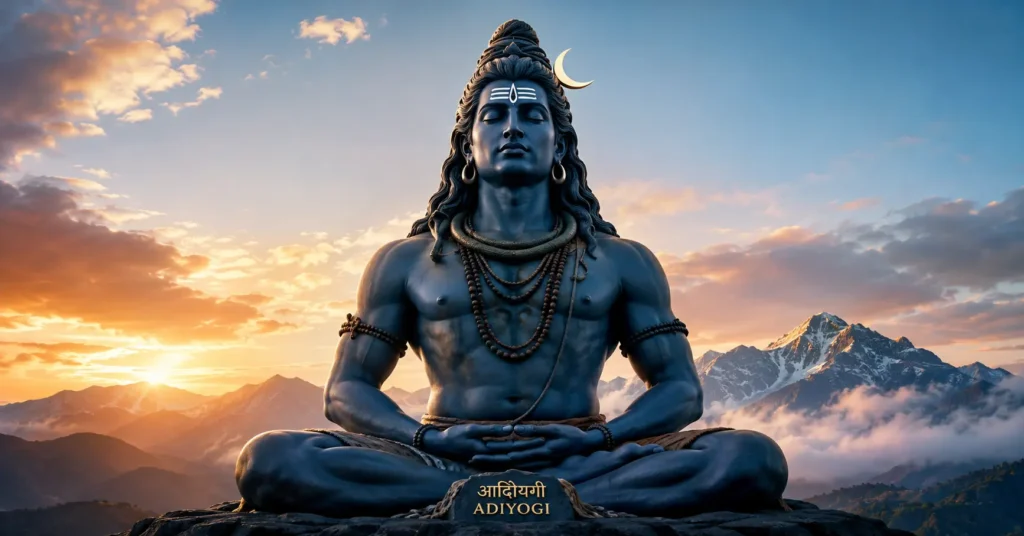
He dissolves ignorance, ego, fear, and illusion. This is why he is also called Adi Yogi, the first yogi. Sitting in deep meditation on Mount Kailash, Shiv shows that true power comes from inner stillness.
Bhagwan Shiv is both formless and with form. He can be worshipped as a Lingam or imagined as a calm yogi with ash-covered body. This flexibility is what makes Shiv so close to seekers of all kinds.
Bhagwan Shiv in the Vedas and Puranas
Bhagwan Shiv is deeply rooted in the sacred literature of Sanatan Dharma. References to a divine form associated with Shiv can be found in the Vedas, where Rudra appears as a powerful and mysterious deity connected with nature, healing, and transformation.
Over time, this Vedic Rudra became closely identified with the Shiva worshipped across India today.
The Puranas further expand the understanding of Bhagwan Shiv. Texts such as the Shiva Purana, Linga Purana, Skanda Purana, and Kurma Purana describe his cosmic role, divine forms, sacred stories, and relationship with Shakti.
These scriptures present Shiv not merely as a deity among many, but as the timeless reality that exists before creation, sustains spiritual order, and remains even after the universe dissolves.
Different traditions within Sanatan Dharma may emphasize different aspects of Shiv, yet all agree on one point: he represents a truth that transcends ordinary limitations of time, space, and identity.
The Eternal Family of Bhagwan Shiv
Though Bhagwan Shiv is the ultimate ascetic, he is also a loving family man. His family teaches balance in life.
Maa Parvati represents Shakti, the active energy of the universe. Shiv without Shakti is stillness, but with Parvati, creation flows. Their relationship shows that spirituality does not reject worldly life. It completes it.
Lord Ganesha, their son, stands for wisdom, patience, and new beginnings. He removes obstacles, not by force, but by understanding.
Lord Kartikeya represents courage, discipline, and leadership. He shows the warrior aspect needed to face inner and outer battles.
Nandi, Shiv’s devoted companion, symbolizes unwavering faith and humility. He listens patiently, reminding devotees to approach Shiv with silence and devotion.
Together, this eternal family reflects harmony between inner growth and outer responsibilities.
Bhagwan Shiv and Maa Parvati: The Union of Consciousness and Shakti
The relationship between Bhagwan Shiv and Maa Parvati carries a meaning far deeper than that of a divine husband and wife. In many spiritual traditions, Shiv represents pure consciousness while Parvati represents Shakti, the dynamic energy through which creation unfolds.
Without Shakti, consciousness remains still and unexpressed. Without consciousness, energy lacks direction. Together they symbolize the complete reality of existence.
This idea is beautifully reflected in the form of Ardhanarishvara, where Shiv and Shakti appear as one being.
For devotees, this union teaches balance. Spiritual growth does not require rejecting the world. Instead, it involves bringing awareness and energy into harmony, just as Shiv and Parvati exist in perfect unity.

Famous Stories of Bhagwan Shiv That People Love
Stories of Bhagwan Shiv are deeply loved because they reveal his compassion, fearlessness, and unique way of guiding devotees.
During Samudra Manthan, when a deadly poison emerged and threatened all life, Shiv drank it to protect creation. He held the poison in his throat, which turned blue, earning him the name Neelkanth. This story teaches sacrifice, responsibility, and the willingness to bear suffering for the welfare of others.
Another beloved story is of young Markandeya, a devotee destined to die at an early age. When Yama came to take his life, Shiv emerged from the Lingam and protected the child. This story reflects Shiv’s role as the protector of sincere devotion and unwavering faith.
Shiv is also known for granting boons easily, even to demons. While some of these boons later create challenges, the stories highlight his impartial nature and his willingness to give beings the freedom to face the consequences of their choices.
Together, these stories present Bhagwan Shiv as compassionate, fearless, and deeply connected to those who approach him with sincerity.
The Meaning Behind the Appearance of Bhagwan Shiv
Every detail of Bhagwan Shiv’s appearance has meaning.
The ash on his body reminds us that everything eventually returns to dust. It teaches detachment.
His matted hair holds the mighty river Ganga, showing control over powerful emotions and energies.
The crescent moon on his head represents time and rhythm, showing that Shiv stands beyond time.
The snake around his neck symbolizes fearlessness and mastery over instincts.
His calm face shows deep inner peace, even amidst chaos.
Shiv’s appearance tells us that beauty lies in truth, not decoration.
Shiva Lingam Meaning and Symbolism
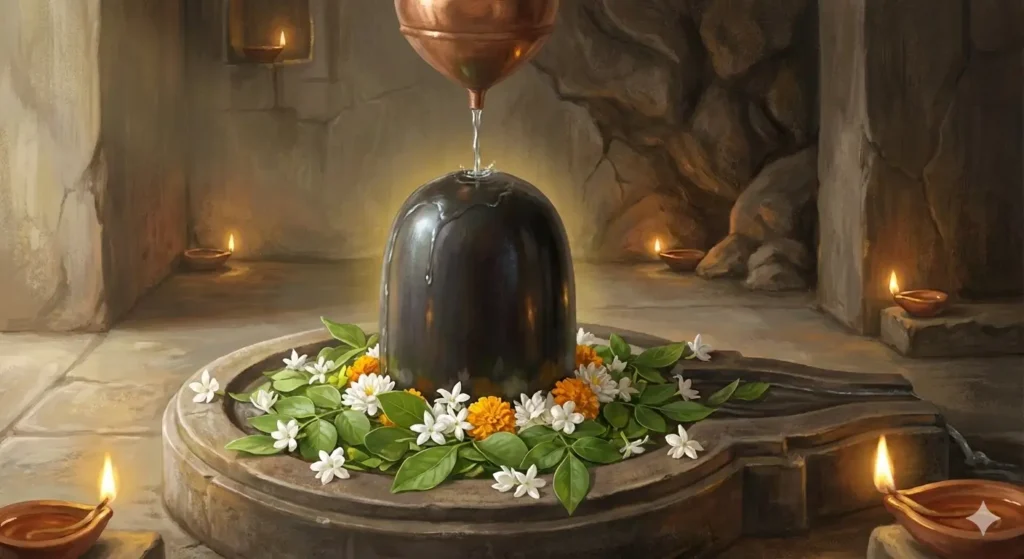
The Shiva Lingam is one of the most misunderstood symbols in Sanatan Dharma. In many Shaiva traditions, it is understood as a representation of the formless and infinite nature of Bhagwan Shiv.
The Lingam symbolizes pure consciousness that exists beyond shape, gender, and limitation. It is also traditionally associated with the union of Shiv and Shakti, consciousness and creative energy, from which all existence emerges.
The base of the Lingam is often understood as representing Shakti, while the upward form points toward the infinite and unmanifest reality of Shiv.
Worshipping the Shiva Lingam reminds devotees that the divine cannot always be understood through physical form alone and must also be experienced inwardly.
This is why the Lingam is worshipped with simple offerings such as water, milk, and Bilva leaves, symbols of devotion, purity, and surrender.
Why Bhagwan Shiv Is Called Mahadev and Bhole Baba
Bhagwan Shiv is called Mahadev because even the gods look up to him. Not because he seeks power or worship, but because he stands as the highest truth, free from ego, desire, and attachment.
At the same time, devotees lovingly call him Bhole Baba. Bhole means innocent, simple, and easily pleased. Shiv does not judge a devotee by wealth, status, or knowledge. A few Bilva leaves, a drop of water, or a prayer from the heart is enough to move him.
He does not seek worship, yet receives the deepest devotion. He does not desire authority, yet holds everything together. Shiv teaches through silence. He forgives quickly and accepts everyone, saints and sinners alike.
Mahadev means the one who stands above fear, time, and ego. Bhole Baba means the one who melts instantly with pure devotion. Together, these names reveal the true nature of Bhagwan Shiv, the greatest of all, yet the simplest and most compassionate.
Forms of Bhagwan Shiv and Their Inner Meaning
Bhagwan Shiv appears in many forms, each revealing a different aspect of his nature and teachings.
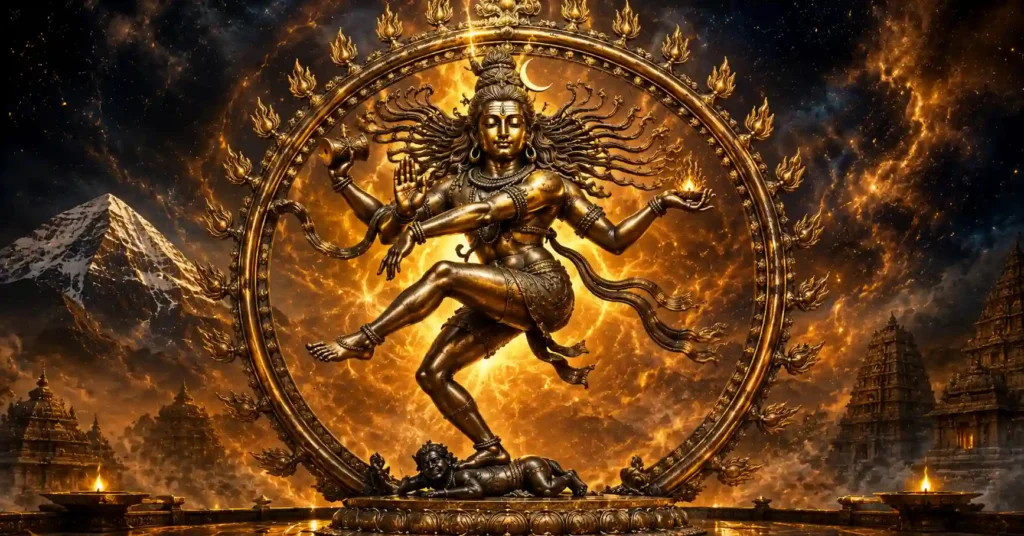
As Nataraja, he performs the cosmic dance that symbolizes creation, preservation, and dissolution, the eternal rhythm of existence.
As Ardhanarishvara, he represents the inseparable unity of Shiv and Shakti, showing the balance between consciousness and energy.
As Bhairav, he is the fierce protector who removes fear, ignorance, and obstacles on the spiritual path.
As Mahakal, he stands beyond time itself, reminding devotees that all worldly things are temporary while truth remains eternal.
Each form reveals a different dimension of Bhagwan Shiv, helping devotees understand his teachings and connect with him in their own spiritual journey.
Bhagwan Shiv as Adiyogi: The First Yogi
Bhagwan Shiv is widely revered as Adiyogi, the first yogi and the original source of yogic wisdom. According to sacred traditions, Shiv entered a state of profound meditation and realization long before formal systems of yoga existed.
From this state of awakening, he shared the science of inner transformation with the Sapta Rishis, who carried this knowledge to different parts of the world.
As Adiyogi, Shiv is not worshipped merely as a deity but also as the first spiritual teacher. His life symbolizes self-mastery, inner stillness, discipline, and direct experience of truth.
This aspect of Shiv continues to inspire seekers who view spirituality not only as devotion but also as a path of personal transformation.
The image of Shiv seated in meditation on Mount Kailash remains one of the most powerful symbols of inner freedom in Sanatan Dharma.
How Devotees Worship Bhagwan Shiv
Shiv worship is simple and accessible.
Devotees offer water, milk, and Bilva leaves to the Shiva Lingam. Mondays are considered especially sacred for Shiv worship, as is the festival of Mahashivratri.
In many traditions, devotees believe that Bhagwan Shiv responds more to sincerity than outward display. A heartfelt prayer, a simple offering, or a few moments of remembrance are considered meaningful acts of devotion.
This simplicity is one reason why people from all walks of life feel deeply connected to Mahadev.
Why Mount Kailash Is Sacred to Bhagwan Shiv Devotees
Mount Kailash in Tibet is regarded as the divine abode of Bhagwan Shiv. For centuries, saints, pilgrims, yogis, and seekers have viewed this sacred mountain as a place where the earthly and spiritual worlds meet.
According to tradition, Shiv resides on Kailash in eternal meditation alongside Maa Parvati. While devotees may differ in how they interpret this belief, the mountain has long been regarded as one of the holiest places in Sanatan Dharma.
Many pilgrims undertake the difficult Kailash Parikrama as an act of devotion and inner purification.
Even for those who never visit physically, Mount Kailash represents the highest spiritual peak within the human heart, a state of stillness beyond worldly distractions and desires.

Benefits of Chanting “Om Namah Shivay”
“Om Namah Shivay” is more than a mantra. For many devotees, it is an expression of surrender, devotion, and remembrance of Bhagwan Shiv.
Chanting this sacred mantra is traditionally believed to calm the mind, bring inner clarity, and turn awareness inward. Over time, many practitioners feel it helps them develop greater peace, self-awareness, and emotional balance.
Devotees often describe feeling guided, protected, and spiritually strengthened through regular chanting. The mantra remains one of the most widely recited prayers dedicated to Mahadev.
More than seeking outward miracles, the heart of “Om Namah Shivay” lies in inner transformation and a deeper connection with the divine.
The Spiritual Significance of the Twelve Jyotirlingas
Among the most sacred places associated with Bhagwan Shiv are the twelve Jyotirlingas spread across India. According to tradition, these holy shrines mark places where Shiv revealed himself as an infinite pillar of divine light.
Each Jyotirlinga is associated with unique legends, regional traditions, and forms of worship. Together they form one of the most important pilgrimage traditions in Shaivism.
Devotees visit these sacred temples seeking blessings, spiritual growth, and a deeper connection with Mahadev.
Beyond their historical and religious importance, the Jyotirlingas remind devotees that the divine light of Shiv is present everywhere, beyond physical form and beyond human limitations.

Why Millions Feel Deeply Connected With Bhagwan Shiv
For many devotees, Bhagwan Shiv feels deeply approachable and compassionate. His presence is often associated with acceptance, inner strength, and peace.
People struggling with pain, loss, confusion, or loneliness often turn to Shiv in prayer and remembrance. In moments when words feel inadequate, many devotees find comfort in his silence and stillness.
Shiv does not ask for perfection. He welcomes sincerity, faith, and surrender. This simple and accepting nature is one reason why devotees from different walks of life feel such a deep personal connection with him.
For millions, Bhagwan Shiv is not only a deity to worship but also a source of courage, guidance, and inner peace.
Conclusion: Finding Bhagwan Shiv Within
Bhagwan Shiv has inspired saints, seekers, householders, and devotees for countless generations because he speaks to something universal within every human being.
He reminds us that true strength is not found in control but in inner stillness, self-awareness, and freedom from fear.
Whether one approaches Shiv through devotion, meditation, prayer, or simple remembrance, his teachings point toward the same truth: lasting peace is discovered not outside but within.
His stories, symbols, and forms are invitations to look beyond the noise of daily life and reconnect with the deeper self.
For some, Shiv is Mahadev, the great god. For others, he is Adiyogi, the first teacher. For many devotees, he is simply a compassionate presence who listens without judgment.
Yet beyond every name and form, Bhagwan Shiv represents the eternal consciousness that pervades all existence, silent, boundless, and ever-present.
Suggested reading
If you would like to explore Bhagwan Shiv more deeply, the following articles may help you continue your spiritual journey.
Shiva and Bhairav: Meaning, Connection & Spiritual Path
https://thesanatantales.com/batuk-bhairav-removes-fear-obstacles/Bhagwan Dattatreya: The Eternal Guru of Sanatan Dharma
https://thesanatantales.com/bhagwan-dattatreya-adi-guru/Ashta Bhairav: Powerful Guardians of Time, Direction, and Dharma
https://thesanatantales.com/ashta-bhairav/Bhairav Tattva: The Fierce Principle of Time, Truth, and Awakening
https://thesanatantales.com/bhairav-tattva/Kaal Bhairav: Story, Significance, Kashi Kotwal, Worship and Spiritual Meaning
https://thesanatantales.com/kaal-bhairav/Shiv Tandav Stotram: Meaning, Full Lyrics, Benefits and How to Chant
https://thesanatantales.com/shiv-tandav-stotram-meaning-lyrics-benefits/Rudrashtakam: Lyrics with Meaning in Hindi and English, Benefits and How to Chant
https://thesanatantales.com/rudrashtakam-lyrics-with-meaning-hindi-englishLingashtakam: Meaning, Benefits and How to Chant
https://thesanatantales.com/lingashtakam-meaning-benefitsMaha Mrityunjaya Mantra: Meaning, Benefits and How to Chant
https://thesanatantales.com/maha-mrityunjaya-mantra/Om Namah Shivaya Mantra: Complete Guide to Meaning, Benefits and Chanting
https://thesanatantales.com/om-namah-shivaya-mantra/Shiva Mantras: Most Powerful Shiva Mantras, Stotras and How to Chant
https://thesanatantales.com/shiva-mantras/Kaal Bhairav Ashtakam: Meaning for Beginners (Hinglish & English)
https://thesanatantales.com/kaal-bhairav-ashtakam/Shiva (Wikipedia)
https://en.wikipedia.org/wiki/Shiva
FAQs
Who is Bhagwan Shiv in Hinduism?
Bhagwan Shiv is one of the principal deities of Sanatan Dharma and is revered as Mahadev, the great god. He represents pure consciousness, transformation, inner freedom, and the truth that exists beyond birth and death. Many traditions also regard him as the supreme reality from which creation emerges and ultimately returns.
Why is Bhagwan Shiv worshipped as Shiva Lingam?
The Shiva Lingam represents the formless and infinite nature of Bhagwan Shiv. It is a sacred symbol of pure consciousness and the eternal union of Shiv and Shakti. Rather than depicting a human form, the Lingam reminds devotees that the divine reality transcends all physical limitations.
Why is Bhagwan Shiv called Bhole Baba?
Bhagwan Shiv is lovingly called Bhole Baba because he is believed to be innocent, compassionate, and easily pleased by sincere devotion. Devotees believe that even a simple offering of water, Bilva leaves, or heartfelt prayer is enough to receive his blessings.
What is the meaning of Om Namah Shivay?
Om Namah Shivay is one of the most sacred mantras dedicated to Bhagwan Shiv. It is often translated as “I bow to Shiv” or “I honor the divine consciousness within.” Devotees chant this mantra to cultivate inner peace, devotion, self-awareness, and spiritual growth.
Why do devotees worship Bhagwan Shiv on Monday?
Monday is traditionally associated with Bhagwan Shiv in many Hindu traditions. Devotees observe fasts, visit temples, offer prayers, and chant mantras on this day seeking blessings, peace, spiritual progress, and fulfillment of sincere wishes.
Why does Bhagwan Shiv wear ash on his body?
he sacred ash on Bhagwan Shiv’s body symbolizes the temporary nature of worldly existence. It reminds devotees that wealth, status, and physical beauty eventually pass away, while spiritual truth remains eternal.
Why is Nandi always seen with Bhagwan Shiv?
Nandi is the devoted companion and vehicle of Bhagwan Shiv. He symbolizes faith, loyalty, patience, and unwavering devotion. In many temples, devotees first offer respect to Nandi before approaching Shiv.
Why are Bilva leaves offered to Bhagwan Shiv?
Bilva leaves are considered highly sacred in Shiv worship. Traditional scriptures and temple practices describe them as dear to Mahadev. Offering Bilva leaves is seen as an act of devotion, purity, and surrender.
What is the significance of Mount Kailash in Shiv worship?
Mount Kailash is traditionally regarded as the divine abode of Bhagwan Shiv and Maa Parvati. For devotees, it represents spiritual elevation, inner stillness, and the highest state of consciousness.
Is Bhagwan Shiv the same as Rudra?
Many Hindu traditions consider Rudra of the Vedas and Shiva of later scriptures to be closely connected. Over time, the characteristics associated with Rudra became integrated into the broader understanding of Bhagwan Shiv found in the Puranas and Shaiva traditions.
Glossary of Important Terms
| Term | Meaning |
|---|---|
| Bhagwan Shiv | One of the principal deities of Sanatan Dharma, representing pure consciousness, transformation, and inner freedom. |
| Mahadev | “Great God,” a title that signifies Shiv as the highest divine reality beyond ego and attachment. |
| Shiva | The auspicious one; another name of Bhagwan Shiv. |
| Sanatan Dharma | The eternal spiritual tradition commonly known as Hinduism. |
| Consciousness | The eternal awareness or divine reality that Shiv represents. |
| Adiyogi | The first yogi and original teacher of yoga according to tradition. |
| Rudra | A powerful Vedic deity considered an early form of Shiva. |
| Vedas | The oldest sacred scriptures of Sanatan Dharma. |
| Puranas | Ancient Hindu texts containing stories, teachings, and spiritual knowledge. |
| Shiva Purana | A major Purana dedicated to the stories and teachings of Bhagwan Shiv. |
| Linga Purana | A scripture focusing on Shiva Lingam worship and Shiva’s divine nature. |
| Skanda Purana | One of the largest Puranas containing many stories about Shiv and sacred places. |
| Kurma Purana | A Hindu scripture discussing spiritual teachings and divine manifestations. |
| Shakti | Divine cosmic energy represented by Maa Parvati. |
| Maa Parvati | Consort of Bhagwan Shiv and embodiment of divine energy. |
| Ardhanarishvara | The combined form of Shiv and Shakti representing perfect balance. |
| Ganesha | Son of Shiv and Parvati, worshipped as the remover of obstacles. |
| Kartikeya | Son of Shiv and Parvati, associated with courage and leadership. |
| Nandi | The sacred bull and devoted vehicle of Bhagwan Shiv. |
| Samudra Manthan | The cosmic churning of the ocean described in Hindu scriptures. |
| Neelkanth | A name of Shiv meaning “Blue-Throated One,” earned after drinking poison during Samudra Manthan. |
| Markandeya | A young devotee saved by Bhagwan Shiv from death. |
| Yama | The deity associated with death and justice. |
| Ganga | The sacred river believed to flow from Shiv’s matted hair. |
| Crescent Moon | Symbol worn on Shiv’s head representing mastery over time. |
| Shiva Lingam | Sacred symbol representing the formless and infinite nature of Shiva. |
| Bilva Leaves | Sacred leaves traditionally offered during Shiva worship. |
| Bhole Baba | Affectionate name for Shiv meaning innocent, simple, and easily pleased. |
| Nataraja | Cosmic dancing form of Shiv symbolizing creation and dissolution. |
| Bhairav | Fierce form of Shiv associated with protection and spiritual discipline. |
| Mahakal | Form of Shiv representing mastery over time and death. |
| Sapta Rishis | The seven great sages who received spiritual wisdom from Adiyogi Shiv. |
| Mount Kailash | Sacred mountain believed to be the divine abode of Shiv and Parvati. |
| Kailash Parikrama | Sacred pilgrimage circuit around Mount Kailash. |
| Mahashivratri | Major Hindu festival dedicated to Bhagwan Shiv. |
| Om Namah Shivay | One of the most sacred mantras dedicated to Bhagwan Shiv. |
| Mantra | Sacred sound, phrase, or prayer used in spiritual practice. |
| Jyotirlinga | Sacred shrine where Shiva is believed to have manifested as divine light. |
| Shaivism | Major Hindu tradition centered on the worship of Bhagwan Shiv. |
| Meditation | Spiritual practice of inner stillness strongly associated with Shiv. |
| Dissolution | The cosmic process of transformation and release represented by Shiv. |
| Devotion (Bhakti) | Loving worship and surrender to the Divine. |
| Transformation | The process of inner growth and spiritual evolution associated with Shiv. |
About the Author
Yateendra Chaturvedi is a spiritual writer, researcher, devotee, and the founder of The Sanatan Tales. With over 35 years of professional experience and a lifelong interest in Sanatan Dharma, he writes about Hindu deities, temples, scriptures, festivals, Mahavidyas, sacred stories, rituals, and living traditions that continue to guide and inspire devotees across India.
Drawing from traditional scriptures, regional beliefs, temple traditions, devotional literature, and historical sources, he aims to present authentic, well-researched, and easy-to-understand content for modern readers. His work focuses on preserving spiritual wisdom, explaining sacred traditions, and helping seekers develop a deeper understanding of India’s rich spiritual heritage.
Through The Sanatan Tales, Yateendra strives to make the timeless teachings of Sanatan Dharma simple, meaningful, and relevant for today’s generation while maintaining respect for traditional sources, regional practices, and diverse spiritual perspectives.
Learn More About Yateendra Chaturvedi →
https://thesanatantales.com/about-the-author/
References & Sources
This article is based on Shaiva and Bhairava traditions followed within Sanatan Dharma, traditional beliefs associated with Lord Bhairava, religious narratives, folk traditions, and insights gathered from various spiritual and religious study sources. Some concepts discussed in this article are also inspired by interpretations found in guru-disciple lineages, temple traditions, and devotional literature.
Note: Beliefs, stories, and methods of worship related to Lord Bhairava may differ across regions, sects, and spiritual traditions. The purpose of this article is not to present any single viewpoint as the absolute truth, but to explain commonly accepted religious and spiritual perspectives in a simple and accessible manner.
Explore More Fascinating Topics from Sanatan Dharma