
Maa Matangi is the ninth Mahavidya, one of the ten great wisdom goddesses of Tantra.
She represents the living power of speech, music, knowledge, and expression. Where formal learning ends, her domain begins.
She is often called the Tantric Saraswati, not because she replaces Saraswati, but because she governs the deeper, raw, and unconventional current of wisdom that flows beyond social rules and polished discipline.
For a serious devotee, Maa Matangi is not only a goddess of art or intellect. She is the force that turns inner knowing into living words, sound, command, and influence.
She rules the throat chakra, Vishuddha, the sacred space where thought becomes expression and silence takes form as speech.
Table of Contents
ToggleWhy Maa Matangi is the ninth Mahavidya
The position of Maa Matangi as the ninth Mahavidya is not accidental. The Mahavidyas are not merely ten goddesses but a spiritual journey of consciousness.
Before Matangi appears, the seeker passes through Dhumavati, the goddess of loss, void, and disillusionment. Dhumavati strips away illusions, pride, and comfort.
After this emptiness, Matangi arises. She teaches the seeker how to re-enter the world with wisdom. She restores speech, creativity, and engagement, but without ignorance.
After Matangi comes Kamala, the goddess of abundance and fulfillment. Thus, Matangi stands at the bridge between inner emptiness and outer prosperity.
She teaches how to live, speak, and act after awakening.
Maa Matangi’s position among the Mahavidyas
Among the Mahavidyas, Maa Matangi governs articulation. Kali dissolves ego, Tripura Sundari reveals beauty, and Bhairavi ignites discipline. Matangi makes wisdom functional.
She brings knowledge into language, music, command, and leadership.
In Tantric understanding, realization that cannot be expressed remains incomplete.
Mantra, poetry, debate, political authority, and even persuasive speech belong to her domain. This is why her worship is prominent in Sri Vidya, Shakta Tantra, and advanced left-hand traditions.
Goddess of Vaikhari Vak and the science of sound
Tantra describes four stages of speech: Para, Pashyanti, Madhyama, and Vaikhari. Para is silent awareness.
Pashyanti is vision-like sound. Madhyama is inner dialogue. Vaikhari is spoken word.
Maa Matangi presides over Vaikhari Vak, the stage where inner consciousness enters the world as sound.
She is therefore called Para-Vaikhari, the supreme word that manifests directly as inspired speech, poetry, or command.
This makes her sadhana powerful for teachers, artists, speakers, and leaders whose lives depend on expression.
Tantric Saraswati and the contrast with Saraswati
While Saraswati governs Vedic learning, grammar, memorization, and discipline, Maa Matangi governs instinctive wisdom. Saraswati rules Shruti and Smriti, the structured transmission of knowledge. Matangi rules Apabhramsha, the spontaneous, living language of poetry, street speech, and inspired utterance.
Saraswati refines the mind. Matangi liberates the tongue. This difference explains why Matangi worshippers often include poets, rebels, politicians, occult practitioners, and visionaries rather than only scholars.
Iconography and emerald symbolism
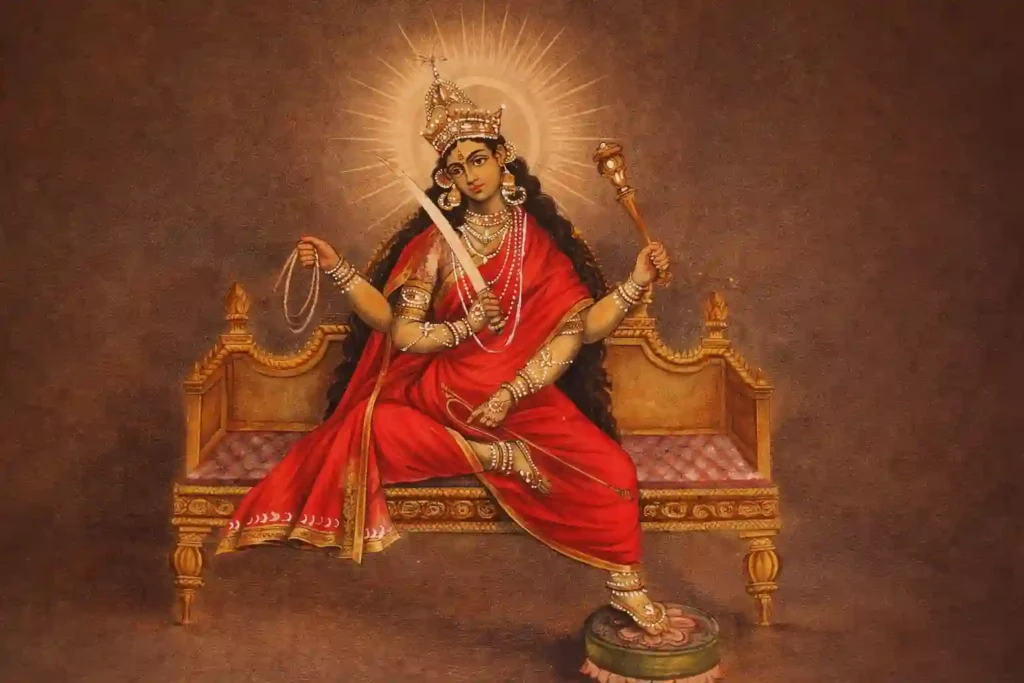
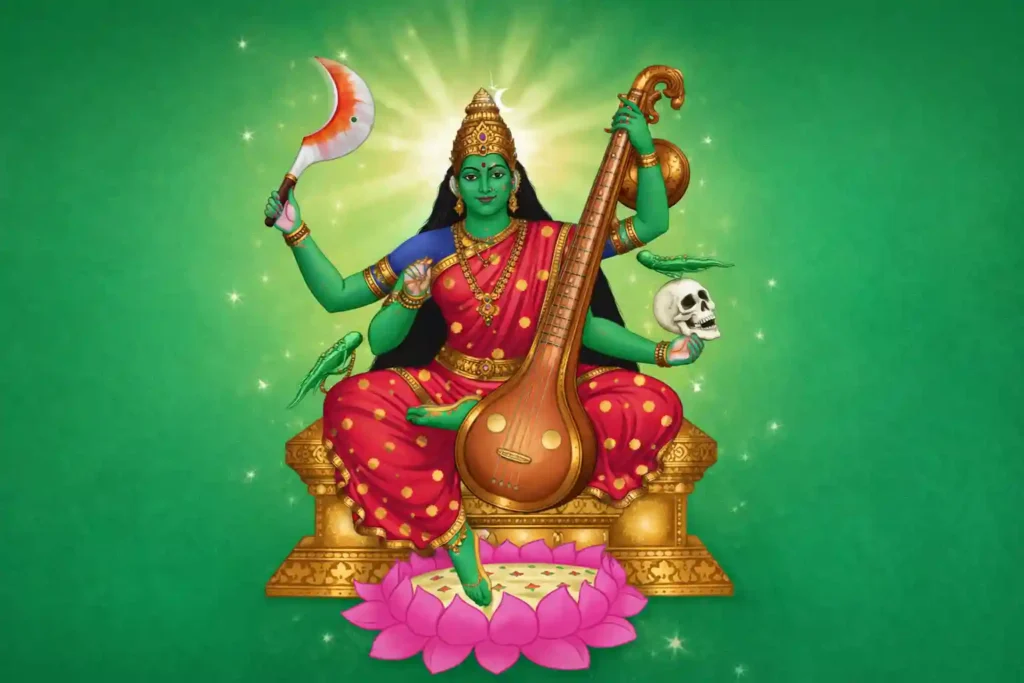
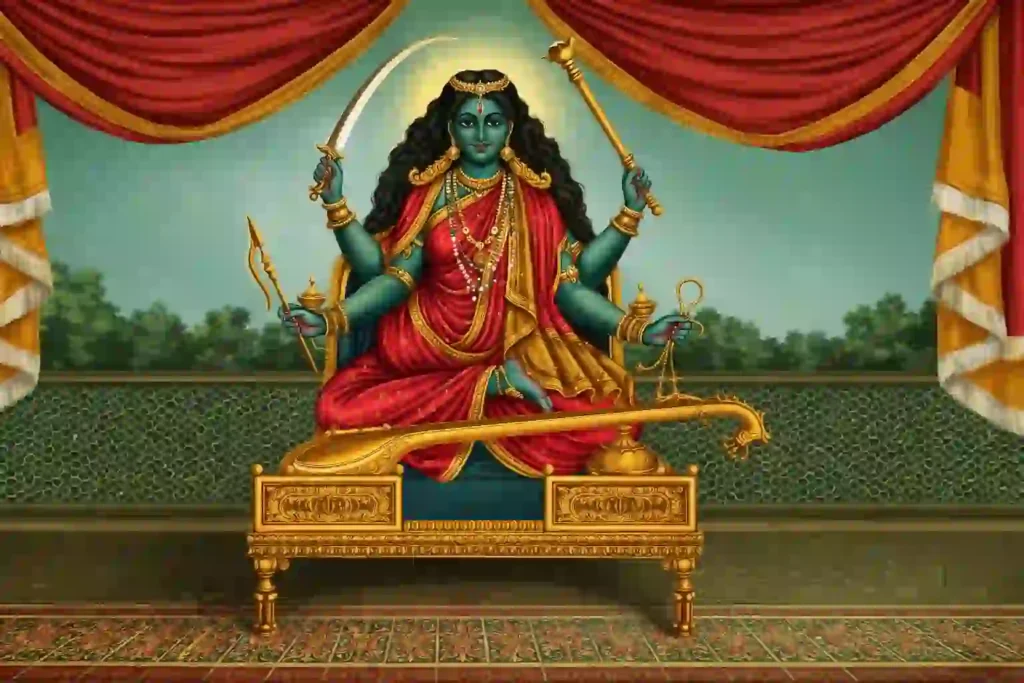
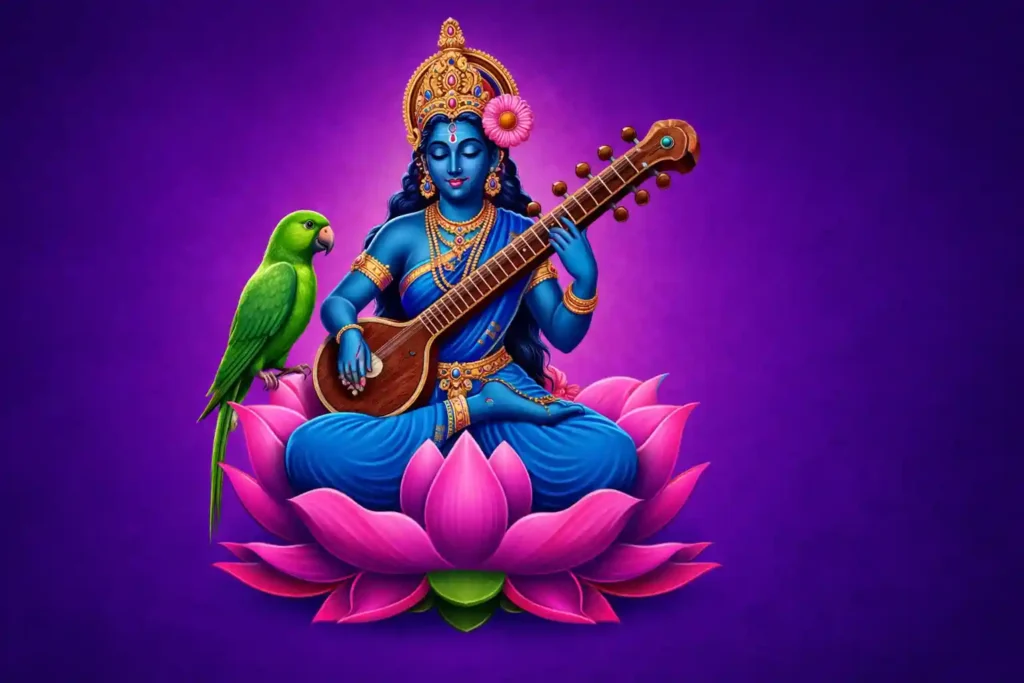
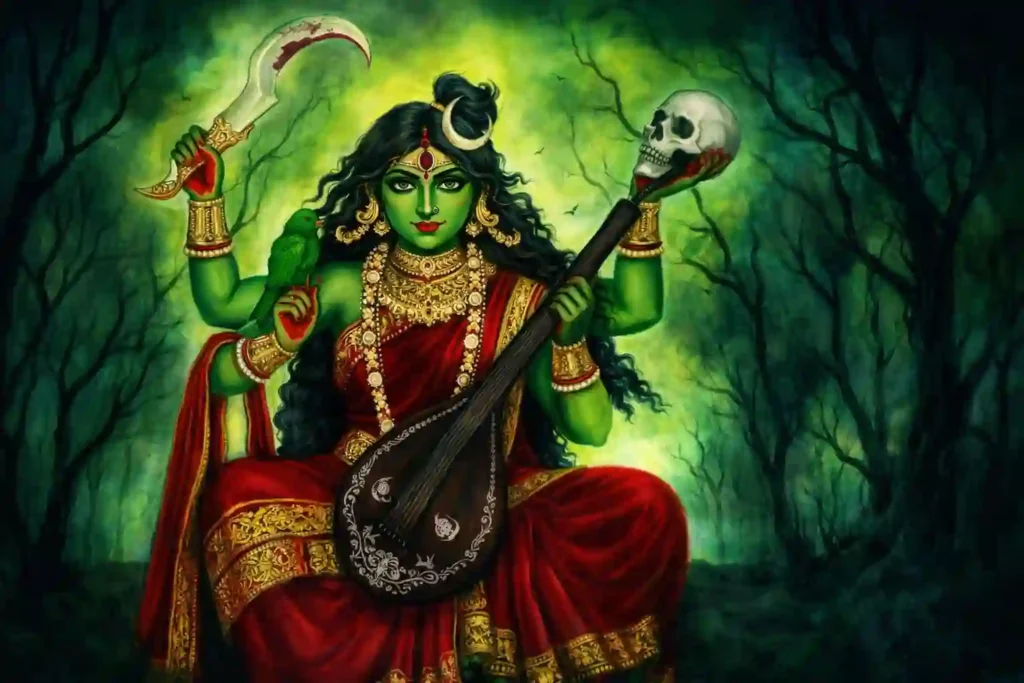
Maa Matangi is depicted with an emerald green or dark bluish complexion, reflecting her link with Mercury, the planet of intelligence and speech. Her beauty is youthful and magnetic, not austere.
In her Raja Matangi or Shyamala form, she sits on a gem-studded throne and plays a ruby-studded veena.
The veena represents the central energy channel, while its strings symbolize the many nadis of the subtle body.
A parrot accompanies her, symbolizing Vak Shakti. Repetition of mantra matures into original mastery through her grace.
Uchchhishta Chandalini and the deeper meaning of transcendence
As Uchchhishta Chandalini, Maa Matangi accepts offerings that are symbolically considered leftover or incomplete.
This is not an act of rebellion, but a deep Tantric teaching. Uchchhishta represents the subtle residue of awareness that remains after all experiences are lived, understood, and absorbed.
Through this symbolism, she helps devotees move beyond social conditioning, inner shame, and rigid ideas of purity.
Her presence reminds seekers that the Divine is not limited to specific places or conditions.
Sacredness exists equally in temples, homes, cremation grounds, and every space touched by sincere awareness.
Mythological origins and sacred narratives
Some legends say Maa Matangi arose from leftovers after Shiva and Parvati’s divine meal. Others describe Parvati appearing as a Chandala maiden to test Shiva’s realization.
When Shiva embraced her, she revealed herself as Uchchhishta Matangi.
Other traditions describe her as the daughter of Sage Matanga, born after long penance.
Each narrative teaches that divine wisdom is not limited by appearance or social order.
Raja Matangi as Mantrini in Sri Vidya
In Sri Vidya Tantra, Maa Matangi is Mantrini, the Prime Minister of Goddess Tripura Sundari.
She governs the manifest world and controls mantra articulation. Without her grace, no mantra reaches the supreme Queen.
She resides in the Geya Chakra of the Sri Yantra, the realm of music and sound. For Sri Vidya practitioners, Matangi worship is essential, not optional.
Forms of Maa Matangi and their inner role
Raja Matangi or Shyamala grants refined speech, leadership, and artistic mastery.
Uchchhishta Matangi breaks inner conditioning and dissolves fear of judgment.
Laghu Shyamala is the gateway form, often worshipped first to gain eligibility for higher sadhana.
Uchchhishta Ganapati and the residue principle
Maa Matangi shares a deep relationship with Uchchhishta Ganapati. Both govern the principle of residue, the essence that remains after creation is digested.
In many Tantric lineages, Uchchhishta Ganapati is worshipped before or alongside Matangi.
This pairing teaches mastery over speech only after mastery over appetite, desire, and instinct.
In some traditions, Matangi is seen as his Shakti or mother, reinforcing their inseparable tantric bond.
Temples and living traditions
Maa Matangi is alive in temple worship. Goddess Meenakshi of Meenakshi Amman Temple is widely regarded as Raja Matangi. Her green complexion and parrot symbolism reflect this truth.
At Kamakhya Temple, she is worshipped among the Mahavidyas with powerful Tantric rituals. In Gujarat, the Modh community reveres her as Modheshwari.
Mantras and disciplined sound practice
The commonly used mantra is
Om Hreem Kleem Hum Matangaye Phat Swaha
This mantra grants mastery over speech, creativity, and attraction. Her Gayatri mantra refines intellect and inspired expression. Mantra japa is traditionally done at night or in silence.
Vashikaran and its ethical Tantric meaning
In Tantra, Vashikaran does not mean crude manipulation. It means mastery over one’s own speech and presence.
When inner truth aligns with words, influence arises naturally. Maa Matangi grants this ethical command, not domination.
Tantric rituals and disciplined transgression
In some Vamachara traditions, Maa Matangi is worshipped during states considered impure.
These rituals follow strict lineage rules and demand mental purity, restraint, and guru guidance. Breaking social purity never means moral chaos.
Astrological role and planetary links
Maa Matangi is linked with Mercury and also invoked for difficult Sun and Rahu periods.
Rahu’s chaos, when offered to Matangi, becomes innovation rather than confusion.
The sixty four arts and creative mastery
She governs the Chaturshashti Kalas, the sixty four arts, from music and poetry to architecture and alchemy. Her grace brings sudden creative breakthroughs.
Kalidasa and awakened speech
The legend of Kalidasa shows her power. Once unlearned, he gained poetic mastery after Shyamala touched his tongue.
His Shyamala Dandakam remains central to her worship.
Psychological digestion and inner healing
Maa Matangi helps devotees digest rejected experiences. Trauma, chaos, and suppressed expression become wisdom through her grace.
Liminal spaces and cremation ground symbolism
As a Mahavidya, Matangi is connected to boundaries. Cremation grounds, leftovers, and social edges reflect her role as guardian of transition.
She rules spaces where identity dissolves and truth speaks freely.
The Matangi Yantra and subtle body science
The Matangi Yantra refines speech and awakens inner sound. Its bindu is the origin of sound, its petals the Sanskrit vowels.
Her veena mirrors the sushumna nadi, tuning the subtle body.
Final understanding of Maa Matangi
Maa Matangi is the voice of awakened consciousness. She is not gentle wisdom but honest truth. While Saraswati teaches accepted knowledge, Matangi reveals lived reality.
She stands at the edge of society and invites the seeker beyond fear, shame, and silence. When her grace flows, words carry power, music heals, and expression becomes sacred.
Suggested Reading
If Maa Matangi’s energy resonates with you, you may also like to explore the deeper journey of the Mahavidyas as a living path of transformation.
Reading about Tripura Sundari helps understand Matangi’s role as Mantrini in Sri Vidya, while Dhumavati reveals the silence and void that come just before Matangi’s awakening of speech.
Together, these readings place Maa Matangi within the wider flow of Sanatan wisdom, not as an isolated goddess, but as a vital bridge between inner realization and outer expression.
Read more such article on our website:www,thesanatantales.com.
FAQs
Can we do Matangi pooja at home?
Yes, simple Matangi pooja and mantra chanting can be done at home with sincerity, discipline, and respectful intention, without advanced Tantric rituals.
Which planet does Maa Matangi control?
Maa Matangi is mainly associated with Mercury (Budha) and is also invoked to balance difficult influences of Rahu or the Sun.
What are the benefits of worshipping Maa Matangi?
Her worship improves speech, confidence, creativity, and clarity of thought, and helps devotees express truth with ease and authority.
What makes Durga angry?
Maa Durga does not get angry like humans; her fierce forms symbolise the destruction of ego, injustice, and negative forces.
What do they offer in Matangi Devi worship?
Devotees usually offer fruits, cooked food, sweets, and green items, symbolising nourishment, gratitude, and conscious offering.