
We often hear that Maya binds the soul while Bhakti liberates it. Yet for many people, these words remain difficult to understand in practical life.
Every day, the human mind is pulled in different directions. We chase success, recognition, comfort, relationships, and countless desires. At the same time, there is a quieter longing within us, a desire for peace, meaning, and connection with something deeper than the changing world around us.
In Sanatan Dharma, this inner experience is often understood through the relationship between Maya and Bhakti. One draws the mind toward attachment and outward seeking, while the other turns the heart toward devotion and the Divine.
Yet Maya is not simply an enemy, and Bhakti is not limited to temples, rituals, or religious practices. Both play an important role in the spiritual journey.
Understanding Maya and Bhakti helps us understand why the mind becomes restless, why worldly achievements alone rarely satisfy the heart, and how devotion gradually brings inner peace.
In this article, let us explore the meaning of Maya and Bhakti, their differences, their role in the Ramayana and Bhagavad Gita, and how devotion helps a person live in the world without becoming trapped by attachment.
Table of Contents
ToggleWhat do Maya and Bhakti mean in Sanatan Dharma?
To understand Maya and Bhakti, it helps to first understand what these two terms mean in Sanatan Dharma.
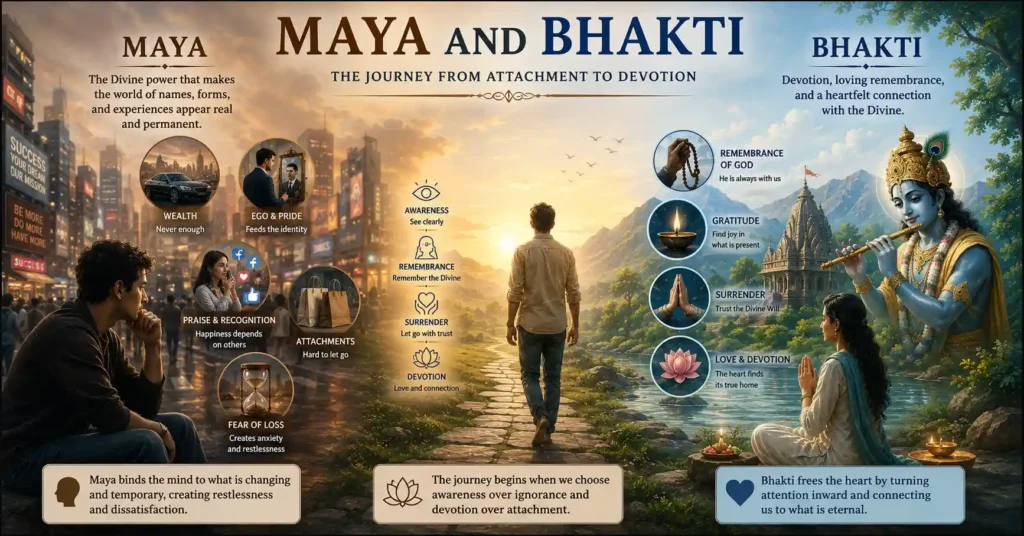
Maya is often described as the Divine power through which the soul experiences the material world. It draws the mind into the changing world of relationships, achievements, desires, joys, and sorrows, often making temporary things appear permanent.
Because of Maya, people become attached to wealth, status, praise, possessions, and personal identities, forgetting that these things constantly change.
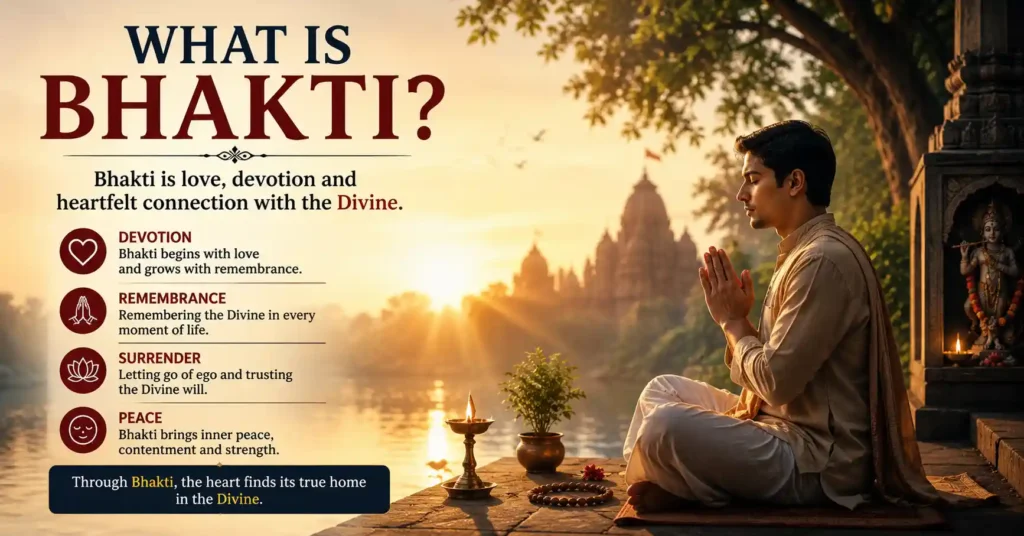
Bhakti, on the other hand, means devotion, loving remembrance, and a heartfelt connection with the Divine. Through Bhakti, the soul gradually remembers its deeper spiritual nature and its relationship with God.
While Maya turns the attention outward, Bhakti gently turns it inward. While Maya creates attachment, Bhakti nurtures trust, surrender, and peace.
Both are part of the spiritual journey. Maya creates worldly experience, while Bhakti helps the soul rediscover its Divine source. Understanding Maya and Bhakti is not about choosing one world over another, but about understanding where the heart finds its true center.
Why Maya is not always negative
Many people hear the word Maya and assume it means something harmful. However, Sanatan teachings offer a more balanced understanding.
Maya is not simply illusion. It is also the Divine power through which the universe and human experience unfold. Without Maya, there would be no relationships, responsibilities, learning, or opportunities for growth.
The problem is not Maya itself. The difficulty begins when we forget that everything in the world is constantly changing and start treating temporary things as the ultimate source of happiness.
Money, relationships, and success are natural parts of life. They become binding only when we depend on them completely for happiness and identity.
This is why Sanatan Dharma does not ask most people to reject the world. Instead, it encourages us to participate in life while remembering its temporary nature.
Seen in this way, Maya is both a veil and a teacher. It can create attachment, but it can also help the soul learn, grow, and move toward deeper wisdom.
Difference between Maya and Bhakti
Understanding the difference between Maya and Bhakti helps clarify the spiritual path.
Maya | Bhakti |
Pulls the mind toward worldly desires | Turns the heart toward the Divine |
Creates attachment and restlessness | Brings surrender and peace |
Makes temporary things appear permanent | Reveals deeper spiritual truth |
Focuses on “mine” and “me” | Focuses on devotion and trust |
Increases dependence on external things | Strengthens inner stability |
Encourages constant seeking | Encourages contentment and remembrance |
Although Maya and Bhakti appear opposite, both play a role in human life.
Most people experience both at the same time.
There are moments when the mind becomes absorbed in desires, worries, and attachments. There are also moments when the heart feels drawn toward prayer, gratitude, devotion, or remembrance of God.
The spiritual journey is not about pretending Maya does not exist. It is about gradually allowing Bhakti to become stronger than attachment.
As devotion grows, worldly experiences continue, but their hold over the mind slowly begins to weaken.

Understanding the power of Maya
Maya works in a very subtle way. It rarely appears as something harmful. Most of the time, it appears attractive, reasonable, and even necessary.
Comfort, success, recognition, and relationships are natural parts of life. The difficulty begins when the mind starts believing that these things alone can provide lasting happiness.
Maya quietly convinces us that peace lies just beyond the next achievement. One goal is reached, another appears, and the search continues.
This is why many people feel restless even after achieving what they once desired. Maya does not always create suffering through problems. Sometimes it creates suffering through endless chasing.
When the heart becomes focused only on what is missing, it forgets to appreciate what is already present. This is how attachment slowly grows and why understanding Maya and Bhakti is so important in spiritual life.
Why Maya feels so real
One of the most interesting questions in spiritual life is this: if Maya is temporary, why does it feel so real?
The reason is that Maya does not usually appear as something obvious or deceptive. It works through everyday experiences such as desires, fears, ambitions, attachments, and personal identities. Because these are part of daily life, their influence can be difficult to recognize.
Over time, the mind begins to believe that lasting happiness lies somewhere outside itself. It keeps chasing one goal after another, hoping that fulfillment is just around the corner.
This is why Maya can be so powerful. It often works through subtle attachments that quietly occupy the heart and attention.
As we become deeply identified with possessions, achievements, status, or circumstances, Maya appears stronger. Bhakti gradually loosens this influence by reminding us that our deepest identity is far greater than these constantly changing things.
Signs that Maya is influencing the mind
Maya often works in subtle ways, which is why it can be difficult to recognize. One common sign is constant comparison, where the mind becomes focused on what others have and begins measuring its own worth through external achievements.
Another sign is endless dissatisfaction. Even after reaching a goal, contentment lasts only briefly before the mind starts chasing something else.
Attachment to praise, fear of losing status, possessions, or recognition can also indicate the influence of Maya. The more tightly we cling to temporary things, the more anxiety they often create.
These experiences are a normal part of human life. The purpose of recognizing them is not self-criticism but awareness. When we begin noticing these patterns, Bhakti can gradually guide the heart toward something deeper, steadier, and more lasting.
What Bhakti really means
Bhakti is often translated as devotion, but its meaning goes far beyond rituals or temple visits. At its heart, Bhakti is a loving relationship with the Divine and a quiet remembrance that God is present throughout everyday life.
While Maya pulls the mind outward, Bhakti gently turns it inward. It reminds us that lasting peace comes not from controlling every situation, but from trusting the Divine presence behind life itself.
A person walking the path of Bhakti does not need to abandon family, work, or responsibilities. A parent caring for a child with love, someone performing honest work, offering gratitude, or remembering God’s name with sincerity can all express Bhakti in daily life.
As devotion deepens, the heart gradually becomes guided by trust, gratitude, and surrender rather than constant desires and expectations. The outer world may remain the same, but the inner experience begins to transform, and that transformation is where true peace begins.
A simple lesson from the Ramayana
The Ramayana offers one of the most beautiful examples of Maya and Bhakti.
When Lord Rama was sent into exile, many people believed that losing the kingdom meant losing everything. Power, position, and royal authority appeared to be the most important things.
But Bharata saw the situation differently. Although the throne was available to him, he refused to claim it as his own. Instead, he placed Lord Rama’s sandals on the throne and ruled only as a caretaker until Rama’s return.
Bharata continued living in the world and fulfilling his responsibilities, yet his heart remained devoted to Rama. This is what makes Bhakti different from attachment. The responsibilities remained the same, but the inner attitude changed.
His story reminds us that a person can live amidst worldly duties and still allow Bhakti to guide the heart.
Maya and Bhakti in the Bhagavad Gita
Another powerful lesson about Maya and Bhakti comes from the Bhagavad Gita.
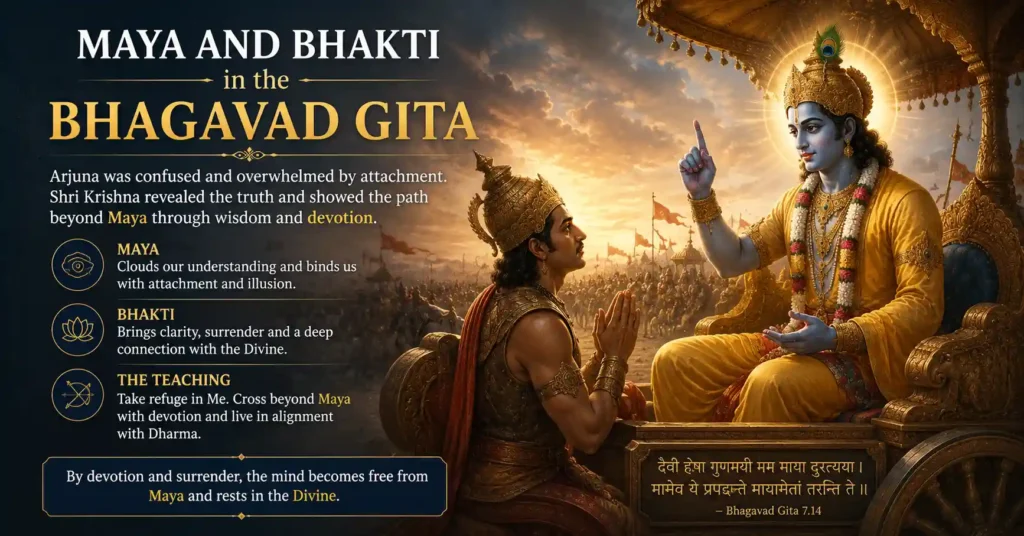
At the beginning of the Kurukshetra war, Arjuna was overwhelmed by fear, attachment, and confusion. Seeing his loved ones on the battlefield, he could no longer think clearly.
At that moment, he turned to Lord Krishna for guidance. Krishna did not remove the battlefield or Arjuna’s responsibilities. What changed was Arjuna’s understanding. Through wisdom and devotion, he began to see his duty from a higher perspective.
In Bhagavad Gita 7.14, Shri Krishna explains that His Divine Maya is difficult to cross, yet those who take refuge in Him can move beyond its influence.
This teaching beautifully shows the relationship between Maya and Bhakti. Maya clouds understanding, while Bhakti helps restore clarity and brings the mind closer to truth.
Can Maya and Bhakti exist together?
Many people assume that spiritual life requires choosing between the world and God. But Sanatan Dharma offers a more balanced understanding.
For most people, Maya and Bhakti exist together throughout life. Family responsibilities, work, relationships, and daily duties continue even after a person develops devotion.
The goal is not to abandon the world, but to change the way we relate to it. A devotee may earn money, raise a family, pursue goals, and fulfill responsibilities, yet these things no longer become the only source of identity and happiness.
As Bhakti deepens, attachment gradually transforms into gratitude, service, and surrender. The external circumstances of life may remain largely the same, but the inner relationship with them begins to change.
This is why many householders throughout Sanatan history have walked the path of devotion while remaining fully engaged in everyday life. Spiritual growth is not always about leaving the world behind. Often, it is about living in the world with a different awareness.
Maya and Bhakti in modern life
Today, Maya often appears through constant distractions, comparison, social media validation, and the pressure to achieve more. Bhakti appears through gratitude, prayer, service, and moments of remembrance.
The forms may look different from earlier times, but the inner struggle remains the same. The human heart still chooses between attachment and devotion every day.
A simple example from everyday life
The difference between Maya and Bhakti can be seen in everyday life.
Imagine someone constantly checking their phone. Notifications, messages, and social media updates keep pulling the mind from one thing to another. Each notification brings a brief moment of excitement, but the restlessness soon returns.
This is one way Maya operates.
Now imagine the same person spending a few quiet minutes each morning in prayer, gratitude, mantra japa, or silent remembrance of the Divine. The responsibilities of life remain the same, but over time the mind becomes calmer and more balanced.
This quiet inner change is one of the early signs of Bhakti. The outer world may remain unchanged, but the inner experience begins to transform.
How to live in the world without getting trapped in Maya
Sanatan wisdom does not ask everyone to withdraw from worldly life. Instead, it teaches how to participate in life with awareness.
One helpful practice is remembering that everything in the material world is temporary. Success and failure, praise and criticism, gain and loss all come and go with time.
Daily remembrance of the Divine also helps. Even a few minutes of prayer, mantra chanting, gratitude, or silent reflection can gradually strengthen Bhakti.
Acts of service are equally important. When actions are performed with humility and a spirit of offering, attachment begins to weaken.
Gratitude also plays a powerful role. Maya constantly focuses on what is missing, while gratitude helps us recognize what has already been given.
These small practices may seem simple, but over time they create a profound shift in the heart.
The world remains part of life, yet it no longer completely controls the mind.
How Bhakti slowly transforms the mind
Bhakti rarely changes a person overnight. Its transformation is usually gentle and gradual.
As devotion deepens, the need for constant praise, recognition, and approval slowly begins to weaken. Anxiety reduces, comparison becomes less intense, and contentment grows stronger.
The challenges of life may remain, but the way they are experienced begins to change. This quiet inner transformation is one of the greatest gifts that the path of Maya and Bhakti offers a spiritual seeker.

Is the Goal to Escape Maya?
A common misunderstanding is that spiritual growth requires completely rejecting the world. However, Sanatan Dharma offers a more balanced and practical perspective.
Most people are meant to live within families, communities, and society. Responsibilities, relationships, and daily duties are all part of life, and spiritual growth does not require abandoning them.
The deeper teaching is not to destroy Maya, but to avoid becoming completely controlled by attachment. A person can fulfill responsibilities, pursue goals, and care for loved ones while still keeping the heart connected to the Divine.
This is where Bhakti becomes important. It helps create balance between worldly life and spiritual awareness.
Over time, happiness becomes less dependent on changing circumstances and more rooted in inner peace. In this way, spiritual life becomes less about escaping the world and more about seeing it with greater clarity and wisdom.
When Maya becomes a teacher
At first, Maya and Bhakti may seem like opposite paths. One draws the mind toward the world, while the other gently turns the heart toward the Divine.
Yet many people begin seeking something deeper only after discovering that worldly achievements alone cannot provide lasting peace. Success, comfort, and recognition may bring happiness for a time, but they often leave deeper questions unanswered.
People begin wondering what truly brings peace, what remains when circumstances change, and what gives life its deeper meaning.
In this way, Maya itself can become a teacher. The experiences created by attachment often encourage us to look beyond temporary things and search for something more lasting.
Maya shows us the changing beauty of the world. Bhakti helps us discover the Divine presence behind it. Seen from this perspective, Maya and Bhakti become two important teachers on the spiritual journey.
A gentle reflection
When we reflect on Maya and Bhakti, we often discover that the struggle is not between the world and spirituality. It is between forgetfulness and remembrance.
Every day presents small choices. At different moments, we can become completely absorbed in worries, desires, and distractions, or we can pause and remember something deeper.
Bhakti does not ask us to stop living. It simply invites us to live with greater awareness.
Perhaps this is why devotion has remained such a powerful path throughout the centuries. It gently reminds the heart of what it has always been seeking.
Conclusion
Maya and Bhakti are not enemies. Both are part of the spiritual journey through which the soul learns, grows, and gradually moves closer to the Divine.
Maya provides experiences within the world, while Bhakti helps us understand those experiences from a deeper perspective. The goal of spiritual life is not to reject the world, but to live in it with greater awareness and less attachment.
The journey from Maya to Bhakti does not happen overnight. It unfolds through small moments of remembrance, gratitude, prayer, and devotion that slowly transform the heart.
Over time, the things that once seemed most important begin to lose their hold on the mind, and a deeper sense of peace begins to emerge.
Perhaps this is the true significance of Maya and Bhakti in Sanatan Dharma. One teaches us about the changing nature of the world, while the other helps us remember what remains constant beyond all change.
Suggested Reading
If reflections on Maya, devotion, attachment, and spiritual growth resonate with you, the articles below explore these themes more deeply. Together they offer a broader understanding of Sanatan wisdom, inner transformation, and the journey from restlessness to peace.
What Is Spiritual Awakening Feels Lonely and Quite Inside
https://thesanatantales.com/why-spiritual-awakening-feels-lonely/
What Is Sri Vidya? The Sacred Path of Lalita Tripura Sundari?
https://thesanatantales.com/sri-vidya-meaning/
Detachment in Hindu Philosophy: The Deep Meaning of Vairagya and Inner Freedom
https://thesanatantales.com/detachment-in-hindu-philosophy/
Ambition and Peace: Finding Balance in Modern Life
https://thesanatantales.com/ambition-and-peace/
Why Do Bad Things Happen to Good People? A Sanatan Perspective
https://thesanatantales.com/why-bad-things-happen-to-good-people/
Ego in Spiritual Life: Signs, Meaning & How to Reduce It
https://thesanatantales.com/ego-in-spiritual-life/
What Are the Four Purusharthas? A Simple Guide to Dharma, Artha, Kama & Moksha
https://thesanatantales.com/four-purusharthas-dharma-artha-kama-moksha/
Does the Soul Choose its Next Journey? The Mystery of Rebirth & Cousciousness
https://thesanatantales.com/does-the-soul-choose-its-next-journey/
How to Seek Forgiveness for Unintentional Sins in Sanatan Dharma
https://thesanatantales.com/forgiveness-for-unintentional-sins/
FAQs
What is Maya in Sanatan Dharma?
Maya is the Divine power that creates the experience of the material world. It often causes temporary things to appear permanent and can lead the mind toward attachment and distraction
What is Bhakti in Hindu philosophy?
Bhakti means devotion, love, and remembrance of the Divine. It helps the heart develop trust, surrender, and a deeper spiritual connection.
What is the difference between Maya and Bhakti?
Maya draws attention toward worldly attachments, while Bhakti turns the heart toward the Divine. One often creates restlessness, while the other gradually brings inner peace.
Can Maya and Bhakti exist together?
Yes. Most people experience both throughout life. Spiritual growth is not about eliminating Maya completely but allowing Bhakti to become stronger than attachment.
How can Bhakti help overcome Maya?
Bhakti helps by shifting attention away from constant desires and toward remembrance of God. Over time, devotion reduces attachment and strengthens inner stability.
Does Bhakti require leaving worldly life?
No. Sanatan Dharma teaches that devotion can be practiced while fulfilling family, work, and social responsibilities. Bhakti is more about inner attitude than external lifestyle.
Why does Maya feel stronger than Bhakti?
Maya works through everyday desires, fears, and attachments, making it feel very real. Bhakti grows gradually through regular remembrance, prayer, and devotion.
What does the Bhagavad Gita say about Maya?
The Bhagavad Gita teaches that Divine Maya is difficult to cross through personal effort alone. Shri Krishna explains that devotion and surrender help a person move beyond its influence.
Is Maya an illusion or a reality?
Sanatan teachings describe Maya as a real experience, but one that is temporary and constantly changing. It becomes misleading when we mistake temporary things for permanent happiness.
How does devotion bring inner peace?
Devotion reduces the mind’s dependence on external circumstances. As trust in the Divine grows, the heart becomes calmer, steadier, and more content.