
There comes a moment in life when we feel a quiet emptiness inside. Even when things seem fine on the outside, something within still feels incomplete.
At such times, a quiet question begins to arise within us, what is Bhakti, and why do so many people find peace in it?
We try to fill that space in many ways through success, relationships, distractions, or constant activity.
For a while, it may work, but the feeling quietly returns.
In Sanatan Dharma, this inner search is understood very deeply, and when we truly explore what is Bhakti, we begin to see it as one of the simplest and most natural paths offered to us.
Bhakti means devotion, but not just in the sense of rituals or prayers. It is a deep, personal connection with the Divine, filled with love, trust, and surrender.
It is when you remember God not out of fear or duty, but like you remember someone who truly matters to you. It becomes a relationship, not a routine.
Bhakti is powerful because it touches the heart directly. It does not depend on how much you know, how perfect you are, or how disciplined your life is.
Even a person who feels lost, broken, or confused can walk this path, and many people begin Bhakti from that very place.
Slowly, this connection starts changing something inside.
The mind becomes quieter, the constant pressure to control everything begins to reduce, and a sense of inner support starts growing.
Bhakti does not remove all problems from life, but it changes how you experience them.
It gives strength without hardness, peace without escape, and a feeling that you are not alone, even in your most silent moments.
That is why Bhakti is not just a practice. It becomes a way of living, a way of feeling, and a way of being.
Table of Contents
ToggleWhat is Bhakti in Sanatan Dharma?
Bhakti simply means devotion, but in Sanatan Dharma it is understood as loving devotion towards the Divine.
It is not limited to rituals, temples, or fixed methods. It is a feeling that lives inside you and grows with sincerity.
You can express Bhakti by praying, chanting, serving others, or even sitting quietly and talking to God in your own way.
In texts like the Bhagavad Gita, Bhakti is described as one of the most direct paths to connect with the Divine. In simple words, Bhakti is not about doing more, it is about feeling more.
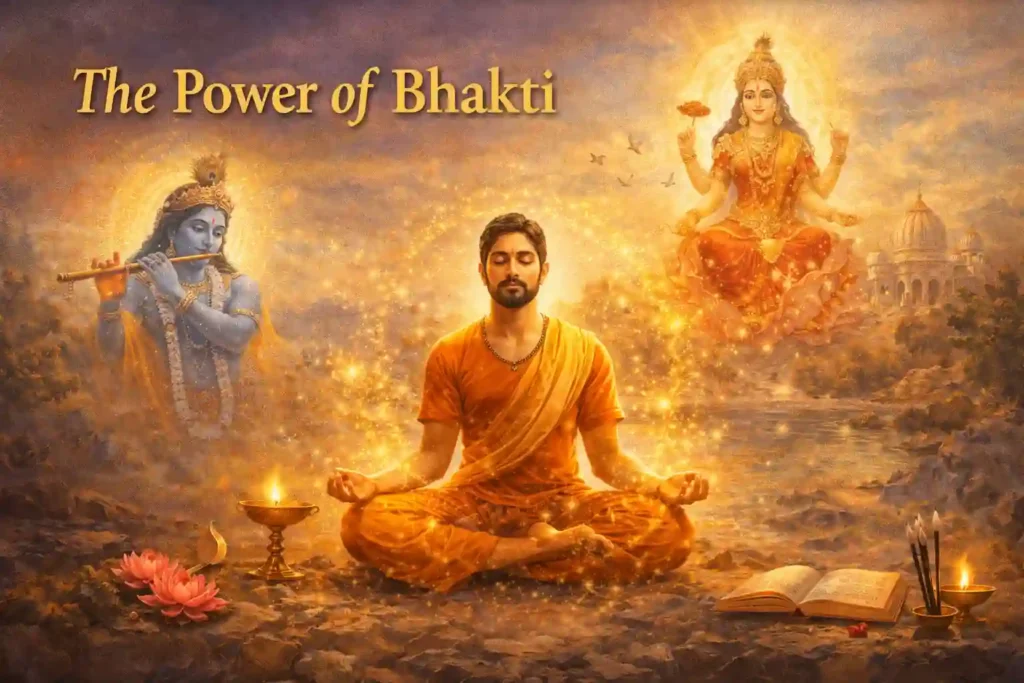
Why is Bhakti considered so powerful?
When we understand what is Bhakti, we begin to see why it is considered so powerful.
Bhakti is powerful because it works directly on the heart. When a person follows this path, something slowly softens inside.
Ego reduces, fear becomes lighter, and a natural sense of trust begins to grow.
Unlike strict discipline or purely intellectual paths, Bhakti does not create pressure. It creates comfort and inner stability.
A person who lives with Bhakti never feels completely alone, because there is always a quiet presence within.
That inner connection becomes strength in difficult times and peace in uncertain moments.
Is Bhakti only about rituals and prayers?
Many people misunderstand what is Bhakti and assume it is only about rituals.
Bhakti is much deeper than rituals. Rituals can support your devotion, but they are not the core.
A person may perform many rituals and still feel disconnected, while another may simply remember God with love and feel complete.
Bhakti is not about how long you pray, but how deeply you feel. Even a small, honest moment of devotion can be more meaningful than long mechanical prayers.
Can anyone follow the path of Bhakti?
Bhakti is the most open and accessible path. You do not need special knowledge, perfect discipline, or complicated rules to begin.
A child, an elder, a busy person, or someone going through a difficult phase can all walk this path.
In fact, Bhakti often begins when a person feels lost and starts seeking something real.
What are the different types of Bhakti?
To truly understand what is Bhakti, it helps to see how it is expressed in different ways.
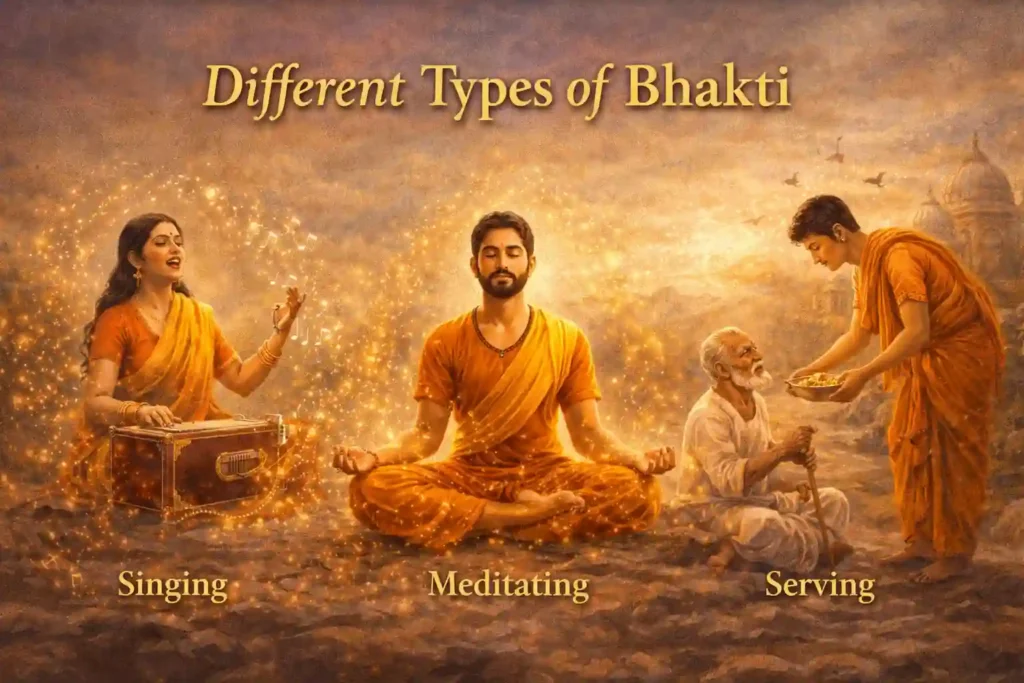
Bhakti can be expressed in many natural ways depending on a person’s nature. Some people feel it through singing or chanting, while others connect through silence, service, or surrender.
Traditionally, Sanatan Dharma describes forms of Bhakti like listening, chanting, remembering, serving, and surrendering. But in real life, Bhakti is simply love expressed in your own way. There is no one fixed method.
What is Bhakti Yoga?
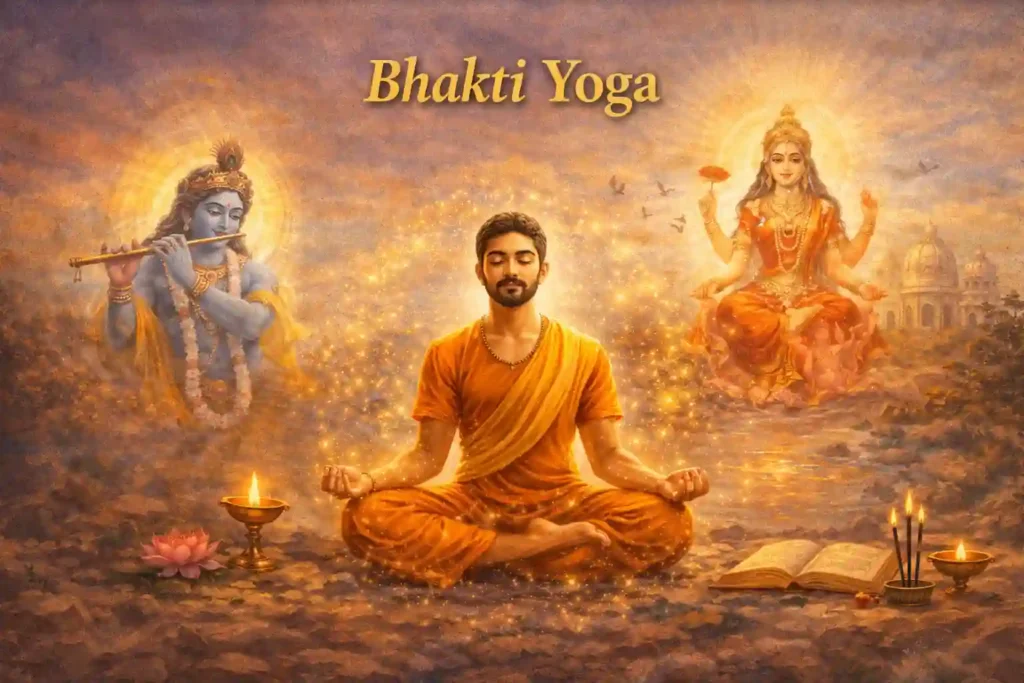
Bhakti Yoga is the path of devotion among the different spiritual paths described in Sanatan Dharma.
While Karma Yoga focuses on action and Jnana Yoga focuses on knowledge, Bhakti Yoga focuses on building a loving relationship with the Divine.
It does not require complex philosophy or strict discipline, which is why it feels more natural for many people today.
It allows you to grow spiritually through love rather than effort alone.
How does Bhakti change a person’s life?
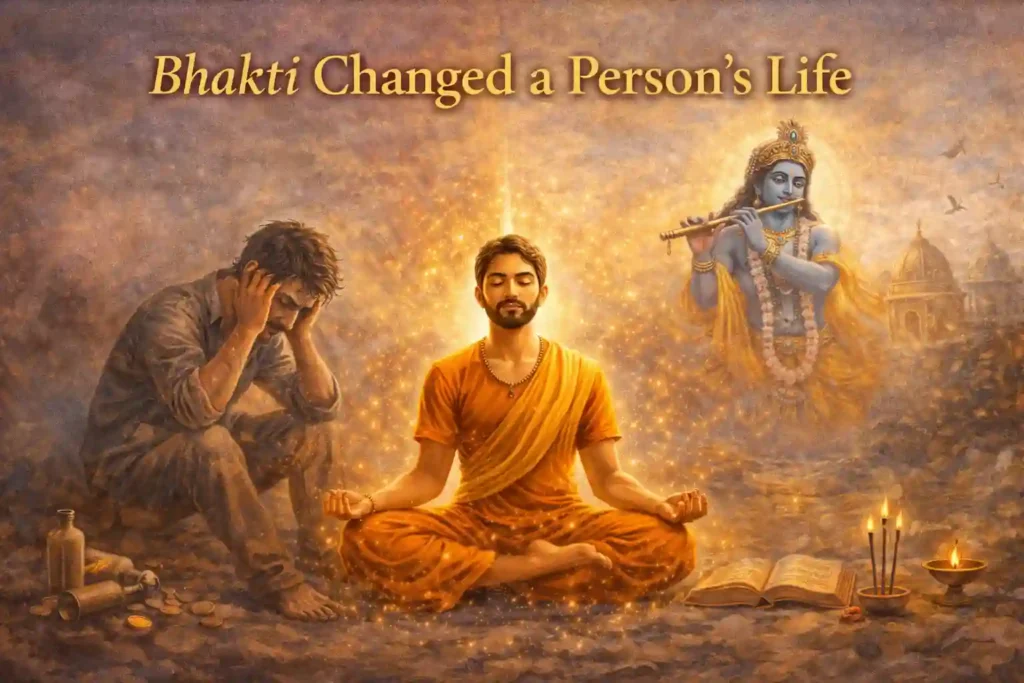
When a person truly experiences what is Bhakti, the change begins from within. Bhakti does not change life overnight, but it slowly changes how you experience life.
Situations may remain the same, yet your reactions become calmer and more balanced.
You begin to accept things with more grace, feel less burdened by expectations, and experience a quiet joy even in small moments.
Over time, Bhakti makes a person softer, stronger, and more peaceful from within.
How can a beginner start practicing Bhakti?
Starting Bhakti is very simple and natural. You can begin by taking out a few quiet minutes in your day and remembering God in your own way.
You may speak, chant, listen, or just sit in silence. There is no need to force anything or follow strict rules in the beginning.
What matters most is honesty in your feeling. Even a small daily connection is enough to begin.
🌿 Conclusion
Bhakti is not about becoming someone else. It is about returning to your natural state of love and trust.
In a world that often feels noisy and overwhelming, Bhakti becomes a quiet space within you where you do not have to prove anything.
It allows you to simply be, and that is where its true power lies. Once you understand what is Bhakti, you begin to see it not just as a practice, but as a way of living.
Suggested Reading
If this topic touched something within you, you may also like exploring these related questions:
What is Karma according to Sanatan Dharma?
https://thesanatantales.com/what-is-karma-according-to-sanatan-dharma/
What is Moksha and how is it attained?
https://thesanatantales.com/what-is-moksha-and-how-is-it-attained/
What are the 16 sanskar in Sanatan Dharma?
https://thesanatantales.com/what-are-the-16-sanskar-in-sanatan-dharma/
What Is Dharma and Why Is It Important?
https://thesanatantales.com/what-is-dharma-and-why-is-it-important/
FAQs
What is the simple meaning of Bhakti?
Bhakti means loving devotion towards God, expressed through feeling, remembrance, or surrender.
What is Bhakti Yoga in simple words?
Bhakti Yoga is the path of connecting with God through love and devotion rather than knowledge or strict practices.
Is Bhakti better than Karma or Jnana Yoga?
Not better, just different. Bhakti is the path of the heart, while others focus on action or knowledge.
Can Bhakti be practiced without rituals?
Yes, Bhakti is mainly about feeling. Rituals can help, but they are not necessary.
What are examples of Bhakti in daily life?
Remembering God, chanting, helping others selflessly, or simply feeling gratitude are all forms of Bhakti.
How much time should I give to Bhakti daily?
Even a few minutes of honest connection is enough to begin.