Rudraksha is one of the most sacred symbols associated with Lord Shiva and has been revered in Sanatan Dharma for centuries. These sacred beads are traditionally worn by saints, devotees, yogis, and spiritual seekers as a tool for meditation, mantra chanting, and inner growth.
The meaning of Rudraksha goes far beyond a simple bead. According to Hindu tradition, Rudraksha originated from the compassionate tears of Lord Shiva and is regarded as a powerful aid for spiritual practice. Over time, different types of Rudraksha have become associated with specific qualities, making them popular among devotees seeking peace, focus, devotion, and self-discipline.
Many people are curious about Rudraksha benefits, how to wear Rudraksha correctly, whether everyone can wear it, and how to identify a genuine bead. At the same time, there are many myths and misconceptions surrounding these sacred beads.
In this article, you will learn what Rudraksha is, its meaning, origin, scriptural significance, different Mukhi varieties, spiritual and practical benefits, rules for wearing Rudraksha, and how to choose an authentic Rudraksha according to traditional beliefs.
Whether you are a beginner or a devotee looking to deepen your understanding, this guide will help you explore the spiritual significance of Rudraksha in a simple and practical way.
At a Glance
| Aspect | Details |
|---|---|
| Meaning of Rudraksha | Commonly understood as “The Tears of Lord Shiva” |
| Sanskrit Origin | Rudra (Lord Shiva) + Aksha (tears or eyes) |
| Associated Deity | Lord Shiva |
| What Is Rudraksha? | A sacred seed from the Rudraksha tree (Elaeocarpus ganitrus) |
| Primary Purpose | Meditation, mantra japa, prayer, and spiritual practice |
| Mentioned In | Shiva Purana, Padma Purana, Devi Bhagavata Purana, Rudraksha Jabala Upanishad |
| Types | Classified by natural faces or grooves called Mukhis |
| Most Common Type | 5 Mukhi Rudraksha |
| Who Can Wear It? | Men, women, students, householders, and spiritual seekers |
| Traditional Significance | Symbol of devotion, self-discipline, and spiritual growth |
| Common Use | Worn as a mala, bracelet, or used for mantra chanting |
| Spiritual Association | Mindfulness, inner awareness, and connection with Lord Shiva |
Table of Contents
ToggleWhat Is the Meaning of Rudraksha?
The meaning of Rudraksha comes from two Sanskrit words: Rudra and Aksha.
Rudra is one of the sacred names of Lord Shiva, while Aksha means tears, eyes, or that which is seen. Together, the word Rudraksha is commonly understood as “the tears of Lord Shiva.”
According to Hindu tradition, these sacred beads originated from the compassionate tears of Lord Shiva. These were not tears of sorrow, but tears born from deep concern for the well-being of all living beings.
Because of this divine association, Rudraksha is regarded as much more than a spiritual accessory. For devotees, it represents a sacred connection with Lord Shiva and serves as a reminder of compassion, devotion, and inner awareness.
Traditionally, these sacred beads are used for meditation, mantra chanting, prayer, and other spiritual practices. Many devotees wear a Rudraksha mala to support concentration, discipline, and a deeper connection with their spiritual path.
The spiritual significance of these devotional beads has been recognized for centuries in Sanatan Dharma. Today, they continue to be worn by seekers, householders, saints, and devotees around the world as symbols of faith and spiritual commitment.
What Is the Origin of Rudraksha?
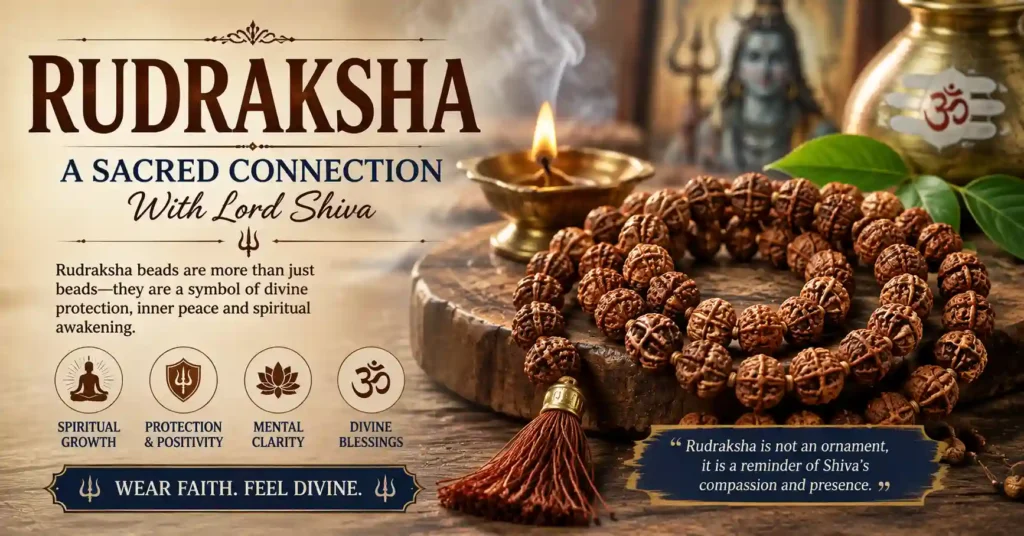
The origin of Rudraksha is closely connected with Lord Shiva and is described in several Hindu traditions and sacred texts. According to popular belief, these sacred beads were born from the compassionate tears of Lord Shiva.
The story tells that Lord Shiva once entered a deep state of meditation for the welfare of all living beings. When he opened his eyes after a long period of contemplation, tears of compassion fell to the earth.
From those sacred tears grew the Rudraksha tree, whose seeds later became revered throughout Sanatan Dharma. Because of this divine origin, these beads are considered sacred and remain closely associated with Lord Shiva.
References to their origin and spiritual importance can be found in texts such as the Shiva Purana, Padma Purana, and Devi Bhagavata Purana. These scriptures describe them as a sacred aid for devotion, meditation, and spiritual practice.
Beyond the literal story, many devotees also understand this origin symbolically. The tears of Lord Shiva represent compassion, wisdom, and concern for the suffering of all beings.
For this reason, wearing these sacred seeds is often seen as a reminder to cultivate qualities such as inner peace, self-discipline, devotion, and spiritual awareness.
Whether viewed as a divine gift from Lord Shiva or as a symbol of spiritual growth, the story of Rudraksha continues to inspire millions of devotees across generations.
Is Rudraksha Mentioned in Hindu Scriptures?
Yes, Rudraksha is mentioned in several Hindu scriptures and has been revered for centuries as a sacred aid for spiritual practice. References can be found in texts such as the Shiva Purana, Padma Purana, Devi Bhagavata Purana, and the Rudraksha Jabala Upanishad.
Among these, the Rudraksha Jabala Upanishad is one of the most important texts dedicated specifically to these sacred beads. It discusses their origin, significance, different types, and spiritual value.
The Shiva Purana describes their close association with Lord Shiva and explains their sacred origin. The text also highlights the importance of wearing them with devotion, sincerity, and proper conduct.
Traditional scriptures often describe these devotional beads as helpful for meditation, mantra japa, self-discipline, and spiritual growth. However, the emphasis is not on the bead alone but on the intention, devotion, and actions of the person who wears it.
Many scriptural references also discuss different varieties, commonly known as Mukhi Rudraksha, and their symbolic associations. These descriptions have contributed to the continued popularity of this sacred symbol among devotees and spiritual seekers.
For centuries, saints, yogis, and householders have worn Rudraksha malas as part of their spiritual practice. Their continued presence in Hindu scriptures and living traditions reflects an enduring role in Sanatan Dharma.
Why Is Rudraksha Considered Sacred?
Rudraksha is considered sacred because of its deep association with Lord Shiva and its long-standing place in Hindu spiritual traditions. For centuries, devotees have regarded these sacred beads as symbols of devotion, self-discipline, and spiritual growth.
According to traditional beliefs, these beads originated from the compassionate tears of Lord Shiva. This divine connection is one of the primary reasons they are revered across different schools of Sanatan Dharma.
Their sacredness is also linked to their role in spiritual practice. Many devotees wear a Rudraksha mala while performing meditation, mantra chanting, prayer, and scriptural study. These practices help create an atmosphere of focus, mindfulness, and devotion.
Hindu scriptures often describe these sacred seeds as a supportive aid for those seeking a more disciplined and spiritually centered life. However, their true value is not believed to lie in the bead itself, but in the sincerity, faith, and conduct of the person who wears it.
For many devotees, wearing Rudraksha serves as a constant reminder of spiritual values such as compassion, humility, self-control, and inner awareness. It helps keep the mind connected to higher ideals amidst the distractions of daily life.
The continued use of these devotional beads by saints, yogis, householders, and spiritual seekers reflects their enduring significance in Sanatan Dharma. This combination of scriptural support, traditional reverence, and spiritual symbolism is what makes Rudraksha sacred to millions of devotees.
What Are the Different Types of Rudraksha?
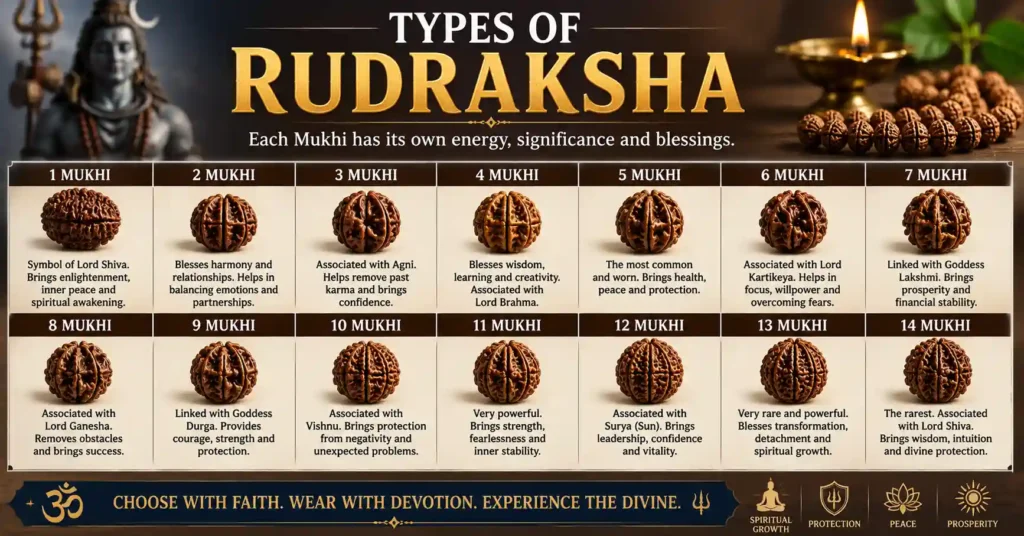
One of the unique features of Rudraksha is that these sacred beads are classified according to the number of natural lines or grooves present on their surface. These lines are known as Mukhi, which means “faces.”
Based on the number of faces, there are different varieties, each carrying its own traditional symbolism and spiritual associations. Some are rare, while others are more commonly worn by devotees.
The most widely used and easily available variety is the 5 Mukhi Rudraksha, which is commonly worn for daily spiritual practice, meditation, and mantra chanting.
Rudraksha Types at a Glance
| Mukhi | Traditional Association |
|---|---|
| 1 Mukhi | Lord Shiva |
| 2 Mukhi | Ardhanarishvara (Shiva and Shakti) |
| 3 Mukhi | Agni (Fire) |
| 4 Mukhi | Lord Brahma |
| 5 Mukhi | Kalagni Rudra |
| 6 Mukhi | Lord Kartikeya |
| 7 Mukhi | Goddess Lakshmi |
| 8 Mukhi | Lord Ganesha |
| 9 Mukhi | Goddess Durga |
| 10 Mukhi | Lord Vishnu |
| 11 Mukhi | Ekadasha Rudra |
| 12 Mukhi | Surya (Sun God) |
| 13 Mukhi | Kamadeva |
| 14 Mukhi | Lord Shiva |
It is important to understand that these associations come from traditional beliefs and scriptural interpretations. Different traditions may explain certain Mukhi beads in slightly different ways.
Many people assume that a higher Mukhi automatically means a better choice. However, traditional teachings generally emphasize devotion, spiritual practice, and sincerity over rarity or cost.
For beginners, a 5 Mukhi Rudraksha is often considered the most suitable option because it is widely available, traditionally respected, and commonly used for meditation and daily wear.
While 1 Mukhi to 14 Mukhi varieties are the most commonly discussed, some traditions also describe higher Mukhi beads and special combinations. However, for most devotees, a genuine 5 Mukhi bead is considered sufficient for daily prayer, meditation, and spiritual practice.
While learning about the various types can be helpful, the true value of these sacred beads lies in how they inspire spiritual discipline, mindfulness, and devotion in everyday life.

What Are the Spiritual Benefits of Rudraksha?
For centuries, devotees have worn Rudraksha as a sacred aid for spiritual practice. While different traditions describe its benefits in various ways, these sacred beads have long been associated with devotion, meditation, and inner growth.
One of the most commonly mentioned benefits is their role in improving focus during meditation and mantra chanting. Many devotees use a Rudraksha mala while repeating sacred mantras, as it helps create a sense of discipline and concentration.
1. Supports Meditation and Mantra Japa
Meditation requires a calm and focused mind. Using these sacred beads during japa or meditation can help practitioners stay attentive and maintain a regular spiritual routine.
For this reason, malas made from these beads are widely used by yogis, saints, and spiritual seekers across different traditions.
2. Encourages Spiritual Discipline
Wearing Rudraksha often serves as a daily reminder of one’s spiritual goals. It can encourage regular prayer, self-reflection, and mindful living.
Many devotees view it as a symbol of commitment to a more balanced and spiritually conscious life.
3. Strengthens Devotion
Because these sacred beads are closely associated with Lord Shiva, many devotees feel a deeper sense of connection during worship and prayer.
For them, they become a symbol of faith, surrender, and devotion rather than merely an accessory.
4. Promotes Inner Awareness
Spiritual traditions often emphasize the importance of self-awareness and control over thoughts and actions. Wearing these beads can serve as a reminder to remain mindful and centered throughout the day.
This awareness gradually becomes part of daily life, both during spiritual practice and ordinary activities.
5. Supports a Sattvic Lifestyle
In Sanatan Dharma, spiritual growth is often linked with cultivating qualities such as calmness, compassion, discipline, and clarity.
Many devotees associate Rudraksha with these values and wear it as a reminder to live with greater balance and self-control.
6. Supports Prayer and Daily Spiritual Practice
Many people wear these sacred beads not only during meditation but also during daily prayers, scriptural study, and moments of quiet reflection.
Their presence can help create a spiritual mindset and encourage consistency in one’s daily practice.
7. Inspires a Connection with Sacred Traditions
For centuries, saints, sages, and devotees have used these devotional beads as part of their spiritual journey. They help many people feel connected to a long spiritual heritage.
They also serve as a reminder of the teachings, practices, and values passed down through generations.
The spiritual benefits of Rudraksha are traditionally understood as support for devotion, mindfulness, self-discipline, and inner growth. While experiences vary from person to person, Hindu traditions generally view wearing these sacred beads as a way to strengthen spiritual practice and connection with higher values.
It is important to remember that traditional texts emphasize that the true benefits come when they are accompanied by sincere effort, good conduct, devotion, and regular practice. The bead itself is not viewed as a substitute for inner transformation but as a support on the path of spiritual growth.
What Are the Practical Benefits of Wearing Rudraksha?
Apart from its spiritual significance, many people wear Rudraksha as part of their daily routine because it helps them stay connected to positive habits and mindful living. While traditional beliefs focus primarily on spiritual growth, devotees often describe several practical benefits from wearing these sacred beads.
1. Encourages a Daily Spiritual Routine
Wearing a Rudraksha mala can serve as a constant reminder to make time for prayer, meditation, or self-reflection.
Even a few minutes of spiritual practice each day can help bring greater consistency and discipline to life.
2. Promotes Mindfulness
Many devotees use these sacred beads as a reminder to stay aware of their thoughts, words, and actions.
This awareness can encourage more thoughtful decisions and a calmer approach to everyday situations.
3. Helps Maintain Focus
Whether used during meditation, mantra chanting, or quiet reflection, these devotional beads are traditionally associated with concentration and mental discipline.
Many practitioners find that they help them remain committed to their spiritual and personal goals.
4. Strengthens Cultural and Spiritual Identity
For many people, wearing these sacred seeds is a way of expressing their connection with Sanatan Dharma and its spiritual traditions.
They serve as a visible reminder of values such as devotion, humility, self-control, and respect for sacred teachings.
5. Inspires Positive Habits
When worn with awareness, these beads can encourage practices such as regular prayer, scriptural study, gratitude, and self-improvement.
Over time, these small habits can contribute to a more balanced and purposeful lifestyle.
6. Creates a Sense of Connection
Many devotees feel a sense of comfort and inspiration while wearing them, especially during challenging times.
For them, these sacred beads symbolize faith, guidance, and a connection to Lord Shiva and centuries of spiritual tradition.
It is important to remember that the practical benefits associated with Rudraksha are often linked to the positive habits, discipline, and spiritual practices that accompany its use. Traditional teachings emphasize that personal effort, devotion, and right conduct remain the foundation of meaningful spiritual growth.
Who Can Wear Rudraksha?
One of the most common questions people ask is whether Rudraksha can be worn by everyone. According to traditional Hindu beliefs, these sacred beads are not limited to saints, monks, or spiritual teachers.
Men and women, young and old, householders and spiritual seekers can all wear them with faith and respect. Their purpose is to support devotion, mindfulness, and spiritual practice, not to create barriers based on social status or lifestyle.
Many devotees wear a Rudraksha mala while performing meditation, mantra chanting, yoga, or daily prayers. Others wear it throughout the day as a reminder of spiritual values and their connection with Lord Shiva.
Students may wear these sacred beads as a symbol of discipline and focus. Professionals and householders often include them in their daily spiritual routine while balancing work, family, and personal responsibilities.
Traditional teachings generally emphasize that the attitude of the wearer is more important than age, profession, or background. Respect, sincerity, and good conduct are considered far more important than external appearance.
At the same time, different spiritual traditions may follow their own customs regarding how these devotional beads should be worn. Some devotees choose to follow specific guidance from their guru, family tradition, or spiritual lineage.
For most people, however, Rudraksha remains a sacred symbol that can be worn by anyone who wishes to deepen spiritual awareness, strengthen devotion, and live a more mindful life.

How Should Rudraksha Be Worn?
There is no single rule that applies to every devotee, but Rudraksha is traditionally worn with respect, faith, and sincere spiritual intention. The way it is worn often depends on personal preference, family tradition, or guidance from a spiritual teacher.
Many devotees wear these sacred beads as a mala around the neck, while others wear them as a bracelet on the wrist. Both practices are common and widely accepted across different Hindu traditions.
A Rudraksha mala is often used during meditation, mantra chanting, prayer, and spiritual study. Some people wear it only during spiritual practices, while others keep it on throughout the day as a reminder of their spiritual values.
Common Ways to Wear Rudraksha
- As a mala around the neck
- As a bracelet on the wrist
- During meditation and mantra japa
- As part of daily spiritual practice
- According to personal or family tradition
Before wearing these sacred beads, many devotees choose to clean them and offer a simple prayer to Lord Shiva. Some also chant sacred mantras such as “Om Namah Shivaya” while wearing or using them.
It is important to remember that Hindu scriptures place greater emphasis on devotion and conduct than on complex rituals. Wearing Rudraksha with sincerity and respect is generally considered more important than following numerous external rules.
For beginners, a 5 Mukhi Rudraksha is often regarded as a simple and suitable choice for daily wear and spiritual practice. It is widely available and commonly used by devotees across different traditions.
Ultimately, the purpose of wearing these devotional beads is not merely to follow a custom but to cultivate mindfulness, devotion, self-discipline, and a deeper connection with one’s spiritual path.
Are There Any Rules for Wearing Rudraksha?
Many people believe that wearing Rudraksha involves numerous strict rules. However, traditional teachings generally place greater importance on devotion, sincerity, and good conduct than on complicated restrictions.
The primary purpose of these sacred beads is to support spiritual practice and keep the mind connected to higher values. For this reason, they are traditionally worn with respect and mindfulness.
Some devotees prefer to wear them after bathing and while maintaining personal cleanliness. This practice is followed as a mark of respect rather than a compulsory requirement.
Many people also choose to remove their Rudraksha mala before activities such as swimming, using chemical products, or engaging in tasks that may damage the beads. Proper care helps preserve their natural quality and longevity.
Common Traditional Guidelines
- Wear Rudraksha with faith and respect.
- Keep the beads clean and well maintained.
- Use a mala for meditation, prayer, or mantra chanting.
- Avoid treating these sacred beads as a fashion accessory alone.
- Follow the guidance of your guru or family tradition if applicable.
It is also important to understand that customs regarding how to wear Rudraksha may vary between different spiritual traditions. Some devotees follow specific practices, while others adopt a simpler approach.
The spirit behind these guidelines is not fear or superstition. Rather, they encourage mindfulness and help the wearer remember the sacred purpose of these devotional beads.
Ultimately, Hindu teachings suggest that devotion, humility, self-discipline, and ethical living are far more important than rigid external rules. Wearing Rudraksha with sincere faith and a positive attitude is generally considered the most meaningful practice.
Can Women Wear Rudraksha?
Yes, women can wear Rudraksha. There is no universal scriptural rule in Sanatan Dharma that prohibits women from wearing these sacred beads. In fact, many women have used them for spiritual practice, meditation, prayer, and devotion for centuries.
The belief that women should not wear Rudraksha is largely based on regional customs or personal traditions rather than a clear prohibition found in major Hindu scriptures. Because traditions vary from one family or lineage to another, practices may differ.
The primary purpose of these sacred beads is to support spiritual growth, mindfulness, and devotion. These goals are not limited by gender. Anyone who approaches them with faith and respect can incorporate them into spiritual practice.
Many women wear a Rudraksha mala during meditation, mantra chanting, yoga, and daily prayers. Others wear it throughout the day as a reminder of spiritual values and their connection with the Divine.
At the same time, some families or spiritual traditions may follow specific customs regarding their use. Devotees who wish to follow those traditions can do so according to their personal beliefs and spiritual guidance.
It is important to remember that Hindu teachings generally place greater emphasis on devotion, sincerity, and righteous conduct than on external distinctions. The spiritual significance of these devotional beads lies in how they inspire inner discipline, awareness, and faith.
For most devotees, the question is not whether women can wear Rudraksha, but whether it is worn with respect, understanding, and a genuine desire for spiritual growth.
Common Myths and Misconceptions About Rudraksha
Over the years, many beliefs and misconceptions have developed around Rudraksha. While some are based on regional customs, others have no clear support in major Hindu scriptures. Understanding these myths can help devotees approach these sacred beads with greater clarity and confidence.
Myth 1: Only Saints and Monks Can Wear Rudraksha
This is one of the most common misconceptions.
In reality, Rudraksha has been worn by saints, householders, students, professionals, and spiritual seekers for centuries. Its purpose is to support spiritual awareness and devotion, not to separate people based on their lifestyle.
Myth 2: Women Cannot Wear Rudraksha
Many people believe that women should not wear these sacred beads, but there is no universally accepted scriptural prohibition against it.
Today, many women wear Rudraksha malas during meditation, prayer, and daily spiritual practice.
Myth 3: Wearing Rudraksha Automatically Solves All Problems
Some people assume that simply wearing these beads will instantly remove difficulties or bring success.
Traditional teachings do not present them as a magical solution. Instead, they are viewed as a spiritual aid that supports devotion, self-discipline, and inner growth.
Myth 4: A Higher Mukhi Rudraksha Is Always Better
Many buyers focus only on rare or expensive varieties.
However, the spiritual value of these sacred beads does not depend solely on the number of Mukhis. A genuine 5 Mukhi Rudraksha can be just as meaningful for daily prayer, meditation, and spiritual practice.
Myth 5: Rudraksha Must Never Be Removed
Some devotees wear these sacred beads continuously, while others remove them during sleep, bathing, or certain activities.
Different traditions follow different practices. There is no single rule followed by everyone.
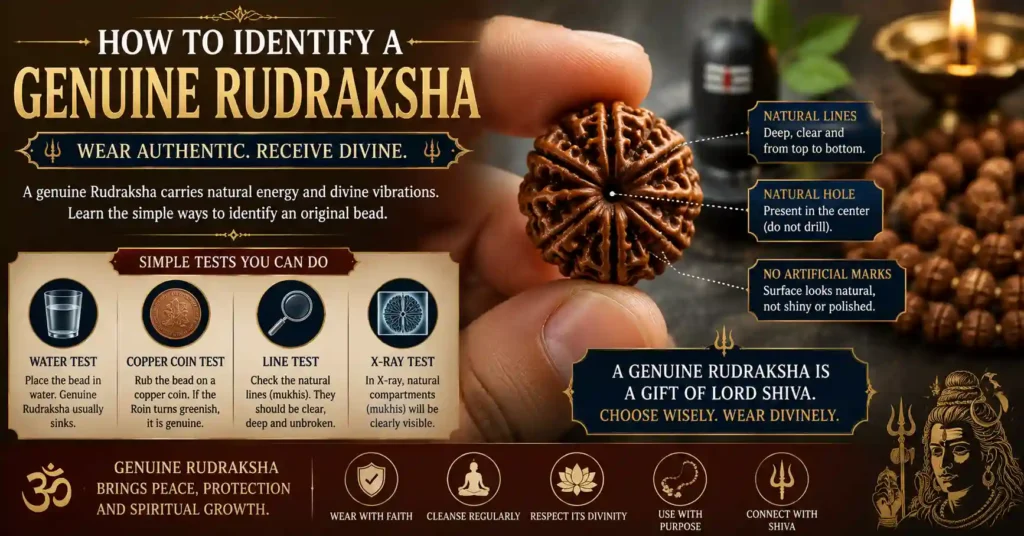
Myth 6: Water Tests Can Always Identify a Genuine Rudraksha
A popular belief suggests that a genuine bead must sink in water.
However, many experts point out that this test is unreliable. Authenticity should be judged through natural features, trusted sources, and careful examination rather than a single test.
Myth 7: Rudraksha Is Only for Shiva Devotees
Although Rudraksha is closely associated with Lord Shiva, people from different spiritual paths within Sanatan Dharma also wear these sacred beads.
Many devotees use them for meditation, mantra chanting, and spiritual discipline regardless of their chosen deity.
Understanding these myths helps us appreciate the true purpose of Rudraksha. Hindu traditions generally emphasize devotion, sincerity, right conduct, and spiritual practice over superstition, fear, or exaggerated claims.
Conclusion
Rudraksha is much more than a sacred bead. In Sanatan Dharma, it is regarded as a symbol of devotion, spiritual discipline, and a deeper connection with Lord Shiva.
From its traditional origin story and scriptural references to the different Mukhi varieties and their spiritual significance, these sacred beads have remained an important part of Hindu spiritual practices for centuries.
Many devotees use them during meditation, mantra chanting, prayer, and daily life as a reminder to cultivate mindfulness, self-control, and inner awareness. Their true value lies not in rarity or external appearance but in the sincerity, faith, and spiritual effort of the person who wears them.
Whether you are exploring the meaning of Rudraksha, learning about its spiritual benefits, or understanding the best ways to wear it, the most important lesson is that these sacred beads are meant to support spiritual growth rather than replace it.
When worn with understanding and respect, Rudraksha can serve as a meaningful companion on the journey toward devotion, self-discovery, and inner peace.
Key Takeaways
- Rudraksha is a sacred seed traditionally associated with Lord Shiva and has been revered in Sanatan Dharma for centuries.
- The word is derived from the Sanskrit terms Rudra (Lord Shiva) and Aksha (tears or eyes) and is commonly understood as “the tears of Lord Shiva.”
- According to Hindu tradition, these sacred beads originated from the compassionate tears of Lord Shiva and symbolize devotion, spiritual awareness, and inner discipline.
- References to these devotional beads can be found in scriptures such as the Shiva Purana, Padma Purana, Devi Bhagavata Purana, and Rudraksha Jabala Upanishad.
- Different varieties are classified according to the number of natural faces or grooves, known as Mukhis.
- One of the most valued spiritual benefits of these beads is their role in supporting meditation, mantra chanting, prayer, mindfulness, and spiritual practice.
- Rudraksha can be worn by men and women, householders, students, professionals, and spiritual seekers who wish to deepen their spiritual journey.
- A 5 Mukhi Rudraksha is commonly recommended for beginners because it is widely available and traditionally used for daily wear.
- The authenticity of a genuine bead should be judged through its natural features and trusted sources rather than popular myths such as floating or sinking tests.
- The true significance of Rudraksha lies not in rarity or cost but in the devotion, sincerity, and spiritual effort of the person who wears it.
Suggested Reading
If you found this guide on Rudraksha helpful, you may also enjoy exploring these related topics. These articles explore important aspects of Sanatan Dharma that can help deepen your understanding of spiritual life. Together, they offer practical insights into devotion, self-awareness, daily spiritual practices, and living with greater balance, purpose, and inner growth.
Brahma Muhurta: Meaning, Time, Benefits and Spiritual Significance
https://thesanatantales.com/brahma-muhurta-meaning-time-significance/
What is Nishit Kaal? Meaning, Time, and Importance in Sanatan Dharma
https://thesanatantales.com/nishit-kaal-meaning-faq/
Mudras: A Simple Practice for Balance, Awareness and Well-Being
https://thesanatantales.com/mudras/
Daily Meditation: Benefits, Meaning and Simple Ways to Start
https://thesanatantales.com/daily-meditation/
Sanatan Living: Finding Balance in a Fast-Paced World
https://thesanatantales.com/sanatan-living/
Rudraksha (Wikipedia)
https://en.wikipedia.org/wiki/Rudraksha
FAQs
What Is Rudraksha?
Rudraksha is a sacred seed obtained from the Rudraksha tree (Elaeocarpus ganitrus) and is traditionally associated with Lord Shiva. The name comes from the Sanskrit words Rudra (Shiva) and Aksha (tears or eyes) and is commonly understood as “the tears of Lord Shiva.”
According to Hindu tradition, these sacred beads originated from the compassionate tears of Lord Shiva. For centuries, devotees have worn Rudraksha malas during meditation, mantra chanting, prayer, and other spiritual practices.
Today, Rudraksha remains one of the most respected spiritual symbols in Sanatan Dharma. These devotional beads are worn by saints, householders, students, and spiritual seekers as a reminder of faith, discipline, and spiritual growth.
What Are the Main Benefits of Rudraksha?
The primary Rudraksha benefits described in traditional texts relate to spiritual growth, devotion, and self-discipline. Many devotees wear these sacred beads to support meditation, mantra japa, prayer, and mindful living.
A Rudraksha mala can serve as a reminder of spiritual values such as compassion, self-control, and inner awareness. Many practitioners believe it helps them maintain focus during spiritual practices and develop a more disciplined routine.
Traditional sources and spiritual organizations also associate these devotional beads with supporting calmness, meditation, and overall well-being, though experiences may vary from person to person.
Which Rudraksha Is Best for Beginners?
For most beginners, the 5 Mukhi Rudraksha is traditionally considered the most suitable choice. It is widely available, easy to wear, and commonly used for daily spiritual practice.
Many devotees use this sacred bead for meditation, mantra chanting, and prayer. It is also one of the most commonly recommended varieties for those exploring spiritual practices for the first time.
Rather than focusing on rare or expensive beads, beginners are generally encouraged to choose an authentic Rudraksha and develop a regular routine of prayer, meditation, and self-discipline.
Can Anyone Wear Rudraksha?
Yes, according to traditional Hindu sources, Rudraksha can be worn by people of different ages, backgrounds, and lifestyles. It is not restricted only to monks, saints, or advanced spiritual practitioners.
Many contemporary spiritual authorities and traditional references state that these sacred beads may be worn by men, women, students, householders, and spiritual seekers.
The most important consideration is wearing Rudraksha with respect, sincerity, and an understanding of its spiritual significance.
Can Women Wear Rudraksha?
Yes, women can wear it. There is no widely accepted scriptural prohibition preventing women from wearing these sacred beads. Several traditional and modern sources affirm that they may be worn for prayer, meditation, and spiritual practice.
Some families and spiritual traditions may follow specific customs regarding their use. However, these practices often vary according to local traditions and personal beliefs.
The spiritual purpose of Rudraksha is devotion, mindfulness, and spiritual growth, which are not limited by gender.
Can Women Wear Rudraksha During Periods?
This is one of the most frequently asked questions about Rudraksha.
Many contemporary spiritual teachers and traditional interpretations state that women can continue wearing these sacred beads during menstruation. There is no universally accepted scriptural restriction that requires their removal during this time.
However, some families and spiritual traditions continue to follow customs that recommend temporarily removing them. Both approaches exist, and many devotees choose to follow their family tradition, spiritual guidance, or personal conviction.
How Should Rudraksha Be Worn?
These sacred beads are commonly worn as a mala around the neck or as a bracelet on the wrist. Many devotees use them during meditation, mantra chanting, prayer, and other daily spiritual activities.
Some people choose to chant “Om Namah Shivaya” before wearing Rudraksha, while others simply wear it with devotion and respect.
The exact method may vary according to personal preference, family tradition, or guidance from a guru.
Can Rudraksha Be Worn While Sleeping?
Yes, many devotees wear, while sleeping and throughout the day.
Others prefer to remove these sacred beads before bed for comfort or to prevent accidental damage. There is no universally followed rule requiring their removal during sleep.
The choice often depends on personal preference and spiritual tradition. The most important aspect is treating Rudraksha with respect and proper care.
How Can You Identify a Genuine Rudraksha?
A genuine Rudraksha should have natural Mukhi lines running from one end of the bead to the other. The surface should display natural texture rather than signs of artificial carving or modification.
Buying from a trusted and reputable source is one of the best ways to ensure authenticity. Careful visual inspection is generally more reliable than popular myths and internet tests.
Experts also caution that common floating and sinking tests are not always dependable methods for verifying authenticity.
Is Rudraksha Mentioned in Hindu Scriptures?
Yes, Rudraksha is mentioned in several Hindu scriptures and spiritual texts.
References can be found in the Shiva Purana, Padma Purana, Devi Bhagavata Purana, and the Rudraksha Jabala Upanishad. These texts discuss the origin, significance, and spiritual value of these sacred beads.
Their continued presence in Hindu traditions for centuries reflects an enduring role in Sanatan Dharma and the spiritual lives of countless devotees.
Is Rudraksha Only for Shiva Devotees?
No. Although Rudraksha is closely associated with Lord Shiva, it is worn by many spiritual seekers across different traditions within Sanatan Dharma.
Many people use these sacred beads for meditation, mantra chanting, self-discipline, and spiritual growth regardless of their preferred deity or spiritual path.
The deeper purpose of Rudraksha is to support devotion, awareness, and spiritual practice rather than limit itself to a particular group of worshippers.
References & Sources
This article is based on traditional Hindu beliefs, scriptural references, and information found in respected Sanatan Dharma texts and teachings.
Primary References
- Shiva Purana
- Rudraksha Jabala Upanishad
- Padma Purana
- Devi Bhagavata Purana
Additional Sources
- Traditional teachings related to Lord Shiva and Rudraksha
- Contemporary commentaries on Hindu spiritual practices
- Research on the Rudraksha tree (Elaeocarpus ganitrus) and its historical use in spiritual traditions
Note: Different spiritual traditions may interpret certain aspects of Rudraksha differently. This article is intended for educational and spiritual awareness purposes.
Explore More on The Sanatan Tales