
Sometimes, even in a room full of people, we can feel completely alone. There are conversations, messages, and people around us, yet something inside feels quiet, distant, and empty.
It is a strange experience. From the outside, life appears normal, but within, there is a subtle sense of disconnection that is difficult to explain. Many people struggle to understand whether they are experiencing loneliness or simply spending time alone.
This feeling is not new. Human beings have faced it for centuries. Yet Sanatan Dharma encourages us to look deeper and understand what these emotions may be trying to reveal rather than pushing them away.
This is where the difference between loneliness vs solitude becomes important. Although both may appear similar from the outside, the inner experience is very different. Loneliness often feels heavy and draining, while solitude can become a source of inner peace, self-awareness, and spiritual growth.
To understand loneliness vs solitude more deeply, we must look beyond physical isolation and explore our relationship with ourselves. The real difference is not whether we are alone, but how we experience that aloneness within.
In this article, we will explore loneliness vs solitude through the lens of Sanatan Dharma, understand their deeper meaning, discover the benefits of solitude, and learn how quiet moments can become a path to self-understanding and lasting inner peace.
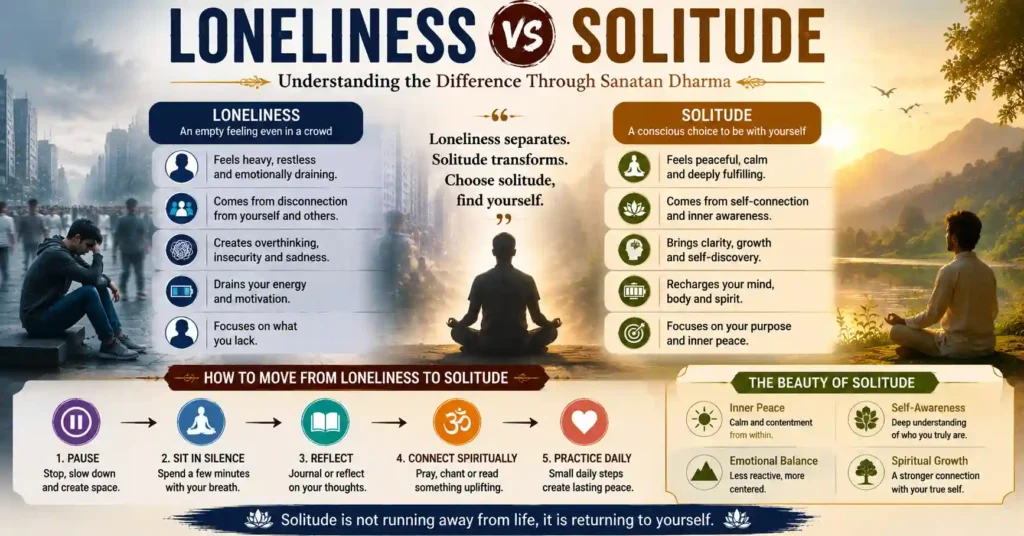
Loneliness vs Solitude At a Glance
| Aspect | Loneliness | Solitude |
|---|---|---|
| Meaning | A feeling of emotional disconnection or emptiness | A peaceful and conscious state of being alone |
| Nature | Usually unwanted | Usually chosen |
| Inner Experience | Feels heavy, empty, or painful | Feels calm, balanced, and fulfilling |
| Source | Comes from a lack of connection | Comes from self-awareness and inner connection |
| Emotional Impact | Creates sadness, restlessness, or dissatisfaction | Encourages peace, clarity, and contentment |
| Focus | What is missing | What is present |
| Relationship with Self | Feeling disconnected from oneself | Feeling comfortable with oneself |
| State of Mind | Reactive and outward-seeking | Reflective and inward-looking |
| Effect on Growth | Can create suffering and confusion | Supports self-reflection and personal growth |
| Spiritual Perspective | A signal to look within and understand oneself | A valuable space for inner awareness and wisdom |
| Connection | Seeks fulfillment from outside | Discovers fulfillment within |
| Outcome | Emotional isolation and discomfort | Inner peace and self-understanding |
Table of Contents
ToggleWhat Are Loneliness and Solitude?
At first glance, loneliness and solitude may seem similar because both involve spending time alone. However, the inner experience is very different.
Loneliness is a feeling of emptiness or disconnection. A person can feel lonely even when surrounded by family, friends, or social activity because loneliness is more about the quality of connection than the number of people around us.
Solitude, on the other hand, is a peaceful and conscious state of being alone. Rather than feeling deprived, a person feels comfortable in their own company and uses quiet moments for reflection and personal understanding.
This difference lies at the heart of loneliness vs solitude. One often feels burdensome because we experience separation, while the other can become enriching because it creates space for greater awareness and clarity.
Understanding this distinction is important because many people mistake solitude for loneliness. In reality, solitude can become a valuable opportunity to slow down, reflect, and develop a healthier relationship with oneself.
How Does Sanatan Dharma View Loneliness and Solitude?
Sanatan Dharma encourages us to look beyond external circumstances and understand the state of the mind. From this perspective, being physically alone is not the real issue. What matters is how we experience that aloneness.
Loneliness can arise even when a person is surrounded by people, activity, or success. External circumstances may change, yet a sense of dissatisfaction or incompleteness can still remain.
Solitude is viewed differently. Rather than something to fear, it can become an opportunity for reflection, contemplation, and personal growth. Quiet moments create space to better understand ourselves beyond the noise of daily life.
Sanatan teachings remind us that lasting peace does not depend solely on external company. It develops through a balanced mind, self-understanding, and greater awareness of our inner world.
This insight lies at the heart of loneliness vs solitude. While loneliness often feels limiting and uncomfortable, solitude can become a path toward wisdom, clarity, and inner peace.
Why Do We Feel Lonely in Modern Life
In today’s fast-paced world, we are constantly connected to the outside. Messages, reels, notifications, and endless streams of information compete for our attention throughout the day.
Yet, despite this constant activity, we rarely spend time with ourselves. Every quiet moment is quickly filled with entertainment, conversation, or distraction.
Over time, this creates a subtle gap between our outer life and inner world. We may know what is happening around us, but lose touch with our thoughts, feelings, and deeper needs.
Silence often feels uncomfortable because we are not used to it. Instead of listening to ourselves, we keep seeking stimulation from outside sources.
This is one reason modern loneliness has become so common. The problem is not always a lack of people around us. Sometimes it is a lack of inner connection and self-awareness.
Understanding this helps us see the deeper difference between loneliness vs solitude. One arises from feeling disconnected from ourselves, while the other grows from learning to be at peace in our own company.
Why Constant Connection Does Not Remove Loneliness
Today, technology allows us to connect with people instantly through messages, video calls, and social media. We can interact with hundreds of people in a single day without ever leaving our homes.
However, digital connection is not always the same as emotional connection. A person may receive messages, likes, and comments yet still feel unseen, unheard, or emotionally disconnected.
Meaningful connection is built through trust, understanding, and genuine human interaction. When these are missing, constant communication may provide temporary engagement but not lasting fulfillment.
This helps explain why loneliness remains common in an age of endless connectivity. The mind stays busy, but deeper emotional needs may still go unmet.
Understanding this reality is important when exploring loneliness vs solitude. Being connected to many people does not always prevent loneliness, just as spending time alone does not always lead to isolation.

How Loneliness Shows Up in Daily Life
Loneliness does not always appear in obvious ways. Often, it hides behind busy routines, constant activity, and everyday habits.
You may keep yourself occupied throughout the day, yet still experience a quiet sense of dissatisfaction. Despite staying busy, something within may feel unsettled or incomplete.
At times, conversations continue and daily responsibilities are fulfilled, but a deeper sense of fulfillment remains absent. The feeling can be difficult to explain, yet it quietly affects how we experience life.
This is the subtle nature of loneliness. It is not always caused by being physically alone. Often, it reflects an unmet emotional or inner need that has gone unnoticed.
Recognizing these signs is an important step in understanding loneliness vs solitude. Awareness helps us identify what is missing and opens the door to greater self-understanding and emotional balance.
What Is Loneliness and Why Does It Hurt?
Loneliness is more than being physically alone. It is a feeling that something important is missing, even when life appears full from the outside.
The experience often arises when our emotional, relational, or inner needs remain unmet. As a result, a person may feel disconnected despite having people, responsibilities, and activities around them.
This is why loneliness can be difficult to resolve through external changes alone. While temporary distractions may offer relief, they do not always address the deeper cause of the discomfort.
From a spiritual perspective, loneliness can also serve as a reminder to examine what is happening within. It encourages greater honesty, reflection, and awareness of our inner state.
Understanding this is an important step in the journey of loneliness vs solitude. When we begin to recognize the source of our discomfort, loneliness can gradually become an opportunity for deeper understanding and personal growth.
What Is Solitude in Sanatan Dharma?
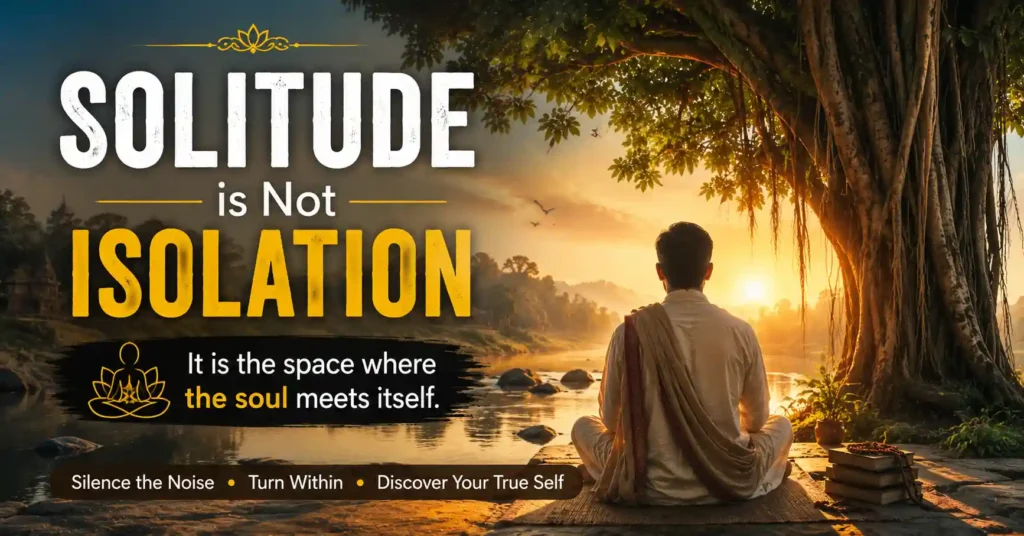
In Sanatan Dharma, solitude is not viewed as something negative or lonely. Instead, it is considered a valuable opportunity for inner growth, self-awareness, and spiritual development.
Many rishis and sages willingly embraced periods of silence and contemplation. They spent time in forests, mountains, and peaceful surroundings, not to escape life, but to understand it more deeply.
The purpose of solitude was to reduce distraction and turn attention inward. When the mind becomes less occupied with external noise, it becomes easier to observe thoughts, emotions, and deeper aspects of one’s nature.
True solitude is not isolation from the world. It is the ability to be comfortable in your own presence without constantly seeking stimulation or validation from outside sources.
In this quiet space, self-reflection becomes possible. A person begins to listen not only to the mind but also to the deeper voice of awareness within.
Over time, what once felt uncomfortable can become a source of clarity, balance, and inner peace. This is the deeper meaning of solitude in Sanatan Dharma and one of the key distinctions in loneliness vs solitude.
Why Is Solitude Valued in Sanatan Dharma?
Many teachings within Sanatan Dharma encourage periods of reflection, self-inquiry, and inner awareness. These practices help a person move beyond constant mental activity and develop a deeper understanding of life.
The Upanishads repeatedly guide seekers to look within and discover their true nature beyond external roles, identities, and worldly distractions. True wisdom is not found only through external knowledge but also through self-discovery.
For this reason, solitude has traditionally been valued as a supportive environment for spiritual growth. When external noise becomes quieter, it becomes easier to observe the mind and cultivate greater clarity and self-awareness.
Sanatan Dharma does not encourage rejecting the world or abandoning responsibilities. Instead, it teaches the importance of creating moments of stillness where we can reconnect with ourselves and reflect on what truly matters.
In this way, solitude becomes more than physical aloneness. It becomes a tool for inner transformation, helping us develop balance, understanding, and lasting peace.
Solitude in the Bhagavad Gita and Upanishads
The importance of solitude is not limited to the lives of rishis and sages. It is also reflected in some of the most respected scriptures of Sanatan Dharma. Understanding these teachings can deepen our understanding of loneliness vs solitude from a spiritual perspective.
In the Bhagavad Gita, Lord Krishna explains that a spiritual seeker should regularly spend time in a quiet and peaceful place to develop concentration and inner awareness. In Chapter 6, which discusses meditation, solitude is presented as a supportive environment for calming the mind and deepening spiritual practice.
The Bhagavad Gita also teaches that reducing unnecessary distractions and spending time in reflection can help a person gain greater clarity and self-understanding. Solitude is not encouraged as an escape from life but as a means of understanding life more deeply.
The Upanishads similarly emphasize turning inward to discover the true Self. Rather than seeking lasting fulfillment only in the external world, they guide seekers toward self-inquiry, contemplation, and inner awareness.
These teachings help us see loneliness vs solitude in a different light. Loneliness often arises when we feel disconnected from ourselves or others, while solitude creates an opportunity to reconnect with our deeper nature.
This scriptural perspective shows why solitude has long been valued in Sanatan Dharma as a tool for personal and spiritual growth. It creates space to observe the mind, understand our deeper nature, and develop a stronger connection with the Self.
When viewed through the wisdom of the Bhagavad Gita and Upanishads, loneliness vs solitude is not simply a psychological experience. It becomes a spiritual journey from disconnection toward self-awareness, wisdom, and inner peace.
Why Solitude Feels Uncomfortable at First
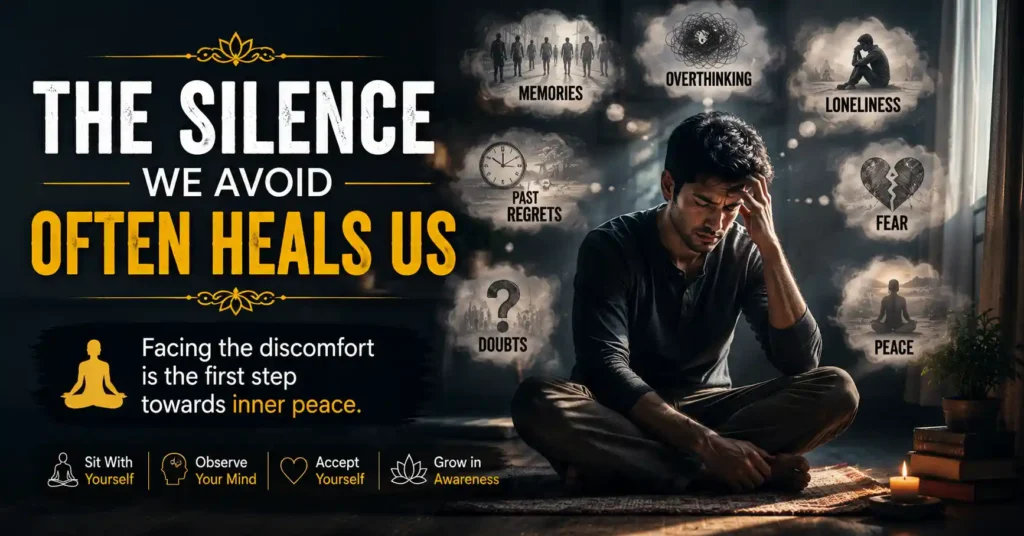
For many people, solitude does not feel peaceful immediately. When external distractions become quieter, we naturally become more aware of our thoughts, emotions, and unresolved feelings.
In everyday life, constant activity often keeps us occupied. When we finally sit in silence, worries, fears, regrets, or unanswered questions may begin to surface.
This experience can feel uncomfortable at first. Many people assume they are feeling lonely, when in reality they are becoming more aware of what has been hidden beneath the noise of daily life.
From a spiritual perspective, this stage is not a problem to be avoided. It is often the beginning of greater self-awareness and inner understanding.
With patience and honest self-reflection, the discomfort gradually begins to change. What once felt unsettling can become an opportunity for healing, clarity, and personal growth.
Over time, silence becomes less threatening and more supportive. Instead of running from ourselves, we learn to sit with our thoughts and understand them more deeply.
This is one of the important distinctions in loneliness vs solitude. Loneliness often creates suffering through disconnection, while solitude can guide us toward deeper self-understanding and inner peace.
Loneliness vs Solitude: Understanding the Real Difference
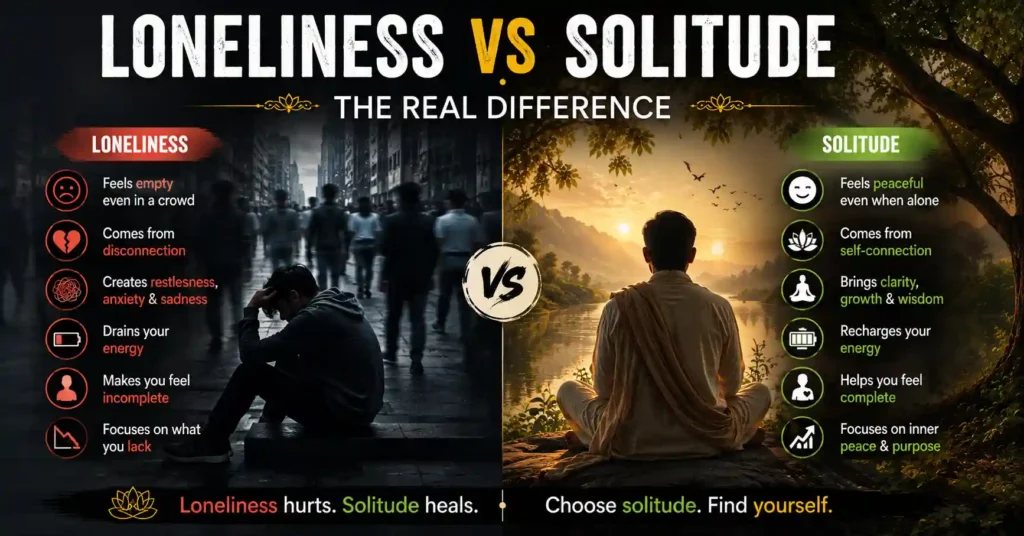
At first glance, loneliness and solitude may appear similar because both involve spending time alone. Yet their inner experience is completely different.
Comparison Table
| Loneliness | Solitude |
|---|---|
| Feels empty | Feels peaceful |
| Comes from lack | Comes from awareness |
| Emotionally draining | Emotionally nourishing |
| Focuses on what is missing | Appreciates what is present |
| Creates restlessness | Creates clarity |
| Feels disconnected | Feels connected within |
| Painful | Healing |
Loneliness often arises from a feeling of separation. A person may feel disconnected from others, from life, or even from themselves. This creates a sense of emptiness, restlessness, and emotional discomfort.
Solitude, on the other hand, is a conscious and peaceful state of being alone. It is not based on what is missing but on developing a deeper connection with oneself.
Loneliness pulls the mind outward in search of something to fill an inner gap. We look for distraction, validation, or constant activity in the hope of feeling complete.
Solitude gently turns our attention inward. Instead of escaping ourselves, we begin to understand our thoughts, emotions, and deeper nature with greater awareness.
The difference is not in being alone. The difference lies in how we experience that aloneness. One feels like separation, while the other becomes a source of self-awareness, clarity, and inner peace.
This is the deeper meaning of loneliness vs solitude. When we understand this distinction, we begin to see that solitude is not something to fear but something that can support personal growth and inner transformation.
Did You Know?
Many great sages and seekers in the Sanatan tradition intentionally spent time in solitude to deepen self-awareness and spiritual understanding.
Their goal was not to escape society but to reduce distractions and turn their attention inward. They believed that periods of silence and reflection could reveal insights that are often missed in the noise of daily life.
This is why Sanatan Dharma views solitude not as isolation, but as an opportunity for inner growth, clarity, and peace.
The Spiritual Meaning of Loneliness
Loneliness is often seen as a problem to solve or a feeling to escape as quickly as possible. Yet from a spiritual perspective, it can also serve as an important signal that something within needs attention.
Rather than viewing loneliness only as a negative experience, we can see it as an invitation to pause and reflect. It encourages us to look beyond external distractions and become more aware of our inner state.
Moments of loneliness often reveal needs, emotions, or questions that may have been overlooked in the busyness of daily life. By acknowledging these feelings instead of avoiding them, we create an opportunity for greater understanding.
This is where transformation begins. What initially feels uncomfortable can gradually become a source of insight and personal growth.
The spiritual purpose of loneliness is not to keep us trapped in suffering. It is to encourage a deeper understanding of ourselves and what truly brings lasting fulfillment.
This understanding marks an important shift in loneliness vs solitude. While loneliness may feel limiting, it can also become the first step toward greater awareness, wisdom, and inner peace.
How to Move from Loneliness to Solitude
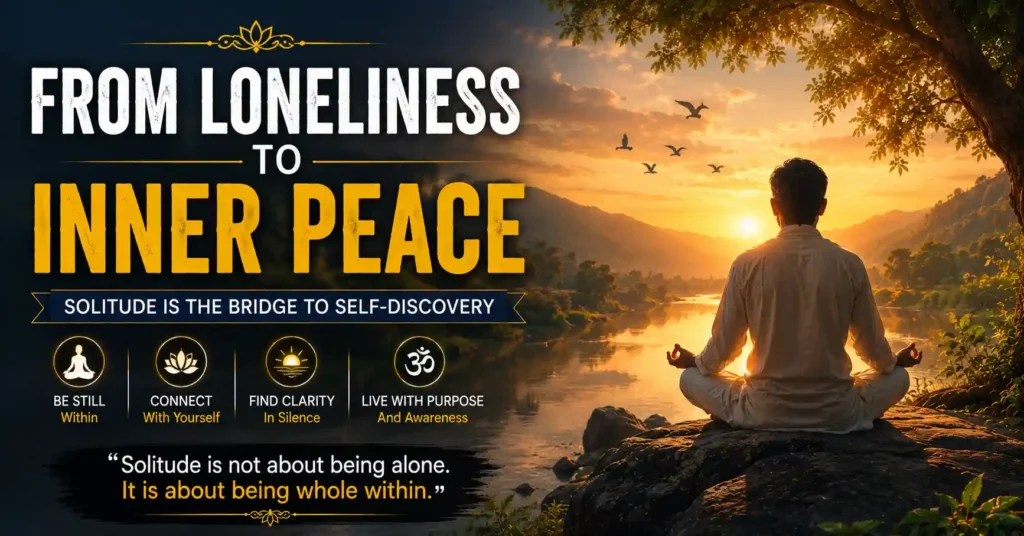
The shift from loneliness to solitude rarely happens overnight. It is usually a gradual process of developing a healthier relationship with yourself.
A good place to begin is by spending a few quiet moments alone each day without distractions. Put aside the phone, turn off unnecessary noise, and simply allow yourself to be present.
At first, this may feel uncomfortable. Restlessness, boredom, or difficult emotions may arise when there is nothing to distract the mind. This is a natural part of self-reflection.
Instead of resisting these feelings, try observing them with patience. Notice your thoughts, emotions, and breathing without judging or trying to change them immediately.
Over time, you become more comfortable in your own presence. The need for constant stimulation begins to fade, and moments of silence start feeling less intimidating.
As self-awareness grows, what once felt like emptiness can gradually become a space for clarity, balance, and inner peace.
This is how loneliness slowly transforms into solitude. It is not about escaping the world but about building a deeper connection with yourself. This is the practical journey behind loneliness vs solitude.
Can Householders Practice Solitude in Daily Life?
Many people assume that solitude is only for monks, sages, or those living away from society. However, Sanatan Dharma teaches that inner growth is possible for everyone, including householders with family, work, and daily responsibilities.
Practicing solitude does not necessarily mean withdrawing from the world. It can be as simple as setting aside a few quiet moments each day for reflection, prayer, meditation, or self-awareness.
Even a short period of silence in the morning or evening can help create space away from constant distractions. These moments allow us to reconnect with ourselves and observe our thoughts with greater clarity.
Understanding loneliness vs solitude is especially important for householders. Loneliness may arise from feeling disconnected despite being surrounded by people, while solitude offers an opportunity to build a deeper relationship with oneself.
The Bhagavad Gita teaches balance rather than extreme withdrawal. A person can fulfill family and worldly duties while also nurturing inner awareness and spiritual growth.
Over time, these small moments of quiet reflection can bring greater emotional balance, self-understanding, and inner peace. This is how loneliness vs solitude becomes relevant not only for spiritual seekers but for everyday life as well.
A Simple Practice to Experience Solitude
You do not need any special technique or complicated spiritual practice to experience solitude. A few minutes of quiet awareness each day can be enough to begin.
Try this simple practice:
- Sit comfortably in a quiet place for a few minutes.
- Allow your body to relax and settle naturally.
- Observe your breath as it moves in and out without trying to control it.
- Notice any thoughts, emotions, or memories that arise.
- Let them come and go without judging, resisting, or following them.
- Gently bring your attention back to the present moment whenever the mind wanders.
At first, the mind may feel busy or restless. This is completely natural. The goal is not to stop thinking but to become more aware of what is happening within.
With regular practice, you begin to feel more comfortable in your own presence. Silence no longer feels empty. Instead, it becomes a space for self-awareness, reflection, and inner calm.
This small practice can gradually change your relationship with yourself and reduce feelings of emotional isolation. Understanding loneliness vs solitude helps us respond differently to moments of aloneness and discover the peace that comes from within.
How Solitude Becomes a Path to Inner Peace
When you begin spending time with yourself in a healthy and conscious way, something gradually changes within.
The restlessness of the mind starts to settle. The constant urge for distraction, stimulation, or external validation slowly becomes less powerful.
Instead of trying to escape every quiet moment, you begin to feel more comfortable in your own presence. What once felt empty starts feeling calm and meaningful.
This is where inner peace begins. Not through external circumstances, but through a deeper connection with yourself.
Over time, solitude becomes a space for healing, self-reflection, and emotional balance. It allows you to reconnect with your thoughts, understand your feelings, and develop greater self-awareness.
This is one of the most important lessons in loneliness vs solitude. Loneliness often feels like separation, while solitude creates an opportunity for clarity, acceptance, and inner growth.
As this inner connection deepens, being alone no longer feels like a burden. It becomes a quiet source of strength, understanding, and lasting peace.
Conclusion
Loneliness is a human experience, not a personal failure. Almost everyone feels disconnected at different stages of life.
The purpose of understanding loneliness is not to judge yourself for feeling it. It is to understand what that feeling may be trying to show you. Sometimes the first step toward peace is simply meeting yourself with a little more kindness, patience, and awareness.
The journey of loneliness vs solitude is not about avoiding difficult emotions. It is about learning to understand them more deeply. While loneliness can feel painful and isolating, it can also become an invitation to reconnect with yourself.
Sanatan Dharma teaches that peace is not found only through external circumstances. It also arises through self-awareness, reflection, and a deeper connection with our inner being.
As we learn to spend time with ourselves without fear or distraction, solitude gradually becomes a source of clarity, healing, and inner peace. What once felt like emptiness can become a space for growth, understanding, and quiet strength.
Key Takeaways
- Loneliness and solitude are not the same. Loneliness is a feeling of disconnection, while solitude is a peaceful state of being alone.
- A person can feel lonely even when surrounded by people if there is a lack of meaningful connection or inner awareness.
- In Sanatan Dharma, solitude is valued as a space for self-reflection, self-inquiry, and spiritual growth.
- Many rishis and sages embraced periods of silence and contemplation to better understand themselves and the deeper truths of life.
- The discomfort often felt in solitude is natural and can become the starting point for greater self-awareness and inner understanding.
- Understanding loneliness vs solitude helps us recognize that being alone is not the real problem. The real issue is how we experience that aloneness.
- Instead of running from loneliness, we can use it as an opportunity to look within and reconnect with ourselves.
- Simple practices such as quiet reflection, mindful breathing, prayer, or meditation can help transform loneliness into peaceful solitude.
- Solitude encourages clarity, emotional balance, inner peace, and a deeper connection with our true self.
- The journey from loneliness to solitude is not about escaping the world but about discovering the peace and strength that already exist within.
Suggested Reading
Understanding loneliness vs solitude can help us develop a deeper relationship with ourselves and find greater inner peace. If you would like to explore more aspects of self-awareness, spiritual growth, karma, inner freedom, and the deeper teachings of Sanatan Dharma, the following articles may be helpful.
Atma and Parmatma: Meaning, Relationship and Their Role in Sanatan Dharma
https://thesanatantales.com/atma-and-parmatma/
Karma: Meaning, Types, Philosophy and How It Works in Sanatan Dharma
https://thesanatantales.com/karma/
Why Do Hindus Have So Many Gods? The Truth Behind Many Deities in Sanatan Dharma
https://thesanatantales.com/why-do-hindus-have-so-many-gods/
Shakti in Sanatan Dharma: Meaning, Forms, Philosophy and Spiritual Significance
https://thesanatantales.com/shakti-in-sanatan-dharma/
Forgiveness for Unintentional Sins in Sanatan Dharma: Meaning, Karma and Scriptural Remedies
https://thesanatantales.com/forgiveness-for-unintentional-sins/
Detachment in Hindu Philosophy: Meaning, Vairagya and the Path to Inner Freedom
https://thesanatantales.com/detachment-in-hindu-philosophy/
Solitude (Wikipedia)
https://en.wikipedia.org/wiki/Solitude
FAQs
What Are Loneliness and Solitude?
Loneliness and solitude both involve spending time alone, but they are very different experiences.
Loneliness is a feeling of emptiness, disconnection, or emotional isolation. A person may feel lonely even when surrounded by family, friends, or social activity. The pain comes from feeling disconnected from others, from oneself, or from a deeper sense of meaning.
Solitude, on the other hand, is a peaceful and often intentional state of being alone. Instead of feeling empty, a person feels comfortable in their own company and uses that time for reflection, self-awareness, and inner growth.
Understanding these two experiences is the foundation of loneliness vs solitude. One often creates suffering through disconnection, while the other can become a source of clarity, healing, and inner peace.
What Is the Difference Between Loneliness and Solitude?
Although both involve being alone, the inner experience is very different.
Loneliness usually feels unwanted. It is often accompanied by sadness, emptiness, restlessness, or a longing for connection. A person may feel lonely even in a crowd if meaningful connection is missing.
Solitude is generally chosen and experienced positively. It provides space for self-reflection, personal growth, creativity, and spiritual awareness.
In simple terms, loneliness feels like something is missing, while solitude helps us discover what is already present within.
Why Is Solitude Valued in Sanatan Dharma?
Sanatan Dharma views solitude as an opportunity for self-reflection, self-inquiry, and inner growth.
Many rishis and sages spent time in silence and contemplation to understand the deeper nature of life and the self. Solitude was not considered an escape from the world but a way to gain clarity and wisdom.
When external distractions become quieter, a person can better observe the mind, understand emotions, and cultivate greater self-awareness.
For this reason, solitude is often regarded as a supportive environment for spiritual growth and inner peace.
Can a Person Feel Lonely Even When Surrounded by People?
Yes. Loneliness is not determined by the number of people around us.
A person may have family, friends, colleagues, and social interactions yet still feel lonely. This often happens when there is a lack of meaningful emotional connection or when a person feels misunderstood or disconnected from their own inner self.
This is why loneliness is primarily an inner experience rather than a physical condition.
Is Solitude the Same as Isolation?
No. Solitude and isolation are not the same.
Solitude is usually a healthy and conscious choice to spend time alone for reflection, rest, creativity, or spiritual practice. It often leaves a person feeling refreshed and balanced.
Isolation generally refers to separation from meaningful relationships or social support. Prolonged isolation can sometimes increase feelings of loneliness and emotional distress.
A person can enjoy solitude without feeling isolated, just as a person can feel isolated even while living among others.
How Can Loneliness Become Solitude?
The transition from loneliness to solitude usually happens gradually rather than all at once.
It begins by spending a little time with yourself without constant distractions. Through self-reflection, quiet awareness, prayer, meditation, or mindful observation, you start developing a deeper connection with your inner self.
As self-awareness grows, the feeling of emptiness slowly begins to change. What once felt uncomfortable can become a source of clarity, balance, and inner peace.
This is the deeper transformation behind loneliness vs solitude. Instead of fearing time alone, we learn to use it as an opportunity for growth, healing, and self-discovery.
Glossary of Important Terms
| Term | Meaning |
|---|---|
| Loneliness | A feeling of emotional emptiness, disconnection, or isolation. Loneliness can occur even when a person is surrounded by family, friends, or social activity. |
| Solitude | A peaceful and often intentional state of being alone. Solitude provides space for self-reflection, self-awareness, and inner growth without feelings of isolation. |
| Self-Awareness | The ability to observe and understand your thoughts, emotions, habits, and inner experiences with clarity and honesty. |
| Inner Peace | A state of mental and emotional calm that comes from balance, acceptance, and a deeper connection with oneself rather than external circumstances. |
| Self-Reflection | The practice of looking inward to examine your thoughts, feelings, actions, and life experiences in order to gain greater understanding and wisdom. |
| Inner Connection | A sense of being connected with your true self, values, emotions, and deeper nature rather than relying entirely on external validation or distractions. |
| Silence | More than the absence of sound, silence in spiritual traditions is often seen as a space for awareness, contemplation, and deeper understanding. |
| Awareness | The practice of observing thoughts, emotions, and experiences without immediate judgment or reaction. Awareness helps cultivate clarity and self-understanding. |
| Spiritual Growth | The gradual process of developing greater wisdom, self-awareness, compassion, and inner understanding through life experiences and spiritual practice. |
| Rishi | A sage or enlightened seeker in the Sanatan tradition who pursued truth through meditation, contemplation, self-discipline, and spiritual knowledge. |
| Upanishads | Ancient spiritual texts of Sanatan Dharma that explore the nature of the self, consciousness, reality, and the relationship between the individual soul and ultimate truth. |
| Self-Inquiry | The practice of examining one’s thoughts, beliefs, identity, and inner experiences to gain deeper understanding of the self. |
| Contemplation | Deep and thoughtful reflection on spiritual truths, life experiences, or personal questions to develop wisdom and insight. |
| Emotional Isolation | A feeling of being disconnected, misunderstood, or unsupported emotionally, even when other people are physically present. |
| Inner Growth | The process of developing greater maturity, self-understanding, emotional balance, and wisdom through reflection and life experiences. |
About the Author
Yateendra Chaturvedi is a spiritual writer, researcher, devotee, and the founder of The Sanatan Tales. With over 35 years of professional experience and a lifelong interest in Sanatan Dharma, he writes about Hindu deities, temples, scriptures, festivals, Mahavidyas, sacred stories, rituals, and living traditions that continue to guide and inspire devotees across India.
Drawing from traditional scriptures, regional beliefs, temple traditions, devotional literature, and historical sources, he aims to present authentic, well-researched, and easy-to-understand content for modern readers. His work focuses on preserving spiritual wisdom, explaining sacred traditions, and helping seekers develop a deeper understanding of India’s rich spiritual heritage.
Through The Sanatan Tales, Yateendra strives to make the timeless teachings of Sanatan Dharma simple, meaningful, and relevant for today’s generation while maintaining respect for traditional sources, regional practices, and diverse spiritual perspectives.
Learn More About Yateendra Chaturvedi →
https://thesanatantales.com/about-the-author/
References & Sources
This article is based on teachings, values, and practices associated with Sanatan Dharma, including insights drawn from Hindu scriptures, traditional spiritual knowledge, devotional practices, yogic traditions, and widely accepted philosophical teachings. It also reflects guidance preserved through family traditions, spiritual communities, and the guru-disciple lineage that has transmitted Sanatan wisdom across generations.
Note: Beliefs, interpretations, and spiritual practices may vary across different traditions, sampradayas, regions, and individual paths within Sanatan Dharma. The purpose of this article is not to promote any single viewpoint as the absolute truth, but to present commonly accepted spiritual perspectives in a simple, practical, and reader-friendly manner. Sanatan Dharma embraces multiple paths of worship, knowledge, devotion, meditation, and self-transformation
Explore More Fascinating Topics from Sanatan Dharma