There are some places where you do not simply go for darshan. You arrive because something deep within quietly calls you. Ambaji Temple Gujarat is one such sacred destination, where millions of devotees seek the blessings of Maa Amba, the Divine Mother worshipped as Adi Shakti.
Located in the Banaskantha district of Gujarat, this ancient shrine is one of the revered Shakti Peeths of Sanatan Dharma.
What makes Ambaji Temple truly unique is that there is no idol of the Goddess in the sanctum. Instead, devotees offer their prayers to the sacred Sri Yantra, symbolizing the eternal presence of Divine Shakti. This rare tradition makes the temple unlike most Hindu temples in India.
Many devotees believe that a visit to Ambaji is not planned but happens only when Maa herself calls. As you enter the temple, the peaceful atmosphere and heartfelt devotion create an experience that goes beyond rituals.
Rather than focusing on a visible form, the temple gently encourages devotees to turn inward and experience the Divine through faith, silence, and devotion.
In this guide, you will discover the history of Ambaji Temple Gujarat, its spiritual significance, darshan timings, festivals, travel information, and everything you need to know before planning your pilgrimage.
Ambaji Temple Gujarat at a Glance
| Particular | Details |
|---|---|
| Temple Name | Ambaji Temple (Shri Arasuri Ambaji Mata Temple) |
| Location | Ambaji, Banaskantha District, Gujarat, India |
| Presiding Deity | Maa Amba (Arasuri Amba), a form of Adi Shakti |
| Temple Type | Shakti Peeth |
| Unique Feature | Maa Amba is worshipped through the sacred Sri Yantra instead of a physical idol |
| Religious Significance | One of the most revered Shakti Peeths in India |
| Nearest Railway Station | Abu Road Railway Station (22 km) |
| Nearest Airport | Sardar Vallabhbhai Patel International Airport, Ahmedabad (180 km) |
| Best Time to Visit | October to February and during Sharad Navratri |
| Major Festivals | Sharad Navratri, Chaitra Navratri, Bhadarvi Poonam Fair |
| Temple Timings | Open daily (timings may vary on festivals) |
| Special Worship | Daily Aarti, Rajbhog, Sri Yantra Darshan |
| Nearby Attractions | Gabbar Hill, Kumbhariya Jain Temples, Koteshwar Mahadev Temple, Mount Abu |
| Managed By | Shri Arasuri Ambaji Mata Devsthan Trust |
| Official Website | https://ambajitemple.in/ |
Did You Know?
Did you know that Ambaji Temple Gujarat is one of the very few temples in India where Maa Amba is worshipped without a physical idol? Instead, devotees offer their prayers to the sacred Sri Yantra, a revered symbol of Adi Shakti in the Sri Vidya tradition.
According to temple tradition, this unique form of worship has continued for centuries, making Ambaji one of the most distinctive and spiritually significant Shakti Peeths in India. Millions of pilgrims visit every year to experience this rare tradition and seek the blessings of the Divine Mother.
Table of Contents
ToggleWhy is Ambaji Temple Gujarat So Special?
Ambaji Temple Gujarat is one of the most revered pilgrimage destinations dedicated to Maa Amba, the Divine Mother worshipped as Adi Shakti. According to temple tradition, it is one of the sacred Shakti Peeths, drawing millions of devotees from Gujarat and across India every year.
What makes Ambaji Temple truly unique is that there is no idol (murti) of the Goddess in the sanctum. Instead, devotees offer their prayers to the sacred Sri Yantra, a revered geometric symbol that, according to temple tradition, embodies the divine presence and cosmic energy of Maa Amba.
This rare form of worship sets Ambaji apart from most Hindu temples, where the deity is represented in an idol.
The absence of a physical form changes the experience of darshan. Rather than focusing on the visible image of the Goddess, devotees are encouraged to connect with the Divine through faith, silence, and inner contemplation.
Many pilgrims describe the atmosphere inside the temple as peaceful and spiritually uplifting, where devotion feels deeply personal.
Another reason for the temple’s importance is its association with Gabbar Hill, believed in local tradition to be the original seat of Maa Amba. During Navratri and Bhadarvi Poonam, the temple comes alive with grand celebrations as countless devotees gather to seek the blessings of the Divine Mother.
For many visitors, the true uniqueness of Ambaji Temple Gujarat lies not only in its ancient traditions but also in the quiet spiritual experience it offers, leaving devotees with a sense of peace that stays long after the pilgrimage ends.
Maa Amba and Her Unique Swaroop
Maa Amba, also known as Arasuri Amba, is worshipped as Adi Shakti, the eternal Divine Mother and the source of all creation in Sanatan Dharma.
She is revered as the supreme feminine power from whom the universe originates, and devotees seek her blessings for strength, wisdom, protection, and prosperity.
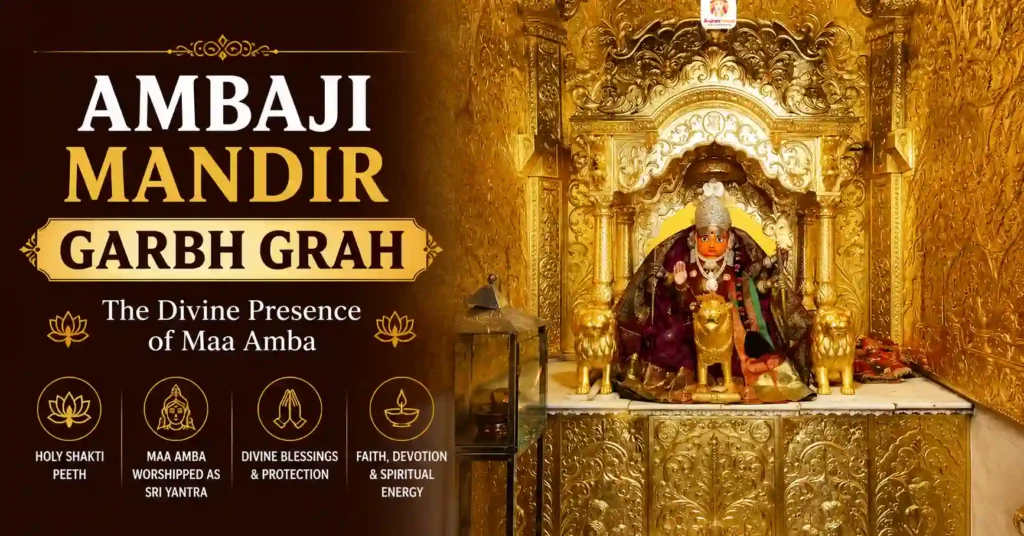
At Ambaji Temple Gujarat, the Goddess is not worshipped through a physical idol. According to the temple tradition, her divine presence is represented by the sacred Sri Yantra enshrined in the Garbhagriha.
This ancient geometric symbol is regarded as a manifestation of the cosmic energy of Shiva and Shakti, reflecting the harmony between consciousness and creative power.
The Sri Yantra holds deep spiritual significance in the Sri Vidya tradition. Its interlocking triangles symbolize the union of the masculine and feminine principles, while the central point, known as the Bindu, represents the ultimate reality from which all creation emerges.
Because there is no visible form of the Goddess, the experience of darshan at Ambaji Temple Gujarat becomes deeply contemplative. Instead of focusing on an idol, devotees are encouraged to turn inward through faith, silence, and devotion.
Many pilgrims describe this as a peaceful and uplifting experience that allows them to feel the divine presence of Maa Amba in a deeply personal way.
Why Is There No Idol in Ambaji Temple Gujarat?
One of the most common questions asked by devotees is, “Why is there no idol in Ambaji Temple Gujarat?” The answer lies in the temple’s unique spiritual tradition and centuries-old mode of worship.
Unlike most Hindu temples, Ambaji Temple Gujarat does not enshrine a physical murti of Maa Amba. According to the temple tradition, the Goddess is worshipped in her formless (Nirakar) aspect through the sacred Sri Yantra, which symbolizes the eternal presence and cosmic energy of Adi Shakti.
This makes Ambaji one of the few temples in India where the Divine Mother is worshipped without an idol.
The absence of a visible form encourages devotees to look beyond external appearances and experience the Divine through faith, meditation, and inner awareness.
Instead of focusing on an image, pilgrims offer their prayers to the sacred Yantra, believing it to be the spiritual seat of Maa Amba.
For many devotees, darshan at Ambaji Temple Gujarat becomes more than a visual experience. It is a moment of quiet reflection, where the mind gradually becomes still and devotion turns inward.
This unique tradition is one of the main reasons why the temple continues to inspire millions of pilgrims seeking a deeper spiritual connection with the Divine Mother.
The Spiritual Significance of the Sri Yantra at Ambaji Temple Gujarat
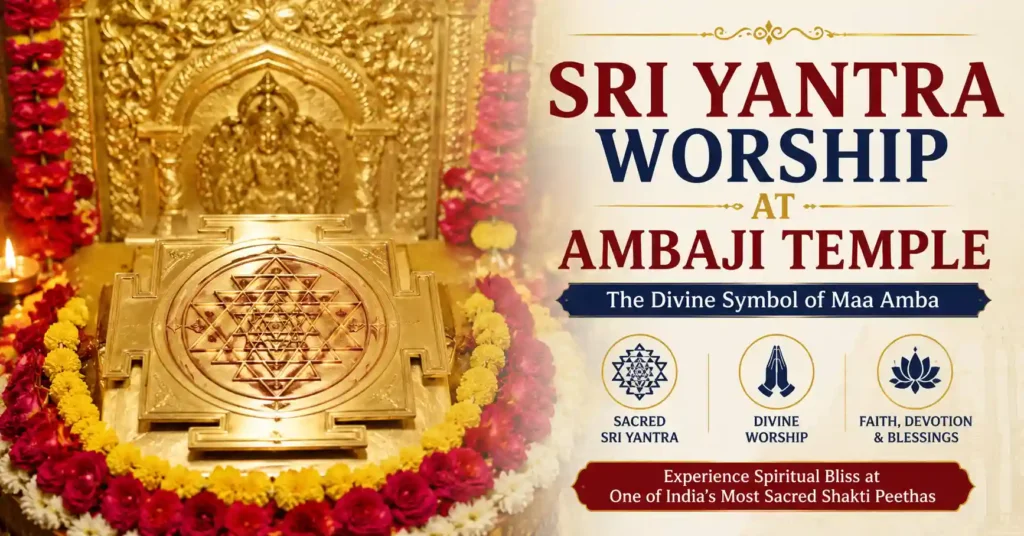
The Sri Yantra is the heart of worship at Ambaji Temple Gujarat and is regarded as one of the most sacred symbols in the Sri Vidya tradition. According to temple tradition, it represents the divine presence of Maa Amba and the eternal union of Shiva and Shakti, the two cosmic forces that sustain the universe.
The Yantra is formed by nine interlocking triangles that symbolize the harmony between the masculine and feminine energies of creation. Its outer layers represent the material world, while the central point, known as the Bindu, signifies the ultimate reality and the source from which all existence emerges.
For devotees, the Sri Yantra is not merely a geometric design but a powerful symbol of spiritual wisdom and inner awakening.
During darshan at Ambaji Temple Gujarat, devotees offer prayers before the sacred Sri Yantra instead of a physical idol. This unique tradition encourages meditation, self-reflection, and a deeper connection with the Divine Mother.
Many pilgrims believe that worshipping the Sri Yantra helps cultivate inner peace, clarity of mind, and spiritual balance.
This profound symbolism is one of the reasons why Ambaji Temple Gujarat is considered more than a place of worship. It is a sacred space where devotion, contemplation, and the timeless wisdom of Adi Shakti come together, inspiring seekers on their spiritual journey.
The Sacred Origin Story of Ambaji Shakti Peeth
Ambaji Temple Gujarat is revered as one of the most sacred Shakti Peeths in Sanatan Dharma. Its origin is deeply connected with the story of Goddess Sati and Lord Shiva, making it a place of immense spiritual significance for devotees.
According to the Shakti Peeth tradition, after Goddess Sati immolated herself during the yajna of her father, King Daksha, a grief-stricken Lord Shiva carried her body across the universe.
To restore cosmic balance, Lord Vishnu used his Sudarshana Chakra to dismember Sati’s body. The places where her body parts and ornaments fell became the sacred Shakti Peeths, each representing a unique manifestation of Adi Shakti.
The story of Goddess Sati and the origin of the Shakti Peeths is described in traditional Hindu scriptures such as the Devi Bhagavata Purana, Kalika Purana, and other Puranic traditions.
While regional traditions differ regarding the specific body part associated with each Shakti Peeth, all of them recognize these sacred sites as powerful centres of the Divine Mother and important places of Shakti worship.
According to one widely accepted temple tradition, Sati’s heart is believed to have fallen at Ambaji, making it a powerful center of devotion, compassion, and divine feminine energy.
However, different traditional lists of the Shakti Peeths mention varying body parts, reflecting the rich diversity of regional traditions within Sanatan Dharma.
For centuries, devotees have visited Ambaji Temple Gujarat with the belief that sincere prayers offered here bring inner strength, peace, and the blessings of Maa Amba.
The temple continues to be one of the most important pilgrimage destinations for devotees seeking a deeper connection with the Divine Mother.
History of Ambaji Temple Gujarat
The history of Ambaji Temple Gujarat dates back several centuries, making it one of the oldest and most revered pilgrimage destinations dedicated to Maa Amba.
Although the exact date of the temple’s original construction is not known, historical records and local traditions indicate that Ambaji has been an important centre of Shakti worship since ancient times.
The present temple has undergone several renovations over the centuries under the patronage of local rulers and devotees. Today, it is managed by the Shri Arasuri Ambaji Mata Devsthan Trust, which oversees the temple’s daily rituals, festivals, pilgrim facilities, and ongoing development.
Unlike many temples known primarily for their architecture, the importance of Ambaji Temple Gujarat lies in its uninterrupted tradition of worship.
For generations, saints, pilgrims, and devotees have visited this sacred shrine to seek the blessings of Maa Amba, making it one of the most significant pilgrimage centres in western India.
Location and Surroundings of Ambaji Temple Gujarat
Ambaji Temple Gujarat is located in the Banaskantha district of Gujarat, nestled at the foothills of the Arasur Hills, close to the Gujarat-Rajasthan border.
Surrounded by scenic hills and a peaceful natural landscape, the temple offers a serene atmosphere that enhances the spiritual experience of every pilgrim.
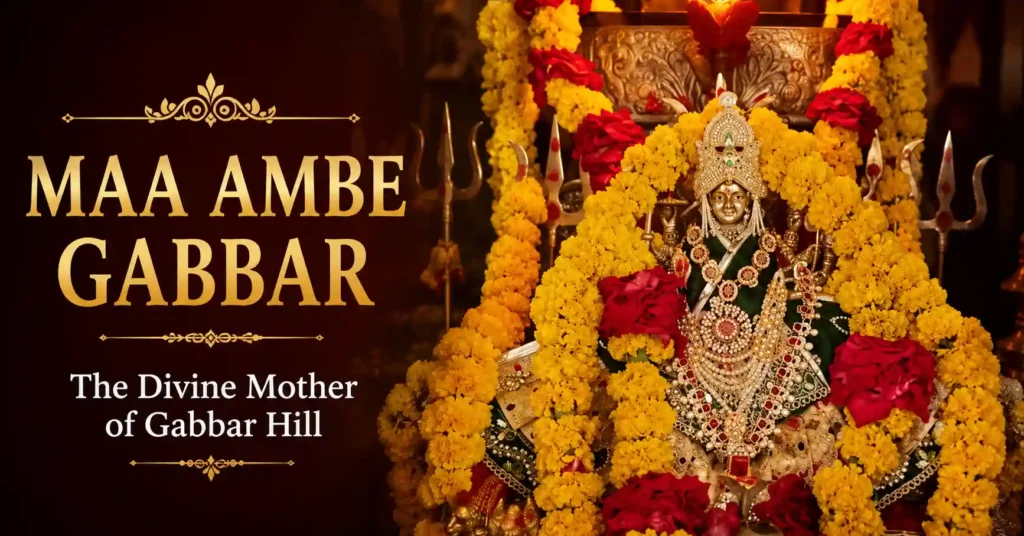
One of the most sacred places near the temple is Gabbar Hill, situated about 4 km away. According to local tradition, Gabbar Hill is believed to be the original seat of Maa Amba, where the Divine Mother first manifested.
Devotees often visit the hill as an important part of their pilgrimage, either by climbing the steps or using the ropeway to reach the shrine at the top.
The peaceful surroundings, devotional chants, and panoramic views of the Aravalli landscape create an atmosphere of calm and reflection.
Many pilgrims combine their darshan at Ambaji Temple Gujarat with a visit to Gabbar Hill, considering both sites an integral part of seeking the blessings of Maa Amba.
Together, they offer a spiritually enriching pilgrimage that blends devotion, history, and the beauty of nature.
Architecture of Ambaji Temple Gujarat
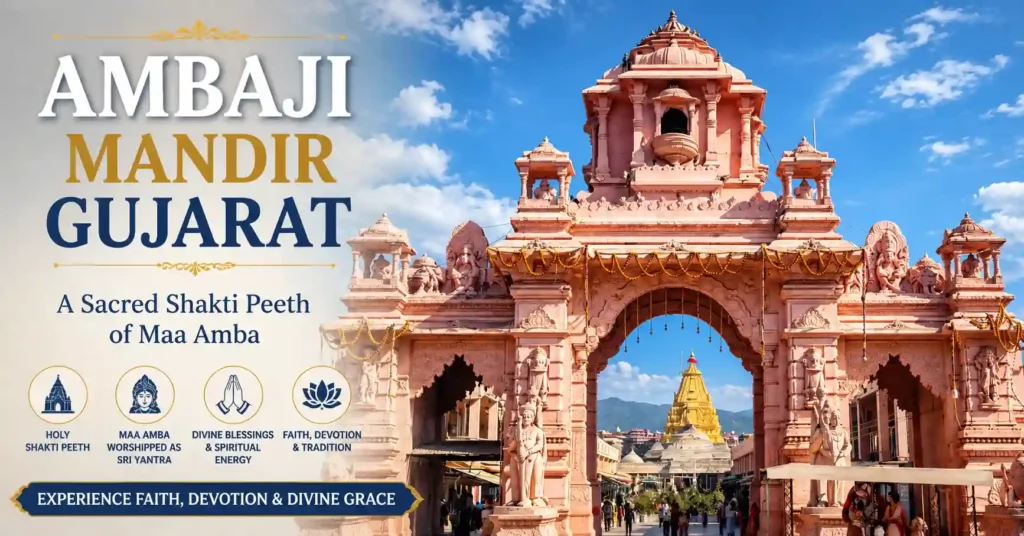
The architecture of Ambaji Temple Gujarat beautifully reflects the rich heritage of traditional Hindu temple design. Built primarily from white marble, the temple features intricate carvings, beautifully sculpted pillars, and a magnificent shikhara (spire) that can be seen from a distance.
The most sacred part of the temple is the Garbhagriha, where the revered Sri Yantra is enshrined instead of a physical idol of Maa Amba. This unique feature distinguishes Ambaji from most Hindu temples and makes it one of the few temples where the Divine Mother is worshipped in a symbolic form.
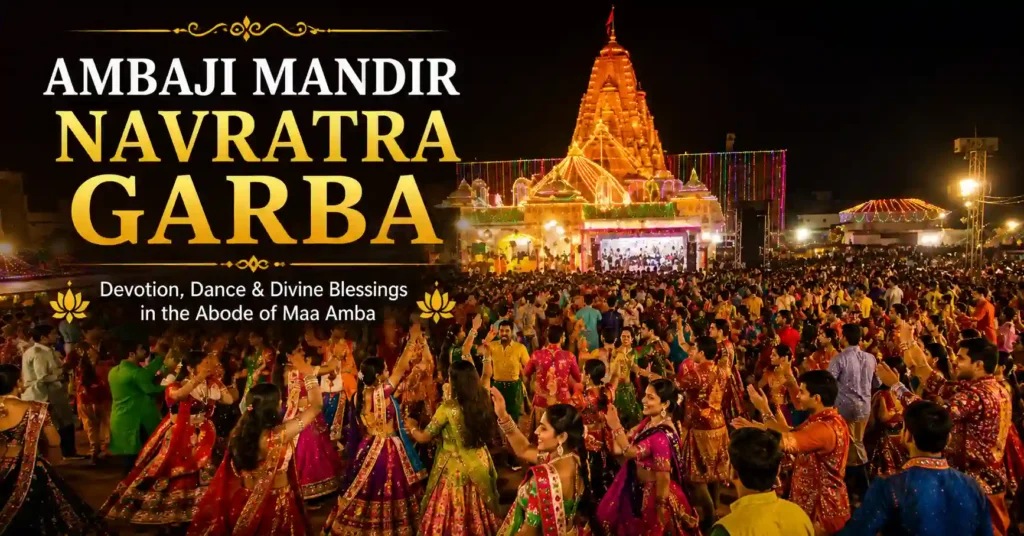
The spacious temple courtyard, prayer halls, and beautifully maintained premises provide a peaceful environment for devotees. During festivals, the temple is illuminated with decorative lights and flowers, creating a spiritually uplifting atmosphere that enhances the pilgrimage experience.
Interesting Facts About Ambaji Temple Gujarat
- Ambaji is one of the most revered Shakti Peeths in India and attracts millions of devotees every year.
- Unlike most Hindu temples, Maa Amba is worshipped through the sacred Sri Yantra instead of a physical idol.
- The temple is located at the foothills of the Arasur Hills in Gujarat’s Banaskantha district.
- Gabbar Hill, located about 4 km from the temple, is believed in local tradition to be the original seat of Maa Amba.
- The Bhadarvi Poonam Fair is one of Gujarat’s largest religious gatherings, with lakhs of devotees undertaking a padayatra to Ambaji.
- Ambaji Temple is managed by the Shri Arasuri Ambaji Mata Devsthan Trust, which oversees temple administration and pilgrim facilities.
Ambaji Temple Gujarat Darshan Experience
The darshan at Ambaji Temple Gujarat is unlike that of most Hindu temples. Since there is no physical idol of Maa Amba in the sanctum, devotees offer their prayers before the sacred Sri Yantra, which is worshipped as the divine manifestation of Adi Shakti. This unique tradition creates a peaceful and deeply spiritual atmosphere.
Unlike many temples where elaborate rituals are expected, the experience at Ambaji is simple and heartfelt. Devotees quietly fold their hands, offer prayers, and seek the blessings of the Divine Mother with devotion and faith.
Many choose to spend a few moments in silence after darshan, allowing themselves to absorb the calm and sacred energy of the temple.
The absence of a visible form encourages pilgrims to look inward rather than outward. Instead of focusing on an idol, devotees connect with Maa Amba through meditation, gratitude, and inner reflection.
Many returning pilgrims describe this as a deeply personal experience that brings peace, clarity, and spiritual comfort.
For countless devotees, the true darshan at Ambaji Temple Gujarat is not merely about seeing the Divine but about experiencing the presence of the Divine Mother within their own hearts.
A Personal Experience Many Devotees Share
Many pilgrims who visit Ambaji Temple Gujarat describe a similar experience during their darshan. At first, some feel surprised because there is no idol of Maa Amba to focus on.
However, as they spend a few quiet moments before the sacred Sri Yantra, that initial curiosity gradually gives way to a sense of peace.
The calm atmosphere of the temple naturally encourages silence and reflection. Devotees often find that their thoughts become quieter, their minds feel lighter, and a deep sense of devotion begins to emerge.
Rather than seeking a visual experience, they discover a more personal connection with the Divine Mother through faith and inner contemplation.
While every devotee’s spiritual journey is unique, many return from Ambaji Temple Gujarat with a lasting feeling of serenity and gratitude.
It is not an experience that can be measured or explained, but one that quietly remains in the heart, inspiring many pilgrims to visit the sacred shrine again and again.
Ambaji Temple Gujarat Darshan Timings and Aarti
Ambaji Temple Gujarat remains open every day for devotees seeking the blessings of Maa Amba. The temple follows a daily schedule for darshan and Aarti, although the timings may vary slightly during Navratri, Bhadarvi Poonam, and other major festivals.
| Activity | Timings |
|---|---|
| Morning Aarti | 7:00 AM – 7:30 AM |
| Morning Darshan | 7:30 AM – 10:45 AM |
| Rajbhog Aarti | 12:30 PM – 1:00 PM |
| Afternoon Darshan | 1:00 PM – 4:30 PM |
| Evening Aarti | 7:00 PM – 7:30 PM |
| Evening Darshan | 7:30 PM – 9:00 PM |
The Morning Aarti begins the day with devotional prayers to Maa Amba, while the Rajbhog Aarti marks the offering of food to the Goddess. In the evening, the temple resonates with the sound of bells, devotional hymns, and lamps during the Evening Aarti, creating a spiritually uplifting atmosphere for devotees.
For a peaceful darshan at Ambaji Temple Gujarat, early morning is generally the best time to visit, as the queues are shorter and the surroundings are calm. During Navratri and Bhadarvi Poonam, the temple receives lakhs of pilgrims, so waiting times may be considerably longer.
Note: Darshan and Aarti timings may change during festivals or special occasions. Before planning your visit, it is advisable to check the latest schedule on the official website of the Shri Arasuri Ambaji Mata Devsthan Trust.
Is Online Darshan Available?
Yes. Devotees who are unable to visit Ambaji Temple Gujarat in person can stay connected through the official website and social media channels of the Shri Arasuri Ambaji Mata Devsthan Trust. During major festivals and special occasions, the temple often provides updates, devotional programmes, and important announcements for devotees around the world.
However, for the latest information regarding online darshan, live streaming, or temple services, it is always advisable to visit the temple’s official website.
Temple Rituals and Daily Worship
Daily worship at Ambaji Temple Gujarat follows centuries-old traditions dedicated to Maa Amba. Every day begins with the Morning Aarti, followed by regular darshan, devotional chanting, and offerings made to the Divine Mother. The Rajbhog Aarti is performed in the afternoon, when food is ceremonially offered to the Goddess, while the Evening Aarti concludes the day’s worship with devotional hymns and the lighting of sacred lamps.
Since the temple does not house a physical idol, devotees offer their prayers before the sacred Sri Yantra, which is revered as the divine manifestation of Adi Shakti according to temple tradition. Throughout the day, pilgrims participate in prayers, offer coconuts, flowers, and prasad, and seek the blessings of Maa Amba with deep faith and devotion.
During Navratri, Bhadarvi Poonam, and other major festivals, additional rituals, special Aartis, and devotional programmes are organised, attracting lakhs of devotees from across the country.
Offerings Made to Maa Amba
Offering prayers to Maa Amba is an important part of the pilgrimage at Ambaji Temple Gujarat. Devotees express their faith by presenting simple offerings that symbolize devotion, gratitude, and surrender to the Divine Mother.
| Offering | Significance |
|---|---|
| Red Chunri | Symbolizes devotion, protection, and the blessings of Maa Amba. |
| Flowers | Offered as a mark of reverence, purity, and love for the Goddess. |
| Coconut | Represents selfless surrender and the offering of one’s ego to the Divine. |
| Prasad | Sweets and other offerings presented to the Goddess and later received as sacred blessings. |
| Kumkum and Akshat (Rice) | Used during worship as symbols of auspiciousness and prosperity. |
| Incense and Ghee Lamps | Offered to create a sacred atmosphere and express devotion. |
Apart from these traditional offerings, many devotees participate in the temple’s daily Aarti, recite Durga Saptashati, Ambe Maa Bhajans, or silently meditate before the sacred Sri Yantra. According to the temple tradition, the greatest offering to Maa Amba is a heart filled with faith, humility, and sincere devotion.
Festivals Celebrated at Ambaji Temple Gujarat
Ambaji Temple Gujarat comes alive during its major festivals, attracting millions of devotees from across India. These celebrations are marked by deep devotion, traditional rituals, cultural performances, and a vibrant spiritual atmosphere.
The most important festival celebrated at the temple is Sharad Navratri, dedicated to Maa Amba, the Divine Mother. For nine nights, the temple is beautifully decorated, and thousands of devotees gather to participate in special Aartis, devotional bhajans, and traditional Garba dances.
The entire temple town echoes with chants of “Jai Ambe Maa,” creating an unforgettable spiritual experience.
Another major pilgrimage is the Bhadarvi Poonam Fair (Bhadarvi Purnima Mela), one of Gujarat’s largest religious gatherings. Every year, lakhs of devotees undertake a padayatra (pilgrimage on foot), many walking barefoot from different parts of Gujarat and Rajasthan to seek the blessings of Maa Amba.
Their journey reflects unwavering faith, devotion, and gratitude toward the Divine Mother. Other important Hindu festivals, including Chaitra Navratri, Diwali, Purnima, and Amavasya, are also observed with special prayers and temple rituals.
If you wish to experience the rich spiritual traditions and vibrant culture of Ambaji Temple Gujarat, visiting during Navratri or the Bhadarvi Poonam Fair offers a truly memorable pilgrimage experience.
Best Time to Visit Ambaji Temple Gujarat
The best time to visit Ambaji Temple Gujarat depends on the kind of pilgrimage experience you are looking for. While the temple welcomes devotees throughout the year, the weather and festival celebrations can make each season unique.
| Season | Experience |
|---|---|
| Navratri (September–October) | The most vibrant time to visit with grand celebrations, Garba, special Aartis, and a festive atmosphere. Expect very large crowds. |
| Winter (October–February) | Pleasant weather makes it the ideal season for darshan, sightseeing, and visiting nearby attractions like Gabbar Hill. |
| Summer (March–June) | Days are hot, but the temple is less crowded, making darshan quicker and more peaceful. Early morning visits are recommended. |
| Monsoon (July–September) | The surrounding Arasur Hills become lush and scenic. Rainfall may affect outdoor travel, but the temple remains open for devotees. |
If you prefer a peaceful pilgrimage, winter mornings are the best time for darshan at Ambaji Temple Gujarat. The weather is comfortable, the queues are generally shorter, and you can spend more time in quiet prayer before the sacred Sri Yantra.
For devotees who wish to experience the temple at its most vibrant, visiting during Sharad Navratri or the Bhadarvi Poonam Fair offers an unforgettable spiritual and cultural experience, although these periods also attract lakhs of pilgrims.
How to Reach Ambaji Temple Gujarat
Ambaji Temple Gujarat is located in the Banaskantha district of Gujarat, near the Gujarat-Rajasthan border. The temple is well connected by road, rail, and air, making it easily accessible from major cities in Gujarat and neighbouring states.
By Road
Ambaji is connected by a good network of national and state highways. Regular GSRTC buses, private buses, taxis, and self-drive vehicles operate from major cities.
Distance from Major Cities
| City | Distance |
|---|---|
| Ahmedabad | 180 km |
| Abu Road | 22 km |
| Mount Abu | 48 km |
| Palanpur | 65 km |
| Udaipur | 165 km |
| Mehsana | 125 km |
Driving from Ahmedabad takes around 3.5 to 4 hours, while Abu Road can be reached in about 30 to 40 minutes.
By Train
The nearest railway station is Abu Road Railway Station (ABR), located about 22 km from the temple. It is well connected to Ahmedabad, Delhi, Mumbai, Jaipur, Udaipur, and several other major cities. From the railway station, taxis, shared jeeps, and local buses are readily available to reach Ambaji Temple.
By Air
The nearest airport is Sardar Vallabhbhai Patel International Airport, Ahmedabad, approximately 180 km away. Another convenient option is Maharana Pratap Airport, Udaipur, located about 170 km from Ambaji. From both airports, visitors can hire taxis or board buses to reach the temple.
Local Transport
Auto-rickshaws, shared jeeps, taxis, and local buses are easily available within Ambaji town. Many pilgrims also hire vehicles to visit nearby attractions such as Gabbar Hill, Kumbhariya Jain Temples, and other sacred sites.
If you plan to visit Gabbar Hill, you can either climb the steps or use the Gabbar Ropeway, which offers a convenient and scenic journey to the hilltop shrine.
Well-maintained roads, frequent public transport, and good local connectivity make Ambaji Temple Gujarat one of the easiest and most accessible pilgrimage destinations in western India.
Ambaji Temple on Google Maps
Planning your visit to Ambaji Temple? Use the interactive Google Map below to find the exact location of the temple, get the best route for your journey, estimate travel time, and explore nearby attractions. It makes your pilgrimage to Maa Amba’s sacred abode easier and more convenient.
Pilgrimage Tips
| Tip | Recommendation |
|---|---|
| Best Time for Darshan | Visit early in the morning for a peaceful darshan and shorter queues. |
| Ideal Season | October to February offers the most pleasant weather for pilgrimage. |
| Festival Visits | Expect heavy crowds during Sharad Navratri and Bhadarvi Poonam. Book accommodation in advance. |
| Dress Code | Wear modest and comfortable clothing suitable for a place of worship. |
| Footwear | Remove footwear before entering the temple premises. |
| Offerings | Flowers, coconuts, red chunri, sweets, and prasad are commonly offered to Maa Amba. |
| Photography | Photography and videography may be restricted inside the temple. Follow temple guidelines. |
| Nearby Visit | Include Gabbar Hill in your itinerary for a complete pilgrimage experience. |
| Time Required | Allow 3–5 hours to comfortably visit the temple and nearby attractions. |
| Accommodation | Book hotels or dharamshalas early during festivals and weekends. |
| Local Transport | Auto-rickshaws, taxis, buses, and the Gabbar Ropeway are easily available. |
| Temple Etiquette | Maintain silence, follow the darshan queue, and respect temple traditions and fellow devotees. |
Quick Visitor Checklist
| ✔ | Checklist |
|---|---|
| ☐ | Carry a valid ID if staying overnight. |
| ☐ | Wear modest and comfortable clothing. |
| ☐ | Carry drinking water, especially in summer. |
| ☐ | Keep cash for small purchases and offerings. |
| ☐ | Book accommodation early during festivals. |
| ☐ | Visit Gabbar Hill after temple darshan. |
| ☐ | Check the latest darshan timings before your visit. |
| ☐ | Follow temple rules and maintain cleanliness. |
Pilgrimage Route for Ambaji Temple Gujarat
Many devotees follow a traditional pilgrimage route while visiting Ambaji Temple Gujarat to make their journey more spiritually fulfilling. Although there is no compulsory order, the following sequence is commonly followed by pilgrims:
- Take a bath and prepare for darshan with a calm and devotional mind.
- Visit Ambaji Temple and seek the blessings of Maa Amba by offering prayers before the sacred Sri Yantra.
- Participate in the daily Aarti if your visit coincides with the scheduled timings.
- Receive prasad from the temple.
- Visit Gabbar Hill, believed in local tradition to be the original seat of Maa Amba.
- Explore nearby sacred places such as Koteshwar Mahadev Temple and the Kumbhariya Jain Temples before concluding your pilgrimage.
Many devotees believe this sequence makes the pilgrimage more complete and spiritually rewarding.
Food and Stay Near Ambaji Temple Gujarat
Ambaji is a well-developed pilgrimage town that offers a wide range of accommodation and dining options for devotees. Whether you are visiting for a day or planning an extended stay, you can easily find comfortable facilities to suit different budgets.
Accommodation
Pilgrims can choose from dharamshalas, guest houses, budget hotels, and premium hotels located close to Ambaji Temple Gujarat. Many dharamshalas are managed by religious trusts and community organizations, offering clean and affordable rooms for families and groups. Those looking for additional comfort can opt for private hotels equipped with modern amenities.
It is advisable to book your accommodation in advance if you plan to visit during Navratri, Bhadarvi Poonam, weekends, or other major festivals, as rooms fill up quickly due to the large number of devotees.
Food
Being an important pilgrimage destination, Ambaji offers a variety of pure vegetarian and sattvic meals. Visitors can enjoy authentic Gujarati thalis, North Indian dishes, snacks, and simple home-style food at restaurants and local eateries throughout the town.
Many dharamshalas and community kitchens also serve wholesome vegetarian meals at reasonable prices. During major festivals, several organizations arrange free prasad and community meals (Bhandara) for pilgrims as an act of devotion and service.
With its comfortable accommodation, clean dining facilities, and pilgrim-friendly atmosphere, Ambaji Temple Gujarat ensures that devotees can focus on their spiritual journey without worrying about basic travel needs.
Nearby Places to Visit
A pilgrimage to Ambaji Temple Gujarat can be made even more meaningful by exploring several sacred and scenic attractions located nearby. These destinations offer a blend of spirituality, history, and natural beauty, making them ideal additions to your itinerary.
Gabbar Hill (4 km)
Gabbar Hill is one of the most sacred places associated with Maa Amba. According to local tradition, it is believed to be the original seat of the Goddess before the present temple was established. Devotees can climb the steps or take the Gabbar Ropeway to reach the hilltop shrine, where a sacred lamp is worshipped. The hill also offers beautiful panoramic views of the surrounding Aravalli landscape.
Kumbhariya Jain Temples (2 km)
Located just a short distance from Ambaji, the Kumbhariya Jain Temples are a group of beautifully carved marble temples dating back to the 11th and 12th centuries. Renowned for their intricate architecture and peaceful surroundings, they are an important pilgrimage destination for the Jain community and a delight for history and architecture enthusiasts.
Mount Abu (48 km)
The only hill station in Rajasthan, Mount Abu is a popular excursion from Ambaji. Visitors can explore attractions such as the Dilwara Jain Temples, Nakki Lake, Guru Shikhar, and Sunset Point while enjoying the pleasant climate and scenic beauty of the Aravalli Hills.
Koteshwar Mahadev Temple (8 km)
Situated on the banks of the Saraswati River, Koteshwar Mahadev Temple is a revered shrine dedicated to Lord Shiva. Many pilgrims visit this ancient temple after seeking the blessings of Maa Amba, making it an important stop on the Ambaji pilgrimage circuit.
Visiting these nearby attractions enriches your journey to Ambaji Temple Gujarat, allowing you to experience the region’s spiritual heritage, ancient architecture, and natural beauty in a single pilgrimage.

Temple Etiquette for Visitors
Following a few simple guidelines can make your visit to Ambaji Temple Gujarat more peaceful and spiritually fulfilling. Respecting the temple’s traditions also helps maintain its sacred atmosphere for all devotees.
- Dress modestly and wear clean, comfortable clothing suitable for a place of worship.
- Remove your footwear before entering the temple premises and follow the designated queue for darshan.
- Maintain silence inside the temple and avoid loud conversations to preserve the devotional environment.
- Keep mobile phones on silent mode and avoid photography or videography in areas where it is prohibited.
- Offer prayers with devotion and avoid rushing through the darshan. If time permits, spend a few quiet moments in meditation after offering your prayers.
- Follow the instructions of the temple authorities and volunteers, especially during festivals and crowded days.
- Help keep the temple premises clean by disposing of waste only in designated bins.
- Respect fellow devotees and be patient while waiting for darshan, particularly during Navratri and Bhadarvi Poonam, when the temple receives a large number of pilgrims.
For many devotees, the most meaningful part of visiting Ambaji Temple Gujarat is not just the darshan itself but the moments of silence and gratitude that follow. A calm and respectful approach allows you to experience the spiritual serenity of this sacred Shakti Peeth more deeply.
Dress Code and Visitor Facilities
There is no strict dress code for visiting Ambaji Temple Gujarat, but devotees are encouraged to wear modest and respectful clothing suitable for a sacred place of worship. Comfortable footwear is recommended, as it must be removed before entering the temple premises.
The temple complex provides several facilities for pilgrims, including footwear stands, drinking water, clean washrooms, cloakroom facilities, parking areas, wheelchair accessibility in designated areas, and assistance from temple volunteers during busy periods. Shops near the temple sell flowers, coconuts, prasad, and other items required for worship.
During major festivals such as Navratri and Bhadarvi Poonam, additional security arrangements, medical assistance, and crowd management measures are put in place to ensure a safe and comfortable pilgrimage experience for all devotees.
Photography and Mobile Phone Rules
Photography and videography are generally restricted inside the Garbhagriha and other designated areas of Ambaji Temple Gujarat. Devotees should always follow the instructions issued by the temple authorities regarding the use of cameras and mobile phones.
To maintain the sanctity of the temple, visitors are encouraged to keep their phones on silent mode, avoid making calls inside the premises, and respect areas where photography is prohibited. Following these guidelines helps preserve the peaceful atmosphere for everyone.
Why Ambaji Temple Gujarat Feels Different from Other Temples
Every temple has its own spiritual significance, but Ambaji Temple Gujarat offers an experience that is truly unique. Unlike most Hindu temples, where devotees worship a visible idol of the deity, Ambaji follows the ancient tradition of worshipping Maa Amba through the sacred Sri Yantra. This distinctive form of worship makes the temple one of the most revered Shakti Peeths in India.
The absence of a physical idol encourages devotees to look beyond external forms and connect with the Divine through faith, meditation, and inner reflection. Instead of focusing on what they can see, pilgrims are invited to experience the presence of Adi Shakti through devotion and silence. This creates a calm and contemplative atmosphere that many visitors find deeply uplifting.
Another reason why Ambaji Temple Gujarat stands apart is its rich blend of spirituality, ancient tradition, and living faith. The temple, the sacred Gabbar Hill, the worship of the Sri Yantra, and the unwavering devotion of millions of pilgrims together create a pilgrimage that goes far beyond a routine temple visit.
For many devotees, the true blessing of Ambaji Temple Gujarat is not only the darshan of the Divine Mother but also the inner peace, faith, and spiritual connection they carry home long after their pilgrimage has ended.
Spiritual Significance of Visiting Ambaji Temple Gujarat
For devotees, a pilgrimage to Ambaji Temple Gujarat is much more than a temple visit. As one of the revered Shakti Peeths, it is regarded as a sacred place where devotees seek the blessings of Maa Amba for strength, wisdom, protection, and inner peace.
The temple’s unique tradition of worshipping the Sri Yantra instead of a physical idol reminds devotees that the Divine can be experienced beyond form. This inspires faith, self-reflection, and a deeper connection with Adi Shakti, the eternal source of creation.
Many pilgrims believe that sincere prayers offered at Ambaji help remove obstacles, strengthen courage, and bring spiritual clarity. Whether one visits to express gratitude, seek guidance, or simply experience the peaceful atmosphere, the temple continues to inspire millions with its timeless message of devotion and inner transformation.
Conclusion
Ambaji Temple Gujarat is more than a famous pilgrimage destination. It is one of the most revered Shakti Peeths, where devotees experience the divine presence of Maa Amba through the sacred Sri Yantra rather than a physical idol. This unique tradition, combined with centuries of faith and devotion, makes the temple unlike any other in India.
Whether you come seeking blessings, inner peace, or a deeper spiritual connection, the temple offers an experience that goes beyond rituals. The serene atmosphere, the devotion of countless pilgrims, and the sacred surroundings of the Arasur Hills inspire every visitor to pause, reflect, and connect with the Divine Mother.
If you are planning a pilgrimage to Ambaji Temple Gujarat, take time to explore Gabbar Hill, participate in the temple’s daily Aarti, and experience the timeless traditions that have drawn devotees here for generations. You may arrive as a visitor, but you will leave with memories, faith, and a sense of peace that stays with you long after your journey ends.
Key Takeaways
- Ambaji Temple Gujarat is one of the most revered Shakti Peeths, dedicated to Maa Amba, a form of Adi Shakti.
- The temple is unique because devotees worship the sacred Sri Yantra instead of a physical idol of the Goddess.
- According to temple tradition, Ambaji is associated with the story of Goddess Sati and is an important centre of Shakti worship.
- The best time to visit is October to February, while Sharad Navratri and Bhadarvi Poonam offer the most vibrant spiritual experience.
- Pilgrims should also visit Gabbar Hill, believed in local tradition to be the original seat of Maa Amba.
- Ambaji is well connected by road, rail, and air, with Abu Road Railway Station being the nearest railhead.
- Dress modestly, follow temple etiquette, and spend a few quiet moments in prayer to fully experience the peaceful atmosphere of this sacred pilgrimage.
Suggested Reading
If this experience of Ambaji Temple Gujarat touched your heart, you may also enjoy exploring these sacred temples and pilgrimage guides. Each destination reflects a unique aspect of Sanatan Dharma and offers its own spiritual journey.
Vindhyavasini Devi: Story, Temple & Vindhyachal Darshan Guide
https://thesanatantales.com/vindhyavasini-devi/
Mahalaxmi Temple, Kolhapur: Complete Pilgrim Guide to Ambabai Shakti Peetha
https://thesanatantales.com/mahalaxmi-temple-kolhapur/
Maa Sharda Maihar: The Divine Shakti Peeth of Wisdom and Faith
https://thesanatantales.com/maa-sharda-maihar/
Sanwariya Seth Temple: The Living Krishna of Mewar
https://thesanatantales.com/sanwariya-seth-temple/
Kedarnath Dham Yatra Guide: Complete Pilgrimage, Darshan & Travel Information
https://thesanatantales.com/kedarnath-dham-yatra/
Maa Saptashrungi Temple: Story, Shakti Peeth Significance, Darshan & Travel Guide
https://thesanatantales.com/maa-saptashrungi/
Ambubachi Mela: The Sacred Festival of Maa Kamakhya
https://thesanatantales.com/ambubachi-mela-2026/
Pavagadh Mahakali Temple: A Sacred Shakti Peeth in Gujarat
https://thesanatantales.com/pavagadh-mahakali-temple/
FAQs
Who is Ambaji?
Ambaji is a revered form of Maa Amba, also known as Arasuri Amba, who is worshipped as Adi Shakti, the Supreme Divine Mother in Sanatan Dharma. She represents the divine feminine energy that creates, protects, and sustains the universe. Devotees seek her blessings for strength, wisdom, prosperity, courage, and spiritual growth.
At Ambaji Temple Gujarat, Maa Amba is worshipped in a unique way. Unlike most Hindu temples, there is no physical idol of the Goddess. Instead, devotees offer prayers to the sacred Sri Yantra, which, according to temple tradition, symbolizes her eternal divine presence. This distinctive form of worship has made Ambaji Temple Gujarat one of the most revered Shakti Peeths and an important pilgrimage destination for millions of devotees across India.
Why is Ambaji Temple Gujarat famous?
Ambaji Temple Gujarat is one of the most revered Shakti Peeths in India and is dedicated to Maa Amba, a form of Adi Shakti. The temple is unique because there is no physical idol of the Goddess inside the sanctum. Instead, devotees worship the sacred Sri Yantra, which, according to temple tradition, represents the divine presence of Maa Amba. Every year, millions of pilgrims visit the temple, especially during Navratri and Bhadarvi Poonam, to seek blessings, offer prayers, and experience its peaceful spiritual atmosphere.
Why is there no idol in Ambaji Temple Gujarat?
Unlike most Hindu temples, Ambaji Temple Gujarat does not have a murti of Maa Amba. According to the temple tradition, the Goddess is worshipped in her formless aspect through the sacred Sri Yantra enshrined in the Garbhagriha. This ancient form of worship encourages devotees to focus on inner devotion rather than a physical image. The Sri Yantra is regarded as a powerful symbol of Adi Shakti and holds great significance in the Sri Vidya tradition.
Which part of Goddess Sati fell at Ambaji Shakti Peeth?
According to one of the widely followed Shakti Peeth traditions, Goddess Sati’s heart is believed to have fallen at Ambaji, making it one of the holiest pilgrimage sites dedicated to the Divine Mother. However, different traditional texts and regional traditions mention varying body parts for some Shakti Peeths. Despite these differences, Ambaji has been revered for centuries as an important center of Shakti worship and remains one of the most visited pilgrimage destinations in western India.
What are the darshan timings of Ambaji Temple Gujarat?
The temple generally opens daily for devotees, with Morning Darshan from 7:30 AM to 10:45 AM, Afternoon Darshan from 1:00 PM to 4:30 PM, and Evening Darshan after the evening Aarti until the temple closes. The temple also performs Morning Aarti, Rajbhog Aarti, and Evening Aarti every day. Timings may change during Navratri, Bhadarvi Poonam, and other major festivals, so it is advisable to check the latest schedule before planning your visit.
How far is Ambaji Temple Gujarat from Ahmedabad?
Ambaji Temple Gujarat is located approximately 180 km from Ahmedabad and can be reached in about 3.5 to 4 hours by road. Regular GSRTC buses, private buses, taxis, and self-drive vehicles operate between Ahmedabad and Ambaji. The nearest railway station is Abu Road, around 22 km away, from where taxis and buses are easily available to reach the temple.
What is the significance of Gabbar Hill?
Gabbar Hill, located about 4 km from Ambaji Temple, is considered one of the holiest places associated with Maa Amba. According to local tradition, it is believed to be the original seat of the Goddess before the present temple was established. Devotees often visit Gabbar Hill after taking darshan at Ambaji Temple. The hill can be reached by climbing the steps or using the Gabbar Ropeway, making it an important part of the pilgrimage.
What is the best time to visit Ambaji Temple Gujarat?
The best time to visit Ambaji Temple Gujarat is between October and February, when the weather is pleasant and ideal for pilgrimage. If you wish to experience the temple during its grand celebrations, visit during Sharad Navratri or the Bhadarvi Poonam Fair, when lakhs of devotees gather to worship Maa Amba. However, these festivals are also the busiest periods, so expect longer waiting times for darshan.
Are there accommodation and food facilities near Ambaji Temple?
Yes. Ambaji is a well-developed pilgrimage town with a wide range of dharamshalas, guest houses, budget hotels, and comfortable hotels for devotees. The town also has numerous restaurants serving pure vegetarian and sattvic meals, including traditional Gujarati cuisine. During major festivals, many religious organizations arrange free community meals (Bhandara) and distribute prasad to pilgrims, making the visit convenient and comfortable for families and groups.
Glossary of Important Terms
| Term | Meaning |
|---|---|
| Adi Shakti | The Supreme Divine Mother in Sanatan Dharma, regarded as the eternal source of all creation and cosmic energy. |
| Ambaji Temple Gujarat | A revered Hindu temple in the Banaskantha district of Gujarat, dedicated to Maa Amba and one of the sacred Shakti Peeths. |
| Arasur Hills | The hill range surrounding Ambaji Temple, known for its spiritual significance and scenic beauty. |
| Arasuri Amba | A traditional name of Maa Amba, the presiding deity worshipped at Ambaji Temple. |
| Aarti | A devotional ritual in which lamps are offered to the deity while sacred hymns and prayers are sung. |
| Bhadarvi Poonam | A major annual pilgrimage and fair held on the full moon day of the Bhadrapada month, attracting lakhs of devotees to Ambaji. |
| Bindu | The central point of the Sri Yantra, representing the ultimate reality and the source of all creation. |
| Darshan | The sacred act of seeing and receiving the blessings of a deity at a temple. |
| Gabbar Hill | A sacred hill near Ambaji Temple, believed in local tradition to be the original seat of Maa Amba. |
| Garbhagriha | The innermost sanctum of a Hindu temple where the deity or sacred object is enshrined. |
| Garba | A traditional devotional folk dance of Gujarat performed in honour of the Divine Mother, especially during Navratri. |
| Maa Amba | A revered form of Goddess Durga worshipped as Adi Shakti and the presiding deity of Ambaji Temple. |
| Murti | The physical idol or image of a deity. Ambaji Temple is unique because Maa Amba is worshipped without a murti. |
| Navratri | A nine-night Hindu festival dedicated to the worship of Goddess Durga, celebrated with great devotion at Ambaji Temple. |
| Padayatra | A pilgrimage undertaken on foot as an act of devotion and spiritual discipline. |
| Prasad | Food or other offerings first presented to the deity and then distributed among devotees as a sacred blessing. |
| Shakti Peeth | A sacred pilgrimage site associated with Goddess Sati, where, according to tradition, parts of her body or ornaments fell. |
| Shiva and Shakti | The complementary cosmic principles representing pure consciousness (Shiva) and divine creative energy (Shakti). |
| Sri Vidya | A revered spiritual tradition centered on the worship of the Divine Mother through the Sri Yantra and associated mantras. |
| Sri Yantra | The sacred geometric diagram worshipped at Ambaji Temple in place of an idol, symbolizing the divine presence and cosmic energ |
About the Author
Yateendra Chaturvedi is a spiritual writer, researcher, devotee, and the founder of The Sanatan Tales. With over 35 years of professional experience and a lifelong interest in Sanatan Dharma, he writes about Hindu deities, temples, scriptures, festivals, Mahavidyas, sacred stories, rituals, and living traditions that continue to guide and inspire devotees across India.
Drawing from traditional scriptures, regional beliefs, temple traditions, devotional literature, and historical sources, he aims to present authentic, well-researched, and easy-to-understand content for modern readers. His work focuses on preserving spiritual wisdom, explaining sacred traditions, and helping seekers develop a deeper understanding of India’s rich spiritual heritage.
Through The Sanatan Tales, Yateendra strives to make the timeless teachings of Sanatan Dharma simple, meaningful, and relevant for today’s generation while maintaining respect for traditional sources, regional practices, and diverse spiritual perspectives.
Learn More About Yateendra Chaturvedi →
https://thesanatantales.com/about-the-author/
References & Sources
This article has been prepared using traditional Hindu scriptures, temple traditions, historical references, and publicly available information. Every effort has been made to present accurate, balanced, and easy-to-understand content while respecting the diverse traditions of Sanatan Dharma.
The information is based on a combination of:
- Traditional Hindu scriptures and Puranic literature
- Official temple websites and temple trust publications (where available)
- Historical and cultural references
- Regional traditions and oral histories associated with the temple
- Devotional literature and pilgrimage guides
- Reputed public reference sources for historical and geographical information
Note: Beliefs, legends, rituals, and local traditions may vary across different regions, lineages, and spiritual traditions within Sanatan Dharma. This article is intended to provide educational and devotional information and does not claim any single interpretation as the only authoritative viewpoint.
Explore More Fascinating Topics from Sanatan Dharma