Rudrashtakam is one of the most beautiful and revered hymns dedicated to Lord Shiva. Composed by Goswami Tulsidas, this powerful Shiva stotra praises Mahadev as the eternal, formless, compassionate, and all-pervading Supreme Being. For centuries, devotees have recited Rudrashtakam with faith and devotion to seek inner peace, spiritual strength, and a deeper connection with Shiva.
Many devotees chant Rudrashtakam during Shravan, Maha Shivratri, Pradosh Vrat, and daily Shiva worship. The verses of Rudrashtakam not only glorify Lord Shiva’s divine qualities but also inspire surrender, humility, and devotion in the heart of the devotee.
In this article, you will find the complete Rudrashtakam lyrics in Sanskrit, transliteration, Hindi and English meaning, verse-by-verse explanation, spiritual symbolism, benefits of chanting Rudrashtakam, and simple guidance on how and when to chant this sacred hymn.
If you wish to understand the deeper message of Rudrashtakam rather than simply recite its verses, this guide will help you explore its devotional, spiritual, and philosophical significance in an easy-to-understand way.
Do you want to read in Hindi
Rudrashtakam at a Glance
| Aspect | Details |
|---|---|
| Stotra Name | Rudrashtakam |
| Dedicated To | Lord Shiva (Rudra) |
| Composer | Goswami Tulsidas |
| Language | Sanskrit |
| Type | Shiva Stotra (Ashtakam) |
| Number of Verses | 8 Verses + Phalashruti |
| Main Theme | Devotion, Surrender, Praise of Lord Shiva |
| Traditional Source | Traditionally associated with the Uttara Kand of the Ramcharitmanas |
| Best Time to Chant | Early morning, Pradosh Kaal, Mondays, Shravan Month, Maha Shivratri |
| Suitable For | Beginners, Shiva Devotees, Spiritual Seekers |
| Key Benefits | Enhances Shiva Bhakti, Promotes Inner Peace, Encourages Humility and Surrender |
| Popular During | Shravan Somvar, Maha Shivratri, Pradosh Vrat, Daily Shiva Worship |
| Focus of the Hymn | Lord Shiva’s formless nature, compassion, power, and divine grace |
Rudrashtakam is among the most beloved Shiva stotras recited by devotees across India. Its verses beautifully describe Lord Shiva as both the formless Supreme Reality and the compassionate protector of devotees.
Because of its simple yet profound language, Rudrashtakam is suitable for both beginners and experienced devotees seeking to deepen their connection with Mahadev through prayer, meditation, and devotion.
Table of Contents
ToggleWhat is Rudrashtakam?
Rudrashtakam is a sacred Sanskrit hymn dedicated to Lord Shiva. The word Rudrashtakam comes from two words: Rudra, a powerful name of Shiva, and Ashtakam, which means a composition of eight verses. Together, it refers to an eight-verse stotra that glorifies the divine nature of Mahadev.
Composed by Goswami Tulsidas, Rudrashtakam is one of the most widely recited Shiva stotras in the Hindu tradition. The hymn praises Lord Shiva as the eternal, formless, infinite, and compassionate Supreme Being who protects devotees and removes their suffering.
Unlike many devotional hymns that focus mainly on prayers for worldly blessings, Rudrashtakam emphasizes Shiva’s transcendental nature. Its verses describe Mahadev as beyond birth and death, beyond time and space, and beyond all worldly limitations.
The beauty of Rudrashtakam lies in its ability to combine deep spiritual philosophy with heartfelt devotion. While scholars appreciate its profound teachings about the nature of reality, ordinary devotees cherish it as a simple yet powerful prayer to Lord Shiva.
Today, Rudrashtakam is commonly recited during Shravan month, Maha Shivratri, Pradosh Vrat, and daily Shiva worship. Many devotees chant Rudrashtakam to strengthen their Shiva bhakti, cultivate inner peace, and experience a deeper connection with the divine.
For this reason, Rudrashtakam remains one of the most beloved and timeless hymns in the rich tradition of Shiva devotion.
Who Wrote Rudrashtakam?
Rudrashtakam is traditionally attributed to Goswami Tulsidas, the great saint-poet who is best known for composing the Ramcharitmanas. He is one of the most respected figures in the Bhakti movement and played a major role in making spiritual teachings accessible to ordinary people through devotional poetry.
Although Tulsidas is primarily known for his deep devotion to Lord Rama, he also expressed profound reverence for Lord Shiva. In the Sanatan tradition, Rama and Shiva are not viewed as separate rivals but as divine manifestations worthy of equal devotion and respect.
Rudrashtakam beautifully reflects this spirit of harmony. Through its verses, Tulsidas praises Lord Shiva as the infinite, formless, and compassionate Supreme Reality while expressing complete devotion and surrender at His feet.
According to tradition, Rudrashtakam is associated with the Uttara Kand of the Ramcharitmanas. The hymn is believed to have been composed as a heartfelt prayer glorifying Mahadev and seeking His divine grace.
The poetic beauty, spiritual depth, and devotional sincerity of Rudrashtakam have made it one of the most cherished Shiva stotras in Hindu tradition. Even today, devotees across the world recite Rudrashtakam and remember the devotion of Tulsidas, whose words continue to inspire seekers on the path of bhakti.
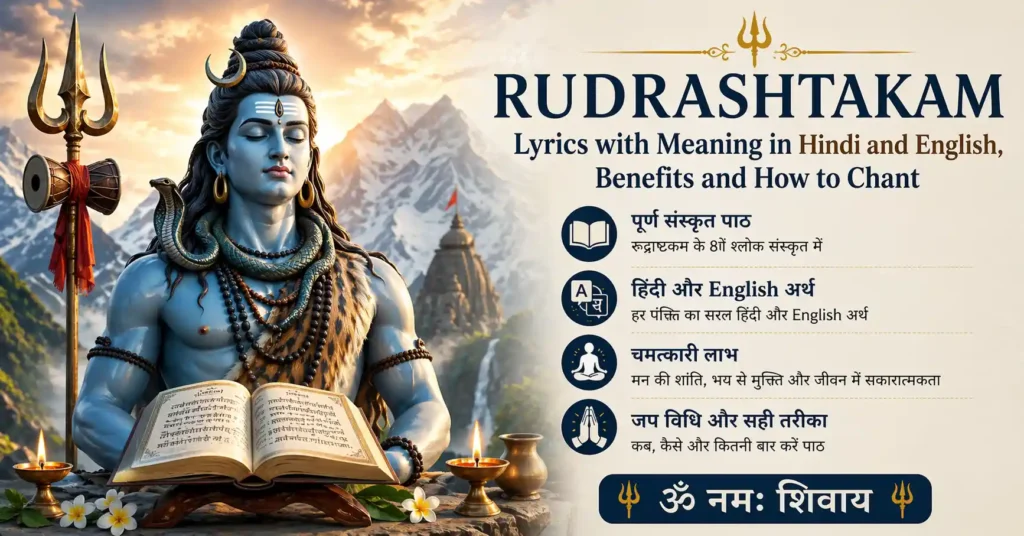
Where Is Rudrashtakam Found in the Ramcharitmanas?
The hymn beautifully reflects the devotional unity between Shiva and Rama in the Ramcharitmanas tradition, combining praise of Shiva’s formless nature with heartfelt surrender and devotion.
Why Do Devotees Chant Rudrashtakam?
Devotees chant Rudrashtakam to express their love, reverence, and surrender to Lord Shiva. The hymn beautifully describes Mahadev as the compassionate protector of devotees, the destroyer of ignorance, and the Supreme Reality beyond all worldly limitations.
Many people recite Rudrashtakam during difficult phases of life to find strength, peace, and spiritual comfort. The verses remind devotees that Shiva’s grace can help them remain calm and steadfast even during challenges.
Rudrashtakam is also cherished because it combines deep philosophy with heartfelt devotion. While its words praise Shiva’s infinite and formless nature, they also inspire a personal connection with Mahadev through bhakti and prayer.
For Shiva devotees, chanting Rudrashtakam is a way to cultivate humility and surrender. The hymn encourages seekers to look beyond material concerns and focus on spiritual growth, self-reflection, and devotion to the Divine.
Many devotees include Rudrashtakam in their daily spiritual practice, especially during Shravan month, Maha Shivratri, Pradosh Vrat, and Monday worship. Its rhythmic verses make it suitable for both chanting and meditation.
Above all, devotees chant Rudrashtakam because it fills the heart with devotion and reminds them of Lord Shiva’s boundless compassion, wisdom, and protective presence.
Rudrashtakam lyrics in Sanskrit (full text for chanting)
नमामीशमीशान निर्वाणरूपं
विभुं व्यापकं ब्रह्मवेदस्वरूपम्।
निजं निर्गुणं निर्विकल्पं निरीहं
चिदाकाशमाकाशवासं भजेऽहम्॥
निराकार ओंकार मूलं तुरीयं
गिरा ज्ञान गोतीतमीशं गिरीशम्।
करालं महाकाल कालं कृपालं
गुणागार संसार पारं नतोऽहम्॥
तुषाराद्रि संकाश गौरं गभीरं
मनोभूत कोटि प्रभा श्री शरीरम्।
स्फुरन्मौलि कल्लोलिनी चारु गंगा
लसद्भालबालेन्दु कण्ठे भुजंगाः॥
चलत्कुण्डलं भ्रूसुनेत्रं विशालं
प्रसन्नाननं नीलकण्ठं दयालम्।
मृगाधीशचर्माम्बरं मुण्डमालं
प्रियं शङ्करं सर्वनाथं भजामि॥
प्रचण्डं प्रकृष्टं प्रगल्भं परेशं
अखण्डं अजं भानुकोटि प्रकाशम्।
त्रयः शूलनिर्मूलनं शूलपाणिं
भजेऽहं भवानीपतिं भावगम्यम्॥
कलातीतं कल्याण कल्पान्तकारी
सदा सज्जनानन्ददाता पुरारी।
चिदानन्दसंदोह मोहापहारी
प्रसीद प्रसीद प्रभो मन्मथारी॥
न यावद् उमानाथ पादारविन्दं
भजन्तीह लोके परे वा नराणाम्।
न तावत्सुखं शान्ति संतापनाशं
प्रसीद प्रभो सर्वभूताधिवासम्॥
न जानामि योगं जपं नैव पूजां
नतोऽहं सदा सर्वदा शम्भु तुभ्यम्।
जरा जन्म दुःखौघ तातप्यमानं
प्रभो पाहि आपन्नमामीश शम्भो॥
Phalashruti
रुद्राष्टकमिदं प्रोक्तं विप्रेण हरतोषये।
ये पठन्ति नरा भक्त्या तेषां शम्भुः प्रसीदति॥
The sacred verses of Rudrashtakam praise Lord Shiva’s infinite nature, compassion, power, and grace. In the next section, we will explore the Rudrashtakam meaning in Hindi and English, with a verse-by-verse explanation to understand the deeper message hidden within this beautiful Shiva stotra.
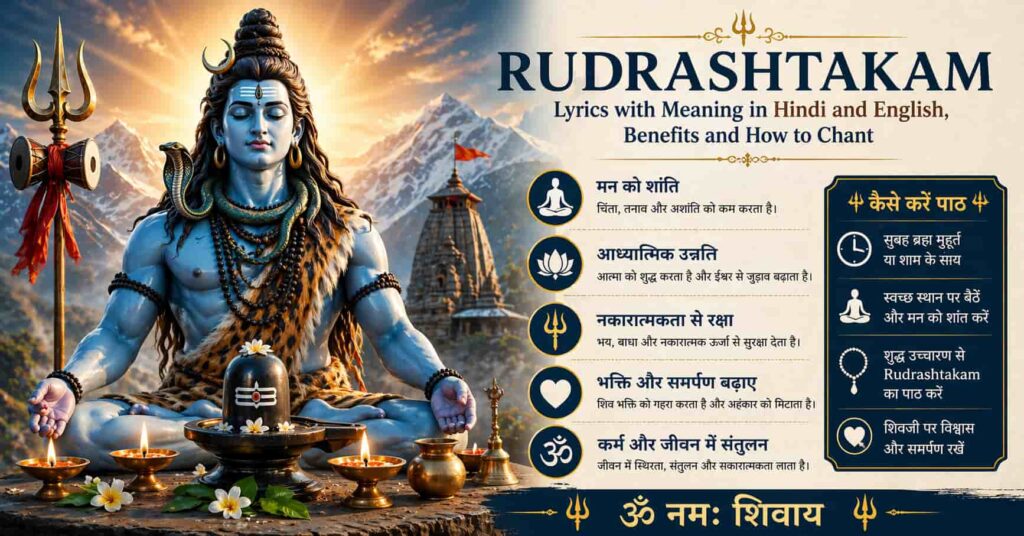
Rudrashtakam lyrics with meaning in Hindi and English
If you are new, do not worry about pronunciation. Start slowly. Even listening first is enough.
People often look for rudrashtakam lyrics with meaning in hindi and english so they can connect with each line. When you understand the meaning, chanting becomes more natural.
First Verse
नमामीशमीशान निर्वाणरूपं
Namami Isham Ishan Nirvana Roopam
मैं उस शिव को प्रणाम करता हूँ जो मोक्ष स्वरूप हैं।
I bow to Shiva, who is the form of liberation.
विभुं व्यापकं ब्रह्मवेदस्वरूपम्
Vibhum Vyapakam Brahma Veda Swaroopam
वह हर जगह व्याप्त हैं और ब्रह्म तथा वेदों का स्वरूप हैं।
He is present everywhere and is the essence of Brahman and the Vedas.
निजं निर्गुणं निर्विकल्पं निरीहं
Nijam Nirgunam Nirvikalpam Nireeham
वह निर्गुण हैं, विचारों से परे हैं और इच्छाओं से मुक्त हैं।
He is beyond qualities, thoughts, and desires.
चिदाकाशमाकाशवासं भजेऽहम्
Chidakasham Aakash Vaasam Bhajeham
मैं उस चेतना की उपासना करता हूँ जो आकाश के समान सर्वव्यापी है।
I worship the infinite consciousness present everywhere like space.
First Full Verse
नमामीशमीशान निर्वाणरूपं
विभुं व्यापकं ब्रह्मवेदस्वरूपम्।
निजं निर्गुणं निर्विकल्पं निरीहं
चिदाकाशमाकाशवासं भजेऽहम्॥
Key Terms
Nirvāṇa-rūpam – The embodiment of liberation (moksha)
Vibhum Vyāpakam – All-pervading and omnipresent
Brahma-Veda-Svarūpam – The essence of Brahman and the Vedas
Nirguṇam – Beyond the three material qualities (gunas)
Nirvikalpam – Free from duality and distinctions
Nirīham – Desireless and unattached
Chidākāśam – The infinite space of pure consciousness
Meaning
I bow to Lord Shiva, who is the embodiment of liberation. He is all-pervading, infinite, and the very essence of Brahman and the Vedas. He is beyond all material qualities, free from duality, and untouched by worldly desires. I worship that Supreme Consciousness, which exists everywhere like the limitless sky.
Bhawarth
In the opening verse of Rudrashtakam, Goswami Tulsidas presents Lord Shiva not merely as a deity but as the Supreme Reality itself. Shiva is described as the eternal, formless, and all-pervading consciousness that transcends time, space, and worldly limitations.
This verse reminds devotees that the Divine is not confined to a particular form or place. Just as the sky surrounds everything, Shiva’s presence exists throughout the entire universe. By contemplating this truth, a seeker can gradually rise above worldly attachments and move closer to inner peace, spiritual wisdom, and self-realization.
Second Verse
निराकार ओंकार मूलं तुरीयं
Nirakaar Omkar Moolam Tureeyam
वह निराकार हैं और ओंकार के मूल हैं।
He is formless and the source of Om.
गिरा ज्ञान गोतीतमीशं गिरीशम्
Giraa Gyaan Goteetam Eesham Gireesham
वह वाणी और ज्ञान से परे हैं।
He is beyond speech and knowledge.
करालं महाकाल कालं कृपालं
Karaalam Mahakaal Kaalam Kripaalam
वह काल के समान शक्तिशाली हैं और करुणामय हैं।
He is powerful like time and also compassionate.
गुणागार संसार पारं नतोऽहम्
Gunagaar Sansaar Paaram Nato’ham
वह गुणों के भंडार हैं और संसार से पार ले जाते हैं।
He is the storehouse of virtues and takes us beyond worldly life.
Second Full Verse
निराकारमोङ्कारमूलं तुरीयं
गिरा ज्ञान गोतीतमीशं गिरीशम्।
करालं महाकाल कालं कृपालं
गुणागार संसारपारं नतोऽहम्॥
Key Terms
Nirākāram – Formless and beyond physical appearance
Omkāra-Mūlam – The source of the sacred syllable Om
Turīyam – The fourth state of consciousness beyond waking, dreaming, and deep sleep
Girā Jñāna Gotītam – Beyond the reach of words, intellect, and ordinary knowledge
Girīśam – Lord of the mountains (Lord Shiva)
Mahākālam – The Great Lord beyond time
Kṛpālam – Compassionate and merciful
Guṇāgāram – The abode of all noble qualities
Saṁsāra-Pāram – The One who helps devotees cross the ocean of worldly existence
Meaning
I bow to Lord Shiva, who is formless and the source of the sacred sound Om. He is the transcendental reality beyond words, knowledge, and intellectual understanding. He is the Lord of the mountains, the mighty Mahakala who stands beyond time itself, yet remains infinitely compassionate. He is the treasure house of all virtues and the One who helps devotees cross the ocean of worldly existence.
Bhawarth
This verse highlights the transcendental nature of Lord Shiva. Tulsidas describes Shiva as the ultimate reality that cannot be fully understood through language, logic, or ordinary knowledge. He is the source from which all creation emerges and the divine presence that exists beyond the limitations of the mind.
The verse also presents a beautiful balance between Shiva’s immense power and boundless compassion. Although He is Mahakala, the force beyond time and destruction, He is also the merciful protector who guides devotees through the challenges of worldly life. By surrendering to Shiva, a seeker gains the strength to rise above fear, attachment, and ignorance and move closer to spiritual liberation.
Third Verse
तुषाराद्रि संकाश गौरं गभीरं
Tusharadri Sankash Gauram Gabheeram
वह हिमालय के समान उज्ज्वल और गंभीर हैं।
He is bright like snow mountains and deeply calm.
मनोभूत कोटि प्रभा श्री शरीरम्
Manobhoot Koti Prabha Shree Shareeram
उनका तेज असंख्य मनों से भी अधिक है।
His divine form shines with a splendour surpassing millions of Kamadevas.
स्फुरन्मौलि कल्लोलिनी चारु गंगा
Sphuran Mouli Kallolini Charu Ganga
उनकी जटाओं से गंगा बहती है।
The Ganga flows beautifully from His hair.
लसद्भालबालेन्दु कण्ठे भुजंगाः
Lasad Bhaal Balendu Kanthe Bhujangaa
उनके मस्तक पर चंद्रमा और गले में सर्प हैं।
He wears the moon and serpents.
Third Full Verse
तुषाराद्रि संकाश गौरं गभीरं
मनोभूत कोटि प्रभा श्री शरीरम्।
स्फुरन्मौलि कल्लोलिनी चारु गंगा
लसद्भालबालेन्दु कण्ठे भुजंगा॥
Key Terms
Tuṣārādri Saṅkāśam – Radiant like a snow-covered mountain
Gauram – Fair and resplendent in appearance
Gabhīram – Profound and majestic
Manobhūta Koṭi Prabhā – Brighter than millions of Cupids (Kamadevas)
Śrī Śarīram – Auspicious divine form
Kallolinī Cāru Gaṅgā – The beautiful flowing River Ganga
Bālendu – The crescent moon
Bhujanga – Serpent adorning the neck
Meaning
I bow to Lord Shiva, whose radiant form shines like a snow-clad mountain. His divine appearance is majestic and more beautiful than millions of Kamadevas. The sacred River Ganga flows gracefully from His matted locks, while the crescent moon adorns His forehead. A serpent rests around His neck, enhancing His awe-inspiring and divine presence.
Bhawarth
In this verse, Tulsidas beautifully describes the iconic form of Lord Shiva. Every element of Shiva’s appearance carries deep spiritual symbolism. The snow-like radiance represents purity, the flowing Ganga symbolizes divine grace, the crescent moon reflects control over time and the mind, and the serpent signifies mastery over fear, ego, and worldly desires.
Beyond describing Shiva’s physical form, the verse reminds devotees that true beauty comes from spiritual wisdom and inner purity. Lord Shiva’s appearance reflects perfect balance between power, serenity, compassion, and detachment. Meditating on this divine form helps devotees cultivate calmness, purity of thought, and a deeper connection with the sacred presence of Mahadev.
Fourth Verse
चलत्कुण्डलं भ्रूसुनेत्रं विशालं
Chalat Kundalam Bhroo Sunetram Vishaalam
उनके कानों में कुण्डल और विशाल नेत्र हैं।
He has shining earrings and large eyes.
प्रसन्नाननं नीलकण्ठं दयालम्
Prasannaananam Neelkantham Dayaalam
वे शांत मुख वाले, नीलकंठ और दयालु हैं।
He is calm, Neelkanth, and compassionate.
मृगाधीशचर्माम्बरं मुण्डमालं
Mrigaadheesh Charmambaram Mundamaalam
वे व्याघ्रचर्म और मुण्डमाला धारण करते हैं।
He wears tiger skin and a skull garland.
प्रियं शङ्करं सर्वनाथं भजामि
Priyam Shankaram Sarvanaatham Bhajaami
मैं उस प्रिय शंकर की भक्ति करता हूँ।
I worship beloved Shankar, the Lord of all.
Fourth Full Verse
चलत्कुण्डलं भ्रूसुनेत्रं विशालं
प्रसन्नाननं नीलकण्ठं दयालम्।
मृगाधीशचर्माम्बरं मुण्डमालं
प्रियं शङ्करं सर्वनाथं भजामि॥
Key Terms
Calat-Kuṇḍalam – Wearing gently swinging earrings
Bhrū-Su-Netram Viśālam – Possessing large and beautiful eyes beneath graceful brows
Prasannānanam – Having a serene and cheerful face
Nīlakaṇṭham – The blue-throated Lord Shiva
Dayālam – Compassionate and merciful
Mṛgādhīśa-Carma-Ambaram – Clothed in a tiger skin
Muṇḍa-Mālam – Adorned with a garland of skulls
Sarva-Nātham – Lord of all beings and all creation
Meaning
I worship Lord Shankara, whose earrings gently sway and whose large eyes radiate divine wisdom. His face is serene and filled with compassion. He is the blue-throated Lord Shiva, known for His mercy toward all beings. Clad in a tiger skin and adorned with a garland of skulls, He is the beloved Lord and the master of the entire universe.
Bhawarth
This verse presents a beautiful blend of Lord Shiva’s gentleness and power. His calm face and compassionate nature reassure devotees that He is always ready to protect and guide those who seek His refuge. At the same time, His tiger skin and skull garland symbolize His complete mastery over fear, death, ego, and worldly attachments.
The title Neelkantha recalls Shiva’s selfless act of consuming the deadly poison during the Samudra Manthan to protect the universe. This reminds devotees of His boundless compassion and willingness to bear suffering for the welfare of all beings. The verse teaches that true strength is not merely power, but the ability to remain compassionate, fearless, and selfless in every situation.
Fifth Verse
प्रचण्डं प्रकृष्टं प्रगल्भं परेशं
Prachandam Prakrishtam Pragalbham Paresham
वे अत्यंत शक्तिशाली और सर्वोच्च हैं।
He is powerful and supreme.
अखण्डं अजं भानुकोटि प्रकाशम्
Akhanda Aj Bhanu Koti Prakaasham
वे अखंड और करोड़ों सूर्य के समान तेजस्वी हैं।
He shines like millions of suns.
त्रयः शूलनिर्मूलनं शूलपाणिं
Trayah Shool Nirmoolanam Shoolpaanim
वे दुखों को दूर करते हैं और त्रिशूल धारण करते हैं।
He removes suffering and holds a trident.
भजेऽहं भवानीपतिं भावगम्यम्
Bhajeham Bhavani Patim Bhaav Gamayam
मैं भवानी के पति शिव की भक्ति करता हूँ।
I worship Shiva, known through devotion.
Fifth Full Verse
प्रचण्डं प्रकृष्टं प्रगल्भं परेशं
अखण्डं अजं भानुकोटि प्रकाशम्।
त्रयः शूल निर्मूलनं शूलपाणिं
भजेऽहं भवानीपतिं भावगम्यम्॥
Key Terms
Pracaṇḍam – Intensely powerful and mighty
Prakṛṣṭam – Supreme and excellent
Pragalbham – Fearless and majestic
Pareśam – The Supreme Lord
Akhaṇḍam – Indivisible and eternal
Ajam – Unborn and beyond creation
Bhānukoṭi Prakāśam – Radiant like millions of suns
Śūlapāṇim – The One who holds the trident
Bhavānīpatim – Consort of Goddess Bhavani (Parvati)
Bhāva-Gamyam – Attainable through sincere devotion and pure feelings
Meaning
I worship Lord Shiva, who is immensely powerful, supreme, and majestic. He is eternal, unborn, and shines with the brilliance of millions of suns. Holding the divine trident in His hand, He destroys the three kinds of suffering that bind living beings. I bow to Bhavani’s Lord, who can be realized through sincere devotion and a pure heart.
Bhawarth
This verse glorifies Lord Shiva as the Supreme Lord who transcends birth, death, and all limitations. His radiance symbolizes divine knowledge that dispels the darkness of ignorance, just as sunlight removes darkness from the world.
The trident held by Shiva carries deep spiritual meaning. It is often understood to represent His power to remove the three forms of suffering experienced by human beings: physical suffering, mental suffering, and suffering caused by external forces. Through His grace, devotees gain the strength to overcome these challenges.
The verse concludes with a beautiful reminder that Shiva is Bhāva-Gamya, meaning He is reached not through status, wealth, or intellectual achievement, but through genuine devotion. A heart filled with faith, humility, and love is the true path to experiencing the presence of Mahadev.
Sixth Verse
कलातीतं कल्याण कल्पान्तकारी
Kalaateetam Kalyaan Kalpantkaari
वे समय से परे और कल्याणकारी हैं।
He is beyond time and brings auspiciousness.
सदा सज्जनानन्ददाता पुरारी
Sada Sajjan Anand Data Puraari
वे सज्जनों को आनंद देते हैं।
He gives joy to the righteous.
चिदानन्दसंदोह मोहापहारी
Chidanand Sandoh Mohaapahaari
वे आनंद के स्रोत हैं और मोह को दूर करते हैं।
He removes illusion and gives bliss.
प्रसीद प्रसीद प्रभो मन्मथारी
Praseed Praseed Prabho Manmathaari
हे प्रभु, कृपा करें।
O Lord, please bless me.
Sixth Full Verse
कलातीत कल्याण कल्पान्तकारी
सदा सज्जनानन्ददाता पुरारि।
चिदानन्द सन्दोह मोहापहारी
प्रसीद प्रसीद प्रभो मन्मथारि॥
Key Terms
Kalātīta – Beyond time and all limitations
Kalyāṇa – The source of auspiciousness and well-being
Kalpānta-Kārī – The One who brings about the dissolution of the universe at the end of a cosmic cycle
Sajjan-Ānanda-Dātā – Bestower of joy to the righteous and virtuous
Purāri – Destroyer of the demon Tripura
Cidānanda-Sandoha – The embodiment of pure consciousness and bliss
Mohāpahārī – Remover of ignorance, delusion, and attachment
Manmathāri – Conqueror of Kamadeva (the god of desire)
Meaning
I bow to Lord Shiva, who is beyond time and the source of all auspiciousness. He is the One who dissolves the universe at the end of a cosmic cycle and continually bestows joy upon the righteous. He is the embodiment of pure consciousness and divine bliss, who removes ignorance and worldly delusion. O Lord, the conqueror of desire, please shower Your grace upon me.
Bhawarth
This verse highlights Lord Shiva as the eternal source of wisdom, bliss, and spiritual freedom. While He possesses the power to dissolve the universe, He is also the compassionate protector who brings happiness and guidance to sincere devotees.
The names Mohāpahārī and Manmathāri carry a profound spiritual message. They remind us that the greatest obstacles on the spiritual path are ignorance, attachment, and uncontrolled desires. Through devotion to Shiva, a seeker gradually gains clarity, self-discipline, and inner freedom.
Tulsidas teaches that true happiness does not come from temporary worldly pleasures but from realizing the divine consciousness within. By seeking Shiva’s grace, devotees can overcome confusion and attachment and move toward lasting peace, wisdom, and spiritual fulfillment.
Seventh Verse
न यावद् उमानाथ पादारविन्दं
Na Yaavad Umaanath Paadaaravindam
जब तक शिव के चरणों की भक्ति नहीं होती,
Until one worships Shiva,
भजन्तीह लोके परे वा नराणाम्
Bhajanti Lokey Pare Va Naraanaam
चाहे इस लोक में हो या परलोक में,
in this world or beyond,
न तावत्सुखं शान्ति संतापनाशं
Na Taavat Sukham Shaanti Santaapnaasham
तब तक शांति नहीं मिलती।
peace is not attained.
प्रसीद प्रभो सर्वभूताधिवासम्
Praseed Prabho Sarvabhootadhivaasam
हे प्रभु, कृपा करें।
O Lord, please bless.
Seventh Full Verse
न यावद् उमानाथ पादारविन्दं
भजन्तीह लोके परे वा नराणाम्।
न तावत्सुखं शान्ति सन्तापनाशं
प्रसीद प्रभो सर्वभूताधिवासम्॥
Key Terms
Umānātha – Lord of Goddess Uma (Parvati)
Pādāravindam – Lotus feet of the Lord
Bhajanti – Worship or devotion
Sukham – True happiness
Śānti – Inner peace
Santāpa-Nāśam – Destruction of sorrow and suffering
Sarva-Bhūtādhivāsam – The One who resides in all living beings
Meaning
O Lord of Uma, as long as people do not worship Your lotus feet, they cannot attain true happiness, inner peace, or freedom from suffering in this world or the next. O Lord who dwells within all beings, please be gracious and bless us with Your divine presence.
Bhawarth
In this verse, Tulsidas emphasizes the importance of devotion to Lord Shiva as a path to lasting peace and fulfillment. He explains that worldly achievements, possessions, and pleasures alone cannot provide permanent happiness because they are temporary by nature.
The verse teaches that true peace arises when a person develops a sincere relationship with the Divine. By taking refuge at Shiva’s lotus feet, devotees gradually overcome anxiety, sorrow, and inner restlessness and discover a deeper sense of purpose and contentment.
The name Sarva-Bhūtādhivāsam reminds us that Shiva resides in every living being. This understanding encourages compassion, humility, and respect for all forms of life. The verse ultimately teaches that devotion to Mahadev is not merely a ritual but a transformative journey toward inner peace, spiritual wisdom, and divine realization.
Eighth Verse
न जानामि योगं जपं नैव पूजां
Na Jaanami Yogam Japam Naiva Poojaam
मुझे योग या पूजा का ज्ञान नहीं है।
I do not know yoga or rituals.
नतोऽहं सदा सर्वदा शम्भु तुभ्यम्
Nato’ham Sadaa Sarvada Shambhu Tubhyam
मैं आपको ही प्रणाम करता हूँ।
I bow only to you.
जरा जन्म दुःखौघ तातप्यमानं
Jaraa Janma Dukhaugh Taatapyamaanam
मैं जीवन के दुखों से पीड़ित हूँ।
I suffer from life’s pain.
प्रभो पाहि आपन्नमामीश शम्भो
Prabho Paahi Aapannamaameesh Shambho
हे शिव, मेरी रक्षा करें।
O Shiva, please protect me.
Eighth Full Verse
न जानामि योगं जपं नैव पूजां
नतोऽहं सदा सर्वदा शम्भु तुभ्यम्।
जरा जन्म दुःखौघ तातप्यमानं
प्रभो पाहि आपन्नमामीश शम्भो॥
Key Terms
Na Jānāmi – I do not know
Yogam – The path of yoga and spiritual disciplines
Japam – Repetition of sacred mantras
Pūjām – Ritual worship
Natoham – I bow down in surrender
Śambhu – The benevolent and auspicious Lord Shiva
Jarā – Old age
Janma – Birth
Duḥkhaugha – The multitude of sufferings
Āpannam – One who is distressed and seeking refuge
Meaning
O Lord Shambhu, I do not know the proper practices of yoga, mantra repetition, or elaborate worship. I simply bow before You with devotion at all times. Troubled by the sufferings of birth, old age, and worldly existence, I seek Your protection. O compassionate Lord Shiva, please save and guide me.
Bhawarth
The final verse of Rudrashtakam is a heartfelt prayer of complete surrender. Tulsidas humbly admits that he does not possess mastery over complex spiritual practices or rituals. Instead, he approaches Lord Shiva with a sincere heart and unwavering devotion.
This verse teaches that true devotion is not measured by ritual expertise, scholarly knowledge, or spiritual accomplishments. What matters most is genuine faith, humility, and the willingness to surrender to the Divine. Lord Shiva responds not to outward display but to the purity of a devotee’s heart.
The verse also reflects a universal human experience. Every person faces the challenges of birth, aging, suffering, and uncertainty. By seeking refuge in Mahadev, devotees find strength, comfort, and spiritual guidance. The concluding prayer reminds us that sincere devotion and complete surrender are among the most powerful paths to experiencing Shiva’s grace and protection.
Phalashruti (Benefits of Reciting Rudrashtakam)
रुद्राष्टकमिदं प्रोक्तं विप्रेण हरतोषये।
ये पठन्ति नरा भक्त्या तेषां शम्भुः प्रसीदति॥
Key Terms
Rudrashtakam Idam – This sacred hymn known as Rudrashtakam
Vipreṇa – By the wise sage or learned devotee
Hara-Toṣaye – Composed to please Lord Hara (Shiva)
Paṭhanti – Recite or chant
Bhaktyā – With devotion and faith
Śambhuḥ – Lord Shiva, the auspicious and benevolent One
Prasīdati – Becomes pleased and bestows grace
Meaning
This Rudrashtakam has been composed to please Lord Shiva. Those who recite this sacred hymn with sincere devotion and faith receive the blessings and grace of Lord Shambhu.
Bhawarth
The Phalashruti teaches that the true power of Rudrashtakam lies in sincere devotion. Lord Shiva is pleased not by elaborate rituals or spiritual knowledge alone, but by a heart filled with faith, humility, and love.
Tulsidas reassures devotees that anyone can benefit from Rudrashtakam. When recited with genuine devotion, this sacred hymn becomes a means of receiving Shiva’s grace, protection, and spiritual guidance.
Understanding the Deeper Meaning of Rudrashtakam
Rudrashtakam is more than a hymn praising Lord Shiva’s divine qualities. Through its eight verses, Goswami Tulsidas describes Shiva as the eternal reality beyond form, time, and worldly limitations.
One central teaching is that the Supreme Truth cannot be fully understood through words or intellectual knowledge alone. Shiva is described as formless, infinite, and all-pervading, inviting devotees to look beyond external appearances and contemplate the Divine presence throughout creation.
The hymn also emphasises surrender. In its final verses, the devotee humbly admits that he does not know the intricacies of yoga, mantra repetition, or ritual worship. Instead, he seeks refuge in Lord Shiva through sincere devotion. This expresses the importance of humility and faith in the path of bhakti.
Another important message is freedom from ignorance, ego, and attachment. By reflecting on Shiva’s qualities, devotees are encouraged to develop wisdom, self-awareness, and a more balanced approach to worldly life.
Ultimately, Rudrashtakam brings together spiritual understanding and heartfelt devotion. It encourages seekers to approach Lord Shiva with humility, recognise the limitations of worldly pursuits, and move towards lasting peace and spiritual freedom.
Spiritual Symbolism Hidden in Rudrashtakam
One of the reasons Rudrashtakam remains so powerful is its rich spiritual symbolism. Goswami Tulsidas does not merely describe Lord Shiva’s appearance; he uses symbolic imagery to convey profound spiritual truths about life, devotion, and self-realization.
1. The Formless Shiva
Rudrashtakam begins by describing Shiva as Nirakara (formless) and Nirguna (beyond qualities). This symbolizes the Supreme Reality that exists beyond all names, forms, and limitations. It reminds devotees that the Divine is far greater than what can be perceived through the senses.
2. The Sacred Sound Om
Shiva is called the source of Om, the primordial sound from which creation emerges. Om symbolizes the origin of the universe, divine consciousness, and the unity of all existence.
3. The River Ganga
The Ganga flowing from Shiva’s matted locks represents divine grace, purity, and spiritual wisdom. Just as the sacred river cleanses impurities, divine knowledge purifies the mind and heart.
4. The Crescent Moon
The crescent moon on Shiva’s forehead symbolizes mastery over time, emotions, and the restless mind. It teaches devotees to remain calm and balanced amid life’s changing circumstances.
5. The Serpent Around Shiva’s Neck
The serpent represents fear, ego, and worldly desires. By wearing it as an ornament, Lord Shiva demonstrates complete control over these forces rather than being controlled by them.
6. Neelkantha, the Blue Throat
Shiva’s blue throat symbolizes sacrifice and compassion. It reminds devotees of His willingness to absorb the poison that emerged during the Samudra Manthan to protect the universe from destruction.
7. The Trident (Trishul)
The Trishul represents Shiva’s power over the three dimensions of existence. It is often understood as mastery over creation, preservation, and destruction, as well as the ability to remove physical, mental, and spiritual suffering.
8. The Tiger Skin
The tiger skin worn by Shiva symbolizes victory over pride, uncontrolled desires, and animal instincts. It reflects the mastery that comes through self-discipline and spiritual awareness.
9. The Garland of Skulls
The skull garland reminds devotees of the temporary nature of the physical body and worldly achievements. It encourages detachment and a deeper focus on the eternal soul.
Through these powerful symbols, Rudrashtakam teaches that Lord Shiva is not only a deity to be worshipped but also a guide who leads seekers toward wisdom, inner transformation, and liberation.
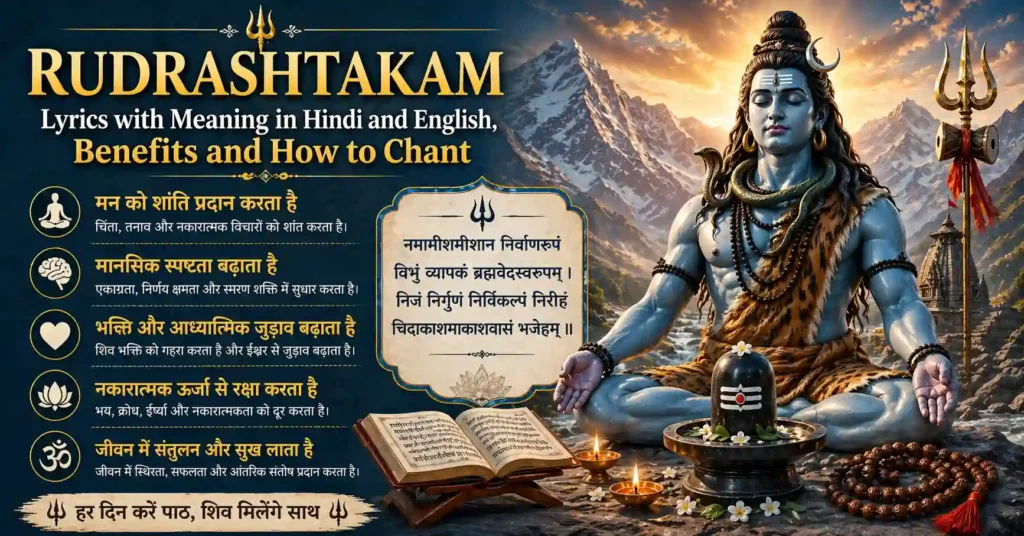
What Makes Rudrashtakam So Powerful?
Rudrashtakam has remained a beloved Shiva stotra for centuries because it combines spiritual wisdom with heartfelt devotion. Its verses describe Lord Shiva as both the compassionate Mahadev whom devotees worship and the eternal, formless Supreme Reality beyond worldly limitations.
The hymn beautifully balances philosophy and bhakti, reminding devotees that humility, faith, and sincere surrender are as important as intellectual knowledge or ritual practice.
For many devotees, chanting Rudrashtakam brings comfort during difficult times and strengthens their connection with Lord Shiva. Its timeless message continues to inspire devotion, inner peace, and spiritual growth across generations.
Benefits of Chanting Rudrashtakam
For centuries, devotees have recited Rudrashtakam as an expression of love, faith, and surrender to Lord Shiva. While individual experiences may vary, the following benefits are traditionally associated with sincere chanting.
1. Spiritual Benefits
Deepens Devotion to Lord Shiva
Regular chanting strengthens a devotee’s connection with Mahadev. Its verses inspire humility, faith, and appreciation of Shiva’s divine qualities.
Encourages Surrender and Faith
The hymn emphasises surrender to the Divine, encouraging devotees to trust in Shiva’s wisdom and grace.
Supports Spiritual Growth
Rudrashtakam reminds seekers of the eternal nature of the soul and the temporary nature of worldly concerns, encouraging spiritual awareness and inner maturity.
2. Mental and Emotional Benefits
Promotes Inner Peace
The rhythm and devotional meaning of Rudrashtakam can help calm the mind. Many devotees recite it during prayer and meditation to cultivate peace.
May Help Ease Stress and Anxiety
Focusing on Lord Shiva through chanting may provide comfort and help devotees approach life’s challenges with a calmer mindset.
Inspires Positive Thinking
The hymn’s teachings encourage faith, courage, and detachment from negative thoughts, supporting a more balanced outlook.
3. Daily Life Benefits
Develops Discipline and Consistency
Including Rudrashtakam in a daily spiritual routine encourages discipline and mindfulness. Even a few minutes of chanting can become a meaningful devotional habit.
Strengthens Emotional Resilience
The hymn’s message of Shiva’s compassion and protection can offer devotees spiritual strength during difficult times.
Creates a Sense of Divine Connection
Many devotees feel that chanting Rudrashtakam brings them closer to Lord Shiva, providing comfort, hope, and spiritual inspiration.
Note: These benefits are based on traditional Hindu beliefs, devotional practices, and devotees’ personal experiences. They are spiritual observations, not guaranteed outcomes.
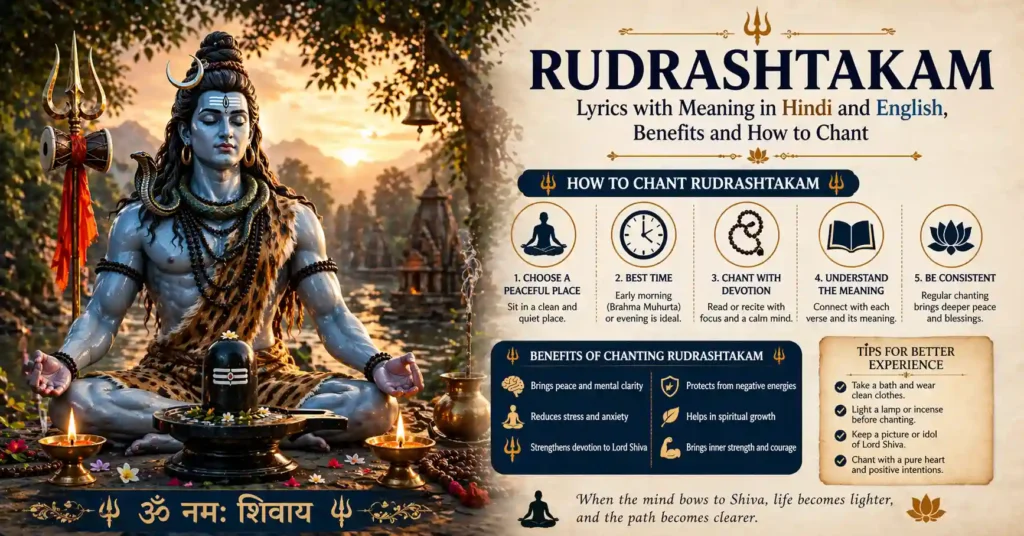
How to Chant Rudrashtakam
Chanting Rudrashtakam does not require elaborate rituals or complicated preparations. What matters most is devotion, sincerity, and a calm state of mind while remembering Lord Shiva.
1. Prepare Yourself with a Peaceful Mind
Sit in a clean and quiet place before chanting. Take a few moments to calm your mind so you can focus on the verses and connect with Mahadev.
2. Chant with Devotion and Understanding
Learning the correct pronunciation is helpful, but do not let initial difficulties discourage you. Chant with faith and gradually learn the meaning of the verses.
3. Chant During or After Puja
Many devotees include Rudrashtakam in their daily Shiva worship. You may recite it before, during, or after your prayers according to your personal practice.
4. Listen to the Recitation
If you are new to Rudrashtakam or find Sanskrit difficult, begin by listening to a clear recitation. This can help you become familiar with the verses, pronunciation, and rhythm.
5. Focus on Lord Shiva While Chanting
Keep your attention on Lord Shiva’s divine qualities described in the hymn. Reflecting on His compassion, wisdom, and protective nature can make the experience more meaningful.
6. Chant Regularly Rather Than Mechanically
Regular chanting with attention and devotion can help establish a meaningful spiritual routine. Sincerity and understanding matter more than simply counting repetitions.
7. Begin Without Unnecessary Worry About Rules
You can begin reciting Rudrashtakam with respect and faith without elaborate rituals or advanced spiritual knowledge. Follow your family tradition or personal practice where applicable, and let devotion guide your recitation.
Best Time to Chant Rudrashtakam
Rudrashtakam can be chanted at any time with devotion and sincerity. However, certain days and occasions are traditionally considered especially auspicious for reciting this sacred hymn dedicated to Lord Shiva.
1. Early Morning (Brahma Muhurta)
The early morning hours before sunrise are considered favourable for spiritual practices. Chanting Rudrashtakam during Brahma Muhurta can help create a calm and focused mindset for the day ahead.
2. During Daily Shiva Worship
Many devotees recite Rudrashtakam as part of their daily puja or meditation routine. Regular chanting can help maintain a steady devotional connection with Lord Shiva.
3. On Mondays (Somvar)
Monday is traditionally dedicated to Lord Shiva. Many devotees recite Rudrashtakam on Mondays as an expression of faith and devotion.
4. During the Month of Shravan
The holy month of Shravan is especially sacred for Shiva worship. Many devotees chant Rudrashtakam during this period as part of their devotional practice.
5. On Maha Shivratri
Maha Shivratri is one of the most important festivals dedicated to Lord Shiva. Reciting Rudrashtakam on this occasion can make prayer and worship more meaningful.
6. During Pradosh Vrat
Pradosh Kaal, the period around sunset on Trayodashi, is traditionally associated with Lord Shiva. Devotees may include Rudrashtakam in their Pradosh Vrat prayers.
7. During Prayer and Reflection
Apart from specific days and festivals, Rudrashtakam can be recited whenever you seek peace, guidance, or a deeper connection with Lord Shiva. Sincere devotion matters more than following a particular time.
Can Beginners Chant Rudrashtakam?
Yes, beginners can chant Rudrashtakam. You do not need to be a Sanskrit scholar or an advanced practitioner to recite this sacred Shiva stotra. Sincere devotion and faith are more important than perfect pronunciation.
If you are new to the hymn, begin by listening to a clear recitation and gradually learning the verses and their meanings. With regular practice, you can become more familiar with the words and their spiritual message.
Whether you chant a few verses or the complete Rudrashtakam, approach Lord Shiva with humility, devotion, and sincerity.
Common Doubts About Rudrashtakam
Can Women Chant Rudrashtakam?
Yes, women can chant Rudrashtakam. Lord Shiva’s worship is open to all devotees, and there is no restriction on sincerely reciting this sacred hymn.
Can I Listen to Rudrashtakam Instead of Chanting It?
Yes. Listening to Rudrashtakam with devotion and attention is also considered beneficial. Many devotees begin by listening regularly before learning the verses themselves.
What If My Pronunciation Is Not Perfect?
Perfect pronunciation is helpful but not mandatory. In the bhakti tradition, sincerity and devotion are considered more important than flawless recitation. With regular practice, pronunciation naturally improves.
How Many Times Should I Chant Rudrashtakam?
There is no fixed rule. Some devotees chant Rudrashtakam once daily, while others recite it multiple times during Shravan, Maha Shivratri, or special Shiva pujas. Consistency matters more than the number of repetitions.
Can Rudrashtakam Be Chanted Every Day?
Yes, Rudrashtakam can be chanted daily. Many devotees include it in their morning prayers or daily Shiva worship to strengthen their connection with Mahadev.
Can Children Chant Rudrashtakam?
Yes, children can chant Rudrashtakam. Learning and reciting this Shiva stotra at a young age can help cultivate devotion, discipline, and familiarity with sacred prayers.
Do I Need Initiation (Diksha) to Chant Rudrashtakam?
No. Rudrashtakam is a devotional hymn that can be recited by anyone with faith and respect. Formal initiation is not required to begin chanting it.
Can I Chant Rudrashtakam During Difficult Times?
Yes. Many devotees recite Rudrashtakam during periods of stress, uncertainty, or personal challenges. The hymn’s message of surrender, faith, and divine grace often provides comfort and inner strength.
Conclusion
Rudrashtakam is much more than a devotional hymn. It presents Lord Shiva as the eternal, formless, and compassionate Supreme Reality while inspiring devotees to cultivate faith, humility, and surrender.
Through its eight verses, this sacred Shiva stotra conveys timeless teachings about devotion, inner peace, and divine grace. Whether you chant it, listen to its recitation, or reflect on its meaning, Rudrashtakam can become a meaningful part of your spiritual journey.
If you are new to Rudrashtakam, begin by listening to the recitation or learning a few verses. With sincere devotion and a gradual understanding of its meaning, you can deepen your connection with Mahadev and find spiritual inspiration in its timeless message.
Did You Know?
- Rudrashtakam is traditionally attributed to Goswami Tulsidas, the saint-poet best known for composing the Ramcharitmanas.
- Despite being a great devotee of Lord Rama, Tulsidas composed Rudrashtakam to glorify Lord Shiva, reflecting the deep unity between Rama bhakti and Shiva bhakti in the Sanatan tradition.
- The word Rudrashtakam comes from Rudra (Lord Shiva) and Ashtakam (a hymn of eight verses), making it an eight-verse prayer dedicated to Mahadev.
- One of the most distinctive features of Rudrashtakam is that it describes Lord Shiva both as a personal deity and as the formless Supreme Reality beyond time, space, and worldly limitations.
- Devotees commonly chant Rudrashtakam during Shravan, Maha Shivratri, Pradosh Vrat, and Monday worship dedicated to Lord Shiva.
- The final verse of Rudrashtakam emphasizes that sincere devotion and surrender are more important than mastery of rituals, mantras, or complex spiritual practices.
Suggested Reading
If you found Rudrashtakam meaningful and want to deepen your understanding of Lord Shiva, sacred stotras, and powerful mantras, the following articles can help you explore related prayers and spiritual practices.
These resources complement the teachings of Rudrashtakam, explain their meanings in simple language, and help devotees strengthen their connection with Mahadev and the wider traditions of Sanatan Dharma.
Shiv Tandav Stotram Meaning, Full Lyrics, Benefits and How to Chant
https://thesanatantales.com/shiv-tandav-stotram-meaning-lyrics-benefits/
Lingashtakam Meaning, Benefits & How to Chant (Full Stotram)
https://thesanatantales.com/lingashtakam-meaning-benefits/
Maha Mrityunjaya Mantra: Meaning, Benefits and How to Chant
https://thesanatantales.com/maha-mrityunjaya-mantra/
Kaal Bhairav Ashtakam Meaning for Beginners (Hinglish & English)
https://thesanatantales.com/kaal-bhairav-ashtakam/
Gayatri Mantra: 7 Divine Benefits and Spiritual Power
https://thesanatantales.com/gayatri-mantra-meaning-benefits/
Devi Kavach Meaning: Durga Saptashati Protection Prayer with English Pronunciation
https://thesanatantales.com/devi-kavach-meaning/
Durga Beej Mantra: Simple Meaning, Benefits and How to Chant
https://thesanatantales.com/durga-beej-mantra-meaning/
Rudrashtakam
https://en.wikipedia.org/wiki/Rudrashtakam
FAQs
What Is Rudrashtakam?
Rudrashtakam is a sacred Sanskrit hymn dedicated to Lord Shiva. It consists of eight verses that praise Mahadev as both the compassionate deity worshipped by devotees and the formless Supreme Reality described in Hindu philosophy.
The stotra is traditionally attributed to Goswami Tulsidas and is associated with the Uttara Kanda of the Ramcharitmanas. It remains one of the most widely recited Shiva stotras in the Sanatan tradition.
Who Wrote Rudrashtakam?
Rudrashtakam was composed by Goswami Tulsidas, the revered saint-poet best known for writing the Ramcharitmanas. Despite being a great devotee of Lord Rama, Tulsidas also expressed deep devotion to Lord Shiva through this beautiful hymn.
The composition reflects the traditional harmony between Rama bhakti and Shiva bhakti, which has been an important part of Sanatan Dharma for centuries.
What Are the Benefits of Chanting Rudrashtakam?
According to traditional beliefs, chanting Rudrashtakam helps deepen devotion to Lord Shiva, calm the mind, and encourage spiritual reflection. Many devotees recite it to seek inner peace, strength, and divine guidance.
The hymn also reminds devotees about surrender, humility, and the temporary nature of worldly concerns. These teachings can support personal growth and a more balanced outlook on life.
Can Rudrashtakam Be Chanted Daily?
Yes, Rudrashtakam can be chanted daily. Many devotees include it in their morning or evening prayers as part of their regular Shiva worship.
There is no strict requirement regarding frequency. Even reciting Rudrashtakam once a day with devotion and understanding can become a meaningful spiritual practice.
What Is the Best Time to Chant Rudrashtakam?
Rudrashtakam may be chanted at any time with sincerity and devotion. However, Mondays, Pradosh Kaal, the month of Shravan, and Maha Shivratri are traditionally considered especially auspicious for its recitation.
Many devotees also prefer chanting Rudrashtakam during Brahma Muhurta or as part of their daily Shiva puja.
Can Beginners Chant Rudrashtakam?
Yes, Rudrashtakam is suitable for beginners. You do not need advanced knowledge of Sanskrit or extensive experience with spiritual practices to start chanting it.
Many devotees begin by listening to Rudrashtakam and then gradually learn the verses. Regular practice and sincere devotion are more important than perfection.
What If My Pronunciation Is Not Perfect?
Perfect pronunciation is beneficial, but it should not prevent you from chanting Rudrashtakam. In the devotional tradition, sincerity, faith, and regular practice are considered more important than flawless recitation.
As you continue chanting, your pronunciation and familiarity with the verses will naturally improve over time.
Can I Listen to Rudrashtakam Instead of Chanting It?
Yes. Listening to Rudrashtakam with attention and devotion is also a meaningful practice. Many people start by listening regularly before learning to recite the stotra themselves.
Listening can help you become familiar with the pronunciation, rhythm, and spiritual message of the hymn.
How Many Times Should I Chant Rudrashtakam?
There is no universally fixed number for chanting Rudrashtakam. Some devotees recite it once daily, while others chant it multiple times during special occasions such as Shravan, Pradosh Vrat, or Maha Shivratri.
The emphasis is generally placed on devotion and consistency rather than achieving a particular count.
Do I Need Diksha (Initiation) to Chant Rudrashtakam?
No, formal initiation is not required to chant Rudrashtakam. It is a stotra that can be recited by any devotee who wishes to worship Lord Shiva with sincerity and devotion.
While guidance from a guru can deepen understanding, beginners are welcome to start chanting Rudrashtakam on their own and gradually learn its meaning and significance.
Is Rudrashtakam Different from Shri Rudram?
Yes. Rudrashtakam and Shri Rudram are different compositions. Rudrashtakam is an eight-verse devotional hymn attributed to Goswami Tulsidas, while Shri Rudram is a much longer Vedic hymn from the Krishna Yajurveda.
Both are dedicated to Lord Shiva, but Rudrashtakam is generally considered easier for beginners and more suitable for daily recitation at home.
References & Sources
This article draws on the traditional Sanskrit text of Rudrashtakam and its devotional association with Goswami Tulsidas and the Ramcharitmanas tradition.
The verse meanings, explanations, and Bhavarth presented here are intended to help readers understand the hymn’s spiritual significance, symbolism, and devotional teachings in simple, accessible language.
The spiritual benefits and interpretations discussed in this article reflect traditional beliefs and devotional practices. They should be understood as matters of faith and personal spiritual experience, not guaranteed outcomes.
Explore More Topics from The Sanatan Tales