Have you ever stopped for a moment to think about the blessings that make your life possible? The food on your plate, the love of your parents, the guidance of your teachers, the beauty of nature, and the faith that gives you strength are all reasons to feel thankful. Yet, in our busy lives, we often focus more on what we lack than on what we already have.
Gratitude in Sanatan Dharma is more than saying thank you. It is an attitude of respect, humility, and awareness that helps us recognise the value of the people, resources, and opportunities around us. Sanatan traditions encourage us to honour our parents and teachers, respect nature, share what we have, and remember the Divine with a grateful heart.
The beauty of practising gratitude in Sanatan Dharma is that it does not require expensive offerings or complicated rituals. Even a sincere prayer before a meal, a kind word to a family member, or a moment of reflection at the end of the day can become a meaningful spiritual practice.
In this article, we will explore the meaning and importance of gratitude in Hinduism, its connection with Sanatan values, and simple daily habits you can follow at home and at work. You will also learn how to express thankfulness towards parents, teachers, food, nature, and the Divine, making gratitude a natural part of your everyday life.
Table of Contents
ToggleWhat Is Gratitude in Sanatan Dharma?
Gratitude means recognising the value of what we have received and feeling thankful for it. In Sanatan Dharma, this feeling goes beyond good manners. It reflects humility, respect, and an understanding that our lives are connected with many people, living beings, and natural resources. We may work hard for our achievements, but our journey is also supported by our family, teachers, society, and the world around us.
Gratitude in Sanatan Dharma is closely connected with the value of kritajna (कृतज्ञता), which means thankfulness or being mindful of another person’s help. A grateful person does not take every blessing for granted. Instead, they recognise the care, effort, and support behind the things they receive, whether it is a parent’s sacrifice, a teacher’s guidance, or the food that sustains them each day.
This outlook is also reflected in the traditional idea of seva, or selfless service. When we appreciate what others do for us, we become more willing to help them in return. Gratitude can encourage us to care for our elders, share food with someone in need, treat others fairly, and protect the natural world. In this way, thankfulness becomes an action rather than just a feeling.
It is important to remember that gratitude does not mean pretending that life is always easy or accepting injustice without question. We can be thankful for the good in our lives while working to improve difficult situations. Practised sincerely, gratitude helps us approach life with greater awareness, kindness, and responsibility.
Why Is Gratitude Important in Sanatan Dharma?
Gratitude holds an important place in Sanatan values because it teaches us to recognise the help, care, and blessings we receive throughout life. Gratitude in Sanatan Dharma encourages us to become aware of these gifts and avoid taking people or everyday comforts for granted. A grateful heart encourages humility and reminds us that life is not built on individual effort alone.
One of the important teachings of the Bhagavad Gita is to perform our duties sincerely without becoming overly attached to their results. This does not mean that we should stop working towards our goals. Rather, we can make honest efforts while remaining thankful for the opportunities, guidance, and support that help us along the way. This attitude can bring balance to our ambitions and expectations.
Gratitude is also connected with dharma, or the responsibility to act rightly. When we appreciate our parents, teachers, friends, and community, we are encouraged to treat them with respect. When we value food, water, trees, and other natural resources, we become more mindful of how we use them. Thankfulness can therefore inspire responsible actions in everyday life.
Most importantly, gratitude can deepen our spiritual connection. A sincere prayer offered with humility may be more meaningful to us than a ritual performed without attention or feeling. Gratitude does not require a person to have a perfect life. It invites us to recognise what is good, learn from what is difficult, and continue living with kindness, faith, and responsibility.

7 Simple Ways to Practise Gratitude in Sanatan Dharma
1. Begin Your Morning with Thankfulness
Before reaching for your phone or thinking about the day’s responsibilities, take a quiet moment to appreciate the new day. You may offer a short prayer to the Divine, sit peacefully for a minute, or simply feel thankful for the opportunity to begin again.
This simple morning habit can help you start the day with a calmer and more positive outlook. You do not need elaborate rituals. A sincere thought of thankfulness is a meaningful beginning.
2. Express Gratitude Before Eating
Food sustains our bodies, yet we often eat in a hurry without thinking about how it reaches our plates. The farmer who grows the crops, the people who transport them, and the family members who prepare meals all contribute to this everyday blessing.
Before eating, pause for a moment and offer a prayer of thanks according to your family tradition. This practice encourages mindful eating and respect for food. You can also avoid unnecessary waste and share a meal with someone who needs it.
3. Respect Your Parents and Teachers
Our parents and teachers often shape our lives in ways we understand only with time. Their guidance, sacrifices, and lessons may influence our decisions long after we have grown independent.
Expressing gratitude can be as simple as listening patiently, speaking respectfully, offering help, or acknowledging their efforts. Respect should be sincere, however, and does not require accepting harmful behaviour or abandoning healthy boundaries.
4. Appreciate the Small Things in Everyday Life
We often wait for major achievements or special occasions before feeling thankful. Yet, a caring conversation, a helping hand, a safe journey, or a peaceful evening can also bring value to our lives.
Try noticing three things you appreciate each day. They need not be extraordinary. This simple exercise can gradually shift your attention from what is missing to what is meaningful in your life.
5. Care for Nature and Its Gifts
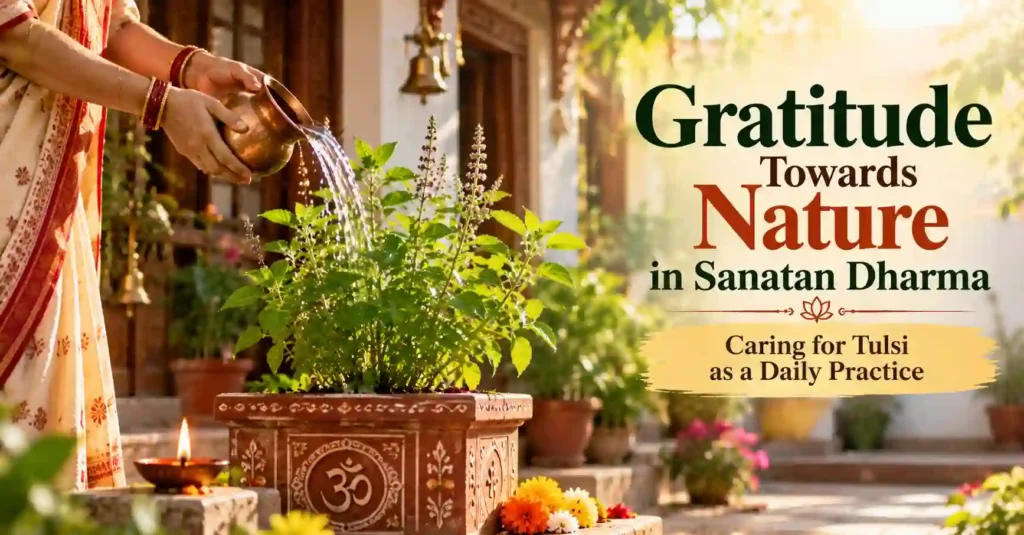
Sanatan traditions encourage reverence for nature through the respect shown to rivers, trees, plants, animals, and the elements that sustain life. Practices such as caring for a Tulsi plant can remind us of our connection with the natural world.
You can express this appreciation through everyday actions. Save water, avoid littering, care for plants, feed animals responsibly, and reduce waste. Gratitude becomes more meaningful when it leads us to protect the things we value.
6. Help Others Without Expecting a Reward
When we recognise the support we have received in life, we may feel inspired to support others. This is where gratitude connects naturally with seva, the spirit of selfless service.
Help an elderly neighbour, share food with someone in need, guide a younger person, or offer your time to a good cause. You do not need to make a public display of your actions. Even small acts of kindness can express appreciation for the wider community that supports us.
7. End Your Day with a Moment of Reflection
Before sleeping, spend a few minutes thinking about your day. Recall the people who helped you, the things that went well, and the lessons you learned from difficult moments.
You can offer a short prayer, write a few lines in a gratitude journal, or silently thank the Divine for the strength to face the day. This evening practice can help you end the day with greater awareness instead of carrying every worry into tomorrow.
Remember: Gratitude grows through regular practice, not perfection. Choose one or two habits that suit your routine and follow them sincerely. As they become natural, you can gradually include others in your daily life.
Gratitude Towards Parents, Gurus and Elders
Our parents care for us from childhood, while teachers and gurus guide us towards learning, wisdom, and responsible living. Recognising their contribution is a meaningful way to practise gratitude in our relationships.
The Taittiriya Upanishad contains the well-known guidance Matru Devo Bhava, Pitru Devo Bhava, Acharya Devo Bhava, which encourages us to regard our mother, father, and teacher with deep respect. These words remind us that gratitude is not limited to prayer or religious ceremonies. It should also be reflected in how we speak to people, listen to their guidance, and acknowledge the efforts they make for our well-being.
We can express thankfulness through simple actions. Call your parents regularly, spend time with elderly family members, thank a teacher who helped you, or pass on useful lessons to younger generations. Even when family members live far apart, a thoughtful conversation or a sincere message can help maintain a bond of care and respect.
At the same time, genuine respect does not mean believing that elders are always right. People can make mistakes, and family relationships can sometimes be difficult. We can appreciate the good we have received while maintaining healthy boundaries and treating everyone with dignity. True gratitude comes from understanding and sincerity, not from fear or pressure.
When we recognise the contributions of others, we become more mindful of the relationships that enrich our lives. This is one practical way to bring Sanatan values into family life and make thankfulness a part of our everyday behaviour.

Gratitude for Food, Water and Nature
Be Thankful for the Food You Receive
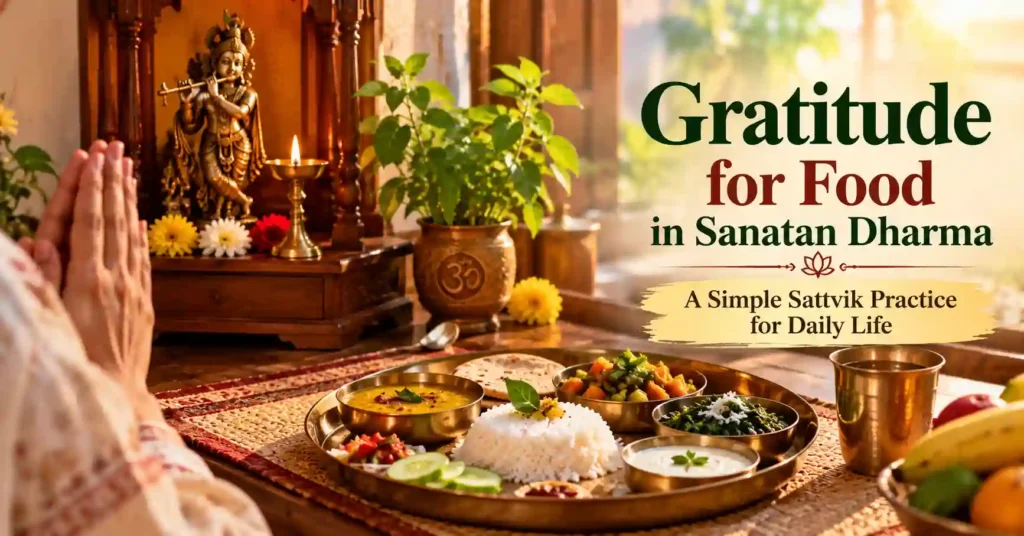
Food reaches our plates through the efforts of farmers, workers, sellers, and those who prepare our meals. Remembering this connection can help us appreciate what we eat rather than taking it for granted. Many Hindu families offer food to the Divine before eating, expressing thankfulness according to their family traditions.
You can follow this practice by pausing for a short prayer before meals, eating mindfully, and avoiding unnecessary food waste. Sharing food with family members, guests, or people in need is another meaningful way to express gratitude.
Respect Water and the Natural World
Water is essential for every living being, yet we often use it without thinking about its importance. Sanatan traditions also express reverence for rivers such as the Ganga, recognising their sacred place in spiritual and cultural life. This reverence can inspire us to keep water sources clean and use water responsibly.
The same attitude can extend to trees, plants, animals, and the earth. Caring for a Tulsi plant, planting suitable native trees, reducing plastic waste, and keeping our surroundings clean are simple ways to turn thankfulness into responsible action.
Let Gratitude Become a Daily Practice
Gratitude in Sanatan Dharma becomes meaningful when it influences our choices. We do not need to perform elaborate rituals every time we eat or use water. What matters is developing an awareness of the gifts we receive and treating them with respect.
When we waste less food, conserve water, and care for living beings, our actions reflect appreciation for the world around us. In this way, gratitude becomes more than a feeling. It becomes a daily expression of responsibility, compassion, and respect for life.
Gratitude in Sanatan Dharma: Strengthening Your Relationship with the Divine
You do not need elaborate arrangements to express thankfulness to Bhagwan. Lighting a diya, offering a flower, chanting your favourite mantra, or sitting quietly for a few moments can become meaningful acts of devotion. The value of these practices lies in the sincerity and attention with which they are performed, according to your own tradition and beliefs.
The Bhagavad Gita teaches the importance of devotion and sincere offering. In Chapter 9, Verse 26, Shri Krishna explains that He accepts a leaf, a flower, a fruit, or water offered with devotion. This teaching reminds devotees that a loving offering does not need to be expensive or grand. A simple act performed with a sincere heart can hold deep spiritual meaning.
Gratitude in Sanatan Dharma also encourages us to recognise that devotion is not limited to the time we spend before a home mandir. We can express it through honesty, kindness, compassion, and fulfilling our responsibilities. Helping someone in need, speaking truthfully, or doing our work with integrity can also reflect the values we seek to practise through our faith.
Over time, this approach can make daily worship feel more personal and meaningful. Instead of remembering Bhagwan only when we want something, we learn to appreciate the opportunity to pray, serve, learn, and live according to our values. Gratitude does not mean that we will never experience sorrow or uncertainty. It helps us maintain faith and humility while facing the changing circumstances of life.
Gratitude in Sanatan Dharma: Teachings from Hindu Scriptures
1. The Bhagavad Gita: Appreciate What You Receive
The Bhagavad Gita teaches the importance of performing one’s duties sincerely without becoming excessively attached to the results. This teaching can help us appreciate the opportunities and support we receive while continuing to work towards our goals.
In Chapter 9, Verse 26, Shri Krishna speaks of accepting even a simple offering made with devotion. The verse reminds devotees that the sincerity behind an offering matters more than its material value. A humble prayer, a flower, or a little water offered with love can express deep thankfulness.
2. The Taittiriya Upanishad: Honour Your Parents and Teachers
The Taittiriya Upanishad, in its teachings to students, includes the guidance Matru Devo Bhava, Pitru Devo Bhava, Acharya Devo Bhava. These words encourage respect for one’s mother, father, and teacher.
This teaching connects naturally with gratitude. Our parents help shape our lives, while teachers share knowledge and guidance that can remain valuable for years. We express appreciation not only through words but also through respectful behaviour, learning from their guidance, and supporting them when appropriate.
3. The Isha Upanishad: Live with a Sense of Reverence
The opening verse of the Isha Upanishad encourages us to recognise the Divine presence throughout the world and to avoid a possessive attitude towards what we use or receive. Its message can inspire a more thoughtful relationship with possessions and natural resources.
When we understand that life depends on more than our personal efforts, we may become less wasteful and more considerate of others. Caring for nature, using resources responsibly, and sharing what we can are practical ways to bring this outlook into daily life.
4. The Spirit of Yajna: Give Back, Not Just Receive
The Bhagavad Gita also discusses yajna, a sacred offering or act of dedication, in connection with duty and the wider order of life. In Chapter 3, Verse 11, it describes a relationship of mutual support between human beings and the devas.
This idea encourages us to look beyond our individual needs. We receive support from family, society, nature, and many people whose work we may never see. Gratitude can inspire us to give back through service, generosity, environmental care, and responsible living.
Taken together, these teachings show that gratitude is not simply a feeling we experience during prayer. It can shape how we treat people, use resources, fulfil our duties, and express devotion. By bringing these values into everyday actions, we can make thankfulness a living part of our spiritual journey.
How to Make Gratitude a Daily Spiritual Habit
Making gratitude in Sanatan Dharma a daily habit does not require hours of prayer or complicated rituals. A few sincere moments of thankfulness can help you appreciate the people around you, recognise life’s blessings, and bring spiritual values into your everyday actions.
Here are some practical ways to develop gratitude as part of your spiritual routine:
- Begin the morning with a prayer: Before starting your daily tasks, take a quiet moment to thank Bhagwan for a new day and the opportunity to live, learn, and grow.
- Appreciate your food: Pause before eating and remember the farmers, workers, and family members who helped bring the meal to your plate. Offer a short prayer according to your family tradition.
- Thank people sincerely: Express appreciation when someone helps you, offers guidance, or shows kindness. A simple, heartfelt thank you can strengthen relationships.
- Practise mindful living: Notice the small blessings around you, such as clean water, a comfortable home, a supportive friend, or a peaceful moment in nature.
- Keep a gratitude journal: Each evening, write down three things you appreciated during the day. They can be simple experiences, meaningful conversations, or lessons learned from a difficult situation.
- End the day with reflection: Before sleeping, think about what went well, what you learned, and where you could have acted with greater kindness or patience. Offer a short prayer if you wish.
- Turn gratitude into action: Help someone in need, care for plants, avoid wasting food, or support an elderly family member. These actions allow thankfulness to become part of your behaviour.
The most important thing is to begin with one or two habits and practise them sincerely. You do not need to feel grateful every moment or pretend that difficulties do not exist. Even on challenging days, you can acknowledge your feelings while appreciating the support and strength available to you.
Over time, these small practices can make gratitude a natural part of your spiritual life, helping you approach daily responsibilities with greater awareness, humility, and care for others.
Common Mistakes to Avoid When Practising Gratitude
Gratitude is a simple practice, but sometimes we misunderstand what it means. We may think we must always feel happy, ignore our problems, or perform special rituals to prove our thankfulness. In reality, gratitude is about recognising the good in our lives while remaining honest about our feelings and responsibilities.
Here are some common mistakes to avoid when practising gratitude in daily life.
- Comparing your blessings with others: Gratitude is not a competition. Instead of thinking that your life is better than someone else’s, appreciate what you have without judging another person’s circumstances.
- Expecting immediate results: Gratitude is not a transaction in which we thank Bhagwan only to receive something in return. Practise thankfulness sincerely, without expecting every prayer to bring a particular outcome.
- Ignoring pain or difficulties: Being grateful does not mean denying sadness, disappointment, or hardship. You can appreciate the support you receive while acknowledging your struggles and taking steps to address them.
- Treating gratitude as a ritual without feeling: Lighting a diya or offering a prayer can be meaningful, but the practice becomes more personal when accompanied by sincere attention and appreciation. Follow rituals according to your beliefs and family traditions.
- Forgetting to express gratitude through actions: Saying thank you is valuable, but our behaviour matters too. Respect people’s time, help those in need, avoid wasting food, and care for the environment.
- Feeling guilty on difficult days: Some days are more challenging than others. You do not need to force yourself to find something positive in every situation. Begin again when you feel ready, even with one small act of appreciation.
The purpose of gratitude is not to create another set of rules for yourself. It is to develop a more thoughtful relationship with life, other people, nature, and the Divine. Practised with sincerity and balance, it can become a natural expression of your values rather than an obligation.
How Gratitude Can Change Your Outlook on Life
One benefit of practising thankfulness is that it encourages us to value people rather than taking them for granted. We may become more willing to express appreciation, listen patiently, and recognise the efforts of family members, colleagues, and friends. These small changes can help strengthen relationships and create a more considerate home environment.
Gratitude can also encourage contentment without discouraging ambition. Sanatan wisdom does not require us to abandon our goals or stop working for a better future. Instead, we can continue making sincere efforts while appreciating what we already have. This balance helps us avoid measuring our entire happiness only through money, possessions, achievements, or social recognition.
At a spiritual level, gratitude in Sanatan Dharma reminds us to approach life with humility and responsibility. We can appreciate the guidance of our teachers, the care of our family, the gifts of nature, and the opportunity to perform our duties. Even when circumstances are uncertain, these reminders can help us act with greater patience and compassion.
The change often begins with small moments. A sincere thank you, a thoughtful prayer, or a few minutes of evening reflection may seem ordinary, but such habits can gradually influence how we respond to everyday situations. The aim is not to feel positive all the time. It is to notice what deserves appreciation while facing life’s challenges honestly and responsibly.
Simple Gratitude Prayer to Begin and End Your Day
A Simple Morning Gratitude Prayer
After waking up, sit quietly for a moment and offer thanks for the new day. You may say this simple prayer in your own words:
“O Bhagwan, thank You for giving me another day. Please guide my thoughts, words, and actions. Help me treat others with kindness, fulfil my responsibilities honestly, and appreciate the blessings I receive. May I use this day wisely and bring some goodness into the lives of others.”
You can offer this prayer before your daily worship or while sitting peacefully in your home mandir. If you follow a particular deity, you may address Bhagwan by that name and include your favourite mantra.
A Simple Evening Gratitude Prayer
Before sleeping, reflect on your day and remember the people who supported you, the work you completed, and the lessons you learned. You may offer this prayer:
“O Bhagwan, thank You for guiding me through this day. I am grateful for the people who helped me and the opportunities I received. Please give me the wisdom to learn from my mistakes, the strength to face difficulties, and the compassion to treat others well. May I rest peacefully and begin tomorrow with a sincere heart.”
These prayers are personal examples, not prescribed scriptural mantras. You may change the words to suit your beliefs and circumstances. What matters is not reciting them perfectly, but taking a moment to reflect sincerely.
With regular practice, morning and evening prayers can become gentle reminders to live with humility, kindness, and appreciation. Gratitude then becomes more than something we express before a diya or home mandir. It becomes an attitude we carry into our relationships, responsibilities, and daily choices.
Key Takeaways
Gratitude in Sanatan Dharma begins with awareness: Recognise and appreciate the people, opportunities, and everyday blessings that support your life.
Small habits make a difference: Begin your day with a prayer, appreciate your food, thank those who help you, and reflect on your experiences each evening.
Sanatan Dharma connects gratitude with action: Respect your parents and teachers, care for nature, share with those in need, and fulfil your responsibilities sincerely.
Gratitude strengthens devotion: A simple prayer offered with a sincere heart can make your daily spiritual practice more meaningful.
You can practise gratitude in Sanatan Dharma during difficult times: Gratitude does not mean ignoring pain or pretending everything is fine. It means recognising what you appreciate while honestly facing life’s challenges.
Practise gratitude without expecting rewards: Make thankfulness a natural part of your life, not a transaction or an obligation. Let it guide your thoughts, words, and actions.

Conclusion
Practising gratitude in Sanatan Dharma does not require expensive offerings, complicated rituals, or hours of daily worship. A sincere morning prayer, respect for parents and teachers, mindful use of resources, and a kind act towards someone in need can all become expressions of thankfulness.
Start with one small habit today. Thank Bhagwan when you wake up, appreciate your next meal, or spend a few minutes reflecting on the good things in your life. Practise these habits sincerely, without expecting immediate rewards or forcing yourself to feel positive all the time.
Over time, gratitude can become more than a daily spiritual practice. It can shape how you treat others, how you fulfil your responsibilities, and how you respond to life’s challenges. When thankfulness guides our thoughts and actions, we begin to live the values of Sanatan Dharma in a more meaningful and practical way.
Ultimately, gratitude in Sanatan Dharma becomes meaningful when it shapes how we pray, treat others, care for nature, and fulfil our responsibilities each day.
Suggested Reading
If this article inspired you to bring more gratitude into your daily life, you may also enjoy these reflections from the Divine Living category. Together, they explore daily spiritual practices, devotional living, inner peace, and the practical wisdom of Sanatan Dharma.
These articles also show how gratitude in Sanatan Dharma can become part of everyday life through simple spiritual habits, thoughtful actions, and a deeper appreciation of the blessings we often take for granted.
1. Daily Spiritual Habits: 7 Simple Sanatan Practices for Inner Peace
https://thesanatantales.com/daily-spiritual-habits/
2. Daily Sattvik Routine for Working Professionals: Simple Habits for a Peaceful Life
https://thesanatantales.com/daily-sattvik-routine-for-working-professionals/
3. Daily Devotional Practices: How Small Acts Build Inner Discipline and Faith
https://thesanatantales.com/daily-devotional-practices/
4. Karma and Life Lessons: What Your Experiences Are Teaching You
https://thesanatantales.com/karma-and-life-lessons/
5. Daily Meditation: Benefits, Meaning and Simple Ways to Start
https://thesanatantales.com/daily-meditation-benefits/
6. Home Mandir: Simple Setup Ideas, Vastu Tips and Daily Rituals
https://thesanatantales.com/home-mandir-setup-ideas/
7. How Can We Practise Gratitude in Sanatan Dharma in Our Daily Life?
Read on Quora: https://qr.ae/pFlZEa
FAQs
1. What does gratitude mean in Sanatan Dharma?
Gratitude in Sanatan Dharma means recognising and appreciating the help, blessings, and opportunities we receive in life. It encourages us to remain humble, respect our parents and teachers, care for nature, and remember Bhagwan with a sincere heart.
Gratitude is not limited to prayer or religious ceremonies. It can also be expressed through kind words, honest actions, helping others, and avoiding waste. When we appreciate what we have received, we become more mindful of our responsibilities towards people, society, and the natural world.
2. How can I practise gratitude in daily life?
You can practise gratitude through small habits that fit naturally into your daily routine. Begin your morning with a short prayer, appreciate your food before eating, thank people who help you, and spend a few minutes reflecting on your day before sleeping.
You can also maintain a gratitude journal and write down three things you appreciate each evening. They may be simple experiences, such as a family conversation or a helpful colleague. Regular practice can help you notice the good around you without ignoring life’s difficulties.
3. What does the Bhagavad Gita teach about gratitude?
The Bhagavad Gita teaches devotion, sincere action, humility, and freedom from excessive attachment to results. In Chapter 9, Verse 26, Shri Krishna describes accepting a leaf, a flower, a fruit, or water offered with devotion. This highlights the importance of sincerity in devotional offerings.
The Gita also encourages us to perform our duties responsibly rather than becoming consumed by rewards. These teachings can inspire gratitude for the opportunities and support we receive while reminding us to act with honesty, dedication, and consideration for others.
4. Is gratitude the same as devotion to Bhagwan?
Gratitude and devotion are closely connected, but they are not identical. Gratitude is the feeling of thankfulness for the help, opportunities, and blessings we receive. Devotion, or bhakti, involves love, faith, and dedication to Bhagwan.
Gratitude can become an important part of devotional life through prayer, mantra chanting, offering flowers, or lighting a diya. However, it can also be expressed outside formal worship through kindness, honesty, and service. Both gratitude and devotion can encourage us to live with humility and greater awareness.
5. How can I teach children to practise gratitude?
Children learn gratitude most effectively when they see it practised at home. Parents can express appreciation for everyday help, thank people sincerely, avoid wasting food, and explain why respecting others matters. These small examples teach children that gratitude is part of everyday behaviour.
You can also encourage children to thank their teachers, help grandparents, share with others, and mention one thing they appreciated each day. Explain these habits gently rather than making them feel guilty. The aim is to help children develop genuine appreciation, kindness, and respect as they grow.
6. Can I practise gratitude during difficult times?
Yes, but gratitude does not mean pretending that pain, disappointment, or hardship does not exist. Sanatan wisdom encourages us to face life’s challenges with understanding, patience, and a sense of responsibility. You can acknowledge your difficulties while appreciating the people who support you or the strength to take the next step.
You do not need to find a blessing in every painful experience or force yourself to feel positive. Begin with something small, such as a supportive conversation or a moment of peace. Gratitude should support honest reflection, not prevent you from seeking help or addressing problems.
7. Do I need special rituals to express gratitude in Sanatan Dharma?
No. You can express gratitude through traditional worship if that is part of your daily practice, but special rituals are not necessary for every expression of thankfulness. A sincere prayer, a moment of reflection, or a simple offering at your home mandir can be meaningful.
You can also practise gratitude by respecting your parents, appreciating your teachers, helping someone in need, and caring for nature. These everyday actions reflect values associated with Sanatan Dharma. Choose practices that suit your beliefs and family traditions, and focus on sincerity rather than the complexity of the ritual.
8: How can I practise gratitude in daily life?
You can practise gratitude in daily life by beginning your morning with a short prayer, thanking the Divine before meals, respecting your parents and teachers, and helping others without expecting anything in return.
You can also appreciate nature, use resources carefully, and reflect on the good things that happened during the day. These simple habits make gratitude in Sanatan Dharma a natural part of everyday living rather than just a religious idea.
9: Why is gratitude important in Hinduism?
Gratitude is important in Hinduism because it encourages humility, respect, and awareness of the blessings we receive from Bhagwan, our families, teachers, nature, and society. It reminds us that life depends on many forms of support, often beyond our control.
Gratitude in Sanatan Dharma also encourages us to express thankfulness through responsible actions, kindness, prayer, and respect for all forms of life.
About the Author
Yateendra Chaturvedi is a spiritual writer, researcher, devotee, and the founder of The Sanatan Tales. With over 35 years of professional experience and a lifelong interest in Sanatan Dharma, he writes about Hindu deities, temples, scriptures, festivals, Mahavidyas, sacred stories, rituals, and living traditions that continue to guide and inspire devotees across India.
Drawing from traditional scriptures, regional beliefs, temple traditions, devotional literature, and historical sources, he aims to present authentic, well-researched, and easy-to-understand content for modern readers. His work focuses on preserving spiritual wisdom, explaining sacred traditions, and helping seekers develop a deeper understanding of India’s rich spiritual heritage.
Through The Sanatan Tales, Yateendra strives to make the timeless teachings of Sanatan Dharma simple, meaningful, and relevant for today’s generation while maintaining respect for traditional sources, regional practices, and diverse spiritual perspectives.
Learn More About Yateendra Chaturvedi →
https://thesanatantales.com/about-the-author/
References & Sources
Explore More Topics from The Sanatan Tales