
Table of Contents
ToggleDas Mahavidya and the Hidden Map of Shakti
Das Mahavidya is not a list of goddesses. It is a complete spiritual map of Shakti. These ten forms show how the Divine Mother moves through fear, beauty, discipline, loss, silence, power, expression, and finally peace.
The Das Mahavidya tradition comes mainly from Shakta Tantra, not from popular festival religion. Yet it has always lived alongside temple worship, household devotion, and saint traditions. From Ramakrishna Paramahamsa to Bamakhyapa, these goddesses were not theories. They were living presences.
Origin of Das Mahavidya: Two Interlinked Traditions
The origin of Das Mahavidya is understood through two parallel but connected traditions within Shakta philosophy.
The first comes from Tantric texts, especially those linked with the Sati–Shiva episode. When Shiva attempted to withdraw from the world and renounce Shakti, the Divine Mother manifested in ten powerful forms, appearing in all directions. These forms stopped Shiva not through force, but through truth. Each Mahavidya revealed a cosmic principle that even Shiva could not deny. This moment established the Mahavidyas as ten great wisdoms, each expressing a fundamental reality of existence.
The second tradition sees the Mahavidyas as purpose-born warrior manifestations of Maa Durga. In this view, the Divine Mother does not appear randomly. She manifests a specific form when a cosmic imbalance arises, when a demon cannot be defeated by ordinary means, or when a deeper spiritual blockage must be destroyed. Each Mahavidya thus has a clear reason, story, and role, often linked to battles, protection of dharma, or transformation of consciousness.
These two traditions do not contradict each other. The Tantric view explains what the Mahavidyas represent, while the Durga tradition explains why and when they appear.
Why Are They Called Mahavidya (Goddesses of Wisdom)
The ten forms of the Divine Mother are called Mahavidya because each one reveals a great and complete wisdom about life and existence. Here, wisdom does not mean knowledge from books or rituals alone.
It means direct understanding of truth as it is. The Mahavidyas teach lessons that cannot be learned through comfort. They reveal time, fear, desire, loss, discipline, silence, control, expression, and fulfillment.
Kali teaches the wisdom of time and death. Tara teaches guidance through darkness. Tripura Sundari teaches balance and harmony. Bhairavi teaches inner fire and discipline. The remaining forms reveal sacrifice, emptiness, restraint, voice, and abundance.
Together, the Mahavidyas show that real wisdom is not always gentle or pleasing. It is transformative. It breaks illusion, removes false security, and leads the seeker toward clarity and liberation.
That is why they are worshipped not only as goddesses, but as living wisdoms to be realized.
Mahavidyas as Warrior Forms of Maa Durga: Purpose and Story
Below is the second layer of origin, where each Mahavidya appears as a specific Shakti of Maa Durga, manifesting for a clear purpose. In this tradition, the Divine Mother does not take form without reason.
Each Mahavidya arises when a particular imbalance must be corrected, a demon subdued, or a deeper spiritual truth revealed.
These stories are preserved across Puranic narratives, regional temple traditions, and Tantric texts, often told differently in different regions, yet pointing to the same inner purpose behind each manifestation.
Maa Kali
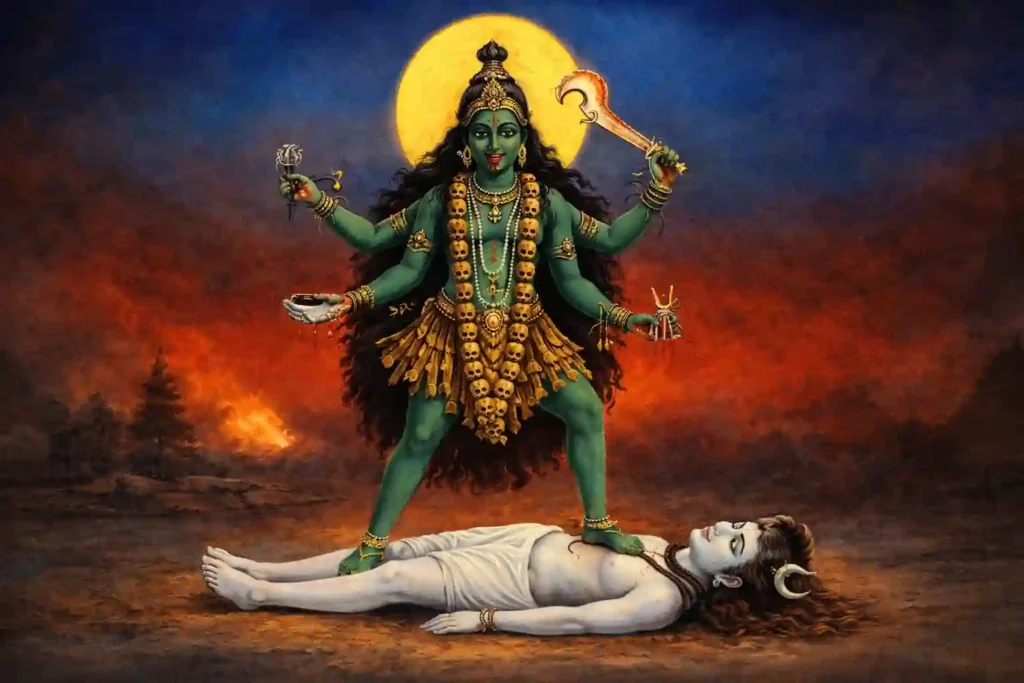
Kali manifests from Durga’s rage during battles against asuras like Raktabija, whose blood created endless clones. Kali drinks his blood and destroys him completely. Her purpose is total annihilation of ego and evil, without mercy.
Here, Kali is not time alone. She is cosmic emergency power.
Maa Tara
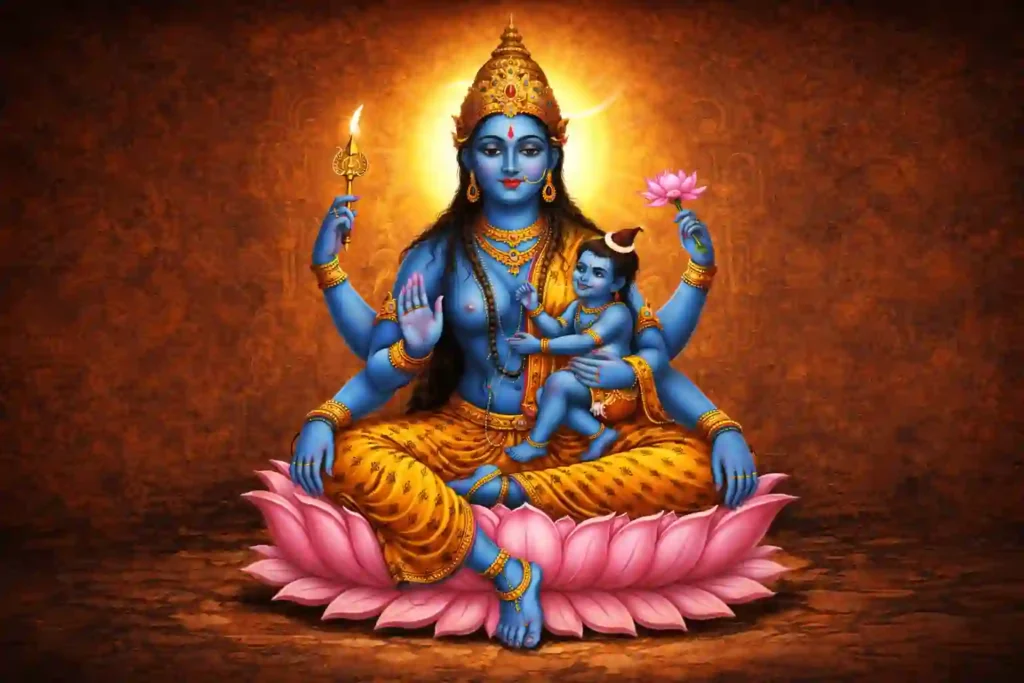
Tara emerges when even fierce destruction is not enough, and guidance is required amid chaos. In some traditions, she appears to protect Shiva himself when he drinks poison, nursing him like a mother.
Her warrior role is not slaughter, but rescue and protection during collapse.
Maa Tripura Sundari (Shodashi)
She manifests after chaos has been controlled. When the universe needs restoration of harmony, beauty, and order, Durga appears as Tripura Sundari.
Her purpose is rebalancing creation, not fighting directly. She governs the cosmic structure through Sri Chakra.
Maa Bhairavi
Bhairavi arises when discipline is needed to sustain victory. After demons are destroyed, uncontrolled power can still corrupt. Bhairavi’s role is tapasya, restraint, and purification through fire.
She is the guardian of spiritual seriousness.
Maa Chhinnamasta
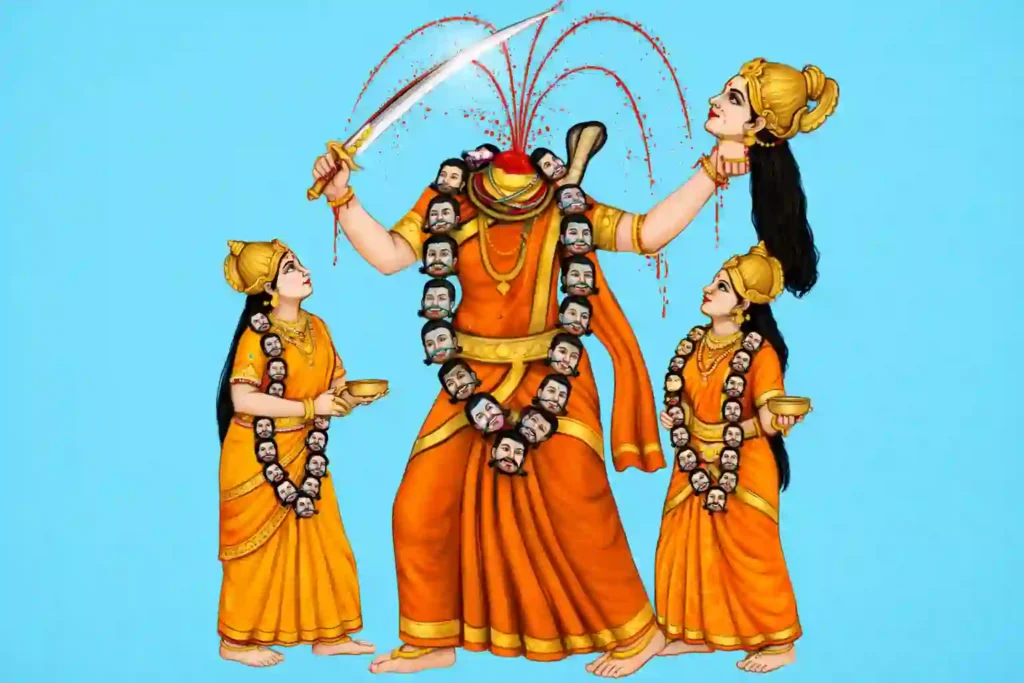
Chhinnamasta appears when desire itself becomes the enemy. In some traditions, she manifests to teach gods and yogis that even divine hunger must be sacrificed.
Her act of self-decapitation is not violence. It is ultimate self-control. Her warrior role is cutting attachment at the root.
Maa Dhumavati
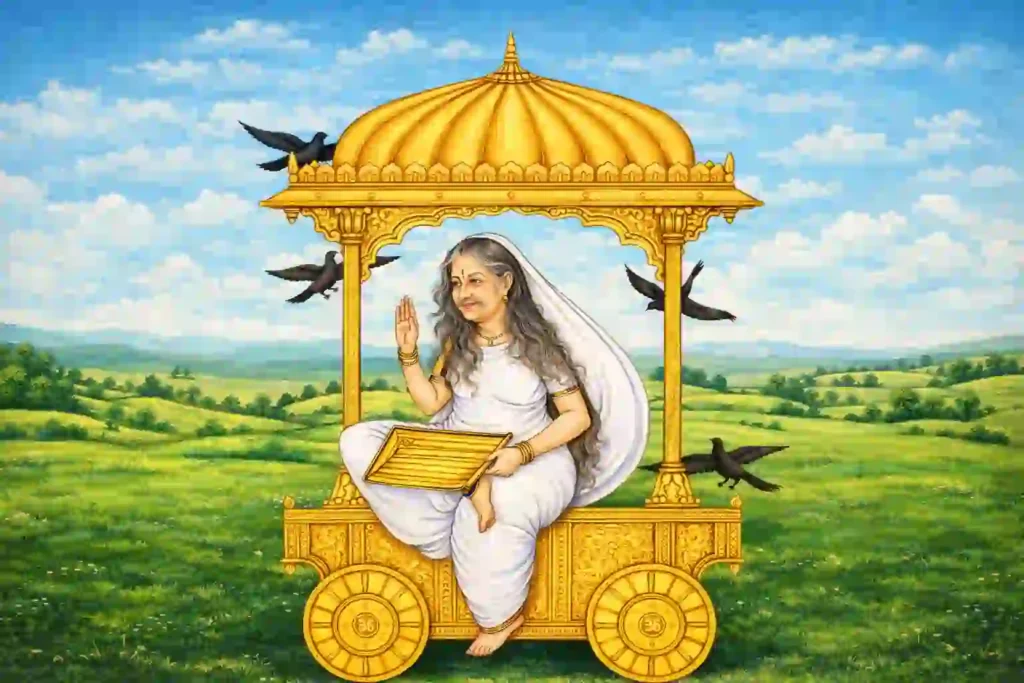
Dhumavati emerges after destruction, when loss, famine, or widowhood spreads across the world. She represents the truth that not all battles end in celebration.
Her purpose is to guide souls through grief, emptiness, and detachment, when nothing else remains.
Maa Bagalamukhi
Bagalamukhi manifests to paralyze destructive speech, deception, and hostile forces. In several legends, she appears when enemies cannot be killed but must be stopped.
Her warrior power is stambhana, the freezing of harmful intent.
Maa Matangi
Matangi appears when divine wisdom needs to enter impure or neglected spaces. She takes form to restore balance where society rejects, marginalizes, or silences.
Her role is reclaiming forbidden knowledge and inner voice.
Maa Kamala
Kamala manifests after long periods of chaos and austerity, when the world needs stability, nourishment, and prosperity to continue dharma.
Her warrior role is subtle. She protects life by sustaining abundance, not by destroying enemies.
The Ten Mahavidyas and Their Living Essence
Maa Kali
Kali is time, truth, and fearless compassion. She destroys illusion, not the devotee. Her form is fierce because truth is fierce.
Main sadhak: Sri Ramakrishna Paramahamsa
Ramakrishna did not see Kali as terrifying. He saw her as Mother. His sadhana was intense but deeply bhakti-based. Through Kali, he reached the highest non-dual realization.
Major temples:
Dakshineswar Kali, Kalighat, Tarapith
Practice reality:
Kali is worshipped both sattvikly with lamps and flowers, and tantrically with mantra, nyasa, and night sadhana depending on lineage.
Maa Tara
Tara is the guide who carries the soul across darkness. She protects, teaches, and sometimes shouts like a mother when needed.
Main sadhak: Bamakhyapa (Vamakhepa)
Bamakhyapa of Tarapith was considered mad by society. For Tara, he was a child. His life shows raw, unfiltered tantric surrender, guided directly by the Devi.
Major temple:
Tara Peeth, Birbhum
Temple practice:
Night worship, Tara bija mantra, cremation ground symbolism, strict temple rules for sadhana.
Maa Tripura Sundari (Shodashi)
She is beauty with awareness. Balance with power. The central deity of Sri Vidya.
Main tradition:
Sri Vidya lineage
Great saints like Bhaskararaya wrote deep works on her worship.
Major temples:
Tripura Sundari Temple in Tripura, Sri Chakra temples in South India
Practice reality:
Highly structured worship. Sri Chakra puja, mantra diksha, and disciplined sattvik lifestyle.
Maa Bhairavi
Bhairavi is tapasya. Controlled fire. She burns impurities without chaos.
Main sadhak archetype:
Ascetics and kundalini practitioners
Bhairavi is often worshipped before deeper tantric entry.
Practice reality:
Both household puja and advanced sadhana exist. Strong emphasis on discipline, fasting, and mantra purity.
Maa Chhinnamasta
She represents sudden awakening through sacrifice. She cuts ego instantly.
Major temple:
Rajrappa Chhinnamasta Temple, Jharkhand
Practice reality:
Traditionally tantric. Symbolic blood offerings, strict observances, rarely recommended without guru guidance.
Maa Dhumavati
She is the wisdom of loss. The void after everything is taken away.
Practice reality:
Mostly worshipped by renunciates. Very few temples. Silence, smoke, and detachment are her symbols.
Maa Bagalamukhi
She stops negativity, enemies, and harmful speech.
Major temples:
Datia Bagalamukhi, Nalkheda, Himachal Bagalamukhi shrines
Practice reality:
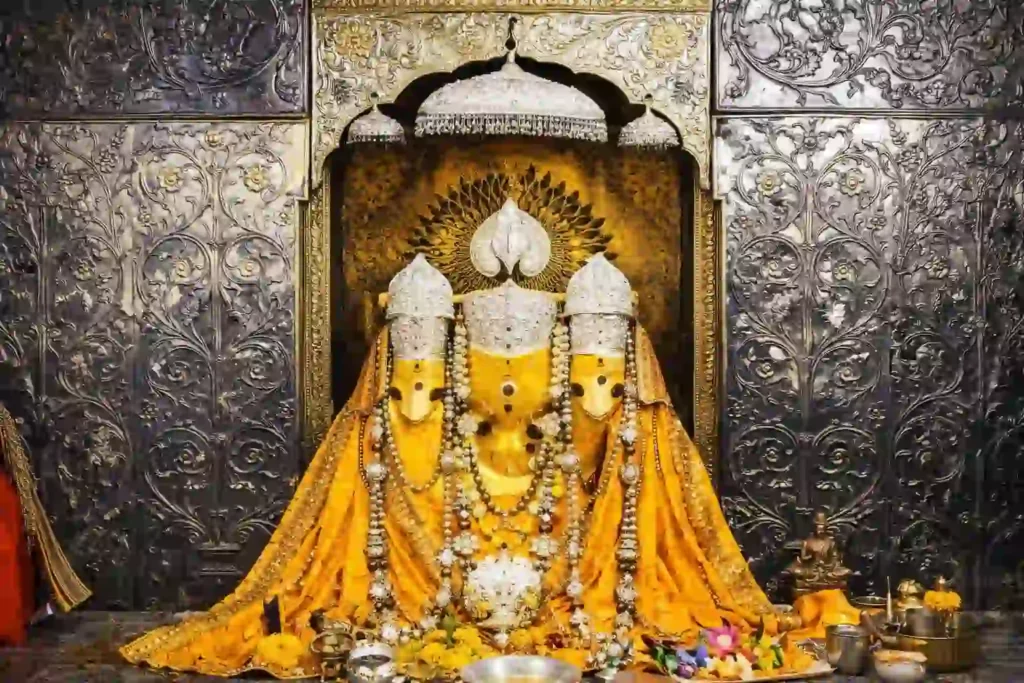
Strong tantric acceptance. Yellow color, specific timings, stambhana homa widely practiced.
Maa Matangi
She is inner speech, music, and wisdom beyond social rules.
Practice reality:
Tantric traditions accept non-conventional offerings. Associated with art, language, and intuitive intelligence.
Maa Kamala
She is abundance with awareness. Prosperity that supports dharma.
Practice reality:
Often merged with Lakshmi worship. Both sattvik puja and tantric prosperity rituals exist.
Das Mahavidya Puja Vidhi
Sattvik Path
Daily diya, mantra japa, temple darshan, Gupt Navratri fasting, and inner surrender. This path is complete and sufficient for most devotees.
Tantric Path
Requires guru, diksha, and discipline. Includes bija mantra, yantra worship, nyasa, homa, and in some traditions symbolic bali. Tantra here means precision, not danger.
Gupt Navratri and Sacred Times
Mahavidya worship intensifies during Magh and Ashadha Gupt Navratri. These are inward festivals, meant for silence and inner work. Amavasya, Ashtami, and Chaturdashi are especially important, varying by Devi and temple.
Common Misunderstandings
Das Mahavidya is not black magic.
It is not anti-Vedic.
It is not fear worship.
It is not for ego power.
It is a path of truth.
Why Devotees Are Drawn to Different Mahavidyas
A person drawn to Kali seeks truth.
One drawn to Tara seeks guidance.
One drawn to Bhairavi seeks discipline.
The Devi chooses first.
Conclusion
The Das Mahavidya are not distant goddesses. They are living realities. They appear when a seeker is ready, not when curiosity demands. Approached with humility, they do not destroy life. They transform it quietly, completely, and forever.
Suggested Reading
If you feel drawn to one form, begin with understanding her essence deeply. Kali, Tara, Tripura Sundari, and Bhairavi form the foundation of the Mahavidya path. Their stories open the inner door gently before the fiercer truths appear.
FAQs
Are Das Mahavidya worshipped in temples?
Yes. Many forms like Kali, Tara, Bagalamukhi, and Chhinnamasta have active temples with traditional rituals.
Is Das Mahavidya worship only tantric?
No. Sattvik worship is valid and widely practiced. Tantra is one traditional layer, not the whole path.
What is the role of Gupt Navratri in Mahavidya worship?
Gupt Navratri is meant for quiet inner sadhana, especially connected to Mahavidya traditions.
Can householders worship Das Mahavidya?
Yes, with devotion, simplicity, and respect. Advanced rituals require guidance.