
Maa Kamalatmika is the tenth and final Mahavidya, and her placement at the end of the Das Mahavidya sequence is not accidental.
The Mahavidyas are not merely separate goddesses. They represent stages of inner transformation.
After fear, dissolution, time, void, wisdom, beauty, and radical inner change, the tantric journey reaches completion through integration.
Maa Kamalatmika represents the moment when awakened consciousness no longer withdraws from the world but fully inhabits it.
She teaches that liberation is not escape. It is the ability to stand rooted in life without inner poverty, fragmentation, or fear.
In Shakta Tantra, Maa Kamalatmika is the highest expression of Lakshmi, yet she is not limited to the gentle household image familiar in popular worship.
She is sovereign, self-existing Shakti. She governs wealth, nourishment, beauty, authority, fertility, dignity, and spiritual fulfillment as a single, unified power.
She teaches that abundance is not opposed to wisdom. It matures only after wisdom is earned.
Table of Contents
ToggleWhy Maa Kamalatmika stands apart among the Mahavidyas
Among the ten Mahavidyas, Maa Kamalatmika stands apart. Most Mahavidyas work through disruption. Kali dissolves identity.
Tara guides through fear. Chhinnamasta breaks ego. Dhumavati confronts void and loss. Kamalatmika appears only after these inner purifications are complete.
She reveals what realization looks like when it becomes stable, ethical, and life-sustaining.
In Tantra, abundance does not mean accumulation. It means sufficiency, continuity, nourishment, and dignity.
Only when desire has been refined can prosperity exist without corruption. This is why Maa Kamalatmika is considered an advanced Mahavidya.
She governs the settling of wisdom into daily existence.
Iconography and its deeper tantric meaning
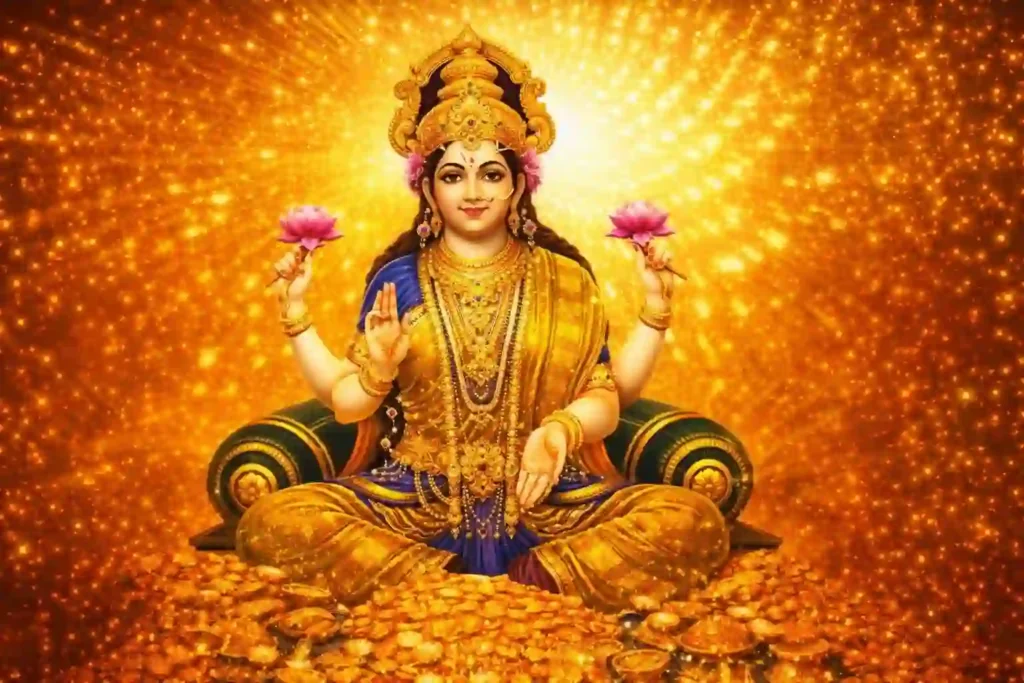
Maa Kamalatmika is described as radiant gold in complexion, luminous like molten sunlight.
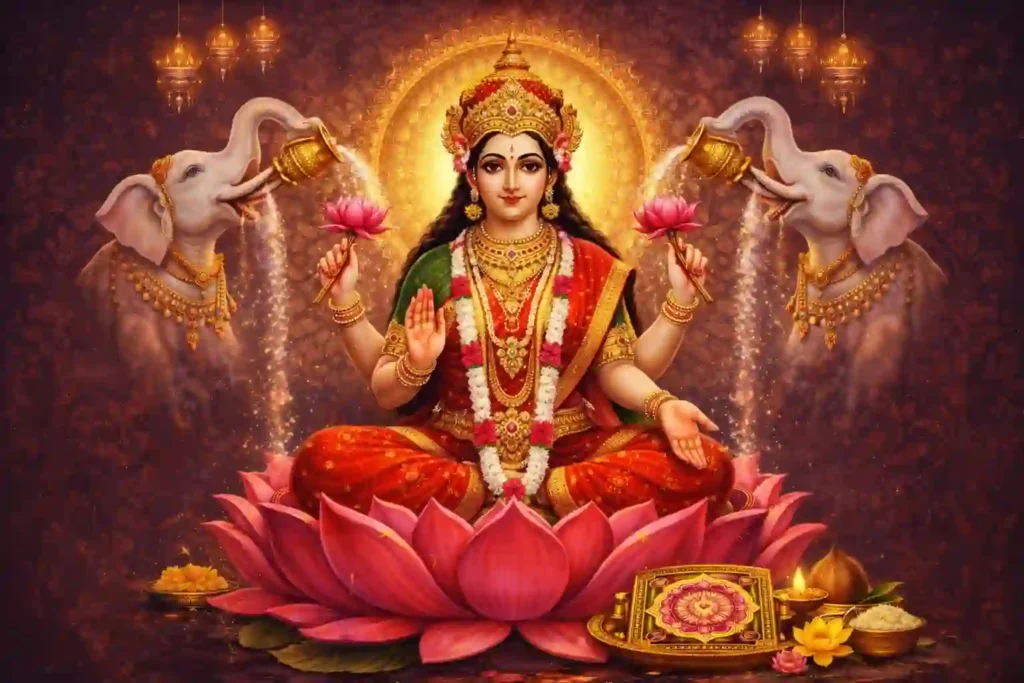
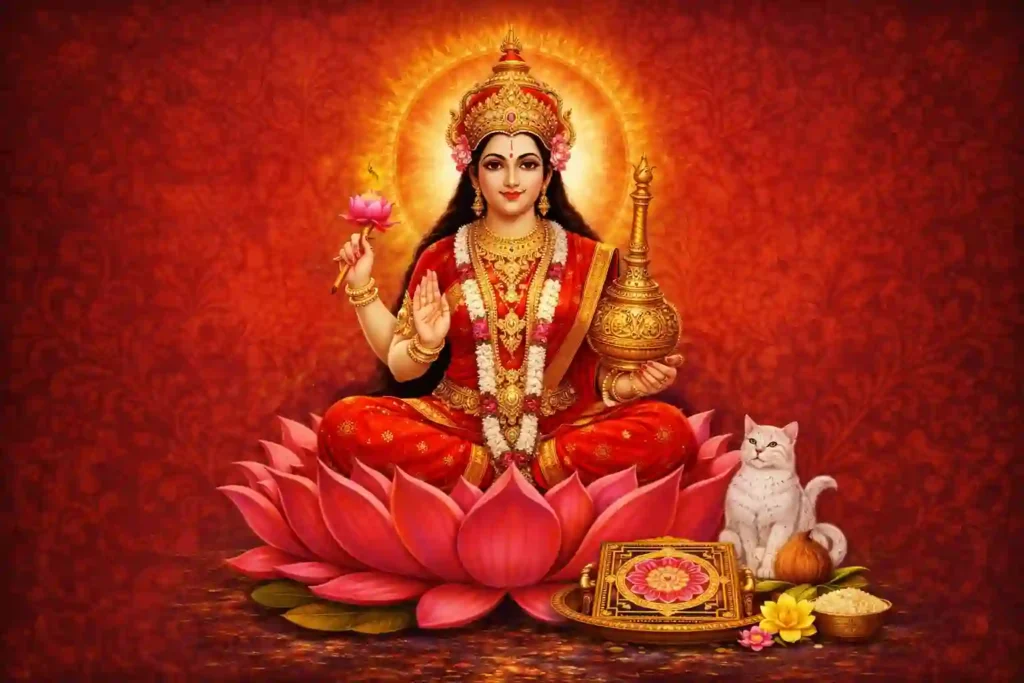
She sits upon a fully bloomed lotus rising from muddy waters, untouched yet rooted. This lotus teaches detachment without escape.
She has four arms. Two hold lotuses, symbols of awakened awareness within worldly life.
Her other two hands display Abhaya, freedom from fear, and Varada, the granting of boons.
Together they show that true prosperity first removes fear and then grants fulfillment.
Behind her stand four white elephants pouring water or nectar from golden vessels.
These elephants symbolize royal authority, the four directions, fertile monsoon rains, and the nourishment of creation.
On a subtler level, they represent the flow of amrita, the sustaining nectar of life and consciousness.
Some tantric depictions show her holding rice shoots along with lotuses, emphasizing her role as both Dhan (wealth) and Dhanya (grain and nourishment).
Lakshmi and Kamalatmika are not identical
Although often merged in popular worship, Lakshmi and Kamalatmika are not identical in tantric understanding.
Lakshmi in mainstream Vaishnava tradition is generally portrayed as Vishnu’s consort, associated with household harmony, comfort, and fortune.
Maa Kamalatmika, however, is worshipped as an independent sovereign Shakti.
In some traditions her consort is Vishnu, in others Kamala Bhairava, a tantric form of Shiva. Certain lineages worship her without any consort at all.
Lakshmi gives comfort.
Maa Kamalatmika gives capacity.
Tantric texts also describe Kamalatmika as a protector and demon-slayer, destroying forces such as Banasura.
This fierce aspect shows that abundance must be protected through awareness and discipline, not indulgence.
Philosophical depth of Maa Kamalatmika
Maa Kamalatmika embodies the final teaching of Tantra. The world is not an illusion to abandon. It is divine energy to be inhabited consciously.
She is one of the rare deities who grants all four Purusharthas together: Dharma, Artha, Kama, and Moksha.
When separated, these goals fragment life. When united, they create wholeness.
In tantric psychology, poverty is not merely lack of money. It is lack of prana, confidence, worthiness, and trust.
Maa Kamalatmika removes Alakshmi, the condition of inner scarcity, envy, inertia, and despair. Her grace restores dignity to desire and balance to prosperity.
Lunar kalas, Venus, and cosmic rhythm
Maa Kamalatmika is associated with the sixteen lunar kalas, representing fullness and completion.
This links her to Shodashi, yet while Shodashi reflects inner beauty, Kamalatmika manifests that beauty outwardly in the world.
Astrologically, she is deeply connected to Venus (Shukra). In Shakta Tantra, Kamalatmika sadhana is a recognized remedy for afflicted Venus.
It addresses relationship imbalance, artistic stagnation, financial instability, and loss of self-worth. This is not folk belief, but a documented tantric application.
Chakra associations and inner flow
Different traditions place Maa Kamalatmika in different energy centers. Many locate her in the Anahata chakra, the heart, where worthiness and contentment arise.
Others associate her with the Manipura chakra, the seat of stability, confidence, and authority.
Advanced traditions link the nectar poured by her elephants to the Sahasrara, where amrita descends to nourish the entire system.
This layered placement shows her reach from survival to liberation.
Kamalatmika sadhana in tantric tradition
Kamalatmika sadhana is precise and disciplined. It is not casual worship.
Her primary bija is Shreem, the vibration of abundance and harmony. Common mantras include
Om Hreem Shreem Kamalayai Namah
and the advanced form
Om Aim Hreem Shreem Kleem Sau Jagatprasootyai Namah
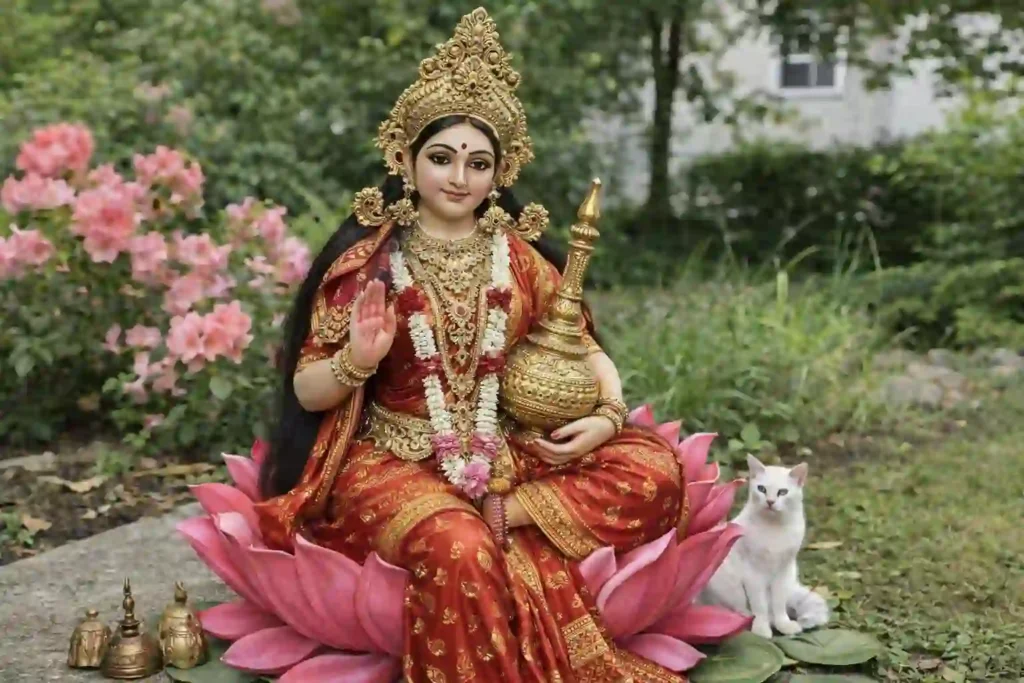
Serious practitioners use a Kamala Yantra, often copper, and chant with a Kamal Gatta mala made of lotus seeds.
Fridays, full moon nights, Gupt Navratri, and Diwali are especially favored.
Her Kamala Gayatri is also recited in some lineages, affirming her as the universal mother and source of illumination.
Temples and living regional traditions
At Kamakhya Temple, Maa Kamalatmika is worshipped as a Mahavidya deeply connected to fertility and generative power. The worship here remains strongly tantric.
At Kolhapur Mahalakshmi Temple, her presence blends Shakta and Vaishnava streams, sustaining social and royal order.
In Belgaum, a dedicated Kamalatmika temple preserves her independent tantric identity.
Across rural India, her worship merges with Dhanya Lakshmi traditions, where rice, turmeric, coconuts, and grain-filled kalashas represent her womb of nourishment.
These are living agrarian rituals, not symbolic abstractions.
Meaning of Maa Kamalatmika for modern life
Maa Kamalatmika does not reject the modern world. She teaches how to live within it without being consumed by it.
She governs refinement, beauty, art, finance, and ethical prosperity.
She supports growth only when integrity is present and withdraws when greed dominates. Psychologically, blocked Kamalatmika energy appears as fear of success, constant anxiety, or feeling undeserving.
Her grace restores balance, dignity, and quiet confidence.
Conclusion
Maa Kamalatmika is not merely the goddess of wealth. She is the wisdom that teaches how to hold abundance without losing the soul.
As the tenth Mahavidya, she completes the tantric journey by grounding realization into daily life.
When worshipped with discipline and humility, Maa Kamalatmika grants nourishment, beauty, stability, and liberation together, without contradiction.
Suggested Reading
To understand Maa Kamalatmika fully, explore related Mahavidya studies such as Maa Kali, Tripura Sundari, Chhinnamasta, and Maa Matangi, which reveal the stages of transformation leading to her final integration of wisdom and life.
FAQs
What are the benefits of Maa Kamalatmika Sadhana?
Maa Kamalatmika sadhana brings stability, abundance, self-worth, and inner balance by removing scarcity consciousness and aligning material life with spiritual clarity.
How to worship Kamalatmika Devi?
She is worshipped through mantra japa, lotus or yellow flower offerings, and sincere discipline, especially on Fridays, full moon days, or during Gupt Navratri.
What is the mantra of Kamalatmika for wealth?
A commonly used mantra is Om Hreem Shreem Kamalayai Namah, chanted with focus and ethical intent for balanced prosperity.
Is Kamalatmika Lakshmi?
Kamalatmika is the tantric and sovereign form of Lakshmi, worshipped independently as a Mahavidya rather than only as Vishnu’s consort.
Can we chant Kamalatmika mantra?
Yes, her mantra can be chanted by devotees with respect and purity of intention, even without advanced tantric initiation.