In Sanatan Dharma, remembering and honoring our ancestors is considered a sacred duty. The bond between generations does not end with physical death. Through prayers, gratitude, and traditional rituals, families continue to express respect for those who came before them. One of the most important ancestral rites in Hindu tradition is Pind Daan, a practice performed with devotion for the welfare of departed souls.
Pind Daan is a sacred ritual in which symbolic offerings known as pindas are dedicated to ancestors with prayers and remembrance. It is commonly performed during Shraddha ceremonies, Pitru Paksha, death anniversaries, and at holy pilgrimage sites. The ritual reflects gratitude toward one’s lineage and acknowledges the spiritual connection between the living and the departed.
According to Hindu tradition, Pind Daan is associated with fulfilling Pitru Rin (ancestral debt), seeking blessings from ancestors, and praying for their spiritual well-being. Scriptures such as the Garuda Purana discuss ancestral rites and the importance of offerings made on behalf of departed family members.
Whether performed at home, on the banks of a sacred river, or at revered pilgrimage centers like Gaya, this ancient ritual continues to hold deep spiritual significance for millions of Hindu families today.
In this article, you will learn the meaning of Pind Daan, its scriptural significance, why it is performed, how the ritual is conducted, the connection between Pind Daan, Shraddha, and Tarpan, the best time and places to perform it, its spiritual benefits, and common misconceptions surrounding this ancient Hindu tradition.
Whether you are exploring the practice for the first time or seeking a deeper understanding of ancestral rites, this guide will help you understand the importance of honoring your ancestors in Sanatan Dharma.
Pind Daan at a Glance
| Aspect | Details |
|---|---|
| Meaning | Offering symbolic food balls (pindas) to ancestors |
| Purpose | Honor, remembrance, gratitude, and ancestral prayers |
| Main Ingredients | Rice, black sesame seeds, barley, ghee, honey |
| Associated Rituals | Shraddha and Tarpan |
| Most Important Period | Pitru Paksha |
| Sacred Place | Gaya, Bihar |
| Scriptural References | Garuda Purana, Vishnu Purana, Smriti texts |
| Spiritual Theme | Gratitude toward ancestors and family lineage |
Table of Contents
ToggleWhat Is Pind Daan?
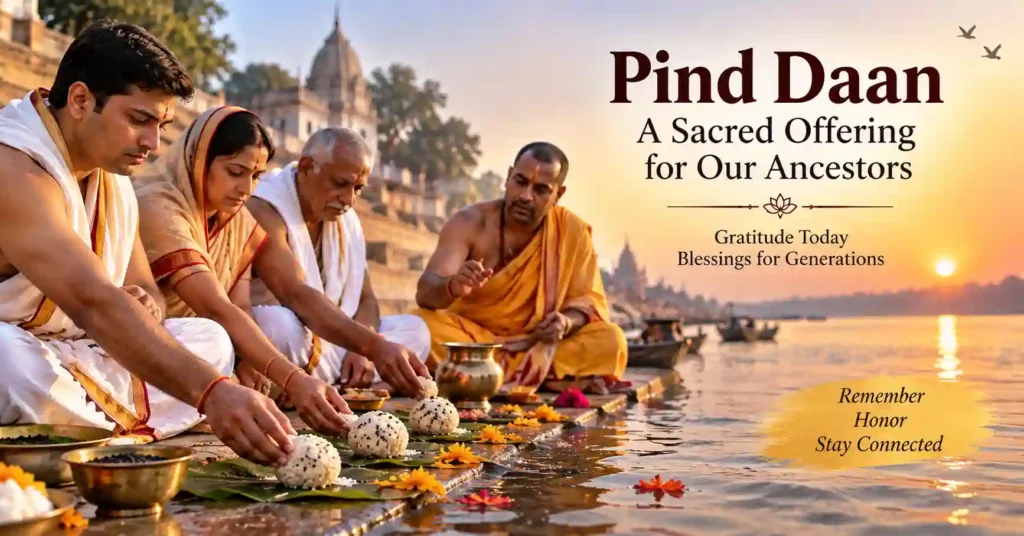
Pind Daan is a sacred Hindu ritual in which symbolic offerings known as pindas are dedicated to departed ancestors through prayers, remembrance, and devotion. It is traditionally performed as part of Shraddha ceremonies and is considered one of the most important ancestral rites in Sanatan Dharma.
The word pinda refers to a rounded offering usually prepared from rice, black sesame seeds, barley flour, and ghee. These offerings are presented with prayers seeking peace, blessings, and spiritual welfare for departed family members. The ritual is commonly performed during Pitru Paksha, death anniversaries, and at sacred pilgrimage sites associated with ancestral worship.
According to Hindu tradition, the ritual is an expression of gratitude toward parents, grandparents, and earlier generations whose efforts and sacrifices helped shape the lives of their descendants. It reflects the belief that remembering and honoring ancestors is an important part of dharmic living.
Beyond its ritual aspect, Pind Daan serves as a reminder that every individual is connected to a larger family lineage. Through this sacred act, devotees acknowledge their roots, preserve family traditions, and express heartfelt respect for those who came before them.
Meaning of Pind Daan in Sanskrit
The term is derived from two Sanskrit words:
- Pinda means a lump, ball, or symbolic offering.
- Daan means giving, offering, or donation.
Together, the phrase refers to the offering of sacred food balls to departed ancestors as an act of devotion and remembrance.
Traditionally, the pinda symbolizes the physical body and serves as a sacred medium through which descendants express respect for their forefathers. Various Hindu texts describe the offering as an important component of ancestral rites.
The deeper meaning goes beyond the physical offering. It represents love, gratitude, continuity of family lineage, and acknowledgment of the sacrifices made by previous generations.
Why Is Pind Daan Performed?
Pind Daan is performed for several spiritual, cultural, and traditional reasons in Sanatan Dharma. While customs may vary across regions, the core purpose remains honoring and remembering one’s ancestors with gratitude and devotion.
The main reasons for performing Pind Daan include:
- Honoring Ancestors: Expressing respect and gratitude toward parents, grandparents, and earlier generations who contributed to the family’s lineage.
- Fulfilling Pitru Rin (Ancestral Debt): Hindu tradition teaches that every person has certain responsibilities toward their ancestors. Performing ancestral rites is considered one way of fulfilling this sacred duty.
- Praying for Departed Souls: Many Hindu traditions believe that ancestral offerings and prayers help promote peace and spiritual well-being for departed family members.
- Observing Shraddha and Pitru Paksha: The ritual forms an important part of Shraddha ceremonies and is especially significant during Pitru Paksha, the annual period dedicated to ancestor remembrance.
- Seeking Ancestral Blessings: Devotees perform the ritual with faith and pray for the blessings, guidance, and goodwill of their ancestors.
- Preserving Family Traditions: The practice helps pass ancestral values, customs, and spiritual traditions from one generation to the next.
- Strengthening Family Connection: Remembering ancestors encourages a deeper appreciation of family history, lineage, and cultural heritage.
Beyond its religious significance, Pind Daan serves as a powerful reminder that our lives are connected to those who came before us. Through gratitude, remembrance, and prayer, families continue to honor this timeless bond across generations.
Pind Daan and Pitru Rin: Understanding the Ancestral Debt
One of the most important concepts behind Pind Daan is Pitru Rin, often translated as “ancestral debt.” In Sanatan Dharma, it is believed that every person is born with certain responsibilities toward those who made their existence possible. Parents, grandparents, and earlier generations contribute not only to our physical birth but also to the values, traditions, culture, and wisdom passed down through the family lineage.
Ancient Hindu teachings describe three primary debts of human life:
- Deva Rin – Debt toward the divine forces and deities.
- Rishi Rin – Debt toward sages and spiritual teachers.
- Pitru Rin – Debt toward parents and ancestors.
Among these, Pitru Rin is fulfilled through respect, care, remembrance, and ancestral rites performed with sincerity and gratitude.
Many Hindu families consider Pind Daan an important way of expressing thanks to ancestors for their sacrifices and contributions. The ritual reflects the understanding that our lives are connected to countless generations who came before us and helped shape the opportunities we enjoy today.
Rather than viewing ancestral debt as a burden, Sanatan Dharma presents it as an opportunity to cultivate gratitude. By remembering our ancestors through prayers, Shraddha, Tarpan, and Pind Daan, we acknowledge our roots and strengthen our connection with family heritage and dharmic values.
Scriptural Basis of Pind Daan
The tradition of Pind Daan is deeply rooted in Hindu scriptures and has been practiced for centuries. References to ancestral offerings, Shraddha rituals, and remembrance of departed souls can be found in texts such as the Garuda Purana, Vishnu Purana, Mahabharata, and various Dharmashastra scriptures.
The Garuda Purana is one of the most frequently cited texts when discussing ancestral rites. It emphasizes the importance of performing Shraddha and offering prayers for departed family members. The text describes how descendants can honor their ancestors through faith, devotion, and prescribed rituals.
The Mahabharata also contains several references highlighting respect for ancestors and the significance of performing rites for departed souls. Throughout Hindu tradition, ancestor worship is viewed as an important aspect of maintaining harmony between generations and preserving family dharma.
While scriptural interpretations may vary across traditions and regions, the common message remains consistent: remembering ancestors with gratitude and performing sacred rites on their behalf is considered a noble and spiritually meaningful practice. This enduring scriptural foundation is one reason why Pind Daan continues to be observed by millions of Hindu families today.
Relationship Between Pind Daan, Shraddha, and Tarpan
Many people use the terms Pind Daan, Shraddha, and Tarpan interchangeably, but they are not the same ritual. They are closely connected and are often performed together, yet each has its own purpose within Hindu ancestral traditions.
The easiest way to understand them is to think of Shraddha as the broader ancestral observance, while Tarpan and Pind Daan are important rituals that may be performed as part of it. Together, they help devotees express gratitude, remembrance, and prayers for their ancestors.
| Ritual | Purpose |
|---|---|
| Shraddha | A complete ancestral ceremony performed with faith (shraddha) to honor departed family members. |
| Tarpan | Offering water, usually mixed with black sesame seeds, to satisfy and remember ancestors. |
| Pind Daan | Offering symbolic food balls (pindas) as an act of devotion and ancestral remembrance. |
Although the rituals differ, they share a common goal: maintaining a sacred connection with one’s ancestors and expressing gratitude for their contributions to the family lineage.
How They Work Together
A traditional Shraddha ceremony may include several steps, and both Tarpan and Pind Daan often form important parts of the process. For example:
A devotee begins with purification and Sankalpa (sacred intention).
Tarpan is offered through water and sesame seed libations.
Pindas are prepared and offered to ancestors.
Prayers, charity, and food offerings conclude the ceremony.
Because these rituals are interconnected, many people refer to the entire ancestral ceremony by the name of one particular ritual. Understanding the distinction helps clarify their individual significance while appreciating their shared spiritual purpose.
What Is a Pind Made Of?
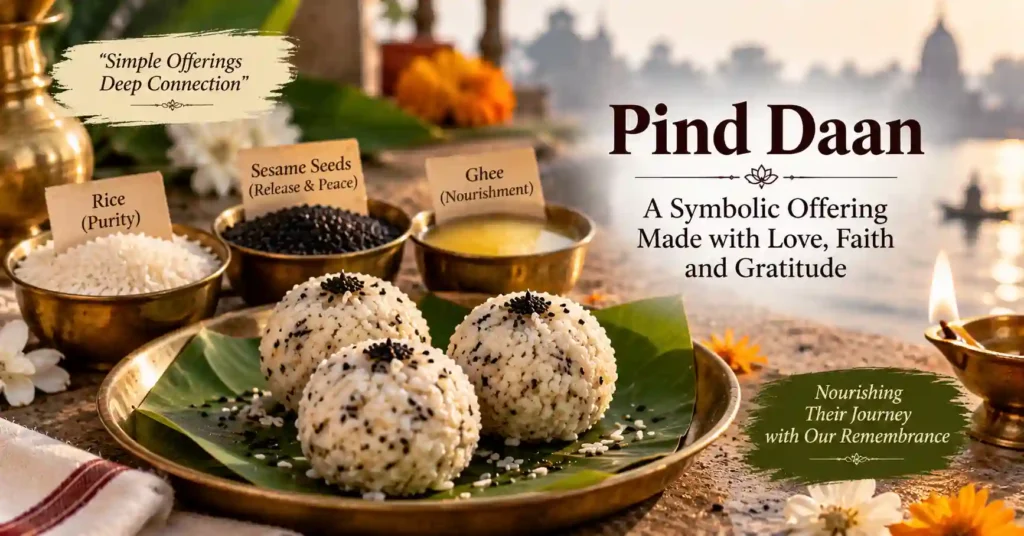
A pinda is the sacred offering used in Pind Daan and is usually prepared from simple ingredients that hold ritual and symbolic importance in Hindu tradition. Although the exact preparation may vary according to region, family customs, and local traditions, the purpose of the offering remains the same: honoring and remembering departed ancestors with faith and gratitude.
The most commonly used ingredients include:
- Cooked rice – Represents nourishment, life, and sustenance.
- Black sesame seeds (Til) – Traditionally associated with ancestral rites and purification.
- Barley flour (Jau) – Frequently used in Vedic rituals and sacred offerings.
- Ghee (Clarified Butter) – Symbolizes purity, devotion, and sacredness.
- Honey or milk – Included in some traditions to complete the offering.
These ingredients are mixed together and shaped into small round balls known as pindas. During the ritual, they are offered with prayers, mantras, and remembrance of ancestors. Depending on family tradition, multiple pindas may be prepared and dedicated to different generations of the ancestral lineage.
Beyond the physical ingredients, Hindu tradition emphasizes the importance of sincerity and devotion. The pinda serves as a symbolic expression of gratitude, respect, and remembrance, making the spiritual intention behind the offering just as important as the ritual itself.
How Is Pind Daan Performed?
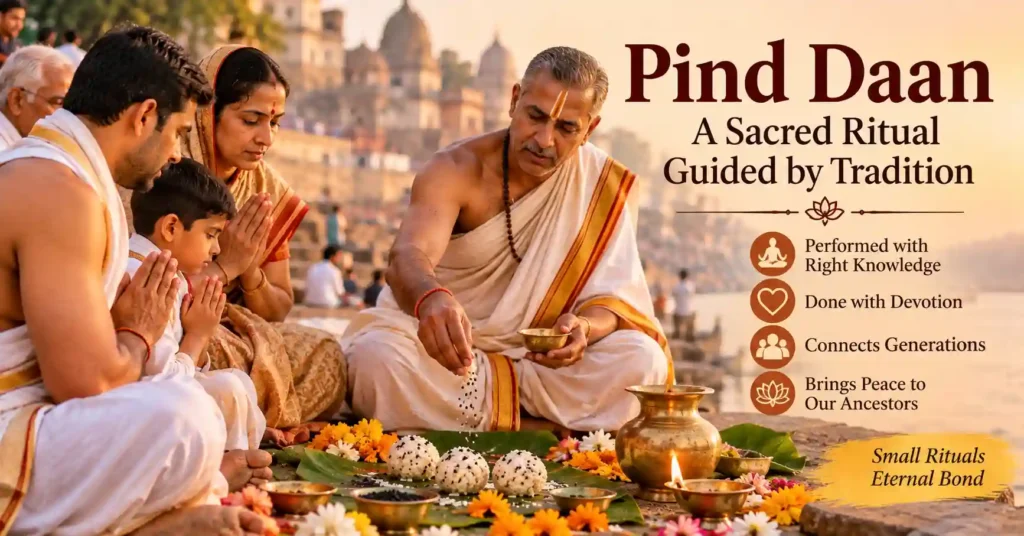
The procedure of Pind Daan may vary slightly across regions, family traditions, and sampradayas, but the core steps remain largely the same. The ritual is usually performed with devotion, prayers, and offerings dedicated to departed ancestors. In many cases, a knowledgeable priest guides the ceremony, especially when it is performed during Shraddha or Pitru Paksha.
The traditional Pind Daan ritual generally includes:
1. Sankalpa (Sacred Intention)
The devotee takes a bath, purifies the mind, and makes a sincere resolve to perform the ritual for the benefit of departed ancestors.
2. Invocation of Ancestors
Prayers and Vedic mantras are recited to respectfully remember and invoke the ancestors for whom the ceremony is being performed.
3. Preparation of Pindas
Rice, black sesame seeds, barley flour, ghee, and other traditional ingredients are used to prepare the sacred pindas.
4. Offering of Pindas
The prepared pindas are offered with prayers and devotion while the names of ancestors may be remembered according to family tradition.
5. Tarpan (Water Offering)
Water mixed with black sesame seeds is offered through cupped hands as a mark of respect, gratitude, and remembrance.
6. Charity and Food Offering
The ceremony often concludes with feeding Brahmins, cows, birds, or those in need and making charitable donations according to one’s ability.
While the external procedure is important, Hindu teachings emphasize that faith, sincerity, and gratitude are the true essence of the ritual. The offering becomes meaningful when it is performed with a genuine intention to honor and remember one’s ancestors.
Who Can Perform Pind Daan?
A common question people ask is who is eligible to perform Pind Daan. Traditionally, Hindu customs assign this responsibility to the closest surviving family members, especially those who continue the family’s ancestral lineage and rituals. However, practices may vary depending on regional traditions, family customs, and the guidance of religious authorities.
Traditionally, the ritual is most often performed by:
The eldest son of the deceased
Other sons or male descendants
Grandsons and great-grandsons
Brothers or close male relatives when direct descendants are unavailable
In many modern Hindu families, daughters, widows, and other family members also participate in or perform ancestral rites, particularly when there is no eligible male descendant or when local customs permit. Different communities and traditions may have varying views on this subject.
Ultimately, the spirit of the ritual is rooted in remembrance, gratitude, and devotion. While traditional guidelines exist, many spiritual teachers emphasize that sincere prayers offered with faith and respect carry deep significance. Families are often encouraged to follow their ancestral customs and seek guidance from knowledgeable priests when questions arise regarding specific circumstances.
When Should Pind Daan Be Done?
Pind Daan can be performed on several occasions throughout the year, depending on family traditions, regional customs, and the purpose of the ritual. While ancestral prayers may be offered at different times, certain periods are considered especially auspicious for remembering and honoring departed ancestors.
The most important occasions for performing the ritual include:
Pitru Paksha: The 16-day period dedicated to ancestor remembrance, usually observed in the Hindu month of Bhadrapada or Ashwin.
Death Anniversary (Tithi): The annual lunar date associated with a departed family member.
Amavasya (New Moon): Many families perform ancestral rites on Amavasya, which is traditionally connected with Pitru worship.
Special Pilgrimages: Rituals are often performed during visits to sacred places such as Gaya, Prayagraj, Varanasi, and Haridwar.
Among these occasions, Pitru Paksha is widely regarded as the most significant period for ancestral rituals. During these sacred days, devotees offer prayers, Tarpan, Shraddha, and Pind Daan to express gratitude toward their ancestors and seek their blessings.
If a family is unsure about the appropriate date or procedure, it is common to consult a knowledgeable priest who can determine the correct tithi and guide the ritual according to family tradition. The most important aspect is not merely the date itself but the sincerity, devotion, and remembrance with which the offering is made.
Importance of Pind Daan During Pitru Paksha
Among all occasions for ancestral worship, Pitru Paksha Pind Daan holds a special place in Hindu tradition. Pitru Paksha is a sacred 16-day period dedicated to remembering, honoring, and praying for departed ancestors. During this time, many families perform Shraddha, Tarpan, and ancestral offerings according to the tithi of their departed relatives.
According to traditional beliefs, Pitru Paksha is a spiritually significant period when prayers and offerings made for ancestors are considered especially meaningful. This is why millions of devotees across India observe ancestral rites during these days and visit sacred places associated with Pitru worship.
Many families believe that performing Pind Daan during Pitru Paksha helps express gratitude toward ancestors, fulfills family traditions, and strengthens the spiritual bond between generations. The ritual also serves as a reminder that the blessings, values, and sacrifices of previous generations continue to influence the lives of their descendants.
Beyond the ritual itself, Pitru Paksha encourages reflection, remembrance, and gratitude. It reminds us that honoring our ancestors is not merely a ceremonial practice but a way of preserving family heritage and maintaining a connection with our roots. For this reason, Pitru Paksha continues to be one of the most important periods in the Hindu calendar for ancestral observances.
Spiritual Benefits of Pind Daan
For centuries, Hindu families have performed Pind Daan with faith and devotion, believing that it benefits both the departed ancestors and the living descendants. While the exact beliefs may vary among traditions, the ritual is widely regarded as a meaningful act of gratitude, remembrance, and spiritual responsibility.
Many Hindu traditions associate the following benefits with ancestral offerings:
Honoring Ancestors: Demonstrates respect and gratitude toward parents, grandparents, and earlier generations.
Fulfilling Pitru Rin: Helps descendants express their responsibility toward their ancestral lineage.
Praying for Peace: Offers prayers for the spiritual well-being of departed family members.
Seeking Ancestral Blessings: Many devotees believe that sincere ancestral worship invites blessings, guidance, and goodwill from ancestors.
Preserving Family Traditions: Strengthens the continuity of cultural, spiritual, and family values across generations.
Deepening Spiritual Awareness: Encourages reflection on life’s impermanence, gratitude, and the interconnectedness of family lineage.
Beyond these traditional beliefs, the ritual also has emotional value. It provides an opportunity for families to remember loved ones, express gratitude for their sacrifices, and keep their memories alive through meaningful acts of devotion.
Whether performed during Pitru Paksha, on a death anniversary, or at a sacred pilgrimage site, the true significance of the ritual lies in the spirit of remembrance and gratitude. Through prayer and offering, devotees reaffirm their connection to the generations that shaped their lives and heritage.
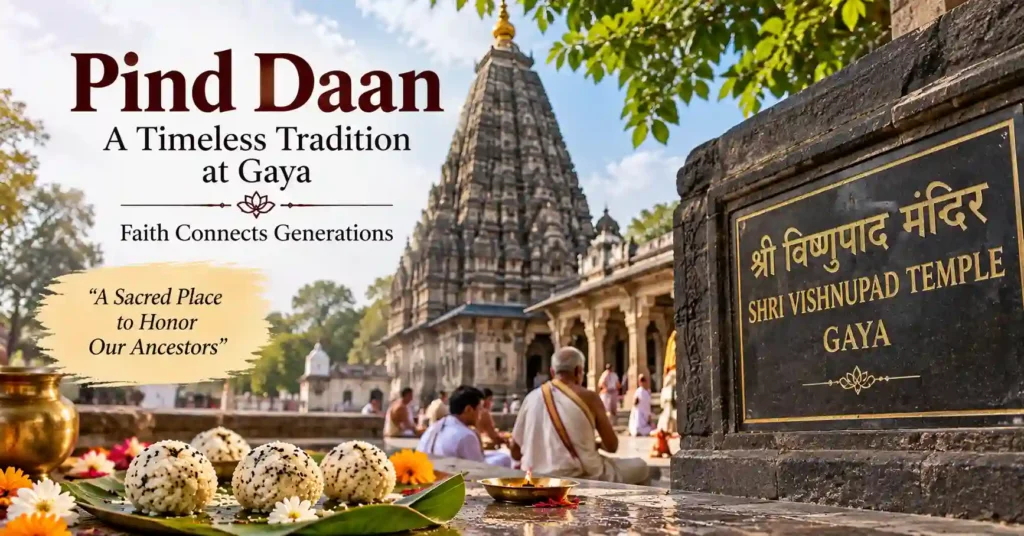
Famous Places for Pind Daan in India
Although Pind Daan can be performed in many locations according to family traditions, certain pilgrimage sites are especially revered for ancestral rites. These places have been associated with Shraddha, Tarpan, and Pitru worship for centuries and attract devotees from across India throughout the year.
Many families choose to perform ancestral rituals at these sacred destinations because of their deep spiritual significance and scriptural associations. Among them, Gaya in Bihar is considered the most famous and is often regarded as one of the holiest places for honoring ancestors.
| Place | State | Spiritual Significance |
|---|---|---|
| Gaya | Bihar | Home to the Vishnupad Temple and the sacred Falgu River. Traditionally regarded as the most important place for ancestral rites. |
| Varanasi (Kashi) | Uttar Pradesh | The holy city of Lord Shiva, where many devotees perform Shraddha and ancestral prayers on the banks of the Ganga. |
| Prayagraj | Uttar Pradesh | Known for the Triveni Sangam, the sacred confluence of the Ganga, Yamuna, and Saraswati rivers. |
| Haridwar | Uttarakhand | One of Hinduism’s most important pilgrimage centers, located on the banks of the Ganga. |
| Badrinath (Brahma Kapal) | Uttarakhand | A revered site where many devotees perform ancestral rituals while undertaking a Char Dham pilgrimage. |
According to traditional belief, performing Pind Daan at these sacred locations carries special spiritual significance. However, Hindu teachings also emphasize that devotion, sincerity, and remembrance are more important than the location itself. Families who cannot travel to these pilgrimage centers can still perform ancestral rites according to their local customs and traditions.
Common Misconceptions About Pind Daan
Because Pind Daan is an ancient ritual, many misconceptions have developed around it over time. Some beliefs arise from incomplete information, while others come from regional practices that are mistakenly viewed as universal rules. Understanding these misconceptions can help devotees approach the ritual with greater clarity and confidence.
1. Pind Daan Can Only Be Performed in Gaya
Gaya is undoubtedly one of the most revered places for ancestral rites, but it is not the only location where the ritual can be performed. Many families perform ancestral ceremonies at home, local temples, sacred rivers, or other pilgrimage sites according to their traditions.
2. Pind Daan Is Performed Only During Pitru Paksha
Pitru Paksha is considered the most significant period for ancestral worship, but the ritual can also be performed on annual death anniversaries (tithi), Amavasya, and other appropriate occasions as guided by family customs.
3. The Ritual Is Based on Fear
Some people mistakenly believe ancestral rites are performed out of fear of misfortune. In reality, the foundation of Pind Daan is gratitude, remembrance, respect, and prayer for departed ancestors. It is an expression of love and duty rather than fear.
4. Only Elderly People Need to Perform It
Ancestral remembrance is a family responsibility that can involve people of different ages. Many younger generations participate in Shraddha and related rituals to preserve family traditions and honor their ancestors.
5. The Ritual Is Only a Formal Ceremony
While the external procedures are important, Hindu teachings emphasize that devotion, sincerity, and gratitude are the true essence of the offering. The spiritual intention behind the ritual is considered more important than merely completing the external steps.
Understanding these misconceptions helps reveal the deeper purpose of the practice. At its heart, Pind Daan is a sacred act of remembrance that strengthens the connection between generations and keeps ancestral traditions alive.
Related Questions About Pind Daan
As people learn about Pind Daan, several practical questions often arise regarding the ritual, its procedure, and its significance. Here are answers to some of the most commonly asked questions.
1. Can Pind Daan Be Performed at Home?
Yes. Many families perform ancestral rites at home according to their traditions. However, some devotees prefer performing them at sacred rivers, temples, or pilgrimage sites because of their spiritual importance.
2. Is a Priest Necessary for Pind Daan?
A priest is not always mandatory, but many families seek guidance from a knowledgeable priest to ensure that the ritual is performed according to traditional practices and family customs.
3. How Many Pindas Are Offered?
The number of pindas offered can vary depending on regional traditions, the purpose of the ritual, and family practices. A priest can provide guidance based on the specific ceremony being performed.
4. Can Women Participate in the Ritual?
In many Hindu families, women actively participate in ancestral prayers and Shraddha ceremonies. Customs regarding who performs specific rites may differ across regions and traditions.
5. What Is the Difference Between Tarpan and Pind Daan?
Tarpan involves offering water, usually mixed with black sesame seeds, while Pind Daan involves offering symbolic food balls (pindas) prepared from traditional ingredients. Both rituals are commonly performed during ancestral observances.
6. Is Pind Daan Performed Only for Parents?
No. The ritual may be performed for parents, grandparents, great-grandparents, and other departed ancestors according to family traditions and the purpose of the ceremony.
These questions highlight the diversity of practices found across Hindu communities. Since customs can vary, families are often encouraged to follow their ancestral traditions and seek guidance when needed.
Philosophical Insight: What Does Pind Daan Teach Us?
Beyond its rituals and traditions, Pind Daan carries a profound philosophical message. It reminds us that human life is not an isolated journey but part of a continuous chain connecting past, present, and future generations. Every individual inherits values, knowledge, culture, and opportunities shaped by those who came before them.
In Sanatan Dharma, gratitude is considered a fundamental virtue. The ritual encourages us to acknowledge the sacrifices, efforts, and contributions of our ancestors rather than taking them for granted. By remembering them through prayer and offering, we cultivate humility and a deeper appreciation for our roots.
The practice also reflects the Hindu understanding that life is temporary, while the soul continues its spiritual journey. Ancestral rites serve as a reminder of the impermanence of the physical body and the importance of living a meaningful, dharmic life guided by compassion, duty, and gratitude.
At a deeper level, Pind Daan teaches that honoring ancestors is not merely about looking back at the past. It is also about preserving family values, strengthening cultural identity, and passing wisdom to future generations. In this way, the ritual becomes a bridge that connects generations through remembrance, respect, and spiritual continuity.
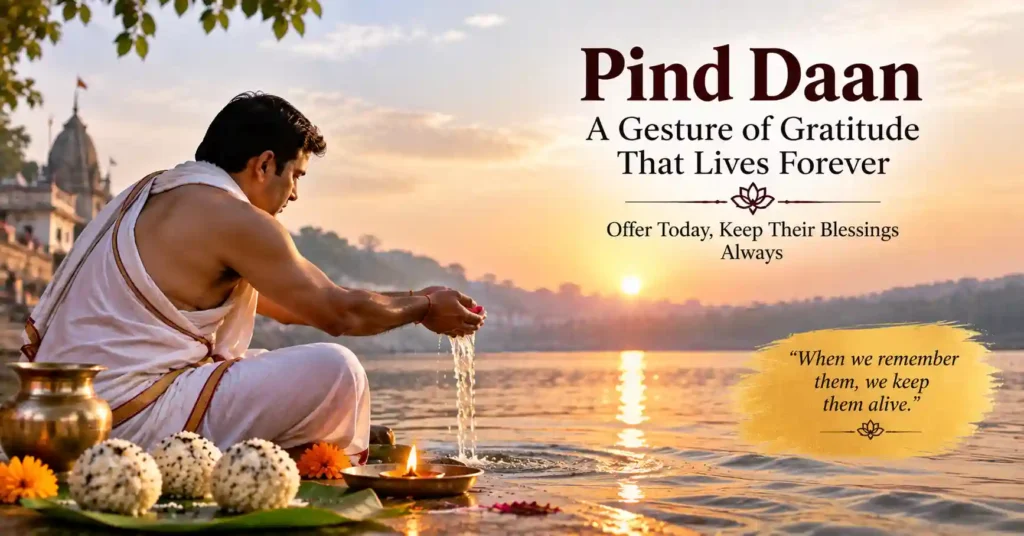
Conclusion
Pind Daan is one of the most meaningful ancestral rituals in Sanatan Dharma, reflecting gratitude, remembrance, and respect for those who came before us. Through sacred offerings, prayers, and devotion, families honor their ancestors and preserve a tradition that has been followed for generations.
Whether performed during Pitru Paksha, on a death anniversary, or at a sacred pilgrimage site, the ritual serves as a reminder of the enduring bond between ancestors and descendants. It encourages individuals to acknowledge their roots, fulfill family responsibilities, and express appreciation for the sacrifices made by earlier generations.
While customs and procedures may vary across regions and traditions, the essence of Pind Daan remains the same: remembering ancestors with sincerity and praying for their peace and well-being. More than a ritual, it is a timeless expression of gratitude that strengthens family heritage and keeps ancestral memories alive.
In a fast-changing world, practices like Pind Daan remind us of the importance of staying connected to our lineage, values, and cultural traditions. By honoring the past with faith and respect, we carry forward the wisdom and blessings of those who helped shape our lives.
Key Takeaways
- Pind Daan is a sacred Hindu ritual performed to honor, remember, and pray for departed ancestors.
- The term combines two Sanskrit words: Pinda (offering) and Daan (giving or offering).
- The ritual is closely associated with Shraddha, Tarpan, and ancestral worship traditions in Sanatan Dharma.
- Many Hindu families perform the ceremony during Pitru Paksha, annual death anniversaries, and other significant occasions.
- Common ingredients used in the offering include rice, black sesame seeds, barley flour, and ghee.
- The practice is linked with the concept of Pitru Rin, the ancestral debt that descendants traditionally strive to fulfill through gratitude and remembrance.
- Sacred pilgrimage sites such as Gaya, Varanasi, Prayagraj, Haridwar, and Badrinath are well known for ancestral rites.
- Beyond the ritual itself, Pind Daan teaches gratitude, respect for family lineage, and the importance of preserving ancestral traditions.
- The true significance of the ceremony lies in devotion, sincerity, and heartfelt remembrance rather than external formalities alone.
- Through prayers and offerings, families maintain a meaningful connection with previous generations and keep their legacy alive.
FAQs
1. What Is Pind Daan in Hinduism?
Pind Daan is a sacred Hindu ritual in which symbolic offerings known as pindas are made to departed ancestors with prayers, devotion, and remembrance. The ritual is commonly performed during Shraddha ceremonies, Pitru Paksha, and death anniversaries.
In Sanatan Dharma, it is considered an important way of honoring one’s ancestors, expressing gratitude for their contributions, and praying for their spiritual well-being. The practice also helps preserve family traditions and maintain a connection with previous generations.
2. Why Is Pind Daan Important?
The importance of Pind Daan lies in its role as an act of gratitude and ancestral remembrance. Hindu tradition teaches that every individual owes a debt of respect to parents, grandparents, and earlier generations who contributed to their existence and upbringing.
The ritual provides an opportunity to acknowledge these contributions through prayers and offerings. It also helps families preserve cultural values, strengthen family bonds, and continue traditions passed down through generations.
3. When Should Pind Daan Be Performed?
Pind Daan is most commonly performed during Pitru Paksha, the 16-day period dedicated to honoring ancestors. Many families also perform the ritual on the annual death anniversary (tithi) of a departed relative.
In addition, some devotees choose to perform ancestral rites on Amavasya or while visiting sacred pilgrimage sites such as Gaya, Prayagraj, Varanasi, and Haridwar. The appropriate date often depends on family customs and religious guidance.
4. Can Women Perform Pind Daan?
The answer varies according to regional traditions, family customs, and religious interpretations. Traditionally, the ritual was often performed by male descendants, especially the eldest son.
However, many Hindu families today allow women to participate in or perform ancestral rites, particularly when there is no eligible male descendant. Since practices differ across communities, it is advisable to follow family traditions and seek guidance when necessary.
5. What Is the Difference Between Shraddha and Pind Daan?
Shraddha and Pind Daan are closely related but not identical. Shraddha is a broader ancestral ceremony performed with faith and devotion to honor departed family members.
Pind Daan is one specific ritual that may form part of a Shraddha ceremony. While Shraddha can include prayers, Tarpan, charity, and food offerings, Pind Daan specifically involves offering symbolic pindas to ancestors.
6. Can Pind Daan Be Performed at Home?
Yes, Pind Daan can be performed at home if family traditions permit it. Many families conduct ancestral rites in a clean and peaceful environment while following customary procedures and prayers.
Others prefer performing the ritual at temples, sacred rivers, or pilgrimage centers because of their spiritual significance. The most important element is the sincerity and devotion with which the ritual is performed.
7. Why Is Gaya Famous for Pind Daan?
Gaya in Bihar is considered one of the most sacred destinations for ancestral rites in Hindu tradition. It is home to the revered Vishnupad Temple and the sacred Falgu River, both of which are closely associated with ancestor worship.
Many devotees believe that performing Pind Daan in Gaya carries special spiritual significance. As a result, thousands of pilgrims visit the city every year to perform Shraddha and ancestral rituals.
8. What Is Pitru Rin and How Is It Connected to Pind Daan?
Pitru Rin means ancestral debt and is an important concept in Sanatan Dharma. It refers to the responsibility descendants have toward their parents, grandparents, and earlier generations.
Many Hindu traditions view Pind Daan as one way of expressing gratitude and fulfilling this responsibility. Through prayers and offerings, devotees acknowledge the sacrifices and contributions made by their ancestors and honor their memory with respect and devotion.
9. What Ingredients Are Used in Pind Daan?
The offerings used in Pind Daan are traditionally prepared from simple ingredients such as cooked rice, black sesame seeds, barley flour, and ghee. Some traditions may also include honey or milk.
These ingredients are shaped into small rounded offerings known as pindas. While the preparation may vary slightly across regions, the symbolism of gratitude, remembrance, and devotion remains the same.
10. Is Pind Daan Performed Only During Pitru Paksha?
No. Although Pitru Paksha is considered the most important period for ancestral rites, Pind Daan can also be performed on annual death anniversaries, Amavasya, and other occasions according to family customs.
Many devotees additionally perform the ritual during pilgrimages to sacred places associated with ancestor worship. The timing often depends on personal circumstances, tradition, and religious guidance.
Suggested Reading
If you found this guide on Pind Daan helpful, you may also enjoy exploring these related topics. Together, these articles provide deeper insights into ancestor remembrance, Shraddha rituals, Pitru Paksha observances, karma, rebirth, liberation, and other important teachings of Sanatan Dharma. Exploring these subjects will help you better understand the spiritual principles that guide Hindu ancestral traditions and family duties.
What Is Shraddha in Hinduism? Meaning, Rituals and Spiritual Significance
https://thesanatantales.com/shraddha-in-hinduism/
Tarpan: Meaning, Significance, Method, Spiritual Benefits, and Pitru Paksha Guide
https://thesanatantales.com/tarpan/
What Is Pitru Paksha and Why Is It Observed? Meaning, Significance, Rituals, and Spiritual Importance
https://thesanatantales.com/what-is-pitru-paksha/
What Is Moksha? Meaning, Path to Liberation and Spiritual Truth
https://thesanatantales.com/what-is-moksha/
What Is Samsara? Meaning, Karma, and the Cycle of Rebirth
https://thesanatantales.com/what-is-samsara-rebirth-guide/
What Are the 16 Samskaras in Sanatan Dharma? Meaning, Names and Importance
https://thesanatantales.com/16-samskaras-in-sanatan-dharma/
Karma: Meaning, Types, Philosophy and How It Works in Sanatan Dharma
https://thesanatantales.com/karma/
Pinda (Riceball Offering) – Wikipedia
https://en.wikipedia.org/wiki/Pinda_(riceball)
About the Author
Yateendra Chaturvedi is a spiritual writer, researcher, devotee, and the founder of The Sanatan Tales. With over 35 years of professional experience and a lifelong interest in Sanatan Dharma, he writes about Hindu deities, temples, scriptures, festivals, Mahavidyas, sacred stories, rituals, and living traditions that continue to guide and inspire devotees across India.
Drawing from traditional scriptures, regional beliefs, temple traditions, devotional literature, and historical sources, he aims to present authentic, well-researched, and easy-to-understand content for modern readers. His work focuses on preserving spiritual wisdom, explaining sacred traditions, and helping seekers develop a deeper understanding of India’s rich spiritual heritage.
Through The Sanatan Tales, Yateendra strives to make the timeless teachings of Sanatan Dharma simple, meaningful, and relevant for today’s generation while maintaining respect for traditional sources, regional practices, and diverse spiritual perspectives.
Learn More About Yateendra Chaturvedi →
https://thesanatantales.com/about-the-author/
References & Sources
This article is based on teachings, traditions, and practices associated with Sanatan Dharma, including insights drawn from Hindu scriptures, ancestral rites, devotional customs, pilgrimage traditions, and widely accepted spiritual teachings related to Shraddha, Tarpan, Pitru Paksha, and ancestor remembrance. It also reflects knowledge preserved through family traditions, spiritual communities, temple practices, and the guru-disciple lineage that has helped transmit Sanatan wisdom across generations.
The concepts discussed in this article, such as Pind Daan, Pitru Rin (ancestral debt), ancestral worship, gratitude toward forefathers, and prayers for departed souls, are rooted in traditional Hindu beliefs and continue to be observed by millions of devotees across India and beyond.
Note: Beliefs, interpretations, rituals, and customs related to Pind Daan may vary across different traditions, sampradayas, regions, family lineages, and individual spiritual paths within Sanatan Dharma. The purpose of this article is not to promote any single interpretation as the absolute truth, but to present commonly accepted perspectives in a simple, practical, and reader-friendly manner. Sanatan Dharma embraces diversity in worship, ritual practices, philosophy, and spiritual understanding, allowing devotees to follow traditions that resonate with their faith and family heritage.
Explore More Topics from The Sanatan Tales