The Durga Beej Mantra is one of the most powerful and widely chanted mantras dedicated to Maa Durga, the Divine Mother and embodiment of Shakti. Though the Durga Beej Mantra consists of only a few sacred syllables, it is traditionally believed to contain the essence of Maa Durga’s protective, transformative, and empowering energy.
For centuries, devotees have chanted the Durga Beej Mantra to seek courage, inner strength, spiritual protection, and a deeper connection with the Divine Mother. Because of its simplicity, it is often recommended for both beginners and experienced practitioners of mantra meditation and Shakti worship.
In Sanatan Dharma, beej mantras are considered seed sounds that carry profound spiritual significance. The sacred sound “Dum” is associated with Goddess Durga and is traditionally believed to invoke her blessings, remove negativity, and inspire confidence during difficult times.
In this article, you will learn the meaning of the Durga Beej Mantra, its origin and scriptural significance, Sanskrit text, English pronunciation, spiritual symbolism, benefits, proper chanting method, connection with Navratri, practical lessons for daily life, FAQs, and much more.
Durga Beej Mantra at a Glance
| Aspect | Details |
|---|---|
| Mantra | ॐ दुं दुर्गायै नमः |
| English Transliteration | Om Dum Durgayai Namah |
| Deity | Maa Durga |
| Beej Sound | Dum (दुं) |
| Meaning | Salutations to Goddess Durga |
| Associated Tradition | Shaktism (Shakta Tradition) |
| Primary Purpose | Protection, courage, inner strength, devotion |
| Best Time to Chant | Brahma Muhurta, sunrise, evening, Navratri |
| Recommended Repetitions | 11, 21, 54, or 108 times |
| Ideal Prayer Aid | Rudraksha Mala or Red Chandan Mala |
| Suitable For | Beginners and experienced devotees |
| Major Festival | Sharadiya Navratri and Chaitra Navratri |
| Spiritual Focus | Divine protection, Shakti awakening, fearlessness, spiritual growth |
Table of Contents
ToggleWhat Is the Durga Beej Mantra?
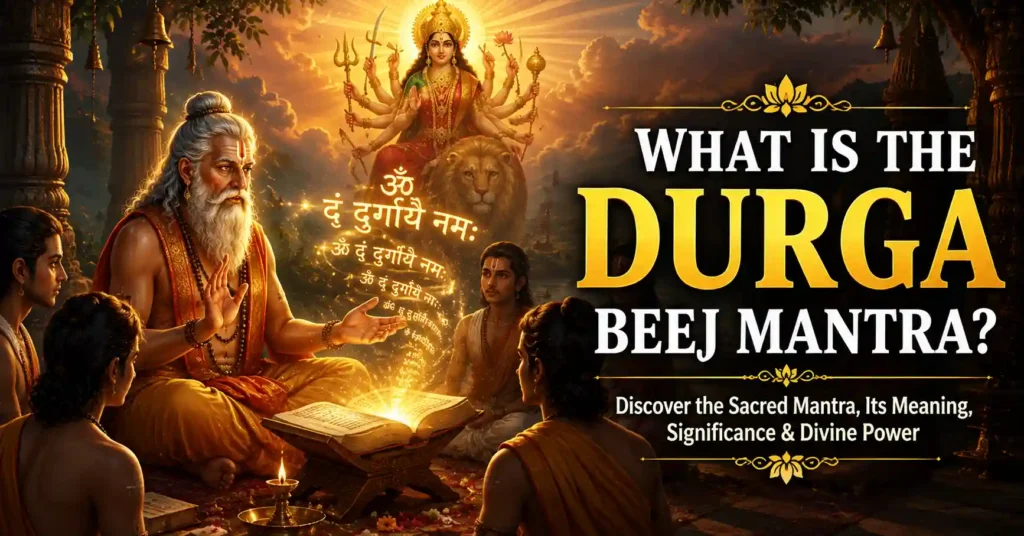
The Durga Beej Mantra is a sacred seed mantra dedicated to Maa Durga, the Divine Mother and supreme embodiment of Shakti in Sanatan Dharma. It is one of the most popular mantras used in Durga worship, meditation, and daily spiritual practice.
The mantra is:
ॐ दुं दुर्गायै नमः
Om Dum Durgayai Namah
The word Beej Mantra means “seed mantra.” In Hindu spiritual traditions, a beej mantra is believed to contain the essence of a deity’s energy in a condensed sound form.
The Durga Beej Mantra centers around the sacred syllable “Dum” (दुं), which is traditionally associated with the protective, nurturing, and transformative power of Maa Durga.
Unlike longer prayers and hymns, the Durga Beej Mantra is short and easy to remember. This makes it suitable for beginners while also remaining an important part of advanced spiritual practices within the Shakta tradition.
Devotees chant the Durga Beej Mantra to seek courage during difficult times, protection from negative influences, inner strength, mental clarity, and a deeper connection with the Divine Mother.
The mantra is especially popular during Navratri, Durga Puja, and other festivals dedicated to Goddess Durga. However, many devotees also include it in their daily prayers and meditation routines throughout the year.
In the broader tradition of Shakti worship, the Durga Beej Mantra is regarded as a powerful invocation of divine feminine energy. It reminds devotees that Maa Durga is both a compassionate mother and a fierce protector who guides her devotees toward spiritual growth and righteousness.
Spiritual Essence
The Durga Beej Mantra teaches that even a single sacred sound can become a doorway to devotion, inner transformation, and divine grace when chanted with faith, sincerity, and regular practice.
Origin and Scriptural Significance of the Durga Beej Mantra
The Durga Beej Mantra originates from the broader tradition of Shakti worship, where the Divine Mother is revered as the supreme source of creation, protection, and transformation. In this tradition, sacred seed sounds known as Beej Mantras are believed to embody the essential spiritual energy of a deity.
The central sound of the Durga Beej Mantra is “Dum” (दुं), which is traditionally associated with the protective and powerful energy of Maa Durga. Devotees regard this sacred syllable as a concentrated expression of the Goddess’s strength, courage, and divine grace.
Although the Durga Beej Mantra is not a hymn like the Durga Chalisa, Devi Kavach, or Argala Stotra, it holds an important place in Shakta spiritual practices, mantra meditation, and devotional worship.
Connection with Maa Durga
Maa Durga is one of the most revered goddesses in Sanatan Dharma. She is worshipped as the destroyer of negative forces, the protector of dharma, and the compassionate Divine Mother who guides her devotees through life’s challenges.
The Durga Beej Mantra serves as a direct invocation of her divine presence. Through this mantra, devotees seek protection, fearlessness, wisdom, and spiritual strength.
Because the mantra is short and easy to chant, it is often recommended for those who wish to establish a daily connection with Maa Durga.
Significance in Shakta Tradition
In Shaktism, sound is considered a manifestation of divine energy. Sacred syllables are not viewed merely as words but as spiritual vibrations capable of focusing the mind and deepening devotion.
The Durga Beej Mantra is therefore regarded as more than a prayer. It is a sacred sound formula that helps devotees meditate upon the qualities of Maa Durga and cultivate inner strength.
Many practitioners include the mantra in their daily japa, meditation, and devotional routines as a way of honoring the Divine Mother.
Relationship with Durga Saptashati
The teachings associated with the Durga Beej Mantra closely align with the themes found in the Durga Saptashati (Devi Mahatmyam), one of the most important scriptures dedicated to Maa Durga.
The Durga Saptashati describes the Goddess as the cosmic power who protects devotees, removes obstacles, and restores righteousness. These same qualities are traditionally associated with the spiritual symbolism of the Durga Beej Mantra.
For this reason, many devotees chant the mantra during Navratri, Durga worship, and while studying sacred texts dedicated to the Divine Mother.
Why Devotees Continue Chanting It Today
Despite its ancient roots, the Durga Beej Mantra remains highly relevant in modern times.
Its simplicity allows devotees of all ages and backgrounds to incorporate it into their daily spiritual practice. Whether chanted during prayer, meditation, or moments of difficulty, the mantra serves as a reminder of Maa Durga’s protective presence and unwavering strength.
Spiritual Essence
The origin of the Durga Beej Mantra reflects a timeless teaching of Sanatan Dharma: that divine power can be invoked through sacred sound, sincere devotion, and remembrance of the Divine Mother. Through the simple yet profound syllable “Dum,” devotees connect with the protective and transformative energy of Maa Durga.
Durga Beej Mantra Lyrics in Sanskrit
The Durga Beej Mantra is a short yet powerful mantra dedicated to Maa Durga. Despite its simplicity, it is widely revered in Shakta traditions and is commonly chanted during daily worship, meditation, and Navratri celebrations.
The mantra invokes the protective, nurturing, and transformative energy of the Divine Mother and serves as a direct expression of devotion to Goddess Durga.
Durga Beej Mantra
ॐ दुं दुर्गायै नमः॥
Alternative Sanskrit Presentation
ॐ दुं दुर्गायै नमः
Devanagari Text
ॐ दुं दुर्गायै नमः॥
Sacred Beej Sound
दुं (Dum)
This sacred syllable is considered the core Beej Mantra of Maa Durga and is traditionally associated with her divine protection, courage, strength, and power to remove obstacles.
Meaning at a Glance
ॐ (Om) – The primordial cosmic sound and universal consciousness.
दुं (Dum) – The sacred seed sound of Goddess Durga.
दुर्गायै (Durgayai) – To Goddess Durga.
नमः (Namah) – I bow with reverence and devotion.
Together, the mantra expresses humble salutations to Maa Durga and invokes her blessings, guidance, and protective grace.
Spiritual Essence
Although the Durga Beej Mantra contains only a few words, devotees believe it carries the spiritual essence of Maa Durga herself. Through regular chanting, practitioners seek to cultivate devotion, inner strength, fearlessness, and a deeper connection with the Divine Mother.
Durga Beej Mantra English Pronunciation and Transliteration
For many devotees, learning the correct pronunciation of the Durga Beej Mantra helps improve concentration and makes chanting more meaningful. While perfect pronunciation is not mandatory for beginners, understanding the transliteration can build confidence and familiarity with the mantra.
Sanskrit Text
ॐ दुं दुर्गायै नमः॥
English Transliteration
Om Dum Durgayai Namah
Easy Pronunciation Guide
Om – Ohm
Dum – Doom (with a soft nasal ending)
Durgayai – Door-gaa-yai
Namah – Na-mah
Word-by-Word Transliteration
| Sanskrit | Transliteration |
|---|---|
| ॐ | Om |
| दुं | Dum |
| दुर्गायै | Durgayai |
| नमः | Namah |
Full Pronunciation
Om Dum Durgayai Namah
Pronunciation Tips for Beginners
Chant slowly and clearly rather than rushing through the mantra.
Focus on maintaining a steady rhythm and calm breathing.
Try to pronounce “Durgayai” smoothly as a single word.
Do not worry if your pronunciation is not perfect initially.
Consistent practice naturally improves pronunciation over time.
Many spiritual teachers emphasize that devotion and sincerity are more important than linguistic perfection. A mantra chanted with faith and concentration is considered more beneficial than one recited mechanically.
Can You Chant Using English Transliteration?
Yes. Many devotees begin their practice using English transliteration before learning the Devanagari script.
This approach makes the Durga Beej Mantra accessible to people from different linguistic backgrounds while helping them develop a regular chanting practice.
Over time, some practitioners choose to learn the Sanskrit text as their familiarity with the mantra grows.
Spiritual Essence
The purpose of pronunciation is not merely to recite words correctly but to connect the mind and heart with Maa Durga. When the Durga Beej Mantra is chanted with devotion, awareness, and sincerity, it becomes a powerful expression of faith and remembrance of the Divine Mother.
What Does "Om Dum Durgayai Namah" Mean?
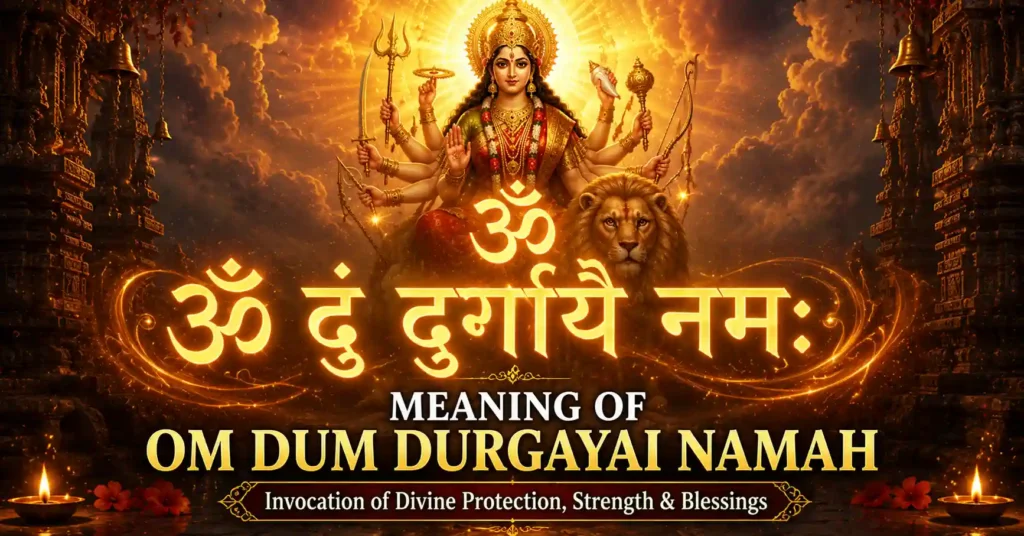
The Durga Beej Mantra may appear simple, but every word carries deep spiritual significance. Understanding the meaning of “Om Dum Durgayai Namah” helps devotees connect more deeply with Maa Durga and appreciate the mantra beyond its sound.
This sacred mantra is both a prayer and an invocation of the Divine Mother’s protective and transformative energy.
Word-by-Word Meaning
| Sanskrit Word | Meaning |
|---|---|
| ॐ (Om) | The primordial cosmic sound and universal consciousness |
| दुं (Dum) | The sacred beej (seed) sound of Maa Durga |
| दुर्गायै (Durgayai) | To Goddess Durga |
| नमः (Namah) | I bow with reverence and devotion |
Full Mantra Meaning
Om Dum Durgayai Namah means:
“I bow with reverence to Goddess Durga, the Divine Mother, and invoke her blessings, protection, strength, and guidance.”
The mantra expresses devotion, surrender, and faith in Maa Durga’s ability to protect and uplift her devotees.
Meaning of Om
Om is regarded as the primordial sound from which all creation emerges.
In Hindu philosophy, it represents the ultimate reality, universal consciousness, and the divine presence that exists in all beings.
Beginning the Durga Beej Mantra with Om connects the devotee to this universal spiritual energy.
Meaning of Dum
Dum (दुं) is the sacred beej sound associated with Maa Durga.
Traditionally, this syllable symbolizes:
Divine protection
Courage and fearlessness
Strength during adversity
Removal of obstacles
Transformative spiritual power
Many devotees consider Dum to be the energetic heart of the Durga Beej Mantra.
Meaning of Durgayai
Durgayai means “to Goddess Durga.”
The word acknowledges Maa Durga as the compassionate Divine Mother who protects her devotees and guides them toward righteousness and spiritual growth.
It is an expression of devotion directed specifically toward the Goddess.
Meaning of Namah
Namah means “I bow” or “I offer my respectful salutations.”
In spiritual practice, it represents humility, surrender, and reverence before the Divine.
This simple word reminds devotees that true spiritual growth begins with devotion and humility.
Symbolic Meaning of the Durga Beej Mantra
On a symbolic level, the Durga Beej Mantra teaches that divine strength already exists within every individual.
Maa Durga represents courage, wisdom, compassion, and the ability to overcome challenges.
By chanting the mantra, devotees seek to awaken these qualities within themselves while remaining connected to the Divine Mother’s grace.
Practical Relevance in Daily Life
The message of the Durga Beej Mantra remains relevant even today.
When faced with fear, uncertainty, stress, or obstacles, the mantra reminds devotees to remain strong, focused, and faithful.
Its teachings encourage resilience, self-confidence, and trust in a higher power during life’s challenges.
Spiritual Essence
The deeper meaning of “Om Dum Durgayai Namah” is not merely a request for protection but an invitation to cultivate inner strength, courage, devotion, and spiritual awareness. Through this sacred mantra, devotees remember that Maa Durga’s divine presence is always available to guide and protect them.
Benefits of Chanting the Durga Beej Mantra
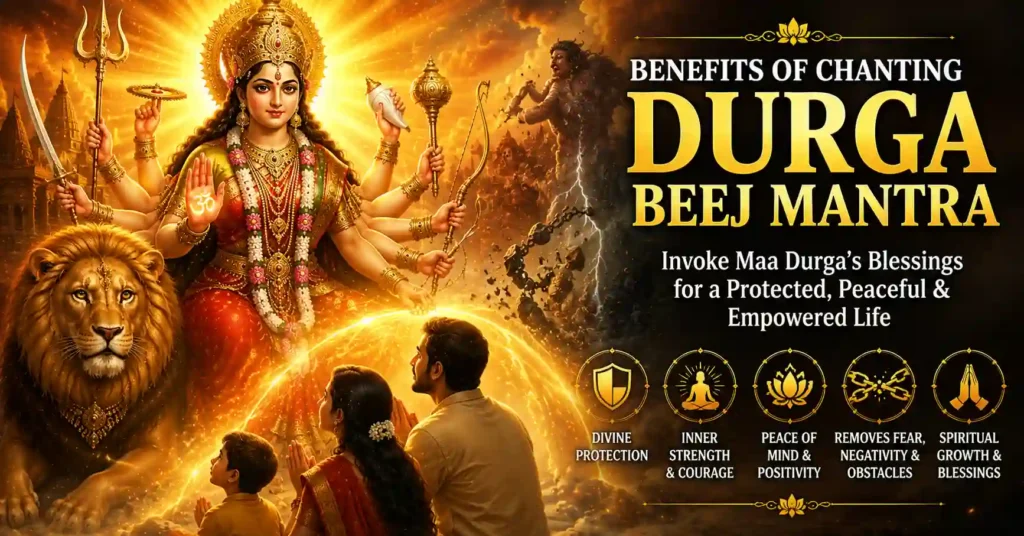
The Durga Beej Mantra is traditionally chanted to invoke the blessings of Maa Durga, the Divine Mother who represents strength, protection, wisdom, and compassion. Devotees believe that regular chanting helps cultivate both spiritual and personal growth.
While experiences may vary from person to person, the benefits of the Durga Beej Mantra are widely described in devotional and Shakta traditions.
Spiritual Benefits
The Durga Beej Mantra helps devotees strengthen their connection with Maa Durga and deepen their spiritual practice.
Regular chanting encourages remembrance of the Divine Mother and helps create a devotional mindset focused on faith, surrender, and spiritual growth.
Many practitioners use the mantra during meditation, prayer, and Navratri worship to cultivate inner awareness and spiritual discipline.
Mental Benefits
Chanting the Durga Beej Mantra with concentration can help calm a restless mind and improve focus.
The repetitive nature of mantra recitation encourages mindfulness and allows devotees to direct their attention away from distractions.
Many people find that regular chanting creates a sense of mental clarity and steadiness during challenging situations.
Emotional Benefits
The teachings associated with Maa Durga inspire courage, resilience, and confidence.
For this reason, devotees often turn to the Durga Beej Mantra during periods of uncertainty, fear, or emotional stress.
The mantra serves as a reminder that strength and divine support are always available through sincere devotion and faith.
Traditional Benefits
In Hindu tradition, the Durga Beej Mantra is often chanted to seek divine protection and blessings.
Devotees believe that Maa Durga helps remove obstacles, protect her followers from negativity, and guide them toward righteous actions.
The mantra is especially popular during Navratri, Durga Puja, and other festivals dedicated to the Divine Mother.
Devotional Benefits
One of the greatest benefits of the Durga Beej Mantra is the opportunity to develop a closer relationship with Maa Durga.
Regular chanting encourages gratitude, humility, and devotion while helping devotees remember the compassionate and protective nature of the Divine Mother.
Over time, this practice can become an important part of daily worship and spiritual life.
Benefits During Navratri
Navratri is considered one of the most auspicious times for chanting the Durga Beej Mantra.
During these sacred nine nights, devotees worship the various forms of Maa Durga and seek her blessings for spiritual growth and inner transformation.
Many practitioners increase their mantra chanting during Navratri as an expression of devotion and reverence.
Spiritual Essence
The true benefit of the Durga Beej Mantra lies not only in its recitation but also in the qualities it inspires. Through regular chanting, devotees strive to cultivate courage, faith, discipline, devotion, and a deeper connection with Maa Durga’s divine presence.
Durga Beej Mantra vs Navarna Mantra
Chanting the Durga Beej Mantra with sincerity, focus, and devotion is considered more important than following complicated rituals. Even a simple daily practice can help devotees build a stronger connection with Maa Durga.
While there are no strict requirements for most devotees, traditional practices can help create a more meaningful and disciplined chanting routine.
Best Time to Chant
The Durga Beej Mantra can be chanted at any time of the day with devotion.
However, many devotees prefer:
Brahma Muhurta (before sunrise)
Early morning after bathing
Evening during prayer time
Navratri and other Durga festivals
These periods are traditionally considered spiritually favorable for mantra chanting and meditation.
Preparations Before Chanting
Before beginning the Durga Beej Mantra, it is helpful to prepare both the mind and surroundings.
You may:
Bathe or wash your hands and face
Wear clean clothes
Sit in a peaceful location
Light a diya or incense if desired
Place an image or murti of Maa Durga nearby
These practices help create a devotional atmosphere and encourage concentration.
Traditional Chanting Method
Sit comfortably with your spine straight and focus your attention on Maa Durga.
Slowly chant:
ॐ दुं दुर्गायै नमः॥
Om Dum Durgayai Namah
You may chant the mantra:
11 times
21 times
54 times
108 times
Many devotees use a Rudraksha Mala or Chandan Mala to maintain count during japa.
Chanting Rules for Beginners
The Durga Beej Mantra is suitable for beginners and does not require advanced spiritual knowledge.
Some helpful guidelines include:
Chant with devotion rather than haste
Maintain a calm and respectful attitude
Focus on the meaning of the mantra
Practice regularly, even if only for a few minutes
Avoid treating chanting as a mechanical task
Consistency is often considered more important than the number of repetitions.
Can Beginners Chant the Durga Beej Mantra?
Yes. The Durga Beej Mantra is widely regarded as one of the most beginner-friendly mantras dedicated to Maa Durga.
Its short length makes it easy to memorize and incorporate into daily worship, meditation, or prayer.
Many devotees begin their spiritual journey with this mantra before exploring longer hymns such as the Durga Chalisa, Devi Kavach, or Argala Stotra.
Why Understanding the Meaning Matters
While chanting itself is an important devotional practice, understanding the meaning of the Durga Beej Mantra can deepen the experience.
When devotees understand that the mantra invokes courage, protection, strength, and devotion, each repetition becomes more mindful and meaningful.
This understanding helps transform chanting from a routine practice into a conscious spiritual discipline.
Spiritual Essence
The proper way to chant the Durga Beej Mantra is with faith, concentration, and devotion. Whether recited 11 times or 108 times, the mantra becomes most powerful when it is accompanied by sincere remembrance of Maa Durga and a genuine desire for spiritual growth.
Durga Beej Mantra During Navratri
Navratri is one of the most sacred festivals dedicated to Maa Durga and her nine divine forms, collectively known as the Navadurga. During these nine nights, devotees engage in prayer, fasting, mantra chanting, and spiritual practices to seek the blessings of the Divine Mother.
The Durga Beej Mantra holds special significance during Navratri because it directly invokes the protective and transformative energy of Maa Durga. Many devotees increase their chanting during this period as an expression of devotion and spiritual discipline.
Why Is Navratri Considered Auspicious for the Durga Beej Mantra?
According to Hindu tradition, Navratri is a time when the worship of Shakti is especially emphasized.
Devotees believe that prayers, meditation, and mantra chanting performed during Navratri help deepen spiritual awareness and strengthen one’s connection with the Divine Mother.
For this reason, the Durga Beej Mantra is commonly included in daily Navratri worship and sadhana.
How Devotees Chant the Durga Beej Mantra During Navratri
Many devotees chant the Durga Beej Mantra:
During morning and evening prayers
Before reading the Durga Saptashati
Alongside Durga Chalisa recitation
During meditation and japa
While performing Navratri puja
Some practitioners also undertake a fixed number of daily repetitions throughout the nine days.
Connection with the Navadurga
Each day of Navratri is dedicated to a different form of Maa Durga.
These forms represent qualities such as devotion, courage, wisdom, discipline, compassion, and spiritual realization.
By chanting the Durga Beej Mantra, devotees honor all manifestations of the Divine Mother and seek guidance on their spiritual journey.
A Simple Navratri Practice
A beginner-friendly Navratri practice may include:
Offering prayers to Maa Durga.
Lighting a diya before her image or altar.
Chanting Om Dum Durgayai Namah 11, 21, or 108 times.
Reading a chapter from a Durga-related scripture.
Spending a few moments in silent meditation.
Even a simple daily practice performed with sincerity is considered meaningful.
Spiritual Lessons from Navratri
Navratri teaches that spiritual growth requires both devotion and inner transformation.
The Durga Beej Mantra reminds devotees to cultivate courage when facing challenges, wisdom when making decisions, and faith during uncertain times.
These timeless lessons remain relevant long after the festival has ended.
Spiritual Essence
Chanting the Durga Beej Mantra during Navratri is not merely a ritual. It is an opportunity to deepen one’s relationship with Maa Durga, reflect on her divine qualities, and invite greater strength, devotion, and spiritual awareness into daily life.
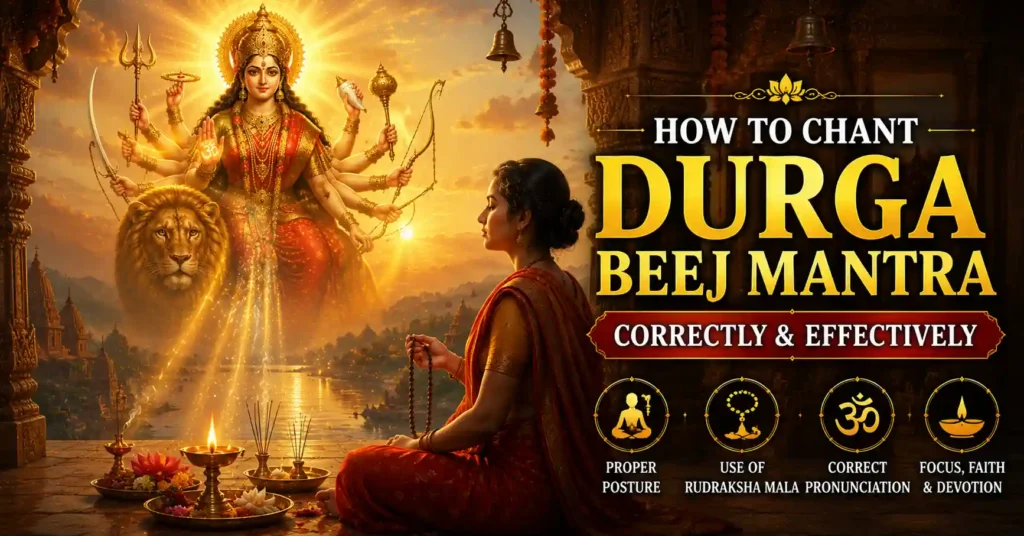
Durga Beej Mantra in Daily Life
The Durga Beej Mantra is not limited to temples, festivals, or formal worship. Its message can guide devotees in everyday life by inspiring courage, discipline, faith, and inner strength.
Finding Courage During Challenges
Life brings situations that test patience, confidence, and determination. The Durga Beej Mantra reminds devotees of Maa Durga’s fearless nature and encourages them to face difficulties with strength rather than fear. Remembering the Divine Mother during challenging times can help cultivate resilience and hope.
Managing Stress and Mental Restlessness
Many devotees chant the Durga Beej Mantra during prayer or meditation to calm the mind. Its rhythmic repetition encourages focus and helps create a moment of stillness amid the distractions of daily life. Regular chanting can become a simple practice for restoring inner balance.
Building Spiritual Discipline
Even a few minutes of daily mantra chanting can help establish a consistent spiritual routine. Regular remembrance of Maa Durga encourages mindfulness, devotion, and self-discipline, helping devotees stay connected to their spiritual goals.
Practicing Faith and Surrender
A deeper teaching of the Durga Beej Mantra is trusting in divine guidance while continuing to perform one’s duties sincerely. The mantra reminds devotees to make their best effort while placing faith in the wisdom and grace of the Divine Mother.
Applying Its Teachings in Everyday Life
The qualities associated with Maa Durga can be practiced in daily situations by:
Acting with courage and integrity
Showing compassion toward others
Remaining calm during difficulties
Performing responsibilities sincerely
Maintaining faith during uncertain times
These values help bring spirituality into everyday actions and relationships.
A Mantra for Everyone
The simplicity of the Durga Beej Mantra makes it accessible to people of all ages. Students, professionals, homemakers, and elderly devotees can easily include it in their daily prayers and spiritual practice.
Spiritual Essence
The true value of the Durga Beej Mantra lies in the qualities it inspires. By remembering Maa Durga’s strength, wisdom, and compassion, devotees seek to cultivate the same virtues within themselves and bring greater faith, courage, and spiritual awareness into daily life.
Did You Know? Interesting Facts About the Durga Beej Mantra
The sacred syllable “Dum” (दुं) is the primary Beej Mantra associated with Maa Durga and is traditionally linked with her protective and transformative energy.
Unlike longer hymns such as the Durga Chalisa or Devi Kavach, the Durga Beej Mantra consists of only a few words, making it one of the simplest Durga mantras for daily practice.
In Shakta traditions, Beej Mantras are regarded as concentrated expressions of divine energy rather than ordinary words or prayers.
The Durga Beej Mantra is commonly chanted during Navratri, one of the most important festivals dedicated to the Divine Mother and the worship of Shakti.
Many devotees use the mantra during both puja and meditation, making it suitable for devotional worship as well as personal spiritual practice.
The word “Durgayai” means “to Goddess Durga” and expresses reverence, devotion, and surrender to the Divine Mother.
The mantra is recited by devotees across India and around the world, regardless of regional language or tradition.
Spiritual teachers often encourage devotees to understand the meaning of the mantra along with chanting it, as this can help deepen devotion and make the practice more meaningful.
Spiritual Essence
The enduring popularity of the Durga Beej Mantra lies in its simplicity and depth. Through a few sacred words, devotees remember Maa Durga’s strength, protection, compassion, and divine presence in their lives.
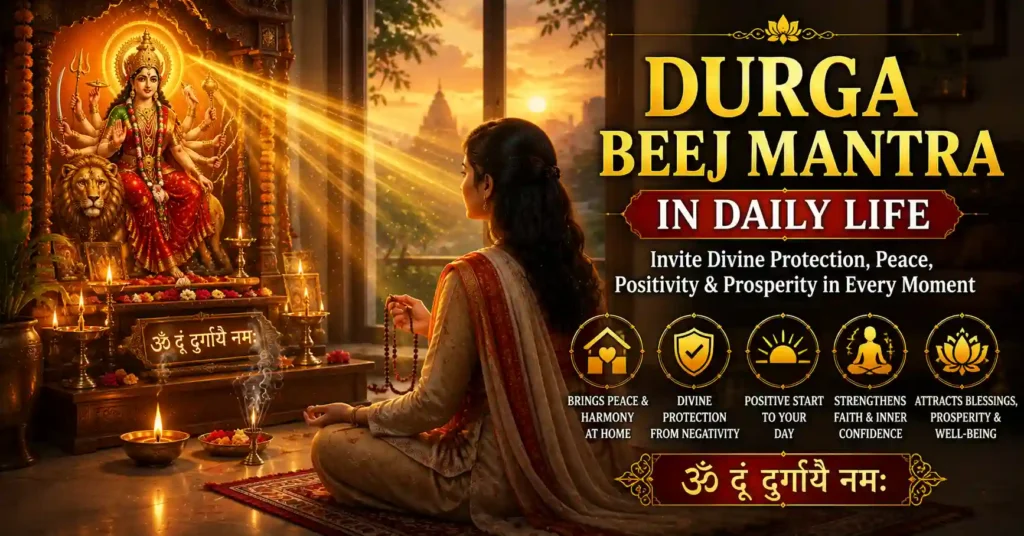
Conclusion
The Durga Beej Mantra is a simple yet deeply meaningful mantra dedicated to Maa Durga, the Divine Mother who represents strength, protection, wisdom, and compassion. Though it consists of only a few sacred words, the Durga Beej Mantra holds an important place in Shakta traditions and devotional practices.
By understanding the meaning of Om Dum Durgayai Namah, devotees can develop a deeper appreciation for the spiritual symbolism of the mantra. Its message encourages courage during difficulties, faith during uncertainty, and devotion to the Divine Mother.
The Durga Beej Mantra is traditionally associated with spiritual growth, inner strength, mental focus, and a closer connection with Maa Durga. Whether chanted during daily prayers, meditation, Navratri, or moments of personal reflection, it serves as a reminder of the Goddess’s protective and nurturing presence.
Ultimately, the true value of the Durga Beej Mantra lies not only in its recitation but also in the qualities it inspires. Through regular practice, devotion, and sincere remembrance of Maa Durga, devotees can bring greater peace, confidence, and spiritual awareness into their lives.
Suggested Reading
The Durga Beej Mantra is one of the most powerful mantras dedicated to Maa Durga and is often practiced alongside other sacred prayers, hymns, and scriptures related to Devi worship. Exploring these texts can help devotees gain a deeper understanding of Shakti, mantra sadhana, Navratri traditions, divine protection, and the spiritual teachings of Sanatan Dharma.
Devi Kavach Meaning: Durga Saptashati Protection Prayer
https://thesanatantales.com/devi-kavach-meaning/
Argala Stotram Lyrics with Meaning and Spiritual Significance
https://thesanatantales.com/argala-stotram-lyrics-meaning/
Durga Chalisa Lyrics with English Pronunciation and Hindi Meaning
https://thesanatantales.com/durga-chalisa-lyrics-meaning/
What Is Durga Saptashati? Meaning, Story and Why It Is Read in Navratri
https://thesanatantales.com/durga-saptashati-meaning-navratri/
Navarna Mantra Meaning, Benefits, Chanting Rules and How to Chant
https://thesanatantales.com/navarna-mantra/
Aarti of Maa Ambe: Lyrics, Meaning, Benefits and How to Perform
https://thesanatantales.com/aarti-of-maa-ambe/
Siddha Kunjika Stotram: The Sacred Key That Unlocks the Full Power of Durga Saptashati
https://thesanatantales.com/siddha-kunjika-stotram/
Gayatri Mantra: 7 Divine Benefits and Spiritual Power
https://thesanatantales.com/gayatri-mantra-meaning-benefits/
Durga
https://en.wikipedia.org/wiki/Durga
Beej Mantra
https://en.wikipedia.org/wiki/Bija
FAQs
What is the Durga Beej Mantra?
The Durga Beej Mantra is a sacred mantra dedicated to Maa Durga, the Divine Mother and embodiment of Shakti in Sanatan Dharma. The mantra, “Om Dum Durgayai Namah,” contains the powerful seed syllable “Dum,” which is traditionally associated with Goddess Durga’s protective and transformative energy.
Devotees chant the Durga Beej Mantra to seek courage, spiritual strength, devotion, and divine guidance. Its simplicity makes it suitable for both beginners and experienced practitioners.
Despite being short, the mantra is highly revered in Shakta traditions and is commonly recited during daily worship, meditation, and Navratri celebrations.
What does "Dum" mean in the Durga Beej Mantra?
The syllable “Dum” (दुं) is the sacred beej or seed sound of Maa Durga. In traditional Hindu spiritual practices, beej mantras are believed to contain the essence of a deity’s divine energy in a condensed form.
The sound “Dum” is traditionally associated with protection, courage, inner strength, and the removal of obstacles. Devotees believe it invokes the blessings and presence of Maa Durga.
While interpretations may vary among traditions, the beej sound is generally viewed as a symbol of the Divine Mother’s power to protect devotees and guide them through life’s challenges.
What are the benefits of chanting the Durga Beej Mantra?
The Durga Beej Mantra is traditionally associated with several spiritual and devotional benefits. Devotees believe that regular chanting helps strengthen faith, deepen devotion, and cultivate a closer connection with Maa Durga.
Many practitioners also use the mantra to improve concentration, encourage emotional resilience, and develop inner confidence during difficult situations.
In Hindu tradition, the mantra is often recited to seek divine protection and blessings. It is especially popular during Navratri and other Durga-related festivals.
The greatest benefit, however, is often considered the development of sincere devotion and spiritual discipline.
Can beginners chant the Durga Beej Mantra?
Yes, the Durga Beej Mantra is widely considered one of the most beginner-friendly mantras dedicated to Maa Durga. Its short length makes it easy to learn, memorize, and incorporate into a daily spiritual routine.
Beginners can start by chanting the mantra slowly and with attention rather than focusing on large numbers of repetitions. Even a few minutes of daily practice can help build consistency and familiarity.
Many devotees begin their journey with the Durga Beej Mantra before exploring longer prayers such as the Durga Chalisa, Devi Kavach, or Durga Saptashati.
Faith and sincerity are generally considered more important than perfection.
How many times should I chant the Durga Beej Mantra?
There is no single mandatory number for chanting the Durga Beej Mantra. The number often depends on personal practice, available time, and spiritual goals.
Many devotees chant the mantra 11, 21, 54, or 108 times. Among these, 108 repetitions are especially popular because of their significance in Hindu spiritual traditions.
For beginners, starting with a smaller number can help establish a regular habit without feeling overwhelming.
The most important aspect is consistency and devotion. Chanting the Durga Beej Mantra regularly with focus and sincerity is generally regarded as more valuable than occasional large counts performed mechanically.
Is the Durga Beej Mantra powerful?
Within Shakta traditions, the Durga Beej Mantra is regarded as a powerful mantra because it contains the sacred seed sound associated with Maa Durga. Devotees believe that the mantra embodies the Goddess’s protective, nurturing, and transformative qualities.
Its power is not measured by the number of words but by the spiritual significance attributed to the sacred syllable “Dum.”
Many practitioners use the mantra during meditation, prayer, and times of difficulty to strengthen their faith and connection with the Divine Mother.
Traditional teachings emphasize that devotion, concentration, and regular practice play an important role in experiencing the mantra’s spiritual value.
Can I chant the Durga Beej Mantra during Navratri?
Yes, Navratri is considered one of the most auspicious times to chant the Durga Beej Mantra. The festival is dedicated to Maa Durga and her nine divine forms, making it a significant period for Shakti worship and devotional practices.
Many devotees increase their mantra chanting during the nine days of Navratri as part of their spiritual observances. Some recite the mantra during daily puja, while others include it in meditation or japa practices.
The Durga Beej Mantra is often chanted alongside other sacred texts such as the Durga Chalisa, Devi Kavach, and Durga Saptashati during this festival.
Do I need initiation to chant the Durga Beej Mantra?
In general devotional practice, many devotees chant the Durga Beej Mantra without formal initiation. The mantra is commonly recited in homes, temples, and personal prayer routines across Hindu traditions.
However, certain advanced spiritual disciplines and tantric practices may involve guidance from a qualified guru. Such practices often follow specific traditions and methods.
For most devotees seeking to worship Maa Durga, express devotion, and establish a daily spiritual practice, the Durga Beej Mantra is widely considered accessible.
Those interested in deeper mantra sadhana may choose to learn under the guidance of a knowledgeable spiritual teacher.
What is the difference between the Durga Beej Mantra and the Navarna Mantra?
The Durga Beej Mantra and the Navarna Mantra are both important in the worship of Maa Durga, but they serve different roles.
The Durga Beej Mantra, “Om Dum Durgayai Namah,” is a simple and direct invocation of Goddess Durga. It is commonly used in daily prayer, meditation, and devotional practice.
The Navarna Mantra, “Om Aim Hreem Kleem Chamundayai Vichche,” is a more complex mantra that holds special significance within Shakta traditions and Durga Saptashati worship.
Both mantras are revered, but the Durga Beej Mantra is generally considered more beginner-friendly and easier to incorporate into daily practice.
Which mala is best for chanting the Durga Beej Mantra?
Many devotees use a mala to maintain focus and count repetitions while chanting the Durga Beej Mantra. Traditionally, Rudraksha Mala, Red Chandan Mala, and crystal malas are among the commonly used options.
The choice of mala often depends on personal preference, family tradition, or guidance from a spiritual teacher. There is no strict requirement for most devotees.
While a mala can help establish discipline during japa, it is not essential. The sincerity of devotion and regularity of practice are generally considered more important than the type of mala used.
The mantra may be chanted with or without a rosary according to one’s comfort and tradition.
Share Your Devotion
Have you ever chanted the Durga Beej Mantra during Navratri, daily prayers, meditation, or a difficult phase of life?
We would love to hear about your experience with the Durga Beej Mantra and how it has influenced your spiritual journey.
You can share:
How you first learned the Durga Beej Mantra
Your daily chanting routine
Your favorite aspect of Maa Durga worship
Experiences from Navratri or Durga Puja
The benefits or lessons you have personally felt through chanting
Every devotee’s journey is unique, and your story may inspire others who are beginning their own path of devotion to Maa Durga.
Feel free to share your thoughts, experiences, or favorite teachings related to the Durga Beej Mantra in the comments below. Let us learn and grow together in the spirit of faith, devotion, and Sanatan Dharma.
References & Sources
Durga Beej Mantra (ॐ दुं दुर्गायै नमः) – Traditional Shakta mantra dedicated to Maa Durga.
Durga Saptashati (Devi Mahatmyam) – One of the most important scriptures glorifying the power and grace of Goddess Durga.
Markandeya Purana – The Purana that contains the revered Devi Mahatmyam.
Traditional Shakta Agamas and Tantra traditions that discuss the significance of beej mantras and Devi worship.
Sacred traditions associated with Navadurga and Navratri worship.
Secondary Sources
Traditional Sanskrit commentaries on Devi worship and Shakti philosophy.
Sanskrit manuscript repositories and transliteration resources.
Scholarly studies on Hindu mantras, Shaktism, and mantra meditation.
Hindu devotional literature related to Maa Durga, Navratri, and Durga Saptashati.
Educational resources on Sanskrit pronunciation and mantra chanting traditions.
Note: The meaning and interpretation of the Durga Beej Mantra may vary slightly across different Hindu traditions, lineages, teachers, and published editions.
The Sanskrit text, transliteration, meanings, and explanations presented in this article are intended for educational and devotional purposes. Readers are encouraged to explore traditional commentaries and consult qualified teachers for deeper study of mantra sadhana and Shakta philosophy.
May Maa Durga bless all devotees with courage, wisdom, devotion, and spiritual strength. 

References & Sources