There are moments in life when fear, uncertainty, illness, or emotional challenges make us seek strength beyond ourselves. For centuries, devotees have turned to the Maha Mrityunjaya Mantra, one of the most revered mantras dedicated to Lord Shiva, for courage, healing, and inner peace.
The Maha Mrityunjaya Mantra is often called the “Death-Conquering Mantra,” but its deeper meaning extends far beyond physical death. It is a prayer for freedom from fear, suffering, negativity, and spiritual ignorance while cultivating faith, resilience, and trust in the Divine.
In this guide, you will learn the meaning of the Maha Mrityunjaya Mantra, its origin and significance, the story associated with it, verse-by-verse explanation, benefits of chanting, best times for recitation, how to chant it correctly, and answers to common questions asked by devotees.
Maha Mrityunjaya Mantra at a Glance
| Aspect | Details |
|---|---|
| Sanskrit Name | Maha Mrityunjaya Mantra |
| Meaning | The Great Death-Conquering Mantra |
| Deity | Lord Shiva |
| Source | Rigveda and Yajurveda |
| Also Known As | Rudra Mantra, Tryambakam Mantra |
| Purpose | Prayer for healing, protection, strength, and spiritual growth |
| Primary Theme | Victory over fear, suffering, and spiritual ignorance |
| Best Time to Chant | Brahma Muhurta, morning, Mondays, Pradosh, Maha Shivaratri |
| Suitable For | Beginners and experienced devotees |
| Associated With | Sage Markandeya and Lord Shiva |
The Maha Mrityunjaya Mantra is one of the oldest and most revered mantras in the Vedic tradition. Dedicated to Lord Shiva, it is widely recited by devotees seeking courage, inner peace, healing, and spiritual strength.
Often called the “Death-Conquering Mantra,” the Maha Mrityunjaya Mantra is not simply a prayer for protection from physical death. Its deeper message focuses on overcoming fear, attachment, suffering, and the limitations that prevent spiritual growth.
For centuries, saints, seekers, and householders have chanted the Maha Mrityunjaya Mantra as a source of comfort, faith, and connection with the divine presence of Mahadev.
Table of Contents
ToggleWhat is Maha Mrityunjaya Mantra?
The Maha Mrityunjaya Mantra is one of the most sacred and powerful mantras dedicated to Lord Shiva. It is a Vedic prayer that invokes Shiva’s blessings for protection, healing, inner strength, and spiritual growth.
Often called the Death-Conquering Mantra, the Maha Mrityunjaya Mantra is traditionally chanted to overcome fear, difficulties, and suffering. However, its deeper meaning goes far beyond physical well-being.
The mantra teaches devotees to seek freedom from attachment, ignorance, and the fear of change. It encourages trust in the divine and reminds us that spiritual growth comes through surrender and faith.
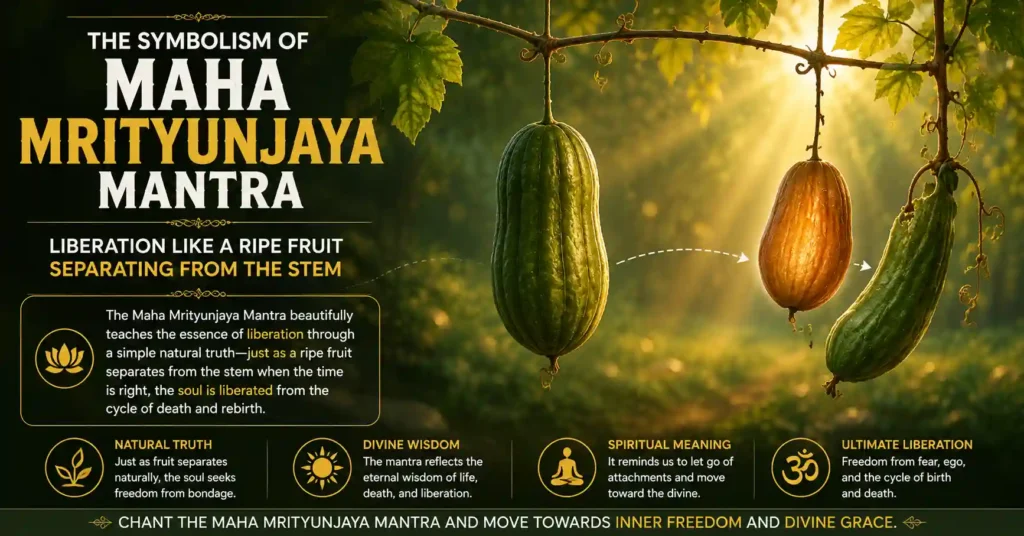
The central prayer of the Maha Mrityunjaya Mantra asks Lord Shiva to liberate us from bondage just as a ripe fruit naturally separates from its stem. This powerful symbolism reflects the soul’s journey toward freedom and higher awareness.
For this reason, the Maha Mrityunjaya Mantra is widely recited during daily worship, meditation, spiritual practices, and important life situations where devotees seek courage, peace, and divine grace.
Its timeless message of healing, transformation, and liberation has made the Maha Mrityunjaya Mantra one of the most beloved mantras in Sanatan Dharma.
Origin and History of Maha Mrityunjaya Mantra
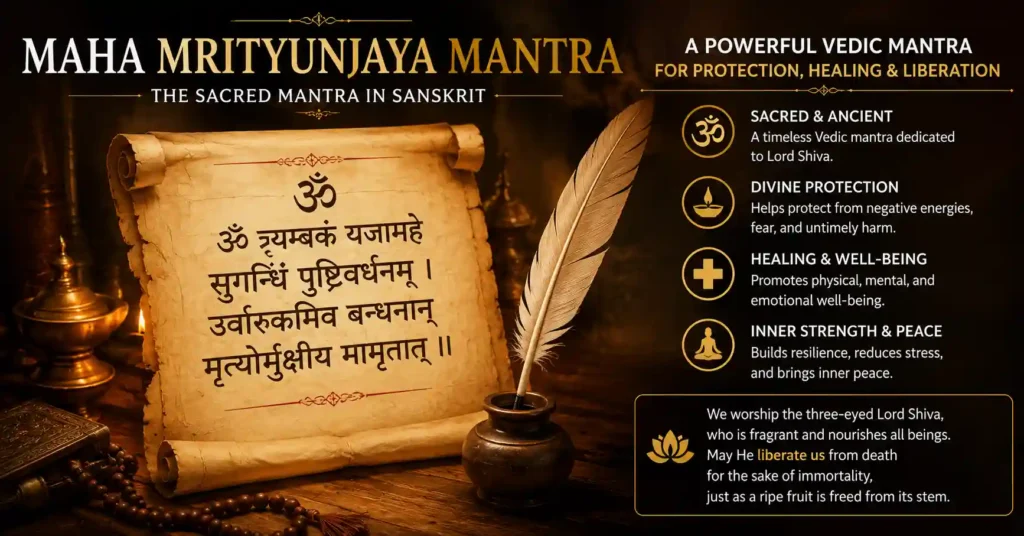
The Maha Mrityunjaya Mantra is one of the oldest mantras in Hinduism and holds a special place in the Vedic tradition. It is found in the Rigveda and later appears in the Yajurveda, making it one of the most ancient prayers dedicated to Lord Shiva.
The mantra is addressed to Tryambaka, the three-eyed form of Lord Shiva. In Vedic literature, Shiva is invoked as the compassionate protector who grants healing, strength, and liberation from fear and suffering.
Because of its profound spiritual message, the Maha Mrityunjaya Mantra is also known as the Rudra Mantra and Tryambakam Mantra. For centuries, sages, saints, and devotees have recited it during prayer, meditation, and spiritual practices.
Traditionally, the mantra is associated with healing, protection, longevity, and inner transformation. However, its deeper purpose is not merely extending life but helping devotees overcome attachment, ignorance, and the fear of death.
The enduring popularity of the Maha Mrityunjaya Mantra comes from its universal message. It reminds seekers that true freedom is found not through worldly achievements but through spiritual awakening and surrender to the Divine.
Today, the Maha Mrityunjaya Mantra continues to be chanted in homes, temples, yajnas, meditation practices, and Shiva worship across the world, inspiring millions with its timeless wisdom and spiritual power.
The Story Behind Maha Mrityunjaya Mantra
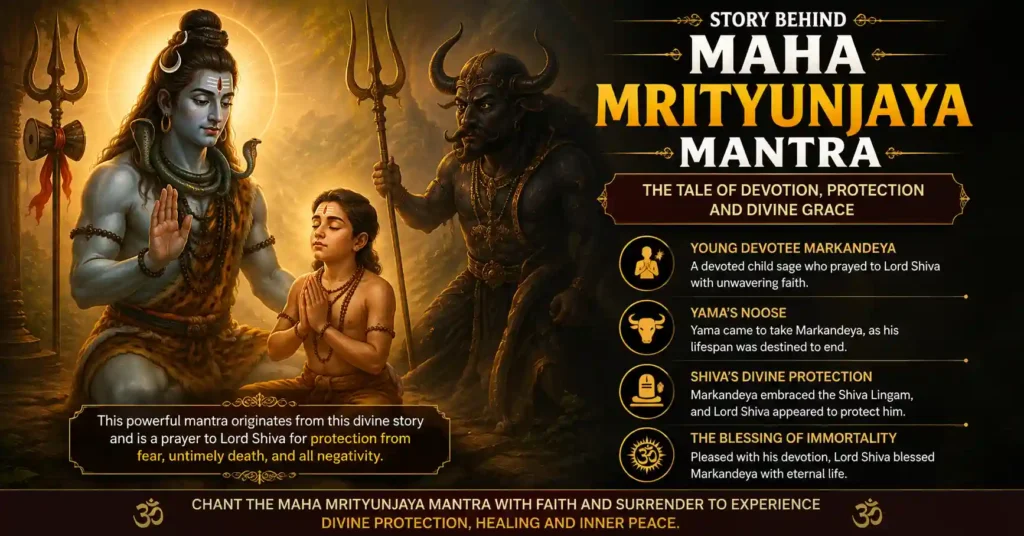
One of the most famous stories associated with the Maha Mrityunjaya Mantra is the legend of Sage Markandeya, a devoted worshipper of Lord Shiva.
According to tradition, Markandeya was born to a childless couple who had prayed intensely for a son. Lord Shiva granted their wish but gave them a choice: a son with a long but ordinary life or a brilliant son who would live only sixteen years.
They chose the gifted child, and Markandeya grew up as a wise and devoted devotee of Lord Shiva.
As his sixteenth birthday approached, Markandeya learned about his destined fate. Instead of giving in to fear, he turned to Lord Shiva with complete faith and devoted himself to prayer and meditation.
On the day when Yama, the god of death, arrived to take him, Markandeya embraced a Shivling and continued praying to Lord Shiva with unwavering devotion.
Moved by his sincerity and devotion, Lord Shiva appeared and protected Markandeya. According to the legend, Shiva defeated Yama and blessed Markandeya with immortality and divine grace.
Because of this story, the Maha Mrityunjaya Mantra is often associated with protection, healing, longevity, and victory over fear. It is widely believed to embody the same spirit of faith and surrender demonstrated by Sage Markandeya.
The deeper message of the story is not merely about escaping physical death. It teaches that devotion, courage, and trust in the Divine can help us overcome fear, suffering, and spiritual limitations.
For this reason, the story of Markandeya continues to inspire devotees who chant the Maha Mrityunjaya Mantra seeking strength, peace, and Lord Shiva’s blessings during difficult times.
Full Maha Mrityunjaya Mantra in Sanskrit
ॐ त्र्यम्बकं यजामहे सुगन्धिं पुष्टिवर्धनम्।
उर्वारुकमिव बन्धनान्मृत्योर्मुक्षीय मामृतात्॥
The Maha Mrityunjaya Mantra is one of the most sacred Vedic mantras dedicated to Lord Shiva in His three-eyed form, known as Tryambaka. It is revered across Hindu traditions as a prayer for healing, protection, inner strength, and spiritual liberation.
Unlike many devotional hymns, the Maha Mrityunjaya Mantra is a single yet profound Vedic mantra. Despite its brevity, it contains deep spiritual symbolism and has been recited by sages, seekers, and devotees for centuries.
The mantra invokes Lord Shiva as the nurturer of life and seeks freedom from fear, suffering, and bondage, just as a ripe fruit naturally separates from its stem. This powerful imagery forms the heart of the Maha Mrityunjaya Mantra and its timeless spiritual message.
Word-by-Word Meaning of Maha Mrityunjaya Mantra
Sanskrit Verse
ॐ त्र्यम्बकं यजामहे
सुगन्धिं पुष्टिवर्धनम्।
उर्वारुकमिव बन्धनान्
मृत्योर्मुक्षीय मामृतात्॥
Transliteration
Om Tryambakam Yajamahe
Sugandhim Pushtivardhanam
Urvarukamiva Bandhanan
Mrityor Mukshiya Maamritat
Line-by-Line Hindi Meaning
ॐ त्र्यम्बकं यजामहे
हम तीन नेत्रों वाले भगवान शिव की उपासना करते हैं।
सुगन्धिं पुष्टिवर्धनम्
जो दिव्य सुगंध की तरह सर्वत्र व्याप्त हैं और सभी का पोषण करते हैं।
उर्वारुकमिव बन्धनान्
जैसे पका हुआ फल या ककड़ी अपने बंधन से सहज रूप से अलग हो जाती है।
मृत्योर्मुक्षीय मामृतात्
वैसे ही हमें मृत्यु और सांसारिक बंधनों से मुक्त करें तथा अमृत स्वरूप सत्य से कभी अलग न करें।
Line-by-Line English Meaning
Om Tryambakam Yajamahe
We worship Lord Shiva, the three-eyed one.
Sugandhim Pushtivardhanam
Who spreads divine grace everywhere and nourishes all life.
Urvarukamiva Bandhanan
Just as a ripe fruit naturally detaches from its stem.
Mrityor Mukshiya Maamritat
May He free us from death and bondage while leading us toward immortality and spiritual liberation.
Full Meaning
The Maha Mrityunjaya Mantra is a prayer to Lord Shiva seeking protection, healing, and liberation. The mantra asks Shiva to free devotees from fear, suffering, attachment, and the cycle of birth and death, just as a ripe fruit naturally separates from its stem.
Spiritual Essence
The deeper message of the Maha Mrityunjaya Mantra is not merely freedom from physical death. It teaches spiritual growth, surrender, and liberation from ignorance, helping devotees move closer to divine truth and inner peace.
Understanding the Deeper Meaning of Maha Mrityunjaya Mantra
At first glance, the Maha Mrityunjaya Mantra appears to be a prayer for protection from death and suffering. However, its deeper meaning goes far beyond physical well-being and longevity.
The mantra teaches that the greatest challenge in life is not death itself but the fear, attachment, and ignorance that keep us spiritually bound. Through devotion to Lord Shiva, devotees seek freedom from these limitations.
Freedom from Fear
One of the central themes of the Maha Mrityunjaya Mantra is overcoming fear. Fear of loss, change, uncertainty, and death can prevent spiritual growth.
The mantra reminds devotees to place their trust in the Divine and face life’s challenges with courage and faith.
The Meaning of Spiritual Liberation
The prayer asks Lord Shiva to release us from bondage just as a ripe fruit naturally separates from its stem.
This symbolizes liberation from attachment, ego, and ignorance, allowing the soul to move closer to its true spiritual nature.
Nourishment and Inner Growth
The phrase Pushtivardhanam refers to nourishment and growth.
In a spiritual sense, the Maha Mrityunjaya Mantra nourishes the mind, strengthens faith, and supports the inner development of the devotee.
Beyond Physical Healing
While many people chant the Maha Mrityunjaya Mantra for health and protection, its deeper purpose is transformation.
The mantra encourages emotional resilience, spiritual awareness, and a deeper understanding of life’s impermanent nature.
A Prayer for Divine Grace
Ultimately, the Maha Mrityunjaya Mantra is a prayer of surrender.
It teaches devotees to trust Lord Shiva’s wisdom, accept life’s changes with grace, and seek lasting peace through spiritual awakening rather than temporary worldly security.
Spiritual Symbolism Hidden in Maha Mrityunjaya Mantra
The Maha Mrityunjaya Mantra is rich in spiritual symbolism. Every word carries a deeper meaning that goes beyond its literal translation and offers insight into the path of spiritual growth and self-realization.
The Three Eyes of Lord Shiva
The mantra begins by invoking Tryambaka, the three-eyed form of Lord Shiva.
Shiva’s two eyes represent the physical world, while the third eye symbolizes wisdom, higher awareness, and the ability to see beyond illusion.
The Symbolism of Divine Fragrance
The word Sugandhim means fragrant or sweet-smelling.
Just as fragrance spreads naturally in all directions, divine qualities such as compassion, wisdom, and purity influence everyone around us without force or effort.
The Meaning of Nourishment
The term Pushtivardhanam refers to nourishment and growth.
Spiritually, it symbolizes the nurturing power of divine grace that helps devotees develop faith, inner strength, and spiritual maturity.
The Cucumber Metaphor
One of the most profound symbols in the Maha Mrityunjaya Mantra is the comparison to a ripe fruit separating from its stem.
This imagery represents the soul becoming free from attachment, fear, ego, and worldly bondage in a natural and effortless manner.
Freedom from Bondage
The phrase Bandhanan refers to bondage or limitations.
These bonds may include fear, ignorance, unhealthy attachments, negative habits, and anything that prevents spiritual progress.
Liberation from Death
In the mantra, death symbolizes more than the end of physical life.
It also represents fear, ignorance, and the cycle of suffering that keeps the soul trapped in worldly existence.
The Journey Toward Immortality
The final prayer seeks connection with Amritat, the immortal truth.
This immortality is understood spiritually as the realization of the eternal soul and union with the Divine beyond birth and death.
Through these powerful symbols, the Maha Mrityunjaya Mantra teaches that true victory is not over physical death alone but over fear, ignorance, and all limitations that stand between the soul and spiritual freedom.
Why is Maha Mrityunjaya Mantra So Powerful?
The Maha Mrityunjaya Mantra is regarded as one of the most powerful mantras in Sanatan Dharma because it combines devotion, spiritual wisdom, and profound symbolism within a single Vedic prayer.
Unlike prayers that focus solely on worldly blessings, the Maha Mrityunjaya Mantra addresses both material and spiritual well-being. It seeks protection, inner strength, healing, and ultimately liberation from fear and ignorance.
Rooted in the Vedic Tradition
The Maha Mrityunjaya Mantra originates from the ancient Vedas, making it one of the oldest sacred mantras still recited today.
Its Vedic roots have helped preserve its importance across generations of sages, spiritual teachers, and devotees.
Dedicated to Lord Shiva
The mantra invokes Lord Shiva as Tryambaka, the three-eyed Lord who represents wisdom, transformation, and divine grace.
Devotees chant the Maha Mrityunjaya Mantra to seek Shiva’s blessings during both joyful and difficult phases of life.
Focuses on Inner Transformation
One of the greatest strengths of the Maha Mrityunjaya Mantra is its emphasis on transformation rather than merely seeking external solutions.
The mantra encourages devotees to overcome fear, attachment, negativity, and limiting beliefs that hinder spiritual growth.
A Source of Courage and Faith
Many people turn to the Maha Mrityunjaya Mantra during times of uncertainty, illness, grief, or emotional challenges.
Its message inspires faith, resilience, and trust in the divine presence of Lord Shiva.
Balances Healing and Liberation
The mantra is traditionally associated with healing and protection, but its ultimate goal is spiritual liberation.
It reminds devotees that true freedom comes from transcending fear and realizing the eternal nature of the soul.
Relevant in Every Stage of Life
The teachings of the Maha Mrityunjaya Mantra remain meaningful regardless of age, background, or spiritual experience.
Whether someone seeks peace, strength, healing, or deeper spiritual understanding, the mantra offers timeless guidance and inspiration.
For these reasons, the Maha Mrityunjaya Mantra continues to be one of the most beloved and widely recited mantras dedicated to Lord Shiva throughout the world.
Benefits of Chanting Maha Mrityunjaya Mantra
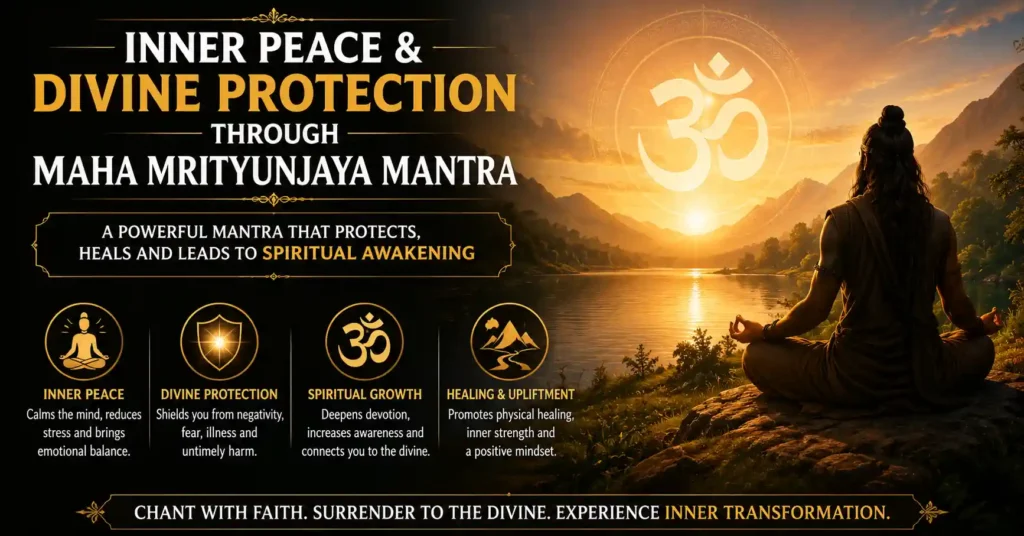
The Maha Mrityunjaya Mantra has been recited for centuries by devotees seeking Lord Shiva’s blessings for strength, peace, healing, and spiritual growth. The benefits associated with the mantra are based on traditional beliefs and devotional practices.
Spiritual Benefits
The Maha Mrityunjaya Mantra helps deepen devotion to Lord Shiva and strengthens one’s spiritual connection with the Divine.
Regular chanting encourages faith, surrender, self-reflection, and a greater awareness of life’s deeper spiritual purpose.
Mental and Emotional Benefits
Many devotees find that chanting the Maha Mrityunjaya Mantra creates a sense of calm and emotional balance.
The rhythmic repetition of the mantra can help reduce anxiety, improve focus, and provide comfort during stressful situations.
Helps Cultivate Courage
One of the central teachings of the Maha Mrityunjaya Mantra is overcoming fear.
The mantra inspires devotees to face uncertainty, change, and life’s challenges with greater confidence and trust in Lord Shiva.
Encourages Positive Thinking
Regular recitation can help shift the mind away from negative thoughts and toward faith, gratitude, and inner strength.
This positive mindset often supports emotional resilience and personal growth.
Supports Meditation and Concentration
The Maha Mrityunjaya Mantra is frequently used during meditation and japa practices.
Its sacred sound and profound meaning help many devotees improve concentration and maintain a focused state of mind.
Strengthens Daily Spiritual Practice
Including the Maha Mrityunjaya Mantra in daily worship can help cultivate discipline and consistency in spiritual life.
Even a few minutes of sincere chanting each day can become a meaningful part of one’s devotional routine.
Inspires Inner Transformation
Beyond worldly benefits, the deeper purpose of the Maha Mrityunjaya Mantra is spiritual transformation.
It reminds devotees to move beyond fear, attachment, and ignorance while progressing toward wisdom, peace, and spiritual freedom.
While devotees traditionally associate many blessings with the Maha Mrityunjaya Mantra, individual experiences may vary. These benefits should be understood as spiritual and devotional beliefs rather than guaranteed outcomes.
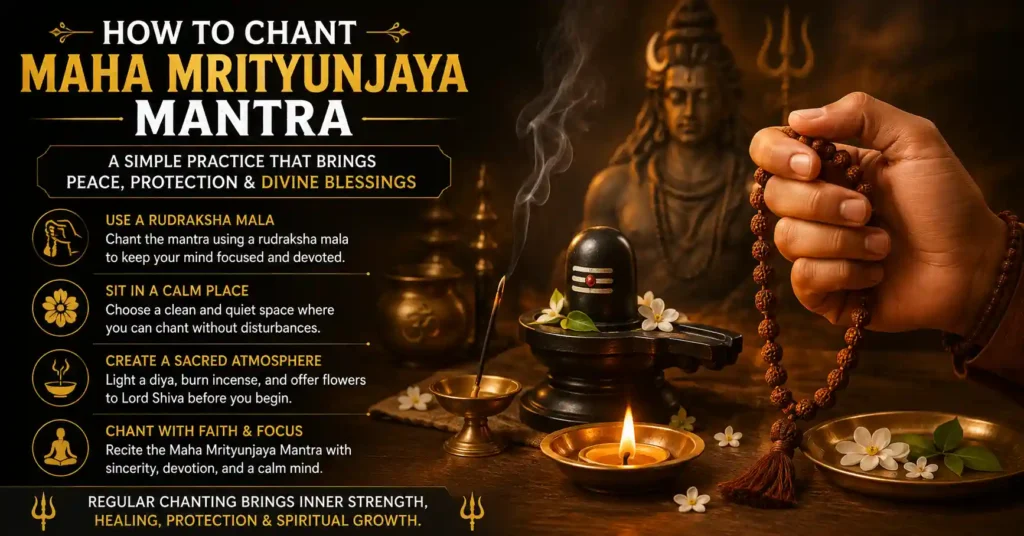
How to Chant Maha Mrityunjaya Mantra
Chanting the Maha Mrityunjaya Mantra is a simple yet powerful spiritual practice. While traditions may vary, the most important elements are devotion, sincerity, and focused remembrance of Lord Shiva.
Prepare Yourself for Chanting
Many devotees prefer to bathe and wear clean clothes before chanting the Maha Mrityunjaya Mantra.
A calm and clean environment can help create a more focused and devotional state of mind.
Create a Peaceful Environment
Choose a quiet place where you can sit comfortably without distractions.
Some devotees light a lamp, incense, or place an image of Lord Shiva or a Shivling nearby to create a devotional atmosphere.
Chant with Focus and Devotion
Recite the Maha Mrityunjaya Mantra slowly and clearly while keeping your attention on its meaning and on Lord Shiva.
The quality of concentration and devotion is generally considered more important than speed or repetition.
How Many Times Should You Chant?
There is no fixed rule for daily chanting.
Many devotees chant the Maha Mrityunjaya Mantra 11, 21, 51, or 108 times, while others recite it once with complete faith and attention.
Can You Use a Mala?
Yes, many practitioners use a Rudraksha mala to keep count during japa.
Using a mala can help maintain focus and develop a consistent chanting practice.
Can You Listen Instead of Chanting?
Yes, listening to the Maha Mrityunjaya Mantra with faith and attention is also considered a meaningful devotional practice.
Many beginners start by listening regularly before memorizing and chanting the mantra themselves.
Consistency Matters More Than Quantity
A few minutes of daily chanting is often more beneficial than occasional long sessions.
Regular recitation helps cultivate devotion, discipline, and a deeper connection with Lord Shiva over time.
Whether chanted once or many times, the Maha Mrityunjaya Mantra is traditionally believed to be most effective when recited with sincerity, faith, and a genuine desire for spiritual growth.
Best Time to Chant Maha Mrityunjaya Mantra
The Maha Mrityunjaya Mantra can be chanted at any time with faith and devotion. However, certain times are traditionally considered especially auspicious for Shiva worship and mantra recitation.
During Brahma Muhurta
Brahma Muhurta, the period before sunrise, is regarded as one of the best times for chanting the Maha Mrityunjaya Mantra.
The mind is generally calm and free from distractions, making it easier to focus on prayer and meditation.
During Morning Prayer
Many devotees include the Maha Mrityunjaya Mantra in their daily morning worship.
Starting the day with the mantra can help cultivate peace, positivity, and spiritual awareness.
On Mondays
Monday is traditionally dedicated to Lord Shiva.
Chanting the Maha Mrityunjaya Mantra on Mondays is a common practice among Shiva devotees seeking blessings and spiritual strength.
During Pradosh
Pradosh Kaal, the sacred period around sunset on Trayodashi, is considered highly auspicious for Shiva worship.
Many devotees recite the Maha Mrityunjaya Mantra during this time as part of their prayers and meditation.
During Maha Shivaratri
Maha Shivaratri is one of the most important festivals dedicated to Lord Shiva.
The Maha Mrityunjaya Mantra is widely chanted during Shivaratri worship, night vigils, and spiritual observances.
During Difficult Times
Many people turn to the Maha Mrityunjaya Mantra during periods of illness, emotional stress, uncertainty, or personal challenges.
The mantra is often recited to seek courage, peace, and Lord Shiva’s guidance during such times.
Any Time with Faith and Devotion
While certain occasions are considered especially sacred, there is no restriction on when the Maha Mrityunjaya Mantra may be chanted.
The best time is whenever you can recite it with sincerity, concentration, and devotion to Lord Shiva.
Can Beginners Chant Maha Mrityunjaya Mantra?
Absolutely. The Maha Mrityunjaya Mantra can be chanted by beginners as well as experienced devotees. Although the Sanskrit words may seem difficult initially, anyone can start learning this sacred mantra with sincerity and devotion.
You Do Not Need Perfect Pronunciation
Many beginners worry about making mistakes while chanting the Maha Mrityunjaya Mantra.
While correct pronunciation is beneficial, most spiritual traditions emphasize devotion and sincere intent over perfection. Regular practice naturally improves pronunciation over time.
Start Slowly and Learn Gradually
There is no need to memorize the entire Maha Mrityunjaya Mantra immediately.
You can begin by learning the mantra one line at a time, listening to recitations, and becoming familiar with its rhythm and meaning.
Understanding the Meaning Helps
Learning the meaning of the Maha Mrityunjaya Mantra can make chanting more meaningful.
When devotees understand the symbolism and spiritual message behind the mantra, they often develop a deeper connection with Lord Shiva.
Listening Is Also Beneficial
If chanting feels challenging at first, listening to the Maha Mrityunjaya Mantra regularly can be a great starting point.
Many devotees become comfortable with pronunciation and rhythm through attentive listening before beginning their own recitation practice.
Focus on Devotion, Not Perfection
The purpose of the Maha Mrityunjaya Mantra is spiritual growth and remembrance of Lord Shiva.
Rather than worrying about mistakes, beginners should focus on faith, concentration, and cultivating a sincere devotional attitude.
Every Devotee Begins Somewhere
No one starts as an expert.
Every devotee who chants the Maha Mrityunjaya Mantra today once learned it for the first time. Patience, consistency, and devotion are often the keys to developing a meaningful chanting practice.
Can You Chant Maha Mrityunjaya Mantra for Someone Else?
Yes, many devotees chant the Maha Mrityunjaya Mantra for the well-being of family members, friends, and loved ones. This practice is common in Hindu tradition, especially when someone is facing illness, emotional difficulties, or challenging life circumstances.
Chanting with Good Intentions
When chanting the Maha Mrityunjaya Mantra for another person, the most important element is sincere intention.
Devotees often pray for the person’s health, peace, strength, protection, and overall well-being while offering the recitation to Lord Shiva.
A Prayer for Healing and Strength
The Maha Mrityunjaya Mantra is frequently recited during periods of illness or recovery.
Many devotees believe that chanting the mantra helps create a positive spiritual environment and invokes Lord Shiva’s blessings for courage and resilience.
During Special Prayers and Rituals
The mantra is commonly included in pujas, yajnas, japa practices, and group prayers dedicated to someone’s welfare.
Temples and spiritual organizations also organize collective chanting of the Maha Mrityunjaya Mantra for individuals and communities facing difficulties.
Distance Is Not a Barrier
Many devotees chant the Maha Mrityunjaya Mantra for loved ones who are far away.
The practice is viewed as an expression of prayer, compassion, and spiritual support regardless of physical distance.
Leave the Results to Lord Shiva
While chanting for someone else, devotees are encouraged to focus on prayer rather than expectations.
The spirit of the Maha Mrityunjaya Mantra is surrender, faith, and trust in Lord Shiva’s wisdom and divine grace.
A Meaningful Act of Devotion
Chanting the Maha Mrityunjaya Mantra for others is ultimately an act of kindness and devotion.
It reflects the belief that sincere prayer, combined with faith and compassion, can become a powerful offering at the feet of Mahadev.
Common Doubts About Maha Mrityunjaya Mantra
Many devotees have practical questions about chanting the Maha Mrityunjaya Mantra. While traditions may vary across regions and spiritual lineages, the following answers reflect commonly accepted devotional practices.
Can Women Chant Maha Mrityunjaya Mantra?
Yes, women can chant the Maha Mrityunjaya Mantra.
There is no widely accepted scriptural restriction that prevents women from reciting this sacred mantra. Across India, countless women include Shiva mantras, stotras, and prayers in their daily spiritual practice.
The most important requirement is devotion, sincerity, and respect for Lord Shiva.
Can I Chant Maha Mrityunjaya Mantra at Night?
Yes, the Maha Mrityunjaya Mantra can be chanted at night.
Many devotees recite it before sleep, during meditation, or during periods of worry and uncertainty. The mantra is traditionally believed to create a sense of peace and spiritual comfort.
However, it may be chanted at any time that allows for focused and sincere prayer.
How Many Times Should I Chant Maha Mrityunjaya Mantra?
There is no fixed rule regarding the number of repetitions.
Some devotees chant the Maha Mrityunjaya Mantra 11, 21, 51, or 108 times, while others recite it once with complete devotion and concentration.
The quality of prayer is generally considered more important than the number of repetitions.
Do I Need a Guru to Chant Maha Mrityunjaya Mantra?
No, a guru is not required to begin chanting the Maha Mrityunjaya Mantra.
Many devotees learn the mantra through scriptures, family traditions, temples, or spiritual teachers and recite it as part of their personal worship.
However, guidance from a knowledgeable teacher can help deepen understanding and pronunciation.
Can Children Chant Maha Mrityunjaya Mantra?
Yes, children can learn and chant the Maha Mrityunjaya Mantra.
Many families introduce children to Shiva mantras from an early age. Learning the mantra can help children become familiar with devotional practices and spiritual values.
Children may start by listening to the mantra and gradually learning its pronunciation and meaning.
Is It Necessary to Sit Before a Shivling?
No, it is not necessary to sit before a Shivling to chant the Maha Mrityunjaya Mantra.
While many devotees prefer chanting in front of a Shivling, image of Lord Shiva, or home altar, the mantra may be recited anywhere with faith and concentration.
Lord Shiva can be remembered through sincere devotion regardless of location.
What If I Mispronounce the Mantra?
Beginners often worry about making mistakes while chanting the Maha Mrityunjaya Mantra.
While proper pronunciation is beneficial, most spiritual traditions emphasize sincere devotion over perfection. Regular practice and attentive listening usually improve pronunciation naturally.
Is Listening to Maha Mrityunjaya Mantra Effective?
Yes, listening to the Maha Mrityunjaya Mantra is also considered a meaningful devotional practice.
Many devotees listen to the mantra during meditation, prayer, travel, or quiet reflection. Listening regularly can help create a peaceful mindset and strengthen one’s connection with Lord Shiva.
Conclusion
The Maha Mrityunjaya Mantra is one of the most sacred and revered mantras dedicated to Lord Shiva. Its timeless message extends beyond protection and healing, guiding devotees toward courage, inner peace, spiritual growth, and freedom from fear.
Through its profound symbolism and Vedic wisdom, the Maha Mrityunjaya Mantra teaches us to trust the Divine, accept life’s changes with grace, and cultivate resilience in the face of challenges.
Whether you chant the Maha Mrityunjaya Mantra daily, during meditation, or in difficult times, the mantra serves as a powerful reminder of Lord Shiva’s compassion and protective presence.
If you are new to the Maha Mrityunjaya Mantra, begin with sincerity and patience. Even a few moments of devoted recitation can become a meaningful step on your spiritual journey.
The true power of the Maha Mrityunjaya Mantra lies not only in its words but in the faith, devotion, and inner transformation it inspires in the hearts of devotees.
Did You Know?
The Maha Mrityunjaya Mantra is one of the oldest mantras found in the Vedic tradition and is often called the “Death-Conquering Mantra.” Despite its name, the deeper purpose of the Maha Mrityunjaya Mantra is not merely protection from physical death.
It symbolizes freedom from fear, attachment, suffering, and spiritual ignorance, helping devotees move toward inner peace, wisdom, and liberation through Lord Shiva’s grace.
Suggested Reading
If you found the Maha Mrityunjaya Mantra helpful, you may also enjoy exploring other powerful Shiva stotras and mantras. These sacred prayers complement the teachings of the Maha Mrityunjaya Mantra and can help deepen your understanding of Lord Shiva, devotion, meditation, and spiritual growth.
Many devotees recite the Maha Mrityunjaya Mantra alongside these hymns during daily worship and special occasions dedicated to Mahadev.
Rudrashtakam: Lyrics with Meaning in Hindi and English, Benefits and How to Chant
https://thesanatantales.com/rudrashtakam-lyrics-with-meaning-hindi-english/
Lingashtakam Meaning, Benefits & How to Chant (Full Stotram)
https://thesanatantales.com/lingashtakam-meaning-benefits/
Shiv Tandav Stotram Meaning, Full Lyrics, Benefits and How to Chant
https://thesanatantales.com/shiv-tandav-stotram-meaning-lyrics-benefits/
Argala Stotra: Lyrics, Meaning, Benefits, and How to Chant
https://thesanatantales.com/argala-stotra/
Durga Chalisa Lyrics with English Pronunciation and Hindi Meaning
https://thesanatantales.com/durga-chalisa-lyrics-meaning/
Devi Kavach Meaning: Durga Saptashati Protection Prayer with English Pronunciation
https://thesanatantales.com/devi-kavach-meaning/
Maha Mrityunjaya Mantra
https://en.wikipedia.org/wiki/Mahamrityunjaya_Mantra
FAQs
What is the meaning of Maha Mrityunjaya Mantra?
The Maha Mrityunjaya Mantra is a sacred Vedic prayer dedicated to Lord Shiva in His three-eyed form, Tryambaka. It is often translated as a prayer seeking freedom from fear, suffering, and bondage while moving toward spiritual growth and divine grace.
The mantra uses the image of a ripe fruit naturally separating from its stem to symbolize liberation from attachment and ignorance. While many people associate the Maha Mrityunjaya Mantra with protection and healing, its deeper meaning focuses on inner transformation, spiritual awakening, and trust in the eternal nature of the soul.
Why is Maha Mrityunjaya Mantra called the Death-Conquering Mantra?
The Maha Mrityunjaya Mantra is called the “Death-Conquering Mantra” because it symbolizes victory over fear, suffering, and the limitations that bind the soul. Traditionally, it is associated with Lord Shiva and the story of Sage Markandeya, who was protected through his unwavering devotion.
The deeper meaning of conquering death is not simply avoiding physical death. Instead, the mantra teaches devotees to overcome fear, attachment, and ignorance. It encourages spiritual growth and helps seekers understand the eternal nature of the soul beyond the cycle of birth and death.
Can Maha Mrityunjaya Mantra be chanted daily?
Yes, the Maha Mrityunjaya Mantra can be chanted daily and is often included in regular worship, meditation, and japa practices. Many devotees recite it in the morning, while others chant it during prayer, quiet reflection, or before beginning important activities.
Daily chanting helps cultivate discipline, devotion, and remembrance of Lord Shiva. Even a few minutes of sincere recitation can become a meaningful spiritual practice. Consistency is generally considered more important than the number of repetitions, and devotees are encouraged to chant with faith, focus, and understanding.
What are the benefits of chanting Maha Mrityunjaya Mantra?
According to traditional beliefs, chanting the Maha Mrityunjaya Mantra helps strengthen devotion, promote inner peace, and develop emotional resilience. Many devotees feel that regular recitation encourages a positive mindset and helps them face challenges with greater courage and faith.
The mantra is also associated with spiritual growth, self-reflection, and a deeper connection with Lord Shiva. While it is widely recited for healing and protection, its ultimate purpose is to guide devotees toward freedom from fear, attachment, and spiritual ignorance through divine grace and inner transformation.
Can beginners chant Maha Mrityunjaya Mantra?
Absolutely. The Maha Mrityunjaya Mantra can be chanted by beginners as well as experienced practitioners. Although the Sanskrit words may seem unfamiliar at first, most people learn the mantra gradually through listening, repetition, and understanding its meaning.
Beginners do not need perfect pronunciation before they start. While proper pronunciation is beneficial, devotion and sincerity are traditionally considered more important. Learning the meaning of the Maha Mrityunjaya Mantra can also make the practice more meaningful and help build a deeper connection with Lord Shiva over time.
Can I chant Maha Mrityunjaya Mantra for someone else?
Yes, many devotees chant the Maha Mrityunjaya Mantra for family members, friends, and loved ones. This practice is especially common when someone is experiencing illness, emotional stress, or a difficult phase of life.
When chanting for another person, devotees typically pray for their well-being, strength, peace, and spiritual welfare while offering the recitation to Lord Shiva. The practice is viewed as an expression of compassion, faith, and devotion. Rather than focusing on specific outcomes, devotees are encouraged to leave the results to Shiva’s wisdom and divine grace.
What is the best time to chant Maha Mrityunjaya Mantra?
The Maha Mrityunjaya Mantra may be chanted at any time, but certain periods are traditionally considered especially auspicious. These include Brahma Muhurta before sunrise, morning worship, Mondays, Pradosh Kaal, and Maha Shivaratri.
Many devotees also chant the mantra during challenging times when seeking strength, peace, or spiritual support. Ultimately, the best time is whenever you can recite the Maha Mrityunjaya Mantra with concentration, faith, and devotion. A sincere and focused practice is generally regarded as more important than following a particular schedule.
How many times should I chant Maha Mrityunjaya Mantra?
There is no universal rule regarding how many times the Maha Mrityunjaya Mantra must be chanted. Many devotees recite it 11, 21, 51, or 108 times, depending on their personal practice and available time.
However, traditional teachings generally emphasize quality over quantity. Chanting the Maha Mrityunjaya Mantra with attention, devotion, and understanding is considered more meaningful than rushing through a large number of repetitions. Even a single recitation offered with sincerity and faith can be a valuable act of worship and remembrance of Lord Shiva.
References & Sources
This article on the Maha Mrityunjaya Mantra is based on traditional Hindu scriptures, Vedic literature, Shaivite traditions, and widely accepted interpretations preserved through generations of spiritual teachers and devotees.
The meanings, symbolism, and explanations presented in this article are intended to help readers understand the spiritual significance of the Maha Mrityunjaya Mantra in a simple and accessible way.
Primary Sources
- Rigveda (Mandala 7, Sukta 59, Mantra 12)
- Yajurveda (Maha Mrityunjaya Mantra References)
- Traditional Shaivite Commentaries and Oral Teachings
- Puranic Traditions Associated with Sage Markandeya and Lord Shiva
- Hindu Mantra and Bhakti Literature
Disclaimer
The benefits and spiritual observations associated with chanting the Maha Mrityunjaya Mantra are based on traditional beliefs, devotional practices, and personal spiritual experiences. They should be understood as matters of faith and spirituality rather than guaranteed outcomes.
The purpose of this article is educational and devotional, helping readers explore the meaning, symbolism, and significance of the Maha Mrityunjaya Mantra within the broader context of Sanatan Dharma.
Explore More Topics from The Sanatan Tales