Maha Navami is one of the most sacred and spiritually significant days of Sharad Navratri. Observed on the ninth day of the festival, Maha Navami marks the culmination of nine days of devotion to Maa Durga and her divine forms.
On this auspicious day, devotees worship Maa Siddhidatri, the ninth form of Navadurga, perform Havan and Purnahuti, and seek the blessings of the Divine Mother for wisdom, prosperity, and spiritual growth.
For many devotees, Maha Navami is not merely a festival ritual. It represents the completion of an inner spiritual journey. The prayers, fasting, self-discipline, and devotion practiced throughout Navratri reach their peak on Maha Navami. It is a day that reminds us that sincere faith, perseverance, and righteousness ultimately lead to divine grace.
Maha Navami is also closely associated with Kanya Pujan, Navami Havan, and the worship of Maa Siddhidatri, who is revered as the giver of spiritual powers and divine blessings. Across India, temples and homes resonate with devotional chants, sacred fire rituals, and celebrations honoring the triumph of divine energy over negativity.
In this article, you will learn the meaning and significance of Maha Navami, the story of Maa Siddhidatri, important rituals, Kanya Pujan, Havan and Purnahuti, regional traditions, spiritual lessons, Maha Navami 2026 date details, and answers to commonly asked questions.
Maha Navami at a Glance
| Aspect | Details |
|---|---|
| Festival Name | Maha Navami |
| Observed During | Sharad Navratri |
| Tithi | Ashwin Shukla Navami |
| Deity Worshipped | Maa Siddhidatri (Ninth Form of Navadurga) |
| Significance | Culmination of Navratri worship and spiritual practices |
| Major Rituals | Maha Navami Puja, Kanya Pujan, Havan, Purnahuti |
| Special Bhog | Halwa, Puri, Kala Chana, Fruits |
| Regional Traditions | Ayudha Puja, Saraswati Puja, Durga Puja |
| Spiritual Theme | Perfection, Divine Grace, Fulfillment and Victory of Good Over Evil |
| Followed By | Vijayadashami (Dussehra) |
| Maha Navami 2026 | 19–20 October 2026 (depending on local Panchang and tithi observance) (Astha Sangrah) |
Table of Contents
ToggleWhat Is Maha Navami?
Maha Navami is the ninth and final day of Navratri, observed on the Navami Tithi of Ashwin Shukla Paksha. It is one of the most important days of the festival and marks the completion of nine days of worship dedicated to the Divine Mother. The day is devoted to Maa Siddhidatri, the ninth form of Navadurga, who is revered as the bestower of spiritual wisdom, fulfillment, and divine grace.
The word Maha Navami means “The Great Ninth Day.” It represents the culmination of the spiritual journey that begins on the first day of Navratri. Throughout the nine days, devotees practice prayer, self-discipline, fasting, and devotion. Maha Navami symbolizes the successful completion of this sacred journey and prepares devotees for the celebration of Vijayadashami, the festival of victory.
In many parts of India, Maha Navami is observed through special pujas, Kanya Pujan, Havan, and Purnahuti. The day is considered highly auspicious for seeking blessings for spiritual progress, wisdom, prosperity, and inner transformation. Many devotees conclude their Navratri fasts and offer gratitude to the Goddess for guiding them through the nine sacred nights.
Maha Navami also carries a deeper spiritual message. It teaches that true success is not merely material achievement but the attainment of wisdom, purity, devotion, and self-realization. The worship of Maa Siddhidatri reminds devotees that sincere faith and righteous actions ultimately lead to fulfillment and divine
Why Is Maha Navami Celebrated?
Maha Navami is celebrated to honor the victory of divine power over negative forces and to mark the completion of the sacred nine-day Navratri observance. It is the day when devotees offer their final prayers to the Divine Mother before the arrival of Vijayadashami, the festival that symbolizes the triumph of righteousness over evil.
The day is dedicated to Maa Siddhidatri, the ninth and final form of Navadurga. Her name means “the giver of spiritual attainments and fulfillment.” Devotees worship her to seek wisdom, inner peace, spiritual growth, and divine blessings. In the Navadurga journey, Maa Siddhidatri represents the final stage of spiritual completion and realization.
Maha Navami is also celebrated as the culmination of the discipline practiced throughout Navratri. For nine days, devotees engage in fasting, prayer, self-control, mantra chanting, and devotion. This sacred day symbolizes the successful completion of that spiritual journey and encourages devotees to carry those virtues into everyday life.
In many traditions, Maha Navami is associated with Kanya Pujan, Havan, and Purnahuti. These rituals express gratitude to the Goddess and seek her continued protection and guidance. In South India, the day is also observed as Ayudha Puja and Saraswati Puja, highlighting the importance of knowledge, skills, and honest work.
Beyond rituals, Maha Navami reminds us that true victory begins within. It teaches that when faith, wisdom, courage, compassion, and discipline come together, a person can overcome inner weaknesses and move closer to spiritual fulfillment. This timeless message is what makes Maha Navami one of the most revered days in Sanatan Dharma.
The Story Behind Maha Navami
The story of Maha Navami is deeply connected with Maa Durga’s battle against the buffalo demon Mahishasura. According to Hindu tradition, Mahishasura had gained immense power through severe penance and began creating suffering across the three worlds. Neither gods nor humans could stop his growing tyranny.
To restore balance, the combined divine energies of Brahma, Vishnu, and Mahesh manifested as Maa Durga. Armed with celestial weapons gifted by the gods, the Goddess rode into battle against Mahishasura and his powerful army. The fierce battle continued for several days, demonstrating the triumph of divine strength over arrogance and evil.
During Navratri, devotees remember different stages of this cosmic battle. Maha Navami is believed to mark the final phase of the Goddess’s victory over demonic forces. It symbolizes the moment when darkness begins to fade and the forces of righteousness emerge victorious.
Beyond its historical and mythological significance, the story carries a powerful spiritual lesson. Mahishasura is often seen as a symbol of ego, ignorance, anger, greed, and negative tendencies that exist within every person. Maa Durga represents divine wisdom, courage, and inner strength that help overcome these obstacles.
The significance of Maha Navami therefore extends beyond a mythological event. It reminds devotees that the real battle is often within ourselves. Just as the Goddess defeated Mahishasura, we too can overcome fear, negativity, and self-doubt through faith, discipline, and devotion.
This message of inner transformation is one of the reasons why Maha Navami continues to inspire millions of devotees across generations and remains one of the most meaningful days of Navratri.
Maa Siddhidatri: The Goddess of Maha Navami
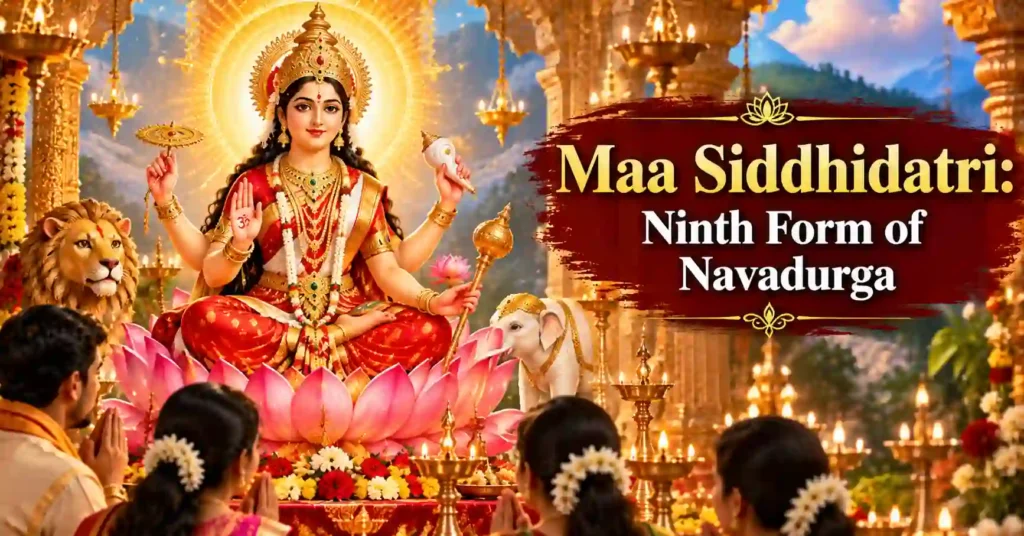
Maa Siddhidatri is worshipped on Maha Navami as the ninth and final form of Navadurga. Her name is derived from two Sanskrit words: Siddhi, meaning spiritual powers or accomplishments, and Datri, meaning the giver. She is therefore revered as the Goddess who grants divine blessings, wisdom, and spiritual fulfillment.
According to Hindu tradition, Maa Siddhidatri is seated on a lotus and is often depicted holding a discus, conch, mace, and lotus. Her serene form symbolizes perfection, purity, and the highest state of spiritual realization. Devotees worship her to seek inner peace, knowledge, success, and freedom from obstacles.
The worship of Maa Siddhidatri on Maha Navami represents the final stage of the Navadurga journey. During the nine days of Navratri, each form of the Goddess guides devotees toward spiritual growth. By the time Maha Navami arrives, the journey reaches its culmination, symbolizing the attainment of divine grace and self-realization.
Scriptures describe Maa Siddhidatri as the bestower of both worldly and spiritual blessings. While many devotees pray for prosperity, health, and success, her deeper blessing is the awakening of wisdom and devotion. She reminds us that true fulfillment comes not only from material achievements but also from inner transformation.
The significance of Maha Navami becomes even more meaningful when viewed through the worship of Maa Siddhidatri. Her divine presence encourages devotees to cultivate humility, faith, compassion, and self-discipline. These qualities help transform spiritual practices into lasting virtues that enrich everyday life.
For devotees, Maha Navami is therefore not just the end of Navratri. It is a celebration of the divine wisdom and grace represented by Maa Siddhidatri, whose blessings guide seekers toward a life of purpose, devotion, and spiritual fulfillment.
Spiritual Meaning of Maha Navami
Beyond rituals and celebrations, the true significance of Maha Navami lies in its spiritual message. The day symbolizes completion, fulfillment, and the victory of higher consciousness over ignorance. After nine days of devotion, prayer, and self-discipline, devotees are reminded that spiritual growth is a journey that requires patience, faith, and perseverance.
Maha Navami teaches that every person faces an inner battle. Negative emotions such as anger, ego, greed, jealousy, and fear can prevent us from living with peace and wisdom. The worship of Maa Siddhidatri inspires devotees to overcome these obstacles and cultivate positive qualities such as compassion, humility, courage, and devotion.
The ninth day of Navratri also represents the culmination of inner transformation. Just as the Goddess defeats powerful demonic forces in sacred stories, devotees are encouraged to conquer their own weaknesses and move closer to their highest potential. This is why many spiritual seekers view Maha Navami as a day of self-reflection and gratitude.
Another important lesson of Maha Navami is that true success is not measured only by wealth, status, or achievements. In Sanatan Dharma, success also includes purity of thought, strength of character, and a deep connection with the Divine. The blessings of Maa Siddhidatri remind devotees that inner fulfillment is the foundation of lasting happiness.
As Navratri approaches its conclusion, Maha Navami encourages us to carry the values learned during the festival into daily life. The devotion, discipline, and spiritual awareness cultivated during these nine days should continue long after the celebrations end. In this way, Maha Navami becomes not just a festival observance but a guide for living a more conscious and meaningful life.
Maha Navami and the Victory Over Mahishasura
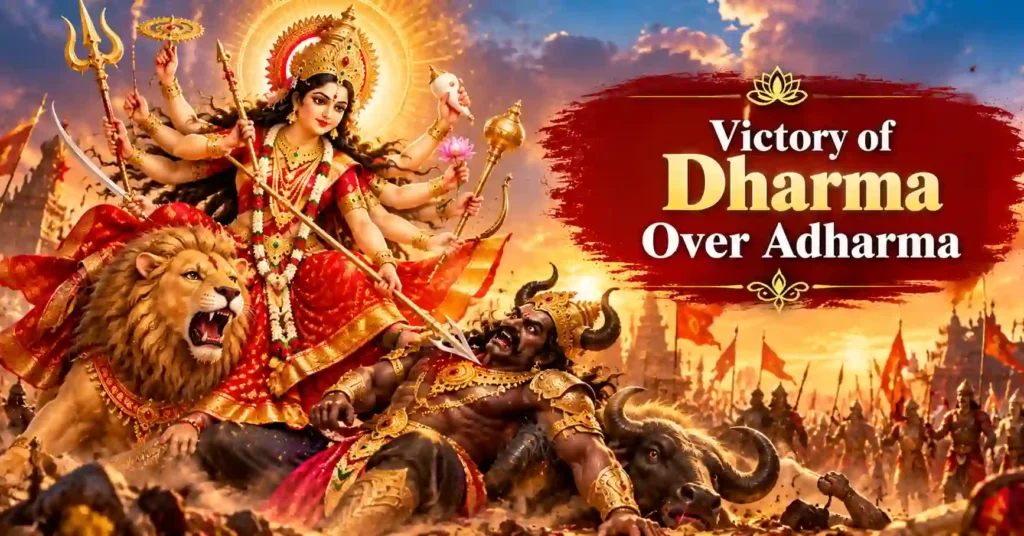
One of the most important themes associated with Maha Navami is the victory of Maa Durga over Mahishasura. This legendary battle is not merely a mythological event but a powerful symbol of the triumph of dharma over adharma and truth over falsehood.
According to Hindu tradition, Mahishasura’s growing power threatened peace and harmony across the universe. The gods were unable to defeat him, and their combined divine energies manifested as Maa Durga. Armed with celestial weapons and unwavering determination, the Goddess fought against the demon and his army to restore cosmic balance.
Maha Navami commemorates the final phase of this divine battle. It reminds devotees that no matter how powerful negativity may appear, righteousness ultimately prevails. The victory of the Goddess serves as an enduring source of hope and inspiration for those facing challenges in their own lives.
On a deeper level, Mahishasura represents the negative tendencies that reside within every human being, such as ego, anger, greed, attachment, and ignorance. The victory of Maa Durga symbolizes the power of wisdom, self-discipline, and devotion to overcome these inner enemies and achieve spiritual growth.
This message makes Maha Navami especially meaningful in today’s world. It encourages devotees to stand firm in their values, remain faithful during difficult times, and trust that goodness and truth will ultimately prevail.
Importance of Kanya Pujan on Maha Navami
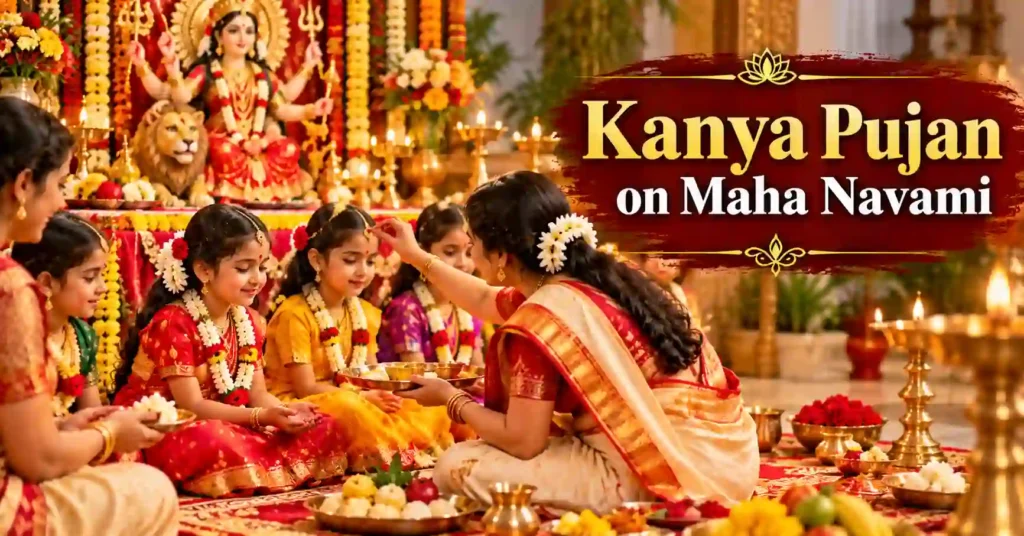
Kanya Pujan is one of the most cherished traditions associated with Maha Navami. In this sacred ritual, young girls are worshipped as living manifestations of the Divine Mother. The practice reflects the belief that the feminine divine exists in every child and deserves respect, honor, and reverence.
During Kanya Pujan, devotees invite young girls, usually between the ages of two and ten, into their homes or temples. Their feet are washed, tilak is applied, and they are offered food, gifts, and blessings. In many families, a young boy representing Bhairav is also included in the ritual.
The significance of Kanya Pujan goes beyond tradition. It serves as a reminder that every form of feminine energy is sacred. By honoring young girls, devotees express gratitude to Maa Durga and acknowledge the qualities of purity, innocence, compassion, and divine strength that they symbolize.
Many devotees perform Kanya Pujan on Ashtami, while others observe it on Maha Navami. Both traditions are widely accepted and followed across different regions of India. The essence of the ritual remains the same: honoring the Divine Mother through her living representations.
Spiritually, Kanya Pujan teaches humility and respect. It reminds us that divinity is not confined to temples and scriptures but can also be found in the people around us. This beautiful tradition continues to be one of the most meaningful and widely practiced rituals of Maha Navami.
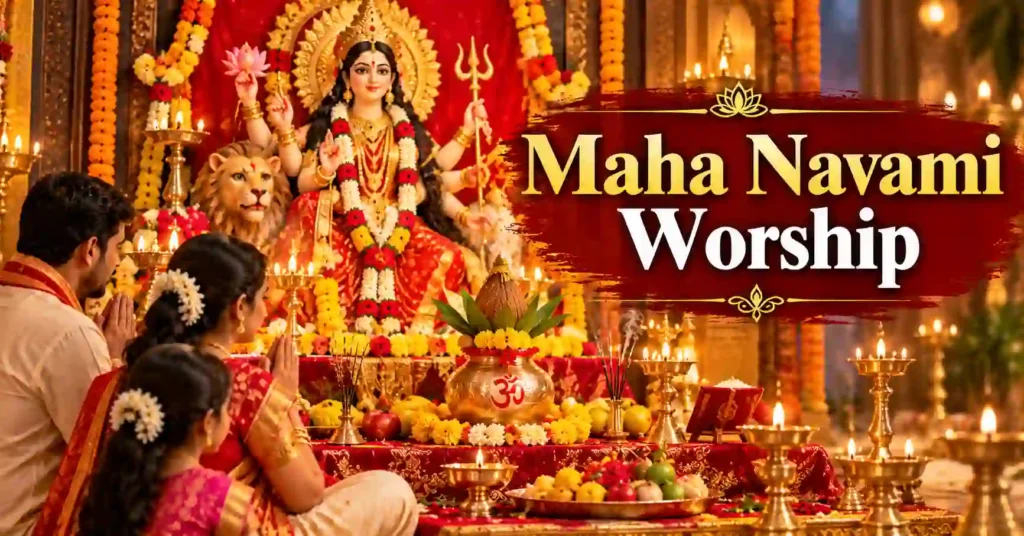
How to Perform Maha Navami Puja at Home
Performing Maha Navami Puja at home is a beautiful way to seek the blessings of Maa Siddhidatri and conclude the Navratri celebrations with devotion. The puja does not need elaborate arrangements. What matters most is sincerity, faith, and a focused mind.
Begin the day by taking a bath and wearing clean clothes. Clean the puja area and decorate it with flowers, diyas, and rangoli if possible. Place the idol or picture of Maa Durga or Maa Siddhidatri on a clean altar. If you performed Ghatasthapana at the beginning of Navratri, continue worshipping the Kalash along with the Goddess.
Light a diya and incense sticks before starting the puja. Offer flowers, fruits, sweets, and seasonal bhog to the Goddess. Many devotees also offer halwa, puri, and kala chana, especially if Kanya Pujan is being performed on Maha Navami.
Recite Durga Saptashati, Durga Chalisa, Siddhidatri Stotra, or simple prayers according to your family tradition. Chanting the Goddess’s mantras with devotion is considered highly auspicious on this day. Even a few minutes of sincere prayer can create a deep spiritual connection.
If possible, perform Kanya Pujan and seek blessings from the young girls after offering them food and gifts. Many families also conduct a small Havan as part of the Maha Navami rituals and offer prayers for the well-being of family members and society.
Conclude the puja with aarti and gratitude to the Divine Mother. Pray for wisdom, strength, peace, and the ability to follow the path of dharma. The essence of Maha Navami Puja lies not in elaborate rituals but in wholehearted devotion and surrender to the Goddess.
Maha Navami Puja Samagri List
Before beginning the Maha Navami Puja, it is helpful to gather all the required items in advance. While the exact samagri may vary according to regional traditions and family customs, the following items are commonly used for worship on this sacred day.
Essential Puja Items
- Idol or picture of Maa Durga or Maa Siddhidatri
- Kalash (if established during Ghatasthapana)
- Clean red or yellow cloth
- Kumkum (Roli)
- Haldi (Turmeric)
- Akshat (Unbroken rice)
- Fresh flowers and flower garlands
- Betel leaves and betel nuts
- Coconut
- Incense sticks (Agarbatti)
- Camphor (Kapoor)
- Ghee lamp (Diya)
- Gangajal or clean water
Bhog and Offerings
- Fruits
- Sweets
- Mishri
- Halwa
- Puri
- Kala Chana
- Dry fruits
These offerings are commonly presented to the Goddess and later distributed as prasad among family members and devotees.
Items for Kanya Pujan
If you plan to perform Kanya Pujan on Maha Navami, keep the following items ready:
- Plates for serving prasad
- Halwa, Puri, and Kala Chana
- Flowers
- Kumkum for tilak
- Chunri (optional)
- Small gifts, stationery items, or dakshina
Items for Navami Havan
For devotees performing a Havan, additional materials may include:
- Havan Kund
- Samidha (sacred wood)
- Havan Samagri
- Ghee
- Camphor
- Mango leaves
- Rice and sesame seeds
Having the puja samagri prepared beforehand allows devotees to focus on prayer and devotion without interruptions. Remember that the true spirit of Maha Navami lies in devotion and gratitude. Even a simple worship performed with sincerity is considered pleasing to Maa Siddhidatri.
Maha Navami Puja Vidhi Step by Step
If you are observing Maha Navami at home, following a simple and sincere puja vidhi can help you connect deeply with the Divine Mother. The steps below can be adapted according to your family traditions and available time.
1. Purify Yourself and the Puja Area
Begin the day with an early morning bath and wear clean clothes. Clean the puja space and decorate it with flowers, diyas, and rangoli if desired. A clean environment is believed to attract positive energy and create a peaceful atmosphere for worship.
2. Prepare the Altar
Place the idol or picture of Maa Durga or Maa Siddhidatri on a clean cloth. If you established a Kalash during Ghatasthapana, keep it in its original place and continue worshipping it. Light a diya and incense sticks before starting the puja.
3. Invoke the Divine Mother
Join your hands and pray to Maa Siddhidatri with devotion. Offer flowers while mentally inviting the Goddess to accept your worship. This step is known as invoking the divine presence and is an important part of Maha Navami Puja.
4. Offer Puja Samagri
Offer kumkum, haldi, akshat, flowers, fruits, sweets, and other items to the Goddess. Many devotees also offer red flowers, which are considered especially dear to Maa Durga.
5. Chant Mantras and Sacred Texts
Recite Durga Chalisa, Siddhidatri Stotra, Durga Saptashati, or any prayer dedicated to the Divine Mother. If time is limited, even simple chanting of the Goddess’s name with faith is considered beneficial.
6. Offer Bhog
Prepare and offer bhog such as halwa, puri, kala chana, fruits, or sweets. Place the offerings before the Goddess and pray with gratitude. After the puja, the bhog can be distributed as prasad among family members.
7. Perform Kanya Pujan
Many devotees perform Kanya Pujan on Maha Navami by worshipping young girls as forms of the Divine Mother. Their feet are respectfully washed, tilak is applied, and they are offered food, gifts, and blessings.
8. Conduct Havan and Purnahuti (Optional)
If your family tradition permits, perform a Navami Havan by offering ghee and havan samagri into the sacred fire while chanting mantras. The ritual concludes with Purnahuti, symbolizing the completion of the worship.
9. Perform Aarti
Conclude the puja with Maa Durga Aarti or Siddhidatri Aarti. Ring a bell, wave the diya before the Goddess, and sing devotional hymns with family members.
10. Offer Gratitude and Seek Blessings
End the Maha Navami Puja by expressing gratitude to the Divine Mother for her blessings. Pray for wisdom, good health, spiritual growth, and the strength to walk the path of dharma.
The essence of Maha Navami Puja is not the complexity of the rituals but the devotion with which they are performed. A sincere prayer offered with faith is considered the most precious offering to Maa Siddhidatri.
Maha Navami Bhog and Offerings
Offering bhog on Maha Navami is an important part of the worship of Maa Siddhidatri. The food offered to the Goddess is prepared with devotion and gratitude and is later distributed as prasad among family members and devotees. In Sanatan Dharma, bhog is not merely food; it is an expression of love, faith, and surrender to the Divine Mother.
One of the most popular Maha Navami offerings is halwa, puri, and kala chana. This sacred combination is especially prepared when Kanya Pujan is performed and is considered highly auspicious. Many devotees also offer seasonal fruits, dry fruits, coconut, mishri, and homemade sweets.
The bhog should ideally be prepared in a clean and peaceful environment. While cooking, devotees often chant the name of the Goddess or listen to devotional hymns. The intention behind the offering is as important as the food itself. A simple meal prepared with sincerity is considered more valuable than an elaborate feast offered without devotion.
Common Bhog Offered on Maha Navami
- Halwa
- Puri
- Kala Chana
- Fresh Fruits
- Coconut
- Kheer
- Dry Fruits
- Mishri
- Traditional Sweets
- Panchamrit
In different parts of India, the offerings may vary according to local customs. Some families prepare special regional dishes, while others offer only fruits and simple sattvic food. All traditions share the same purpose: expressing gratitude to Maa Siddhidatri and seeking her blessings.
Spiritually, offering bhog teaches humility and selflessness. It reminds devotees that everything they possess ultimately comes from the Divine. Through Maha Navami offerings, devotees symbolically surrender their ego and express gratitude for the abundance and grace present in their lives.
Navami Havan and Purnahuti
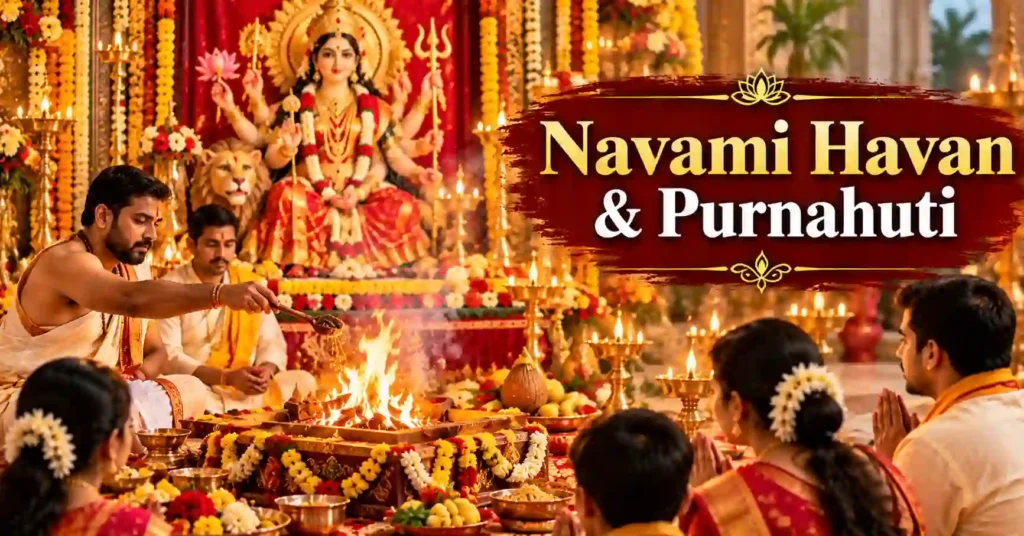
Navami Havan is one of the most sacred rituals performed on Maha Navami. After nine days of worship, prayers, and devotion, devotees offer oblations into the sacred fire as a symbol of purification, gratitude, and spiritual completion. In many households and temples, the Havan marks the culmination of the Navratri celebrations.
According to Hindu tradition, fire is considered a divine witness and a medium through which offerings reach the deities. During the Havan, devotees chant mantras and offer ghee, herbs, grains, and havan samagri into the sacred fire. The ritual is believed to purify the environment, elevate spiritual vibrations, and invoke the blessings of the Divine Mother.
Significance of Navami Havan
The Havan symbolizes the burning away of negative thoughts, ego, anger, fear, and other inner impurities. Just as offerings are surrendered into the sacred fire, devotees are encouraged to surrender their weaknesses and seek spiritual renewal.
Many families perform the Havan after completing the worship of Maa Siddhidatri. It is considered a powerful way to conclude the nine-day Navratri observance and express gratitude for the blessings received during the festival.
What Is Purnahuti?
Purnahuti means “final offering.” It is the concluding and most important part of the Havan. During this ritual, a special offering consisting of coconut, ghee, grains, herbs, and other sacred items is placed into the fire while prayers are offered to the Goddess.
Purnahuti symbolizes the successful completion of the puja and the devotee’s complete surrender to the Divine Mother. It represents the offering of one’s actions, desires, and ego at the feet of the Goddess.
Spiritual Meaning of Purnahuti
The deeper meaning of Purnahuti goes beyond the physical ritual. It reminds devotees that every spiritual journey should ultimately lead to humility, gratitude, and surrender. The final offering signifies letting go of attachment and placing trust in divine wisdom.
For many devotees, the sacred fire of Maha Navami becomes a symbol of inner transformation. As the flames rise, they are reminded to cultivate purity of thought, strength of character, and unwavering faith in the Divine Mother.
By performing Navami Havan and Purnahuti with devotion, devotees conclude Navratri on a spiritually uplifting note and prepare themselves for the joy and victory celebrated on Vijayadashami.
Ayudha Puja and Saraswati Puja Traditions
In many parts of South India, Maha Navami is also celebrated as Ayudha Puja and Saraswati Puja. These traditions highlight an important teaching of Sanatan Dharma: every tool, skill, and form of knowledge that helps us fulfill our duties deserves respect and gratitude.
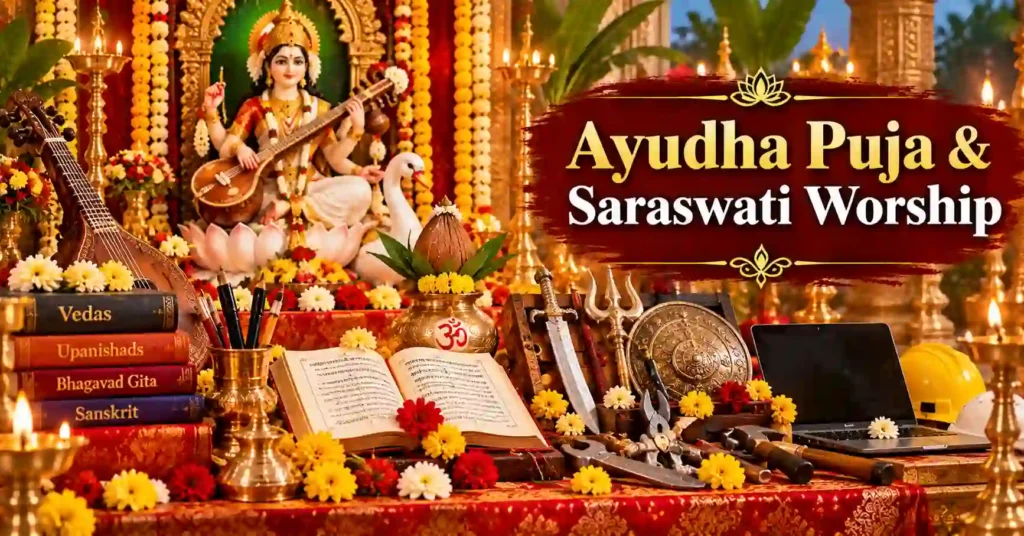
Ayudha Puja literally means “worship of tools and instruments.” On this day, people clean and decorate the items they use in their daily lives. These may include books, musical instruments, vehicles, farming equipment, machines, computers, and professional tools. The ritual is a way of thanking the Divine for providing the means to earn a livelihood and serve society.
Saraswati Puja is dedicated to Maa Saraswati, the Goddess of wisdom, learning, arts, and knowledge. Students place their books before the Goddess and pray for success in education. Musicians, artists, and writers seek her blessings for creativity, skill, and inspiration.
One of the beautiful messages of these traditions is that work itself can become a form of worship when performed with sincerity and dedication. By honoring books, tools, and instruments, devotees acknowledge that knowledge and honest effort are gifts from the Divine.
Although customs vary across regions, the spirit behind Ayudha Puja and Saraswati Puja remains the same. Both rituals encourage humility, gratitude, and respect for learning. They remind us that success is not achieved by effort alone but also through divine grace and wisdom.
The celebration of Ayudha Puja and Saraswati Puja on Maha Navami adds another layer of meaning to the festival. Along with devotion to Maa Siddhidatri, devotees are inspired to value education, skill, discipline, and service, making the day a celebration of both spiritual and worldly growth.
Maha Navami Across Different Regions of India
While the spiritual essence of Maha Navami remains the same, the celebrations vary across different regions of India. These diverse traditions reflect the cultural richness of Sanatan Dharma while honoring the Divine Mother in unique ways.
West Bengal and Eastern India
In West Bengal, Assam, Odisha, and Tripura, Maha Navami is one of the most important days of Durga Puja. Beautifully decorated pandals attract thousands of devotees who gather for special prayers, devotional music, cultural programs, and community celebrations.
The day is marked by elaborate worship of Maa Durga, sacred rituals, and offerings. Many devotees visit multiple pandals to seek blessings and participate in the festive atmosphere that reaches its peak on Maha Navami.
North India
In states such as Uttar Pradesh, Rajasthan, Haryana, Delhi, Madhya Pradesh, and Punjab, devotees observe Maha Navami through fasting, Kanya Pujan, Havan, and special Durga Puja rituals. Many families conclude their Navratri fasts on this day after offering prayers to Maa Siddhidatri.
Temples witness large gatherings of devotees who come to participate in aarti, bhajans, and community worship. In many homes, young girls are honored as forms of the Divine Mother through Kanya Pujan.
South India
In Tamil Nadu, Karnataka, Andhra Pradesh, Telangana, and Kerala, Maha Navami is closely associated with Ayudha Puja and Saraswati Puja. Books, tools, vehicles, musical instruments, and work equipment are cleaned, decorated, and worshipped.
Students, teachers, artists, and professionals seek blessings for knowledge, creativity, and success. The day emphasizes gratitude for the skills and resources that support daily life.
Western India
In Maharashtra and Gujarat, Maha Navami is celebrated with devotion, community gatherings, and temple worship. The final days of Navratri are filled with bhajans, devotional programs, and vibrant Garba and Dandiya festivities.
Many devotees perform special prayers to seek the blessings of Maa Durga before the arrival of Vijayadashami.
A Common Spiritual Thread
Despite regional differences, the message of Maha Navami remains universal. Whether through Durga Puja, Kanya Pujan, Ayudha Puja, or Saraswati Puja, devotees celebrate the victory of divine power over negativity and express gratitude for the blessings of the Divine Mother.
This unity in diversity is one of the most beautiful aspects of Maha Navami and reflects the inclusive spirit of Sanatan Dharma.
Maha Navami 2026 Date and Muhurat
Maha Navami in 2026 will be observed during Sharad Navratri, one of the most important festivals dedicated to Maa Durga. The day falls on the Navami Tithi of Ashwin Shukla Paksha and marks the final day of Navratri worship before Vijayadashami.
Maha Navami 2026 at a Glance
| Details | Information |
|---|---|
| Festival | Maha Navami 2026 |
| Day | Monday |
| Date | 19 October 2026 |
| Tithi | Ashwin Shukla Navami |
| Goddess Worshipped | Maa Siddhidatri |
| Major Rituals | Maha Navami Puja, Kanya Pujan, Havan, Purnahuti |
| Followed By | Vijayadashami (Dussehra) |
On Maha Navami, devotees wake up early, perform special prayers, offer bhog to the Goddess, and participate in Kanya Pujan and Havan. Temples dedicated to Maa Durga witness large gatherings as devotees seek blessings for health, prosperity, wisdom, and spiritual growth.
Since festival timings can vary slightly based on location and local Panchang calculations, devotees should also check their regional Panchang for the most accurate puja timings and Navami observance details.
For those observing the full Navratri fast, Maha Navami is a particularly meaningful day. It represents the completion of nine days of devotion, self-discipline, and worship and prepares devotees for the celebration of Vijayadashami, the festival that symbolizes victory, renewal, and new beginnings.
Common Mistakes to Avoid on Maha Navami
Maha Navami is a day of devotion, gratitude, and spiritual reflection. While rituals are important, their true value lies in the sincerity with which they are performed. Avoiding a few common mistakes can help devotees observe Maha Navami in a more meaningful and spiritually fulfilling way.
1. Focusing Only on Rituals and Forgetting Their Meaning
Many people become so occupied with completing rituals that they overlook the spiritual message behind them. Maha Navami is not merely about performing puja; it is also about cultivating devotion, humility, and gratitude toward the Divine Mother.
2. Performing Puja in a Hurry
Rushing through prayers without concentration can reduce the spiritual impact of worship. Even if time is limited, it is better to perform a simple Maha Navami Puja with full devotion than an elaborate ritual without focus.
3. Neglecting Respect During Kanya Pujan
Kanya Pujan is one of the most sacred traditions of Maha Navami. It should be performed with genuine respect and reverence. The ritual is not a formality but an expression of gratitude to the Divine Mother through her living manifestations.
4. Ignoring Cleanliness and Purity
A clean body, clean surroundings, and a peaceful state of mind are important during worship. Maintaining purity in thoughts, words, and actions is just as important as keeping the puja area clean and organized.
5. Treating Fasting as the Main Goal
Fasting is a spiritual discipline, not a competition or a burden. The purpose of a Navratri fast is to promote self-control, mindfulness, and devotion. If the focus remains only on food restrictions, the deeper purpose of the observance may be lost.
6. Forgetting Gratitude
Many devotees spend time asking for blessings but forget to express gratitude for what they have already received. Maha Navami is an ideal occasion to thank the Divine Mother for her protection, guidance, and countless blessings.
7. Overlooking the Spiritual Lessons of Maha Navami
The festival teaches the victory of wisdom over ignorance, courage over fear, and righteousness over negativity. Ignoring these lessons while focusing solely on external rituals can diminish the true significance of the day.
By avoiding these common mistakes, devotees can experience Maha Navami not just as a festival but as an opportunity for inner growth and spiritual transformation. The Divine Mother values sincere devotion far more than elaborate ceremonies, making faith and gratitude the most important offerings of all.
Key Takeaways
Maha Navami is the ninth and final day of Navratri and marks the culmination of nine days of devotion to the Divine Mother.
The day is dedicated to Maa Siddhidatri, the ninth form of Navadurga, who is worshipped as the giver of wisdom, spiritual fulfillment, and divine blessings.
The significance of Maha Navami lies in its message of inner transformation, self-discipline, and the victory of righteousness over negativity.
Many devotees observe Kanya Pujan, honoring young girls as manifestations of the Divine Mother and seeking her blessings.
Navami Havan and Purnahuti symbolize purification, gratitude, and the successful completion of the Navratri spiritual journey.
In South India, Maha Navami is also celebrated through Ayudha Puja and Saraswati Puja, emphasizing the importance of knowledge, skills, and honest work.
The story of Maa Durga’s victory over Mahishasura reminds devotees that faith, courage, and truth ultimately triumph over ego, fear, and ignorance.
Maha Navami encourages devotees to carry the values of devotion, humility, gratitude, and dharma into everyday life.
The festival serves as a bridge between the spiritual practices of Navratri and the celebration of victory and new beginnings on Vijayadashami.
Above all, Maha Navami teaches that true success is not only external achievement but also inner peace, wisdom, and a deeper connection with the Divine.
Conclusion
Maha Navami is much more than the ninth day of Navratri. It is a sacred celebration of devotion, spiritual completion, and the triumph of divine wisdom over negativity. As devotees worship Maa Siddhidatri, perform Kanya Pujan, offer bhog, and participate in Havan and Purnahuti, they are reminded of the transformative power of faith and sincere prayer.
The significance of Maha Navami extends beyond rituals and traditions. It encourages us to overcome our inner weaknesses, cultivate positive virtues, and walk the path of dharma with courage and conviction. The day teaches that true victory begins within, when wisdom replaces ignorance and devotion overcomes ego.
Whether celebrated through Durga Puja in the East, Kanya Pujan in the North, or Ayudha Puja and Saraswati Puja in the South, the essence of Maha Navami remains the same: honoring the Divine Mother and expressing gratitude for her blessings.
As Navratri draws to a close and Vijayadashami approaches, Maha Navami offers a moment to reflect on the lessons learned during these nine sacred days. May the blessings of Maa Siddhidatri fill your life with wisdom, peace, prosperity, and spiritual growth, and may her divine grace guide you on every step of your journey. 🙏🌺
Suggested Reading
If you found this guide on Maha Navami helpful, you may also enjoy these related articles on Navratri, Maa Durga worship, sacred rituals, and the spiritual traditions of Sanatan Dharma.
Sharad Navratri 2026: Dates, Ghatasthapana Muhurat, Rituals and Significance
https://thesanatantales.com/sharad-navratri/
Ghatasthapana Guide: Meaning, Puja Vidhi, Samagri and Spiritual Significance
https://thesanatantales.com/ghatasthapana/
Durga Ashtami: Meaning, Significance, Kanya Puja and Rituals
https://thesanatantales.com/durga-ashtami/
Maa Durga: Meaning, Story, Forms, Navadurga, Temples and Worship
https://thesanatantales.com/maa-durga-meaning-story-navadurga-worship/
Navadurga: Meaning, Nine Forms of Maa Durga, Navratri Significance and Spiritual Journey
https://thesanatantales.com/navadurga-nine-forms-of-maa-durga/
Durga Saptashati: Meaning, Story, 13 Chapters and Navratri Significance
https://thesanatantales.com/durga-saptashati-meaning-navratri/
Argala Stotra: Lyrics, Meaning, Benefits and How to Chant
https://thesanatantales.com/argala-stotra/
Navratri Fasting Rules: What to Eat and What to Avoid During Vrat
https://thesanatantales.com/navratri-fasting-rules/
FAQs
1. What is Maha Navami and why is it important in Navratri?
Maha Navami is the ninth and final day of Navratri and is dedicated to Maa Siddhidatri, the ninth form of Navadurga. It marks the completion of nine days of devotion, fasting, prayer, and spiritual discipline. Devotees consider it one of the most sacred days of the festival because it symbolizes the culmination of the spiritual journey undertaken during Navratri.
The significance of Maha Navami lies in its message of inner transformation. The day reminds devotees to overcome negativity, strengthen their faith, and seek divine wisdom. It also prepares them for Vijayadashami, which celebrates the victory of righteousness over evil.
2. Which Goddess is worshipped on Maha Navami?
Maa Siddhidatri is worshipped on Maha Navami. She is the ninth and final form of Navadurga and is revered as the bestower of spiritual wisdom, fulfillment, and divine grace. Her name means “the giver of siddhis” or spiritual attainments.
In Hindu tradition, Maa Siddhidatri represents the completion of the Navadurga journey. Devotees pray to her for knowledge, inner peace, spiritual growth, and freedom from obstacles. Her worship signifies the highest stage of spiritual realization and divine blessings.
3. What is the spiritual significance of Maha Navami?
The spiritual significance of Maha Navami goes beyond rituals and celebrations. It represents the victory of wisdom over ignorance, faith over doubt, and righteousness over negativity. The day encourages devotees to reflect on the spiritual lessons learned during Navratri.
Maha Navami teaches that true success is not limited to material achievements. It includes self-discipline, compassion, humility, and a deeper connection with the Divine. The worship of Maa Siddhidatri inspires devotees to continue their spiritual growth even after Navratri ends.
4. Why is Kanya Pujan performed on Maha Navami?
Kanya Pujan is performed to honor young girls as living manifestations of the Divine Mother. In this ritual, devotees worship girls with respect, offer food, gifts, and seek their blessings. The practice symbolizes reverence for feminine divine energy.
Many families perform Kanya Pujan on Maha Navami, while others observe it on Durga Ashtami. Both traditions are considered valid. The ritual reminds devotees that divinity exists in every living being and teaches respect, humility, gratitude, and compassion.
5. What is the importance of Havan and Purnahuti on Maha Navami?
Navami Havan is considered the concluding fire ritual of Navratri worship. During the ceremony, devotees offer ghee, grains, herbs, and sacred materials into the fire while chanting mantras. The ritual is believed to purify the mind, environment, and spiritual atmosphere.
Purnahuti is the final offering made into the sacred fire and symbolizes the successful completion of the nine-day worship. It represents surrender, gratitude, and devotion to the Divine Mother. Many devotees consider Havan and Purnahuti the spiritual climax of Maha Navami celebrations.
6. Can Maha Navami Puja be performed at home?
Yes, Maha Navami Puja can be performed at home with sincerity and devotion. Devotees usually clean the worship area, light a diya, offer flowers and bhog, chant mantras, and pray to Maa Siddhidatri. Even a simple puja performed with faith is considered auspicious.
Families may also perform Kanya Pujan, recite Durga Chalisa or Durga Saptashati, and conclude the worship with aarti. The essence of Maha Navami Puja is not elaborate arrangements but heartfelt devotion and gratitude toward the Divine Mother.
7. What is offered as bhog on Maha Navami?
The most common Maha Navami bhog includes halwa, puri, and kala chana. These offerings are especially prepared during Kanya Pujan and are distributed as prasad after worship. Many devotees also offer fruits, sweets, coconut, dry fruits, and kheer.
The purpose of bhog is to express gratitude and devotion to the Goddess. While different regions follow different traditions, the spiritual meaning remains the same: offering the best one has with humility and faith.
8. What is the connection between Maha Navami and Vijayadashami?
Maha Navami is the final day of Navratri, while Vijayadashami is celebrated on the following day. Maha Navami marks the completion of worship dedicated to the Divine Mother, and Vijayadashami celebrates the victory of dharma over adharma.
Together, these two festivals convey a powerful spiritual message. Maha Navami focuses on inner purification and devotion, while Vijayadashami symbolizes the triumph of truth, courage, and righteousness. The transition from Navami to Vijayadashami represents the journey from spiritual preparation to ultimate victory.
About the Author
Yateendra Chaturvedi is a spiritual writer, researcher, devotee, and the founder of The Sanatan Tales. With over 35 years of professional experience and a lifelong interest in Sanatan Dharma, he writes about Hindu deities, temples, scriptures, festivals, Mahavidyas, sacred stories, rituals, and living traditions that continue to guide and inspire devotees across India.
Drawing from traditional scriptures, regional beliefs, temple traditions, devotional literature, and historical sources, he aims to present authentic, well-researched, and easy-to-understand content for modern readers. His work focuses on preserving spiritual wisdom, explaining sacred traditions, and helping seekers develop a deeper understanding of India’s rich spiritual heritage.
Through The Sanatan Tales, Yateendra strives to make the timeless teachings of Sanatan Dharma simple, meaningful, and relevant for today’s generation while maintaining respect for traditional sources, regional practices, and diverse spiritual perspectives.
Learn More About Yateendra Chaturvedi →
https://thesanatantales.com/about-the-author/
References & Sources
This article is based on traditional Hindu beliefs and practices associated with Maha Navami, Sharad Navratri, Maa Siddhidatri worship, Kanya Pujan, Havan, and the broader traditions of Sanatan Dharma. The information has been compiled from widely accepted religious traditions, scriptural references, devotional literature, temple practices, and cultural observances followed across different regions of India.
Note: Rituals, customs, and interpretations related to Maha Navami may vary across regions, communities, and family traditions. The purpose of this article is not to promote any one practice as the only correct approach, but to present commonly followed beliefs and traditions in a simple, respectful, and easy-to-understand manner.
Explore More Topics from The Sanatan Tales