The Aarti of Maa Ambe is one of the most beloved devotional hymns dedicated to Maa Ambe, a revered form of Maa Durga and the Divine Mother in Sanatan Dharma. Sung with devotion in homes, temples, and especially during Navratri, the Aarti of Maa Ambe expresses gratitude, faith, and surrender to the Goddess while seeking her blessings, protection, and guidance.
For countless devotees, the Aarti of Maa Ambe is more than a ritual song. It is a heartfelt prayer that celebrates the divine qualities of Maa Ambe as the remover of difficulties, protector of devotees, and embodiment of strength, compassion, and Shakti.
In this article, you will find the complete Aarti of Maa Ambe lyrics, its meaning and spiritual significance, the symbolism behind its verses, benefits of singing it, how to perform the Aarti correctly, and answers to common questions that help deepen your understanding of this sacred devotional practice.
At a Glance
| Aspect | Details |
|---|---|
| Article Topic | Aarti of Maa Ambe |
| Dedicated To | Maa Ambe (Maa Durga / Adi Shakti) |
| Type | Devotional Aarti |
| Tradition | Shakta Tradition |
| Language | Hindi |
| Popular Opening Line | Jai Ambe Gauri, Maiya Jai Shyama Gauri |
| Main Purpose | Worship, gratitude, devotion, and seeking the blessings of Maa Ambe |
| Best Time to Perform | During daily puja, morning and evening worship, and Navratri |
| Associated Festivals | Navratri, Durga Puja, Chaitra Navratri, Sharadiya Navratri |
| Key Benefits | Strengthens devotion, promotes inner peace, cultivates gratitude, and deepens connection with the Divine Mother |
| Commonly Performed In | Homes, temples, community gatherings, and Devi worship ceremonies |
| Spiritual Focus | Faith, protection, surrender, courage, and Divine Shakti |
| Associated Deity Forms | Maa Ambe, Maa Durga, Adi Shakti, Jagadamba |
| Ideal For | Devotees seeking spiritual connection, daily worship, and Maa Durga’s blessings |
Table of Contents
ToggleWhat Is the Aarti of Maa Ambe?
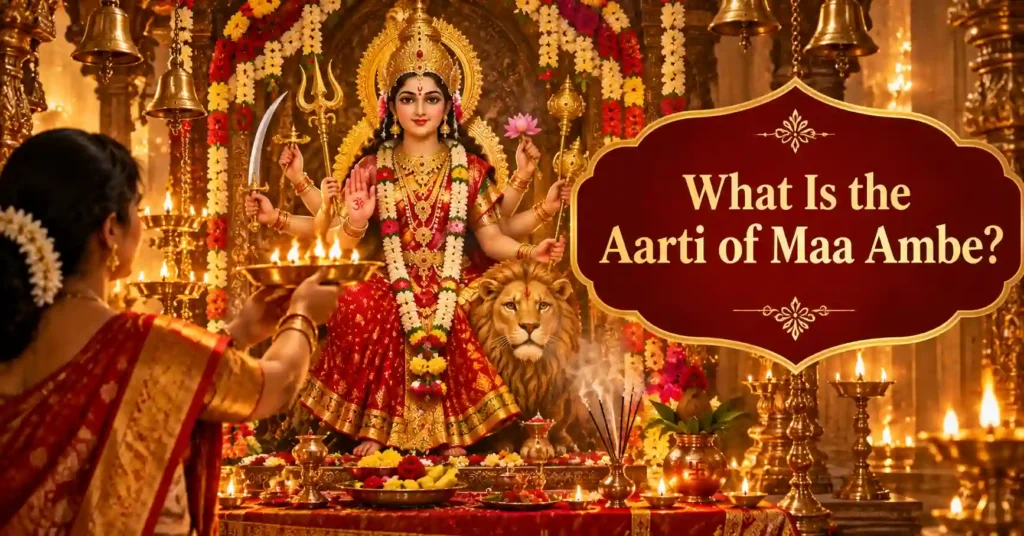
In Hindu worship, an Aarti is a devotional ritual performed by offering light from a lamp (diya) to a deity while singing hymns of praise. It is usually performed at the end of a puja as an expression of gratitude, devotion, and reverence.
The flame of the Aarti symbolizes divine light, wisdom, and the removal of ignorance. As devotees sing and wave the lamp before the deity, they offer their prayers and seek blessings for peace, protection, and spiritual growth.
The Aarti of Maa Ambe is a sacred devotional hymn dedicated to Maa Ambe, a revered form of Maa Durga and the Divine Mother in Sanatan Dharma. Through this Aarti, devotees praise the Goddess and express their faith in her divine power, compassion, and protection.
One of the most popular versions of the Aarti of Maa Ambe begins with the words “Jai Ambe Gauri, Maiya Jai Shyama Gauri.” The verses glorify Maa Ambe’s beauty, strength, and role as the protector of devotees and destroyer of negativity.
The Aarti of Maa Ambe is widely sung during Navratri, Durga Puja, and other Devi-related celebrations. Many devotees also include it in their daily worship as a way to strengthen their connection with the Divine Mother and cultivate qualities such as devotion, courage, gratitude, and inner strength.
Origin and Spiritual Significance of the Aarti of Maa Ambe
The Aarti of Maa Ambe has its roots in the long-standing tradition of Devi worship within Sanatan Dharma. Maa Ambe is revered as a form of Adi Shakti, the primordial divine energy from which all creation emerges. She is worshipped as the loving Mother who protects devotees, removes obstacles, and restores righteousness.
The most popular version of the Aarti of Maa Ambe, beginning with “Jai Ambe Gauri”, has been sung by devotees for generations in homes, temples, and community gatherings. Over time, it became one of the most widely recited Aartis dedicated to the Divine Mother.
The Aarti draws inspiration from the qualities and forms of Maa Durga described in Hindu scriptures and devotional traditions. Its verses praise the Goddess as compassionate, powerful, and ever-present in the lives of her devotees.
The Aarti of Maa Ambe holds special importance during Navratri, when devotees worship different forms of the Divine Mother through prayers, fasting, bhajans, and Aarti. Singing the Aarti during these sacred days is considered a beautiful way to express devotion and gratitude to Maa Ambe.
Spiritually, the Aarti of Maa Ambe is more than a devotional song. It reminds devotees that the Divine Mother is a source of strength during difficulties, wisdom during confusion, and hope during challenging times.
For many devotees, singing the Aarti of Maa Ambe creates a sense of closeness with the Goddess and strengthens faith in her loving guidance, protection, and blessings.
Aarti of Maa Ambe Lyrics
The Aarti of Maa Ambe is one of the most popular devotional hymns dedicated to the Divine Mother. Sung with devotion during daily worship, Navratri celebrations, and special Devi pujas, this sacred Aarti praises Maa Ambe as the source of strength, compassion, protection, and divine grace.
Aarti of Maa Ambe (Jai Ambe Gauri)
जय अम्बे गौरी, मैया जय श्यामा गौरी।
तुमको निशिदिन ध्यावत, हरि ब्रह्मा शिवरी॥मांग सिंदूर विराजत, टीको मृगमद को।
उज्ज्वल से दोउ नैना, चंद्रवदन नीको॥कनक समान कलेवर, रक्ताम्बर राजै।
रक्तपुष्प गल माला, कंठन पर साजै॥केहरि वाहन राजत, खड्ग खप्पर धारी।
सुर नर मुनिजन सेवत, तिनके दुःखहारी॥कानन कुण्डल शोभित, नासाग्रे मोती।
कोटिक चंद्र दिवाकर, सम राजत ज्योति॥शुंभ निशुंभ बिदारे, महिषासुर घाती।
धूम्र विलोचन नैना, निशिदिन मदमाती॥चण्ड मुण्ड संहारे, शोणित बीज हरे।
मधु कैटभ दोउ मारे, सुर भयहीन करे॥ब्रह्माणी रुद्राणी, तुम कमला रानी।
आगम निगम बखानी, तुम शिव पटरानी॥चौंसठ योगिनी मंगल गावैं, नृत्य करत भैरों।
बाजत ताल मृदंगा, अरु बाजत डमरू॥तुम ही जग की माता, तुम ही हो भरता।
भक्तन की दुःख हरता, सुख सम्पत्ति करता॥भुजा चार अति शोभित, खड्ग खप्पर धारी।
मनवांछित फल पावत, सेवत नर नारी॥कंचन थाल विराजत, अगर कपूर बाती।
श्री मालकेतु में राजत, कोटि रतन ज्योति॥श्री अम्बेजी की आरती, जो कोई नर गावै।
कहत शिवानन्द स्वामी, सुख सम्पत्ति पावै॥
The Aarti of Maa Ambe beautifully describes the divine form, power, compassion, and victories of Maa Ambe over negative forces. Through these verses, devotees remember the Goddess as the protector of the righteous, remover of difficulties, and loving Divine Mother who blesses her devotees with faith, strength, and spiritual guidance.
What Does "Jai Ambe Gauri, Maiya Jai Shyama Gauri" Mean?
The opening lines of the Aarti of Maa Ambe are:
जय अम्बे गौरी, मैया जय श्यामा गौरी।
तुमको निशिदिन ध्यावत, हरि ब्रह्मा शिवरी॥
These verses are a heartfelt expression of devotion and praise for Maa Ambe, the Divine Mother who is worshipped as the source of strength, protection, wisdom, and compassion.
The phrase “Jai Ambe Gauri, Maiya Jai Shyama Gauri” glorifies the Goddess in her various forms. Ambe means the Divine Mother, while Gauri represents purity, auspiciousness, and divine grace. By chanting this line, devotees offer their salutations to Maa Ambe and acknowledge her as the loving Mother of the universe.
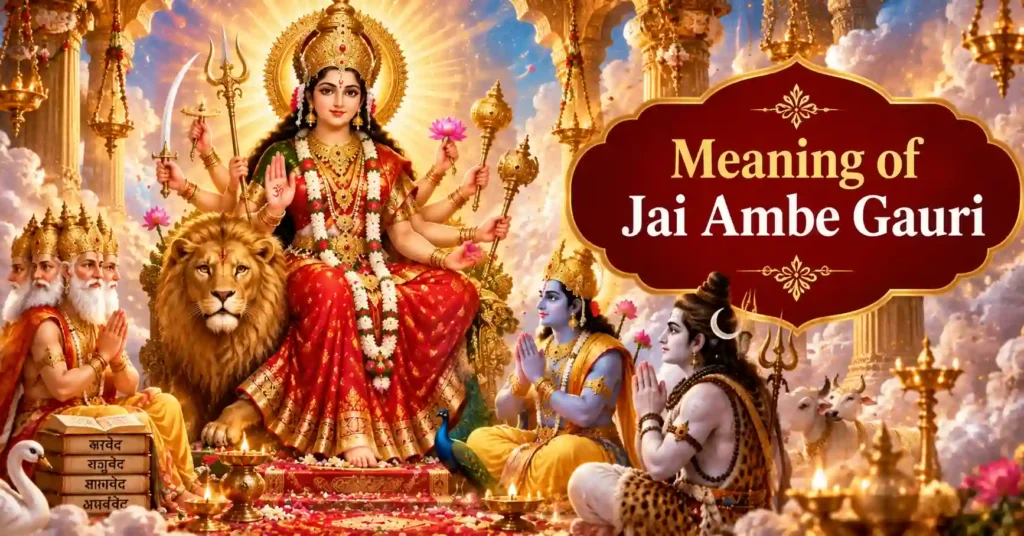
The next line, “Tumko Nishidin Dhyavat, Hari Brahma Shivari,” means that even Lord Vishnu (Hari), Lord Brahma, and Lord Shiva constantly meditate upon and honor the Divine Mother. This highlights the supreme position of Shakti in the Hindu tradition and emphasizes that the Goddess is the source of the power through which creation, preservation, and transformation take place.
On a deeper level, these lines remind devotees that Maa Ambe is not merely a deity to be worshipped during festivals. She is the eternal Divine Mother whose presence sustains the universe and guides all beings. The verse inspires devotees to cultivate the same devotion and remembrance that even the highest divine beings are said to possess.
Together, these opening lines of the Aarti of Maa Ambe express reverence, gratitude, and complete surrender to the Divine Mother. They set the devotional tone for the entire Aarti and remind devotees of Maa Ambe’s boundless love, protection, and divine grace.
Symbolism in the Aarti of Maa Ambe
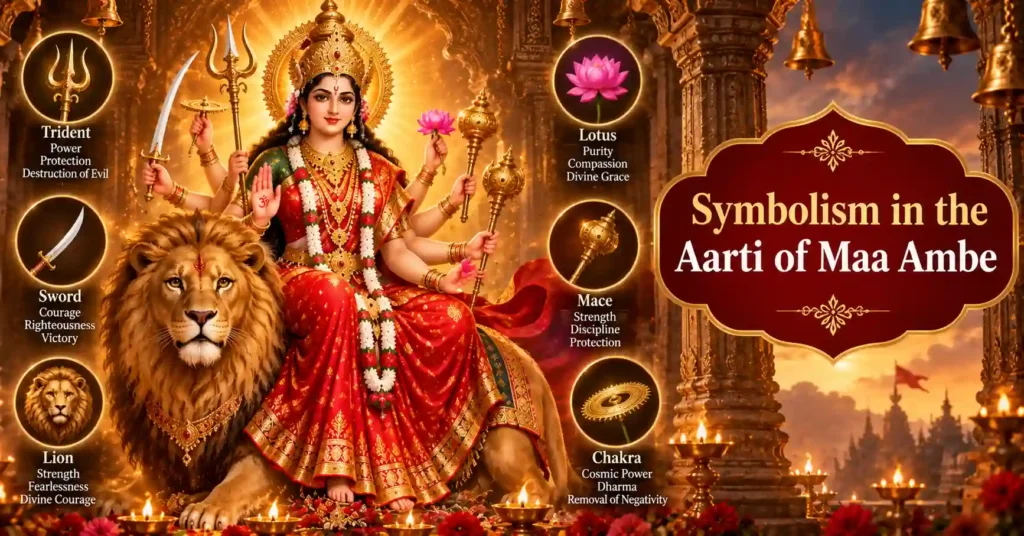
The Aarti of Maa Ambe contains several symbolic descriptions that help devotees understand the divine qualities of the Goddess. These symbols are not merely decorative elements but spiritual representations of her power, wisdom, protection, and compassion.
The Lion (Singh Vahini)
The Aarti describes Maa Ambe seated upon a lion. The lion symbolizes courage, strength, fearlessness, and mastery over negative tendencies. It reminds devotees to face life’s challenges with confidence and faith.
The Trident and Divine Weapons
Maa Ambe is often depicted carrying divine weapons such as the trident and sword. These symbolize the destruction of ignorance, ego, injustice, and negative forces. They represent the Goddess’s role as the protector of righteousness and Dharma.
The Red Garments and Flowers
The Aarti mentions Maa Ambe wearing red garments and adorned with red flowers. In Hindu tradition, red is associated with Shakti, vitality, devotion, and divine energy. It reflects the active and protective nature of the Divine Mother.
The Radiant Divine Form
Descriptions of her bright eyes, moon-like face, and divine radiance symbolize purity, wisdom, compassion, and spiritual illumination. Her light represents the power of divine knowledge that removes darkness and confusion.
The Defeat of Demons
References to Mahishasura, Shumbha, Nishumbha, Chanda, and Munda symbolize the victory of good over evil. Spiritually, these demons can also represent negative qualities such as fear, pride, anger, greed, and ignorance that every seeker strives to overcome.
The Universal Mother
Throughout the Aarti of Maa Ambe, the Goddess is praised as the Mother of the universe. This symbolizes her nurturing nature and her role as the source of creation, protection, and guidance for all beings.
Together, these symbols make the Aarti of Maa Ambe more than a devotional song. They convey timeless spiritual lessons about courage, faith, self-discipline, devotion, and the triumph of divine virtues over negativity.
Why Is Maa Ambe Worshipped in This Form?
Maa Ambe is worshipped as a manifestation of Adi Shakti, the primordial divine energy that sustains, protects, and transforms the universe. In Sanatan Dharma, she is revered as the Divine Mother who lovingly cares for her devotees while also possessing the power to destroy evil and restore balance.
The form of Maa Ambe praised in the Aarti of Maa Ambe combines both compassion and strength. She is depicted as a nurturing mother who grants blessings, removes suffering, and listens to the prayers of her devotees. At the same time, she is a fearless warrior who defeats negative forces and protects Dharma.
Many of the Goddess’s forms, including Durga, Chandika, and Chamunda, reflect different aspects of the same Divine Mother. Through these forms, devotees see Maa Ambe as a source of courage during difficulties, wisdom during confusion, and hope during challenging times.
The Aarti of Maa Ambe highlights these divine qualities by describing her beauty, power, radiance, and victories over evil. These descriptions help devotees develop faith and remember that the Divine Mother is always present to guide and protect those who approach her with sincerity.
For this reason, millions of devotees worship Maa Ambe as the universal mother who embodies love, protection, strength, compassion, and Divine Shakti. Her worship continues to inspire devotion and spiritual growth across generations.
Benefits of Singing the Aarti of Maa Ambe
Devotees have sung the Aarti of Maa Ambe for generations as an expression of faith, gratitude, and devotion to the Divine Mother. While experiences may vary, the Aarti is traditionally associated with several spiritual and emotional benefits.
Spiritual Benefits
Regularly singing the Aarti of Maa Ambe helps strengthen devotion and deepen one’s connection with the Divine Mother. It encourages remembrance of Maa Ambe’s presence and inspires devotees to cultivate faith, humility, and surrender.
The verses of the Aarti also remind devotees of the Goddess’s role as the protector of Dharma and the remover of negativity, helping them stay focused on spiritual values.
Mental and Emotional Benefits
The rhythmic chanting of the Aarti of Maa Ambe can create a sense of calm and positivity. Many devotees find that singing the Aarti helps reduce stress, improve concentration, and bring emotional comfort during difficult times.
The devotional atmosphere created by prayer, music, and worship can also promote inner peace and a sense of spiritual support.
Devotional Benefits
The Aarti of Maa Ambe provides an opportunity to express gratitude and love toward the Divine Mother. Singing the Aarti with sincerity helps nurture devotion and strengthens the feeling of a personal relationship with Maa Ambe.
For many devotees, it becomes a daily practice that keeps them spiritually connected throughout the day.
Traditional Benefits
In many Hindu households, the Aarti of Maa Ambe is performed during daily worship, Navratri, and other Devi-related celebrations. Traditionally, devotees believe that sincere worship of Maa Ambe invites her blessings, protection, and divine grace into their lives.
The Aarti also brings families together in collective prayer, helping preserve devotional traditions across generations.
A Reminder of Inner Strength
The Aarti of Maa Ambe celebrates the Goddess as a symbol of courage, compassion, and resilience. By reflecting on these qualities, devotees are inspired to face challenges with confidence, faith, and a positive outlook.
For this reason, the Aarti is valued not only as a devotional hymn but also as a source of spiritual encouragement and inspiration.
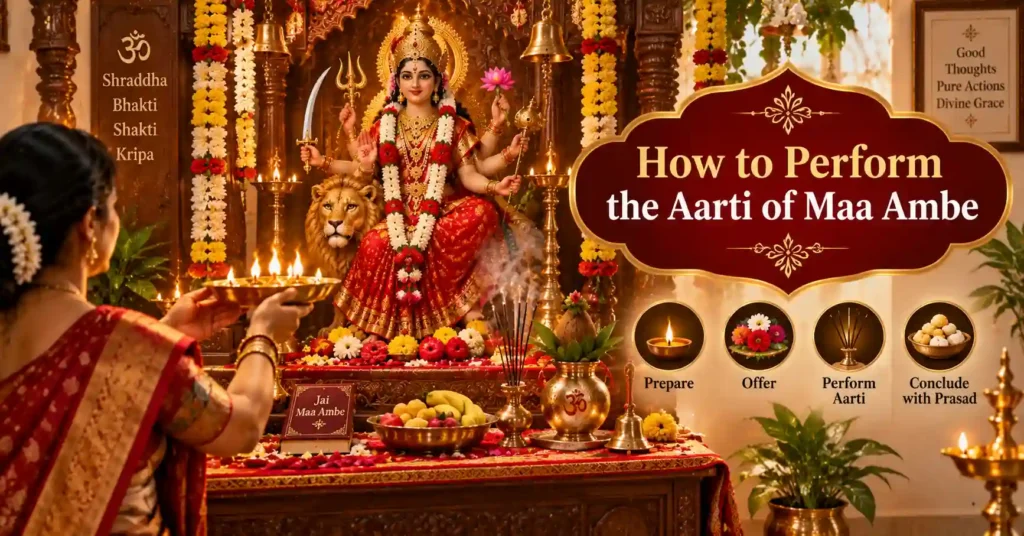
How to Perform the Aarti of Maa Ambe
Performing the Aarti of Maa Ambe is a simple yet meaningful way to express devotion to the Divine Mother. While traditions may vary across regions and families, the essence of the Aarti remains the same: offering gratitude, love, and reverence to Maa Ambe.
Best Time to Perform
The Aarti of Maa Ambe is commonly performed during the morning and evening puja. Many devotees also sing it during Navratri, Durga Puja, Fridays dedicated to the Goddess, and other special occasions related to Devi worship.
Items Commonly Used
The following items are often used while performing the Aarti of Maa Ambe:
Diya (oil lamp or ghee lamp)
Incense sticks (agarbatti)
Camphor (kapoor)
Flowers
Kumkum and rice
Bell (ghanti)
Prasad or offerings
These items are traditional aids to worship and may vary according to personal or family customs.
Simple Step-by-Step Method
Clean the worship area and place the image or idol of Maa Ambe.
Light the diya and incense sticks.
Offer flowers and prayers to the Goddess.
Sing the Aarti of Maa Ambe with devotion and concentration.
Gently rotate the Aarti lamp before the deity in a clockwise direction.
Offer prasad and conclude with a prayer for blessings and guidance.
The most important aspect is sincere devotion rather than elaborate rituals.
Can Beginners Perform It?
Yes. The Aarti of Maa Ambe can be performed by anyone with faith and respect for the Divine Mother. There are no complex requirements for beginners, and many devotees start by simply singing the Aarti and offering a lit lamp.
Over time, individuals may choose to learn additional prayers, rituals, and traditions associated with Maa Ambe worship.
Common Mistakes to Avoid
While performing the Aarti of Maa Ambe, try to focus on devotion rather than rushing through the ritual.
Avoid treating the Aarti as a routine task.
Maintain a clean and respectful worship space.
Chant the verses attentively.
Focus on gratitude and remembrance of the Divine Mother.
A sincere heart and genuine devotion are considered more important than perfect ritual performance.
Why Is the Aarti Sung at the End of Worship?
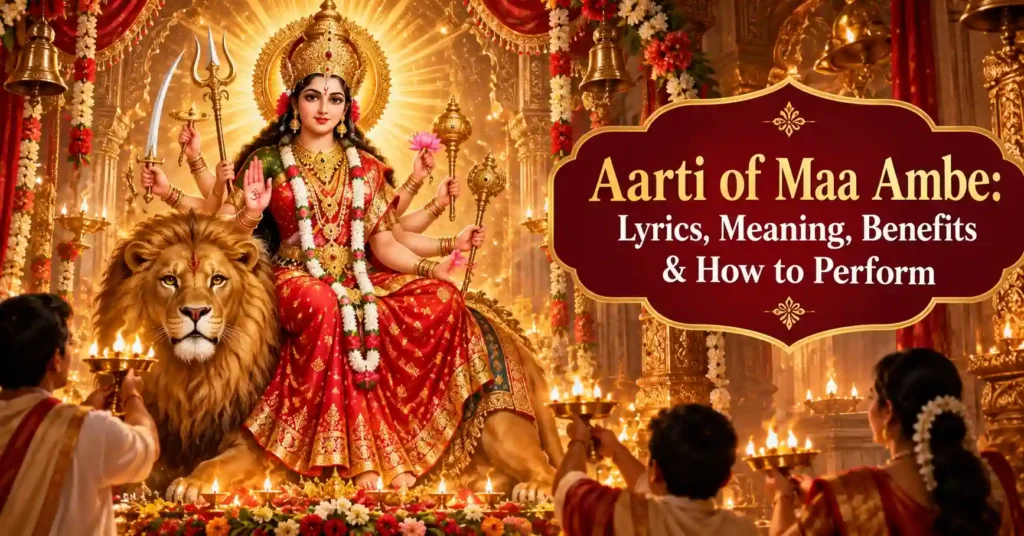
In Hindu worship, an Aarti is traditionally performed at the conclusion of a puja or devotional ritual. It serves as a final offering of love, gratitude, and reverence to the deity after prayers, mantra chanting, and other acts of worship have been completed.
The lighting and waving of the Aarti lamp symbolize offering one’s heart, mind, and actions to the Divine. The flame represents spiritual knowledge and divine light, which is believed to dispel ignorance and guide devotees toward truth and wisdom.
In the case of the Aarti of Maa Ambe, singing the Aarti at the end of worship allows devotees to express their gratitude for the blessings, protection, and guidance of the Divine Mother. It is a moment of devotion where worshippers focus entirely on Maa Ambe and seek her grace.
The Aarti also creates a joyful and uplifting atmosphere. The sound of devotional singing, bells, and prayers helps unite devotees in collective worship and strengthens their spiritual connection with the Goddess.
For many devotees, the Aarti of Maa Ambe is the most emotional part of the worship experience. It marks the completion of the puja while leaving the mind filled with faith, peace, and remembrance of the Divine Mother.
Aarti of Maa Ambe in Daily Life
The Aarti of Maa Ambe is not limited to temples, festivals, or special occasions. Many devotees make it a regular part of their daily spiritual routine as a way to stay connected with the Divine Mother and her teachings.
Singing the Aarti of Maa Ambe each day creates a moment of devotion and reflection amid the demands of daily life. It encourages devotees to begin or end their day with gratitude, faith, and remembrance of Maa Ambe’s presence.
The qualities praised in the Aarti, such as courage, compassion, protection, and inner strength, can also inspire practical actions in everyday situations. Devotees often look to Maa Ambe as a source of guidance when facing challenges, making important decisions, or seeking emotional support.
Many families sing the Aarti of Maa Ambe together during evening prayers. This shared practice helps strengthen family bonds and preserve devotional traditions across generations.
Even when time is limited, listening to or reciting the Aarti of Maa Ambe can serve as a reminder to remain positive, focused, and grounded in spiritual values. For countless devotees, it is a simple yet meaningful way to bring devotion and the blessings of the Divine Mother into everyday life.
Did You Know?
- The Aarti of Maa Ambe is one of the most widely sung devotional hymns dedicated to the Divine Mother in Hindu worship.
- The popular opening line “Jai Ambe Gauri” is instantly recognized by millions of devotees across India and around the world.
- Maa Ambe is worshipped as a form of Adi Shakti, the primordial divine energy that sustains the universe.
- The Aarti of Maa Ambe is especially popular during Navratri, when devotees celebrate the various forms of the Divine Mother.
- Many temples perform the Aarti of Maa Ambe multiple times a day as part of their regular worship rituals.
- The lion associated with Maa Ambe symbolizes courage, strength, fearlessness, and victory over negativity.
- References to Mahishasura, Shumbha, Nishumbha, Chanda, and Munda in the Aarti highlight the triumph of good over evil.
- In many Hindu households, the Aarti of Maa Ambe is passed down through generations and learned from parents and grandparents.
- Devotees often sing the Aarti of Maa Ambe at the end of puja as a final offering of gratitude and devotion to the Divine Mother.
- Beyond its devotional value, the Aarti of Maa Ambe inspires qualities such as faith, resilience, compassion, and inner strength in daily life.
Conclusion
The Aarti of Maa Ambe is a beautiful expression of devotion to the Divine Mother, celebrating her as the source of strength, compassion, protection, and divine grace. Through its sacred verses, devotees remember Maa Ambe’s power to remove negativity, guide the righteous, and bless her children with courage and faith.
Whether sung during Navratri, daily worship, or special devotional occasions, the Aarti of Maa Ambe helps strengthen one’s connection with the Divine Mother. Its timeless message encourages devotees to cultivate devotion, gratitude, humility, and inner strength in everyday life.
More than a ritual hymn, the Aarti of Maa Ambe is a reminder that the Divine Mother is always present to guide, protect, and inspire those who approach her with sincere faith and a pure heart. Through regular remembrance and worship, devotees seek her blessings for both spiritual growth and inner peace.
Suggested Reading
The Aarti of Maa Ambe is an important part of Devi worship and is often sung during daily prayers, Navratri, and Durga-related celebrations. Exploring related articles can help you better understand Maa Ambe, the Divine Mother, her forms, mantras, and the spiritual traditions associated with Shakti worship in Sanatan Dharma.
Maa Durga: Meaning, Symbolism, Forms and Spiritual Significance
https://thesanatantales.com/maa-durga/
Durga Chalisa: Lyrics, Meaning, Benefits and Spiritual Significance
https://thesanatantales.com/durga-chalisa-lyrics-meaning/
Durga Beej Mantra: Simple Meaning, Benefits and How to Chant
https://thesanatantales.com/durga-beej-mantra-meaning/
Navarna Mantra Meaning, Benefits, Chanting Rules and How to Chant
https://thesanatantales.com/navarna-mantra/
Devi Kavach Meaning: Durga Saptashati Protection Prayer
https://thesanatantales.com/devi-kavach-meaning/
Argala Stotram Lyrics with Meaning and Spiritual Significance
https://thesanatantales.com/argala-stotram-lyrics-meaning/
Siddha Kunjika Stotram: The Sacred Key That Unlocks the Full Power of Durga Saptashati
https://thesanatantales.com/siddha-kunjika-stotram/
Navratri: Meaning, History, Significance and Celebration
https://en.wikipedia.org/wiki/Navaratri
Devi Mahatmya (Durga Saptashati)
https://en.wikipedia.org/wiki/Devi_Mahatmya
Durga Puja
https://en.wikipedia.org/wiki/Durga_Puja
FAQs
1. What is the Aarti of Maa Ambe?
The Aarti of Maa Ambe is a popular devotional hymn dedicated to Maa Ambe, a revered form of Maa Durga and the Divine Mother in Sanatan Dharma. It is traditionally sung while offering a lit lamp before the Goddess as an expression of devotion, gratitude, and reverence.
The Aarti praises Maa Ambe’s beauty, compassion, strength, and protective nature. Through its verses, devotees remember her victories over negative forces and seek her blessings for peace, courage, wisdom, and spiritual growth. Today, it is commonly sung in homes, temples, and during festivals such as Navratri and Durga Puja.
2. Why is the Aarti of Maa Ambe so popular during Navratri?
Navratri is one of the most important festivals dedicated to the Divine Mother, making the Aarti of Maa Ambe especially significant during this period. Devotees worship different forms of Maa Durga throughout the nine days and often conclude their prayers with this beloved Aarti.
The Aarti celebrates the Goddess as the source of strength, protection, and divine grace. Its uplifting verses create a devotional atmosphere and help devotees express their love and gratitude toward Maa Ambe. For many families and communities, singing the Aarti together is an important Navratri tradition that strengthens faith and collective devotion.
3. Can beginners perform the Aarti of Maa Ambe?
Yes, beginners can easily perform the Aarti of Maa Ambe. There are no complex requirements for starting this devotional practice. A person can simply light a diya, offer prayers to Maa Ambe, and sing the Aarti with sincerity and respect.
While some devotees follow detailed rituals, the essence of the Aarti lies in faith and devotion rather than perfection. Over time, beginners may choose to learn additional prayers, traditions, and worship practices associated with Maa Ambe. What matters most is approaching the Divine Mother with a sincere heart and a spirit of devotion.
4. What is the spiritual significance of the Aarti of Maa Ambe?
The Aarti of Maa Ambe symbolizes devotion, gratitude, and surrender to the Divine Mother. Its verses remind devotees that Maa Ambe is both a compassionate mother and a powerful protector who helps overcome negativity and challenges.
Spiritually, the Aarti encourages qualities such as faith, courage, humility, and inner strength. The descriptions of the Goddess’s divine form and victories over evil also carry deeper symbolic meanings about overcoming fear, ignorance, and harmful tendencies. For many devotees, singing the Aarti becomes a way to strengthen their connection with Divine Shakti and cultivate spiritual awareness.
5. When should the Aarti of Maa Ambe be performed?
The Aarti of Maa Ambe is commonly performed during morning and evening worship. It is also widely sung during Navratri, Durga Puja, Fridays dedicated to the Goddess, and other special devotional occasions.
Traditionally, the Aarti is performed at the end of a puja as a final offering of devotion and gratitude. However, there is no strict rule requiring a specific time. Many devotees sing it whenever they wish to pray, meditate on Maa Ambe, or seek spiritual inspiration. Regular practice can help create a meaningful connection with the Divine Mother.
6. What does "Jai Ambe Gauri" mean?
“Jai Ambe Gauri” is the opening phrase of the Aarti of Maa Ambe and is a devotional salutation to the Divine Mother. The word “Jai” means victory, glory, or praise, while “Ambe” refers to the Divine Mother and “Gauri” symbolizes purity, auspiciousness, and divine grace.
Together, the phrase expresses reverence and devotion toward Maa Ambe. It acknowledges her as the loving mother of the universe and celebrates her divine qualities. For devotees, chanting these words is an expression of gratitude, faith, and trust in the Goddess’s protection and guidance.
7. What are the benefits of singing the Aarti of Maa Ambe?
Devotees traditionally associate the Aarti of Maa Ambe with spiritual, emotional, and devotional benefits. Singing the Aarti can help strengthen faith, deepen devotion, and create a sense of closeness with the Divine Mother.
Many people also find that devotional singing promotes peace of mind, emotional comfort, and positive thinking. The Aarti’s uplifting message encourages courage, gratitude, and resilience during life’s challenges. While experiences differ from person to person, regular participation in devotional practices often helps cultivate a more focused and spiritually grounded mindset.
8. Is the Aarti of Maa Ambe the same as the Jai Ambe Gauri Aarti?
Yes, in most cases the Aarti of Maa Ambe refers to the well-known Jai Ambe Gauri Aarti, which begins with the words “Jai Ambe Gauri, Maiya Jai Shyama Gauri.” It is one of the most widely sung Aartis dedicated to the Divine Mother.
Over time, devotees have come to identify the Aarti by its opening line as well as by the name of the Goddess it praises. Whether someone searches for “Maa Ambe Aarti,” “Ambe Maa Aarti,” or “Jai Ambe Gauri Aarti,” they are generally referring to the same devotional hymn that is sung in praise of Maa Ambe and her divine qualities.
Is the Aarti of Maa Ambe Dedicated to Maa Durga?
Yes, the Aarti of Maa Ambe is dedicated to Maa Ambe, who is widely worshipped as a form of Maa Durga and the Divine Mother in Sanatan Dharma. The popular Jai Ambe Gauri Aarti praises the Goddess as Adi Shakti, the source of strength, protection, compassion, and divine grace.
The verses describe her divine form and celebrate her victories over demons such as Mahishasura, Shumbha, Nishumbha, Chanda, and Munda, all of whom are closely associated with Maa Durga in Hindu scriptures and devotional traditions. Through the Aarti of Maa Ambe, devotees honor the Goddess as the protector of Dharma and the loving Mother who guides and blesses her devotees.
Can the Aarti of Maa Ambe Be Sung Every Day?
Yes, the Aarti of Maa Ambe can be sung every day as part of regular worship. Many devotees include it in their morning or evening prayers to maintain a spiritual connection with the Divine Mother and express gratitude for her blessings.
Although the Aarti is especially popular during Navratri and other Devi festivals, there is no restriction limiting it to special occasions. In Hindu worship, Aarti is commonly performed at the conclusion of daily puja, making the Aarti of Maa Ambe suitable for regular devotional practice at home or in temples. Daily recitation helps cultivate faith, devotion, inner peace, and remembrance of Maa Ambe’s presence in one’s life.
Share Your Devotion
Do you regularly sing the Aarti of Maa Ambe during your daily prayers or Navratri celebrations? Has this sacred Aarti helped strengthen your faith, brought peace during difficult times, or become a cherished family tradition?
We would love to hear about your experiences with the Aarti of Maa Ambe. Share your thoughts, memories, or devotional practices in the comments and inspire fellow devotees on their spiritual journey.
Jai Ambe Gauri! May Maa Ambe bless you and your family with devotion, courage, wisdom, protection, and divine grace. 🙏🌺
References & Sources
This article is based on teachings, devotional traditions, and worship practices associated with Maa Ambe, Maa Durga, and Divine Shakti within Sanatan Dharma. It draws upon widely accepted spiritual knowledge, traditional Aarti practices, Hindu scriptures, and devotional customs followed across generations.
Key references include:
Devi Mahatmya (Durga Saptashati) – Part of the Markandeya Purana
Markandeya Purana
Traditional Navratri and Devi worship practices
Shakta tradition teachings and devotional literature
Oral traditions preserved through families, temples, and spiritual communities
Note: Interpretations, rituals, and devotional practices may vary across traditions, sampradayas, regions, and individual lineages. This article presents commonly accepted perspectives in a simple and reader-friendly manner while respecting the diversity of practices within Sanatan Dharma.
Explore More Topics from The Sanatan Tales