Durga Saptashati is one of the most revered scriptures dedicated to Maa Durga and the Divine Mother in Sanatan Dharma. Also known as Devi Mahatmya and Chandi Path, the Durga Saptashati contains 700 sacred verses that describe the glory, power, compassion, and victories of the Goddess over various demonic forces. It forms a significant part of the Markandeya Purana and is widely recited during Navratri.
For centuries, devotees have turned to the Durga Saptashati for spiritual guidance, devotion, inner strength, and a deeper understanding of Shakti. The text is not merely a collection of stories but a profound spiritual scripture that teaches the victory of divine wisdom over ignorance, courage over fear, and dharma over adharma.
In this article, you will learn:
- What Durga Saptashati is
- The meaning of Durga Saptashati
- The story and origin behind the scripture
- The structure and 13 chapters of the text
- The three major battles of the Divine Mother
- Why Durga Saptashati is read during Navratri
- Its spiritual significance and symbolism
- Benefits of reading Durga Saptashati
- How to read Durga Saptashati correctly
- Practical lessons from Durga Saptashati for daily life
- Frequently asked questions about Durga Saptashati
Whether you are new to Devi worship or have been reciting the Chandi Path for years, this guide will help you understand the deeper meaning, purpose, and enduring relevance of the Durga Saptashati in spiritual life.
Durga Saptashati At a Glance
| Aspect | Details |
|---|---|
| Scripture Name | Durga Saptashati |
| Other Names | Devi Mahatmya, Chandi Path, Chandi Saptashati |
| Focus Keyword | Durga Saptashati |
| Source Scripture | Markandeya Purana |
| Total Chapters | 13 Chapters |
| Total Verses | Approximately 700 Verses |
| Main Deity | Maa Durga (Divine Mother / Adi Shakti) |
| Language | Sanskrit |
| Main Theme | Victory of Divine Shakti over evil forces and negative tendencies |
| Major Stories | Madhu-Kaitabha, Mahishasura, Shumbha-Nishumbha |
| Structure | Three Charitras (Episodes) and Thirteen Chapters |
| Associated Mantras | Navarna Mantra, Durga Beej Mantra |
| Important Preparatory Texts | Devi Kavach, Argala Stotram, Keelakam Stotram |
| Commonly Read During | Sharadiya Navratri, Chaitra Navratri, Durga Puja |
| Spiritual Significance | Worship of Shakti, protection, devotion, courage, and spiritual growth |
| Traditional Benefits | Inner strength, faith, discipline, devotion, and connection with Maa Durga |
| Suitable For Beginners? | Yes, especially with guidance or selected chapter reading |
| Core Message | The Divine Mother destroys negativity and helps devotees progress on the path of Dharma |
Table of Contents
ToggleWhat Is Durga Saptashati?
Durga Saptashati is one of the most sacred and influential scriptures dedicated to Maa Durga, the Divine Mother, in Sanatan Dharma. It is a collection of approximately 700 Sanskrit verses that glorify the power, compassion, protection, and victories of Maa Durga over various demonic forces. The scripture is widely recited as Chandi Path during Navratri and other Devi worship ceremonies.
The text forms chapters 81 to 93 of the Markandeya Purana and is considered one of the foundational scriptures of the Shakta tradition, which worships the Divine Mother as the supreme reality.
The Durga Saptashati is also widely known as Devi Mahatmya and Chandi Path. These names are often used interchangeably because they refer to the same sacred text.
More than a scripture about battles between gods and demons, the Durga Saptashati teaches profound spiritual truths. It explains how divine wisdom overcomes ignorance, how faith conquers fear, and how the power of Shakti protects devotees on their spiritual journey.
Throughout the Durga Saptashati, Maa Durga appears in various forms to defeat powerful demons that threaten cosmic order. On a deeper level, these demons symbolize negative tendencies such as ego, pride, greed, attachment, and ignorance that every person must overcome.
For this reason, the Durga Saptashati is not viewed merely as mythology. It is regarded as a spiritual guide that helps devotees understand the inner struggle between higher consciousness and lower tendencies.
The scripture is especially revered during Navratri, when millions of devotees recite it to honor the Divine Mother and seek her blessings. Many temples, spiritual organizations, and households perform complete or partial readings of the Durga Saptashati during the nine sacred nights.
Why Is Durga Saptashati Important?
The Durga Saptashati holds a unique place in Hindu spirituality because it presents Maa Durga not only as a protective mother but also as the supreme cosmic power responsible for creation, preservation, and transformation.
The text emphasizes that the Divine Mother resides within every being as strength, wisdom, compassion, faith, and consciousness. It is therefore revered not only as a sacred scripture but also as a guide for spiritual growth and self-transformation.
Its teachings continue to inspire devotees to cultivate courage, devotion, self-discipline, and unwavering faith in the face of life’s challenges.
Meaning of Durga Saptashati and Its Other Names
The name Durga Saptashati reflects both the structure and purpose of this sacred scripture dedicated to the Divine Mother.
The word “Durga” refers to Goddess Durga, the supreme form of Shakti who protects devotees, destroys negative forces, and restores dharma. “Saptashati” is derived from the Sanskrit words “Sapta” (seven) and “Shati” (hundred), meaning “seven hundred.” Together, Durga Saptashati means “the seven hundred verses dedicated to Goddess Durga.”
The scripture is also widely known as Devi Mahatmya. Here, “Devi” means Goddess and “Mahatmya” means greatness, glory, or divine magnificence. This name highlights the central theme of the text, which glorifies the power, compassion, and supreme nature of the Divine Mother.
Another popular name is Chandi Path. The term comes from Goddess Chandi, a fierce form of Maa Durga who destroys negativity and protects righteousness. Since “Path” means recitation or reading, Chandi Path refers to the traditional recitation of the Durga Saptashati, especially during Navratri and other forms of Devi worship.
Depending on regional traditions, devotees may also refer to the scripture as Chandi Saptashati, Sri Sri Chandi, Saptashati, or Durga Path. Although the names differ, they all refer to the same sacred text found within the Markandeya Purana.
Why These Names Matter
Each name highlights a unique aspect of the scripture:
Durga Saptashati emphasizes its seven hundred verses.
Devi Mahatmya highlights the glory of the Divine Mother.
Chandi Path focuses on its devotional recitation.
Chandi Saptashati combines both the Goddess and the seven hundred verses.
Together, these names show that the Durga Saptashati is not only a sacred scripture but also a devotional text and spiritual guide that has inspired devotees of Maa Durga for centuries.
Story and Origin of Durga Saptashati
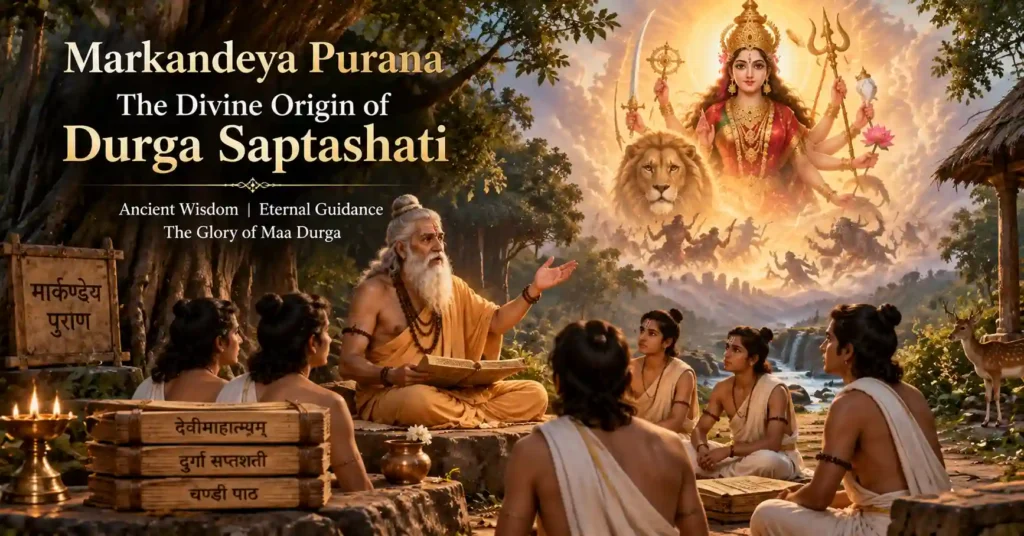
The story of the Durga Saptashati begins in the Markandeya Purana, one of the eighteen major Puranas of Hindu tradition. The scripture is presented as a sacred teaching that reveals the greatness of Maa Durga and the power of Divine Shakti.
At the heart of the narrative are two individuals, King Suratha and Samadhi Vaishya, whose personal struggles lead them to seek spiritual wisdom.
The Story of King Suratha
King Suratha was a righteous and capable ruler. However, after being defeated by enemy kings, he lost his kingdom and was forced to leave his palace.
Although he no longer possessed power or wealth, he remained deeply attached to his kingdom, army, and subjects. These thoughts continued to trouble his mind.
Seeking answers, he wandered into a forest and eventually arrived at the hermitage of a wise sage.
The Story of Samadhi Vaishya
At the same hermitage, King Suratha met a merchant named Samadhi Vaishya.
The merchant had been abandoned by his own family due to greed and selfishness. Despite being mistreated, he remained emotionally attached to them and constantly worried about their well-being.
Both men were confused by their attachments and wished to understand why their minds remained bound to people and possessions that had caused them suffering.
Meeting Sage Medhas
King Suratha and Samadhi Vaishya approached Sage Medhas and asked an important question.
They wanted to know why human beings continue to experience attachment, fear, and delusion even when they understand that such emotions often lead to suffering.
In response, the sage explained the power of Mahamaya, the Divine Mother who governs the cosmic illusion that influences all beings.
The Narration of Devi Mahatmya
To explain the greatness of Mahamaya, Sage Medhas narrated the sacred stories that now form the Durga Saptashati.
These stories describe how the Divine Mother manifested in different forms to protect the universe and defeat powerful demons that threatened cosmic order.
Through these narratives, the sage revealed that the same Divine Power responsible for creation, preservation, and transformation also resides within every living being.
The Spiritual Journey of the Two Seekers
After listening to the teachings, King Suratha and Samadhi Vaishya performed intense worship of the Divine Mother.
Pleased by their devotion, Maa Durga appeared before them and offered blessings.
King Suratha prayed to regain his kingdom and continue fulfilling his duties. His wish was granted, and he later became a great ruler once again.
Samadhi Vaishya sought spiritual wisdom and freedom from attachment. Maa Durga blessed him with higher knowledge and spiritual realization.
Why This Story Is Important
The story of King Suratha and Samadhi Vaishya is more than a historical or mythological account.
King Suratha represents attachment to power, status, and worldly responsibilities.
Samadhi Vaishya represents attachment to relationships, possessions, and emotions.
Their journey symbolizes the struggles that every individual faces and shows how devotion, self-reflection, and divine grace can lead to both worldly balance and spiritual growth.
Structure of Durga Saptashati: 700 Verses, 13 Chapters and 3 Charitras
The Durga Saptashati is carefully organized into 13 chapters that together contain approximately 700 Sanskrit verses. These chapters narrate the victories of the Divine Mother over various demonic forces and reveal the spiritual power of Shakti.
The scripture is part of the Markandeya Purana and is traditionally recited as Chandi Path during Navratri, Durga Puja, and other Devi worship ceremonies.
One of the reasons the Durga Saptashati is highly respected is its structured presentation of the Goddess’s different manifestations and divine actions.
How Many Chapters Are in Durga Saptashati?
The Durga Saptashati consists of:
13 Chapters
Approximately 700 Verses
3 Major Sections known as Charitras
Each section focuses on a different manifestation of the Divine Mother and a different battle against evil forces.
The Three Charitras of Durga Saptashati
| Charitra | Chapters | Main Form of the Goddess | Main Demon Defeated |
|---|---|---|---|
| Prathama Charitra | Chapter 1 | Mahakali | Madhu and Kaitabha |
| Madhyama Charitra | Chapters 2–4 | Mahalakshmi | Mahishasura |
| Uttama Charitra | Chapters 5–13 | Mahasaraswati | Shumbha, Nishumbha and other demons |
Together, these three Charitras represent the Divine Mother’s role in protecting the universe and restoring dharma.
Prathama Charitra (The First Episode)
The first chapter describes how Mahakali emerges to defeat the demons Madhu and Kaitabha, who threaten creation itself.
This episode symbolizes the destruction of ignorance and the awakening of divine consciousness.
Madhyama Charitra (The Middle Episode)
Chapters 2 to 4 focus on the famous battle between Mahalakshmi and Mahishasura, the buffalo demon.
This is one of the most celebrated stories in Hindu tradition and represents the triumph of divine power over arrogance and uncontrolled desires.
Uttama Charitra (The Final Episode)
Chapters 5 to 13 describe the battles against Shumbha, Nishumbha, Raktabeej, Dhumralochana, Chanda, Munda, and other powerful demons.
In these chapters, the Goddess manifests in various forms, including Chandika, Kaushiki, Kali, and other aspects of Shakti.
These stories emphasize the Divine Mother’s ability to overcome even the most difficult obstacles.
Why Is the Structure Important?
The structure of the Durga Saptashati is not random.
Each Charitra represents a stage of spiritual growth:
Overcoming ignorance
Conquering ego and desires
Achieving spiritual victory over deeper negative tendencies
For this reason, many devotees view the scripture as both a sacred narrative and a guide to inner transformation.
Summary of the 13 Chapters of Durga Saptashati
The Durga Saptashati is divided into 13 chapters that collectively narrate the Divine Mother’s victories over various demonic forces. Each chapter carries both a literal story and a deeper spiritual message about overcoming negativity, ignorance, and ego.
Understanding these chapters helps readers appreciate the flow and purpose of the entire Durga Saptashati.
| Chapter | Main Event | Spiritual Theme |
|---|---|---|
| Chapter 1 | Defeat of Madhu and Kaitabha | Victory over ignorance |
| Chapter 2 | Emergence of Goddess Durga and battle with Mahishasura’s army | Awakening of divine power |
| Chapter 3 | Defeat of Mahishasura | Triumph over ego and arrogance |
| Chapter 4 | Praise of the Goddess by the gods | Gratitude and devotion |
| Chapter 5 | Appearance of Kaushiki and challenge from Shumbha and Nishumbha | Divine confidence and strength |
| Chapter 6 | Defeat of Dhumralochana | Removal of blind pride |
| Chapter 7 | Destruction of Chanda and Munda | Victory over aggression and cruelty |
| Chapter 8 | Battle with Raktabeej | Conquering endless desires |
| Chapter 9 | Defeat of Nishumbha | Overcoming attachment |
| Chapter 10 | Defeat of Shumbha | Victory over pride and ego |
| Chapter 11 | Narayani Stuti by the gods | Recognition of Divine Mother |
| Chapter 12 | Benefits of worshipping the Goddess | Divine protection and blessings |
| Chapter 13 | Boons granted to devotees | Faith, devotion, and liberation |
Chapter 1: The Defeat of Madhu and Kaitabha
The first chapter describes how Lord Vishnu is awakened by the Divine Mother to defeat the demons Madhu and Kaitabha.
These demons symbolize ignorance and spiritual forgetfulness.
The chapter teaches that divine grace helps awaken higher consciousness and dispel darkness.
Chapters 2–4: The Story of Mahishasura
The middle section begins with the emergence of Goddess Durga from the combined energies of the gods.
Faced with the tyranny of Mahishasura, the gods pray for help, and the Divine Mother appears to restore cosmic balance.
After a fierce battle, Maa Durga defeats Mahishasura, symbolizing the victory of truth and divine strength over ego, arrogance, and uncontrolled desires.
Chapters 5–10: The Battle Against Shumbha and Nishumbha
The final and longest section focuses on the demons Shumbha and Nishumbha.
As the battle unfolds, the Goddess manifests numerous forms, including Kali, Chamunda, and other powerful aspects of Shakti.
These chapters contain some of the most famous episodes of the Durga Saptashati, including the defeat of Dhumralochana, Chanda, Munda, and Raktabeej.
Each demon represents a different negative tendency that obstructs spiritual growth.
Chapter 11: Narayani Stuti
After the victory of the Goddess, the gods offer the famous Narayani Stuti, one of the most beautiful hymns in praise of the Divine Mother.
The hymn glorifies Maa Durga as the source of creation, protection, wisdom, compassion, and liberation.
Chapter 12: Promises and Benefits of Worship
In this chapter, the Goddess explains the benefits of remembering and worshipping her with devotion.
The chapter emphasizes faith, protection, and the Divine Mother’s continued presence in the lives of her devotees.
Chapter 13: Blessings of the Divine Mother
The final chapter concludes the Durga Saptashati with the Goddess granting boons and blessings.
She assures devotees that sincere worship, remembrance, and devotion will help them overcome difficulties and progress on the spiritual path.
The chapter ends on a message of hope, divine grace, and unwavering faith.
Spiritual Essence
The 13 chapters of the Durga Saptashati form a complete spiritual journey. Beginning with the destruction of ignorance and ending with divine blessings, the scripture teaches that through devotion, courage, self-discipline, and the grace of Maa Durga, every obstacle can be transformed into an opportunity for spiritual growth.
The Three Great Battles in Durga Saptashati
One of the most fascinating aspects of the Durga Saptashati is its description of three major battles fought by the Divine Mother against powerful demonic forces. These battles form the heart of the scripture and demonstrate the triumph of divine power over chaos, ignorance, and evil.
While these stories are inspiring on a literal level, they also carry profound spiritual symbolism that remains relevant to every seeker.
1. The Battle Against Madhu and Kaitabha
The first major battle appears in the opening chapter of the Durga Saptashati.
The demons Madhu and Kaitabha emerge from the cosmic waters and threaten the process of creation. At this time, Lord Vishnu is in deep yogic sleep under the influence of the Divine Mother.
The gods pray to Mahamaya, who withdraws her power from Vishnu, allowing him to awaken and defeat the demons.
Spiritual Meaning
Madhu and Kaitabha symbolize:
Ignorance
Confusion
Spiritual forgetfulness
Lack of awareness
Their defeat represents the awakening of higher consciousness and the victory of wisdom over ignorance.
2. The Battle Against Mahishasura
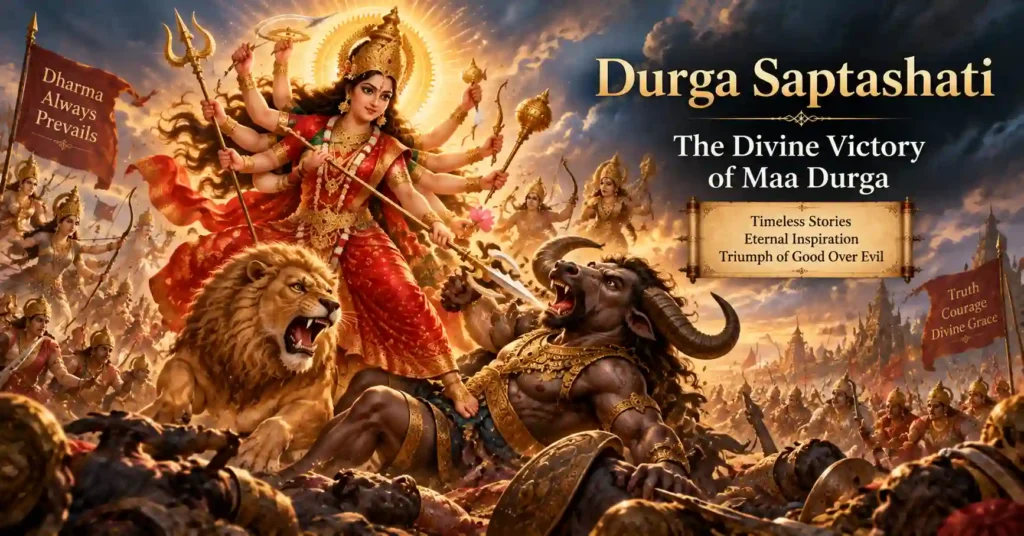
The most famous episode of the Durga Saptashati is the battle between Maa Durga and Mahishasura, the buffalo demon.
After defeating the gods and taking control of heaven, Mahishasura becomes a symbol of unchecked power and arrogance.
In response, the combined divine energies of the gods manifest as Goddess Durga. Armed with celestial weapons, she engages in a fierce battle and ultimately destroys Mahishasura.
This victory is celebrated throughout India during Navratri and Durga Puja.
Spiritual Meaning
Mahishasura symbolizes:
Ego
Pride
Arrogance
Uncontrolled desires
His defeat teaches that spiritual strength and divine wisdom are necessary to overcome the ego’s influence.
3. The Battle Against Shumbha and Nishumbha
The final and longest battle in the Durga Saptashati involves the demons Shumbha and Nishumbha.
These powerful rulers seek to possess the Goddess after hearing about her beauty and greatness. When she refuses, they launch a massive war against her.
During the conflict, Maa Durga manifests numerous forms, including Kali, Chamunda, and other fierce aspects of Shakti.
Several demons, including Dhumralochana, Chanda, Munda, and Raktabeej, are defeated before the final victory over Shumbha and Nishumbha.
Spiritual Meaning
Shumbha and Nishumbha symbolize:
Pride
Possessiveness
Attachment
Self-centeredness
Their defeat represents the spiritual victory that comes from surrendering the ego and recognizing the supremacy of divine truth.
The Special Case of Raktabeej
Among all the demons in the Durga Saptashati, Raktabeej holds a unique place.
Whenever a drop of his blood touched the ground, another demon identical to him emerged.
To defeat him, Goddess Kali drank every drop of blood before it could fall.
Spiritual Meaning
Raktabeej symbolizes recurring negative thoughts and desires.
Just as one desire can give rise to many more, one negative habit can multiply if left unchecked.
The story teaches the importance of addressing problems at their root rather than merely dealing with their symptoms.
Why These Battles Matter Today
The battles described in the Durga Saptashati are not only cosmic events but also reflections of the inner struggles faced by every individual.
The demons represent qualities that create suffering and prevent spiritual growth.
The Goddess represents the inner divine power that helps overcome these obstacles and move toward wisdom, self-mastery, and devotion.
The Deeper Spiritual Meaning of Durga Saptashati
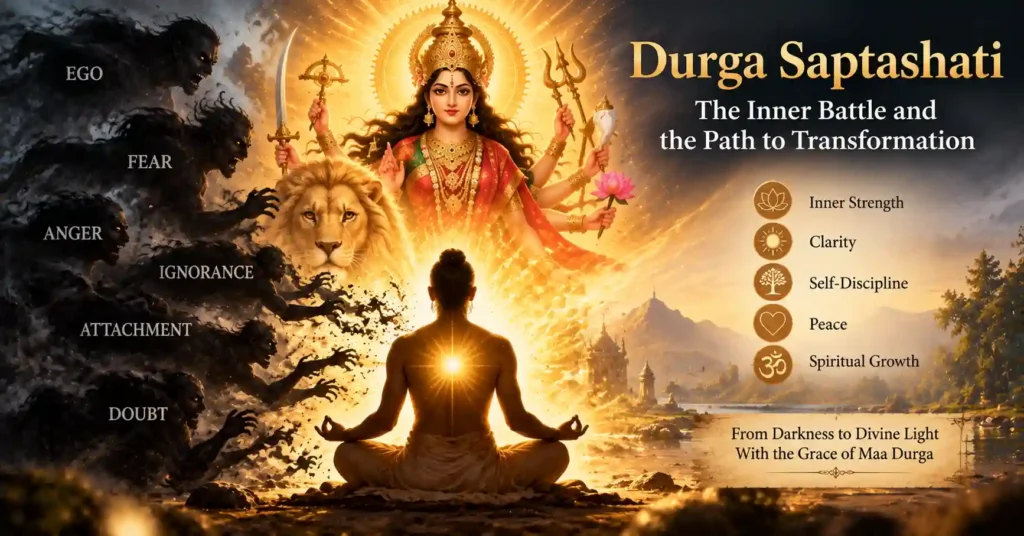
While the Durga Saptashati is often read as a collection of divine stories, its deeper purpose is spiritual transformation. The scripture teaches that the battles fought by Maa Durga are not only external events but also symbolic representations of the inner struggles faced by every human being.
At its core, the Durga Saptashati is a journey from ignorance to wisdom, from fear to courage, and from ego to divine awareness.
The Demons Represent Inner Obstacles
The demons described in the scripture symbolize negative tendencies that prevent spiritual growth.
For example:
Madhu and Kaitabha represent ignorance and confusion.
Mahishasura represents ego, arrogance, and uncontrolled desires.
Raktabeej represents recurring negative thoughts and habits.
Shumbha and Nishumbha represent pride, attachment, and possessiveness.
The victories of Maa Durga show that these obstacles can be overcome through divine grace, self-discipline, and spiritual practice.
Maa Durga Represents Divine Shakti
In the Durga Saptashati, Maa Durga is not merely a warrior goddess. She is portrayed as the supreme cosmic power that creates, sustains, and transforms the universe.
She is the source of:
Strength
Wisdom
Compassion
Faith
Protection
Spiritual awakening
The scripture teaches that this divine energy exists within every individual and can be awakened through devotion and righteous living.
The Battle Between Dharma and Adharma
A central theme of the Durga Saptashati is the eternal struggle between dharma and adharma.
Whenever negativity becomes dominant, the Divine Mother manifests to restore balance.
On a personal level, this reminds devotees to choose truth over falsehood, self-control over temptation, and compassion over selfishness.
The Role of Mahamaya
The scripture frequently refers to the Goddess as Mahamaya, the divine power that governs the universe.
Mahamaya is responsible for both spiritual ignorance and spiritual awakening.
This teaching explains why people often become attached to temporary things and forget their higher purpose. Through devotion and wisdom, the same divine power helps seekers move toward self-realization.
A Scripture for Inner Transformation
Many devotees read the Durga Saptashati for protection and blessings. However, its deeper message goes beyond worldly benefits.
The text encourages readers to:
Develop inner strength
Conquer fear and doubt
Cultivate devotion
Live according to dharma
Seek spiritual wisdom
For this reason, the scripture continues to inspire seekers across generations.
Why Is Durga Saptashati Read During Navratri?
Durga Saptashati is most commonly recited during Navratri, the nine sacred nights dedicated to the worship of Maa Durga and her various forms. Throughout India, devotees read, listen to, or perform Chandi Path during this period to honor the Divine Mother and seek her blessings.
The scripture is considered especially significant during Navratri because its central theme aligns perfectly with the festival’s message: the victory of divine power over negativity and the triumph of dharma over adharma.
Connection Between Navratri and Durga Saptashati
Navratri celebrates the different manifestations of the Divine Mother and her role as the protector of the universe.
The Durga Saptashati narrates these divine acts through the stories of Maa Durga defeating powerful demons such as Mahishasura, Shumbha, and Nishumbha.
For this reason, the scripture has become one of the most important texts associated with Navratri worship.
Why Do Devotees Recite Durga Saptashati During Navratri?
Many devotees believe that reading the Durga Saptashati during Navratri helps deepen their connection with Maa Durga.
Traditionally, devotees recite it to:
Express devotion to the Divine Mother
Seek spiritual strength and courage
Cultivate faith and discipline
Reflect on the victory of good over evil
Participate in a sacred Navratri tradition
The recitation is often accompanied by prayer, fasting, meditation, and worship.
Durga Saptashati and the Nine Forms of Durga
During Navratri, devotees worship the Navadurga, the nine forms of Maa Durga.
Although the Durga Saptashati primarily focuses on the Goddess’s battles against demonic forces, its teachings complement the spiritual themes associated with each day of Navratri.
Together, they encourage devotees to develop purity, courage, wisdom, devotion, and self-mastery.
Traditional Navratri Reading Practices
Different traditions follow different methods of reading the Durga Saptashati.
Some devotees complete all 13 chapters over the nine days of Navratri.
Others divide the chapters according to traditional schedules and read specific portions each day.
In temples and spiritual organizations, group recitations of the Chandi Path are also common during Navratri celebrations.
Is Navratri the Only Time to Read Durga Saptashati?
No. While Navratri is the most popular period for recitation, the Durga Saptashati can be read throughout the year.
Many devotees include selected chapters, hymns, or portions of the scripture in their regular spiritual practice.
The teachings of the text remain relevant regardless of the season or festival.
Important Hymns Associated with Durga Saptashati
Before the main recitation of the Durga Saptashati, several sacred hymns and prayers are traditionally recited. These texts are considered important parts of the Chandi Path tradition and help devotees prepare their minds for the worship of Maa Durga.
Each of these hymns highlights a different aspect of the Divine Mother, including protection, devotion, surrender, and spiritual awakening.
Devi Kavach
Devi Kavach is one of the most popular sections associated with the Durga Saptashati. The word Kavach means armor or protective shield.
The hymn invokes the blessings of various forms of the Goddess and is traditionally recited for divine protection and spiritual strength.
Many devotees recite the Devi Kavach before beginning the main reading of the Durga Saptashati.
Argala Stotram
Argala Stotram is a devotional hymn that praises the Divine Mother and seeks her blessings.
One of its most famous refrains is:
“Roopam Dehi, Jayam Dehi, Yasho Dehi, Dvisho Jahi.”
The hymn expresses a devotee’s desire for virtue, success, spiritual growth, and freedom from negativity.
It is traditionally recited after the Devi Kavach.
Keelakam Stotram
Keelakam Stotram explains the hidden spiritual significance of the Durga Saptashati.
The word Keelakam means a lock or pin. Traditionally, the hymn is believed to remove obstacles that may prevent a devotee from fully benefiting from the recitation.
It emphasizes faith, devotion, and sincerity in worship.
Navarna Mantra
The Navarna Mantra is one of the most important mantras in Shakta worship:
ॐ ऐं ह्रीं क्लीं चामुण्डायै विच्चे
This powerful mantra is dedicated to Maa Chamunda and is closely associated with the Durga Saptashati.
Many devotees chant the Navarna Mantra before, during, or after the recitation of the scripture.
Narayani Stuti
The Narayani Stuti, found in Chapter 11 of the Durga Saptashati, is one of the most beautiful hymns in praise of the Divine Mother.
In this stuti, the gods glorify Maa Durga as the source of creation, protection, wisdom, and liberation.
Many verses from this hymn are regularly recited in temples and daily worship.
Siddha Kunjika Stotram
Siddha Kunjika Stotram is often regarded as a highly revered hymn connected to the Durga Saptashati tradition.
According to traditional belief, it contains the essence of the Chandi Path and is especially popular during Navratri.
Many devotees recite it when they are unable to perform the complete reading of all 13 chapters.
Why Are These Hymns Important?
These hymns help devotees approach the Durga Saptashati with devotion, concentration, and spiritual preparedness.
Together, they form an important part of traditional Devi worship and deepen a devotee’s connection with Maa Durga and the Divine Mother.
Benefits of Reading Durga Saptashati
For centuries, devotees have recited the Durga Saptashati to honor Maa Durga and deepen their connection with the Divine Mother. While spiritual experiences vary from person to person, the scripture is traditionally associated with several spiritual, mental, emotional, and devotional benefits.
Spiritual Benefits
The Durga Saptashati helps devotees develop a stronger relationship with Maa Durga and the concept of Divine Shakti.
Regular reading encourages:
Greater devotion and faith
Spiritual discipline
Deeper understanding of dharma
Connection with the Divine Mother
Reflection on higher spiritual values
Many devotees also view the scripture as a source of inner guidance during difficult phases of life.
Mental Benefits
The stories, prayers, and hymns within the Durga Saptashati encourage focus and contemplation.
Regular recitation may help:
Improve concentration
Promote mental clarity
Reduce unnecessary worry
Strengthen positive thinking
Develop resilience during challenges
The rhythmic nature of Sanskrit recitation can also create a sense of calm and mindfulness.
Emotional Benefits
The teachings of the Durga Saptashati remind devotees that difficulties can be overcome through courage, faith, and perseverance.
As a result, many readers find inspiration to:
Face fears with confidence
Maintain hope during adversity
Develop emotional strength
Cultivate patience and self-control
Let go of negative thought patterns
Traditional Benefits
In Hindu tradition, the Durga Saptashati is often recited during Navratri, Durga Puja, and other important religious observances.
Traditionally, devotees believe that sincere recitation is associated with:
Divine blessings
Protection from obstacles
Success in righteous endeavors
Harmony within the family
Spiritual progress
These beliefs have been passed down through generations within the Shakta tradition.
Devotional Benefits
One of the greatest benefits of reading the Durga Saptashati is the opportunity to spend time in devotion and remembrance of Maa Durga.
The scripture inspires devotees to:
Practice gratitude
Strengthen their faith
Develop humility
Remember the Divine Mother in daily life
Approach challenges with trust and surrender
For many devotees, the greatest blessing is not a material gain but a deeper sense of spiritual connection and inner peace.
Why Devotees Continue to Read Durga Saptashati Today
Even after centuries, the Durga Saptashati remains relevant because its teachings address universal human struggles such as fear, ego, attachment, doubt, and adversity.
Its stories continue to inspire people to cultivate courage, wisdom, compassion, and devotion while walking the path of dharma.
How to Read Durga Saptashati Correctly
The Durga Saptashati can be read by anyone with faith and devotion. While traditional methods exist, the most important requirement is sincerity and respect for the Divine Mother.
Many devotees read the scripture during Navratri, while others include it in their regular spiritual practice throughout the year.
Best Time to Read Durga Saptashati
Traditionally, the Durga Saptashati is recited during:
Sharadiya Navratri
Chaitra Navratri
Durga Puja
Fridays dedicated to Devi worship
Ashtami and Navami observances
However, devotees may read it on any day according to their spiritual routine.
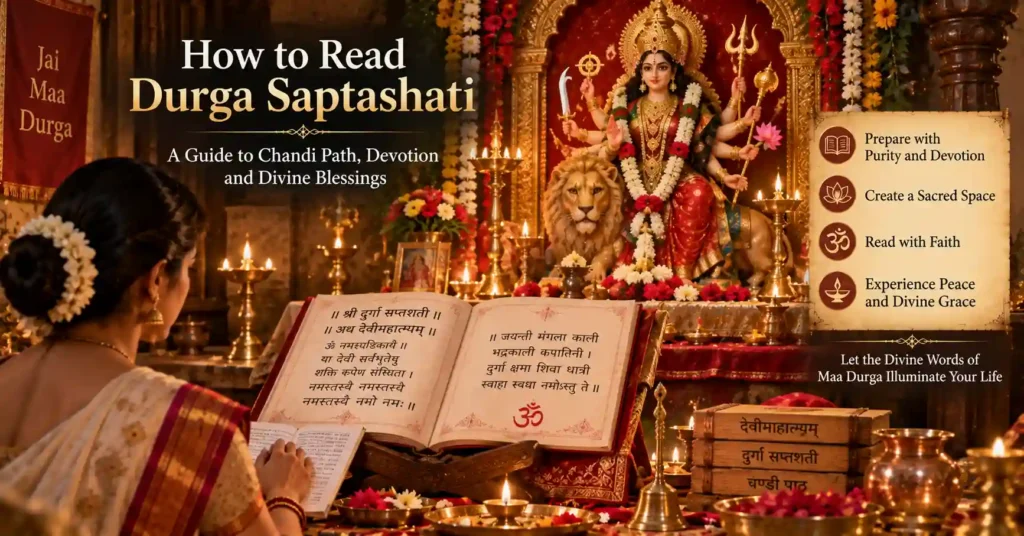
Preparations Before Reading
Before beginning the recitation, devotees often:
Take a bath and wear clean clothes
Sit in a quiet and clean place
Light a diya or incense if possible
Offer prayers to Maa Durga
Maintain a calm and focused mind
These practices help create a devotional atmosphere but should not become a source of stress for beginners.
Traditional Order of Recitation
In many traditions, the following sequence is followed:
Devi Kavach
Argala Stotram
Keelakam Stotram
Navarna Mantra
Durga Saptashati Chapters
Narayani Stuti and concluding prayers
This traditional order is commonly used during Chandi Path and Navratri recitations.
Can You Read Selected Chapters?
Yes. Not every devotee reads all 13 chapters at once.
Many people begin with:
Selected chapters
Narayani Stuti
Devi Kavach
Important portions of the text
Gradually, they move toward reading the complete Durga Saptashati.
Can Beginners Read Durga Saptashati?
Yes. Beginners can read the Durga Saptashati.
If the Sanskrit text feels difficult, one may start by reading translations, chapter summaries, or explanations to understand the scripture’s teachings.
Learning the meaning often helps develop a deeper connection than mechanical recitation alone.
Is Understanding the Meaning Important?
Traditional recitation itself is considered sacred.
However, understanding the stories, symbolism, and teachings of the Durga Saptashati allows devotees to gain greater spiritual insight from the scripture.
When devotion is combined with understanding, the teachings become easier to apply in daily life.
Common Mistakes to Avoid
While reading the Durga Saptashati, devotees should try to avoid:
Treating the recitation as a hurried ritual
Focusing only on material benefits
Ignoring the deeper spiritual teachings
Becoming discouraged by pronunciation difficulties
Faith, consistency, and sincere devotion are generally considered more important than perfection.
A Simple Approach for Modern Readers
If you are new to the Durga Saptashati, begin with small and manageable steps.
Read a chapter summary, learn about the stories of Maa Durga, understand the symbolism, and gradually explore the complete scripture.
This approach makes the teachings more accessible while preserving their spiritual depth.
Can Beginners Read Durga Saptashati?
A common question among devotees is whether the Durga Saptashati is suitable for beginners. The answer is yes. While the scripture is profound and contains approximately 700 Sanskrit verses, anyone with faith, respect, and a willingness to learn can begin exploring its teachings.
Many devotees start their journey with the Durga Saptashati during Navratri and gradually develop a deeper understanding over time.
Why Some Beginners Find It Challenging
The Durga Saptashati contains Sanskrit verses, traditional hymns, and symbolic stories that may initially seem complex.
New readers may find challenges such as:
Sanskrit pronunciation
Understanding the symbolism
Remembering the various forms of the Goddess
Following all 13 chapters in sequence
These challenges are natural and should not discourage anyone from learning.
How Beginners Can Start
A practical approach is to begin with understanding the overall meaning and structure of the scripture.
Many devotees start by:
Reading chapter summaries
Learning the stories of Maa Durga
Understanding the major battles
Exploring translations and explanations
Listening to guided recitations
This foundation makes the complete text easier to appreciate.
Is Perfect Pronunciation Necessary?
Traditional recitation values correct pronunciation, but beginners should not worry about achieving perfection immediately.
Sincere devotion, concentration, and respect for the scripture are considered more important than flawless chanting.
With regular practice, pronunciation naturally improves over time.
Can Beginners Read During Navratri?
Yes. Navratri is one of the most popular times for beginners to start reading the Durga Saptashati.
Many devotees begin by reading selected chapters, associated hymns such as Devi Kavach or Argala Stotram, or simply learning about the significance of the scripture during the festival.
Learning the Meaning Alongside the Text
Reading the Durga Saptashati with an understanding of its meaning often makes the experience more meaningful.
The stories of Maa Durga defeating various demons are not only sacred narratives but also lessons about overcoming fear, ego, attachment, and negativity in daily life.
Understanding these teachings helps readers connect the scripture with their own spiritual journey.
A Good Starting Point
For most beginners, the best approach is to learn gradually rather than trying to master everything at once.
Consistent study, devotion, and curiosity often lead to a deeper appreciation of the Durga Saptashati and its timeless teachings.
Over time, what initially seems complex becomes a source of inspiration, strength, and spiritual growth.
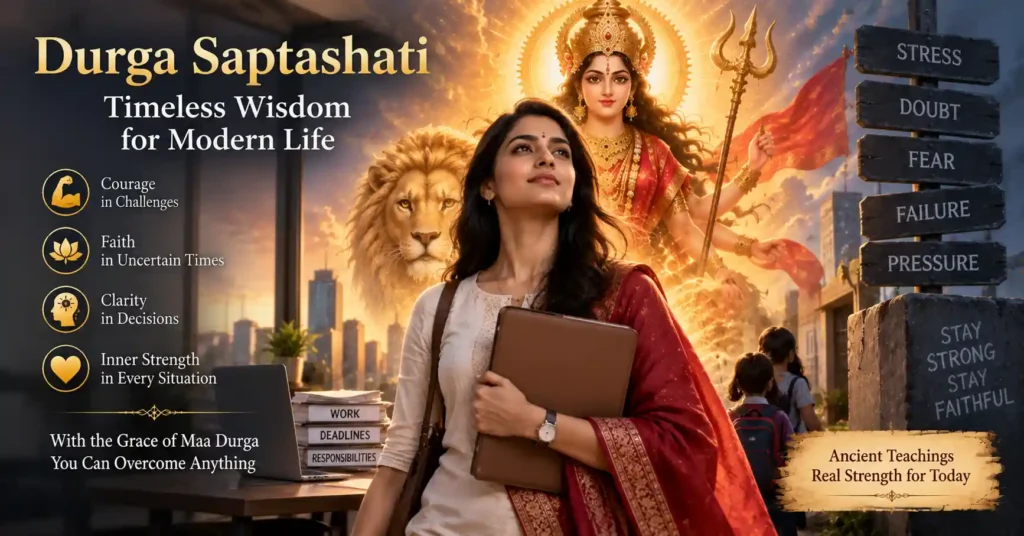
Durga Saptashati in Daily Life
Although the Durga Saptashati is an ancient scripture, its teachings remain highly relevant in modern life. The stories of Maa Durga and her victories over various demons offer valuable lessons that can help individuals face everyday challenges with wisdom, courage, and faith.
Rather than viewing the scripture only as a religious text, many devotees see it as a guide for personal growth and spiritual development.
Learning to Overcome Fear
One of the central messages of the Durga Saptashati is the importance of courage.
Maa Durga confronts powerful demons without hesitation, reminding devotees that fear should not prevent them from doing what is right.
This lesson can inspire confidence when facing difficulties at work, in relationships, or during challenging life situations.
Conquering Ego and Negative Habits
Many demons in the Durga Saptashati symbolize inner weaknesses such as pride, anger, greed, attachment, and arrogance.
The scripture encourages readers to identify these tendencies within themselves and work toward overcoming them through self-awareness and discipline.
This makes the text as much a guide to inner transformation as it is a sacred narrative.
Staying Committed to Dharma
The Divine Mother always acts to restore balance and protect righteousness.
This teaches devotees the importance of living according to dharma by being honest, responsible, compassionate, and respectful toward others.
Even small daily actions can reflect these values.
Building Inner Strength
Life often brings uncertainty, setbacks, and emotional challenges.
The teachings of the Durga Saptashati encourage devotees to develop resilience, patience, and faith rather than becoming discouraged by temporary difficulties.
This mindset can help maintain stability during stressful periods.
Developing Faith and Devotion
Regular reading of the Durga Saptashati reminds devotees of the presence of divine guidance in their lives.
Whether through prayer, meditation, or simple remembrance of Maa Durga, many people find comfort and strength in maintaining a spiritual connection.
Applying the Teachings in Everyday Situations
The lessons of the Durga Saptashati can be practiced by:
Facing challenges with courage
Controlling anger and ego
Making ethical decisions
Helping others selflessly
Remaining patient during adversity
Trusting in divine guidance while taking responsible action
These simple practices help bring the scripture’s teachings into daily life.
Why Durga Saptashati Still Matters Today
The world has changed significantly since the Durga Saptashati was composed, but human struggles remain remarkably similar.
People still face fear, attachment, stress, pride, and uncertainty. The scripture’s timeless teachings continue to offer practical wisdom for navigating these challenges while staying connected to higher spiritual values.
Did You Know? Fascinating Facts About Durga Saptashati
- The Durga Saptashati is part of the Markandeya Purana and comprises chapters 81 to 93 of the Purana.
- The scripture contains approximately 700 verses, which is why it is called Saptashati, meaning “seven hundred.”
- Durga Saptashati, Devi Mahatmya, and Chandi Path are different names for the same sacred text.
- It is one of the most important scriptures of the Shakta tradition, which worships the Divine Mother as the supreme reality.
- The text is divided into 13 chapters and 3 Charitras, each describing a major victory of the Goddess over demonic forces.
- The famous stories of Mahishasura, Raktabeej, Shumbha, and Nishumbha come from the Durga Saptashati.
- The scripture is widely recited during Sharadiya Navratri and Chaitra Navratri, especially in temples dedicated to Maa Durga.
- Several well-known devotional texts, including Devi Kavach, Argala Stotram, and Keelakam Stotram, are traditionally recited alongside the Durga Saptashati.
- The celebrated Narayani Stuti, one of the most beautiful hymns in praise of the Divine Mother, appears in Chapter 11 of the Durga Saptashati.
- The scripture presents Maa Durga not only as a warrior goddess but also as the supreme cosmic power behind creation, preservation, and transformation.
- In many traditions, the Durga Saptashati is considered both a sacred scripture and a manual for inner spiritual growth.
- The demons described in the text are often interpreted symbolically as human weaknesses such as ego, pride, attachment, anger, and ignorance.
- The Navarna Mantra (ॐ ऐं ह्रीं क्लीं चामुण्डायै विच्चे) is closely associated with the worship practices connected to the Durga Saptashati.
- For centuries, saints, scholars, and devotees have studied the Durga Saptashati for its spiritual wisdom, devotional value, and philosophical depth.
- Even today, the Durga Saptashati remains one of the most widely recited and revered scriptures dedicated to Maa Durga across India and many parts of the world.
Conclusion
The Durga Saptashati is far more than a collection of sacred stories. It is a revered scripture that celebrates the power, compassion, and protective grace of Maa Durga while teaching timeless lessons about courage, devotion, and the victory of dharma over adharma.
Through its 13 chapters and 700 verses, the Durga Saptashati presents profound spiritual teachings wrapped within inspiring narratives of the Divine Mother’s battles against various demonic forces. These stories continue to guide devotees in overcoming fear, ego, attachment, and other inner obstacles.
Whether read during Navratri or studied throughout the year, the Durga Saptashati offers valuable insights into the nature of Shakti, the importance of faith, and the path toward spiritual growth. Its message remains as relevant today as it was centuries ago.
For devotees of Maa Durga, the Durga Saptashati serves as both a sacred scripture and a source of inspiration, reminding us that with divine grace, inner strength, and steadfast devotion, even the most difficult challenges can be overcome.
Suggested Reading
The Durga Saptashati is one of the most important scriptures dedicated to Maa Durga and Divine Shakti. Exploring related hymns, mantras, and devotional texts can help readers gain a deeper understanding of Devi worship, Navratri traditions, and the spiritual teachings associated with the Divine Mother.
Devi Kavach Meaning: Durga Saptashati Protection Prayer
https://thesanatantales.com/devi-kavach-meaning/
Argala Stotram Lyrics with Meaning and Spiritual Significance
https://thesanatantales.com/argala-stotram-lyrics-meaning/
Siddha Kunjika Stotram: The Sacred Key That Unlocks the Full Power of Durga Saptashati
https://thesanatantales.com/siddha-kunjika-stotram/
Navarna Mantra Meaning, Benefits, Chanting Rules and How to Chant
https://thesanatantales.com/navarna-mantra/
Durga Beej Mantra: Simple Meaning, Benefits and How to Chant
https://thesanatantales.com/durga-beej-mantra-meaning/
Durga Chalisa: Lyrics, Meaning, Benefits and Spiritual Significance
https://thesanatantales.com/durga-chalisa-lyrics-meaning/
Aarti of Maa Ambe: Lyrics, Meaning, Benefits and How to Perform
https://thesanatantales.com/aarti-of-maa-ambe/
Maa Durga: Meaning, Symbolism, Forms and Spiritual Significance
https://thesanatantales.com/maa-durga/
Devi Mahatmya (Durga Saptashati)
https://en.wikipedia.org/wiki/Devi_Mahatmya
FAQs
1. What is Durga Saptashati and why is it important?
Durga Saptashati is a sacred Hindu scripture dedicated to Maa Durga and the Divine Mother. It forms part of the Markandeya Purana and contains approximately 700 Sanskrit verses spread across 13 chapters.
The scripture is important because it describes the victories of the Goddess over various demonic forces while teaching deeper spiritual lessons about overcoming fear, ego, attachment, and ignorance. It is widely recited during Navratri and is regarded as one of the most important texts in the Shakta tradition.
For devotees, the Durga Saptashati is both a devotional scripture and a guide for spiritual growth, inner strength, and faith in divine protection.
2. What is the meaning of Durga Saptashati?
The name Durga Saptashati is derived from two Sanskrit words: Durga, referring to Goddess Durga, and Saptashati, meaning “seven hundred.”
The title literally means “the seven hundred verses dedicated to Goddess Durga.” The scripture glorifies the Divine Mother and her role in protecting the universe and restoring cosmic balance.
It is also known as Devi Mahatmya, meaning “The Glory of the Goddess,” and Chandi Path, referring to its traditional recitation. These names highlight different aspects of the same sacred text.
Together, they reflect the scripture’s devotional, philosophical, and spiritual significance.
3. Why is Durga Saptashati read during Navratri?
The Durga Saptashati is closely associated with Navratri because its central theme aligns with the festival’s celebration of Maa Durga and Divine Shakti.
The scripture narrates the Goddess’s victories over powerful demons such as Mahishasura, Shumbha, and Nishumbha. These stories symbolize the triumph of good over evil and wisdom over ignorance.
During Navratri, devotees recite the Durga Saptashati to honor the Divine Mother, deepen their devotion, and reflect on her teachings.
Many temples and households perform complete or partial readings of the scripture during the nine sacred nights, making it one of the most important texts of Navratri worship.
4. Can beginners read Durga Saptashati?
Yes, beginners can read the Durga Saptashati. While the scripture contains Sanskrit verses and profound spiritual symbolism, it is not restricted to advanced practitioners.
Many devotees begin by reading chapter summaries, translations, or explanatory guides before exploring the complete text. This helps them understand the stories and teachings more easily.
Beginners can also start with associated hymns such as Devi Kavach, Argala Stotram, or Narayani Stuti.
The most important qualities are sincerity, devotion, and a willingness to learn. Over time, familiarity with the scripture naturally develops through regular study and practice.
5. What are the benefits of reading Durga Saptashati?
The Durga Saptashati is traditionally associated with spiritual, mental, emotional, and devotional benefits. Devotees believe that regular reading strengthens faith, devotion, and connection with Maa Durga.
The scripture’s teachings encourage courage, self-discipline, patience, and resilience during life’s challenges. Its stories inspire readers to overcome negative tendencies such as fear, pride, attachment, and doubt.
Many devotees also find comfort and motivation through its messages of divine protection and hope.
While individual experiences vary, the enduring popularity of the Durga Saptashati reflects its ability to inspire spiritual reflection and personal growth.
6. What are the three main sections of Durga Saptashati?
The Durga Saptashati is divided into three major sections known as Charitras. Together, they describe different manifestations of the Divine Mother and her victories over evil forces.
The Prathama Charitra focuses on Mahakali and the defeat of Madhu and Kaitabha. The Madhyama Charitra describes Mahalakshmi’s battle against Mahishasura. The Uttama Charitra narrates Mahasaraswati’s victories over Shumbha, Nishumbha, Raktabeej, and other demons.
These three sections are not only sacred stories but also symbolic representations of overcoming ignorance, ego, and attachment on the spiritual path.
7. Is Durga Saptashati the same as Devi Mahatmya and Chandi Path?
Yes. Durga Saptashati, Devi Mahatmya, and Chandi Path are different names for the same sacred scripture.
The name Durga Saptashati emphasizes its approximately 700 verses. Devi Mahatmya highlights the glory and greatness of the Divine Mother. Chandi Path refers to the traditional recitation of the text in worship and devotional practice.
Although the names differ, the scripture remains the same. Depending on the region, tradition, or spiritual lineage, devotees may use one name more frequently than another.
All three names refer to the revered text found within the Markandeya Purana.
8. Do I need to understand the meaning of Durga Saptashati while reading it?
Traditional Hindu practice considers the recitation of sacred texts valuable in itself. However, understanding the meaning of the Durga Saptashati can significantly deepen the experience.
The scripture contains rich symbolism, philosophical teachings, and spiritual insights that become clearer when readers study its meaning alongside the verses.
Understanding the stories of Mahishasura, Raktabeej, Shumbha, and Nishumbha helps devotees relate the teachings to their own lives and inner struggles.
Combining devotion with understanding allows readers to appreciate not only the words of the scripture but also its transformative spiritual message.
Share Your Devotion
Have you ever read the Durga Saptashati during Navratri or as part of your daily spiritual practice?
Which story, chapter, or teaching from the Durga Saptashati inspires you the most? Is it the victory over Mahishasura, the powerful message of the Narayani Stuti, or the deeper symbolism behind the battles of Maa Durga?
Share your thoughts, experiences, and reflections in the comments below. Your insights may help fellow devotees learn more about the wisdom and devotion contained within this sacred scripture.
Let us celebrate the teachings of Maa Durga together and continue exploring the timeless spiritual treasures of Sanatan Dharma with respect, faith, and devotion.
References & Sources
Markandeya Purana (Chapters 81–93), containing the Devi Mahatmya or Durga Saptashati
Devi Mahatmya (Durga Saptashati) Traditional Sanskrit Text
Traditional Chandi Path Recitation Texts
Shakta tradition scriptures and commentaries related to Maa Durga worship
Secondary Sources
Traditional Sanskrit commentaries on the Durga Saptashati
Scholarly studies on the Devi Mahatmya and Shakta traditions
Sanskrit scripture repositories and reference editions
Research works on Navratri, Durga Puja, and Hindu goddess traditions
Hindu philosophy and Sanatan Dharma reference materials
Note: The Durga Saptashati has been translated and interpreted by numerous scholars, spiritual teachers, and traditions over many centuries.
As a result, certain translations, explanations, and symbolic interpretations may vary slightly across editions and lineages. This article presents a beginner-friendly overview based on widely accepted traditional understandings of the scripture.
Readers interested in deeper study are encouraged to consult the original Sanskrit text, traditional commentaries, and teachings from qualified scholars and spiritual practitioners.
Explore More Topics from The Sanatan Tales