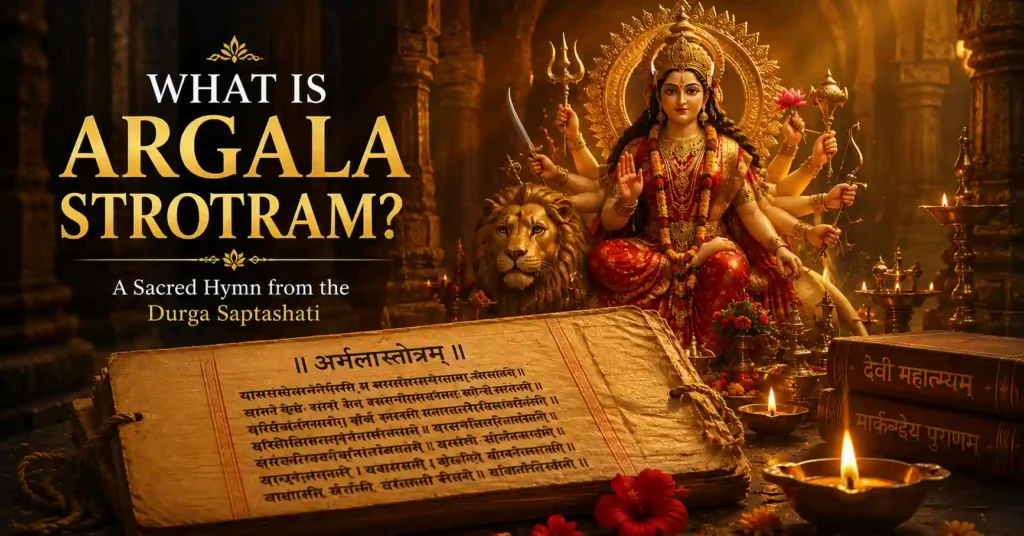
The Argala Stotra is one of the most important hymns dedicated to the Divine Mother and is traditionally recited as part of the Durga Saptashati or Devi Mahatmyam. Revered in the Shakta tradition, the Argala Stotra is believed to invoke the blessings of Goddess Durga, remove spiritual obstacles, and prepare the mind for deeper devotion and worship.
The word Argala means a bolt or barrier. Symbolically, the Argala Stotra is said to help remove the inner obstacles that prevent devotees from receiving the grace, wisdom, and protection of the Divine Mother. This is why it is traditionally recited before reading the Durga Saptashati.
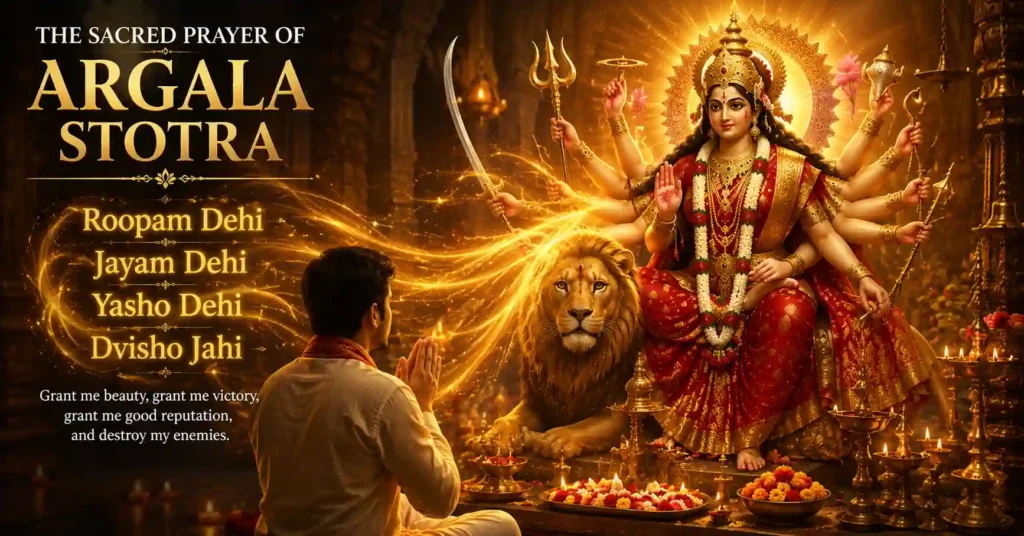
The hymn is especially known for the repeated prayer “Roopam Dehi Jayam Dehi Yasho Dehi Dvisho Jahi,” in which devotees seek beauty, victory, good reputation, and freedom from negativity through the blessings of Devi.
In this article, you will learn the complete Argala Stotra lyrics, English pronunciation, verse-by-verse meaning, spiritual symbolism, benefits of chanting, the best way to recite it, and answers to common questions. Whether you are new to the Argala Stotra or already include it in your daily worship, this guide will help you understand its deeper significance and devotional message.
Argala Stotra at a Glance
| Aspect | Details |
|---|---|
| Name | Argala Stotra |
| Deity | Goddess Durga / Divine Mother |
| Scripture | Devi Mahatmyam (Durga Saptashati) |
| Source Text | Markandeya Purana |
| Tradition | Shakta Tradition |
| Language | Sanskrit |
| Purpose | To invoke the grace, protection, and blessings of Goddess Durga |
| Recited Before | Devi Kavach and Keelak Stotra are traditionally recited along with it as part of Durga Saptashati worship |
| Famous Refrain | Roopam Dehi Jayam Dehi Yasho Dehi Dvisho Jahi |
| Best Time to Chant | Morning, Evening, Navratri, Fridays, and Ashtami |
| Suitable For | Beginners and experienced devotees |
| Main Benefits | Devotion, spiritual strength, inner confidence, protection, and connection with the Divine Mother |
The Argala Stotra is one of the most widely recited hymns in the worship of Goddess Durga. It is traditionally chanted before reading the Durga Saptashati and is considered an important part of Devi worship.
The Argala Stotra repeatedly invokes the blessings of the Divine Mother for victory, prosperity, protection, wisdom, and spiritual growth. Its verses praise the many forms of Devi while expressing complete devotion and surrender.
For many devotees, the Argala Stotra serves as both a prayer and a spiritual preparation, helping the mind become focused and receptive before entering the deeper teachings of the Devi Mahatmyam.
Table of Contents
ToggleWhat Is Argala Stotra?
The Argala Stotra is a sacred hymn dedicated to Goddess Durga that forms an important part of the Durga Saptashati, also known as the Devi Mahatmyam. It is traditionally recited by devotees before reading the main chapters of the Durga Saptashati.
In Sanskrit, the word stotra means a hymn of praise. The Argala Stotra praises the Divine Mother in her various forms and seeks her blessings for protection, victory, prosperity, wisdom, and spiritual growth.
The hymn repeatedly invokes Goddess Durga through prayers that express devotion, surrender, and trust in her divine power. Many of its verses conclude with the well-known refrain:
“Roopam Dehi Jayam Dehi Yasho Dehi Dvisho Jahi”
Through this prayer, devotees ask the Divine Mother to bless them with beauty, success, good reputation, and freedom from negativity and hostile influences.
The Argala Stotra occupies a special place in Shakta worship because it is believed to help devotees become mentally and spiritually prepared to receive the deeper teachings contained within the Devi Mahatmyam.
Today, the Argala Stotra is widely recited during Navratri, Durga Puja, daily Devi worship, and personal spiritual practices. Its verses continue to inspire devotees seeking the grace, protection, and blessings of the Divine Mother.
Meaning of the Word Argala
The word Argala comes from Sanskrit and literally means a bolt, latch, or bar used to secure a door. In everyday usage, an argala is something that controls access by either locking or unlocking an entrance.
In a spiritual context, the meaning of Argala Stotra is much deeper. The hymn is traditionally understood as a prayer that helps remove the inner barriers that prevent devotees from receiving the grace of the Divine Mother.
These barriers may include fear, doubt, ego, negativity, attachment, ignorance, and other obstacles that hinder spiritual growth. Through devotion and prayer, the Argala Stotra seeks the blessings of Goddess Durga to overcome these limitations.
Many traditional commentators explain that just as a bolt can either block or open a doorway, the Argala Stotra symbolically opens the door to divine blessings, protection, wisdom, and spiritual progress.
This symbolism is one reason why the Argala Stotra is recited before the main chapters of the Durga Saptashati. It is believed to prepare the mind and heart of the devotee, making them more receptive to the teachings and grace of the Divine Mother.
From this perspective, the Argala Stotra is not merely a hymn of praise. It is also a spiritual key that helps unlock devotion, remove obstacles, and deepen one’s connection with Goddess Durga.
Scriptural Origin of Argala Stotra
The Argala Stotra originates from the Devi Mahatmyam, a revered scripture found within the Markandeya Purana. The Devi Mahatmyam, also known as the Durga Saptashati or Chandi Path, is one of the most important texts dedicated to the Divine Mother in Hindu tradition.
The Argala Stotra is traditionally recited before the main chapters of the Devi Mahatmyam. Along with the Devi Kavach and Keelak Stotra, it forms part of the preparatory prayers that devotees chant before reading the sacred text.
The Devi Mahatmyam consists of 700 verses that describe the glory, power, and victories of Goddess Durga in her various forms. It narrates how the Divine Mother protects the universe and destroys forces that threaten dharma.
Within this tradition, the Argala Stotra serves as a hymn of praise and supplication. Its verses glorify the Divine Mother while seeking her blessings for success, protection, prosperity, wisdom, and spiritual advancement.
Many traditional scholars explain that the Argala Stotra helps prepare the devotee’s mind for the teachings of the Durga Saptashati. By invoking the grace of Goddess Durga, devotees seek to remove obstacles and cultivate the right attitude for spiritual study and worship.
Because of its deep connection with the Markandeya Purana and Devi Mahatmyam, the Argala Stotra continues to hold a central place in Navratri celebrations, Chandi Path recitations, and daily worship of the Divine Mother across the Hindu world.
Why Is Argala Stotra Recited Before Durga Saptashati?
The Argala Stotra is traditionally recited before the Durga Saptashati because it is believed to prepare the devotee mentally, emotionally, and spiritually for the sacred teachings of the Divine Mother.
In the traditional order of recitation, devotees first chant the Devi Kavach, followed by the Argala Stotra, and then the Keelak Stotra before beginning the main chapters of the Devi Mahatmyam.
Preparing the Mind for Worship
The Argala Stotra helps devotees focus their thoughts on Goddess Durga and cultivate an attitude of devotion and surrender.
Its verses repeatedly praise the Divine Mother and seek her blessings for spiritual progress, protection, wisdom, and success.
Removing Inner Obstacles
According to traditional understanding, the Argala Stotra helps remove the inner barriers that prevent a devotee from fully receiving divine grace.
These obstacles may include fear, doubt, ego, negativity, distractions, and attachment to worldly concerns.
Invoking the Grace of the Divine Mother
The repeated prayer “Roopam Dehi Jayam Dehi Yasho Dehi Dvisho Jahi” expresses a devotee’s desire for blessings, victory, good reputation, and freedom from negativity.
By chanting the Argala Stotra, devotees seek the compassionate support of Goddess Durga before entering the deeper teachings of the Durga Saptashati.
Its Place Alongside Devi Kavach and Keelak Stotra
Each of these preparatory hymns serves a unique purpose:
Devi Kavach – Seeks divine protection from the Goddess.
Argala Stotra – Invokes blessings and removes spiritual obstacles.
Keelak Stotra – Helps unlock the deeper benefits and understanding of the text.
Together, these prayers create a devotional framework that prepares the devotee for the study and recitation of the Devi Mahatmyam.
A Gateway to the Durga Saptashati
For this reason, many devotees view the Argala Stotra as a spiritual gateway to the Durga Saptashati.
By invoking the grace of the Divine Mother and removing inner obstacles, the Argala Stotra helps create the right mindset for worship, reflection, and deeper connection with Goddess Durga.
Full Argala Stotra for Continuous Reading
॥ अथार्गलास्तोत्रम् ॥
ॐ अस्य श्रीअर्गलास्तोत्रमन्त्रस्य विष्णुर्ऋषिः, अनुष्टुप् छन्दः।
श्रीमहालक्ष्मीर्देवता, श्रीजगदम्बाप्रीतये सप्तशतीपाठाङ्गत्वेन जपे विनियोगः॥
ॐ नमश्चण्डिकायै॥
मार्कण्डेय उवाच
ॐ जयन्ती मङ्गला काली भद्रकाली कपालिनी।
दुर्गा क्षमा शिवा धात्री स्वाहा स्वधा नमोऽस्तु ते॥1॥
जय त्वं देवि चामुण्डे जय भूतार्तिहारिणि।
जय सर्वगते देवि कालरात्रि नमोऽस्तु ते॥2॥
मधुकैटभविद्राविविधातृवरदे नमः।
रूपं देहि जयं देहि यशो देहि द्विषो जहि॥3॥
महिषासुरनिर्णाशि भक्तानां सुखदे नमः।
रूपं देहि जयं देहि यशो देहि द्विषो जहि॥4॥
रक्तबीजवधे देवि चण्डमुण्डविनाशिनि।
रूपं देहि जयं देहि यशो देहि द्विषो जहि॥5॥
शुम्भस्यैव निशुम्भस्य धूम्राक्षस्य च मर्दिनि।
रूपं देहि जयं देहि यशो देहि द्विषो जहि॥6॥
वन्दिताङ्घ्रियुगे देवि सर्वसौभाग्यदायिनि।
रूपं देहि जयं देहि यशो देहि द्विषो जहि॥7॥
अचिन्त्यरूपचरिते सर्वशत्रुविनाशिनि।
रूपं देहि जयं देहि यशो देहि द्विषो जहि॥8॥
नतेभ्यः सर्वदा भक्त्या चण्डिके दुरितापहे।
रूपं देहि जयं देहि यशो देहि द्विषो जहि॥9॥
स्तुवद्भ्यो भक्तिपूर्वं त्वां चण्डिके व्याधिनाशिनि।
रूपं देहि जयं देहि यशो देहि द्विषो जहि॥10॥
चण्डिके सततं ये त्वामर्चयन्तीह भक्तितः।
रूपं देहि जयं देहि यशो देहि द्विषो जहि॥11॥
देहि सौभाग्यमारोग्यं देहि मे परमं सुखम्।
रूपं देहि जयं देहि यशो देहि द्विषो जहि॥12॥
विधेहि द्विषतां नाशं विधेहि बलमुच्चकैः।
रूपं देहि जयं देहि यशो देहि द्विषो जहि॥13॥
विधेहि देवि कल्याणं विधेहि परमां श्रियम्।
रूपं देहि जयं देहि यशो देहि द्विषो जहि॥14॥
सुरासुरशिरोरत्ननिघृष्टचरणेऽम्बिके।
रूपं देहि जयं देहि यशो देहि द्विषो जहि॥15॥
विद्यावन्तं यशस्वन्तं लक्ष्मीवन्तं जनं कुरु।
रूपं देहि जयं देहि यशो देहि द्विषो जहि॥16॥
प्रचण्डदैत्यदर्पघ्ने चण्डिके प्रणताय मे।
रूपं देहि जयं देहि यशो देहि द्विषो जहि॥17॥
चतुर्भुजे चतुर्वक्त्रसंस्तुते परमेश्वरि।
रूपं देहि जयं देहि यशो देहि द्विषो जहि॥18॥
कृष्णेन संस्तुते देवि शश्वद्भक्त्या सदाम्बिके।
रूपं देहि जयं देहि यशो देहि द्विषो जहि॥19॥
हिमाचलसुतानाथसंस्तुते परमेश्वरि।
रूपं देहि जयं देहि यशो देहि द्विषो जहि॥20॥
इन्द्राणीपतिसद्भावपूजिते परमेश्वरि।
रूपं देहि जयं देहि यशो देहि द्विषो जहि॥21॥
देवि प्रचण्डदोर्दण्डदैत्यदर्पविनाशिनि।
रूपं देहि जयं देहि यशो देहि द्विषो जहि॥22॥
देवि भक्तजनोद्दामदत्तानन्दोदयेऽम्बिके।
रूपं देहि जयं देहि यशो देहि द्विषो जहि॥23॥
पत्नीं मनोरमां देहि मनोवृत्तानुसारिणीम्।
तारिणीं दुर्गसंसारसागरस्य कुलोद्भवाम्॥24॥
इदं स्तोत्रं पठित्वा तु महास्तोत्रं पठेन्नरः।
स तु सप्तशतीसङ्ख्यावरमाप्नोति सम्पदाम्॥25॥
॥ इति देव्या अर्गलास्तोत्रं सम्पूर्णम् ॥
Argala Stotra Line-by-Line Meaning (English Pronunciation & Hindi Meaning)
The Argala Stotra is traditionally recited in Sanskrit, but understanding its meaning can help devotees connect more deeply with the prayer. Below is the verse-by-verse English pronunciation and meaning of the Argala Stotra, allowing readers to appreciate both its devotional beauty and spiritual message.
Each verse praises the Divine Mother in a particular form and seeks her blessings for protection, victory, prosperity, wisdom, and spiritual growth.
Viniyoga
॥ अथार्गलास्तोत्रम् ॥
ॐ अस्य श्रीअर्गलास्तोत्रमन्त्रस्य विष्णुर्ऋषिः, अनुष्टुप् छन्दः।
श्रीमहालक्ष्मीर्देवता, श्रीजगदम्बाप्रीतये सप्तशतीपाठाङ्गत्वेन जपे विनियोगः॥
English Pronunciation
Om asya shri argala stotra mantrasya vishnur rishih, anushthup chhandah.
Shri Mahalakshmir devata, Shri Jagadamba preetaye saptashati paathangtvaina jape viniyogah.
मंगलाचरण
ॐ नमश्चण्डिकायै॥
English Pronunciation
Om namash chandikayai
Hindi Meaning
मैं देवी चण्डिका को नमस्कार करता हूँ।
मार्कण्डेय उवाच
Markandeya uvach
Hindi Meaning
ऋषि मार्कण्डेय कहते हैं।
Verse 1
Sanskrit Verse
जयन्ती मङ्गला काली भद्रकाली कपालिनी।
दुर्गा क्षमा शिवा धात्री स्वाहा स्वधा नमोऽस्तु ते॥1॥
English Pronunciation
Jayanti Mangala Kali Bhadrakali Kapalini
Durga Kshama Shiva Dhatri Swaha Swadha Namostute
Line-by-Line Hindi Meaning
जयन्ती मङ्गला काली भद्रकाली कपालिनी।
हे जयन्ती, मंगलमयी काली, भद्रकाली और कपालिनी देवी!
दुर्गा क्षमा शिवा धात्री स्वाहा स्वधा नमोऽस्तु ते॥
हे दुर्गा, क्षमा, शिवा और जगत का पालन करने वाली माता! आपको बार-बार नमस्कार है।
Line-by-Line English Meaning
Jayanti Mangala Kali Bhadrakali Kapalini
O Goddess who is victorious, auspicious, Kali, Bhadrakali, and Kapalini.
Durga Kshama Shiva Dhatri Swaha Swadha Namostute
O Durga, embodiment of forgiveness, auspiciousness, and sustainer of the universe, I bow to You.
Full Verse Meaning
This opening verse of the Argala Stotra praises Goddess Durga through several of her divine names and forms. It recognizes her as the source of protection, compassion, auspiciousness, and cosmic power.
Spiritual Essence
The verse reminds devotees that the Divine Mother manifests in many forms to guide, protect, and uplift creation. By remembering these forms, devotees cultivate faith and surrender to her grace.
Verse 2
Sanskrit Verse
जय त्वं देवि चामुण्डे जय भूतार्तिहारिणि।
जय सर्वगते देवि कालरात्रि नमोऽस्तु ते॥2॥
English Pronunciation
Jaya Tvam Devi Chamunde Jaya Bhutarti Harini
Jaya Sarvagate Devi Kalaratri Namostute
Line-by-Line Hindi Meaning
जय त्वं देवि चामुण्डे जय भूतार्तिहारिणि।
हे देवी चामुण्डा! आपको जय हो। हे प्राणियों के दुःख दूर करने वाली माता! आपको जय हो।
जय सर्वगते देवि कालरात्रि नमोऽस्तु ते॥
हे सर्वत्र विद्यमान कालरात्रि स्वरूप देवी! आपको नमस्कार है।
Line-by-Line English Meaning
Jaya Tvam Devi Chamunde Jaya Bhutarti Harini
Victory to You, O Chamunda, who removes the suffering of all beings.
Jaya Sarvagate Devi Kalaratri Namostute
Victory to You, O all-pervading Goddess Kalaratri. I bow before You.
Full Verse Meaning
This verse glorifies Goddess Chamunda as the compassionate Mother who removes suffering and protects devotees from fear and adversity. It also acknowledges her presence throughout the universe.
Spiritual Essence
The verse teaches that the Divine Mother is both powerful and compassionate. Devotees seek refuge in her protection during life’s challenges and uncertainties.
Verse 3
Sanskrit Verse
मधुकैटभविद्राविविधातृवरदे नमः।
रूपं देहि जयं देहि यशो देहि द्विषो जहि॥3॥
English Pronunciation
Madhukaitabha Vidravi Vidhatri Varade Namah
Roopam Dehi Jayam Dehi Yasho Dehi Dvisho Jahi
Line-by-Line Hindi Meaning
मधुकैटभविद्राविविधातृवरदे नमः।
हे मधु और कैटभ असुरों का नाश करने वाली तथा वर प्रदान करने वाली देवी! आपको नमस्कार है।
रूपं देहि जयं देहि यशो देहि द्विषो जहि॥
मुझे सौन्दर्य, विजय और यश प्रदान करें तथा मेरे विरोधियों और नकारात्मकताओं का नाश करें।
Line-by-Line English Meaning
Madhukaitabha Vidravi Vidhatri Varade Namah
Salutations to the Goddess who destroyed the demons Madhu and Kaitabha and grants divine blessings.
Roopam Dehi Jayam Dehi Yasho Dehi Dvisho Jahi
Grant me beauty, victory, good reputation, and remove negativity and hostility from my life.
Full Verse Meaning
This verse honors the Divine Mother as the destroyer of evil forces and the giver of blessings. It introduces the famous refrain that appears repeatedly throughout the Argala Stotra.
Spiritual Essence
The verse symbolizes the victory of divine wisdom over ignorance and negativity. It encourages devotees to seek both inner growth and the strength to overcome obstacles through Devi’s grace.
Verse 4
Sanskrit Verse
महिषासुरनिर्णाशि भक्तानां सुखदे नमः।
रूपं देहि जयं देहि यशो देहि द्विषो जहि॥4॥
English Pronunciation
Mahishasura Nirnashi Bhaktanam Sukhade Namah
Roopam Dehi Jayam Dehi Yasho Dehi Dvisho Jahi
Line-by-Line Hindi Meaning
महिषासुरनिर्णाशि भक्तानां सुखदे नमः।
हे महिषासुर का संहार करने वाली और भक्तों को सुख देने वाली देवी! आपको नमस्कार है।
रूपं देहि जयं देहि यशो देहि द्विषो जहि॥
मुझे सौन्दर्य, विजय और यश प्रदान करें तथा शत्रु भाव और नकारात्मकता का नाश करें।
Line-by-Line English Meaning
Mahishasura Nirnashi Bhaktanam Sukhade Namah
Salutations to the Goddess who destroyed Mahishasura and brings happiness to her devotees.
Roopam Dehi Jayam Dehi Yasho Dehi Dvisho Jahi
Grant me beauty, victory, good reputation, and remove hostility and negativity.
Full Verse Meaning
This verse recalls Goddess Durga’s victory over Mahishasura, one of the most celebrated stories in the Devi Mahatmyam. It praises her as the protector of devotees and destroyer of adharma.
Spiritual Essence
Mahishasura symbolizes arrogance, ignorance, and uncontrolled desires. The verse reminds devotees that the grace of the Divine Mother helps overcome these inner obstacles and leads to spiritual progress.
Verse 5
Sanskrit Verse
रक्तबीजवधे देवि चण्डमुण्डविनाशिनि।
रूपं देहि जयं देहि यशो देहि द्विषो जहि॥5॥
English Pronunciation
Raktabeeja Vadhe Devi Chandamunda Vinashini
Roopam Dehi Jayam Dehi Yasho Dehi Dvisho Jahi
Line-by-Line Hindi Meaning
रक्तबीजवधे देवि चण्डमुण्डविनाशिनि।
हे देवी! आपने रक्तबीज का वध किया और चण्ड-मुण्ड का विनाश किया।
रूपं देहि जयं देहि यशो देहि द्विषो जहि॥
मुझे सौन्दर्य, विजय और यश प्रदान करें तथा मेरे विरोधियों और नकारात्मक प्रवृत्तियों का नाश करें।
Line-by-Line English Meaning
Raktabeeja Vadhe Devi Chandamunda Vinashini
O Goddess, You destroyed Raktabeeja and defeated the demons Chanda and Munda.
Roopam Dehi Jayam Dehi Yasho Dehi Dvisho Jahi
Grant me beauty, victory, good reputation, and remove negativity and hostility.
Full Verse Meaning
This verse praises the Divine Mother for her victories over powerful demonic forces that threatened cosmic balance and righteousness.
Spiritual Essence
The demons symbolize recurring negative thoughts, ego, and destructive tendencies. The verse teaches that devotion to the Divine Mother can help overcome these challenges and restore inner harmony.
Verse 6
Sanskrit Verse
शुम्भस्यैव निशुम्भस्य धूम्राक्षस्य च मर्दिनि।
रूपं देहि जयं देहि यशो देहि द्विषो जहि॥6॥
English Pronunciation
Shumbhasyaiva Nishumbhasya Dhoomrakshasya Cha Mardini
Roopam Dehi Jayam Dehi Yasho Dehi Dvisho Jahi
Line-by-Line Hindi Meaning
शुम्भस्यैव निशुम्भस्य धूम्राक्षस्य च मर्दिनि।
हे देवी! आपने शुम्भ, निशुम्भ और धूम्राक्ष जैसे असुरों का संहार किया।
रूपं देहि जयं देहि यशो देहि द्विषो जहि॥
मुझे सौन्दर्य, विजय और यश प्रदान करें तथा शत्रु भाव और नकारात्मकता का नाश करें।
Line-by-Line English Meaning
Shumbhasyaiva Nishumbhasya Dhoomrakshasya Cha Mardini
O Goddess, You crushed the demons Shumbha, Nishumbha, and Dhoomraksha.
Roopam Dehi Jayam Dehi Yasho Dehi Dvisho Jahi
Grant me beauty, victory, good reputation, and remove hostility and negativity.
Full Verse Meaning
This verse glorifies Goddess Durga as the conqueror of powerful demons who symbolize pride, attachment, and ignorance. It celebrates her role as the protector of righteousness.
Spiritual Essence
The verse reminds devotees that the greatest battles often occur within the mind. Through devotion and divine grace, one can overcome ego, negativity, and spiritual obstacles on the path to self-improvement.
Verse 7
Sanskrit Verse
वन्दिताङ्घ्रियुगे देवि सर्वसौभाग्यदायिनि।
रूपं देहि जयं देहि यशो देहि द्विषो जहि॥7॥
English Pronunciation
Vanditanghriyuge Devi Sarva Saubhagya Dayini
Roopam Dehi Jayam Dehi Yasho Dehi Dvisho Jahi
Line-by-Line Hindi Meaning
वन्दिताङ्घ्रियुगे देवि सर्वसौभाग्यदायिनि।
हे देवी! आपके चरणों की सभी देवता और भक्त वंदना करते हैं। आप सभी प्रकार का सौभाग्य प्रदान करने वाली हैं।
रूपं देहि जयं देहि यशो देहि द्विषो जहि॥
मुझे सौन्दर्य, विजय और यश प्रदान करें तथा मेरे जीवन से द्वेष और नकारात्मकता को दूर करें।
Line-by-Line English Meaning
Vanditanghriyuge Devi Sarva Saubhagya Dayini
O Goddess, whose sacred feet are worshipped by devotees, You are the bestower of all auspiciousness and good fortune.
Roopam Dehi Jayam Dehi Yasho Dehi Dvisho Jahi
Grant me beauty, victory, good reputation, and remove hostility and negativity.
Full Verse Meaning
This verse praises the Divine Mother as the giver of auspiciousness, prosperity, and blessings. It highlights the reverence shown to her by devotees who seek her grace and protection.
Spiritual Essence
True fortune is not limited to material success. The verse teaches that the greatest blessings come through devotion, righteous living, and the grace of the Divine Mother.
Verse 8
Sanskrit Verse
अचिन्त्यरूपचरिते सर्वशत्रुविनाशिनि।
रूपं देहि जयं देहि यशो देहि द्विषो जहि॥8॥
English Pronunciation
Achintya Roopa Charite Sarva Shatru Vinashini
Roopam Dehi Jayam Dehi Yasho Dehi Dvisho Jahi
Line-by-Line Hindi Meaning
अचिन्त्यरूपचरिते सर्वशत्रुविनाशिनि।
हे देवी! आपका स्वरूप और दिव्य चरित्र अचिन्त्य है। आप सभी शत्रुओं का नाश करने वाली हैं।
रूपं देहि जयं देहि यशो देहि द्विषो जहि॥
मुझे सौन्दर्य, विजय और यश प्रदान करें तथा शत्रुता और नकारात्मकता का नाश करें।
Line-by-Line English Meaning
Achintya Roopa Charite Sarva Shatru Vinashini
O Goddess, whose form and divine deeds are beyond comprehension, You destroy all enemies.
Roopam Dehi Jayam Dehi Yasho Dehi Dvisho Jahi
Grant me beauty, victory, good reputation, and remove hostility and negativity.
Full Verse Meaning
This verse acknowledges the limitless nature of the Divine Mother. Her power, compassion, and divine actions transcend ordinary understanding.
Spiritual Essence
The verse encourages humility before the Divine. It reminds devotees that divine wisdom operates beyond human limitations and ultimately removes all obstacles on the spiritual path.
Verse 9
Sanskrit Verse
नतेभ्यः सर्वदा भक्त्या चण्डिके दुरितापहे।
रूपं देहि जयं देहि यशो देहि द्विषो जहि॥9॥
English Pronunciation
Natebhyah Sarvada Bhaktya Chandike Duritapahe
Roopam Dehi Jayam Dehi Yasho Dehi Dvisho Jahi
Line-by-Line Hindi Meaning
नतेभ्यः सर्वदा भक्त्या चण्डिके दुरितापहे।
हे चण्डिके! जो भक्त श्रद्धा से आपको प्रणाम करते हैं, उनके पाप और कष्ट दूर हो जाते हैं।
रूपं देहि जयं देहि यशो देहि द्विषो जहि॥
मुझे सौन्दर्य, विजय और यश प्रदान करें तथा द्वेष और नकारात्मकता का नाश करें।
Line-by-Line English Meaning
Natebhyah Sarvada Bhaktya Chandike Duritapahe
O Chandika, You remove the sins and sufferings of those who bow to You with devotion.
Roopam Dehi Jayam Dehi Yasho Dehi Dvisho Jahi
Grant me beauty, victory, good reputation, and remove hostility and negativity.
Full Verse Meaning
This verse highlights the compassionate nature of the Divine Mother. Through sincere devotion, devotees seek relief from suffering and freedom from the effects of past actions.
Spiritual Essence
The verse teaches that genuine devotion transforms the heart. By turning to the Divine Mother with faith, devotees cultivate inner peace, strength, and spiritual resilience.
Verse 10
Sanskrit Verse
स्तुवद्भ्यो भक्तिपूर्वं त्वां चण्डिके व्याधिनाशिनि।
रूपं देहि जयं देहि यशो देहि द्विषो जहि॥10॥
English Pronunciation
Stuvadbhyo Bhakti Purvam Tvam Chandike Vyadhi Nashini
Roopam Dehi Jayam Dehi Yasho Dehi Dvisho Jahi
Line-by-Line Hindi Meaning
स्तुवद्भ्यो भक्तिपूर्वं त्वां चण्डिके व्याधिनाशिनि।
हे चण्डिके! जो भक्त श्रद्धा से आपकी स्तुति करते हैं, उनके रोग और कष्ट दूर हो जाते हैं।
रूपं देहि जयं देहि यशो देहि द्विषो जहि॥
मुझे सौन्दर्य, विजय और यश प्रदान करें तथा शत्रु भाव और नकारात्मकता का नाश करें।
Line-by-Line English Meaning
Stuvadbhyo Bhakti Purvam Tvam Chandike Vyadhi Nashini
O Chandika, You destroy the suffering and afflictions of devotees who praise You with devotion.
Roopam Dehi Jayam Dehi Yasho Dehi Dvisho Jahi
Grant me beauty, victory, good reputation, and remove hostility and negativity.
Full Verse Meaning
This verse praises the healing and protective nature of the Divine Mother. Devotees seek her blessings for relief from physical, emotional, and spiritual difficulties.
Spiritual Essence
The verse reminds devotees that faith, devotion, and surrender can provide strength during challenging times and inspire inner healing.
Verse 11
Sanskrit Verse
चण्डिके सततं युद्धे जयन्ति पापनाशिनि।
रूपं देहि जयं देहि यशो देहि द्विषो जहि॥11॥
English Pronunciation
Chandike Satatam Yuddhe Jayanti Papa Nashini
Roopam Dehi Jayam Dehi Yasho Dehi Dvisho Jahi
Line-by-Line Hindi Meaning
चण्डिके सततं युद्धे जयन्ति पापनाशिनि।
हे चण्डिके! आप सदैव विजय प्राप्त करने वाली और पापों का नाश करने वाली हैं।
रूपं देहि जयं देहि यशो देहि द्विषो जहि॥
मुझे सौन्दर्य, विजय और यश प्रदान करें तथा मेरे जीवन की नकारात्मकताओं का नाश करें।
Line-by-Line English Meaning
Chandike Satatam Yuddhe Jayanti Papa Nashini
O Chandika, You are always victorious in battle and destroy sin and negativity.
Roopam Dehi Jayam Dehi Yasho Dehi Dvisho Jahi
Grant me beauty, victory, good reputation, and remove hostility and negativity.
Full Verse Meaning
This verse celebrates the eternal victory of the Divine Mother over the forces of darkness and adharma. It portrays her as the protector of righteousness.
Spiritual Essence
The verse symbolizes the ongoing battle between higher and lower tendencies within the human mind. Through devotion and divine guidance, goodness ultimately triumphs.
Verse 12
Sanskrit Verse
देहि सौभाग्यमारोग्यं देहि मे परमं सुखम्।
रूपं देहि जयं देहि यशो देहि द्विषो जहि॥12॥
English Pronunciation
Dehi Saubhagyam Arogyam Dehi Me Paramam Sukham
Roopam Dehi Jayam Dehi Yasho Dehi Dvisho Jahi
Line-by-Line Hindi Meaning
देहि सौभाग्यमारोग्यं देहि मे परमं सुखम्।
हे देवी! मुझे सौभाग्य, उत्तम स्वास्थ्य और परम सुख प्रदान करें।
रूपं देहि जयं देहि यशो देहि द्विषो जहि॥
मुझे सौन्दर्य, विजय और यश प्रदान करें तथा शत्रुता और नकारात्मकता को दूर करें।
Line-by-Line English Meaning
Dehi Saubhagyam Arogyam Dehi Me Paramam Sukham
O Goddess, grant me good fortune, health, and supreme happiness.
Roopam Dehi Jayam Dehi Yasho Dehi Dvisho Jahi
Grant me beauty, victory, good reputation, and remove hostility and negativity.
Full Verse Meaning
This verse is a heartfelt prayer for well-being, happiness, and prosperity. It reflects the devotee’s trust in the Divine Mother’s ability to nurture and protect all aspects of life.
Spiritual Essence
The verse teaches that true happiness arises when material well-being is balanced with spiritual growth, devotion, and inner contentment through the grace of the Divine Mother.
Verse 13
Sanskrit Verse
विधेहि देवि कल्याणं विधेहि विपुलां श्रियम्।
रूपं देहि जयं देहि यशो देहि द्विषो जहि॥13॥
English Pronunciation
Vidhehi Devi Kalyanam Vidhehi Vipulam Shriyam
Roopam Dehi Jayam Dehi Yasho Dehi Dvisho Jahi
Line-by-Line Hindi Meaning
विधेहि देवि कल्याणं विधेहि विपुलां श्रियम्।
हे देवी! मेरे जीवन में कल्याण और समृद्धि प्रदान करें।
रूपं देहि जयं देहि यशो देहि द्विषो जहि॥
मुझे सौन्दर्य, विजय और यश प्रदान करें तथा द्वेष और नकारात्मकता का नाश करें।
Line-by-Line English Meaning
Vidhehi Devi Kalyanam Vidhehi Vipulam Shriyam
O Goddess, bless me with welfare, auspiciousness, and abundant prosperity.
Roopam Dehi Jayam Dehi Yasho Dehi Dvisho Jahi
Grant me beauty, victory, good reputation, and remove hostility and negativity.
Full Verse Meaning
This verse is a prayer for overall well-being and prosperity. The devotee seeks both material and spiritual blessings from the Divine Mother.
Spiritual Essence
The verse teaches that true prosperity includes not only wealth but also wisdom, virtue, peace, and spiritual fulfillment.
Verse 14
Sanskrit Verse
विधेहि द्विषतां नाशं विधेहि बलमुच्चकैः।
रूपं देहि जयं देहि यशो देहि द्विषो जहि॥14॥
English Pronunciation
Vidhehi Dvishatam Nasham Vidhehi Balam Ucchakaih
Roopam Dehi Jayam Dehi Yasho Dehi Dvisho Jahi
Line-by-Line Hindi Meaning
विधेहि द्विषतां नाशं विधेहि बलमुच्चकैः।
हे देवी! शत्रुता का नाश करें और मुझे शक्ति प्रदान करें।
रूपं देहि जयं देहि यशो देहि द्विषो जहि॥
मुझे सौन्दर्य, विजय और यश प्रदान करें तथा नकारात्मकता को दूर करें।
Line-by-Line English Meaning
Vidhehi Dvishatam Nasham Vidhehi Balam Ucchakaih
O Goddess, destroy hostility and bless me with strength and courage.
Roopam Dehi Jayam Dehi Yasho Dehi Dvisho Jahi
Grant me beauty, victory, good reputation, and remove hostility and negativity.
Full Verse Meaning
This verse asks the Divine Mother for protection from harmful influences and the strength needed to face life’s challenges with confidence.
Spiritual Essence
The verse reminds devotees that true strength comes from inner courage, self-discipline, and faith in divine guidance.
Verse 15
Sanskrit Verse
सुरासुरशिरोरत्ननिघृष्टचरणाम्बिके।
रूपं देहि जयं देहि यशो देहि द्विषो जहि॥15॥
English Pronunciation
Surasura Shiroratna Nighrishta Charanambike
Roopam Dehi Jayam Dehi Yasho Dehi Dvisho Jahi
Line-by-Line Hindi Meaning
सुरासुरशिरोरत्ननिघृष्टचरणाम्बिके।
हे अम्बिके! देवताओं और असुरों के मुकुटों के रत्न आपके चरणों को स्पर्श करते हैं।
रूपं देहि जयं देहि यशो देहि द्विषो जहि॥
मुझे सौन्दर्य, विजय और यश प्रदान करें तथा शत्रुता और नकारात्मकता का नाश करें।
Line-by-Line English Meaning
Surasura Shiroratna Nighrishta Charanambike
O Ambika, whose feet are touched by the jeweled crowns of gods and demons alike.
Roopam Dehi Jayam Dehi Yasho Dehi Dvisho Jahi
Grant me beauty, victory, good reputation, and remove hostility and negativity.
Full Verse Meaning
This verse glorifies the supreme status of the Divine Mother. Even powerful celestial beings bow before her and seek her blessings.
Spiritual Essence
The verse teaches humility. Regardless of power or status, all beings ultimately depend on the grace and wisdom of the Divine Mother.
Verse 16
Sanskrit Verse
विद्यावन्तं यशस्वन्तं लक्ष्मीवन्तं जनं कुरु।
रूपं देहि जयं देहि यशो देहि द्विषो जहि॥16॥
English Pronunciation
Vidyavantam Yashasvantam Lakshmivantam Janam Kuru
Roopam Dehi Jayam Dehi Yasho Dehi Dvisho Jahi
Line-by-Line Hindi Meaning
विद्यावन्तं यशस्वन्तं लक्ष्मीवन्तं जनं कुरु।
हे देवी! मुझे ज्ञानवान, यशस्वी और समृद्ध बनाइए।
रूपं देहि जयं देहि यशो देहि द्विषो जहि॥
मुझे सौन्दर्य, विजय और यश प्रदान करें तथा नकारात्मकता को दूर करें।
Line-by-Line English Meaning
Vidyavantam Yashasvantam Lakshmivantam Janam Kuru
O Goddess, make me knowledgeable, respected, and blessed with prosperity.
Roopam Dehi Jayam Dehi Yasho Dehi Dvisho Jahi
Grant me beauty, victory, good reputation, and remove hostility and negativity.
Full Verse Meaning
This verse seeks the blessings of knowledge, success, reputation, and prosperity. It reflects the devotee’s desire for a balanced and meaningful life.
Spiritual Essence
The verse emphasizes that knowledge and wisdom are among the greatest blessings. When combined with humility and devotion, they lead to lasting success.
Verse 17
Sanskrit Verse
प्रचण्डदैत्यदर्पघ्ने चण्डिके प्रणताय मे।
रूपं देहि जयं देहि यशो देहि द्विषो जहि॥17॥
English Pronunciation
Prachanda Daitya Darpaghne Chandike Pranataya Me
Roopam Dehi Jayam Dehi Yasho Dehi Dvisho Jahi
Line-by-Line Hindi Meaning
प्रचण्डदैत्यदर्पघ्ने चण्डिके प्रणताय मे।
हे चण्डिके! आप प्रचण्ड असुरों के अहंकार का नाश करने वाली हैं। मैं आपको प्रणाम करता हूँ।
रूपं देहि जयं देहि यशो देहि द्विषो जहि॥
मुझे सौन्दर्य, विजय और यश प्रदान करें तथा द्वेष और नकारात्मकता का नाश करें।
Line-by-Line English Meaning
Prachanda Daitya Darpaghne Chandike Pranataya Me
O Chandika, destroyer of the pride of mighty demons, I bow before You.
Roopam Dehi Jayam Dehi Yasho Dehi Dvisho Jahi
Grant me beauty, victory, good reputation, and remove hostility and negativity.
Full Verse Meaning
This verse praises the Divine Mother as the destroyer of arrogance and ego. It acknowledges her power to restore balance and righteousness.
Spiritual Essence
The verse reminds devotees that pride and ego are major obstacles on the spiritual path. Through humility and devotion, one moves closer to divine grace.
Verse 18
Sanskrit Verse
चतुर्भुजे चतुर्वक्त्रे संस्तुते परमेश्वरि।
रूपं देहि जयं देहि यशो देहि द्विषो जहि॥18॥
English Pronunciation
Chaturbhuje Chaturvaktre Samstute Parameshwari
Roopam Dehi Jayam Dehi Yasho Dehi Dvisho Jahi
Line-by-Line Hindi Meaning
चतुर्भुजे चतुर्वक्त्रे संस्तुते परमेश्वरि।
हे चार भुजाओं और चार मुखों से स्तुत की जाने वाली परमेश्वरी देवी! आपको प्रणाम है।
रूपं देहि जयं देहि यशो देहि द्विषो जहि॥
मुझे सौन्दर्य, विजय और यश प्रदान करें तथा शत्रुता और नकारात्मकता का नाश करें।
Line-by-Line English Meaning
Chaturbhuje Chaturvaktre Samstute Parameshwari
O Supreme Goddess, praised by divine beings of many forms and powers.
Roopam Dehi Jayam Dehi Yasho Dehi Dvisho Jahi
Grant me beauty, victory, good reputation, and remove hostility and negativity.
Full Verse Meaning
This verse honors the Divine Mother as the Supreme Goddess who is worshipped and praised throughout creation.
Spiritual Essence
The verse inspires devotees to recognize the Divine Mother’s universal presence and supreme authority over the cosmos.
Verse 19
Sanskrit Verse
कृष्णेन संस्तुते देवि शश्वद्भक्त्या सदाम्बिके।
रूपं देहि जयं देहि यशो देहि द्विषो जहि॥19॥
English Pronunciation
Krishnena Samstute Devi Shashvad Bhaktya Sadambike
Roopam Dehi Jayam Dehi Yasho Dehi Dvisho Jahi
Line-by-Line Hindi Meaning
कृष्णेन संस्तुते देवि शश्वद्भक्त्या सदाम्बिके।
हे अम्बिके! भगवान कृष्ण भी आपकी निरंतर भक्ति और स्तुति करते हैं।
रूपं देहि जयं देहि यशो देहि द्विषो जहि॥
मुझे सौन्दर्य, विजय और यश प्रदान करें तथा द्वेष और नकारात्मकता का नाश करें।
Line-by-Line English Meaning
Krishnena Samstute Devi Shashvad Bhaktya Sadambike
O Divine Mother, You are praised with constant devotion even by Lord Krishna.
Roopam Dehi Jayam Dehi Yasho Dehi Dvisho Jahi
Grant me beauty, victory, good reputation, and remove hostility and negativity.
Full Verse Meaning
This verse highlights the greatness of the Divine Mother by describing how even revered divine beings offer devotion and praise to her.
Spiritual Essence
The verse teaches that devotion to the Divine Mother transcends all distinctions. Her grace is sought by devotees and divine beings alike.
Verse 20
Sanskrit Verse
हिमाचलसुतानाथसंस्तुते परमेश्वरि।
रूपं देहि जयं देहि यशो देहि द्विषो जहि॥20॥
English Pronunciation
Himachala Sutanatha Samstute Parameshwari
Roopam Dehi Jayam Dehi Yasho Dehi Dvisho Jahi
Line-by-Line Hindi Meaning
हिमाचलसुतानाथसंस्तुते परमेश्वरि।
हे परमेश्वरी! आप हिमालय की पुत्री पार्वती के स्वामी भगवान शिव द्वारा स्तुत की जाती हैं।
रूपं देहि जयं देहि यशो देहि द्विषो जहि॥
मुझे सौन्दर्य, विजय और यश प्रदान करें तथा शत्रुता और नकारात्मकता को दूर करें।
Line-by-Line English Meaning
Himachala Sutanatha Samstute Parameshwari
O Supreme Goddess, You are praised by Lord Shiva, the consort of Parvati, daughter of the Himalayas.
Roopam Dehi Jayam Dehi Yasho Dehi Dvisho Jahi
Grant me beauty, victory, good reputation, and remove hostility and negativity.
Full Verse Meaning
This verse glorifies the Divine Mother as the Supreme Goddess revered by Lord Shiva himself. It emphasizes her exalted spiritual status.
Spiritual Essence
The verse reminds devotees that the Divine Mother is the source of cosmic power and divine wisdom, worthy of reverence by all.
Verse 21
Sanskrit Verse
इन्द्राणिपतिसद्भावपूजिते परमेश्वरि।
रूपं देहि जयं देहि यशो देहि द्विषो जहि॥21॥
English Pronunciation
Indrani Pati Sadbhava Poojite Parameshwari
Roopam Dehi Jayam Dehi Yasho Dehi Dvisho Jahi
Line-by-Line Hindi Meaning
इन्द्राणिपतिसद्भावपूजिते परमेश्वरि।
हे परमेश्वरी! आप इन्द्र और अन्य देवताओं द्वारा श्रद्धापूर्वक पूजित हैं।
रूपं देहि जयं देहि यशो देहि द्विषो जहि॥
मुझे सौन्दर्य, विजय और यश प्रदान करें तथा द्वेष और नकारात्मकता का नाश करें।
Line-by-Line English Meaning
Indrani Pati Sadbhava Poojite Parameshwari
O Supreme Goddess, You are worshipped with devotion by Indra and the celestial beings.
Roopam Dehi Jayam Dehi Yasho Dehi Dvisho Jahi
Grant me beauty, victory, good reputation, and remove hostility and negativity.
Full Verse Meaning
This verse acknowledges the Divine Mother’s position as the object of devotion for the gods themselves, reflecting her supreme authority and grace.
Spiritual Essence
The verse encourages devotees to cultivate humility and devotion, following the example of the celestial beings who worship the Divine Mother.
Verse 22
Sanskrit Verse
देवि प्रचण्डदोरदण्डदैत्यदर्पविनाशिनि।
रूपं देहि जयं देहि यशो देहि द्विषो जहि॥22॥
English Pronunciation
Devi Prachanda Dora Danda Daitya Darpa Vinashini
Roopam Dehi Jayam Dehi Yasho Dehi Dvisho Jahi
Line-by-Line Hindi Meaning
देवि प्रचण्डदोरदण्डदैत्यदर्पविनाशिनि।
हे देवी! आप अपनी अपार शक्ति से असुरों के अहंकार का नाश करने वाली हैं।
रूपं देहि जयं देहि यशो देहि द्विषो जहि॥
मुझे सौन्दर्य, विजय और यश प्रदान करें तथा शत्रुता और नकारात्मकता को दूर करें।
Line-by-Line English Meaning
Devi Prachanda Dora Danda Daitya Darpa Vinashini
O Goddess, with Your immense power You destroy the pride and arrogance of demons.
Roopam Dehi Jayam Dehi Yasho Dehi Dvisho Jahi
Grant me beauty, victory, good reputation, and remove hostility and negativity.
Full Verse Meaning
This verse celebrates the Divine Mother’s power to destroy arrogance, injustice, and forces that oppose righteousness.
Spiritual Essence
The verse reminds devotees that ego and pride can obstruct spiritual growth. Through devotion and self-awareness, these obstacles can be overcome.
Verse 23
Sanskrit Verse
देवि भक्तजनोद्दामदत्तानन्दोदयेऽम्बिके।
रूपं देहि जयं देहि यशो देहि द्विषो जहि॥23॥
English Pronunciation
Devi Bhakta Janoddama Dattanandodaye Ambike
Roopam Dehi Jayam Dehi Yasho Dehi Dvisho Jahi
Line-by-Line Hindi Meaning
देवि भक्तजनोद्दामदत्तानन्दोदयेऽम्बिके।
हे अम्बिके! आप अपने भक्तों के जीवन में आनंद और उत्साह का उदय करने वाली हैं।
रूपं देहि जयं देहि यशो देहि द्विषो जहि॥
मुझे सौन्दर्य, विजय और यश प्रदान करें तथा द्वेष और नकारात्मकता का नाश करें।
Line-by-Line English Meaning
Devi Bhakta Janoddama Dattanandodaye Ambike
O Ambika, You bring joy, inspiration, and divine happiness into the lives of Your devotees.
Roopam Dehi Jayam Dehi Yasho Dehi Dvisho Jahi
Grant me beauty, victory, good reputation, and remove hostility and negativity.
Full Verse Meaning
This verse praises the Divine Mother as the source of joy, encouragement, and spiritual fulfillment for her devotees.
Spiritual Essence
The verse teaches that true happiness arises from divine connection, devotion, and the experience of the Divine Mother’s grace.
Verse 24
Sanskrit Verse
पत्नीं मनोरमां देहि मनोवृत्तानुसारिणीम्।
तारिणीं दुर्गसंसारसागरस्य कुलोद्भवाम्॥24॥
English Pronunciation
Patnim Manoramam Dehi Manovrittanusarinim
Tarinim Durga Samsara Sagarasya Kulodbhavam
Line-by-Line Hindi Meaning
पत्नीं मनोरमां देहि मनोवृत्तानुसारिणीम्।
हे देवी! मुझे सद्गुणों से युक्त, प्रिय और सहयोगी जीवनसंगिनी प्रदान करें।
तारिणीं दुर्गसंसारसागरस्य कुलोद्भवाम्॥
जो संसार रूपी कठिन सागर से पार लगाने में सहायक हो और श्रेष्ठ संस्कारों वाली हो।
Line-by-Line English Meaning
Patnim Manoramam Dehi Manovrittanusarinim
O Goddess, bless me with a virtuous, loving, and supportive life partner.
Tarinim Durga Samsara Sagarasya Kulodbhavam
One who helps navigate the challenges of worldly life and comes from noble values and character.
Full Verse Meaning
This verse seeks harmony in family life through the blessing of a virtuous and supportive companion. It reflects the importance of dharmic relationships in spiritual and worldly life.
Spiritual Essence
The verse teaches that meaningful relationships built on mutual respect, virtue, and shared values can support both personal growth and spiritual progress.
Phalashruti
Sanskrit Verse
इदं स्तोत्रं पठित्वा तु महास्तोत्रं पठेन्नरः।
स तु सप्तशतीसंख्यां वरमाप्नोति सम्पदाम्॥
English Pronunciation
Idam Stotram Pathitva Tu Mahastotram Pathennarah
Sa Tu Saptashati Sankhyam Varam Apnoti Sampadam
Line-by-Line Hindi Meaning
इदं स्तोत्रं पठित्वा तु महास्तोत्रं पठेन्नरः।
जो व्यक्ति इस स्तोत्र का पाठ करके आगे महास्तोत्र अर्थात् देवी महात्म्य का पाठ करता है,
स तु सप्तशतीसंख्यां वरमाप्नोति सम्पदाम्॥
वह देवी की कृपा से अनेक प्रकार की शुभ संपदाओं और वरदानों को प्राप्त करता है।
Line-by-Line English Meaning
Idam Stotram Pathitva Tu Mahastotram Pathennarah
A person who recites this hymn and then proceeds to recite the great hymn of the Goddess,
Sa Tu Saptashati Sankhyam Varam Apnoti Sampadam
Obtains abundant blessings, prosperity, and divine grace through the merits of the Durga Saptashati.
Full Verse Meaning
The Phalashruti explains the benefits of reciting the Argala Stotra before the Durga Saptashati. It states that those who perform the recitation with devotion receive the blessings and grace of the Divine Mother.
Spiritual Essence
The closing verse emphasizes that sincere devotion, faith, and regular recitation help deepen one’s connection with Goddess Durga. It encourages devotees to approach the Argala Stotra not merely as a ritual, but as a path to spiritual growth and divine grace.
The repeated refrain “Roopam Dehi Jayam Dehi Yasho Dehi Dvisho Jahi” appears throughout the Argala Stotra and forms the heart of the hymn’s devotional message. Through this prayer, devotees seek the grace of Goddess Durga for beauty, victory, good reputation, and the removal of negativity and obstacles.
As you explore the meanings of the individual verses, you will notice that the Argala Stotra is not merely a prayer for worldly blessings. It is also a profound expression of surrender to the Divine Mother and a request for spiritual strength, wisdom, protection, and inner transformation.
What Does "Roopam Dehi Jayam Dehi Yasho Dehi Dvisho Jahi" Mean?
One of the most well-known and frequently repeated lines in the Argala Stotra is:
रूपं देहि जयं देहि यशो देहि द्विषो जहि
Roopam Dehi Jayam Dehi Yasho Dehi Dvisho Jahi
This prayer appears throughout the Argala Stotra and expresses a devotee’s heartfelt request for the blessings of the Divine Mother.
Word-by-Word Meaning
| Sanskrit Phrase | Meaning |
|---|---|
| Roopam Dehi | Grant me beauty, grace, and a noble character |
| Jayam Dehi | Grant me victory and success |
| Yasho Dehi | Grant me good reputation and honor |
| Dvisho Jahi | Remove hostility, negativity, and harmful influences |
Deeper Spiritual Meaning
At first glance, this prayer may appear to seek worldly blessings. However, traditional interpretations explain that its meaning goes much deeper.
Roopam Dehi is not limited to physical beauty. It also refers to inner beauty, purity of thought, good conduct, and spiritual refinement.
Jayam Dehi signifies victory over fear, ignorance, ego, anger, and other obstacles that hinder spiritual growth.
Yasho Dehi represents a life guided by virtue, integrity, and righteous actions that naturally earn respect and goodwill.
Dvisho Jahi is a prayer for the removal of hatred, negativity, jealousy, and inner weaknesses that disturb peace and devotion.
Why Is This Prayer Repeated Throughout the Argala Stotra?
The repeated refrain serves as a constant reminder of what a devotee truly seeks from the Divine Mother.
Rather than asking only for material success, the prayer combines worldly well-being with spiritual growth, self-improvement, and divine grace.
Each repetition reinforces devotion and helps focus the mind on the blessings that support a balanced and meaningful life.
Spiritual Message for Devotees
The heart of the Argala Stotra lies in this simple yet profound prayer. It teaches that true beauty comes from purity, true victory comes from overcoming inner obstacles, and true success comes from living in harmony with dharma.
By repeatedly chanting “Roopam Dehi Jayam Dehi Yasho Dehi Dvisho Jahi,” devotees seek the guidance, protection, and transformative grace of Goddess Durga in every aspect of life.
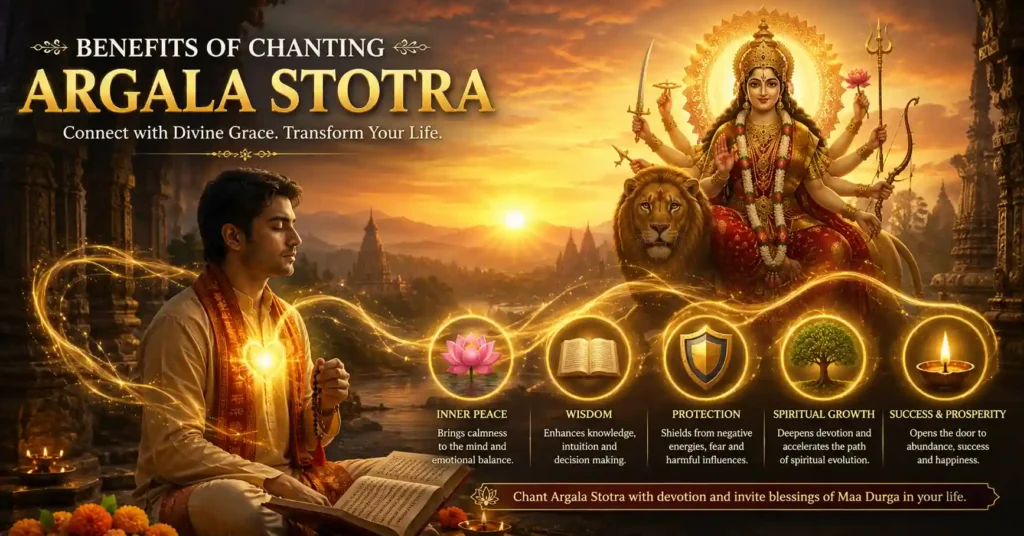
Benefits of Chanting Argala Stotra
The Argala Stotra is revered by devotees of Goddess Durga for its powerful prayers, devotional depth, and spiritual significance. Regular chanting of the Argala Stotra is believed to bring both spiritual and personal benefits when recited with faith and sincerity.
1. Strengthens Devotion to the Divine Mother
The Argala Stotra repeatedly glorifies Goddess Durga and her various forms. Regular recitation helps deepen devotion, strengthen faith, and foster a closer connection with the Divine Mother.
As devotees meditate on her qualities, they cultivate gratitude, surrender, and trust in her guidance.
2. Helps Remove Inner Obstacles
The spiritual meaning of the Argala Stotra is closely linked to removing barriers that hinder spiritual growth.
Through prayer and reflection, devotees seek freedom from fear, doubt, negativity, ego, anger, and other inner obstacles that affect peace of mind.
3. Promotes Mental Strength and Confidence
Many verses of the Argala Stotra praise the Divine Mother as the destroyer of powerful demons and negative forces.
These stories inspire courage, resilience, and confidence, helping devotees face life’s challenges with greater determination and faith.
4. Encourages Positive Thinking
The repeated prayer “Roopam Dehi Jayam Dehi Yasho Dehi Dvisho Jahi” focuses the mind on noble qualities, success, self-improvement, and the removal of negativity.
This positive mindset can help devotees develop greater optimism and emotional balance.
5. Supports Spiritual Growth
The Argala Stotra is not merely a prayer for worldly success. Its deeper purpose is to guide devotees toward self-discipline, devotion, wisdom, and spiritual awakening.
Regular chanting encourages reflection on dharma, inner transformation, and divine values.
6. Creates a Sense of Protection
Many devotees recite the Argala Stotra seeking the blessings and protection of Goddess Durga.
The hymn reminds worshippers that the Divine Mother is a compassionate guardian who supports her devotees during difficult times.
7. Enhances Durga Saptashati Worship
The Argala Stotra is traditionally recited before the Durga Saptashati as part of the preparatory prayers.
Its recitation helps devotees focus their minds, invoke divine grace, and approach the sacred text with devotion and reverence.
8. Brings Inner Peace and Spiritual Comfort
The rhythmic verses and devotional nature of the Argala Stotra can create a sense of calmness and spiritual comfort.
Many devotees find that regular chanting helps reduce mental restlessness and encourages a deeper sense of inner peace.
A Balanced Perspective
The benefits of the Argala Stotra are traditionally understood as spiritual and devotional in nature. While devotees believe the hymn brings blessings and positive transformation, its greatest value lies in strengthening faith, cultivating devotion, and deepening one’s relationship with Goddess Durga.
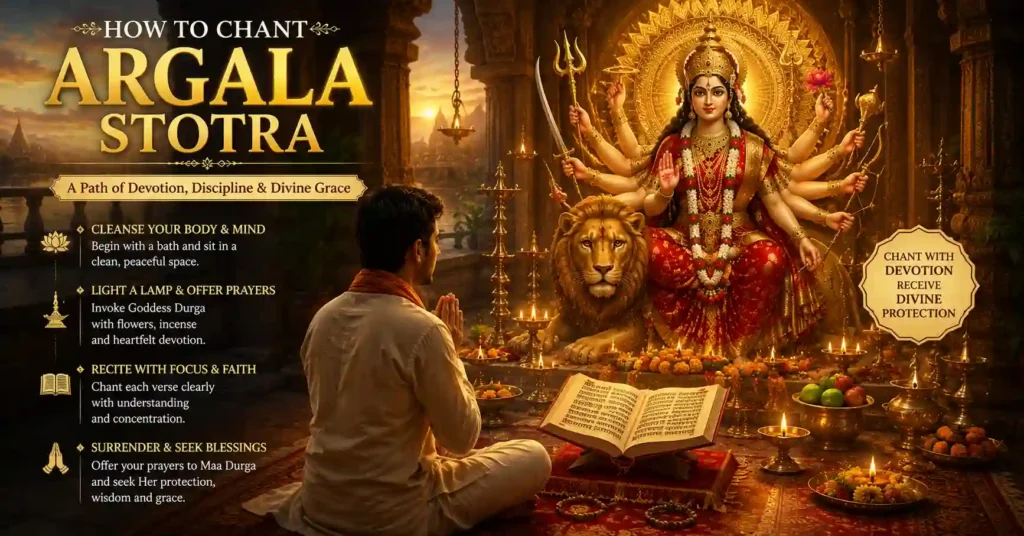
How to Chant Argala Stotra Correctly
The Argala Stotra can be chanted by anyone with faith and devotion. While it is traditionally recited as part of the Durga Saptashati, many devotees also chant the Argala Stotra independently during their daily spiritual practice.
Best Time to Chant Argala Stotra
The Argala Stotra may be chanted at any time, but certain occasions are considered especially auspicious:
Early morning during Brahma Muhurta
During daily Devi worship
Navratri celebrations
Fridays dedicated to Goddess worship
Ashtami and Navami tithis
Before reciting the Durga Saptashati
Consistency and devotion are generally considered more important than the specific time of recitation.
Preparations Before Chanting
Before beginning the Argala Stotra, devotees may:
Bathe and wear clean clothes
Sit in a quiet and peaceful place
Light a diya or incense if desired
Keep an image or murti of Goddess Durga nearby
Calm the mind through a few moments of prayer or meditation
These simple preparations help create a focused devotional atmosphere.
Traditional Order of Recitation
When performed as part of the Durga Saptashati, the traditional sequence is:
Devi Kavach
Argala Stotra
Keelak Stotra
Devi Mahatmyam (Durga Saptashati)
This order is followed by many devotees during Navratri and Chandi Path recitations.
Can Beginners Chant Argala Stotra?
Yes. Beginners can chant the Argala Stotra even if they are not familiar with the entire Durga Saptashati.
Starting with proper pronunciation, devotion, and an understanding of the meaning can make the practice more meaningful and accessible.
Importance of Understanding the Meaning
While chanting the Sanskrit verses is beneficial, understanding the message of the Argala Stotra can deepen the experience.
Reflecting on the qualities of Goddess Durga and the spiritual meaning of the prayers helps transform chanting from a ritual into a personal devotional practice.
Chant with Faith and Sincerity
The essence of the Argala Stotra lies not merely in repetition but in devotion.
Traditional teachings emphasize that sincere prayer, humility, and faith in the Divine Mother are the most important aspects of chanting the Argala Stotra and receiving its spiritual benefits.
Argala Stotra in Daily Life: Practical Lessons for Modern Devotees
Although the Argala Stotra was composed centuries ago, its teachings remain relevant in modern life. The hymn is not only a prayer to Goddess Durga but also a guide for developing inner strength, positive values, and spiritual awareness.
Seeking Inner Victory
The repeated prayer for victory in the Argala Stotra can be understood as a call to overcome fear, anger, laziness, self-doubt, and negative habits.
True success begins with mastering one’s own thoughts and actions.
Developing Courage During Challenges
The Divine Mother is praised throughout the Argala Stotra as the destroyer of powerful negative forces.
This reminds devotees to face difficulties with courage, faith, and perseverance rather than fear or despair.
Cultivating Positive Qualities
The prayer for beauty, victory, and good reputation points toward developing noble character, kindness, integrity, and self-discipline.
These qualities help build meaningful relationships and a balanced life.
Letting Go of Negativity
The phrase “Dvisho Jahi” encourages devotees to overcome hatred, jealousy, resentment, and harmful thoughts.
By reducing negativity within themselves, individuals create greater peace and harmony in their lives.
Balancing Material and Spiritual Goals
The Argala Stotra recognizes that people seek health, prosperity, success, and happiness.
At the same time, it teaches that these goals should be pursued alongside devotion, wisdom, and righteous living.
Strengthening Faith and Gratitude
Regular recitation of the Argala Stotra encourages mindfulness of the Divine Mother’s presence and blessings.
This attitude of gratitude can help devotees remain grounded during both success and adversity.
A Timeless Spiritual Message
The central message of the Argala Stotra is that lasting peace and fulfillment come through devotion, self-improvement, and alignment with dharma.
Its verses continue to inspire devotees to seek both outer success and inner transformation through the grace of Goddess Durga.
Did You Know?
- The Argala Stotra is one of the three preparatory hymns traditionally recited before the Durga Saptashati, along with the Devi Kavach and Keelak Stotra.
- The word Argala literally means a bolt or latch. Spiritually, the Argala Stotra is believed to help remove the inner barriers that prevent devotees from receiving the grace of Goddess Durga.
- The famous prayer “Roopam Dehi Jayam Dehi Yasho Dehi Dvisho Jahi” appears repeatedly throughout the Argala Stotra and is one of the most recognized verses in Shakta worship.
- The Argala Stotra is part of the Devi Mahatmyam, a sacred text found in the Markandeya Purana, one of the important Puranic scriptures of Hinduism.
- Many devotees chant the Argala Stotra during Navratri, especially before reciting the Durga Saptashati or participating in Chandi Path.
- Although the hymn contains prayers for success, prosperity, and protection, traditional interpretations emphasize its deeper message of spiritual growth and inner transformation.
- The demons mentioned in the Argala Stotra, such as Mahishasura, Shumbha, Nishumbha, and Raktabeeja, are often understood symbolically as representations of ego, ignorance, attachment, and negative tendencies.
- The Argala Stotra is widely recited across India and remains an important part of daily Devi worship in many Shakta traditions.
- Many spiritual teachers explain that the repeated prayers in the Argala Stotra are not only requests for external blessings but also prayers for purity, wisdom, courage, and self-mastery.
- Despite being a relatively short hymn, the Argala Stotra holds a central place in Goddess Durga worship and has been recited by devotees for centuries as a means of seeking divine grace and protection.
Conclusion
The Argala Stotra is a powerful hymn dedicated to Goddess Durga that holds a special place in the Durga Saptashati tradition. Through its verses, the Argala Stotra praises the Divine Mother as the source of protection, wisdom, strength, prosperity, and spiritual guidance.
The repeated prayer “Roopam Dehi Jayam Dehi Yasho Dehi Dvisho Jahi” captures the essence of the Argala Stotra, reminding devotees to seek not only success and well-being but also inner purity, courage, and freedom from negativity.
By chanting the Argala Stotra with faith and understanding, devotees cultivate devotion, strengthen their connection with Goddess Durga, and prepare their minds for deeper spiritual growth. Whether recited during Navratri, as part of the Durga Saptashati, or in daily worship, the Argala Stotra continues to inspire generations of devotees.
Its timeless message encourages us to overcome inner obstacles, embrace dharma, and trust in the grace of the Divine Mother. Through sincere devotion and regular recitation of the Argala Stotra, devotees seek both worldly well-being and the higher goal of spiritual transformation.

Suggested Reading
The Argala Stotra is one of the most important hymns in the worship of Goddess Durga, but it is often recited alongside other sacred prayers and scriptures dedicated to the Divine Mother. Studying related texts can help devotees gain a deeper understanding of the Argala Stotra, its spiritual symbolism, and its role within the broader tradition of Devi worship. These resources also provide valuable insights into devotion, divine protection, and the teachings of Shakta philosophy.
Durga Chalisa Lyrics with English Pronunciation and Hindi Meaning
https://thesanatantales.com/durga-chalisa-lyrics-meaning/
Devi Kavach Meaning: Durga Saptashati Protection Prayer
https://thesanatantales.com/devi-kavach-meaning/
Durga Beej Mantra: Simple Meaning, Benefits and How to Chant
https://thesanatantales.com/durga-beej-mantra-meaning/
What Is Durga Saptashati? Meaning, Story and Why It Is Read in Navratri
https://thesanatantales.com/durga-saptashati-meaning-navratri/
Navarna Mantra Meaning, Benefits, Chanting Rules and How to Chant
https://thesanatantales.com/navarna-mantra/
Aarti of Maa Ambe: Lyrics, Meaning, Benefits and How to Perform
https://thesanatantales.com/aarti-of-maa-ambe/
Siddha Kunjika Stotram: The Sacred Key That Unlocks the Full Power of Durga Saptashati
https://thesanatantales.com/siddha-kunjika-stotram/
Gayatri Mantra: 7 Divine Benefits and Spiritual Power
https://thesanatantales.com/gayatri-mantra-meaning-benefits/
FAQs
1. What is the Argala Stotra and why is it important?
The Argala Stotra is a sacred hymn dedicated to Goddess Durga and forms part of the Devi Mahatmyam (Durga Saptashati) found in the Markandeya Purana. It is traditionally recited before reading the Durga Saptashati along with the Devi Kavach and Keelak Stotra.
The word “Argala” means a bolt or latch. Spiritually, the Argala Stotra is believed to help remove inner obstacles that prevent devotees from receiving divine grace. Its verses praise the Divine Mother and seek blessings for protection, wisdom, prosperity, victory, and spiritual growth.
2. What does "Roopam Dehi Jayam Dehi Yasho Dehi Dvisho Jahi" mean?
This is the most famous prayer repeated throughout the Argala Stotra. It translates as, “Grant me beauty, grant me victory, grant me good reputation, and remove hostility and negativity.”
On a deeper level, the prayer is not only about external success. “Roopam” refers to inner purity and noble character, “Jayam” signifies victory over ignorance and fear, “Yasho” represents a life of virtue and respect, and “Dvisho Jahi” is a request to remove hatred, negativity, and harmful tendencies. Together, these words express the devotee’s desire for both worldly well-being and spiritual progress.
3. Can beginners chant the Argala Stotra?
Yes, beginners can chant the Argala Stotra even if they are not familiar with the complete Durga Saptashati. Many devotees begin by learning the pronunciation and understanding the meaning of the verses before incorporating the hymn into their daily practice.
The most important requirement is sincere devotion rather than perfect recitation. Reading the meaning alongside the Sanskrit verses can help beginners develop a deeper connection with Goddess Durga and appreciate the spiritual teachings contained within the hymn.
4. When is the best time to chant Argala Stotra?
The Argala Stotra can be chanted at any time of the day with devotion. However, many devotees prefer early morning during Brahma Muhurta, before daily worship, or during special occasions such as Navratri, Ashtami, and Navami.
It is also traditionally recited before reading the Durga Saptashati. While certain times are considered auspicious, regularity and sincerity are generally regarded as more important than the specific hour of recitation. Consistent chanting helps cultivate focus, devotion, and spiritual discipline.
5. What are the benefits of chanting Argala Stotra?
According to tradition, chanting the Argala Stotra helps strengthen devotion to Goddess Durga, promotes inner courage, and encourages positive thinking. The hymn inspires devotees to overcome fear, negativity, ego, and self-doubt while developing faith and resilience.
Its verses also emphasize spiritual growth, self-improvement, and alignment with dharma. Many devotees recite the Argala Stotra seeking divine protection, mental peace, and a deeper connection with the Divine Mother. The greatest benefit is often considered the transformation of one’s inner life through devotion and self-reflection.
6. Is Argala Stotra part of the Durga Saptashati?
Yes, the Argala Stotra is traditionally associated with the Durga Saptashati (Devi Mahatmyam) and is recited as one of the preparatory hymns before the main text. The usual sequence includes the Devi Kavach, Argala Stotra, Keelak Stotra, and then the recitation of the Durga Saptashati.
Its purpose is to prepare the devotee mentally and spiritually for the worship of Goddess Durga. Because of this role, the Argala Stotra occupies an important place in Navratri worship and Chandi Path traditions.
7. Can the Argala Stotra be chanted without reading the Durga Saptashati?
Yes, many devotees chant the Argala Stotra as a standalone prayer without reading the entire Durga Saptashati. While it is traditionally recited as part of the larger worship sequence, the hymn itself is complete and meaningful on its own.
Its verses contain prayers for divine grace, protection, wisdom, and spiritual growth. Devotees who may not have the time or ability to recite the full Durga Saptashati often include the Argala Stotra in their daily spiritual practice as a way of honoring and connecting with Goddess Durga.
8. What is the spiritual message of the Argala Stotra?
The central message of the Argala Stotra is that true success comes from devotion, self-transformation, and alignment with dharma. The hymn teaches devotees to seek not only material well-being but also inner purity, wisdom, courage, and freedom from negativity.
Through repeated prayers to the Divine Mother, the Argala Stotra encourages spiritual growth and reminds devotees that lasting peace arises from faith, righteous living, and surrender to divine grace. Its teachings remain relevant today for anyone seeking both personal and spiritual development.
Share Your Devotion
Has the Argala Stotra been a part of your spiritual practice? Do you chant it daily, during Navratri, or before reading the Durga Saptashati?
Share your experience, favorite verse, or reflections in the comments below. Your insights may inspire other devotees to learn about the Argala Stotra and deepen their connection with Goddess Durga.
May the Divine Mother bless you with wisdom, strength, protection, and spiritual growth through the sacred recitation of the Argala Stotra. 🙏🌺
References & Sources
This article on the Argala Stotra is based on traditional Hindu scriptures, classical Sanskrit texts, accepted devotional traditions, and scholarly interpretations related to Goddess Durga worship.
Primary Sources
Devi Mahatmyam (Durga Saptashati) from the Markandeya Purana
Traditional Argala Stotra Sanskrit text
Classical commentaries and interpretations from the Shakta tradition
Secondary Sources
Reputed Sanskrit text repositories
Hindu scripture reference materials
Traditional devotional literature on Goddess Durga
Scholarly studies on the Devi Mahatmyam and Shaktism
Historical and cultural resources related to Durga worship and Navratri traditions
Note: The Argala Stotra may have minor variations in verse numbering, transliteration, and translations across different editions, publishers, and regional traditions. The spiritual meanings and explanations presented in this article are intended to help readers understand the hymn’s devotional and philosophical significance.
Explore More Topics from The Sanatan Tales