The Birth of Lord Ganesha is one of the most beloved and widely narrated stories in Sanatan Dharma. It tells how Goddess Parvati created Ganesha, how He came to receive His elephant head, and how He became the first deity worshipped before all auspicious beginnings.
The story is far more than an account of divine events. The Birth of Lord Ganesha carries profound lessons about duty, obedience, devotion, transformation, and the power of divine grace. It also explains why Lord Ganesha is revered as Vighnaharta, the remover of obstacles, and why millions of devotees seek His blessings before starting any new endeavor.
In this article, you will discover the complete Birth of Lord Ganesha, the story behind His elephant head, the spiritual symbolism hidden within the narrative, and the timeless teachings that continue to inspire devotees across generations.
From the sacred role of Goddess Parvati and Lord Shiva to the deeper meaning of Ganesha’s transformation, this story offers valuable insights into faith, wisdom, humility, and the path of spiritual growth.
Table of Contents
ToggleBirth of Lord Ganesha Story Snapshot
| Aspect | Details |
|---|---|
| Main Characters | Lord Ganesha, Goddess Parvati, Lord Shiva, Shiva’s Ganas, Devas |
| Source | Shiva Purana, Linga Purana, Skanda Purana, Traditional Hindu Narratives |
| Setting | Mount Kailash |
| Theme | Obedience, Devotion, Transformation, Divine Grace |
| Key Lesson | Sincere duty, faith, and devotion are always rewarded by the Divine |
| Important Event | Goddess Parvati creates Ganesha, Shiva restores Him with an elephant head |
| Symbolism | Wisdom, humility, new beginnings, and the union of strength and intelligence |
| Divine Title Received | Ganapati, Vinayaka, Vighnaharta (Remover of Obstacles) |
| Spiritual Significance | Explains why Lord Ganesha is worshipped before all rituals and auspicious activities |
| Festival Connection | Ganesh Chaturthi celebrates the birth and glory of Lord Ganesha |
Birth of Lord Ganesha: The Story Behind His Elephant Head
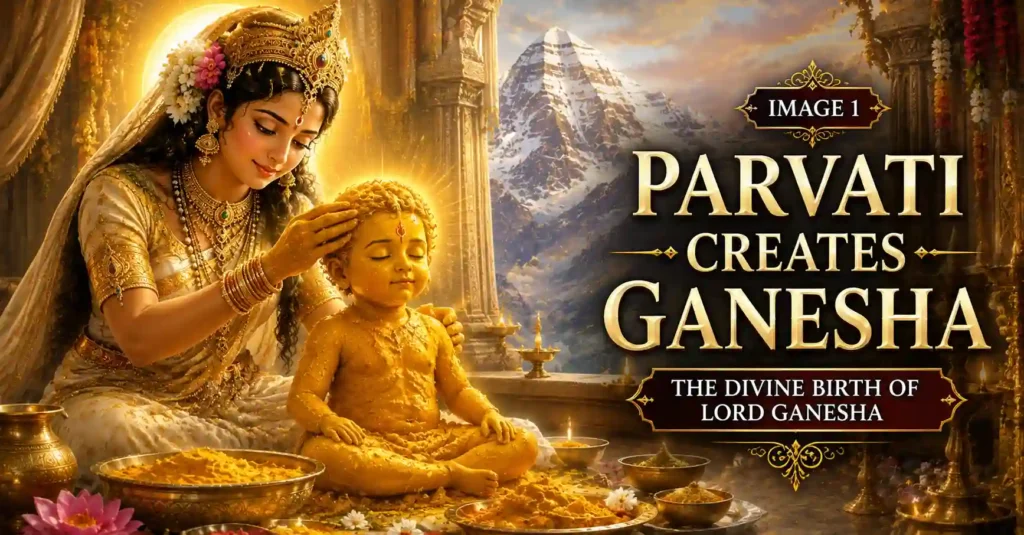
The Birth of Lord Ganesha begins on Mount Kailash, the sacred abode of Lord Shiva and Goddess Parvati. One day, while preparing to bathe, Goddess Parvati desired a trusted guardian who could protect her privacy and obey only her instructions.
Using the turmeric paste from her body, Parvati lovingly shaped a young boy. Through her divine power, she brought the child to life and accepted him as her son.
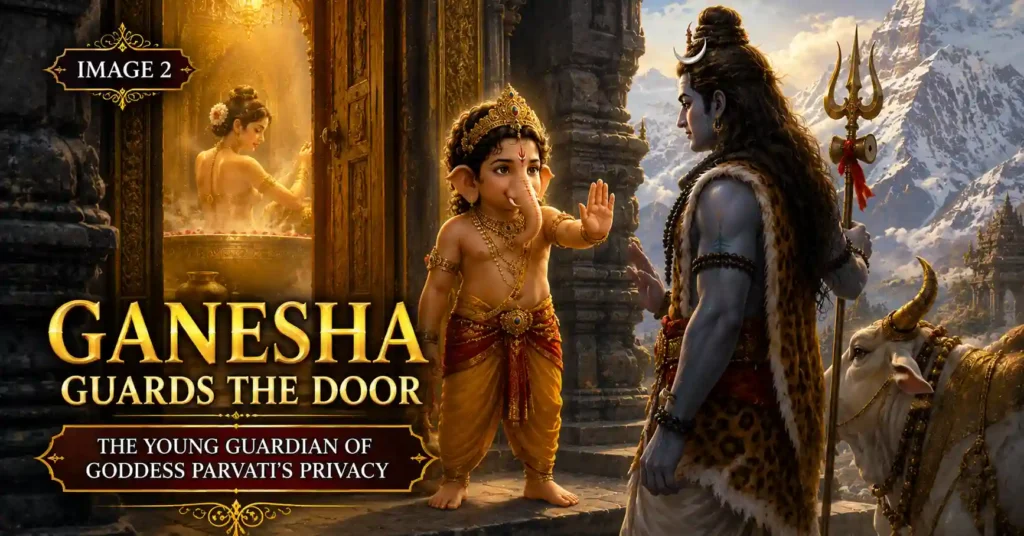
She named him Ganesha and instructed him to stand guard at the entrance. Before leaving, she gave him a simple command: no one should be allowed to enter until she returned.
The young boy took his duty seriously and stood firmly at the doorway.
Some time later, Lord Shiva returned to Kailash after deep meditation. As He approached His home, He found an unfamiliar boy guarding the entrance.
When Shiva attempted to enter, Ganesha respectfully stopped Him and explained that no one could pass without Parvati’s permission.
Shiva was surprised. No one had ever prevented Him from entering His own abode. He informed the boy of His identity, but Ganesha remained loyal to his mother’s command.
Despite knowing the consequences, he refused to move aside.
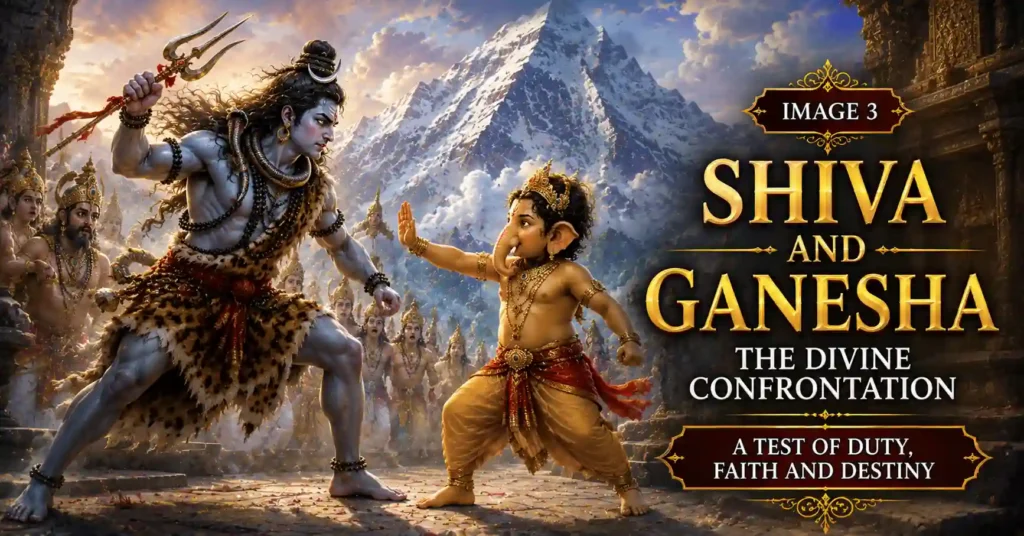
The exchange soon turned into a confrontation. Shiva’s attendants, known as the ganas, tried to remove the young guardian, but Ganesha defeated them with remarkable courage and strength.
The devas and celestial beings were astonished by the determination of the divine child.
As the conflict intensified, Lord Shiva realized that ordinary means would not stop him. A fierce battle followed, shaking the heavens and drawing the attention of gods and sages.
Finally, using His divine power, Shiva severed Ganesha’s head.
When Goddess Parvati emerged and saw what had happened, she was overwhelmed with grief and anger.
The Divine Mother revealed her immense power, and her sorrow shook the universe. She demanded that her son be restored immediately.
The gods became fearful and pleaded with Lord Shiva to calm the situation.
Realizing the depth of Parvati’s love and the seriousness of the situation, Shiva promised to bring the child back to life.
He instructed His attendants to travel north and bring the head of the first living being they encountered.
The attendants soon found a young elephant and respectfully brought its head back to Kailash.
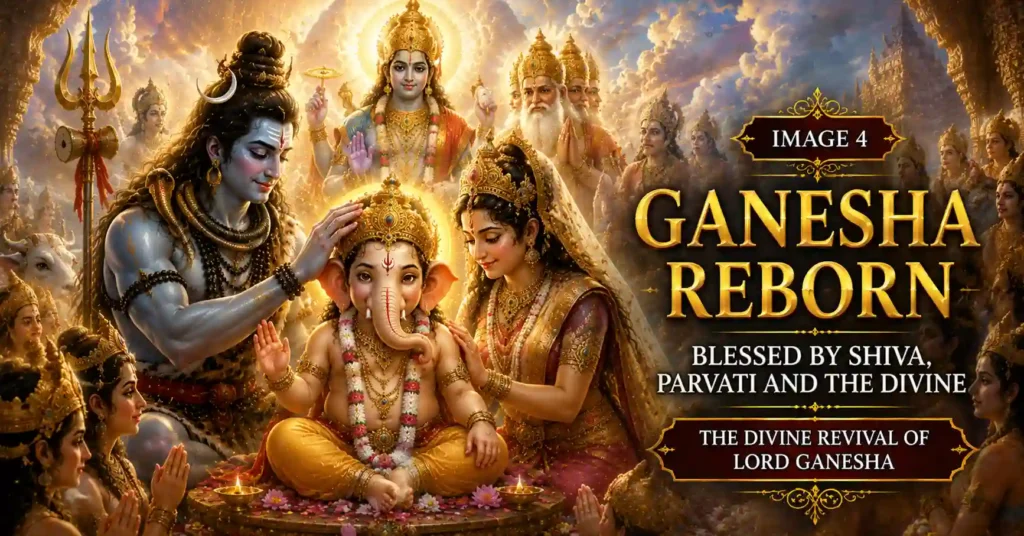
Lord Shiva then placed the elephant’s head upon the boy’s body and restored him to life through divine blessings.
The heavens rejoiced as the child opened his eyes once again. Goddess Parvati embraced her son, and peace returned to the universe.
To honor him, Lord Shiva bestowed extraordinary blessings upon Ganesha.
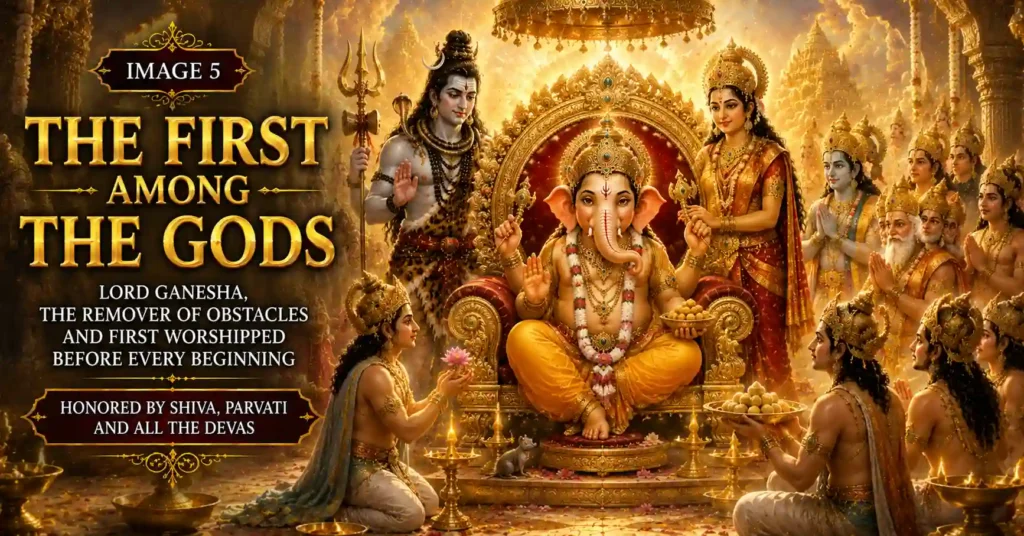
He declared that Ganesha would be known as Ganapati and Vinayaka, revered by gods and humans alike.
Most importantly, Shiva proclaimed that before any worship, ritual, prayer, or auspicious undertaking, Lord Ganesha would be worshipped first.
From that day onward, He became Vighnaharta, the remover of obstacles, and one of the most beloved deities in Sanatan Dharma.
The Birth of Lord Ganesha and the story behind His elephant head continue to inspire devotees with lessons of obedience, devotion, courage, transformation, and divine grace. Through this sacred story, generations have learned why Lord Ganesha holds such a special place in Hindu tradition.
What Does the Birth of Lord Ganesha Teach Us?
The Birth of Lord Ganesha is much more than a story about divine events. It contains timeless lessons that continue to guide devotees on the path of spiritual growth, righteous living, and inner wisdom.
1. Duty Should Be Performed with Sincerity
One of the most important lessons from the story is the value of fulfilling one’s duty.
When Goddess Parvati instructed Ganesha to guard the entrance, He obeyed her command without hesitation. Even when faced with Lord Shiva and powerful celestial beings, He remained committed to the responsibility entrusted to Him.
His unwavering dedication teaches us the importance of sincerity, discipline, and integrity in our own lives.
2. Obedience and Respect Are Virtues
Ganesha’s actions were motivated by respect for His mother and loyalty to her instructions.
He did not act out of pride or arrogance. Instead, He faithfully carried out the task given to Him.
The story reminds devotees that honoring parents, teachers, and righteous responsibilities is an important part of Dharma.
3. Challenges Can Lead to Transformation
One of the most dramatic moments in the story is when Ganesha loses His original head and later receives the head of an elephant.
While this event appears tragic at first, it ultimately leads to His transformation into one of the most revered deities in Sanatan Dharma.
The story teaches that difficult experiences can sometimes become the foundation for growth, wisdom, and new beginnings.
4. Divine Grace Can Change Destiny
After witnessing Parvati’s grief, Lord Shiva restored Ganesha to life and bestowed great blessings upon Him.
Not only was He revived, but He was also honored as Ganapati and declared the first deity to be worshipped before all auspicious activities.
This reminds devotees that divine grace has the power to transform even the most difficult situations.
5. Wisdom Is Greater Than Physical Strength
The elephant head given to Ganesha carries deep symbolism.
The elephant is associated with intelligence, patience, wisdom, and steady strength.
Through this symbolism, devotees learn that true greatness comes not from power alone but from wisdom, understanding, and self-control.
6. Every New Beginning Should Start with the Divine
At the end of the story, Lord Shiva declared that Ganesha would be worshipped before every ritual, prayer, and important undertaking.
This tradition continues to this day across temples and households.
The lesson is simple yet profound: when we begin our actions with faith, humility, and remembrance of the Divine, obstacles become easier to overcome.
7. Humility Leads to Spiritual Growth
Although Ganesha received extraordinary honors, He remained a symbol of humility, compassion, and service.
His life teaches that spiritual growth comes not through ego but through devotion, wisdom, and a willingness to serve a higher purpose.
The enduring message of the Birth of Lord Ganesha is that obedience, faith, courage, and divine grace can transform challenges into opportunities for growth. These lessons continue to inspire devotees and make Lord Ganesha one of the most beloved deities in Sanatan Dharma.
Why Is the Birth of Lord Ganesha Important in Sanatan Dharma?
The Birth of Lord Ganesha holds a special place in Sanatan Dharma because it explains the origin of one of the most beloved and widely worshipped deities in Hindu tradition. The story is not only about Ganesha’s creation but also about His divine purpose and spiritual significance.
For millions of devotees, this sacred narrative helps explain why Lord Ganesha is honored before all other deities during prayers, rituals, and auspicious occasions.
1. It Explains Why Ganesha Is Worshipped First
One of the most important outcomes of the story is Lord Shiva’s declaration that Ganesha would be worshipped before any religious ceremony or sacred undertaking.
Because of this blessing, devotees traditionally invoke Lord Ganesha before beginning prayers, festivals, journeys, studies, and important life events.
This practice continues throughout India and among Hindu communities around the world.
2. It Reveals Ganesha as Vighnaharta
The story also establishes Ganesha as Vighnaharta, the remover of obstacles.
Devotees believe that sincere worship of Lord Ganesha helps remove difficulties, clear obstacles, and bring success in righteous endeavors.
This is one reason why He is often the first deity remembered before starting something new.
3. It Highlights the Importance of Divine Wisdom
The elephant head given to Ganesha carries deep spiritual symbolism.
In Hindu tradition, the elephant represents wisdom, intelligence, patience, and strength.
Through this symbolism, the story teaches that wisdom and good judgment are essential for overcoming life’s challenges and making meaningful progress.
4. It Demonstrates the Power of Divine Grace
The transformation of Ganesha from a guardian boy into one of the most revered deities illustrates the power of divine grace.
What began as a moment of conflict ultimately became an occasion for blessing, restoration, and spiritual elevation.
This reminds devotees that even difficult situations can lead to greater purpose through the will of the Divine.
5. It Strengthens Devotion to Shiva and Parvati
The story highlights the loving relationship between Lord Shiva, Goddess Parvati, and their son.
Devotees see the narrative as a reminder of parental love, protection, compassion, and the importance of family within Sanatan Dharma.
It also deepens understanding of the divine roles played by Shiva and Shakti in guiding and protecting creation.
6. It Plays a Central Role in Ganesh Chaturthi
The Birth of Lord Ganesha is closely associated with Ganesh Chaturthi, one of the most widely celebrated Hindu festivals.
During this festival, devotees worship Ganapati with prayers, offerings, devotional songs, and community celebrations.
The occasion serves as a reminder of His blessings, wisdom, and role as the remover of obstacles.
7. Its Message Remains Relevant Today
Although the story is ancient, its teachings remain meaningful in modern life.
The values of duty, obedience, humility, wisdom, perseverance, and devotion continue to inspire people of all ages.
For this reason, the story remains one of the most cherished narratives in Hindu tradition.
The enduring importance of the Birth of Lord Ganesha lies in its ability to combine spiritual wisdom with practical life lessons. It reminds devotees that faith, humility, and devotion can help transform challenges into opportunities for growth, success, and inner peace.
Did You Know?
The Birth of Lord Ganesha is filled with fascinating details that have inspired devotees, saints, and spiritual seekers for centuries. Many of these traditions and beliefs continue to be remembered through festivals, temple worship, and devotional teachings across India.
1. Goddess Parvati Created Ganesha Without Shiva’s Help
According to traditional accounts, Goddess Parvati created Ganesha from the turmeric paste or sacred clay taken from her own body.
She then brought the child to life through her divine power and accepted Him as her son.
This makes Ganesha one of the few deities whose creation is directly associated with the Divine Mother.
2. Ganesha Was Created to Guard His Mother
Before taking a bath, Parvati instructed the young boy to stand at the entrance and allow no one to enter.
Ganesha followed her command with complete dedication and sincerity.
His unwavering obedience later became one of the most important lessons associated with the story.
3. Lord Shiva Did Not Initially Recognize Ganesha
When Shiva returned to Mount Kailash, He had never seen the young guardian before.
As a result, a misunderstanding arose when Ganesha prevented Him from entering.
This event ultimately led to the famous elephant head story.
4. The Elephant Head Symbolizes Wisdom
The elephant head is not merely a physical feature.
In Hindu tradition, elephants symbolize wisdom, intelligence, patience, and strength.
This symbolism explains why Lord Ganesha is regarded as the deity of wisdom and good judgment.
5. Ganesha Is Also Known by Many Names
Lord Ganesha is worshipped under several sacred names, including Ganapati, Vinayaka, Vighnaharta, and Gajanana.
Each name reflects a different aspect of His divine nature and spiritual significance.
These names are widely used in prayers, temples, and devotional literature.
6. Ganesha Became the First Worshipped Deity
After restoring Ganesha to life, Lord Shiva granted Him a unique blessing.
He declared that Ganesha would be worshipped before all gods during rituals and auspicious ceremonies.
This tradition continues to be followed throughout Sanatan Dharma.
7. The Mouse Became Ganesha’s Vehicle
Lord Ganesha is traditionally depicted riding a mouse known as Mushaka.
The mouse symbolizes desires and restless thoughts that can distract the mind.
By riding the mouse, Ganesha represents mastery over these impulses.
8. Ganesh Chaturthi Celebrates His Glory
The festival of Ganesh Chaturthi is one of the most important celebrations dedicated to Lord Ganesha.
Devotees install His idols, offer prayers, chant sacred hymns, and seek His blessings.
The festival helps preserve the teachings and traditions connected with His divine birth.
9. Ganesha Is Revered Across Multiple Traditions
Although closely associated with Shiva and Parvati, Lord Ganesha is honored by followers of many Hindu traditions.
He is worshipped by devotees from Shaiva, Shakta, Vaishnava, and Smarta traditions alike.
This universal reverence reflects His unique place in Sanatan Dharma.
10. The Story Continues to Inspire Devotees Today
The Birth of Lord Ganesha remains one of the most beloved stories in Hindu tradition.
Its teachings about duty, devotion, humility, wisdom, and divine grace continue to inspire people of all ages.
For many devotees, the story serves as a reminder that faith and sincerity can help overcome even the greatest obstacles.
Conclusion
The Birth of Lord Ganesha is one of the most cherished stories in Sanatan Dharma. From His creation by Goddess Parvati to His transformation into the elephant-headed deity worshipped across the world, every part of the story carries a deeper spiritual meaning.
This sacred narrative teaches timeless lessons about duty, obedience, devotion, humility, wisdom, and the power of divine grace. It reminds devotees that even difficult challenges can become opportunities for growth and transformation when guided by faith and righteousness.
The story also explains why Lord Ganesha is revered as Vighnaharta, the remover of obstacles, and why His blessings are sought before every important beginning. His elephant head symbolizes wisdom, patience, and the ability to overcome life’s difficulties with calmness and understanding.
The enduring significance of the Birth of Lord Ganesha lies in its ability to inspire people of all ages. Whether viewed as a divine story, a source of spiritual wisdom, or a lesson in devotion and perseverance, it continues to guide devotees on the path of Dharma.
Even today, the Birth of Lord Ganesha reminds us that sincere faith, unwavering dedication, and divine blessings can help transform obstacles into opportunities and lead us toward greater wisdom, success, and inner peace.
Suggested Reading
If the Birth of Lord Ganesha inspired you, you may enjoy exploring other sacred stories that reveal divine wisdom, devotion, courage, transformation, and the deeper truths of Sanatan Dharma. Like the Birth of Lord Ganesha, these timeless narratives offer valuable lessons that continue to guide devotees on their spiritual journey.
Many devotees are drawn to the Birth of Lord Ganesha because it beautifully illustrates the power of duty, faith, humility, and divine grace. Across Sanatan Dharma, numerous stories teach that sincere devotion, righteous action, and trust in the Divine can help overcome obstacles and lead to spiritual growth.
Shiv Parvati Vivah: The Sacred Marriage of Shiva and Parvati
https://thesanatantales.com/shiv-parvati-vivah/
Parvati’s Tapasya for Mahadev: Story of Devotion
https://thesanatantales.com/parvatis-tapasya-for-mahadev/
Ardhanarishvara: The Sacred Union of Shiva and Shakti
https://thesanatantales.com/ardhanarishvara/
Kartikeya Birth Story: The Warrior Son of Shiva
https://thesanatantales.com/kartikeya-birth-story/
Markandeya and Shiva Story: How Devotion Conquered Death
https://thesanatantales.com/markandeya-and-shiva-story/
Gajendra Moksha: The Elephant King’s Prayer to Vishnu
https://thesanatantales.com/gajendra-moksha-story/
Samudra Manthan: The Churning of the Ocean
https://thesanatantales.com/samudra-manthan-story/
Spiritual Stories of Sanatan Dharma
https://thesanatantales.com/spiritual-stories-of-sanatan-dharma/
Lord Ganesha (Wikipedia)
https://en.wikipedia.org/wiki/Ganesha
The lessons found in these stories complement the teachings of the Birth of Lord Ganesha. Whether they focus on devotion, wisdom, perseverance, divine protection, or spiritual transformation, each narrative reminds us that faith and righteous conduct help remove obstacles and bring us closer to the Divine.
FAQs
What is the Birth of Lord Ganesha?
The Birth of Lord Ganesha is a sacred story from Hindu tradition that explains how Goddess Parvati created Ganesha and how He later received His elephant head.
According to traditional accounts, Parvati created Him from turmeric paste and brought Him to life through her divine power.
The story also describes how Lord Shiva restored Him after a misunderstanding and blessed Him to become one of the most revered deities in Sanatan Dharma.
Today, this narrative remains one of the most beloved stories associated with Lord Ganesha and His role as the remover of obstacles.
How Was Lord Ganesha Born?
According to traditional teachings, Goddess Parvati created Ganesha while preparing to bathe.
Using turmeric paste from her body, she shaped a young boy and infused Him with life through her divine energy.
She then accepted Him as her son and appointed Him as the guardian of her chamber.
This divine creation marks the beginning of the story and highlights the special bond between Parvati and Ganesha.
Why Did Lord Shiva Cut Off Ganesha's Head?
The incident occurred because Ganesha was faithfully carrying out the instructions given by His mother.
When Lord Shiva returned to Kailash, Ganesha stopped Him from entering because he had been ordered not to allow anyone inside.
A confrontation followed, and in the ensuing conflict, Shiva severed Ganesha’s head.
The event was not driven by hatred or anger but became part of a larger divine purpose that ultimately led to Ganesha’s transformation and elevation.
How Did Lord Ganesha Receive His Elephant Head?
After seeing Parvati’s grief, Lord Shiva promised to restore Ganesha to life.
He instructed His attendants to bring the head of the first living being they encountered while traveling north.
They returned with the head of a young elephant.
Shiva placed the elephant’s head upon Ganesha’s body and revived Him through divine blessings, giving rise to the famous Ganesha Elephant Head Story known throughout Hindu tradition.
Why Does Lord Ganesha Have an Elephant Head?
The elephant head carries deep spiritual symbolism.
In Hindu tradition, the elephant represents wisdom, intelligence, patience, strength, and good judgment.
By receiving the elephant head, Ganesha became a symbol of these qualities and a guide for devotees seeking wisdom and success in life.
This symbolism is one reason why the story remains spiritually significant even today.
Why Is Lord Ganesha Worshipped Before All Other Gods?
After restoring Ganesha to life, Lord Shiva granted Him a unique blessing.
He declared that no worship, ritual, prayer, or auspicious activity would begin without first honoring Ganesha.
Because of this blessing, devotees traditionally invoke Ganapati before starting new ventures, religious ceremonies, studies, journeys, and important life events.
This tradition continues across temples and households throughout the Hindu world.
Which Scriptures Describe the Birth of Lord Ganesha?
The story is preserved through several traditional Hindu texts and devotional traditions.
References to Ganesha’s origin can be found in sources such as the Shiva Purana, Linga Purana, Skanda Purana, and other traditional narratives.
Over the centuries, saints, storytellers, and temple traditions have helped preserve and share the story with future generations.
These sources continue to inspire devotion and spiritual reflection among devotees.
What Spiritual Lessons Can We Learn from the Birth of Lord Ganesha?
The Birth of Lord Ganesha teaches many important spiritual lessons.
It highlights the value of obedience, devotion, duty, humility, courage, and faith in the Divine.
The story also shows that challenges and setbacks can become opportunities for transformation and growth.
For many devotees, it serves as a reminder that wisdom, sincerity, and divine grace can help overcome obstacles and lead to a more meaningful spiritual life.
What Does Ganesha's Elephant Head Symbolize?
Ganesha’s elephant head symbolizes wisdom, understanding, patience, and inner strength.
The large ears are often interpreted as a reminder to listen carefully, while the elephant itself represents intelligence and steady determination.
Many devotees view these qualities as essential for spiritual growth and success in everyday life.
The symbolism encourages people to approach challenges with calmness, wisdom, and thoughtful action.
Why Is the Birth of Lord Ganesha Still Relevant Today?
Although the story is ancient, its teachings remain meaningful in modern times.
The values of responsibility, respect, perseverance, humility, and devotion are just as important today as they were centuries ago.
The story reminds people that obstacles can be overcome through wisdom, patience, and faith.
For this reason, the Birth of Lord Ganesha continues to inspire millions of devotees and remains one of the most cherished stories in Sanatan Dharma.
Item #8
References & Sources
This article is based on traditional teachings and narratives associated with the Birth of Lord Ganesha, one of the most beloved stories in Sanatan Dharma. The story has been preserved through Hindu scriptures, temple traditions, devotional literature, and oral storytelling passed down across generations.
The article draws upon concepts and references found in the Shiva Purana, Linga Purana, Skanda Purana, and other traditional sources that describe the creation of Ganesha by Goddess Parvati, His transformation into the elephant-headed deity, and His role as the first deity worshipped before auspicious beginnings.
It also reflects traditional interpretations of Ganesha as Ganapati, Vinayaka, and Vighnaharta, the remover of obstacles. These teachings emphasize wisdom, devotion, duty, humility, and the importance of beginning all endeavors with divine blessings.
These sources have been used to present the story, symbolism, and spiritual lessons in a simple, beginner-friendly manner while remaining aligned with the broader teachings and living traditions of Sanatan Dharma.
Explore More Topics from The Sanatan Tales