Have you ever looked at the full moon on a clear autumn night and felt a deep sense of peace? In Sanatan Dharma, this beautiful night holds a special place in the hearts of devotees. Sharad Purnima is celebrated on the full moon day of the Hindu month of Ashwin. It is associated with devotion to Chandra Dev, the blessings of Maa Lakshmi, and the divine love of Lord Krishna.
What makes this festival truly special is its beautiful blend of faith, family traditions, and spiritual meaning. Many devotees prepare rice kheer and place it under the moonlight, believing that the moon’s rays on this night carry the blessings of divine nectar. The festival is also known as Kojagari Purnima and Raas Purnima in different regions.
In this guide, we will explore the Sharad Purnima date in 2026, its religious significance, traditional stories, puja vidhi, fasting practices, and the special kheer tradition. You will also learn how families observe this sacred night and how you can celebrate it with devotion and understanding.
Sharad Purnima at a Glance
| Details | Information |
|---|---|
| Festival Name | Sharad Purnima |
| Date in 2026 | Sunday, 25 October 2026 |
| Hindu Month | Ashwin |
| Tithi | Ashwin Shukla Purnima |
| Main Deities | Chandra Dev, Maa Lakshmi and Lord Krishna |
| Main Rituals | Moon worship, Lakshmi Puja and offering kheer |
| Special Tradition | Keeping rice kheer under the moonlight |
| Other Names | Kojagari Purnima, Kojagiri Purnima and Raas Purnima |
| Spiritual Significance | Devotion, prosperity, gratitude and divine blessings |
Table of Contents
ToggleSharad Purnima 2026: Date and Tithi Timings
Sharad Purnima will be observed on Sunday, 25 October 2026. This sacred full moon festival falls on the Purnima tithi of the Hindu month of Ashwin. Devotees worship Chandra Dev, seek the blessings of Maa Lakshmi, and follow traditional customs such as preparing kheer and placing it under the moonlight.
The Purnima tithi begins on 25 October and ends on 26 October 2026. Since the lunar day extends across two calendar dates, devotees should follow the appropriate puja timings for their location.
| Panchang Detail | Date and Time |
|---|---|
| Festival Date | Sunday, 25 October 2026 |
| Purnima Tithi Begins | 25 October 2026, 11:55 AM |
| Purnima Tithi Ends | 26 October 2026, 9:41 AM |
| Hindu Month | Ashwin |
| Lunar Phase | Shukla Paksha Purnima |
Note: The timings above are based on the New Delhi Panchang. Tithi and moonrise timings may vary slightly by location. Please verify local timings before performing the rituals.
The evening of 25 October is especially important for devotees who observe the moonlight kheer tradition and perform Kojagari Lakshmi Puja. Families prepare special offerings, light diyas, and spend time in prayer.
The festival date changes every year because it follows the Hindu lunar calendar. Checking the local Panchang helps devotees plan their worship and traditional observances correctly.

What Is Sharad Purnima?
Sharad Purnima is a sacred Hindu festival celebrated on the full moon day of the Ashwin month. It marks the arrival of Sharad Ritu, the autumn season, when the skies often become clearer after the monsoon. The bright moon, cool night air, and peaceful surroundings make this occasion special for prayer, devotion, and family traditions.
The word Sharad refers to autumn, while Purnima means the full moon day. Together, the name describes the beautiful autumn full moon that holds deep religious significance in Sanatan Dharma. Devotees observe this night with prayers, offerings, moon worship, and, in many households, the preparation of rice kheer.
The festival is associated with Chandra Dev, Maa Lakshmi, and Lord Krishna, although the customs differ across regions. In many parts of eastern India, families observe Kojagari Lakshmi Puja and stay awake during the night. In Braj and Vrindavan, the occasion is associated with Shri Krishna’s divine Maha Raas with the gopis.
For devotees, the night is more than a celebration of the full moon. It is an opportunity to express gratitude, seek divine blessings, strengthen family bonds, and reflect on the importance of faith and devotion. The traditional practice of offering kheer under the moonlight adds another beautiful dimension to this festival.
Religious and Spiritual Significance of Sharad Purnima
Sharad Purnima holds a special place in Sanatan Dharma because it brings together devotion, gratitude, and the beauty of nature. The full moon of the autumn season is traditionally regarded as auspicious for prayer and worship. For devotees, this sacred night is a reminder to turn towards the Divine with a peaceful mind and a grateful heart.
Worship of Chandra Dev
Chandra Dev, the deity associated with the Moon, is an important part of the festival’s traditional observances. In Hindu belief, the Moon represents calmness, emotional balance, beauty, and nourishment. Devotees offer prayers to Chandra Dev and seek peace, well-being, and harmony in their lives.
Seeking the Blessings of Maa Lakshmi
In many regions, this full moon night is associated with Maa Lakshmi, the goddess of wealth, prosperity, and good fortune. During Kojagari Lakshmi Puja, devotees worship the goddess, light diyas, offer flowers and sweets, and pray for happiness and abundance in their homes. The tradition encourages people to remember that true prosperity also includes contentment, generosity, and responsible living.
The Divine Love of Lord Krishna
In the Braj region, Sharad Purnima is closely connected with Lord Krishna’s Maha Raas, a sacred episode described in Hindu devotional tradition. The Raas Leela represents divine love and the soul’s longing for union with the Supreme. For Krishna devotees, this occasion is a reminder that sincere devotion goes beyond material desires and brings the heart closer to God.
A Night of Prayer and Gratitude
The spiritual message of this festival lies in its invitation to slow down, pray, and appreciate life’s blessings. Families prepare traditional food, gather for worship, and share prasad with loved ones. These simple acts strengthen faith and remind us that spirituality can be practised through everyday life, kindness, and gratitude.
The religious significance of the festival is therefore not limited to moon worship or a single ritual. It brings together different devotional traditions while encouraging peace, generosity, and a deeper connection with the Divine.
Why Is the Moon Special on Sharad Purnima?
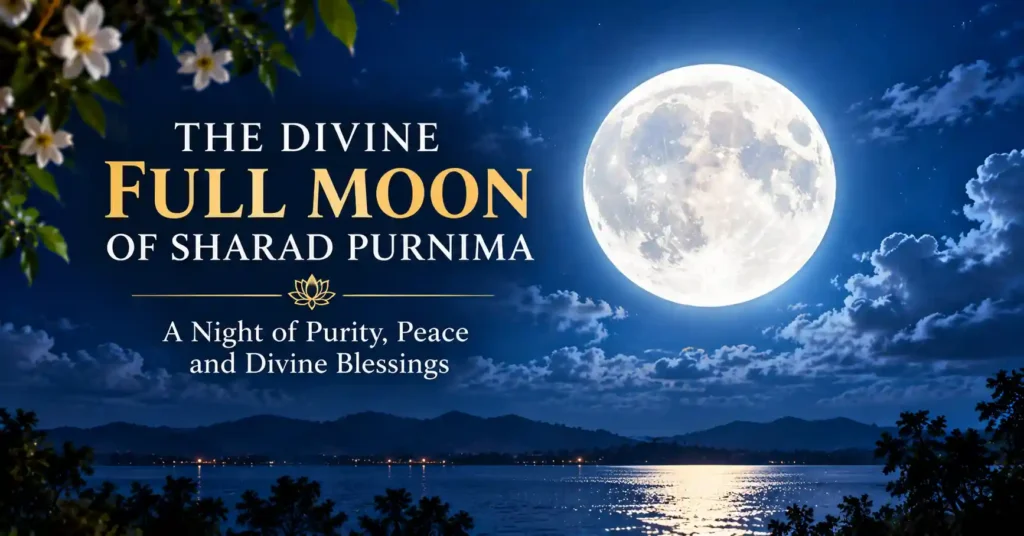
The full moon is the central feature of Sharad Purnima. According to Hindu tradition, the Moon appears especially bright and beautiful on this autumn night. The clear sky after the monsoon adds to its charm, and many devotees spend time praying, singing devotional songs, or quietly admiring the moonlight.
The Belief of Sixteen Kalas
In Hindu tradition, the Moon is often described as possessing sixteen kalas, or aspects of completeness. The full moon is therefore associated with fullness, harmony, and fulfilment. This symbolism gives the night a special place in devotional practices and traditional beliefs about spiritual well-being.
The idea of sixteen kalas also appears in discussions of divine completeness in Hindu thought. However, its meaning can differ according to the scripture, story, or tradition being discussed.
Moonlight and the Belief in Amrit
A popular traditional belief holds that the moon’s rays on this night carry the qualities of amrit, or divine nectar. This belief is one reason many families prepare rice kheer and place it under the open sky. The practice is followed with faith and devotion, and the kheer is later shared as prasad.
It is important to understand this as a religious and cultural belief rather than a scientifically established property of moonlight. The tradition’s value lies in the devotion, symbolism, and sense of togetherness it brings to families.
The Spiritual Meaning of the Full Moon
The full moon can also serve as a reminder of inner peace and completeness. Just as the Moon lights up the night, devotees reflect on the importance of wisdom, kindness, and devotion in their own lives. Spending a quiet moment in prayer can help bring attention away from daily worries and towards gratitude.
For many households, this is what makes the occasion meaningful. The moonlight, traditional offerings, prayers, and time spent with family combine to create a memorable night rooted in faith and cultural heritage.
The Kheer Tradition: Why Is Kheer Kept in Moonlight?
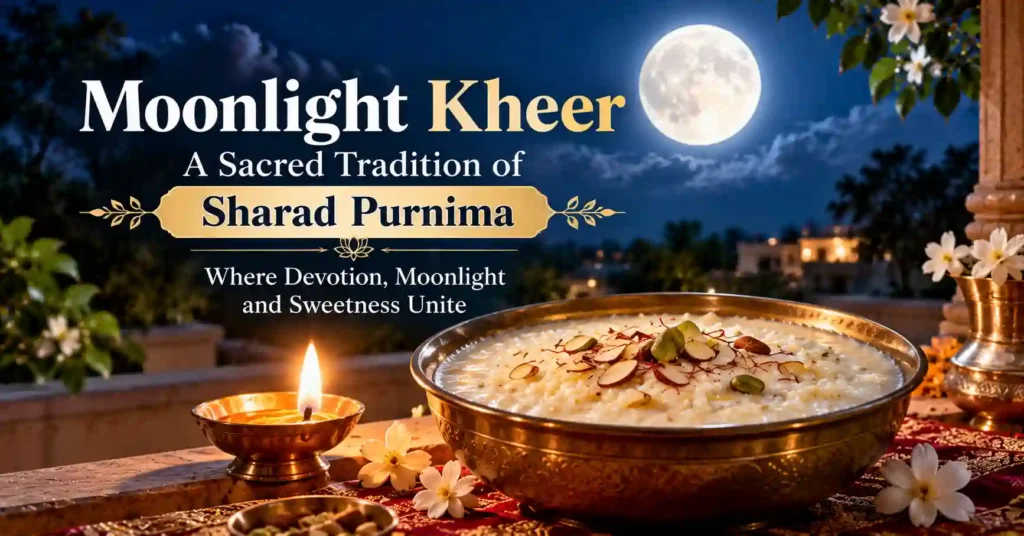
One of the most loved customs of Sharad Purnima is preparing rice kheer and placing it under the open sky at night. The combination of milk, rice, sugar, and fragrant ingredients makes this traditional sweet an important offering in many Hindu households. For devotees, the practice is an expression of faith, gratitude, and the desire to receive divine blessings.
According to popular Hindu belief, the moonlight on this full moon night is associated with amrit, or divine nectar. Families traditionally leave the prepared kheer in a clean, covered or loosely protected vessel where it can be exposed to the moonlight. After the ritual, the kheer is shared among family members as prasad.
How Is Moonlight Kheer Prepared?
Rice kheer is usually prepared by slowly cooking rice in milk until it becomes creamy. Sugar or jaggery may be added according to family tradition, along with cardamom, almonds, cashews, or saffron. Some families keep the recipe simple, while others prepare a richer version for the festival.
Once the kheer is ready, it may first be offered during worship. The bowl is then placed in a clean outdoor space or near an open window where the moon is visible. Practices differ between households, so there is no single method followed by every devotee.
What Does the Kheer Tradition Symbolise?
The offering represents devotion, purity, and gratitude for life’s blessings. Preparing food for worship and sharing it with others also reflects the spirit of prasad in Sanatan Dharma. It turns a simple household dish into a meaningful part of the festival.
Many families look forward to this tradition because it brings generations together. Children help prepare the ingredients, elders share stories, and everyone gathers to enjoy the offering. In this way, the custom preserves family memories as well as religious values.
Is It Necessary to Keep Kheer Under Moonlight?
Keeping kheer under moonlight is a popular custom, but families may observe the festival differently according to their regional and household traditions. Devotion and sincere prayer remain central to the observance.
For food safety, keep the kheer covered with a clean, breathable cover to protect it from insects and dust. Avoid leaving milk-based food outdoors for a prolonged period, especially in warm weather. Refrigerate it promptly when needed, and do not consume it if it has been left in unsafe conditions.
The beauty of this tradition lies in its blend of faith, food, and family togetherness. Whether a household follows the custom in its traditional form or adapts it to modern living, the offering can remain a heartfelt expression of devotion.
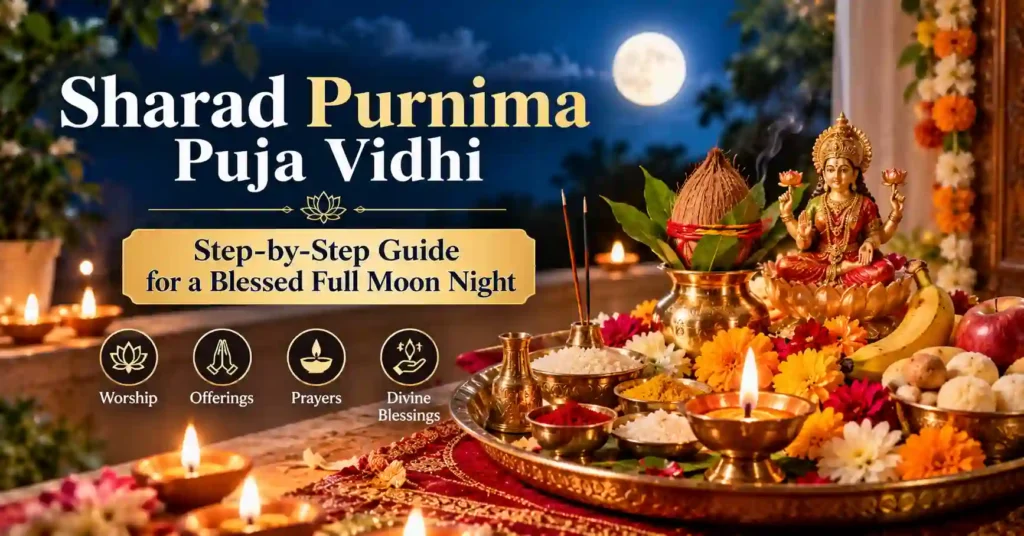
Sharad Purnima Puja Vidhi: Step-by-Step Rituals
The traditional puja on Sharad Purnima is an opportunity to pray, express gratitude, and seek divine blessings. Families may worship Chandra Dev, Maa Lakshmi, or Lord Krishna according to their regional customs and personal devotion. The rituals do not need to be elaborate. A clean space, sincere prayers, and a peaceful mind are a good beginning.
Here is a simple puja method that devotees can adapt to their family traditions.
Step 1: Clean the Home and Prepare the Puja Space
Clean the home and arrange a small puja area with a clean cloth, flowers, a diya, incense, and the offerings you wish to prepare. Place the image or idol of the deity you intend to worship and keep the puja items ready before the evening begins.
Step 2: Take a Sankalpa
After bathing and wearing clean clothes, sit peacefully before the deity. Take a simple sankalpa, or personal resolve, to perform the worship with devotion. You may pray for the well-being of your family, peace in your home, and the strength to follow a righteous path.
Step 3: Offer Prayers and Perform the Puja
Light a diya and offer flowers, fruits, sweets, and water according to your custom. Pray to Chandra Dev for peace and well-being. If you observe Kojagari Lakshmi Puja, worship Maa Lakshmi with devotion and offer kheer or other suitable prasad. Krishna devotees may offer prayers, sing bhajans, or remember the divine Raas Leela.
Step 4: Offer Kheer and Observe the Moonlight Tradition
Prepare rice kheer as an offering if this is part of your household tradition. Offer it during worship and, if desired, place it under the moonlight in a clean and protected setting. Later, share it as prasad while following sensible food-safety practices.
Step 5: Perform Aarti and Share Prasad
Conclude the puja with aarti and a prayer of gratitude. Distribute the prasad among family members and, where possible, share food or other help with people in need. The spirit of giving is a meaningful way to put devotion into practice.
Step 6: Follow Your Family’s Tradition
Some families observe a fast, stay awake during the night, or follow special regional customs. Others simply perform evening worship and offer kheer. Follow the practices passed down in your family, and consult a trusted priest if you need guidance about a particular ritual or muhurat.
The purpose of these rituals is to make the occasion meaningful through faith, gratitude, and togetherness. A simple puja performed sincerely can be just as heartfelt as an elaborate ceremony.
Sharad Purnima Puja Samagri: What You Need
Preparing the puja samagri in advance makes the festival easier to observe and allows devotees to focus on prayer rather than last-minute arrangements. The items required depend on whether you worship Chandra Dev, perform Lakshmi Puja, or follow your family’s traditional customs.
Most households can perform a simple puja with a few basic offerings. There is no need to purchase expensive items or make elaborate arrangements.
Essential Puja Items
Keep the following items ready before beginning the evening worship:
Diya and ghee or oil: For lighting a traditional lamp.
Flowers: Fresh flowers for offering to the deity.
Incense sticks: Used during worship according to household custom.
Roli, kumkum and rice: Common items used in Hindu puja.
Water and a clean vessel: For customary offerings and worship.
Fruits and sweets: To offer as bhog or prasad.
Rice kheer: A traditional offering associated with the festival.
Puja thali: A plate to arrange the worship items neatly.
Deity’s picture or idol: According to the form of worship you follow.
Additional Items for Kojagari Lakshmi Puja
Devotees observing Kojagari Lakshmi Puja may also arrange a kalash, lotus or other flowers, coins, sweets, and a clean cloth for the puja area. Some households decorate the entrance with rangoli and light additional diyas to welcome auspiciousness and prosperity.
Those following a specific regional or family tradition may require additional items. It is best to follow the method customary in your household rather than assume every item is compulsory.
Prepare the Offerings with Care
Use fresh ingredients when preparing kheer and other food offerings. Keep the utensils clean, and arrange the prasad in a suitable place before the puja begins. If food is placed outdoors as part of the moonlight tradition, protect it from insects and dust.
Remember that the heart of the observance is devotion, not the number or cost of the items used. A simple arrangement made with sincerity and care is enough to make the worship meaningful.
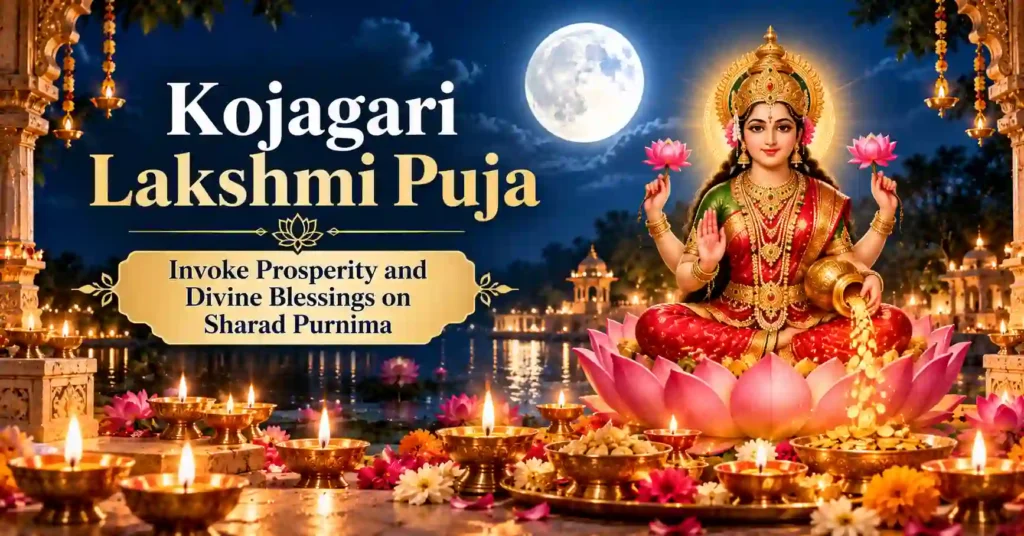
Kojagari Lakshmi Puja: The Night of Goddess Lakshmi
Kojagari Lakshmi Puja is an important tradition associated with Sharad Purnima, particularly in West Bengal, Odisha, Assam, and parts of eastern India. On this auspicious full moon night, devotees worship Maa Lakshmi, the goddess of wealth, prosperity, good fortune, and abundance. Families clean and decorate their homes, prepare offerings, light diyas, and pray for happiness and well-being.
The word Kojagari is traditionally connected with the Sanskrit expression Ko Jagarati?, meaning “Who is awake?” According to popular belief, Maa Lakshmi blesses devotees who remain awake and worship her during this sacred night. This belief gives rise to the custom of staying awake, offering prayers, and singing devotional songs.
How Do Devotees Perform Kojagari Lakshmi Puja?
Devotees begin by cleaning the home and preparing a dedicated place for worship. They place an image or idol of Maa Lakshmi, arrange flowers, light a diya, and offer fruits, sweets, and other customary items. Some families draw alpana or rangoli designs near the entrance and decorate the puja area to welcome the goddess.
The worship usually includes prayers, Lakshmi aarti, and the offering of bhog. Rice kheer is a popular offering on this occasion. After the puja, family members share the prasad and may spend the evening listening to religious stories or singing bhajans.
Why Do Devotees Stay Awake?
The tradition of keeping vigil is an expression of devotion and attentiveness. Remaining awake for prayer is believed, in popular religious tradition, to invite the blessings of Maa Lakshmi. Some households spend the night chanting prayers, reading sacred texts, or participating in family worship.
However, customs differ across communities. Not every devotee follows the same rituals or stays awake throughout the night. People can observe the festival according to their family traditions and personal circumstances.
The Spiritual Message of Lakshmi Puja
The worship of Maa Lakshmi is not only about material wealth. It also reminds devotees to value honesty, generosity, cleanliness, gratitude, and responsible use of resources. Prosperity becomes more meaningful when it supports family well-being and helps others.
Through Kojagari Lakshmi Puja, families celebrate faith and hope for a brighter future. The gentle glow of diyas, the sharing of prasad, and the prayers offered together make the occasion a cherished part of the autumn festival season.
The Stories and Legends Associated with Sharad Purnima
Several Hindu traditions and devotional stories are associated with Sharad Purnima. These stories explain why the full moon night is considered sacred and why devotees connect it with Maa Lakshmi, Chandra Dev, and Lord Krishna. The details vary across regions, but each tradition offers a way to reflect on faith, devotion, and divine grace.
Lord Krishna’s Maha Raas in Vrindavan
One of the best-known traditions connects this full moon night with Lord Krishna’s Maha Raas in Braj. According to the Bhagavata Purana, Krishna played his flute in the forests of Vrindavan, drawing the gopis towards him. The Raas Leela represents the deep love and devotion of the gopis for Krishna and the soul’s longing for the Divine.
In Krishna bhakti traditions, this episode is understood as more than an ordinary dance. It expresses spiritual love, surrender, and the joy of being close to God. Sharad Purnima is therefore celebrated by many devotees as a night that recalls Krishna’s divine play and the beauty of unconditional devotion.
The Legend of Maa Lakshmi and Kojagari Night
Another popular belief is connected with Maa Lakshmi’s visit to the world on Kojagari night. The traditional question Ko Jagarati?, meaning “Who is awake?”, is associated with the belief that the goddess blesses those who remain awake in devotion. This story explains why some families perform Lakshmi Puja and keep a night vigil.
Devotees prepare their homes, light lamps, offer sweets and flowers, and pray for prosperity and well-being. The custom also encourages people to remain mindful of their duties and use their blessings wisely.
Chandra Dev and the Full Moon
Hindu tradition gives Chandra Dev an important place among the celestial deities. The Moon is associated with beauty, calmness, nourishment, and the rhythms of nature. Its bright appearance on the autumn full moon has inspired devotional practices, poetry, and stories over generations.
The custom of preparing kheer and placing it under the moonlight is connected with traditional beliefs about the Moon’s blessings. Families later share the offering as prasad, turning the belief into a cherished act of devotion and togetherness.
What These Stories Teach Us
Although these traditions differ in their details, they share meaningful lessons. The story of Krishna’s Raas Leela points towards divine love, the worship of Maa Lakshmi reminds devotees of gratitude and responsible prosperity, and moon worship encourages peace and reflection.
These stories help explain why the festival continues to hold a special place in Hindu homes. Beyond its rituals, it offers an opportunity to strengthen faith, share family traditions, and remember the values that guide a spiritual life.
Sharad Purnima Vrat: Fasting Rules and Traditions
Many devotees observe a vrat on Sharad Purnima as an expression of faith and devotion. The fasting practices differ from one region and family to another. Some people observe a strict fast, while others eat fruits, milk, or other permitted foods and perform evening worship. There is no single fasting method followed by every Hindu household.
How Do Devotees Observe the Vrat?
Those observing the fast usually begin the day with a bath and prayers. They may take a sankalpa to observe the vrat with sincerity and spend time in worship, devotional reading, or chanting. Some devotees worship Chandra Dev, while others give special attention to Maa Lakshmi or Lord Krishna according to their tradition.
In households where kheer is part of the observance, it is prepared as an offering and shared as prasad after the puja. Families may also donate food or help someone in need as an act of devotion.
What Can You Eat During the Fast?
Food rules depend on the type of vrat being observed. Some devotees abstain from food for a set period, while others follow a fruit-and-milk diet or eat a simple fasting meal. If your family follows a particular vrat tradition, follow its customary guidelines.
People with medical conditions, those taking regular medication, older adults, pregnant women, and anyone who may be affected by fasting should seek appropriate medical advice before undertaking a restrictive fast. Devotion does not require putting one’s health at risk.
When Is the Fast Concluded?
The time for concluding the vrat depends on the family’s tradition and the type of fast being followed. Some devotees complete their worship in the evening, while others follow specific regional customs connected with moon worship or Lakshmi Puja.
It is best to confirm any prescribed fasting or puja timing with a trusted local priest or Panchang. The festival’s deeper purpose is sincere prayer, self-discipline, and gratitude, rather than following a practice that is unsuitable for one’s circumstances.
The Spiritual Meaning of Fasting
Fasting can help devotees become more mindful of their habits and dedicate time to prayer and reflection. When observed sensibly, it can be a personal expression of discipline and faith. Charity, kindness, and gratitude can also form an important part of the observance.
The vrat is therefore best understood as a way to deepen devotion and remember the values of Sanatan Dharma. The sincerity behind the observance matters more than making it unnecessarily difficult.
Regional Names and Celebrations of Sharad Purnima
Sharad Purnima is celebrated across India, but its name, rituals, and devotional customs vary from region to region. Some communities focus on the worship of Maa Lakshmi, while others associate the full moon night with Lord Krishna’s divine Raas Leela. These regional differences show the richness of Hindu traditions and the many ways devotees express their faith.
Kojagari Purnima in Eastern India
In West Bengal and several other eastern regions, the occasion is widely known as Kojagari Purnima or Kojagori Purnima. Many families perform Lakshmi Puja, decorate their homes, offer sweets and fruits, and pray for prosperity and well-being. Staying awake during the night is also a customary practice in some households.
The festival holds a special place in Bengali homes, where worship of Maa Lakshmi is often accompanied by alpana designs, traditional offerings, and family gatherings.
Kojagiri Purnima in Maharashtra
In Maharashtra, the festival is commonly known as Kojagiri Purnima. Families and friends may gather outdoors, enjoy the clear autumn night, and share milk or other refreshments. Some households observe Lakshmi Puja or follow local customs connected with the full moon.
These gatherings combine religious observance with the joy of spending time with loved ones under the bright night sky.
Raas Purnima in Braj
In the Braj region of Uttar Pradesh, the full moon is associated with Lord Krishna’s Raas Leela. Devotees visit temples, sing bhajans, and participate in devotional programmes that celebrate Krishna’s divine love. Vrindavan and nearby sacred places hold particular importance for Krishna devotees.
The name Raas Purnima reflects this connection with Krishna bhakti and the spiritual meaning of the Raas Leela.
Kumar Purnima in Odisha
In Odisha, the full moon festival is known as Kumar Purnima and is associated with youthful aspirations, traditional observances, and worship connected with Kartikeya, also known as Kumar. Young women traditionally participate in rituals and prayers, with customs varying across communities.
Although the regional practices differ, the full moon remains the shared feature of these celebrations. Each tradition gives the occasion its own cultural character while preserving the wider spirit of devotion, hope, and gratitude.
What to Do and Avoid on Sharad Purnima
Sharad Purnima is a time for prayer, gratitude, and family togetherness. Devotees follow different customs according to their region and family traditions. If you wish to observe the festival, a few simple practices can help make the occasion meaningful without turning it into a list of unnecessary restrictions.
What You Can Do
Clean and prepare your home: Create a peaceful space for worship and arrange your puja items in advance.
Offer prayers with devotion: Worship Chandra Dev, Maa Lakshmi, or Lord Krishna according to your family tradition.
Prepare kheer as prasad: Make rice kheer with fresh ingredients and offer it during the puja if this is part of your custom.
Light a diya: A traditional oil or ghee lamp can create a calm and devotional atmosphere.
Spend time in prayer: Read a sacred text, chant a mantra, sing bhajans, or sit quietly in reflection.
Share with others: Distribute prasad, offer food to someone in need, or perform a small act of charity.
Respect family traditions: If your household follows a particular vrat or puja method, observe it according to your customary practice.
What You Should Avoid
Avoid wasteful spending: Expensive decorations and elaborate offerings are not necessary for sincere worship.
Do not force yourself to fast: Choose a fasting practice suitable for your health and circumstances.
Handle food safely: Keep milk-based offerings protected from insects and dust, and refrigerate them promptly when needed.
Avoid treating beliefs as scientific facts: Traditions about the special qualities of moonlight are matters of faith and cultural heritage.
Do not impose one custom on everyone: Rituals differ across regions and households, and there is no need to criticise another family’s way of observing the festival.
Avoid fire hazards: Place diyas on stable, heat-resistant surfaces, away from curtains and other flammable materials.
The Most Important Thing to Remember
The heart of the festival lies in sincere devotion, gratitude, and the wish for the well-being of others. You do not need to perform every ritual to make the occasion meaningful. Even a simple prayer offered with a peaceful mind can become a beautiful expression of faith.
Celebrate according to your capacity, respect your family’s customs, and let the occasion inspire kindness and harmony in everyday life.
Key Takeaways
Sharad Purnima 2026 falls on Sunday, 25 October 2026, according to the Hindu lunar calendar.
The festival is celebrated on the full moon day of the Ashwin month and marks the beauty of the autumn season.
Devotees worship Chandra Dev, Maa Lakshmi, or Lord Krishna according to their regional and family traditions.
Preparing rice kheer and placing it under the moonlight is a popular festival custom associated with divine blessings.
Kojagari Lakshmi Puja is an important observance in several eastern Indian communities.
The festival encourages devotion, gratitude, family togetherness, and generosity.
Conclusion
Sharad Purnima is much more than a festival celebrated under the full moon. It brings together devotion, ancient traditions, and the joy of sharing meaningful moments with family. Whether devotees worship Chandra Dev, seek the blessings of Maa Lakshmi, or remember Lord Krishna’s divine Raas Leela, the occasion offers a chance to strengthen their connection with the Divine.
The tradition of preparing kheer and placing it under the moonlight adds a special charm to the celebration. Along with prayers, aarti, and family gatherings, this custom reminds us to appreciate life’s simple blessings. Regional celebrations such as Kojagari Purnima, Kojagiri Purnima, and Raas Purnima further reflect the richness of Sanatan Dharma.
As you celebrate Sharad Purnima in 2026, take a moment to reflect on the values that make this occasion meaningful: faith, gratitude, kindness, and inner peace. You can observe the festival through a simple puja, a heartfelt prayer, or an act of generosity towards someone in need.
May this sacred full moon night bring peace to your home, strengthen your devotion, and inspire you to live with compassion and gratitude throughout the year.
Suggested Reading
If you enjoyed learning about Sharad Purnima, you may also like these guides to Hindu deities, sacred worship, and festival traditions. Explore them to understand the significance of Maa Lakshmi, the rituals of Sanatan Dharma, and the spiritual meaning behind other important observances.
Maa Lakshmi: Meaning, Blessings, Forms and Worship
https://thesanatantales.com/maa-lakshmi-meaning-blessings/Sharad Navratri 2026: Dates, Ghatasthapana Muhurat, Rituals and Significance
https://thesanatantales.com/sharad-navratri/Ghatasthapana: Meaning, Puja Vidhi and Significance
https://thesanatantales.com/ghatasthapana/Panchopchar Puja: Meaning, Vidhi and Five Sacred Offerings
https://thesanatantales.com/panchopchar-puja/Maha Navami: Significance, Rituals, Kanya Pujan and Spiritual Meaning
https://thesanatantales.com/maha-navami/Maa Baglamukhi: Origin, Puja Vidhi, Temples and Brahmastra
https://thesanatantales.com/maa-baglamukhi-origin-puja-temples/- Sharad Purnima
Read my answer on Quora: https://qr.ae/pFmuCW
FAQs
1. When is Sharad Purnima in 2026?
Sharad Purnima will be celebrated on Sunday, 25 October 2026. It falls on the full moon day of the Hindu month of Ashwin, according to the traditional lunar calendar. Devotees observe the occasion with prayers, moon worship, and offerings according to their family customs.
The Purnima tithi begins on 25 October and ends on 26 October. Since the precise timings depend on the location, devotees should check their local Panchang before planning the puja.
2. What is the religious significance of Sharad Purnima?
Sharad Purnima holds an important place in Sanatan Dharma because it is associated with devotion, prosperity, and the beauty of the autumn full moon. Many devotees worship Chandra Dev and seek the blessings of Maa Lakshmi for peace and well-being.
In the Braj region, the occasion is also connected with Lord Krishna’s Maha Raas. These traditions give the festival different meanings across India while encouraging gratitude, prayer, and a deeper connection with the Divine.
3. Why is kheer kept under the moonlight on Sharad Purnima?
Keeping rice kheer under the moonlight is a popular tradition associated with Sharad Purnima. According to Hindu belief, the Moon’s rays on this night are associated with amrit, or divine nectar. Devotees place the prepared kheer under the open sky as part of the observance and later share it as prasad.
The practice is a religious and cultural tradition rather than a scientifically established effect of moonlight. For food safety, keep the kheer protected from insects and dust, and refrigerate it promptly when needed.
4. Which deities are worshipped on Sharad Purnima?
The deities worshipped during Sharad Purnima vary according to regional and family traditions. Chandra Dev is associated with moon worship, while many households perform Lakshmi Puja to seek prosperity and well-being. In the Braj region, devotees remember Lord Krishna’s divine Raas Leela.
Some families focus on one form of worship, while others combine several practices. Devotees can follow their customary rituals and offer prayers with sincerity rather than feeling that every deity or ritual must be included.
5. What is the difference between Sharad Purnima and Kojagari Purnima?
Sharad Purnima and Kojagari Purnima generally refer to the same full moon occasion in the Hindu month of Ashwin, although regional customs and names differ. The name Kojagari is particularly associated with the tradition of worshipping Maa Lakshmi and staying awake during the night.
In many eastern Indian households, Kojagari Lakshmi Puja is an important part of the celebration. In the Braj region, the same full moon night is closely connected with Lord Krishna’s Raas Leela and is often called Raas Purnima.
6. Can we eat kheer the next morning after keeping it in moonlight?
Yes, kheer may be eaten the next morning if it has been handled and stored safely. The traditional practice of placing kheer under moonlight does not remove the need for proper food hygiene. Milk-based dishes can spoil if left at room temperature for too long, especially in warm weather.
Keep the bowl covered to protect it from insects and dust, and refrigerate the kheer promptly. If it has remained outdoors overnight in unsafe conditions, it is better not to consume it. Devotion does not require risking your health.
7. What should we do on Sharad Purnima?
On Sharad Purnima, devotees traditionally clean their homes, prepare a puja space, light a diya, and offer prayers to Chandra Dev, Maa Lakshmi, or Lord Krishna according to their family customs. Many households prepare rice kheer and offer it as prasad. Some devotees also observe a fast, sing bhajans, or stay awake during the night for Kojagari Lakshmi Puja.
You can celebrate simply by offering a heartfelt prayer, sharing prasad with your family, and helping someone in need. The most important part is sincere devotion, not elaborate arrangements.
8. Can we observe a fast on Sharad Purnima?
Yes, devotees may observe a fast on Sharad Purnima according to their family and regional traditions. Some follow a strict fast, while others consume fruits, milk, or permitted foods and perform evening worship. Fasting practices are not identical across all Hindu communities.
If you choose to observe a vrat, follow a method suitable for your health and circumstances. Older adults, pregnant women, people with medical conditions, and those taking regular medication should avoid restrictive fasting without appropriate medical advice. Sincere prayer and devotion remain meaningful even without fasting.
About the Author
Yateendra Chaturvedi is a spiritual writer, researcher, devotee, and the founder of The Sanatan Tales. With over 35 years of professional experience and a lifelong interest in Sanatan Dharma, he writes about Hindu deities, temples, scriptures, festivals, Mahavidyas, sacred stories, rituals, and living traditions that continue to guide and inspire devotees across India.
Drawing from traditional scriptures, regional beliefs, temple traditions, devotional literature, and historical sources, he aims to present authentic, well-researched, and easy-to-understand content for modern readers. His work focuses on preserving spiritual wisdom, explaining sacred traditions, and helping seekers develop a deeper understanding of India’s rich spiritual heritage.
Through The Sanatan Tales, Yateendra strives to make the timeless teachings of Sanatan Dharma simple, meaningful, and relevant for today’s generation while maintaining respect for traditional sources, regional practices, and diverse spiritual perspectives.
Learn More About Yateendra Chaturvedi →
https://thesanatantales.com/about-the-author/
References & Sources
This article on Sharad Purnima is based on Hindu religious traditions, cultural practices, and devotional beliefs associated with the Ashwin full moon. It draws upon traditional accounts connected with Chandra Dev, Maa Lakshmi, and Lord Krishna, along with the customs of Kojagari Lakshmi Puja, moon worship, and preparing kheer as prasad. These practices have been preserved through regional traditions, family observances, and generations of devotional worship.
Note: Rituals, stories, fasting practices, and interpretations of Sharad Purnima may vary across regions, sampradayas, and family traditions within Sanatan Dharma. Beliefs about the spiritual qualities of moonlight are part of religious tradition and should not be confused with scientifically established facts. This article aims to present commonly followed practices in a simple, respectful, and reader-friendly manner without claiming that one regional custom represents every Hindu tradition.
Explore More Topics from The Sanatan Tales