Table of Contents
ToggleThe Living Faith of Tulja Bhavani
In the spiritual traditions of Maharashtra, Tulja Bhavani is revered as a powerful form of the Divine Mother and worshipped with deep devotion. Millions of devotees believe she blesses her children with courage, protection, wisdom, and strength to overcome life’s challenges.
Her sacred temple at Tuljapur has been a major centre of Shakti worship for centuries. For many families, Bhavani Mata is not only a revered deity but also their Kuldevi, guiding them through every important stage of life.
Among the many traditions associated with the goddess, her sacred connection with Chhatrapati Shivaji Maharaj remains the most celebrated. Devotees believe that the Divine Mother inspired and blessed his mission to establish Swarajya and protect dharma.
This article explores the story, history, temple traditions, cultural significance, and enduring devotion surrounding one of Maharashtra’s most beloved goddesses.
Quick Facts about Tulja Bhavani
| Quick Facts | Details |
|---|---|
| Location | Tuljapur, Dharashiv (Osmanabad), Maharashtra |
| Presiding Deity | Goddess Tulja Bhavani (Bhavani Mata) |
| Tradition | Shakta Tradition |
| Significance | Revered as the Kuldevi of many Maharashtrian families and associated with Chhatrapati Shivaji Maharaj |
| Best Time to Visit | Sharadiya Navratri (September–October) |
| Major Festivals | Sharadiya Navratri, Chaitra Navratri, Vijayadashami |
| Famous For | Ancient Shakti shrine, pilgrimage, Bhavani Mata worship |
Who is Tulja Bhavani?i
In the Shakta tradition of Sanatan Dharma, Bhavani Mata is worshipped as a powerful manifestation of Adi Shakti and is closely associated with Goddess Durga. She embodies the divine power that protects the righteous, destroys evil, and restores balance in the world.
She represents the fearless and compassionate energy of Shakti. Devotees believe the Divine Mother removes fear, grants inner strength, and appears whenever dharma needs protection.
Across Maharashtra, she is lovingly worshipped as Bhavani Mata or Jagdamba, the Universal Mother who watches over her devotees with compassion. Many families also revere her as their Kuldevi, seeking her blessings for health, prosperity, and success.
For centuries, kings, warriors, farmers, and ordinary devotees have prayed before beginning important journeys, new ventures, or difficult tasks. Her worship continues to inspire faith, courage, and unwavering devotion across generations.

The Ancient Legend of Tulja Bhavani
Temple traditions and regional folklore preserve an ancient legend that explains why Bhavani Mata is worshipped at Tuljapur. While different versions of the story exist, they all celebrate the Divine Mother’s role as the protector of righteousness and the destroyer of evil.
According to a popular local tradition, a powerful demon began tormenting sages, devotees, and innocent people. Unable to bear the growing suffering, they prayed to the Divine Mother for protection.
Moved by their devotion, the goddess manifested in a fierce form to defeat the demon and restore peace. This victory symbolizes the triumph of dharma over adharma, a recurring theme in the Shakta tradition.
After restoring balance, the Divine Mother is believed to have chosen Tuljapur as one of her sacred abodes. For this reason, devotees regard the temple as a place where they can seek courage, protection, and divine grace.
Although the details of the legend vary across regional traditions, the central message remains the same: the compassionate Mother stands beside those who uphold righteousness and sincerely seek her refuge.
Tuljapur Temple: The Sacred Abode of Bhavani Mata
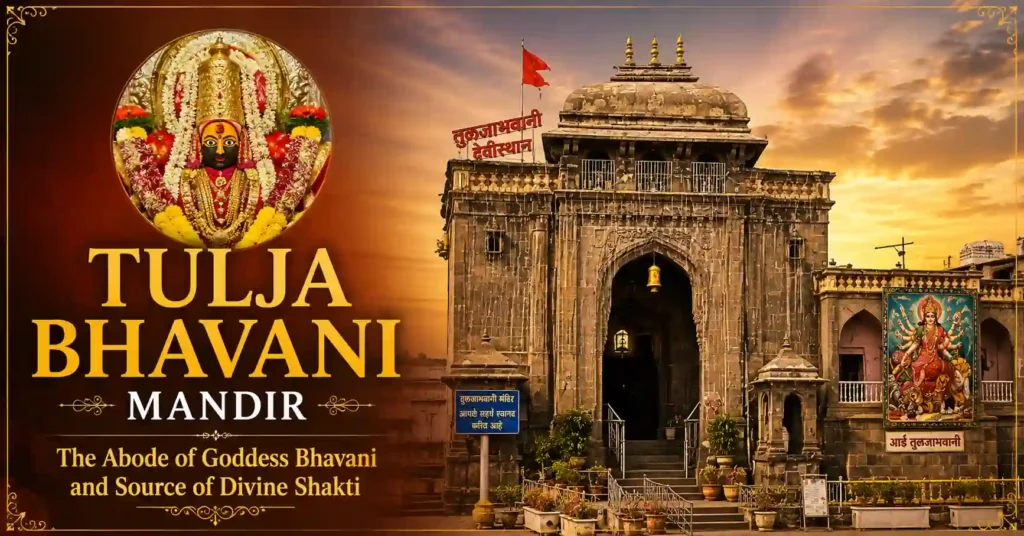
Located in Dharashiv (formerly Osmanabad) district of Maharashtra, Tuljapur is home to one of the most revered Shakti shrines in India. The ancient temple has been a major centre of Devi worship for centuries and attracts millions of pilgrims throughout the year.
Visitors descend a flight of stone steps before reaching the sanctum, symbolizing a spiritual journey from the outer world into the Divine Mother’s sacred presence. This unique approach adds to the temple’s deeply devotional atmosphere.
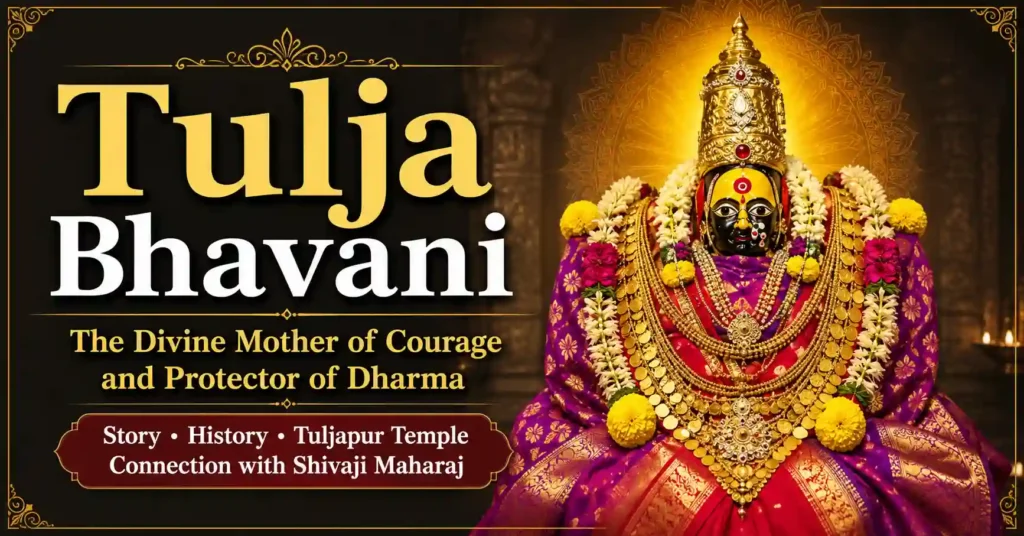
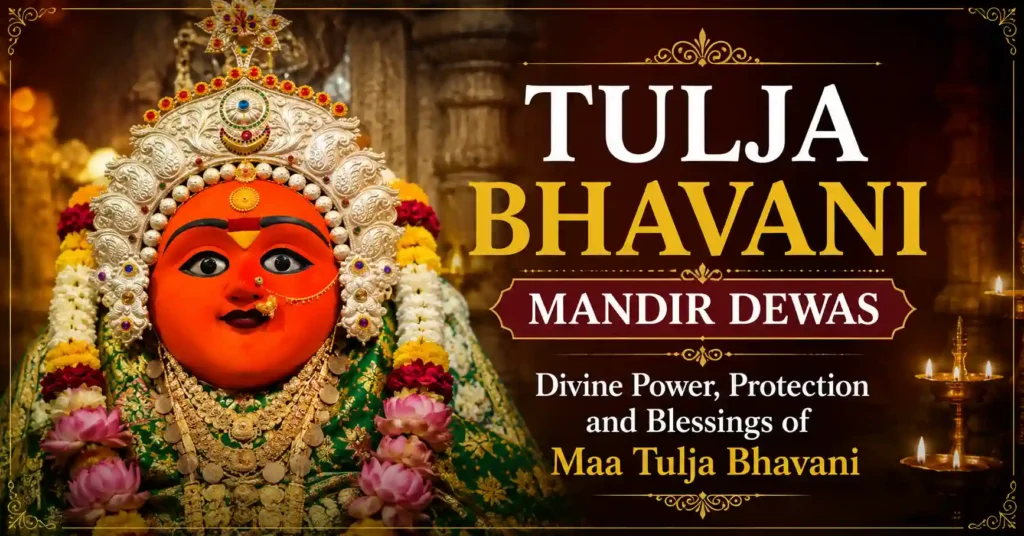
At the heart of the shrine is the ancient stone idol of Bhavani Mata, beautifully adorned with ornaments, flowers, and traditional weapons that symbolize divine protection, strength, and the victory of dharma over evil.
For countless devotees, a pilgrimage to Tuljapur is more than a temple visit. It is a deeply personal experience of faith, where people seek the blessings of their Kuldevi for courage, prosperity, and guidance in every stage of life.
Tulja Bhavani Temple Architecture and Sacred Features
The Tulja Bhavani Temple is an excellent example of medieval temple architecture in Maharashtra. Built using black stone, the temple features intricately carved pillars, spacious courtyards, and a sacred sanctum where the idol of Bhavani Mata is enshrined. Devotees descend a flight of stone steps before reaching the temple, symbolizing a humble approach to the Divine Mother.
The idol of Bhavani Mata is revered for her powerful and compassionate form. She is traditionally depicted with multiple arms holding divine weapons, representing the triumph of righteousness over evil and the protection of devotees. Every architectural element of the temple reflects centuries of devotion and the rich heritage of Shakti worship.
Besides the main sanctum, the temple complex includes several smaller shrines, sacred spaces for rituals, and areas where devotees perform prayers and offer their vows. These features make Tuljapur not only a place of worship but also a living centre of Maharashtra’s spiritual and cultural traditions.
Jijabai and Her Devotion to Bhavani Mata
The spiritual bond between Chhatrapati Shivaji Maharaj and the Divine Mother is closely associated with the unwavering devotion of his mother, Rajmata Jijabai. Her deep faith shaped the values and character that later defined one of India’s greatest rulers.
According to Maharashtrian traditions, Jijabai regularly offered prayers to Bhavani Mata and taught her son the ideals of courage, righteousness, compassion, and selfless service. Through stories from the Ramayana, Mahabharata, and the lives of great heroes, she nurtured in him a lifelong commitment to dharma.
Many local traditions also believe that she prayed for a son who would protect the innocent, uphold justice, and serve the people. Although these accounts belong to regional devotional traditions, they remain an important part of Maharashtra’s cultural memory.
Her steadfast faith in the Divine Mother is believed to have inspired Shivaji Maharaj throughout his mission to establish Swarajya. For devotees, this sacred relationship symbolizes how a mother’s devotion and spiritual values can shape the destiny of a great leader.
Tulja Bhavani and Shivaji Maharaj
The spiritual bond between Bhavani Mata and Chhatrapati Shivaji Maharaj is one of the most cherished traditions in Maharashtra. For generations, devotees have believed that the Divine Mother guided and blessed his mission to establish Swarajya and uphold dharma.
According to popular devotional traditions, Shivaji Maharaj offered prayers at the goddess’s shrine before embarking on important military campaigns and seeking strength to protect his people. These accounts are preserved in regional folklore and devotional literature.
Devotees believe the Divine Mother accepted his prayers, granting him courage, wisdom, and unwavering determination to defend justice and safeguard his kingdom. This sacred belief continues to inspire millions across Maharashtra.
While historians regard these accounts as part of Maharashtra’s rich devotional tradition rather than fully documented historical events, they remain deeply rooted in the region’s cultural and spiritual heritage.
Even today, Shivaji Maharaj is remembered not only as a visionary ruler and fearless warrior but also as a devoted son of the Divine Mother, whose faith continues to inspire courage, leadership, and devotion.
Did You Know?
- Tulja Bhavani Temple is one of Maharashtra’s most revered Shakti shrines and has attracted devotees for centuries.
- Bhavani Mata is worshipped as the Kuldevi by many families across Maharashtra and parts of Karnataka.
- According to popular tradition, Chhatrapati Shivaji Maharaj sought the blessings of the Goddess before important military campaigns.
- The temple draws lakhs of pilgrims during Sharadiya Navratri, one of its grandest annual celebrations.
The Legend of the Divine Bhavani Sword
One of the most enduring traditions associated with Bhavani Mata and Chhatrapati Shivaji Maharaj is the legend of the sacred Bhavani Talwar. The sword is revered not merely as a weapon but as a symbol of divine strength, courage, and the responsibility to protect dharma.
According to a popular Maharashtrian tradition, the Divine Mother blessed Shivaji Maharaj with the sword before his mission to establish Swarajya. Devotees believe this sacred blessing gave him the courage and determination to defend his people and uphold justice.
Historians generally regard the story as a cherished devotional tradition rather than a fully documented historical event. However, its spiritual significance has remained unchanged for generations and continues to be an important part of Maharashtra’s cultural heritage.
For devotees, the legend is not about the physical origin of the sword alone. It represents the belief that true strength comes from faith, righteous action, and the grace of the Divine Mother, who guides those dedicated to protecting truth and justice.
Bhavani Mata as the Kuldevi of Maharashtra
For countless families across Maharashtra, Bhavani Mata is worshipped as their Kuldevi, the ancestral goddess believed to protect the family, preserve traditions, and guide future generations. Her blessings are sought during every important milestone of life.
Devotees visit Tuljapur Temple to offer prayers before weddings, childbirth, housewarming ceremonies, new businesses, and other significant occasions. Many families continue this tradition across generations as an expression of gratitude and faith.
Special offerings, prayers, and vows are made in the hope of receiving the Divine Mother’s protection, prosperity, and guidance. During Navratri and other auspicious festivals, thousands of devotees gather at the temple to participate in traditional worship and seek her blessings.
This enduring bond between the goddess and her devotees has kept her worship alive for centuries. More than a place of pilgrimage, Tuljapur remains a living centre of faith where family traditions and devotion continue to flourish.
Rituals and Worship at Tulja Bhavani Temple
Daily worship at the Tulja Bhavani Temple follows sacred traditions that have been preserved for centuries. Each day begins with Kakad Aarti, followed by regular pujas, darshan, and offerings made to the Divine Mother.
Devotees offer coconuts, flowers, kumkum, sarees, and sweets as symbols of faith and gratitude. Many also perform special pujas or fulfil personal vows after receiving the blessings they had prayed for.
During Navratri, the temple becomes a vibrant centre of devotion as thousands of pilgrims gather for special rituals and celebrations. The atmosphere is filled with devotional chants, prayers, and a deep sense of spiritual unity.
These daily rituals and annual festivals keep the ancient traditions of Shakti worship alive. For countless devotees, visiting Tuljapur is not only a pilgrimage but also an opportunity to strengthen their bond with Bhavani Mata.
Best Time to Visit Tulja Bhavani Temple
| Time of Year | What to Expect |
|---|---|
| Sharadiya Navratri (September–October) | The grandest celebration with special rituals, cultural programs, and thousands of devotees visiting the temple. |
| Weekdays (Non-Festival Season) | Ideal for peaceful darshan with shorter queues and a quieter spiritual atmosphere. |
| Early Morning | The best time to attend Kakad Aarti and experience the temple’s serene devotional environment. |
| Throughout the Year | The temple remains open to pilgrims year-round, making Tuljapur a popular destination for devotees seeking the blessings of Bhavani Mata. |
How to Reach Tulja Bhavani Temple
Reaching the Tulja Bhavani Temple is convenient from most major cities in Maharashtra and neighboring states. Whether you are travelling by road, rail, or air, Tuljapur is well connected, making it easy for devotees to plan a comfortable pilgrimage.
Distance from Major Cities
| City | Approximate Distance |
|---|---|
| Solapur | 45 km |
| Dharashiv (Osmanabad) | 28 km |
| Pune | 295 km |
| Chhatrapati Sambhajinagar (Aurangabad) | 235 km |
| Kolhapur | 300 km |
| Hyderabad | 300 km |
| Mumbai | 450 km |
Travel Options
| Mode | Details |
|---|---|
| By Air | The nearest airports are Solapur Airport (limited services) and Chhatrapati Sambhajinagar Airport. From the airport, taxis and buses are available to Tuljapur. |
| By Train | Solapur Junction is the nearest major railway station, about 45 km from the temple. Dharashiv Railway Station is another convenient option with onward road connectivity. |
| By Road | Tuljapur is well connected by highways. Regular MSRTC buses, private buses, taxis, and self-drive vehicles can easily reach the temple from major cities in Maharashtra and neighboring states. |
Local Transport
Auto-rickshaws, shared taxis, and private cabs are easily available in Tuljapur. Most hotels and lodges are located within a short distance of the temple, making it convenient for pilgrims to reach the shrine on foot or by local transport.
Tulja Bhavani Temple Location on Google Maps
Finding the Tulja Bhavani Temple is easy using Google Maps. Before starting your pilgrimage, you can use the map below to get directions, estimate travel time, and explore nearby facilities such as parking, accommodation, restaurants, and local transport around the temple.
Food, Dining and Stay Near Tulja Bhavani Temple
Tuljapur offers a range of facilities for pilgrims, including simple accommodation, vegetarian dining, and guest houses near the temple. Whether you are visiting for a few hours or planning an overnight stay, you will find convenient options within walking distance of the shrine.
| Facility | Details |
|---|---|
| Accommodation | Dharamshalas, temple guest houses, budget hotels, and mid-range hotels are available near the temple. Booking in advance is recommended during Navratri and major festivals. |
| Food & Dining | Numerous vegetarian restaurants and local eateries serve traditional Maharashtrian meals, snacks, tea, and refreshments close to the temple. |
| Drinking Water | Packaged drinking water and refreshment stalls are easily available around the temple area. |
| Parking | Paid parking facilities are available for cars, buses, and two-wheelers near the temple. |
| Essential Facilities | Washrooms, cloakrooms, shops selling पूजा items, and ATMs are available in the vicinity for the convenience of pilgrims. |
Important Festivals Celebrated at Tulja Bhavani Temple
The Tulja Bhavani Temple comes alive during its annual festivals, when thousands of devotees gather to seek the blessings of Bhavani Mata. These celebrations beautifully reflect Maharashtra’s rich Shakta tradition, devotional practices, and cultural heritage.
| Festival | Significance |
|---|---|
| Sharadiya Navratri | The grandest festival at the temple, celebrated with special pujas, aartis, devotional music, and large gatherings of devotees over nine sacred days. |
| Chaitra Navratri | Another important Navratri dedicated to the Divine Mother, attracting pilgrims from Maharashtra and neighboring states. |
| Vijayadashami (Dussehra) | Celebrated as the victory of dharma over evil. Many devotees worship weapons and seek courage and success, following a tradition associated with Chhatrapati Shivaji Maharaj. |
| Ashwin Purnima & Other Temple Utsavs | Various religious ceremonies, special aartis, and community celebrations are observed throughout the year according to the Hindu calendar. |
Darshan Timings and Temple Aarti Schedule
Before planning your pilgrimage, it is helpful to know the temple’s darshan and aarti schedule. While timings may change slightly during festivals and special occasions, the following schedule serves as a general guide for devotees.
| Activity | Approximate Timing |
|---|---|
| Temple Opening | Around 4:00 AM |
| Kakad Aarti | Early morning (around 4:30 AM) |
| General Darshan | Throughout the day, with short breaks during temple rituals |
| Afternoon Rituals | As per the temple schedule |
| Evening Aarti | Around sunset |
| Temple Closing | Around 10:00 PM |
Note: Darshan and aarti timings may vary on Navratri, Dussehra, Fridays, Purnima, and other special occasions. It is advisable to verify the latest schedule before your visit.
Spiritual Significance of Tulja Bhavani in Shakta Tradition
In the Shakta tradition of Sanatan Dharma, Bhavani Mata is worshipped as a manifestation of Adi Shakti, the eternal Divine Mother who creates, protects, and transforms the universe. She represents the power that destroys ignorance and gives devotees the strength to uphold dharma.
For countless devotees, worship is not limited to seeking material blessings. They pray for courage, wisdom, righteous action, inner peace, and protection during life’s challenges. This is why Bhavani Mata continues to be revered as both a compassionate mother and a fearless protector.
The sacred shrine at Tuljapur has, for centuries, been a place where kings, saints, warriors, and ordinary devotees have sought divine guidance. The temple remains a living symbol of unwavering faith, devotion, and the timeless worship of the Divine Feminine.
Why the Story Still Inspires Devotees
The story of Bhavani Mata and Chhatrapati Shivaji Maharaj conveys a timeless spiritual message that continues to inspire devotees across generations. It teaches that true courage is strengthened by faith, righteousness, and unwavering devotion to the Divine.
For many devotees, this tradition is more than a historical memory. It serves as a reminder that determination guided by dharma and supported by divine grace can help overcome even the greatest challenges in life.
Across Maharashtra, the goddess remains a symbol of strength, protection, and hope. Her enduring legacy encourages people to face difficulties with confidence, uphold moral values, and place their trust in the compassionate guidance of the Divine Mother.
Key Takeaways
- Tulja Bhavani is one of Maharashtra’s most revered forms of Adi Shakti.
- The Tuljapur Temple has been an important Shakti pilgrimage centre for centuries.
- Bhavani Mata is worshipped as the Kuldevi by many families across Maharashtra.
- Chhatrapati Shivaji Maharaj’s devotion to the Goddess remains an enduring part of regional tradition.
- Navratri is the most significant time to experience the temple’s vibrant spiritual atmosphere.
Conclusion
Tulja Bhavani continues to be one of the most revered forms of the Divine Mother in Maharashtra, inspiring millions of devotees with her message of courage, protection, and unwavering faith. From the sacred temple at Tuljapur to the cherished traditions associated with Chhatrapati Shivaji Maharaj, her worship remains deeply woven into the region’s spiritual and cultural heritage.
Whether revered as Bhavani Mata, a family’s Kuldevi, or the guardian who blesses those walking the path of dharma, her presence continues to inspire devotion across generations. The timeless traditions surrounding the goddess remind us that faith, righteousness, and inner strength can guide us through every challenge and bring us closer to the Divine.
Suggested Reading
If you enjoyed learning about Tulja Bhavani and her enduring place in Maharashtra’s spiritual traditions, you may also like exploring these regional deities and sacred legends from across India. Each article highlights the unique history, beliefs, temple traditions, and cultural significance of revered folk deities worshipped by local communities.
Khandoba: Story, Jejuri Temple, Jatra and Worship
https://thesanatantales.com/khandoba-god-jejuri-temple-story/
Shri Mahalakshmi (Ambabai) Temple, Kolhapur
https://thesanatantales.com/mahalaxmi-temple-kolhapur/
Dhari Devi Temple: Story, History, Char Dham Significance and Travel Guide
https://thesanatantales.com/dhari-devi-temple/
Nanda Devi: Story, Folk Beliefs, Raj Jat Yatra and Worship in Uttarakhand
https://thesanatantales.com/nanda-devi-the-beloved-folk-goddess-of-uttarakhand/
Goludevta: The Folk God of Justice in Uttarakhand
https://thesanatantales.com/goludevta-folk-god-of-justice/
Khodiyar Maa: Story, History, Temples, Miracles and the Beloved Kuldevi of Gujarat
https://thesanatantales.com/khodiyar-maa-story-history-temples-miracles/
Shri Tulja Bhavani Temple, Tuljapur
https://shrituljabhavani.org/en
FAQs
Who is Tulja Bhavani?
Tulja Bhavani is a revered form of Goddess Bhavani (Durga) and is worshipped as Adi Shakti, the Supreme Divine Mother in the Shakta tradition. She is especially venerated in Maharashtra as the protector of righteousness and devotees.
Many families also worship her as their Kuldevi (ancestral deity). Her principal shrine at Tuljapur has been a major centre of faith for centuries, attracting pilgrims from across India.
Why is Tulja Bhavani associated with Chhatrapati Shivaji Maharaj?
According to long-standing devotional traditions in Maharashtra, Chhatrapati Shivaji Maharaj regarded Bhavani Mata as his guiding deity and sought her blessings while establishing Swarajya.
A popular legend also speaks of the goddess blessing him with the Bhavani Talwar, symbolizing divine support for the protection of dharma. While deeply revered by devotees, historians generally regard this as part of regional devotional tradition rather than documented historical fact.
Where is the Tulja Bhavani Temple located?
The Tulja Bhavani Temple is located in Tuljapur, in the Dharashiv (formerly Osmanabad) district of Maharashtra. It is one of the state’s most important Shakti pilgrimage destinations.
The temple is well connected by road and welcomes devotees throughout the year. During Navratri and other major festivals, thousands of pilgrims visit to seek the blessings of Bhavani Mata.
Is Tulja Bhavani the Kuldevi of Maharashtrian families?
Yes. Tulja Bhavani is worshipped as the Kuldevi (ancestral family deity) by countless families across Maharashtra and parts of Karnataka.
Many devotees visit the temple before weddings, housewarming ceremonies, childbirth, and new business ventures. This centuries-old tradition reflects the deep bond between families and the Divine Mother.
Which festivals are celebrated at Tulja Bhavani Temple?
The most important celebration is Sharadiya Navratri, when the temple comes alive with special rituals, devotional singing, and large gatherings of pilgrims.
Other Hindu festivals dedicated to the Divine Mother are also celebrated with devotion, making Tuljapur one of Maharashtra’s busiest Shakti pilgrimage centres throughout the year.
What is the spiritual significance of Tulja Bhavani?
Tulja Bhavani symbolizes strength, courage, protection, and righteous action. Devotees believe she grants the strength to overcome difficulties and remain steadfast on the path of dharma.
Her worship also represents surrender to the Divine Mother, inspiring faith, inner resilience, and devotion in everyday life.
What are the darshan timings of Tulja Bhavani Temple?
The temple generally opens early in the morning and remains accessible until late evening. Daily worship includes several aartis and traditional rituals performed at different times of the day.
During Navratri and other major festivals, darshan timings and crowd management arrangements may change. Visitors should check the official temple website before planning their pilgrimage.
What makes Tulja Bhavani Temple unique?
Tulja Bhavani Temple is one of Maharashtra’s most revered Shakti shrines, known for its ancient heritage, sacred traditions, and centuries-old worship of the Divine Mother.
Its association with Bhavani Mata, the devotional traditions linked to Chhatrapati Shivaji Maharaj, and its importance as a Kuldevi shrine continue to make it one of India’s most cherished pilgrimage destinations.
Glossary of Important Terms
| Term | Meaning |
|---|---|
| Adi Shakti | The Supreme Divine Mother in Sanatan Dharma, regarded as the source of all creation and every form of Goddess worship. |
| Bhavani Mata | A revered form of Goddess Durga worshipped as the protector of devotees, the upholder of dharma, and the presiding deity of Tuljapur. |
| Tuljapur | A sacred pilgrimage town in Maharashtra’s Dharashiv district, home to the famous Tulja Bhavani Temple. |
| Kuldevi | The ancestral family goddess worshipped for protection, prosperity, and spiritual guidance across generations. |
| Shakta Tradition | A major tradition within Sanatan Dharma that worships the Divine Mother (Shakti) as the Supreme Reality and cosmic energy. |
| Dharma | The principle of righteousness, moral duty, and ethical living that guides one’s thoughts and actions. |
| Swarajya | A Sanskrit term meaning “self-rule” or “self-governance,” closely associated with Chhatrapati Shivaji Maharaj’s vision of an independent kingdom founded on dharma. |
| Bhavani Talwar | A legendary sword associated with Chhatrapati Shivaji Maharaj in Maharashtrian devotional tradition, symbolizing the blessings and protection of Bhavani Mata. |
| Navratri | A nine-night Hindu festival dedicated to the worship of Goddess Durga in her various forms. It is the most important annual celebration at Tulja Bhavani Temple. |
| Darshan | The sacred act of seeing and receiving the blessings of a deity in a temple. |
| Aarti | A devotional ritual in which lighted lamps are offered to the deity while hymns and prayers are sung. |
| Prasad | Sacred food or offerings presented to the deity during worship and later distributed to devotees as a divine blessing. |
| Tirtha Yatra (Pilgrimage) | A spiritual journey to a sacred temple or holy place undertaken to seek divine blessings and strengthen one’s faith. |
About the Author
Yateendra Chaturvedi is a spiritual writer, researcher, devotee, and the founder of The Sanatan Tales. With over 35 years of professional experience and a lifelong interest in Sanatan Dharma, he writes about Hindu deities, temples, scriptures, festivals, Mahavidyas, sacred stories, rituals, and living traditions that continue to guide and inspire devotees across India.
Drawing from traditional scriptures, regional beliefs, temple traditions, devotional literature, and historical sources, he aims to present authentic, well-researched, and easy-to-understand content for modern readers. His work focuses on preserving spiritual wisdom, explaining sacred traditions, and helping seekers develop a deeper understanding of India’s rich spiritual heritage.
Through The Sanatan Tales, Yateendra strives to make the timeless teachings of Sanatan Dharma simple, meaningful, and relevant for today’s generation while maintaining respect for traditional sources, regional practices, and diverse spiritual perspectives.
Learn More About Yateendra Chaturvedi →
https://thesanatantales.com/about-the-author/
References & Sources
This article is based on beliefs, traditions, and practices followed within the diverse spiritual traditions of Sanatan Dharma. It draws upon traditional knowledge, temple customs, regional folklore, scriptures, and insights from various religious and spiritual study sources. Some concepts discussed are also inspired by teachings preserved through the guru-shishya (guru-disciple) tradition.
Note: Beliefs, interpretations, and religious practices may vary across different sampradayas (traditions), regions, temples, and lineages within Sanatan Dharma. The purpose of this article is not to present any single viewpoint as the absolute truth, but to explain widely accepted spiritual, cultural, and devotional perspectives in a simple, respectful, and accessible manner.
Explore More Fascinating Topics from Sanatan Dharma