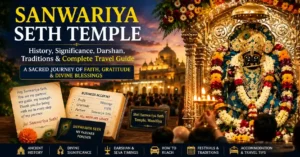
Sanwariya Seth is not just worshipped. He is trusted. For countless devotees, he is not a distant deity seated inside a temple, but a compassionate form of Lord Krishna who becomes part of their daily life, struggles, and even their livelihood.
If you quietly sit inside the Sanwariya Seth Temple in Mandfiya, Rajasthan, and observe the devotees, you will notice something special. People do not simply offer prayers and leave. Many stand silently before the deity, while others speak softly, as if sharing their hopes and worries with someone who truly listens.
This deep sense of closeness is what makes devotion to Sanwariya Seth so unique. It goes beyond rituals and traditions. It is built on faith, trust, gratitude, and a personal relationship that has drawn pilgrims to this sacred temple for generations.
In this guide, you will discover the history of Sanwariya Seth Temple, its spiritual significance, darshan, unique traditions, and why devotees lovingly regard Sanwariya Seth as their divine companion and business partner.
Sanwariya Seth Temple at a Glance
| Feature | Details |
|---|---|
| Location | Mandfiya, Chittorgarh District, Rajasthan |
| Presiding Deity | Lord Krishna worshipped as Sanwariya Seth |
| Temple Tradition | Vaishnava Tradition |
| Famous For | Divine Business Partner tradition, mannat, and gratitude offerings |
| Historical Significance | Three sacred black stone idols discovered in 1840, according to temple tradition |
| Major Festivals | Janmashtami, Devjhulani Ekadashi, Annakut, Phalgun Mela, Kartik Mela |
| Darshan | Daily Mangala Darshan, Rajbhog Darshan, Sandhya Aarti, and Shayan Darshan |
| Best Time to Visit | October to March |
| Nearest Railway Station | Chittorgarh Junction (35–40 km) |
| Nearest Airport | Maharana Pratap Airport, Udaipur (60–65 km) |
| Nearest Major Cities | Chittorgarh (40 km), Udaipur (80 km), Bhilwara (60 km) |
| Ideal For | Krishna devotees, pilgrims, families, traders, entrepreneurs, and spiritual seekers |
Table of Contents
ToggleWho Is Sanwariya Seth in Local Belief?
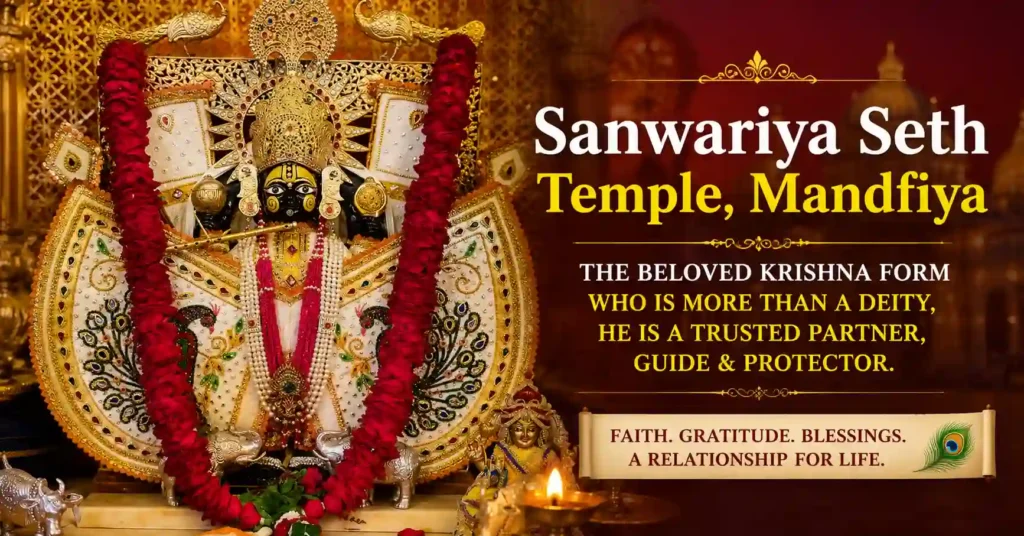
Sanwariya Seth is believed to be a revered form of Lord Krishna, worshipped in his dark and compassionate Sanwara form. While Vaishnava tradition identifies him with Shri Krishna, the devotion that has grown around Sanwariya Seth Temple in Mandfiya has given this form a unique place in the hearts of devotees.
In local belief, people do not see Sanwariya Seth only as the Krishna described in the scriptures. They experience him as a living presence who shares their joys, understands their worries, and quietly guides them through life’s challenges.
This deep personal connection has been passed down through generations and continues to shape the temple’s living tradition.
That is why, when people ask, “Who is Sanwariya Seth?”, the answer is more than simply saying that he is a form of Lord Krishna. For countless devotees, he is a trusted companion, a compassionate protector, and someone they lovingly consider part of their own family.
Why Is Sanwariya Seth Called "Seth"?
The word “Seth” traditionally refers to a wealthy merchant, a respected businessman, or someone who provides for others. At Sanwariya Seth Temple, however, this title carries a much deeper spiritual meaning.
Devotees lovingly address Lord Krishna as Sanwariya Seth because they believe he blesses honest effort, guides their decisions, and helps them earn their livelihood through righteousness.
For many traders, entrepreneurs, farmers, and families, he is not worshipped merely as the giver of wealth but as the divine guardian of their work and responsibilities.
This belief has inspired countless devotees to treat Sanwariya Seth as a silent partner in their lives. When their prayers are fulfilled, they return to the temple with gratitude and offer a share of their earnings as an act of devotion rather than obligation.
That is why the title “Seth” is not simply associated with material prosperity. It reflects the faith that Lord Krishna walks beside his devotees, blessing honest work, inspiring ethical living, and reminding them that true prosperity is rooted in gratitude, integrity, and seva.
Sanwariya Seth in Vaishnava Tradition and Hindu Scriptures
Unlike names such as Govinda, Gopala, Madhava, or Dwarkadhish, the title Sanwariya Seth does not appear in the major Hindu scriptures. It is a devotional name that developed through local temple tradition and the heartfelt faith of devotees.
However, the deity worshipped at Mandfiya is understood to be Lord Krishna, one of the most beloved forms of Lord Vishnu in the Vaishnava tradition.
In sacred texts such as the Bhagavad Gita, Lord Krishna teaches the path of dharma, selfless action, devotion, and complete surrender to God.
The Bhagavata Purana portrays him as the compassionate protector of his devotees, while the Harivamsha and other Vaishnava traditions celebrate his divine childhood, loving nature, and role as the Supreme Being. These scriptural qualities are the foundation of the devotion offered to Sanwariya Seth.
The temple’s unique tradition of regarding Lord Krishna as a trusted companion and even a divine business partner reflects these timeless teachings in everyday life.
Devotees believe that success should be guided by honesty, gratitude, righteous conduct, and humility rather than by wealth alone. In this way, the worship of Sanwariya Seth connects local living tradition with the eternal spiritual values taught in the Vaishnava scriptures.
It is important to understand that the name Sanwariya Seth belongs to temple tradition and popular devotion, while the divine qualities associated with him are those of Lord Krishna as described in Hindu scriptures.
This distinction helps preserve both the authenticity of the temple’s living traditions and the broader theological understanding of Krishna within Sanatan Dharma.
The Story Behind Sanwariya Seth Temple
The story of Sanwariya Seth Temple is closely connected with a local tradition that devotees have cherished for generations. According to temple belief, the discovery of the sacred idols marked the beginning of one of Rajasthan’s most revered Krishna pilgrimage sites.
It is believed that in 1840, a cowherd named Bholaram Gurjar had a vivid dream in which Lord Krishna revealed the location of sacred idols buried near Bagund village in present-day Chittorgarh district. The dream left a deep impression on him, and he shared it with the local community.
Around the same time, workers digging near a babul tree while constructing a road reportedly discovered three black stone idols. Devotees regarded this remarkable discovery as the fulfilment of Bholaram’s dream and a divine sign. One of these idols was later enshrined at Sanwariya Seth Temple in Mandfiya, while the other two were installed at nearby temples.
According to another popular local tradition, these sacred idols were once worshipped by the great Krishna devotee Meerabai. It is believed that they were hidden during the Mughal period to protect them from destruction. While this association is preserved in temple tradition and local belief, it is not conclusively established through historical records.
From that day onward, devotees came to regard Sanwariya Seth not as a rediscovered idol but as the living presence of Lord Krishna. This enduring faith continues to draw lakhs of pilgrims to Sanwariya Seth Temple every year.
The Three Sacred Idols of Sanwariya Seth Temple
One of the most fascinating parts of the Sanwariya Seth Temple story is that three black stone idols of Lord Krishna were discovered together. According to temple tradition, each idol was later installed at a different sacred site, creating a unique pilgrimage circuit in the Mandfiya region of Rajasthan.
The largest idol was enshrined at Mandfiya, where the main Sanwariya Seth Temple stands today and attracts lakhs of devotees every year. The second idol was installed at Bhadsoda, while the third idol remained at Prakatya Sthal, Bagund, the place traditionally associated with their discovery.
Many pilgrims choose to visit all three temples during their journey. According to local belief, this pilgrimage is more than a series of temple visits. It represents a complete spiritual journey that deepens one’s devotion to Lord Krishna and strengthens the bond with Sanwariya Seth.
Although visiting all three temples is not a religious obligation, it has become a cherished tradition among many devotees, who believe that completing this sacred circuit brings inner peace, gratitude, and a deeper connection with the divine.
Did You Know?
- Three black stone idols were discovered together in 1840, according to temple tradition. Today, they are worshipped at Mandfiya, Bhadsoda, and Prakatya Sthal, Bagund.
- The title “Seth” means a respected provider or benefactor. Devotees lovingly address Lord Krishna as Sanwariya Seth, believing he blesses honest work and righteous living.
- Thousands of traders and entrepreneurs consider Sanwariya Seth their Divine Business Partner and voluntarily offer a portion of their profits as an expression of gratitude after their wishes are fulfilled.
- Sanwariya Seth Temple is among the most visited Krishna temples in Rajasthan, attracting pilgrims from Rajasthan, Madhya Pradesh, Gujarat, Maharashtra, and many other states.
- Along with worship and pilgrimage, the temple is also known for its charitable activities, including bhandaras, healthcare initiatives, and gau seva, reflecting the Sanatan ideal of seva alongside bhakti.
Where Is Sanwariya Seth Temple Located?
The Sanwariya Seth Temple is located in Mandfiya village in the Chittorgarh district of Rajasthan, about 40 km from Chittorgarh and 75–80 km from Udaipur. Situated on the Udaipur–Chittorgarh Highway (NH-27), the temple is easily accessible by road and has become one of Rajasthan’s most visited pilgrimage destinations dedicated to Lord Krishna.
Nestled in the historic region of Mewar, the temple attracts devotees from across Rajasthan, Madhya Pradesh, Gujarat, Maharashtra, Delhi, and many other parts of India. While Mandfiya is a small village, its spiritual importance has made it a major centre of Krishna devotion and pilgrimage.
The temple is also part of a unique sacred circuit that includes the Sanwariya Seth Temple at Bhadsoda and Prakatya Sthal, Bagund, where the other two black stone idols discovered in 1840 are worshipped. Many pilgrims choose to visit all three temples during their journey, considering it a complete and spiritually fulfilling pilgrimage.
Whether you are visiting for Sanwariya Seth Darshan, offering a mannat, or simply seeking a peaceful spiritual experience, the temple’s convenient location and excellent connectivity make it an ideal pilgrimage destination for devotees throughout the year.
Why Do Devotees Make Sanwariya Seth Their Business Partner?
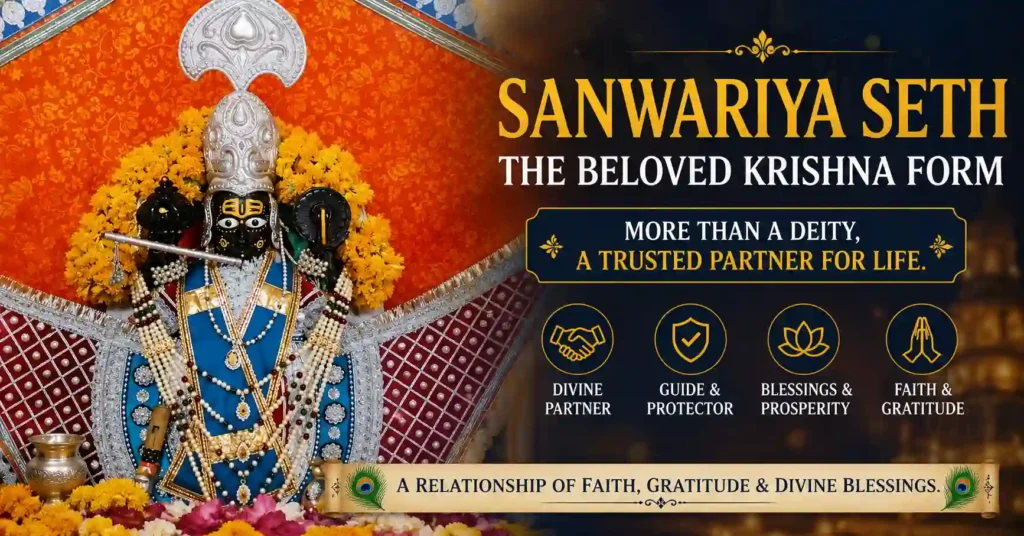
One of the most distinctive traditions associated with Sanwariya Seth Temple is the belief that Lord Krishna becomes a silent partner in the lives of his devotees. This living tradition is especially popular among traders, entrepreneurs, shopkeepers, farmers, and business families across Rajasthan and neighbouring states.
Many devotees begin their work by remembering Sanwariya Seth and, when their efforts bear fruit, they offer a small portion of their profits at the temple. This share is often between 2% and 10%, although the amount is entirely a personal choice. Some even maintain a separate account in the name of Sanwariya Seth as a symbol of gratitude and accountability.
These offerings are not viewed as a payment for blessings or a business transaction with the divine. Instead, devotees see them as an expression of thankfulness after their prayers are fulfilled. This tradition reflects faith, honesty, and the belief that prosperity should be shared with humility.
According to local temple tradition, many devotees believe that treating Sanwariya Seth as their divine business partner gives them confidence during difficult times. Beyond financial success, they feel his presence inspires ethical decisions, patience, and peace of mind.
It is this unique blend of devotion, gratitude, and responsible living that has made Sanwariya Seth Temple renowned as the temple where Lord Krishna is lovingly regarded as a divine business partner.
Over time, this tradition became especially popular among trading and business communities in Rajasthan, Madhya Pradesh, and neighbouring states. As devotees shared their personal experiences across generations, Sanwariya Seth came to be lovingly regarded as a guardian of honest livelihood rather than merely a giver of wealth.
Although this association is rooted in living temple tradition rather than any scriptural injunction, it continues to inspire countless devotees to conduct their work with integrity, gratitude, and a spirit of seva.
Devotion and Worship at Sanwariya Seth Temple
Devotion at Sanwariya Seth Temple is simple, heartfelt, and deeply personal. Unlike traditions that emphasize elaborate rituals, worship here is centered on faith, gratitude, and a living relationship with Lord Krishna.
Devotees believe that sincere prayers and honest intentions matter more than elaborate ceremonies. This unique devotional culture has made Sanwariya Seth Temple one of the most beloved Krishna pilgrimage sites in Rajasthan.
How to Pray at Sanwariya Seth Temple
Many first-time visitors wonder if there is a special way to worship at Sanwariya Seth Temple. The beauty of this sacred place lies in its simplicity. There are no strict rules for ordinary devotees. A humble heart and sincere faith are considered the most meaningful offerings.
Devotees usually begin with Sanwariya Seth Darshan, fold their hands in prayer, and offer flowers, sweets, or prasad according to their devotion. Many spend a few quiet moments before the deity, expressing gratitude, seeking guidance, or silently sharing their hopes and worries. Some also make a personal mannat (vow) and return later to fulfil it after their prayers are answered.
As part of their pilgrimage, many devotees also offer a voluntary donation at the temple hundi as a gesture of gratitude. If time permits, some continue their journey by visiting the temples at Bhadsoda and Prakatya Sthal, Bagund, where the other two sacred idols discovered according to temple tradition are worshipped. Although visiting all three temples is not a religious requirement, it has become a cherished local pilgrimage tradition for many devotees.
The worship of Sanwariya Seth is rooted in faith rather than elaborate rituals. Devotees believe that sincere prayer, gratitude, and righteous living are the truest expressions of devotion, making every visit a deeply personal and spiritually meaningful experience.
Mannat at Sanwariya Seth Temple
One of the most cherished traditions at Sanwariya Seth Temple is making a mannat, or a heartfelt vow. Devotees visit the temple seeking blessings for good health, success in business, family well-being, or guidance during difficult times. They place their faith in Lord Krishna and quietly pray with complete trust.
When their wish is fulfilled, many devotees return to the temple to express their gratitude. They may offer flowers, sweets, prasad, or contribute to the temple hundi according to their devotion. For them, this is not simply an offering but a way of honouring the promise they made before the deity.
This return to the temple completes the bond between the devotee and Sanwariya Seth. According to local temple tradition, this cycle of prayer, fulfilment, and gratitude strengthens faith and deepens one’s spiritual connection with Lord Krishna.
Offerings at Sanwariya Seth Temple: A Symbol of Gratitude
At Sanwariya Seth Temple, offerings are more than a religious custom. They are a heartfelt expression of gratitude and devotion. Many devotees offer flowers, sweets, prasad, or monetary donations after their prayers are fulfilled, believing that every offering should come from sincere faith rather than obligation.
Some devotees dedicate a portion of their first earnings or contribute a share of their business profits as a mark of thankfulness. These offerings are voluntary and reflect the temple’s unique tradition of treating Sanwariya Seth as a trusted guide and silent partner in life.
Rather than being driven by fear or the expectation of rewards, offerings at Sanwariya Seth Temple symbolize trust, gratitude, and responsibility. According to local belief, giving back is a way of acknowledging the blessings received and expressing devotion through humble action.
A Personal Bond with Sanwariya Seth
One of the most touching aspects of Sanwariya Seth Temple is the deeply personal bond that many devotees feel with Lord Krishna. Their devotion often extends beyond formal worship and becomes part of their everyday lives.
Many devotees choose to write letters, place business cards, or leave written prayers before Sanwariya Seth as a symbolic expression of their faith. While these are personal devotional practices rather than official temple rituals, they reflect the trust with which people approach the deity. Some write about their hopes and aspirations, while others silently place their worries at his feet.
For many visitors, praying at Sanwariya Seth Temple feels less like performing a ritual and more like having a heartfelt conversation. There is a widespread belief among devotees that sincere prayers, whether spoken aloud or kept silently in the heart, are heard with compassion.
This deep sense of trust is one of the reasons why devotees return to Sanwariya Seth Temple again and again. They believe that their relationship with Sanwariya Seth is built not only through offerings but also through faith, gratitude, and an unspoken connection that grows stronger over time.
Temple Structure of Sanwariya Seth Temple
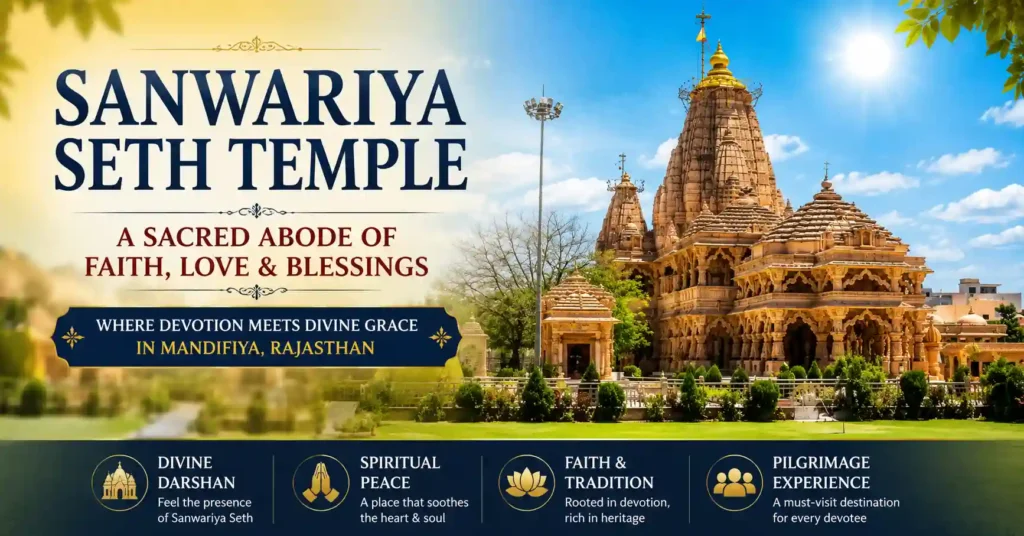
The Sanwariya Seth Temple in Mandfiya reflects a beautiful blend of spiritual simplicity and traditional Rajasthani temple architecture. Over the years, the temple complex has been expanded to welcome the growing number of pilgrims while preserving its peaceful and devotional atmosphere.
At the heart of the temple is the sacred black stone idol of Sanwariya Seth, worshipped as a compassionate form of Lord Krishna. The beautifully adorned deity sits in the main sanctum (garbhagriha), where devotees gather to offer prayers with deep faith and gratitude. The serene presence of the idol is considered the spiritual centre of the entire temple.
The temple complex is well planned, with spacious queue corridors, prayer halls, and facilities that allow thousands of devotees to have an orderly darshan, especially during weekends and major festivals. Clean surroundings, well-managed pathways, and organised arrangements help create a peaceful pilgrimage experience.
Like many North Indian temples, the shrine is crowned by a shikhara (temple spire), which traditionally symbolises the devotee’s spiritual journey towards the Divine. While pilgrims naturally focus on the darshan of Sanwariya Seth, the temple’s architecture quietly complements the atmosphere of devotion, simplicity, and reverence that defines this sacred pilgrimage.
Although the temple has modern facilities for pilgrims, its spiritual character remains rooted in devotion rather than grandeur. Every part of the complex, from the sanctum to the surrounding prayer areas, reflects the temple’s enduring message of humility, discipline, and unwavering faith in Lord Krishna.
Sanwariya Seth Temple Darshan and Aarti Timings
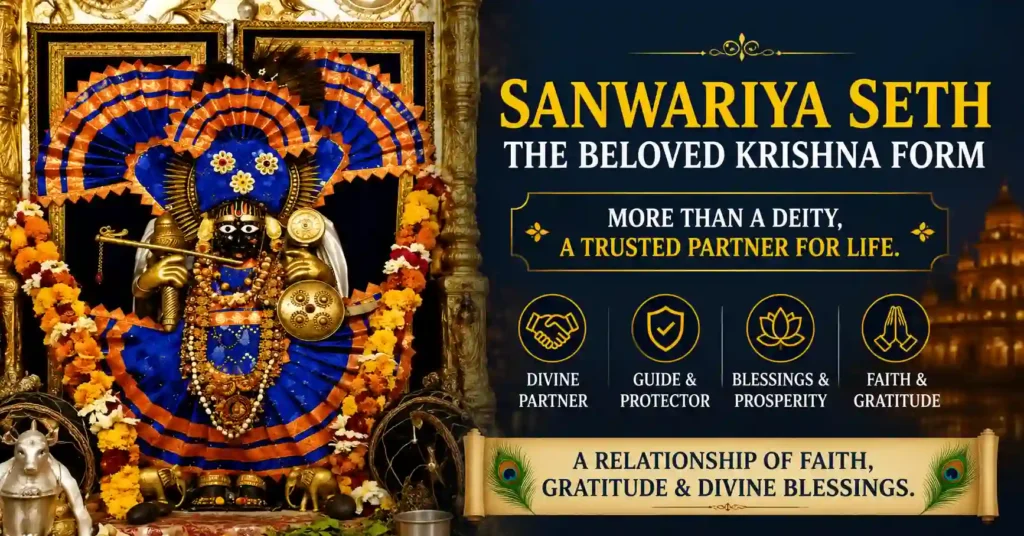
The Sanwariya Seth Temple follows a daily schedule of darshan, aarti, and seva, allowing devotees to participate in worship throughout the day.
While the exact timings may vary slightly with the season, festivals, and temple administration, the daily routine follows the traditional Vaishnava style of worship.
| Darshan / Ritual | Approximate Time* |
|---|---|
| Mangala Darshan | Early morning |
| Shringar Darshan | Morning after the deity is adorned |
| Rajbhog Darshan | Midday |
| Sandhya Aarti | Evening |
| Shayan Darshan | Night before the temple closes |
During Janmashtami, Devjhulani Ekadashi, Annakut, and other major festivals, the temple receives a large number of pilgrims. On these occasions, darshan timings may be extended, and waiting times are usually longer than on regular days.
For a peaceful Sanwariya Seth Darshan, many devotees prefer visiting early in the morning on weekdays when the crowds are relatively smaller. Those planning to visit during weekends or festivals are advised to arrive early and allow sufficient time for darshan.
Note: Temple timings may change on special occasions, festival days, or due to administrative arrangements. It is advisable to check the latest darshan and aarti schedule through the official temple authorities before planning your visit.
Major Festivals at Sanwariya Seth Temple
The Sanwariya Seth Temple comes alive during its major festivals, when thousands of devotees gather to seek blessings and participate in special celebrations. These occasions offer a unique opportunity to experience the temple’s vibrant devotional atmosphere and long-standing Vaishnava traditions.
Janmashtami, the birth anniversary of Lord Krishna, is the most important festival celebrated at the temple. The shrine is beautifully decorated with flowers and lights, while special bhajans, kirtans, shringar, and midnight celebrations mark the divine birth of Krishna. Devotees from across Rajasthan and neighbouring states arrive for Sanwariya Seth Darshan, making it one of the busiest days of the year.
Another significant occasion is Devjhulani Ekadashi, celebrated during the month of Bhadrapada. On this day, devotees participate in special prayers and darshan, expressing gratitude and seeking the blessings of Sanwariya Seth. The temple witnesses large gatherings, with pilgrims patiently waiting for their turn to offer prayers.
Other important celebrations include Annakut, observed after Deepavali, when a grand offering of food is presented to the deity as a symbol of gratitude and abundance. Throughout these festivals, the temple resonates with devotional music, collective prayers, and an atmosphere of faith that leaves a lasting impression on every visitor.
Although the crowds are much larger during festival days, devotees consider the wait itself to be a part of their spiritual journey. For many, participating in these celebrations is not only about witnessing the festivities but also about strengthening their bond with Lord Krishna through devotion, patience, and gratitude.
How to Reach Sanwariya Seth Temple
The Sanwariya Seth Temple is located in Mandfiya village in the Chittorgarh district of Rajasthan. Situated on the Udaipur–Chittorgarh National Highway (NH-27), the temple is well connected by road, rail, and air, making it easily accessible for pilgrims from across India.
Distance from Major Cities
| City | Approximate Distance | Travel Time |
|---|---|---|
| Chittorgarh | 40 km | 45-60 minutes |
| Udaipur | 80 km | 1.5-2 hours |
| Bhilwara | 60 km | 1-1.5 hours |
| Nathdwara | 115 km | 2-2.5 hours |
| Kota | 180 km | 3.5-4 hours |
| Jaipur | 340 km | 6-7 hours |
| Indore | 310 km | 6-7 hours |
| Ahmedabad | 330 km | 6-7 hours |
| Delhi | 620 km | 10-11 hours |
By Road
Sanwariya Seth Temple is easily accessible by road through NH-27. Rajasthan State Road Transport Corporation (RSRTC) buses and private buses operate regular services from Chittorgarh, Udaipur, Bhilwara, Kota, Jaipur, Indore, and nearby cities. Pilgrims travelling by private vehicle will find good road connectivity and parking facilities near the temple.
By Train
The nearest railway station is Chittorgarh Junction (COR), located about 35-40 km from the temple. It is well connected to major cities such as Delhi, Mumbai, Jaipur, Ahmedabad, Indore, Kota, Bhopal, Udaipur, and Bengaluru. From the railway station, taxis, auto-rickshaws, and local buses are readily available to reach Mandfiya.
By Air
The nearest airport is Maharana Pratap Airport (Dabok), Udaipur, approximately 60-65 km from Sanwariya Seth Temple. The airport has regular flights from major Indian cities, including Delhi, Mumbai, Bengaluru, Hyderabad, Jaipur, and Ahmedabad. From the airport, pilgrims can hire taxis or use private cab services to reach the temple.
Local Transport
After reaching Mandfiya, devotees can use shared jeeps, auto-rickshaws, taxis, and local buses to travel between the temple, nearby parking areas, hotels, and the other two sacred temples at Bhadsoda and Prakatya Sthal, Bagund. During weekends and major festivals, additional local transport services are usually available to accommodate the large number of pilgrims.
View Sanwariya Seth Temple on Google Maps
Planning your journey is easier with Google Maps. You can use the link below to view the exact location of Sanwariya Seth Temple, get turn-by-turn directions, check current traffic conditions, and estimate your travel time from your location.
Best Time to Visit Sanwariya Seth Temple
The Sanwariya Seth Temple welcomes devotees throughout the year. The ideal time to visit depends on whether you prefer a peaceful darshan, pleasant weather, or the vibrant atmosphere of major festivals.
| Time | What to Expect | Recommended For |
|---|---|---|
| October to March | Pleasant weather and comfortable sightseeing | ⭐ Best overall time for pilgrimage |
| Janmashtami | Grand celebrations, special decorations, and heavy crowds | Experiencing Krishna’s birth festival |
| Devjhulani Ekadashi | Special darshan, devotional programs, and large gatherings | Spiritual seekers and devotees |
| Annakut (After Diwali) | Grand food offerings and festive atmosphere | Witnessing traditional temple celebrations |
| Phalgun & Kartik Melas | Annual fairs, cultural activities, and thousands of pilgrims | Festival experience and local traditions |
| Weekday Mornings | Shorter queues and peaceful darshan | Families, senior citizens, and first-time visitors |
| April to June (Summer) | High daytime temperatures | Visit only during early morning or evening |
Whether you visit during a major festival or on a quiet weekday, the spiritual experience at Sanwariya Seth Temple is shaped by faith, devotion, and the peaceful atmosphere that has attracted pilgrims for generations.
Visitor Information and Travel Tips
Planning your visit in advance can help make your Sanwariya Seth Temple pilgrimage more comfortable and spiritually fulfilling. The following tips may be useful for first-time visitors as well as regular devotees.
| Information | Details |
|---|---|
| Dress Code | Wear modest and comfortable clothing suitable for a place of worship. Traditional Indian attire is preferred but not mandatory. |
| Footwear | Footwear must be removed before entering the temple. Designated shoe stands are available near the entrance. |
| Photography | Photography and videography may be restricted inside the sanctum. Follow the temple authorities’ instructions during your visit. |
| Mobile Phones | Keep your mobile phone on silent mode. Avoid using it inside the main worship area if restrictions are in place. |
| Prasad | Devotees can purchase prasad from authorised shops near the temple or bring offerings as per temple guidelines. |
| Parking | Parking facilities are available near the temple for cars, buses, and two-wheelers. During festivals, arrive early as parking fills quickly. |
| Accessibility | The temple complex has well-maintained pathways. Senior citizens and differently-abled visitors may find assistance available during normal darshan hours. |
| Accommodation | Dharamshalas, guest houses, and hotels are available in and around Mandfiya, Chittorgarh, and Udaipur to suit different budgets. |
| Food & Drinking Water | Vegetarian restaurants, snack shops, and drinking water facilities are available near the temple premises. |
| Festival Visits | Expect larger crowds during Janmashtami, Devjhulani Ekadashi, Annakut, and annual melas. Arriving early helps reduce waiting time. |
Pilgrims visiting Sanwariya Seth Temple can choose from a range of accommodation options, including dharamshalas, budget lodges, guest houses, and hotels in Mandfiya, Chittorgarh, and nearby Udaipur.
During major festivals such as Janmashtami, Devjhulani Ekadashi, and Annakut, accommodation may fill up quickly. Booking your stay in advance is recommended if you plan to visit during these busy periods.
Following these simple guidelines allows devotees to enjoy a smooth Sanwariya Seth Darshan while respecting the traditions, discipline, and peaceful atmosphere of this sacred Krishna temple.
For the latest darshan timings, festival announcements, donation details, accommodation facilities, and other visitor information, it is advisable to visit the official website of Shri Sanwaliya Ji Mandir Mandal before planning your pilgrimage.
Official Website: https://www.srisanwaliyaji.org/
Temple Governance and Transparency
The Sanwariya Seth Temple is administered by the Shree Sanwaliya Ji Mandir Mandal, a government-appointed temple board responsible for managing the temple’s religious, administrative, and charitable activities. The board oversees daily worship, temple maintenance, pilgrim facilities, donation management, and the smooth conduct of festivals throughout the year.
One of the distinctive features of the temple is its transparent management of donations. Offerings placed in the hundi are counted under official supervision using established procedures to ensure accuracy and accountability. The temple regularly receives generous contributions in the form of cash, gold, silver, and other valuables from devotees across India.
The funds received are used for the maintenance and development of the temple, improving facilities for pilgrims, conducting daily rituals and religious celebrations, and supporting various charitable and social welfare initiatives. This transparent system has strengthened the trust of devotees, many of whom consider their offerings an act of gratitude rather than obligation.
The efficient administration of Sanwariya Seth Temple reflects the belief that devotion should be supported by honesty, accountability, and responsible service. This commitment to transparency has played an important role in making the temple one of the most respected and well-managed pilgrimage centres in Rajasthan.
Social Welfare and Charitable Activities
The Sanwariya Seth Temple is not only a centre of worship but also a place where devotion is expressed through seva (selfless service). Guided by the belief that true bhakti should benefit society, the temple supports several charitable initiatives for pilgrims, local communities, and those in need.
One of the temple’s most meaningful services is the Sanwariya Seth Diagnostic Charitable Trust, which provides free or subsidised diagnostic tests and basic healthcare support to economically weaker sections of society. This initiative reflects the temple’s commitment to serving humanity alongside spiritual growth.
The temple also organises bhandaras (community meals), where free food is served to pilgrims, visitors, and the needy. During major festivals and special religious occasions, thousands of devotees receive prasadam and freshly prepared meals as part of this long-standing tradition of hospitality and service.
In addition, the temple supports gau seva and other humanitarian activities, including feeding cows, birds, and other animals through community initiatives. These efforts reflect the Sanatan belief that compassion should extend to all living beings.
Through these social welfare programmes, Sanwariya Seth Temple demonstrates that devotion is not limited to rituals and prayers. It inspires devotees to practise kindness, generosity, and selfless service, making seva an integral part of the temple’s living tradition.
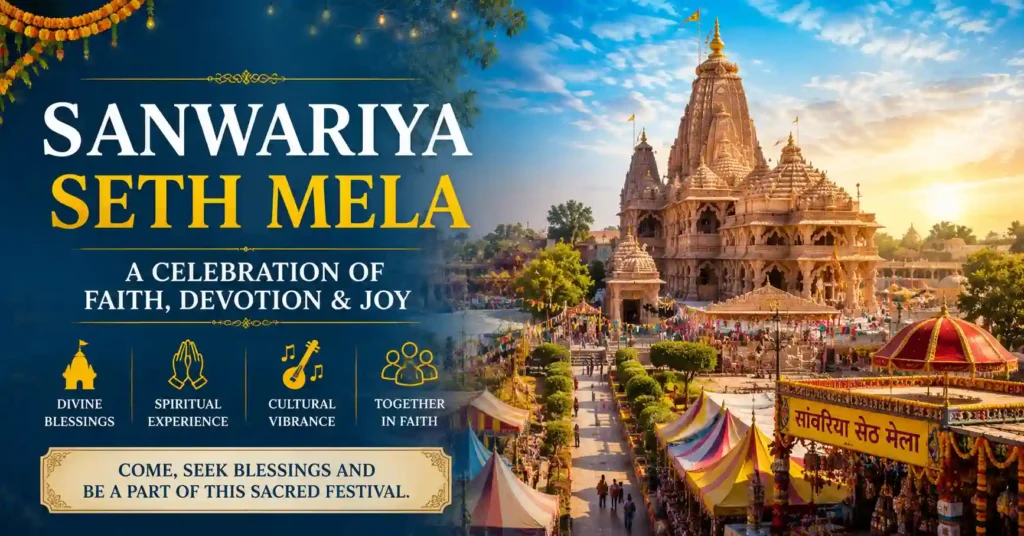
Folk Beliefs and Living Traditions
The Sanwariya Seth Temple is deeply rooted in Vaishnava tradition, where Lord Krishna is worshipped with devotion, simplicity, and gratitude. Alongside the temple’s established religious practices, several local beliefs and living traditions have evolved over generations through the experiences of devotees.
One of the most well-known traditions is the belief that Sanwariya Seth listens to sincere prayers and silently guides those who approach him with faith. Many devotees make a mannat (vow), offer a share of their first earnings or business profits after their wishes are fulfilled, and return to the temple to express their gratitude. These practices arise from personal devotion and local tradition rather than any scriptural requirement.
Another unique aspect of the temple is the deeply personal relationship that devotees share with Sanwariya Seth. Some write letters, place business cards, or silently offer their prayers before the deity as a symbolic expression of faith. While these are individual devotional practices and not official temple rituals, they reflect the trust and affection with which devotees approach Lord Krishna.
The temple does not promote occult practices, fear-based worship, or superstition. Instead, it encourages devotees to cultivate faith through honest living, gratitude, selfless service, and devotion. This harmonious blend of traditional Vaishnava worship and heartfelt local customs continues to make Sanwariya Seth Temple one of the most cherished Krishna pilgrimage destinations in Rajasthan.
Why Visit Sanwariya Seth Temple?
The Sanwariya Seth Temple offers much more than a traditional temple visit. What truly sets this sacred place apart is the unique relationship devotees share with Lord Krishna.
Rather than worshipping him only as a deity, many lovingly regard him as a trusted companion, guide, and even a divine business partner. This living tradition of gratitude, honest livelihood, and personal faith makes the temple unlike most other Krishna pilgrimage centres in India.
Devotees come here not only to seek blessings but also to strengthen their personal bond with Sanwariya Seth through faith, gratitude, and righteous living. This belief has made the temple especially revered among traders, entrepreneurs, farmers, and families across Rajasthan and many other parts of India.
A visit to the temple also provides an opportunity to experience its peaceful atmosphere, participate in Sanwariya Seth Darshan, witness traditional Vaishnava worship, and explore the sacred sites of Bhadsoda and Prakatya Sthal, Bagund, where the other two revered idols are worshipped.
Whether you seek spiritual peace, wish to fulfil a mannat, learn about the temple’s fascinating history, or simply experience one of Rajasthan’s most revered Krishna pilgrimage sites, Sanwariya Seth Temple offers a journey that leaves devotees with a lasting sense of faith, gratitude, and inner peace.
Conclusion
The Sanwariya Seth Temple is more than a place of worship. It is a living symbol of faith, gratitude, and the enduring bond between devotees and Lord Krishna. From its fascinating history and sacred traditions to its unique belief in the Divine Business Partner, the temple offers a spiritual experience unlike any other.
For countless devotees, Sanwariya Seth is not a distant deity worshipped only through rituals. He is a trusted companion who shares their hopes, guides their decisions, and inspires them to live with honesty, humility, and gratitude. This deep personal relationship has made Sanwariya Seth Temple one of the most revered Krishna pilgrimage destinations in Rajasthan.
Whether you visit for Sanwariya Seth Darshan, to fulfil a mannat, seek blessings for your family, or simply experience the peaceful atmosphere of this sacred temple, every pilgrimage becomes a reminder that true devotion is not measured by offerings alone but by faith, righteous action, and a grateful heart.
May the blessings of Sanwariya Seth fill your life with wisdom, prosperity, and inner peace.
Suggested Reading
If you felt connected while reading this, you may enjoy exploring more such content on thesanatantales.com. We regularly share simple and meaningful articles on Hindu deities, rituals and traditions, aarti and mantras, wisdom and philosophy, and everyday spiritual living.
You can also stay connected with us on Instagram and Facebook at @thesanatanroots, and on YouTube at @SanatanTalesIndia. Follow along to receive updates whenever we publish something new.
Khatu Shyam Baba Darshan Guide 2026: Tithi, Timings, Falgun Mela & Travel Guide
https://thesanatantales.com/khatu-shyam-baba-darshan-guide-2026/
Khandoba God: Story, Jejuri Temple, Jatra, Mela Dates and Spiritual Significance
https://thesanatantales.com/khandoba-god-jejuri-temple-story/
Goludevta: TheFolk God of Justice in Uttarakhand
https://thesanatantales.com/goludevta-folk-god-of-justice/
Khodiyar Maa: Story, History, Temples, Miracles and the Beoved Kuldevi of Gujrat
https://thesanatantales.com/khodiyar-maa/
Tulja Bhavani: The Mother who Blessed Shivaji Maharaj
https://thesanatantales.com/tulja-bhavani-shivaji-maharaj-story/
Sawariya Seth Temple (Wikipedia)
https://en.wikipedia.org/wiki/Sawariya_Seth_Temple
FAQs
What is the story behind Sanwariya Seth Temple?
According to temple tradition, three black stone idols of Lord Krishna were discovered near Bagund village in 1840 after a divine dream experienced by a cowherd named Bholaram Gurjar.
One idol was enshrined at Mandfiya, where the present-day Sanwariya Seth Temple stands, while the other two were installed at Bhadsoda and Prakatya Sthal, Bagund.
Although these events are preserved through temple tradition and local belief, some historical details remain part of oral tradition rather than documented history.
Why is Sanwariya Seth Temple famous?
Sanwariya Seth Temple is famous for its unique tradition of worshipping Lord Krishna as a trusted companion and divine business partner. Thousands of devotees, especially traders, entrepreneurs, farmers, and business families, visit the temple to seek blessings, fulfil mannats, and offer a portion of their earnings as an expression of gratitude after their wishes are fulfilled.
The temple is also renowned for its peaceful atmosphere, charitable activities, and deep Vaishnava devotional tradition.
Who is Sanwariya Seth?
Sanwariya Seth is worshipped as a revered form of Lord Krishna in the Vaishnava tradition. The name “Sanwariya” refers to Krishna’s dark and beautiful complexion, while “Seth” is an affectionate title given by devotees who believe he blesses honest work, righteous living, and prosperity. Although the title “Sanwariya Seth” belongs to temple tradition, devotees recognise him as Lord Krishna.
Why do devotees call Lord Krishna "Sanwariya Seth"?
Devotees lovingly call Lord Krishna “Sanwariya Seth” because they believe he guides their lives and livelihoods with compassion and wisdom. Many regard him as a silent partner in their business or profession and voluntarily offer a share of their earnings after their prayers are answered. This practice is a living temple tradition based on gratitude and faith rather than a scriptural requirement.
Can anyone visit Sanwariya Seth Temple?
Yes. Sanwariya Seth Temple is open to devotees and visitors from all backgrounds who wish to visit respectfully. Pilgrims are encouraged to wear modest clothing, maintain the peaceful atmosphere of the temple, and follow the instructions issued by the temple administration during darshan and festivals.
What can devotees offer at Sanwariya Seth Temple?
Devotees commonly offer flowers, sweets, prasad, and voluntary donations according to their faith. Many business owners also offer a symbolic share of their earnings as an expression of gratitude after their wishes are fulfilled. The temple encourages offerings made with sincerity and devotion rather than obligation.
What are the major festivals celebrated at Sanwariya Seth Temple?
The temple celebrates several important festivals throughout the year, including Janmashtami, Devjhulani Ekadashi, Annakut, Phalgun Mela, and Kartik Mela. During these occasions, the temple is beautifully decorated, special aartis and devotional programmes are organised, and thousands of pilgrims gather for darshan.
hen is the best time to visit Sanwariya Seth Temple?
The months from October to March are generally considered the most comfortable for visiting because of the pleasant weather. Devotees who wish to experience the temple’s festive atmosphere often visit during Janmashtami or Annakut, while weekday mornings are usually preferred by those seeking a quieter darshan.
Are the three Sanwariya Seth temples connected?
Yes. According to temple tradition, the three black stone idols discovered together in 1840 were installed at Mandfiya, Bhadsoda, and Prakatya Sthal, Bagund. Many pilgrims choose to visit all three temples as part of their pilgrimage, although doing so is a matter of personal devotion rather than a religious obligation.
Is there an official website for Sanwariya Seth Temple?
es. The temple is administered by the Shri Sanwaliya Ji Mandir Mandal, which provides official information about darshan timings, festivals, donations, pilgrim facilities, and other visitor services.
Official Website: https://www.srisanwaliyaji.org/
Glossary of Important Terms
| Term | Meaning |
|---|---|
| Sanwariya Seth | A revered form of Lord Krishna worshipped at Mandfiya, Rajasthan. Devotees lovingly regard him as a compassionate protector and, in local tradition, a divine business partner. |
| Darshan | The sacred act of seeing and being seen by a deity in a temple. Devotees believe darshan brings spiritual blessings and inner peace. |
| Mannat | A heartfelt vow or prayer made to a deity with the faith that it will be fulfilled. Devotees often return to offer thanks after their wish is granted. |
| Prasad | Food or other offerings first presented to the deity and then distributed among devotees as a sacred blessing. |
| Hundi | A secure donation box placed in temples where devotees voluntarily offer money or valuables as an expression of gratitude and devotion. |
| Vaishnava Tradition | A major tradition within Sanatan Dharma that worships Lord Vishnu and his incarnations, especially Lord Krishna and Lord Rama, as the Supreme Being. |
| Garbhagriha | The innermost sanctum of a Hindu temple where the main deity is installed and worshipped. |
| Shikhara | The tall tower or spire above the sanctum of a North Indian Hindu temple, symbolising the soul’s journey towards the Divine. |
| Aarti | A devotional ritual in which lamps are offered before the deity while prayers and hymns are sung. |
| Rajbhog | The midday offering of food to the deity, followed by a special darshan for devotees. |
| Mangala Darshan | The first darshan of the day, held in the early morning after the deity is ceremonially awakened. |
| Shayan Darshan | The final darshan of the day before the deity is ceremonially put to rest for the night. |
| Seva | Selfless service offered to God, the temple, devotees, or society without expecting anything in return. |
| Bhajan and Kirtan | Devotional songs and congregational chanting in praise of God, commonly performed during temple festivals and religious gatherings. |
| Annakut | A festival in which a large variety of food is offered to Lord Krishna as a symbol of gratitude, abundance, and devotion, celebrated after Deepavali. |
| Devjhulani Ekadashi | An important Vaishnava festival observed on the Ekadashi of the bright fortnight of Bhadrapada, marking the ceremonial procession of Lord Vishnu or Krishna. |
| Prakatya Sthal | The sacred place traditionally believed to be where the three black stone idols of Sanwariya Seth were discovered. |
| Bhadsoda | One of the three sacred temples associated with the Sanwariya Seth tradition, where one of the discovered Krishna idols is worshipped. |
| Mandfiya | A village in Rajasthan’s Chittorgarh district that is home to the main Sanwariya Seth Temple and one of the most important Krishna pilgrimage destinations in the region. |
About the Author
Yateendra Chaturvedi is a spiritual writer, researcher, devotee, and the founder of The Sanatan Tales. With over 35 years of professional experience and a lifelong interest in Sanatan Dharma, he writes about Hindu deities, temples, scriptures, festivals, Mahavidyas, sacred stories, rituals, and living traditions that continue to guide and inspire devotees across India.
Drawing from traditional scriptures, regional beliefs, temple traditions, devotional literature, and historical sources, he aims to present authentic, well-researched, and easy-to-understand content for modern readers. His work focuses on preserving spiritual wisdom, explaining sacred traditions, and helping seekers develop a deeper understanding of India’s rich spiritual heritage.
Through The Sanatan Tales, Yateendra strives to make the timeless teachings of Sanatan Dharma simple, meaningful, and relevant for today’s generation while maintaining respect for traditional sources, regional practices, and diverse spiritual perspectives.
Learn More About Yateendra Chaturvedi →
https://thesanatantales.com/about-the-author/
References and Sources
This article is based on traditional Vaishnava understanding of Lord Krishna, temple traditions associated with Sanwariya Seth Temple, historical information available in the public domain, and devotional practices followed by pilgrims over generations.
The content has been prepared using a combination of official temple information, Rajasthan tourism resources, historical references, Krishna devotional literature, and traditional beliefs preserved by the local community.
Where historical records, temple traditions, and local beliefs differ, every effort has been made to distinguish them clearly. As with many ancient temples in India, certain stories and devotional practices continue through oral tradition and may not always be supported by historical or archaeological evidence.
Readers planning a pilgrimage are encouraged to verify the latest darshan timings, festival schedules, and visitor information with the official temple authorities before their visit.
Explore More Fascinating Topics from Sanatan Dharma