
Twice every year, millions of devotees across India observe Navratri with prayer, devotion, and fasting. These nine sacred days are dedicated to Maa Durga and her divine forms, making it one of the most spiritually significant festivals in Sanatan Dharma. Along with daily worship, many devotees follow specific Navratri Fasting Rules to purify the body, calm the mind, and deepen their connection with the Divine Mother.
While fasting during Navratri is a cherished tradition, many people often have questions about what foods are permitted, what should be avoided, and how to observe the fast correctly. The Navratri Fasting Rules can vary slightly across regions and family traditions, but the core principles remain the same: simplicity, self-discipline, purity, and devotion.
For some devotees, the fast involves consuming only fruits and milk, while others follow a more flexible vrat diet that includes foods such as sabudana, makhana, singhara atta, kuttu atta, and dry fruits. Understanding these Navratri Fasting Rules helps ensure that the fast remains both spiritually meaningful and physically sustainable.
In this guide, you will learn what to eat during Navratri fast, foods allowed in Navratri fast, what not to eat during Navratri fast, the significance of Sendha Namak, common fasting mistakes, health tips, and the spiritual benefits of observing Navratri vrat with faith and devotion.
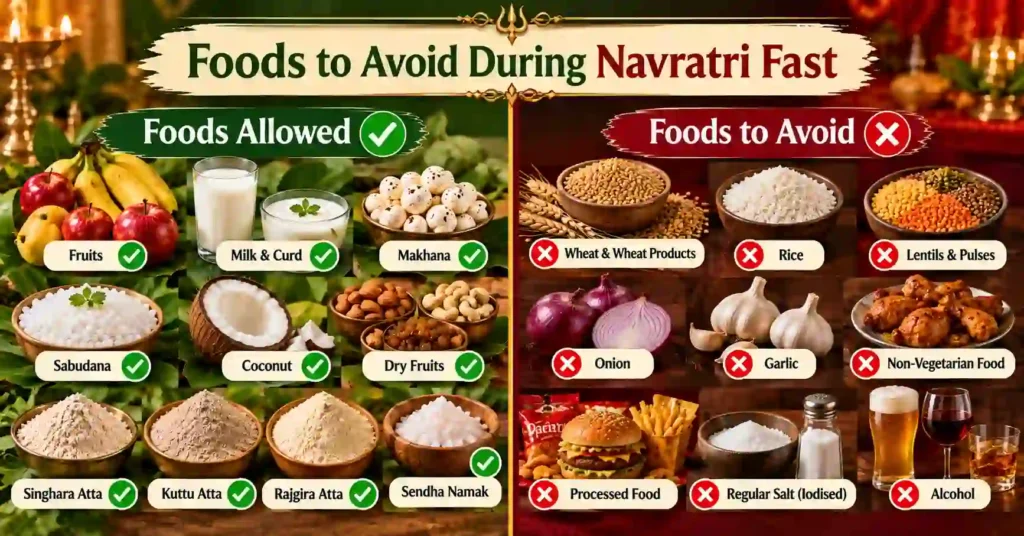
Navratri Fasting Rules at a Glance
| Allowed During Fast | Avoid During Fast |
|---|---|
| Fresh Fruits | Wheat and Wheat Flour |
| Milk and Dairy Products | Regular Rice |
| Sabudana | Lentils and Pulses |
| Makhana | Onion and Garlic |
| Kuttu Atta | Non-Vegetarian Food |
| Singhara Atta | Alcohol |
| Rajgira Atta | Processed Foods |
| Dry Fruits | Packaged Junk Food |
| Coconut and Coconut Water | Regular Salt (Table Salt) |
| Sendha Namak | Excessively Spicy Foods |
Quick Summary
- Navratri fasting is observed to honor Maa Durga through devotion and self-discipline.
- Fruits, milk, curd, makhana, sabudana, dry fruits, and vrat flours are commonly consumed.
- Wheat, rice, pulses, onion, garlic, alcohol, and non-vegetarian foods are generally avoided.
- Sendha Namak is traditionally used instead of regular table salt.
- The purpose of the fast is not only dietary restriction but also spiritual purification.
- Daily prayer, mantra chanting, and positive thoughts are considered important parts of Navratri vrat.

Table of Contents
ToggleWhat Is the Purpose of Fasting During Navratri?
The purpose of observing Navratri Fasting Rules goes far beyond simply avoiding certain foods. In Sanatan Dharma, fasting is considered a sacred practice that helps devotees purify their body, mind, and senses while focusing on the worship of Maa Durga. During the nine days of Navratri, devotees try to reduce worldly distractions and dedicate more time to prayer, meditation, and spiritual reflection.
Ancient Hindu traditions teach that food influences both physical health and mental state. By following Navratri Fasting Rules and consuming simple sattvic foods, devotees aim to cultivate calmness, self-control, and positive thoughts. Foods that are heavy, tamasic, or stimulating are generally avoided because they are believed to distract the mind from spiritual pursuits.
Navratri also symbolizes the victory of divine energy over negativity. Fasting during this period becomes a form of self-discipline, helping devotees overcome cravings, develop patience, and strengthen their devotion. For many people, the vrat is not merely about restricting food but about practicing restraint in speech, behavior, and thoughts.
At a deeper level, fasting reminds devotees that spiritual nourishment is as important as physical nourishment. Through prayer, chanting, reading sacred texts, and following Navratri Fasting Rules, devotees seek the blessings of Maa Durga for inner strength, wisdom, protection, and spiritual growth.
Navratri Fasting Rules Every Devotee Should Know
Following Navratri Fasting Rules is not only about choosing the right foods. The vrat is traditionally viewed as a complete spiritual discipline that combines devotion, purity, self-control, and worship of Maa Durga. While customs may vary from one family or region to another, certain principles are widely followed during Navratri.
Common Navratri Fasting Rules
- Start the day with a bath and offer prayers to Maa Durga.
- Take a sankalpa (sacred vow) to observe the vrat with devotion.
- Perform daily puja, Durga Aarti, or mantra chanting.
- Read sacred texts such as the Durga Saptashati if possible.
- Consume only foods permitted during the fast.
- Use Sendha Namak instead of regular table salt.
- Maintain purity in thoughts, words, and actions.
- Avoid anger, arguments, and negative speech.
- Stay away from alcohol, tobacco, and intoxicants.
- Practice moderation and avoid overeating vrat foods.
- Spend time in prayer, meditation, and self-reflection.
- Perform acts of charity and kindness whenever possible.
One of the most important Navratri Fasting Rules is maintaining inner purity along with dietary discipline. Devotees are encouraged to cultivate patience, gratitude, compassion, and devotion throughout the nine days.
Food consumed during Navratri should generally be simple, fresh, and sattvic. Excessive consumption of fried snacks, sweets, and rich fasting foods can reduce the spiritual benefits of the vrat. The aim is to nourish the body while keeping the mind focused on devotion.
Many devotees also adopt additional spiritual practices during Navratri, such as increased prayer, meditation, or seva (selfless service). These practices complement the Navratri Fasting Rules and help strengthen one’s connection with the Divine Mother.
What to Eat During Navratri Fast
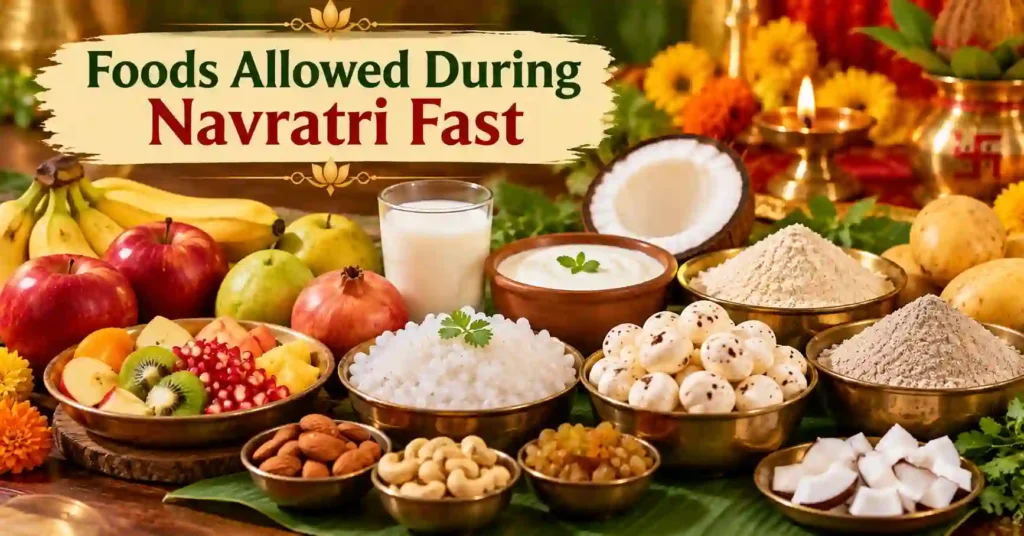
One of the most common questions devotees ask is what to eat during Navratri fast. While fasting traditions may differ across India, most Navratri Fasting Rules allow foods that are simple, natural, and sattvic. These foods help provide energy throughout the day while supporting spiritual discipline and devotion.
Fresh fruits are among the most widely consumed foods during Navratri. Bananas, apples, papayas, pomegranates, pears, and seasonal fruits are often included in vrat meals. Many devotees also drink fresh fruit juices, coconut water, and lemon water to stay hydrated during the fast.
Milk and dairy products form an important part of the Navratri diet. Milk, curd, buttermilk, paneer, and lassi are commonly consumed because they provide protein and essential nutrients. Dry fruits such as almonds, walnuts, raisins, dates, and cashews are also popular choices for maintaining energy levels.
Several special ingredients are traditionally used during Navratri fasting. These include:
- Sabudana (tapioca pearls)
- Makhana (fox nuts)
- Singhara atta (water chestnut flour)
- Kuttu atta (buckwheat flour)
- Rajgira atta (amaranth flour)
- Sama rice (barnyard millet)
- Sendha Namak (rock salt)
- Fresh coconut and coconut water
These ingredients are used to prepare a variety of vrat-friendly dishes such as sabudana khichdi, kuttu puri, singhara paratha, rajgira roti, makhana kheer, and sama rice pulao.
The focus of Navratri Fasting Rules is not merely on avoiding certain foods but on choosing pure and nourishing alternatives. A balanced combination of fruits, dairy products, dry fruits, and vrat foods can help devotees remain energetic while observing the fast with devotion and mindfulness.
Navratri Vrat Food List
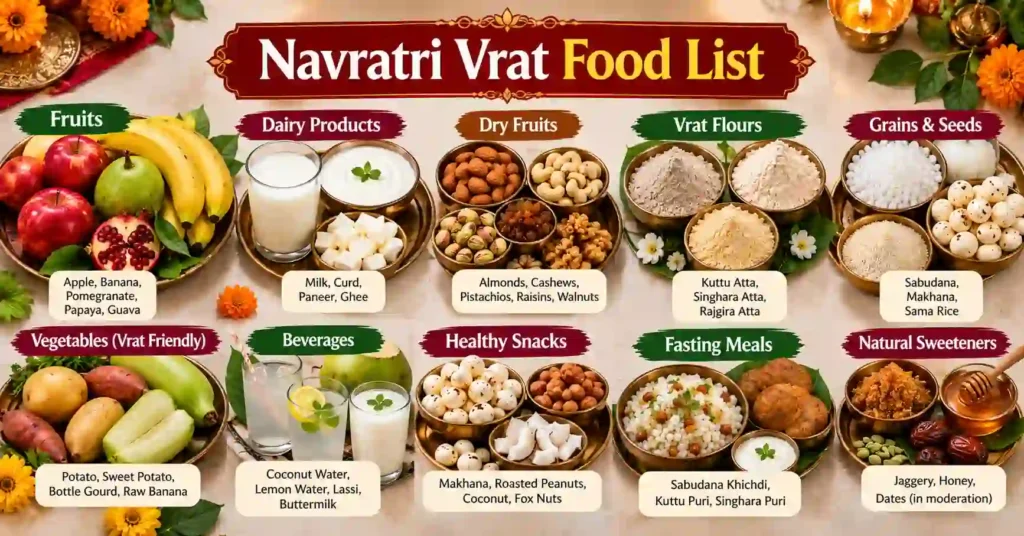
Knowing the right Navratri Vrat Food List can make fasting easier and more organized. The foods permitted during Navratri are generally natural, minimally processed, and considered suitable for a sattvic lifestyle. Following this list helps devotees observe Navratri Fasting Rules without confusion while ensuring proper nutrition throughout the nine days.
Fruits
- Apple
- Banana
- Papaya
- Pomegranate
- Pear
- Orange
- Grapes
- Guava
Fresh fruits are rich in vitamins, minerals, and natural sugars that help maintain energy during the fast.
Dairy Products
- Milk
- Curd (Yogurt)
- Buttermilk
- Paneer
- Lassi
Dairy products are widely consumed during Navratri because they provide protein and help keep you full for longer periods.
Dry Fruits and Nuts
- Almonds
- Cashews
- Walnuts
- Raisins
- Dates
- Pistachios
These nutrient-rich foods are excellent snacks and provide healthy fats, protein, and sustained energy.
Vrat Flours
- Kuttu Atta (Buckwheat Flour)
- Singhara Atta (Water Chestnut Flour)
- Rajgira Atta (Amaranth Flour)
These special flours are commonly used to prepare rotis, parathas, puris, and other fasting dishes.
Grains and Seeds Allowed During Fast
- Sabudana (Tapioca Pearls)
- Sama Rice (Barnyard Millet)
- Makhana (Fox Nuts)
These ingredients are staples in many traditional Navratri recipes and are considered among the most popular foods allowed in Navratri fast.
Vegetables Commonly Used in Vrat
- Potato
- Sweet Potato
- Raw Banana
- Pumpkin
- Arbi (Colocasia)
Many devotees include these vegetables in simple, sattvic preparations using Sendha Namak.
Beverages
- Coconut Water
- Lemon Water
- Milk-Based Drinks
- Fresh Fruit Juices
Staying hydrated is important while following Navratri Fasting Rules, especially if you are observing a full-day fast.
A well-balanced vrat diet should include a mix of fruits, dairy products, dry fruits, and fasting-friendly ingredients. This approach helps maintain energy, supports overall health, and allows devotees to focus on prayer and devotion during the sacred days of Navratri.
Foods Allowed in Navratri Fast
Although fasting traditions differ from one region to another, certain foods are widely accepted across India during Navratri. These foods align with traditional Navratri Fasting Rules because they are considered pure, sattvic, and easy to digest. They provide nourishment while helping devotees maintain their focus on worship and spiritual practices.
Fruits and Fresh Produce
Fresh fruits are the foundation of many Navratri fasts. They are naturally energizing and require minimal preparation. Bananas, apples, pomegranates, papayas, oranges, and seasonal fruits are commonly consumed throughout the nine days.
In addition to fruits, vegetables such as potatoes, sweet potatoes, pumpkin, raw banana, and arbi are often included in vrat meals. These ingredients can be prepared in simple ways using Sendha Namak and mild spices.
Dairy Products
Milk and dairy products play an important role in the fasting diet. Many devotees consume milk, curd, paneer, buttermilk, and lassi to meet their nutritional needs during the fast.
These foods are rich in protein and calcium, making them a valuable addition to daily vrat meals. They also help keep hunger under control for longer periods.
Vrat Grains and Flours
Several special grains and flours are permitted under traditional Navratri Fasting Rules. These include:
- Kuttu Atta (Buckwheat Flour)
- Singhara Atta (Water Chestnut Flour)
- Rajgira Atta (Amaranth Flour)
- Sama Rice (Barnyard Millet)
- Sabudana (Tapioca Pearls)
- Makhana (Fox Nuts)
These ingredients are used to prepare a variety of fasting dishes such as rotis, puris, khichdi, kheer, and snacks.
Nuts, Seeds, and Natural Sweeteners
Dry fruits and nuts are among the most nutritious foods allowed in Navratri fast. Almonds, walnuts, cashews, raisins, dates, and pistachios provide healthy fats, protein, and essential nutrients.
Natural sweeteners such as honey, jaggery, and dates are also used in some fasting recipes. Many devotees prefer these options over refined sugar when preparing vrat-friendly dishes.
The main principle behind Navratri Fasting Rules is choosing foods that are simple, nourishing, and spiritually uplifting. By focusing on fresh and natural ingredients, devotees can observe the fast comfortably while maintaining both physical well-being and devotional focus.
What Not to Eat During Navratri Fast
Just as important as knowing what to eat is understanding what not to eat during Navratri fast. Traditional Navratri Fasting Rules restrict certain foods that are considered heavy, tamasic, or unsuitable for a period dedicated to spiritual discipline and devotion. Avoiding these foods helps devotees maintain purity of body and mind during the nine sacred days.
Grains, Pulses, and Regular Flour
Most devotees avoid common grains and pulses during Navratri. Foods generally excluded from the fasting diet include:
- Wheat and wheat flour
- Regular rice
- Lentils
- Pulses and beans
- Maida (refined flour)
- Semolina (suji)
Instead, devotees use vrat-friendly alternatives such as kuttu atta, singhara atta, rajgira atta, and sama rice.
Onion and Garlic
Onion and garlic are traditionally avoided during Navratri because they are considered rajasic and tamasic in nature. According to Hindu dietary principles, these foods may stimulate the senses and distract the mind from prayer, meditation, and spiritual practices.
For this reason, most vrat recipes are prepared without onion and garlic while still remaining flavorful through the use of herbs and fasting-approved spices.
Non-Vegetarian Food and Alcohol
One of the most widely followed Navratri Fasting Rules is abstaining from non-vegetarian food. Meat, fish, eggs, and other animal-based foods are generally avoided throughout the festival.
Alcohol and intoxicating substances are also prohibited during Navratri. The focus of the festival is on self-control, purity, and devotion, making these substances inconsistent with the spirit of the vrat.
Processed and Packaged Foods
Many devotees also limit or avoid highly processed foods during Navratri, including:
- Packaged snacks
- Fast food
- Artificially flavored beverages
- Excessively spicy foods
- Foods containing preservatives
Even when a packaged product appears vegetarian, it may contain ingredients that do not align with traditional fasting practices.
Regular Salt
Another important aspect of Navratri Fasting Rules is avoiding regular table salt. Instead, devotees traditionally use Sendha Namak (rock salt), which is considered suitable for vrat preparations and has been used in fasting traditions for generations.
The purpose of these restrictions is not merely dietary. By avoiding certain foods and adopting a simpler diet, devotees practice self-discipline, reduce distractions, and create an environment that supports prayer, devotion, and spiritual growth during Navratri.
Why Sendha Namak Is Used During Navratri
If you have ever observed a Navratri vrat, you may have noticed that most fasting recipes use Sendha Namak instead of regular table salt. This practice has been followed for generations and remains an important part of traditional Navratri Fasting Rules across many Hindu households.
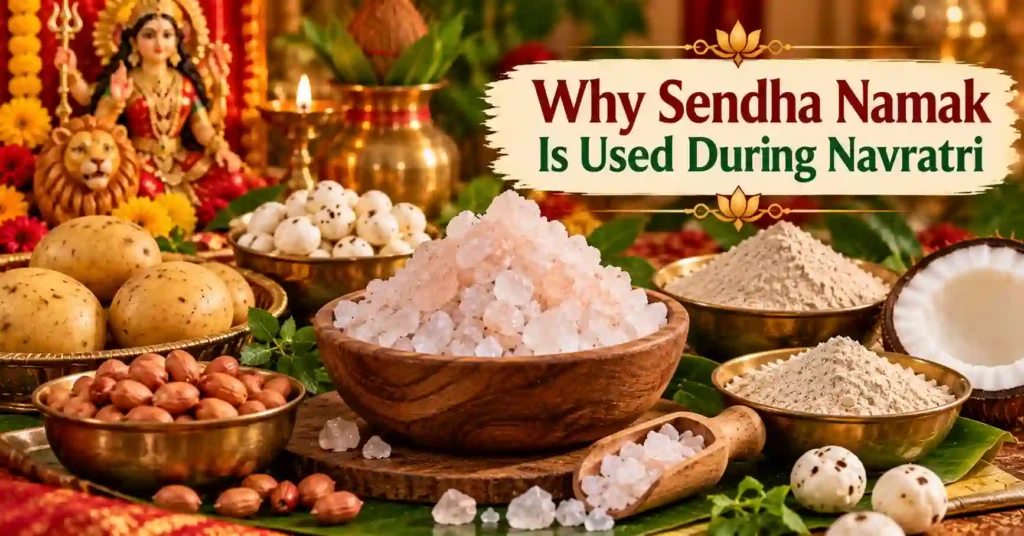
Sendha Namak, also known as rock salt, is a naturally occurring mineral salt obtained from ancient salt deposits. Unlike regular table salt, it is typically less processed and does not contain the additives often found in commercially refined salt. Because of its natural origin, it has long been preferred for religious fasts and vrat preparations.
From a traditional Hindu perspective, Sendha Namak is considered more suitable for fasting because it aligns with the principle of consuming simple and pure foods. Since Navratri Fasting Rules emphasize sattvic eating, devotees choose ingredients that are believed to support physical balance and spiritual focus. Rock salt fits well within this philosophy and is therefore widely used during Navratri, Ekadashi, and other Hindu fasts.
There is also a practical reason for its popularity. Sendha Namak has a mild taste and blends well with common vrat foods such as potatoes, sabudana, makhana, kuttu atta, and singhara atta. Whether preparing sabudana khichdi, vrat parathas, or fruit chaat, rock salt is often the preferred seasoning.
Today, many devotees continue this tradition not only out of religious faith but also as a way of honoring ancestral customs. While the spiritual significance remains the primary reason, the use of Sendha Namak has become one of the most recognized and widely followed Navratri Fasting Rules in Hindu fasting practices.
Can You Drink Tea and Coffee During Navratri Fast?
One of the most frequently asked questions about Navratri Fasting Rules is whether tea and coffee are allowed during the fast. The answer depends largely on family traditions, regional customs, and the type of vrat being observed.
In many households, tea is commonly consumed during Navratri, especially milk tea prepared without regular biscuits or snacks that are not permitted during the fast. Some devotees also drink herbal teas, lemon tea, or warm milk as part of their daily fasting routine. These beverages can help maintain energy levels, particularly for those who are working or managing household responsibilities while fasting.
Coffee is a bit more debated. Some devotees consider it acceptable in moderation, while others avoid it because of its stimulating nature. Since Navratri Fasting Rules encourage simplicity, self-discipline, and sattvic living, many people prefer to limit beverages that contain high amounts of caffeine during the nine days.
Those observing a strict fast often choose alternatives such as:
Coconut water
Lemon water
Buttermilk
Milk
Fruit juices
Herbal drinks
These beverages help keep the body hydrated and provide essential nutrients without relying heavily on caffeine.
Ultimately, there is no single rule followed by every devotee. If your family has a traditional practice regarding tea or coffee during Navratri, it is generally best to follow that custom. The true spirit of Navratri Fasting Rules lies in devotion, moderation, and maintaining a sincere focus on Maa Durga throughout the festival.
Common Navratri Fasting Mistakes to Avoid
Following Navratri Fasting Rules correctly can make your vrat both spiritually rewarding and physically comfortable. However, many devotees unknowingly make mistakes that can lead to fatigue, dehydration, digestive issues, or a loss of focus on the true purpose of the fast. Being aware of these common pitfalls can help you observe Navratri in a healthier and more meaningful way.
1. Overeating Fried Vrat Foods
Many fasting snacks such as sabudana vada, kuttu puri, and potato chips are delicious, but consuming them in large quantities can make the body feel heavy and sluggish. Fasting should encourage moderation, not overeating.
Try to balance fried foods with fruits, dairy products, makhana, and other light vrat-friendly options.
2. Drinking Too Little Water
Dehydration is one of the most common problems during Navratri fasting. Some devotees become so focused on food restrictions that they forget the importance of staying hydrated.
Drink plenty of water, coconut water, lemon water, or other permitted beverages throughout the day, unless you are observing a strict nirjala fast.
3. Depending Only on Potatoes
Potatoes are a staple ingredient in many vrat meals, but relying solely on them can make your diet less nutritious. A balanced fasting diet should include fruits, dairy products, dry fruits, makhana, and vrat grains.
One of the key Navratri Fasting Rules is maintaining both devotion and physical well-being during the nine days.
4. Skipping Fruits and Protein-Rich Foods
Some devotees consume very little besides tea and a few snacks, which may lead to weakness and low energy levels. Including fruits, milk, curd, paneer, nuts, and seeds can help provide essential nutrients.
A well-planned vrat diet supports the body while allowing the mind to remain focused on prayer and worship.
5. Ignoring Rest and Sleep
Navratri often involves early morning prayers, temple visits, and late evening aartis. While devotion is important, insufficient sleep can leave you exhausted and affect your overall health.
Adequate rest helps maintain energy and allows you to participate fully in the festival.
6. Focusing Only on Food Restrictions
One of the biggest misunderstandings about Navratri Fasting Rules is treating the fast as merely a dietary practice. The vrat is also about self-discipline, positive thinking, prayer, and spiritual growth.
Avoid anger, negativity, gossip, and harmful habits. These inner disciplines are just as important as food-related restrictions.
7. Ignoring Medical Conditions
People with diabetes, low blood pressure, pregnancy-related needs, or other health concerns should be cautious when fasting. Modifying the fast according to medical advice is often a wiser approach than following strict restrictions that may affect health.
Remember that devotion comes from sincerity, not from putting your well-being at risk.
By avoiding these common mistakes, devotees can follow Navratri Fasting Rules in a balanced way and experience the festival with greater energy, devotion, and peace of mind.
Health Tips for a Safe Navratri Fast
While the primary purpose of fasting is spiritual, taking care of your health is equally important. Following Navratri Fasting Rules in a balanced manner can help you stay energetic, focused, and comfortable throughout the nine days. A few simple precautions can make your vrat both spiritually fulfilling and physically sustainable.
1. Stay Hydrated Throughout the Day
Hydration plays a crucial role during fasting. Water, coconut water, lemon water, and buttermilk can help prevent dehydration and maintain energy levels.
If your fasting tradition permits fluids, try to drink regularly instead of waiting until you feel thirsty.
2. Include Nutrient-Rich Foods
A healthy vrat diet should contain more than just potatoes and fried snacks. Fruits, milk, curd, paneer, makhana, dry fruits, and vrat grains provide essential vitamins, minerals, protein, and healthy fats.
This balanced approach supports the body while helping you follow Navratri Fasting Rules comfortably.
3. Avoid Excessive Fried Foods
Many popular fasting dishes are deep-fried and high in calories. While they can be enjoyed occasionally, consuming them in large quantities may cause indigestion, bloating, and lethargy.
Whenever possible, include roasted, boiled, baked, or lightly cooked vrat foods in your meals.
4. Eat Small and Balanced Portions
Eating very large meals after long periods of fasting can strain the digestive system. Smaller portions spaced appropriately during the day are often easier to digest and help maintain steady energy levels.
Moderation is one of the key principles behind traditional fasting practices.
5. Get Adequate Rest
Navratri celebrations can be busy, especially for those participating in daily puja, temple visits, Garba, or Durga Aarti. Adequate sleep and rest allow the body to recover and remain active throughout the festival.
A well-rested body also supports better concentration during prayer and meditation.
6. Listen to Your Body
Every person’s health needs are different. If you experience dizziness, weakness, severe fatigue, or other concerning symptoms, consider adjusting your fasting routine.
The spirit of Navratri Fasting Rules is devotion and self-discipline, not physical hardship that may affect your health.
7. Consult a Doctor if Needed
People with diabetes, heart conditions, low blood pressure, pregnancy-related concerns, or other medical conditions should seek professional medical advice before making significant dietary changes.
A modified fast that accommodates health needs can still be observed with sincerity and devotion.
By following these practical health tips along with traditional Navratri Fasting Rules, devotees can observe the vrat safely while maintaining both physical well-being and spiritual focus during the sacred nine days of Navratri.
Can Everyone Observe a Navratri Fast?
Navratri fasting is a cherished spiritual practice, but it is not necessary for every devotee to follow the same type of vrat. The purpose of Navratri Fasting Rules is to encourage devotion, self-discipline, and spiritual growth, not to create health risks or physical hardship. Hindu traditions recognize that age, health, and personal circumstances can influence how a fast is observed.
Elderly Devotees
Many senior citizens continue to observe Navratri with great devotion. However, strict fasting may not always be suitable due to age-related health concerns. In such cases, a lighter vrat that includes fruits, dairy products, and fasting-friendly meals may be a more practical option.
The emphasis should remain on prayer, devotion, and worship rather than on severe dietary restrictions.
Pregnant and Breastfeeding Women
Pregnant and breastfeeding women often have increased nutritional needs. While many choose to participate in Navratri celebrations and worship, they may modify their fasting routine to ensure both their own well-being and that of the child.
Consulting a healthcare professional before following strict Navratri Fasting Rules is generally advisable during pregnancy and breastfeeding.
Children
Children are usually encouraged to learn the spiritual significance of Navratri rather than undertake strict fasting. Some families allow children to avoid certain foods or participate in simple devotional practices as a way of gradually introducing them to the festival’s traditions.
The focus should be on learning, devotion, and cultural participation rather than food restriction.
People with Medical Conditions
Individuals with diabetes, heart disease, low blood pressure, digestive disorders, or other medical conditions should be especially careful while fasting. A modified vrat, supervised by a healthcare professional if necessary, may be more appropriate than a strict fast.
Health and safety should always take priority when observing religious practices.
Devotion Matters More Than Dietary Restriction
It is important to remember that fasting is only one aspect of Navratri. Many devotees who cannot fast due to health or personal circumstances still participate fully through prayer, mantra chanting, charity, temple visits, and worship of Maa Durga.
The true essence of Navratri Fasting Rules lies in sincerity, devotion, and inner discipline. Whether you observe a full fast, a partial fast, or focus primarily on spiritual practices, what matters most is your faith and dedication to the Divine Mother.
Medical Disclaimer: This article is for informational and educational purposes only. It is not medical advice. Individuals with health conditions, pregnant women, breastfeeding mothers, and elderly devotees should consult a qualified healthcare professional before making significant dietary changes or observing a strict fast.
Spiritual Benefits of Following Navratri Fasting Rules
For devotees, fasting during Navratri is much more than a dietary practice. The deeper purpose of Navratri Fasting Rules is to cultivate self-discipline, strengthen devotion, and create a closer connection with Maa Durga. By simplifying daily habits and reducing worldly distractions, devotees can focus more fully on spiritual growth during these sacred nine days.
1. Strengthens Self-Discipline
Fasting teaches restraint and self-control. Choosing to avoid certain foods, regulate habits, and follow a disciplined routine requires determination and commitment.
This practice helps devotees develop inner strength that can also benefit other areas of life beyond the festival.
2. Encourages Deeper Devotion
When daily attention shifts from worldly pleasures to prayer and worship, the mind naturally becomes more focused on the Divine Mother. Many devotees spend additional time chanting mantras, reading sacred texts, attending aartis, and performing puja.
These devotional practices complement Navratri Fasting Rules and help create a more meaningful spiritual experience.
3. Promotes Mental Clarity
Traditional Hindu teachings often associate simple, sattvic foods with a calm and balanced mind. By consuming lighter foods and avoiding excess indulgence, devotees aim to reduce distractions and improve concentration.
This mental clarity can enhance meditation, prayer, and self-reflection during Navratri.
4. Encourages Gratitude and Humility
Fasting reminds us not to take food, comfort, and daily blessings for granted. Experiencing temporary restraint can deepen appreciation for the resources and opportunities we receive every day.
Many devotees also engage in charity and acts of kindness during Navratri as an expression of gratitude and compassion.
5. Helps Reduce Negative Tendencies
The spirit of Navratri Fasting Rules extends beyond food choices. Devotees are encouraged to avoid anger, jealousy, harsh speech, and harmful habits while cultivating patience, kindness, and positive thinking.
This inner purification is considered one of the most valuable aspects of the vrat.
6. Deepens Connection with Maa Durga
Navratri celebrates the victory of divine energy over negativity and ignorance. Through fasting, prayer, and devotion, devotees seek the blessings of Maa Durga for strength, wisdom, protection, and spiritual progress.
For many, the nine days become a period of personal transformation, renewed faith, and a deeper relationship with the Divine Mother.
Ultimately, the greatest benefit of following Navratri Fasting Rules is not what is removed from the diet, but what is added to the heart: devotion, discipline, gratitude, and spiritual awareness.
Key Takeaways
Navratri Fasting Rules are designed to promote devotion, self-discipline, purity, and spiritual growth during the nine sacred days dedicated to Maa Durga.
Fresh fruits, milk, curd, paneer, dry fruits, makhana, sabudana, sama rice, kuttu atta, singhara atta, and rajgira atta are commonly consumed during the fast.
Wheat, rice, lentils, pulses, onion, garlic, non-vegetarian food, alcohol, and processed foods are generally avoided.
Sendha Namak (rock salt) is traditionally used instead of regular table salt in vrat preparations.
Staying hydrated and maintaining a balanced diet can help make the fast healthier and more sustainable.
Tea and coffee may be permitted in some traditions, while others prefer to avoid them. Family customs often play an important role.
Elderly devotees, pregnant women, children, and people with medical conditions may choose a modified fasting routine based on their health needs.
The true purpose of Navratri Fasting Rules is not only dietary discipline but also prayer, self-control, positive thinking, and devotion to Maa Durga.
Spiritual practices such as mantra chanting, Durga Aarti, meditation, charity, and reading sacred texts are considered important parts of Navratri observance.
Fasting during Navratri ultimately aims to bring devotees closer to the Divine Mother while fostering inner peace, gratitude, and spiritual awareness.
Conclusion
Navratri is a sacred time to honor Maa Durga through devotion, prayer, and self-discipline. While different families and regions may follow slightly different traditions, the essence of Navratri Fasting Rules remains the same: purity, moderation, and spiritual focus. The fast is not merely about avoiding certain foods but about creating space for faith, gratitude, and inner growth.
Understanding what to eat during Navratri fast, foods allowed in Navratri fast, and what not to eat during Navratri fast can help devotees observe the vrat with confidence. A balanced fasting diet that includes fruits, dairy products, dry fruits, makhana, sabudana, and vrat flours can provide the nourishment needed to stay healthy throughout the nine days.
At the same time, the most important aspect of Navratri Fasting Rules is maintaining a positive mindset and a sincere connection with the Divine Mother. Prayer, mantra chanting, charity, kindness, and self-reflection are just as valuable as dietary discipline during this auspicious festival.
Whether you observe a full fast, a partial fast, or simply dedicate more time to worship, may Maa Durga bless you with strength, wisdom, good health, and spiritual growth. By following Navratri Fasting Rules with faith and devotion, you can make the nine days of Navratri a truly transformative and meaningful experience.
Suggested Reading
If you would like to learn more about Navratri Fasting Rules, Maa Durga worship, Navratri rituals, and sacred traditions, these guides from The Sanatan Tales will help deepen your understanding and enrich your spiritual journey.
Sharad Navratri 2026: Dates, Ghatasthapana Muhurat, Rituals and Significance
https://thesanatantales.com/sharad-navratri/
Ghatasthapana Guide: Meaning, Puja Vidhi, Samagri and Spiritual Significance
https://thesanatantales.com/ghatasthapana/
Maa Durga: Meaning, Story, Forms, Navadurga, Temples and Worship
https://thesanatantales.com/maa-durga-meaning-story-navadurga-worship/
Navadurga: Meaning, Nine Forms of Maa Durga, Navratri Significance and Spiritual Journey
https://thesanatantales.com/navadurga-nine-forms-of-maa-durga/
Kanya Pujan in Navratri: Meaning, Ritual and Spiritual Significance
https://thesanatantales.com/kanya-pujan/
Kalash in Hinduism: Meaning, Symbolism, Kalash Sthapana and Spiritual Significance
https://thesanatantales.com/kalash-in-hinduism/
Durga Saptashati: Meaning, Story, 13 Chapters and Navratri Significance
https://thesanatantales.com/durga-saptashati-meaning-navratri/
Durga Chalisa: Lyrics, English Pronunciation, Hindi Meaning, Benefits & Significance
https://thesanatantales.com/durga-chalisa-lyrics-meaning/
Navarna Mantra: Meaning, Benefits, Chanting Rules and How to Chant
https://thesanatantales.com/navarna-mantra/
Argala Stotra: Lyrics, Meaning, Benefits, and How to Chant
https://thesanatantales.com/argala-stotra/
Aarti of Maa Ambe: Lyrics, Meaning, Benefits and How to Perform
https://thesanatantales.com/aarti-of-maa-ambe/
Durga Mantras: Complete Guide to Powerful Mantras, Stotras, Chalisa and Aarti
https://thesanatantales.com/durga-mantras-stotras-chalisa-aarti/
Fasting During Navratri
https://www.artofliving.org/in-en/navratri/tips-for-navratri-fasting
Important Vrat Safety Disclaimer
The information provided in this article is intended for educational and informational purposes only. It should not be considered medical, nutritional, or professional healthcare advice. The dietary practices discussed in relation to Navratri Fasting Rules are based on traditional fasting customs and religious observances followed by many devotees during Navratri.
Every individual’s health condition, nutritional needs, and ability to fast may be different. Children, elderly individuals, pregnant or breastfeeding women, and people with diabetes, heart conditions, low blood pressure, digestive disorders, or other medical concerns should consult a qualified healthcare professional before making significant dietary changes or observing a strict fast.
If you experience dizziness, fainting, severe weakness, dehydration, or any other concerning symptoms while fasting, discontinue the fast and seek appropriate medical advice. The purpose of Navratri Fasting Rules is to support devotion, self-discipline, and spiritual growth, and fasting should always be practiced in a manner that is safe and appropriate for your individual circumstances.
FAQs
Can we eat rice during Navratri fast?
Regular rice is generally avoided under traditional Navratri Fasting Rules because it falls under the category of grains that are typically excluded during the vrat. Instead, many devotees consume sama rice (barnyard millet), often called vrat ke chawal, which is widely accepted as a fasting food. However, customs vary across regions and families.
If your family follows a specific tradition regarding rice consumption during Navratri, it is best to follow that practice. The spirit of the vrat is devotion and discipline rather than strict uniformity.
Is milk allowed during Navratri fasting?
Yes, milk is one of the most commonly consumed foods during Navratri fasting. Along with milk, devotees often include curd, paneer, buttermilk, lassi, and other dairy products in their vrat diet. These foods are considered sattvic and help provide protein, calcium, and energy during the nine days.
Since fasting meals may contain fewer food options than a regular diet, dairy products play an important role in maintaining strength and supporting overall well-being while observing Navratri Fasting Rules.
Can we drink tea during Navratri fast?
Tea is permitted in many households during Navratri, although practices vary from family to family. Some devotees enjoy milk tea in moderation, while others prefer to avoid tea completely as part of a stricter fasting routine. There is no single rule followed everywhere.
If tea is allowed in your family tradition, moderation is recommended. Many devotees also choose alternatives such as coconut water, lemon water, buttermilk, milk, or herbal beverages to stay hydrated throughout the fast.
Why is Sendha Namak used during Navratri?
Sendha Namak, or rock salt, is traditionally used during Navratri instead of regular table salt. It has been part of Hindu fasting customs for generations and is considered suitable for vrat foods. Most fasting recipes, including sabudana khichdi, vrat parathas, and fruit chaat, are prepared using rock salt.
The use of Sendha Namak is one of the most widely followed Navratri Fasting Rules across India. It helps distinguish fasting meals from regular daily food and remains an important part of traditional vrat practices.
Can we eat paneer during Navratri fast?
Yes, paneer is widely accepted during Navratri fasting and is one of the best protein-rich foods available in a vrat diet. Many devotees prepare simple paneer dishes using Sendha Namak and fasting-approved ingredients.
Because fasting often limits grains and pulses, paneer helps provide nourishment and keeps you feeling full for longer periods. When combined with fruits, milk, dry fruits, and other vrat foods, paneer can contribute to a balanced and nutritious fasting meal plan.
What fruits are allowed during Navratri fasting?
Most fresh fruits are permitted during Navratri fasting. Popular choices include bananas, apples, papayas, pomegranates, oranges, pears, grapes, and seasonal fruits. Many devotees also consume coconut water and fresh fruit juices to stay hydrated and energized.
Fruits are especially important for those observing a stricter phalahar fast, where fruit and dairy products form the primary diet. They provide natural sugars, vitamins, minerals, and hydration while supporting the goals of Navratri Fasting Rules.
Can pregnant women observe Navratri fast?
Pregnant women can participate in Navratri worship, but strict fasting may not always be appropriate. Pregnancy increases nutritional requirements, and dietary restrictions may not be suitable for everyone. Many women choose a modified vrat that includes fruits, milk, nuts, and other nourishing foods.
Before making significant dietary changes during pregnancy, it is advisable to consult a qualified healthcare professional. Devotion to Maa Durga can be expressed through prayer, mantra chanting, and worship even without observing a strict fast.
What is the best food to eat during Navratri fasting?
There is no single food that is considered the best for every devotee. A balanced combination of fruits, dairy products, dry fruits, makhana, sabudana, sama rice, and vrat flours is generally recommended during Navratri.
The goal of Navratri Fasting Rules is not simply to avoid food but to nourish the body with simple and sattvic ingredients. A varied fasting diet helps maintain energy levels, supports overall health, and allows devotees to focus on prayer and devotion throughout the festival.
Can we eat potatoes during Navratri fast?
Yes, potatoes are among the most commonly consumed foods during Navratri fasting. They are widely accepted across different fasting traditions and are used in many vrat dishes such as aloo sabzi, vrat tikki, and potato chaat.
Potatoes provide carbohydrates and energy, making them a popular choice during the nine days. However, it is advisable not to rely solely on potatoes. Combining them with fruits, dairy products, makhana, and dry fruits creates a more balanced fasting diet.
Can we eat onion and garlic during Navratri fast?
In most traditional Navratri fasting practices, onion and garlic are avoided. They are generally classified as rajasic and tamasic foods and are believed to stimulate the senses rather than support calmness and spiritual focus.
For this reason, vrat recipes are usually prepared without onion and garlic. However, practices may vary in some regions and households. If your family follows a particular tradition, it is best to respect and follow that custom during Navratri.
About the Author
Yateendra Chaturvedi is a spiritual writer, researcher, devotee, and the founder of The Sanatan Tales. With over 35 years of professional experience and a lifelong interest in Sanatan Dharma, he writes about Hindu deities, temples, scriptures, festivals, Mahavidyas, sacred stories, rituals, and living traditions that continue to guide and inspire devotees across India.
Drawing from traditional scriptures, regional beliefs, temple traditions, devotional literature, and historical sources, he aims to present authentic, well-researched, and easy-to-understand content for modern readers. His work focuses on preserving spiritual wisdom, explaining sacred traditions, and helping seekers develop a deeper understanding of India’s rich spiritual heritage.
Through The Sanatan Tales, Yateendra strives to make the timeless teachings of Sanatan Dharma simple, meaningful, and relevant for today’s generation while maintaining respect for traditional sources, regional practices, and diverse spiritual perspectives.
Learn More About Yateendra Chaturvedi →
https://thesanatantales.com/about-the-author/
References & Sources
This article is based on traditional Hindu fasting practices, Navratri observances, Sanatan Dharma teachings, devotional customs associated with Maa Durga worship, and information commonly preserved through family traditions, temple practices, religious literature, and spiritual study resources. It also draws upon widely followed vrat traditions observed across different regions of India during Navratri.
The guidance shared in this article reflects commonly accepted Navratri Fasting Rules, including dietary practices, devotional disciplines, and spiritual principles associated with the festival. Wherever relevant, insights have been drawn from traditional Hindu scriptures, devotional teachings, and contemporary educational resources that explain Navratri rituals and fasting customs.
Note: Fasting practices, permitted foods, rituals, and observances may vary across regions, communities, sampradayas, family traditions, and personal spiritual paths within Sanatan Dharma. The purpose of this article is not to present any single tradition as the only correct approach, but to provide a general understanding of commonly followed Navratri Fasting Rules. Readers are encouraged to follow the customs observed in their family or seek guidance from a trusted spiritual teacher when observing a Navratri vrat.